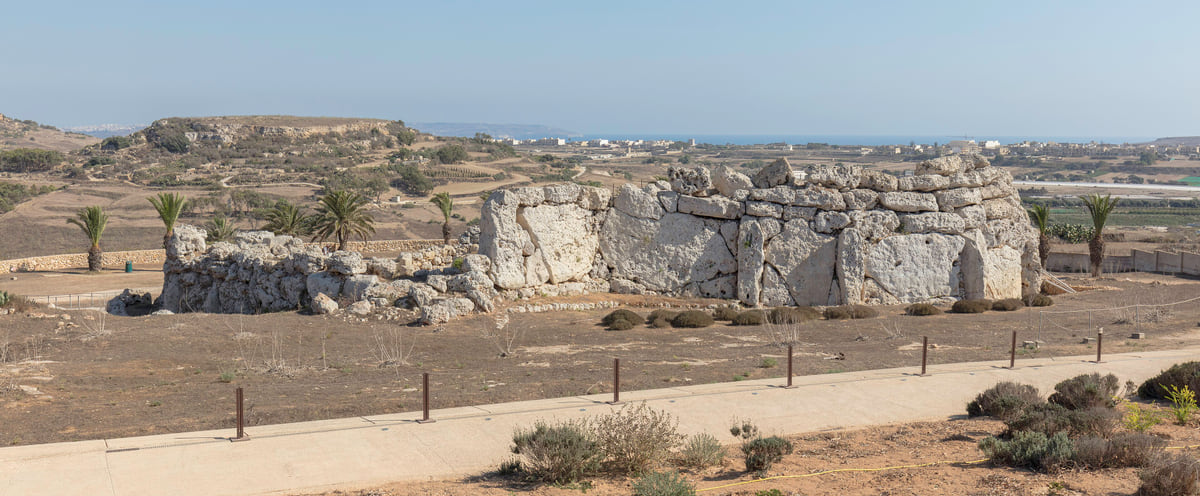
Xagħra, Gozo
Ġgantija, the megalithic temples of Gozo

- Every day
- 09:00–17:00
- Tickets
- €10 adult, with Ta' Kola Windmill
The Ġgantija Temples are two Neolithic structures within a single wall on the Xagħra plateau on Gozo, dated by Heritage Malta to between 3800 and 2000 BC and a World Heritage Site since 1980. Tickets cost €10 including Ta' Kola Windmill, and in winter, until 28 February 2027, they open daily from 9:00 to 17:00.
I'd be there at 9:00, winter opening time, and start in the interpretation centre rather than at the temples. Without the finds and background first, what's outside is just very large stones, and then I'd walk over to Ta' Kola Windmill, on the same ticket.
The essentials in a few lines
Full read: 4 min
- Ġgantija is a pair of Neolithic temples at Xagħra on Gozo, World Heritage since 1980.
- Heritage Malta dates them to between 3800 and 2000 BC.
- Tickets are €10 including Ta' Kola Windmill; the Discover Gozo combo is €13.
- In winter it opens daily from 09:00 to 17:00.
My checklist before setting off
The practical bit
Before you go to Xagħra, this
-
01 To save money
Three euros more, five sites
Ġgantija with Ta' Kola costs €10. The Discover Gozo combo, at €13, adds the Citadel Visitor Centre, the Old Prison and Gran Castello, valid for 30 days.
-
02 My tip
No café on site
Heritage Malta points out there's no restaurant or cafeteria, only a shop. Xagħra's square, with bars and cafés, is a short walk away.
Xagħra -
03 Most beautiful
The legend of the giantess
Heritage Malta retells the legend that a giantess raised these blocks on a diet of broad beans. Stand next to some of them and you'll see why someone needed the story.
-
04 Getting there
Two minutes from the bus
The nearest stop is a two-minute walk from the entrance, according to Heritage Malta, and the whole site is fully accessible for people with reduced mobility.
Bookings I would make
Ġgantija is the oldest thing you’ll see on Gozo and quite possibly on your whole trip. It’s a pair of Neolithic temples built from blocks you’ll struggle to believe were moved by hand, and UNESCO places them among the oldest free-standing stone structures anywhere. They deserve an unhurried visit, ideally without a ferry group at your heels.
What the Ġgantija Temples are
Ġgantija stands on the Xagħra plateau, at the centre of what Heritage Malta calls an extraordinary archaeological landscape. There are two structures, each with its own entrance, enclosed by a common outer wall. Inside, each temple has several apses, semicircular chambers, off a central corridor. VisitMalta’s listing specifies five in each, linked by that corridor to a trefoil-shaped chamber at the far end, and says the outer wall was built with alternating header and stretcher blocks, some of them over five metres long and weighing more than fifty tonnes.
The builders used two kinds of stone. Hard-wearing Coralline Limestone makes up most of the monument, while the softer Globigerina was kept for the interior, in doorways, altars and decorated slabs. Two fragments of plaster with red ochre, now in the interpretation centre, suggest the inner walls were plastered and painted. The Ministry for Gozo adds that animal bones and stone hearths point to ritual feasting, and that the floor has holes for liquid offerings.
On dating, it pays to be precise. Heritage Malta, which runs the site, places it in the Late Neolithic, between 3800 and 2000 BC. The Ministry for Gozo gives a narrower construction window, 3600 to 3200 BC. I’ll go with Heritage Malta, as the body in charge, and with the one point both agree on, that we’re talking about more than five thousand years.
What the visit involves
You go in through an interpretation centre with audiovisual displays and a selection of the most important Neolithic finds from Gozo. From there, an outdoor path leads to the temples. Heritage Malta reckons on about an hour, though you’re welcome to stay longer. Photos are fine without a tripod; flash isn’t allowed in the interpretation centre.
The site is fully accessible for people with reduced mobility and has lockers, baby-changing facilities and its own shop. What it doesn’t have is a restaurant or café. The square in Xagħra is a short walk away, and that’s where I’d eat afterwards.
To sleep close to everything, search places to stay in Victoria on Expedia and filter by area before price.
Tickets, winter hours and Ta’ Kola Windmill
An adult ticket is €10 and includes Ta’ Kola Windmill, built in 1787, a few streets away. If you’re also visiting the Citadel in Victoria on the same trip, the €13 Discover Gozo combo covers both plus the Old Prison, valid for 30 days. Winter hours apply until the end of February 2027, 9:00 to 17:00 every day, an hour earlier than the summer’s 10:00 to 18:00. Admission stops 30 minutes before closing. The combo includes Ta’ Kola Windmill, in the same village, its mechanism restored in 2016.
World Heritage since 1980
Ġgantija was, together with the Ħal Saflieni Hypogeum, among Malta’s first World Heritage inscriptions, in 1980. UNESCO groups it with the megalithic temples of Malta, alongside Tarxien, Skorba, Ta’ Ħaġrat, Mnajdra and Ħaġar Qim, all dating from the 4th and 3rd millennia BC. If you only see one of them, I’d pick this or Ħaġar Qim and Mnajdra, for their condition and their setting.
Heritage Malta also passes on the legend behind the name, of a giantess who raised the blocks fortified by a diet of broad beans. VisitMalta tells it slightly differently but makes the same point. Because the stones are so huge, local people believed the temples were the work of giants, and Ġgantija comes from the Maltese word for giant. Standing beside some of the stones in the outer wall, you can see why Gozitans felt the need for the legend.
If you still need a way in, check train and coach tickets to Malta from where you are.
Getting the most from a visit
I’d arrive at opening time, to get ahead of whoever comes off the mid-morning ferry, because with few people around the site is far more rewarding. I’d start in the interpretation centre, which is what makes sense of the stones, and leave the windmill until last. To fill the rest of your day, my ranking of things to do in Gozo has the options.
What else is nearby in Xagħra
Ġgantija isn’t alone on its plateau. Some 400 metres to the south-west is the Xagħra Circle, a Neolithic cemetery dug by an Anglo-Maltese team from 1987 to 1994, which produced figurines Heritage Malta ranks among the finest works of European prehistoric art. It admits groups of no more than ten. Ta’ Kola Windmill, included on your ticket, keeps its original wooden mechanism and millstones, restored in 2016. The Ministry for Gozo adds a lovely detail, that the miller told the village the wind was right by blowing through a triton shell, the Maltese bronja.
If you are short on time, see the best tours in Ġgantija Temples and pick one that fits your day.
Where the bus does not go, a car does: compare car hire in Gozo before you arrive rather than at the desk.
To sleep close to everything, search places to stay in Victoria on Booking.com and filter by area before price.
Tickets (Heritage Malta, 2026)
| Ticket | Adult | Youth 12-17, senior or student | Child 6-11 |
|---|---|---|---|
| Ġgantija and Ta' Kola Windmill | €10 | €8 | €6 |
| Discover Gozo (with the Citadel) | €13 | €9 | €7 |
| Discover Gozo family (2 adults, 2 children) | €35 |
Under-6s free. Heritage Malta members and Heritage Malta Passport holders go free. All tickets are valid for 30 days from first use.
Ġgantija opening hours
| Period | Hours |
|---|---|
| 1 Mar to 31 Oct 2026 | 10:00-18:00, daily |
| 1 Nov 2026 to 28 Feb 2027 | 09:00-17:00, daily |
Last entry 30 minutes before closing. Closed on 1 January, Good Friday and 24, 25 and 31 December.
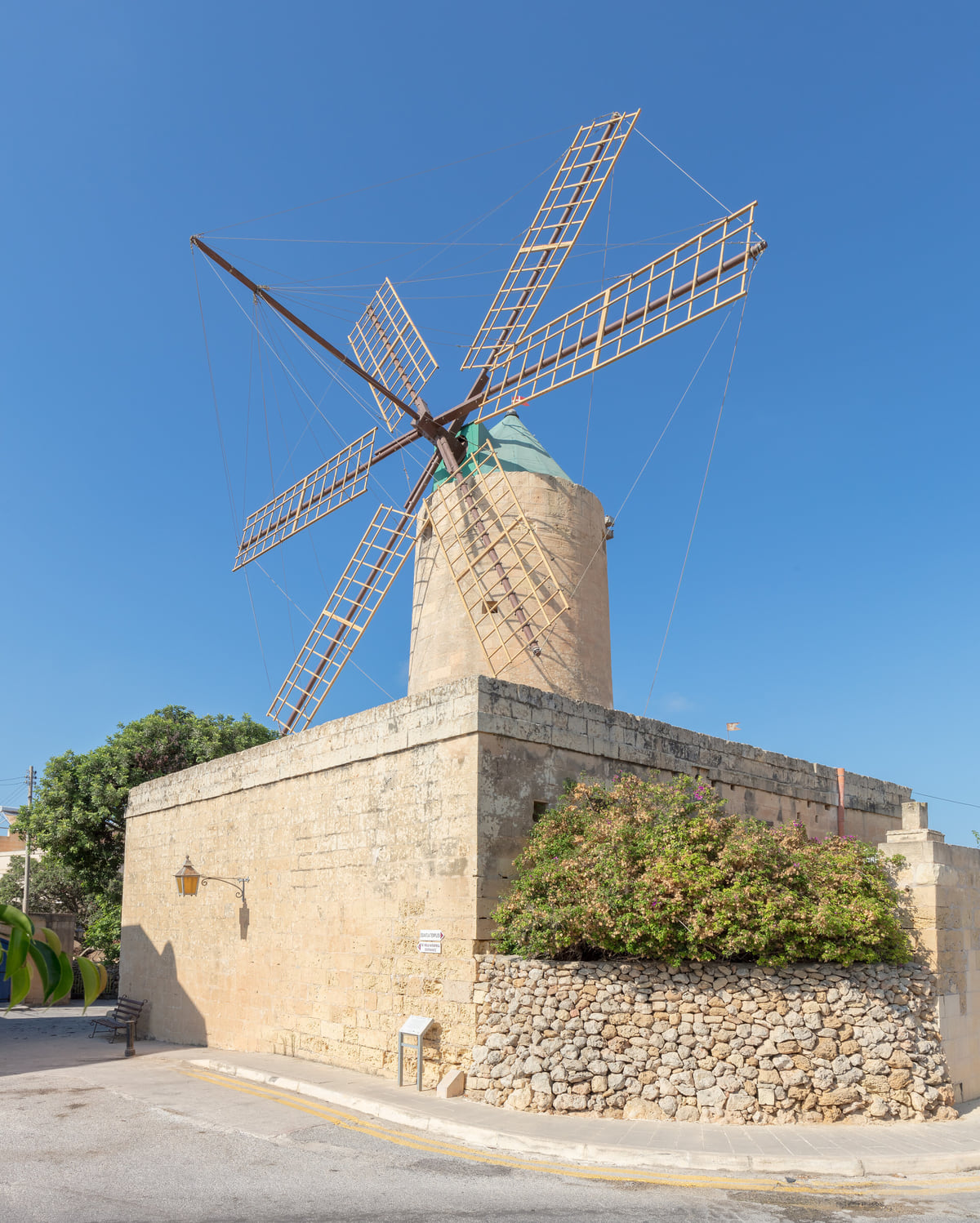
The Ta' Kola windmill in Xagħra, Gozo, with its timber sails turning above the miller's stone house.
Test yourself
True or false?
0/4 Pick before you peek.
-
Ġgantija is a single temple.
See the answer
False. It's two structures, each with its own entrance, inside a shared outer wall. Each has several apses opening off a central corridor.
-
The inner walls of Ġgantija were once painted.
See the answer
True. Two plaster fragments with red ochre, displayed in the interpretation centre, suggest the interior walls were plastered and painted.
-
A Ġgantija ticket includes Ta' Kola Windmill.
See the answer
True. Heritage Malta sells the two together for €10 per adult. The 1787 windmill is a few streets away in the same village.
-
You can use flash photography in the interpretation centre.
See the answer
False. Photos without a tripod are fine on site, but flash isn't allowed inside the interpretation centre.
Map
Where Ġgantija Temples is
Gozo lies to the north-west, across the channel the ferry crosses from Ċirkewwa, with Comino between the two islands. Every number opens its guide.
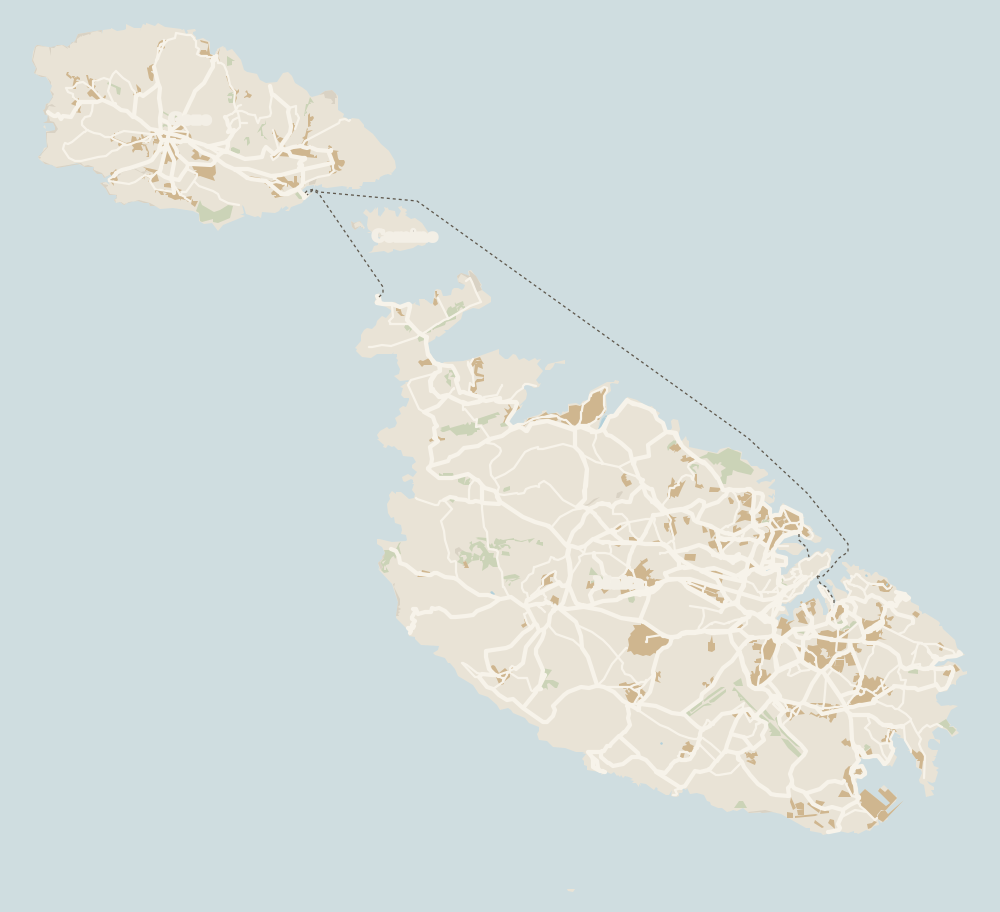 1Xagħra 2Ġgantija Temples 3Ramla Bay 4Calypso's Cave 5Ta' Kola Windmill
Map data © OpenStreetMap contributors (ODbL)
- Inscribed on the World Heritage List
- 1980
- Adult ticket with Ta' Kola
- €10
- Temples inside one wall
- 2
- Typical visit, per Heritage Malta
- 1 hour
Frequently asked questions
How much are tickets for the Ġgantija Temples?
€10 for adults, €8 for 12 to 17-year-olds, over-60s and students, and €6 for children aged 6 to 11. Ta' Kola Windmill is included and under-6s go free.
What are the Ġgantija opening hours?
In winter, 1 November 2026 to 28 February 2027, 09:00 to 17:00 daily; from March to October 2026 it opened 10:00 to 18:00. The last admission is 30 minutes before closing time.
How old are the Ġgantija Temples?
Heritage Malta places them in the Late Neolithic, between 3800 and 2000 BC. The Ministry for Gozo gives a narrower construction window of roughly 3600 to 3200 BC. Either way, they're over five thousand years old.
How long does a visit take?
About an hour, according to Heritage Malta, including the interpretation centre. With Ta' Kola Windmill, I'd allow an hour and a half.
How do I get to Ġgantija?
It's in Xagħra, on Gozo. From Mġarr harbour or Victoria you can get there by bus or car, and the nearest stop is a two-minute walk away.
Who built Ġgantija and what does the name mean?
Late Neolithic communities on Gozo, more than five thousand years ago. The name comes from the Maltese word for giant, because local people believed only giants could have moved blocks weighing over fifty tonnes.
Do I need to book Ġgantija in advance?
Heritage Malta doesn't make advance booking compulsory here, unlike the Hypogeum. You can buy from its online shop or on site.
0 of 294 Malta guides
Your next stamp
- Xagħra
- Ta' Kola Windmill
- Ta' Ħaġrat and Skorba Temples
- Megalithic temples
- Things to do in Gozo
- Calypso's Cave
- Gozo
- Things to do in Malta
- Most beautiful places
- Comino
- Prettiest villages
- UNESCO World Heritage Sites
- Where is Malta
- The Maltese islands
- Towns and villages
- Island of Malta
- Blue Lagoon
- Fort Rinella
- Fort St Angelo
- Gardjola Gardens
- Ħal Saflieni Hypogeum
- Is Malta a country?
- Popeye Village
- Tarxien Temples
- Valletta
- Esplora
- Golden Bay
- Gozo day trip
- Inquisitor's Palace
- Population
- St John's Co-Cathedral
- St Mary's Tower
- Grandmaster's Palace
- How big is Malta
- Maritime Museum
- Mellieħa Bay
- Fort St Elmo
- Language
- Malta at War Museum
- Paradise Bay
- Barrakka Gardens
- Red Tower
- Religion
- Malta government
- Saluting Battery
- MUŻA
- National Museum of Archaeology
- Underground Valletta
- Lascaris War Rooms
- Casa Rocca Piccola
- Malta in one day
- Three Cities
- Victoria
- Birgu
- Manoel Theatre
- Weekend in Malta
- City Gate and Parliament
- Malta in three days
- Nadur
- Senglea
- Cospicua
- Malta in four days
- Qala
- Valletta Waterfront
- Għajnsielem
- Kalkara
- Malta in five days
- Malta in a week
- Paola
- Xewkija
- Sannat
- Tarxien
- Munxar
- Żabbar
- Fgura
- Fontana
- Kerċem
- Luqa
- Floriana
- Marsa
- Mellieħa
- The Citadel, Gozo
- Żebbuġ (Gozo)
- Marsalforn
- Santa Luċija
- Ramla Bay
- San Lawrenz
- Xgħajra
- Xwejni salt pans
- Għarb
- Żejtun
- Għasri
- Gudja
- San Blas Bay
- Għaxaq
- Ħondoq Bay
- Marsaxlokk
- Kirkop
- Marsaxlokk Fish Market
- Mqabba
- St Peter's Pool
- Marsaskala
- Qrendi
- Żurrieq
- Beaches
- Comino ferry
- EU, Schengen and the euro
- Ħaġar Qim and Mnajdra
- Mdina
- Mġarr (Gozo)
- Blue Grotto
- Diving
- Entry requirements
- Mdina Cathedral
- Xewkija Rotunda
- Birżebbuġa
- Money and payments
- Palazzo Falson
- Safi
- Shipwrecks
- Ta' Ċenċ Cliffs
- Għar Dalam
- Mdina Dungeons
- Mġarr ix-Xini
- Prices and budget
- Snorkelling
- Boat trips
- Malta on a budget
- Playmobil FunPark
- Rabat (Malta)
- Xlendi
- Dwejra
- Gozo beaches
- History
- Siġġiewi
- St Paul's Catacombs
- Tipping
- Azure Window
- Domvs Romana
- Għar Lapsi
- Great Siege of 1565
- Plugs
- Limestone Heritage Park
- Second World War
- St Paul's Grotto
- Ta' Pinu Basilica
- Time zone
- Buskett Gardens
- Knights of Malta
- Mobile and roaming
- Wied il-Għasri
- Dingli
- Maltese cross
- Dingli Cliffs
- Flag
- Żebbuġ
- Coat of arms
- Mtarfa
- Balzan
- National anthem
- Lija
- Malta facts
- Game of Thrones
- Iklin
- Attard
- Film locations
- Forts and fortifications
- San Anton Gardens
- Ta' Qali Crafts Village
- Victoria Lines
- Catacombs
- Museums
- Where to eat
- Where to stay
- Churches
- Hotels in Valletta
- Restaurants in Valletta
- Hotels in Sliema
- Maltese food
- Restaurants in Marsaxlokk
- Viewpoints
- Hotels in St Julian's
- Pastizzi
- Walking and hiking
- Hotels in Buġibba and Qawra
- Maltese rabbit stew
- Safety
- Hotels in Mellieħa
- Kinnie and Cisk
- Scams
- Gozo hotels
- Nightlife
- Ramla Bay Resort
- Tap water
- Boat parties
- Holiday packages
- Sliema Marina Hotel
- Tourist tax
- All inclusive
- Gay Malta
- Qawra Palace
- Sightseeing passes
- Apartments
- Malta with kids
- Novotel Malta Sliema
- Public holidays
- How to get there
- Luxury
- Malta for couples
- Natural History Museum
- Taxis and ride-hailing
- Weather
- Best time to visit
- Cycling
- English schools
- Flights
- Fort Delimara
- Flights from Madrid
- Sea temperature
- Shopping and souvenirs
- Tas-Silġ
- Airport
- Free walking tours
- In winter
- Ta' Bistra Catacombs
- Airport transfers
- Day trips and tours
- Gran Castello Historic House
- In summer
- Ferry from Sicily
- In January
- Old Prison, Gozo
- Cruise stop
- In February
- In March
- Kordin III
- In April
- Villa Frere
- In May
- Villa Guardamangia
- Getting around
- In June
- Roman Baths
- Buses
- July
- August
- Hop on hop off
- Gozo ferry
- September
- Gozo fast ferry
- October
- November
- Valletta ferries
- Car hire
- December
- Driving
- Events
- St Paul's Bay
- Village feasts
- Buġibba
- Christmas
- Easter
- Qawra
- Carnival
- Xemxija
- Fireworks festival
- Malta National Aquarium
- Isle of MTV
- St Paul's Islands
- Mosta
- Mosta Rotunda
- Naxxar
- Palazzo Parisio
- Għargħur
- Mġarr (Malta)
- Sliema
- Għajn Tuffieħa Bay
- Tigné Point
- Ġnejna Bay
- St Julian's
- Paceville
- St George's Bay
- Gżira
- Msida
- Ta' Xbiex
- Pietà
- Pembroke
- Swieqi
- San Ġwann
- Birkirkara
- Ħamrun
- Santa Venera
- Qormi

Questions about Xagħra? Write to me
If something does not add up or a fact is missing, write to me and I will answer myself.
My email sergiolepone@gmail.com
By
Tourism graduate with a master’s in Tourism Management and Planning from the University of Málaga, who has travelled across Europe. He writes every guide from official sources and his own judgement.
Published on . Updated on . Facts checked on .
Sources
Some links in this guide are affiliate links: if you book through them, the site earns a commission at no extra cost to you. Affiliate disclosure
Photos: Diego Delso (CC BY-SA 4.0); Diego Delso (CC BY-SA 4.0), via Wikimedia Commons.