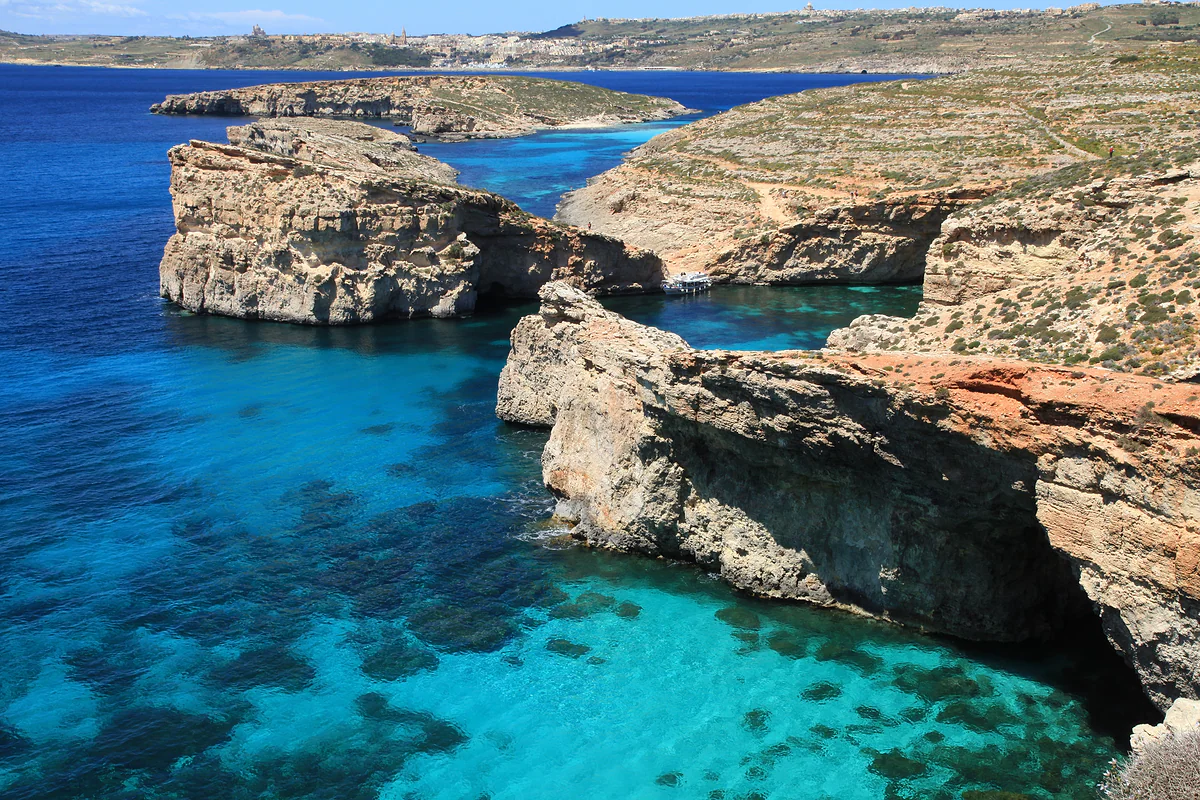
Mask, snorkel and clear water
Where to snorkel in Malta, Gozo and Comino
Malta's best snorkelling spots, according to the Ministry for Gozo, are San Dimitri Point, Wied il-Għasri and the Blue Hole at Dwejra, all on Gozo, with Reqqa Point and Xatt l-Aħmar for more marine life. On Comino, there are the Santa Marija Caves and the Blue Lagoon, which needs a free booking. The sea averages 26.1°C in September.
In 30 seconds
Full read: 3 min
- The Ministry for Gozo rates San Dimitri Point, Wied il-Għasri and Dwejra's Blue Hole as top snorkelling spots.
- For colourful marine life, try Reqqa Point and Xatt l-Aħmar, also on Gozo.
- On Comino, the Santa Marija Caves and the Blue Lagoon, with a free booking.
- A purple flag warns of jellyfish and a double red means no swimming.
For snorkelling, I'd head to Gozo and Comino before the main island. I'd start with the Santa Marija Caves, which are shallow, and save the Blue Hole for a flat-calm day. Never under a red flag, however inviting the blue looks.

Before you go
What I would keep in mind
-
01 Most beautiful
The Blue Hole, a well that opens to the sea
The Ministry for Gozo describes it as a 25-metre-deep hole connected to the open sea eight metres down by a submerged arch. Even from the surface with a snorkel, it's striking.
Dwejra Bay -
02 My tip
A purple flag means jellyfish
In the MTA's code, purple means jellyfish, red high hazard and double red no swimming. Before you go in with your snorkel, check the flagpole.
best beaches in Malta -
03 To save money
Snorkelling costs nothing
Apart from the boat to Comino, the spots in this guide are free to reach. Your own mask and snorkel buy you more hours in the water than any excursion.
-
04 My tip
Mind the rocks at St Peter's Pool
The Spanish Foreign Ministry urges caution over rockfalls at St Peter's Pool, Kalanka and Għar Lapsi, all popular rocky spots for a swim with a mask.
St Peter's Pool
What I would book
My ranking, scored
My favourite snorkelling spots
My own scores out of 10. They weigh the water clarity and seabed described by official sources, how easy the spot is to reach without a boat, and how safe it is in calm conditions.
0 of 5 seen
-
Blue Hole (Dwejra, Gozo)
A 25-metre natural well opening to the sea through an arch eight metres down. The Ministry for Gozo lists it among the best snorkelling sites.
9.3 out of 10
-
Santa Marija Caves (Comino)
Shallow sea caves, with thousands of seabream. The Ministry for Gozo recommends them for snorkellers and divers.
9.0 out of 10
-
Wied il-Għasri (Gozo)
A narrow gorge ending in a pebbly cove between rock walls. Calm sea only; in a storm, watch from a distance.
8.8 out of 10
-
Blue Lagoon (Comino)
Turquoise water and a clear seabed, but with a free timed booking and up to 4,000 people. Early on, a joy; at midday, a crowded pool.
8.4 out of 10
-
Reqqa Point and Xatt l-Aħmar (Gozo)
The two spots the Ministry for Gozo recommends for colourful marine life, on the island's north and south coasts.
8.2 out of 10
Snorkelling is the cheapest way to see what lies under Malta’s surface, and in these islands it’s well worth seeing. With a mask, a snorkel and a calm sea, Gozo and Comino give you caves, arches and pools that elsewhere you’d only reach with a tank. Here’s my pick, built on what the official sources say.
Gozo, the snorkelling island
If I had to choose one island for snorkelling, it would be Gozo. The Ministry for Gozo names its best sites as San Dimitri Point in the west, Wied il-Għasri in the north and the Blue Hole at Dwejra. For colourful marine life, it recommends Reqqa Point in the north and Xatt l-Aħmar in the south.
The Blue Hole is the one that pulls me in. The Ministry for Gozo describes it as a 25-metre-deep hole connected to the open sea eight metres down by a submerged arch. From the surface you can already see the chimney and the light pouring in, and for me it proves a snorkel is no consolation prize. The whole area is covered in my guide to Dwejra.
Wied il-Għasri is something else entirely. A deep gorge dropping between rock walls to a pebbly cove, with steps cut into the cliff. The Ministry for Gozo itself warns that in rough weather it’s spectacular, but to be admired from a safe distance. I’d only go in when the sea is flat. More in my guide to Wied il-Għasri.
Comino, caves and turquoise water
A quarter of an hour by boat from Mġarr lies Comino. The Ministry for Gozo recommends the Santa Marija Caves to snorkellers and divers, a network of sea caves full of rock formations and marine life. Its dive profiles class them as beginner dives no deeper than 10 metres, with a passage cutting clean through the headland and clouds of seabream used to being fed bread. They’re shallow, which makes them ideal with a snorkel.
The Blue Lagoon is the other big draw, with turquoise water and a clear seabed. The trouble is the crowds, which is why, from 1 May 2025, landing requires a free slot and numbers are capped at 4,000. If you’re snorkelling there, the morning slot is the one I’d book. Bring water and sun cream too, because the Ministry for Gozo warns that Comino has no shops beyond a few seasonal kiosks. The booking rules are explained in the Blue Lagoon on Comino guide, and the rest of the island in Comino.
With children in tow, the Ministry for Gozo points to two gentler options. Xlendi Bay and Ħondoq ir-Rummien offer all sorts of fun in the water, from banana rides to pedalos and canoes, and on Comino, Santa Marija Bay has sand and shallow water that suits younger swimmers. I’d start small ones there with a mask before trying any cave.
What about the main island?
You can snorkel on Malta itself, although the official sources say less. What I do know is that the Spanish Foreign Ministry warns of falling rock at three popular rocky swimming spots, Għar Lapsi, Kalanka and St Peter’s Pool, and advises against swimming near Magħtab. And that the Malta Tourism Authority runs snorkelling events as part of its beach campaigns. At Ċirkewwa, next to Paradise Bay, there’s also a protected marine area closely tied to diving.
Rules and safety
Three things I’d keep in mind. First, the MTA’s flags, with purple for jellyfish, red for high hazard and double red for no swimming. Second, the Ministry for Gozo reminds visitors that spearfishing isn’t allowed inside marine conservation zones. And third, snorkelling in caves and gorges is for calm days only.
If you catch the bug and want to go deeper, the natural next step is a try-dive with an MTA-licensed centre. It’s all in my guide to diving in Malta.
When to snorkel in Malta
June to October. The water averages 22°C in June, climbs to 26.1°C in September and still reads 24°C in October, going by the Met Office norms, and the Ministry for Gozo puts the floor at 14°C. September, for me, is the perfect month, warm in the water and past the August peak.
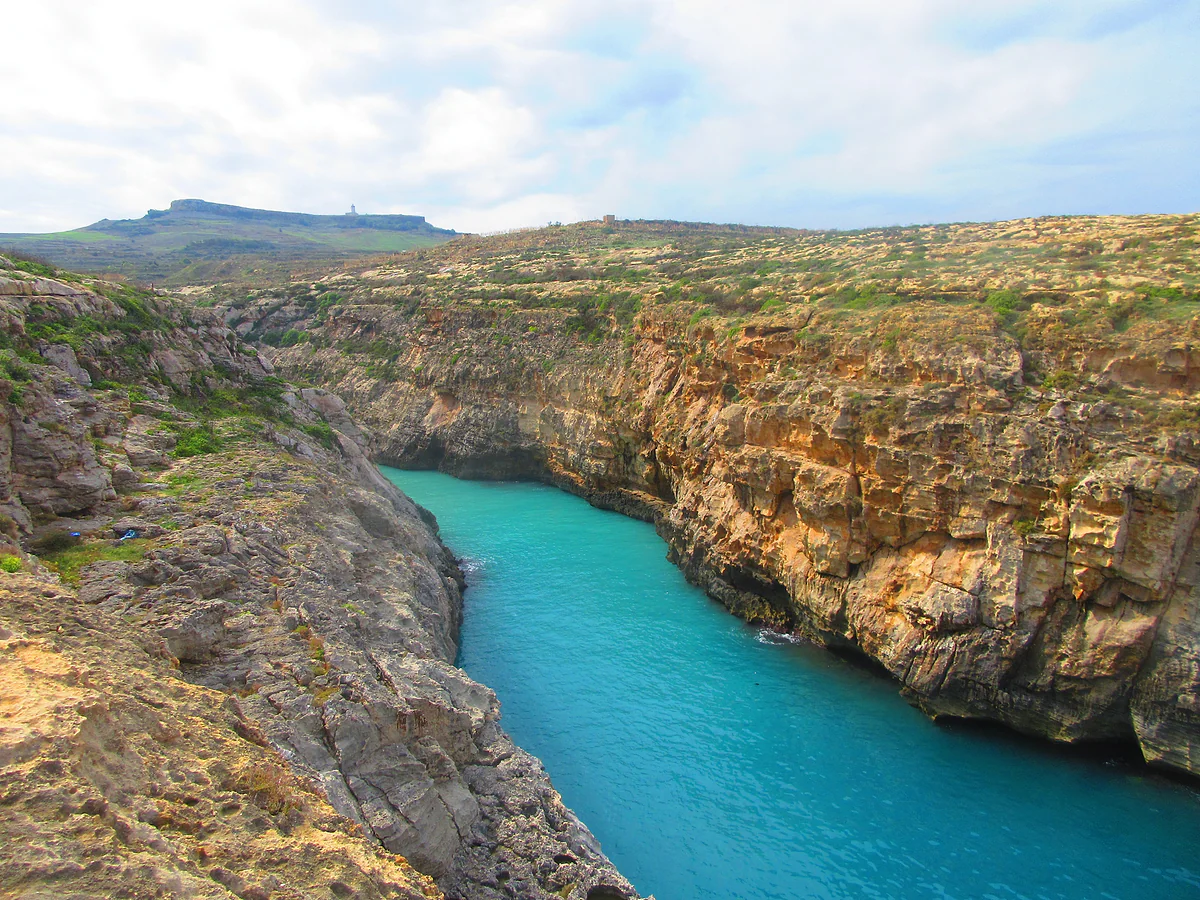
The gorge of Wied il-Għasri in Gozo, a narrow inlet of turquoise sea wedged between tall walls of limestone.
Where to snorkel, according to the Ministry for Gozo
| Spot | Area | Why |
|---|---|---|
| San Dimitri Point | West Gozo | Among the best snorkelling sites |
| Wied il-Għasri | North Gozo | Among the best snorkelling sites |
| Blue Hole | Dwejra, Gozo | A 25 m well linked to the sea by an arch at 8 m |
| Reqqa Point | North Gozo | Colourful marine life |
| Xatt l-Aħmar | South Gozo | Colourful marine life |
| Santa Marija Caves | Comino | Sea caves for snorkellers and divers |
Source, Visit Gozo's watersports and Comino pages, the Ministry for Gozo's website, checked on 28-09-2026.
Sea temperature for snorkelling
| Month | Average sea temperature |
|---|---|
| June | 22°C |
| September | 26.1°C |
| October | 24°C |
Norms cited by the Malta Meteorological Office. The Ministry for Gozo says the sea never drops below 14°C.
Test yourself
True or false?
0/3 Pick before you peek.
-
The Santa Marija Caves on Comino are suitable for beginner divers.
See the answer
True. The Ministry for Gozo rates them beginner level, 7 metres on average and 10 at most. With a snorkel you can enjoy them from the surface too.
-
Dwejra's Blue Hole connects to the open sea through a submerged arch.
See the answer
True. According to the Ministry for Gozo, the hole is 25 metres deep and links to the sea eight metres down through an arch.
-
Spearfishing is allowed in Marine Conservation Areas.
See the answer
False. The Ministry for Gozo points out that spearfishing is banned within the Marine Conservation Areas.
- Depth of Dwejra's Blue Hole
- 25 m
- Depth of the arch linking it to the sea
- 8 m
- Sea in September
- 26.1°C
0 of 279 Malta guides
Your next stamp
- Beaches
- Boat trips
- Most beautiful places
- Malta in five days
- Things to do in Malta
- Gozo beaches
- Walking and hiking
- Comino
- Gozo
- Prettiest villages
- UNESCO World Heritage Sites
- Where is Malta
- The Maltese islands
- Towns and villages
- Island of Malta
- Blue Lagoon
- Fort Rinella
- Fort St Angelo
- Gardjola Gardens
- Ħal Saflieni Hypogeum
- Is Malta a country?
- Popeye Village
- Tarxien Temples
- Things to do in Gozo
- Valletta
- Esplora
- Golden Bay
- Gozo day trip
- Inquisitor's Palace
- Population
- St John's Co-Cathedral
- St Mary's Tower
- Grandmaster's Palace
- How big is Malta
- Maritime Museum
- Mellieħa Bay
- Fort St Elmo
- Language
- Malta at War Museum
- Paradise Bay
- Barrakka Gardens
- Red Tower
- Religion
- Malta government
- Saluting Battery
- MUŻA
- National Museum of Archaeology
- Underground Valletta
- Lascaris War Rooms
- Casa Rocca Piccola
- Malta in one day
- Three Cities
- Victoria
- Birgu
- Manoel Theatre
- Weekend in Malta
- Xagħra
- City Gate and Parliament
- Malta in three days
- Nadur
- Senglea
- Cospicua
- Malta in four days
- Qala
- Valletta Waterfront
- Għajnsielem
- Kalkara
- Malta in a week
- Paola
- Xewkija
- Sannat
- Tarxien
- Munxar
- Żabbar
- Fgura
- Fontana
- Kerċem
- Luqa
- Floriana
- Marsa
- Mellieħa
- The Citadel, Gozo
- Żebbuġ (Gozo)
- Ġgantija Temples
- Marsalforn
- Santa Luċija
- Ramla Bay
- San Lawrenz
- Xgħajra
- Xwejni salt pans
- Calypso's Cave
- Għarb
- Żejtun
- Għasri
- Gudja
- San Blas Bay
- Għaxaq
- Ħondoq Bay
- Marsaxlokk
- Kirkop
- Marsaxlokk Fish Market
- Mqabba
- St Peter's Pool
- Marsaskala
- Qrendi
- Żurrieq
- Comino ferry
- EU, Schengen and the euro
- Ħaġar Qim and Mnajdra
- Mdina
- Mġarr (Gozo)
- Blue Grotto
- Diving
- Entry requirements
- Mdina Cathedral
- Xewkija Rotunda
- Birżebbuġa
- Money and payments
- Palazzo Falson
- Safi
- Shipwrecks
- Ta' Ċenċ Cliffs
- Għar Dalam
- Mdina Dungeons
- Mġarr ix-Xini
- Prices and budget
- Malta on a budget
- Playmobil FunPark
- Rabat (Malta)
- Xlendi
- Dwejra
- History
- Siġġiewi
- St Paul's Catacombs
- Tipping
- Azure Window
- Domvs Romana
- Għar Lapsi
- Great Siege of 1565
- Plugs
- Limestone Heritage Park
- Second World War
- St Paul's Grotto
- Ta' Pinu Basilica
- Time zone
- Buskett Gardens
- Knights of Malta
- Mobile and roaming
- Wied il-Għasri
- Dingli
- Maltese cross
- Dingli Cliffs
- Flag
- Żebbuġ
- Coat of arms
- Mtarfa
- Balzan
- National anthem
- Lija
- Malta facts
- Game of Thrones
- Iklin
- Attard
- Film locations
- Forts and fortifications
- San Anton Gardens
- Ta' Qali Crafts Village
- Victoria Lines
- Megalithic temples
- Catacombs
- Museums
- Where to eat
- Where to stay
- Churches
- Hotels in Valletta
- Restaurants in Valletta
- Hotels in Sliema
- Maltese food
- Restaurants in Marsaxlokk
- Viewpoints
- Hotels in St Julian's
- Pastizzi
- Hotels in Buġibba and Qawra
- Maltese rabbit stew
- Safety
- Hotels in Mellieħa
- Kinnie and Cisk
- Scams
- Gozo hotels
- Nightlife
- Tap water
- Boat parties
- Holiday packages
- Tourist tax
- All inclusive
- Gay Malta
- Sightseeing passes
- Apartments
- Malta with kids
- Public holidays
- How to get there
- Luxury
- Malta for couples
- Taxis and ride-hailing
- Weather
- Best time to visit
- Cycling
- English schools
- Flights
- Flights from Madrid
- Sea temperature
- Shopping and souvenirs
- Airport
- Free walking tours
- In winter
- Airport transfers
- Day trips and tours
- In summer
- Ferry from Sicily
- In January
- Cruise stop
- In February
- In March
- In April
- In May
- Getting around
- In June
- Buses
- July
- August
- Hop on hop off
- Gozo ferry
- September
- Gozo fast ferry
- October
- November
- Valletta ferries
- Car hire
- December
- Driving
- Events
- St Paul's Bay
- Village feasts
- Buġibba
- Christmas
- Easter
- Qawra
- Carnival
- Xemxija
- Fireworks festival
- Malta National Aquarium
- Isle of MTV
- St Paul's Islands
- Mosta
- Mosta Rotunda
- Naxxar
- Palazzo Parisio
- Għargħur
- Mġarr (Malta)
- Sliema
- Ta' Ħaġrat and Skorba Temples
- Għajn Tuffieħa Bay
- Tigné Point
- Ġnejna Bay
- St Julian's
- Paceville
- St George's Bay
- Gżira
- Msida
- Ta' Xbiex
- Pietà
- Pembroke
- Swieqi
- San Ġwann
- Birkirkara
- Ħamrun
- Santa Venera
- Qormi
Frequently asked questions
Where is the best snorkelling in Malta?
On Gozo and Comino. The Ministry for Gozo singles out San Dimitri Point, Wied il-Għasri and the Blue Hole at Dwejra, plus Reqqa Point and Xatt l-Aħmar for marine life. On Comino, the Santa Marija Caves and the Blue Lagoon.
Can you snorkel at the Blue Lagoon on Comino?
Yes, the Ministry for Gozo says it draws swimmers and snorkellers. To set foot on the shore you need a free timed booking, required since 1 May 2025.
Should I bring my own snorkelling gear to Malta?
I would. I haven't found an official source saying where to hire it, and with your own mask and snorkel you're not relying on anyone.
When is the best time for snorkelling in Malta?
June to October, with the sea between 22°C and 26.1°C according to the Met Office norms. September is my favourite, with the warmest water and fewer people than in August.
Are there jellyfish in Malta?
There can be. The MTA flies a purple flag to warn of jellyfish on lifeguarded beaches, so I'd always check before going in.
Is it safe to snorkel at Wied il-Għasri?
In calm conditions, yes. The Ministry for Gozo says it's spectacular in rough weather, but to be enjoyed from a safe distance, not from the water.
By
Tourism graduate with a master’s in Tourism Management and Planning from the University of Málaga, who has travelled across Europe. He writes every guide from official sources and his own judgement.
Published on . Facts checked on .
Sources
Photos: Frank Vincentz (CC BY-SA 3.0); HasanK (CC BY-SA 4.0), via Wikimedia Commons.