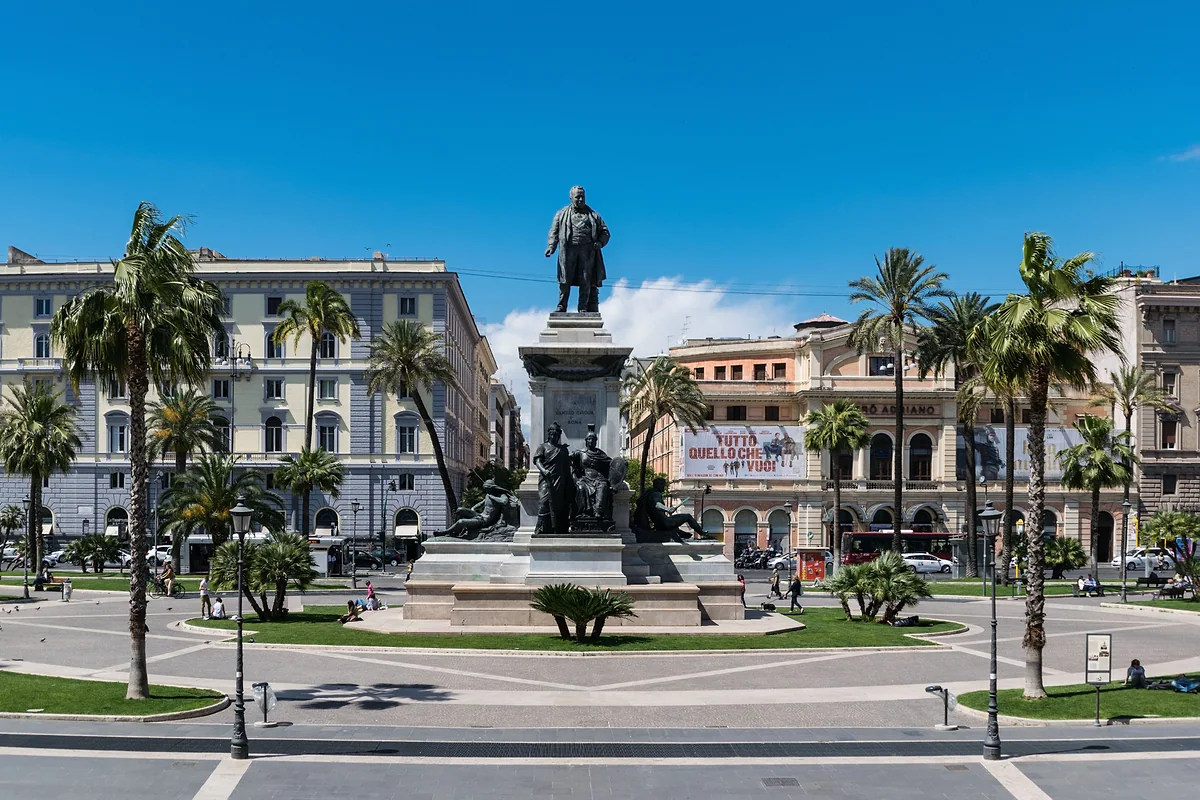
Rione XXII, the last one Rome created
Prati, the smart district with the Vatican round the corner
Prati is Rome's rione XXII, created in 1921 just north of the Vatican and Castel Sant'Angelo. It has broad avenues of Umbertine and Liberty buildings, Via Cola di Rienzo for shopping, Piazza Cavour with the Palace of Justice, and metro line A at Ottaviano and Lepanto. For me it's the best district to stay in if the Vatican is one day of a longer Rome trip.
In 30 seconds
Full read: 5 min
- Prati is Rome's rione XXII, the last one created, in 1921. It sits north of the Vatican and Borgo, between Piazza del Risorgimento and the Tiber.
- It's the Rome built after unification, with straight avenues of Umbertine and Liberty blocks, Piazza Cavour at the centre and the Palace of Justice behind.
- Via Cola di Rienzo is its shopping street, and on the edge of the district the Mercato Trionfale has over 270 stalls.
- For me it's the best base when the Vatican takes up just one day of your trip, because Ottaviano and Lepanto put you in the centre on line A without changing.
- Beware older guides that mention tram 19. As of September 2026 it doesn't run through Prati, and its return is pencilled in for the first months of 2027.
If the Vatican is one day of a wider Rome trip, I'd stay in Prati and look for somewhere near Ottaviano or Lepanto. I like it because it's where Romans actually live, shop and meet for an aperitivo rather than a stage set for visitors, and the Museums entrance is still a short walk away.

Before you go
What I would keep in mind
-
01 Getting there
Line A is the reason to pick Prati
Ottaviano, the stop the Vatican Museums recommend, and Lepanto, the one for Castel Sant'Angelo, are both on line A, which takes you into the centre without changing. Tram 19 isn't serving Prati at the moment and isn't expected back until early 2027.
How to get to Vatican City from Rome and the airports -
02 To save money
Breakfast and lunch from the market
Mercato Trionfale, at Via Andrea Doria 41, has more than 270 stalls and opens Monday to Saturday mornings. If you're staying nearby, it sorts out fruit, sandwiches and supplies without St Peter's Square prices.
Restaurants near Vatican City -
03 Worth the splurge
The special dinner this district does well
Rome's tourist board describes Prati as the place for carefully cooked food, wine bars and gourmet dinners. If you're going to treat yourself once on the trip, I'd do it here, well away from menus aimed at people spilling out of the Museums.
Restaurants near Vatican City -
04 Most beautiful
Palm trees in front of the "Palazzaccio"
Piazza Cavour has a garden of palms and Mediterranean plants opened in 1910, with the Palace of Justice behind it. It's my favourite corner of the district, where postcard Rome meets working Rome.
Castel Sant'Angelo -
05 Watch out
Well-lit cashpoints, card always in sight
The US security report warns of skimmers on Rome's cash machines, and Spain's foreign ministry advises keeping your card in view. On a shopping street like Cola di Rienzo, I'd withdraw cash inside a bank branch.
Vatican scams and tourist traps to avoid in 2026
My priorities
Unmissable
- Piazza Cavour, with its palms planted in 1909 and the Palazzaccio looming behind
- A shopping stroll or an aperitivo along Via Cola di Rienzo as the evening comes in
- Staying a few minutes from Ottaviano or Lepanto if you'll be getting around the whole city
If you have time
- The 1914 Waldensian church, Rome's first built on a reinforced concrete frame
- The Museum of the Souls in Purgatory, beside the sacristy of Sacro Cuore del Suffragio
- Breakfast shopping at the Mercato Trionfale, which is closed on Sundays
What I would book
- Places to stayBooking.com Staying in Prati, near Ottaviano or Lepanto If the Vatican is one day of a wider Rome trip, I'd stay here, near Ottaviano or Lepanto, with line A on the doorstep and the Museums entrance a short walk away.
- Book a tableTheFork Aperitivo and dinner in Prati I like it because this is where Romans actually go for an aperitivo. A booked table keeps you out of the places lined up along the Museums queue.
My ranking, scored
What I like most about Prati
My own scores out of 10, so opinion. I rate what each place tells you about a district unlike the rest of central Rome, how pleasant it is to explore without rushing and whether it's worth the detour once you've done the Vatican.
0 of 7 seen
-
Piazza Cavour and its palm garden
The heart of the district, with palms planted in 1909, the 1895 monument to Cavour and the Teatro Adriano. It's where post-unification Rome shows itself best.
8.8 out of 10
-
The Palazzo di Giustizia
The "Palazzaccio", huge and neo-Baroque, home to Italy's Supreme Court of Cassation. Two 2nd-century sarcophagi and a jointed ivory doll turned up in its foundations.
8.5 out of 10
-
Via Cola di Rienzo
One of Rome's main shopping streets, with understated luxury boutiques. For me it's the best place to watch Romans shopping, with no souvenir stalls in sight.
8.3 out of 10
-
Mercato Trionfale
Over 270 stalls colour-coded by what they sell, two murals of Anna Magnani at the entrance and stallholders into their third generation. It sits on the district's edge, towards Trionfale.
8.2 out of 10
-
Sacro Cuore del Suffragio and the Museum of the Souls in Purgatory
A Gothic Revival church nicknamed the little Milan Cathedral and, by the sacristy, a collection of supposed scorch marks left by the dead. As odd as anything in Rome.
7.9 out of 10
-
The Waldensian church on Piazza Cavour
Opened in 1914, it was Rome's first church built with a reinforced concrete frame, with a Liberty interior and stained glass by Paschetto. Nothing like what you'll have seen across the Tiber.
7.6 out of 10
-
Mercato dell'Unità
A covered market in a 1928 neoclassical building right on Via Cola di Rienzo. I include it for the entrance and because you'll pass it anyway while shopping.
7.2 out of 10
Cross the road from the Vatican Museums and you’re in a different city. Prati has no ruins and no Baroque church on every corner. It has straight avenues, enormous doorways and people heading to work, and for me that’s its biggest draw. This is the Rome that came after Italian unification, and as a base I rate it among the best in the city.
From picnic meadows to a district for Turin’s middle classes
The name tells you what was here. These were the meadows beside Hadrian’s Mausoleum, where Romans came out by carriage or by boat for a day in the fields. In Roman times they were the Horti Domitii, later Prata Neronis and in the Middle Ages Prata Sancti Petri. After unification they were built over for the middle classes who arrived from Turin with the new capital, which is why you’ll see solid, Piedmont-style Umbertine blocks alongside Liberty facades.
Prati became a rione on 21 August 1921, the last one Rome created. Its coat of arms shows Castel Sant’Angelo, even though the castle is in Borgo, on the other side of Via Alberico II and Piazza Adriana. If you’ve just been to Castel Sant’Angelo, you’re a few steps away.
Piazza Cavour and the “Palazzaccio”
Piazza Cavour is the heart of the district. Nicodemo Severi’s garden of palms and Mediterranean plants was begun in 1884 and opened in 1910, with the palms planted in 1909. In the middle stands Stefano Galletti’s monument to Cavour, unveiled on 24 September 1895 in the presence of King Umberto I, and to one side the Teatro Adriano, which opened in 1898 as the Politeama and is now a cinema.
Behind it rises the Palazzo di Giustizia, which Romans call the “Palazzaccio” because of its sheer size. Guglielmo Calderini built it between 1889 and 1911, neo-Baroque in reinforced concrete faced with travertine, and it houses the Supreme Court of Cassation. What I like most about it is underground. Digging the foundations uncovered the sarcophagi of Crepereia Tryphaena and Crepereius Euhodus, from between AD 150 and 170, and a jointed ivory doll about 23 centimetres tall. Crepereia’s sarcophagus is now in the Centrale Montemartini museum.
What else is there to see in Prati?
On the same square is the Waldensian church, opened on 8 February 1914. It was Rome’s first church with a reinforced concrete frame, and inside it’s pure Liberty, with a mosaic on the facade and stained glass by Paolo Antonio Paschetto. In the middle of Catholic Rome, it throws you in the best way.
By the river, on Lungotevere Prati, stands Sacro Cuore di Gesù del Suffragio, a Gothic Revival church finished in 1917 and nicknamed the little Milan Cathedral. Next to the sacristy it keeps something you won’t find anywhere else, the Museo delle Anime del Purgatorio. The French missionary Victor Jouet put it together after a fire in 1897, and it’s a collection of fabrics, books and wooden tablets bearing supposed scorch marks left by the dead. Whatever you believe, it’s one of the strangest collections in Rome.
To the north, Piazza del Risorgimento is the junction everyone passes through on the way to the Vatican Museums, and the district’s main transport hub.
Shopping on Via Cola di Rienzo and eating from the market
Via Cola di Rienzo is, according to Rome’s tourist board, one of the city’s main shopping streets, with understated luxury boutiques, delis and wine bars. It’s where young Romans meet for an aperitivo or dinner, and for me it’s the best way to see how Rome shops without a single fridge-magnet stall.
At number 245 is the Mercato dell’Unità, a covered market in a neoclassical building from 1928. And on the district’s edge, at Via Andrea Doria 41, is the Mercato Trionfale, with more than 270 stalls colour-coded by what they sell (fruit and veg under green, fish under blue, meat under red) and two murals of Anna Magnani on the entrance steps. It opens Monday to Saturday mornings and until the evening on Tuesdays and Fridays. If you’re staying nearby, I’d do my breakfast and picnic shopping there. Cafés inside the Museums and the rest of the options are covered in where to eat near the Vatican.
Getting around, and the tram that isn’t running
The practical reason to choose Prati is line A. Ottaviano is the stop the Museums recommend and Lepanto the one the castle’s ticket office suggests, and from either you reach the centre without changing. Buses 32, 81 and 982 also stop at Piazza del Risorgimento, and the 492 and 990 run along Via Leone IV.
This is where plenty of guides are out of date. Tram 19, which used to reach Piazza del Risorgimento, isn’t serving Prati at the moment. Roma Capitale started work on a temporary terminus on 31 July 2026 and expects the line back in early 2027, and on top of that, buses have been standing in for every tram in the city since 3 August 2026. I wouldn’t count on it. All the other options are in getting to the Vatican.
Is Prati a good area to stay in Rome?
For me, yes, and it’s the one I’d pick for most trips. Line A gets you into the centre, the Museums entrance is a short walk so the Vatican is sorted first thing, and you’ve got a proper neighbourhood with shops and restaurants for everyday life. If your trip is only the Vatican, or you’re going to the Wednesday audience, Borgo puts you closer to the square. I compare them properly in where to stay near the Vatican.
On safety, I haven’t found any official source covering Prati specifically, and I’d rather not make one up. What the UK Foreign Office and Spain’s foreign ministry do document is that pickpockets in Rome work the tourist areas and public transport, so I’d take the same care as anywhere else in the centre. The specific scams around here are in Vatican scams to avoid.
Getting around from Prati
| Transport | Stop | Useful for |
|---|---|---|
| Metro line A | Ottaviano | The Vatican Museums and the rest of Rome without changing |
| Metro line A | Lepanto | Castel Sant'Angelo and the south of the district |
| Buses 32, 81 and 982 | Piazza del Risorgimento | The Vatican Museums side |
| Buses 492 and 990 | Via Leone IV / Via degli Scipioni | The north of the district and the Museums |
| Tram 19 | Not serving Prati | Expected back in early 2027 |
Information from the Vatican Museums, CoopCulture and Roma Capitale, checked on 24 September 2026. Since 3 August 2026 Rome's trams have been replaced by buses while electrical substations are upgraded.
Prati's two markets
| Market | Address | Opening hours |
|---|---|---|
| Mercato Trionfale | Via Andrea Doria, 41 | Monday to Saturday 7:00-14:00; Tuesday and Friday until 19:00; closed Sunday |
| Mercato dell'Unità | Via Cola di Rienzo, 245 | Not published by Turismo Roma |
Trionfale hours from Turismo Roma; some unofficial sites give different Friday hours.
- Year Prati became rione XXII, the last in Rome
- 1921
- Stalls at the Mercato Trionfale, on the edge of the district
- 270+
- Years Calderini's Palace of Justice took to build
- 1889-1911
- Opening of the Waldensian church on Piazza Cavour
- 1914
- Expected return of tram 19 to Prati, per Roma Capitale
- 2027
Map
Everything within a short walk
Green for Rome, black for the Vatican. Every number opens its guide.
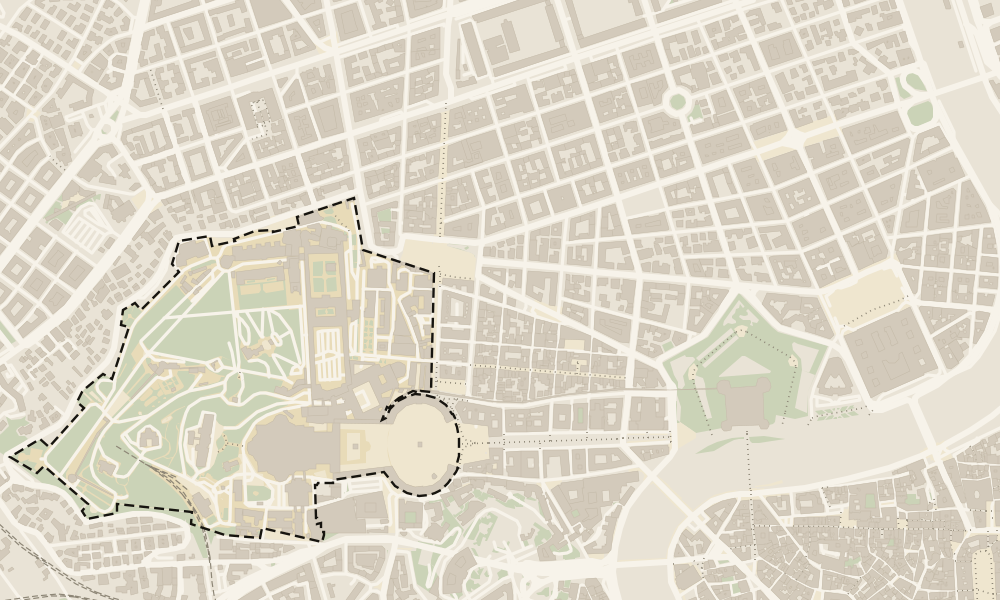 1Castel Sant'Angelo 2Borgo 3Sistine Chapel 4Prati 5Ponte Sant'Angelo 6Vatican Museums 7St Peter's Basilica 8St Peter's Square 9St Peter's Dome 10Vatican Necropolis 11Vatican Gardens 12Swiss Guard 13Seeing the Pope 14Apostolic Palace 15Papal audience 16Angelus 17Who painted it 18Where the Pope lives 19Facts 20Vatican Grottoes 21Pietà 22Baldachin 23Ceiling 24Chair of St Peter 25Last Judgement 26Raphael Rooms 27Architecture and architects 28Gallery of Maps 29Holy Door 30Bramante Staircase 31Facade and balcony 32Mass at St Peter's 33Pio Clementino Museum 34Vatican Pinacoteca 35Gallery of Tapestries 36Gallery of the Candelabra 37Egyptian and Etruscan Museums 38Obelisk 39Bernini's colonnade 40Chiaramonti and Braccio Nuovo 41Christmas 42Anima Mundi Museum 43Easter 44Carriage Pavilion 45Courtyard of the Pine Cone 46Train station 47Borgia Apartment 48Modern art collection 49Pharmacy, shop and petrol
 Map data © OpenStreetMap contributors (ODbL)
- 1Castel Sant'AngeloHadrian's mausoleum, a short walk from the Vatican
- 2BorgoRione XIV, between the colonnade and the Tiber
- 3Sistine ChapelInside the Vatican Museums
- 4PratiRione XXII, the last one Rome created
- 5Ponte Sant'AngeloTen marble angels, and two missing
- 6Vatican MuseumsSeven kilometres of galleries in Vatican City
- 7St Peter's BasilicaConsecrated in 1626, 400 years old this year
- 8St Peter's SquareFree, open to all, and technically another country
- 9St Peter's DomeMichelangelo's dome, 136.57 metres to the cross
- 10Vatican NecropolisThe Scavi tour, by request and with a guide
- 11Vatican Gardens22 hectares behind the museums
- 12Swiss GuardWho guards the Pope, and why they are Swiss
- 13Seeing the PopePope Leo XIV, Wednesdays and Sundays
- 14Apostolic PalaceThe Sistine Chapel is inside, though it doesn't feel like it
- 15Papal audiencePope Leo XIV in St Peter's Square
- 16AngelusSt Peter's Square, Sundays at noon
- 17Who painted itMichelangelo wasn't alone, and he wasn't first
- 18Where the Pope livesApostolic Palace, Santa Marta and Castel Gandolfo
- 19FactsFrom mould on the Flood to visitors' sweat
- 20Vatican GrottoesUnder the basilica, free and without booking
- 21PietàNew protective glass since November 2024
- 22BaldachinBack on view, restored, since October 2024
- 23CeilingMichelangelo, 1508-1512
- 24Chair of St PeterTen years' work and a dove twenty metres up
- 25Last JudgementCleaned between February and March 2026
- 26Raphael RoomsVatican Museums, just before the Sistine
- 27Architecture and architectsTwenty pontificates for one church
- 28Gallery of MapsNumber 8 on the official museum map
- 29Holy DoorClosed by Leo XIV on 6 January 2026
- 30Bramante StaircaseTwo spiral staircases, one name
- 31Facade and balcony116 metres of travertine most people walk past
- 32Mass at St Peter'sNine Masses every weekday, all free
- 33Pio Clementino MuseumClassical sculpture since 1506
- 34Vatican PinacotecaOpened on 27 October 1932
- 35Gallery of TapestriesNumber 7 on the map, between Candelabra and Maps
- 36Gallery of the CandelabraNumber 6 on the map, just before the Tapestries
- 37Egyptian and Etruscan MuseumsNumber 1 on the map, by the Cortile della Pigna
- 38Obelisk330 tonnes of granite without a single hieroglyph
- 39Bernini's colonnade284 columns in four rows that turn into one
- 40Chiaramonti and Braccio NuovoNumbers 2 and 3 on the map, first floor
- 41ChristmasThe 2026 nativity and tree are already announced
- 42Anima Mundi MuseumNumber 21 on the map, in the basement
- 43EasterThe 2026 timetable and what we know of 2027
- 44Carriage PavilionNumber 22 on the map, opened in 1973
- 45Courtyard of the Pine ConePoint CP on the map, open to the sky
- 46Train stationDesigned by Giuseppe Momo, opened in 1933
- 47Borgia ApartmentSix rooms painted in eighteen months
- 48Modern art collectionVan Gogh and Matisse on the way to the Sistine
- 49Pharmacy, shop and petrolOpen to anyone with a paper prescription
0 of 8 Italy guides
Your next stamp
Frequently asked questions
What is there to do in Prati, Rome?
Piazza Cavour with its palm garden and the Palace of Justice, Via Cola di Rienzo for shopping, the Waldensian church, the Gothic Revival Sacro Cuore del Suffragio with its Museum of the Souls in Purgatory, and the Trionfale and Unità markets. Castel Sant'Angelo is right next door, although it belongs to Borgo.
Is Prati a good area to stay in Rome?
I think it's the best if you're seeing the Vatican and the rest of Rome too. You've got line A at Ottaviano and Lepanto, the Vatican Museums entrance a short walk away and a district with shops and restaurants for everyday life. If your trip is only the Vatican, Borgo puts you closer to the square.
Is Prati, Rome, safe?
I haven't found any official source on safety in Prati specifically, so I won't tell you either way. What the UK Foreign Office and Spain's foreign ministry do document is pickpocketing in Rome's tourist areas and on public transport, and that applies here too.
Where should I eat in Prati?
Rome's tourist board describes Prati as a district of traditional and chef-led restaurants, wine bars and delis, with aperitivo a habit among young Romans. I won't recommend a place without a source, but I'd look in the inner streets and make the most of Mercato Trionfale in the morning.
How do I get to Prati?
By metro, on line A to Ottaviano or Lepanto. Buses 32, 81 and 982 stop at Piazza del Risorgimento. Tram 19 isn't serving Prati at the moment, and Roma Capitale expects it back in early 2027.
Where is Prati in Rome?
On the right bank of the Tiber, north of the Vatican and Borgo. It runs from Via Leone IV and Piazza del Risorgimento down to the river, with Piazza Cavour at its centre and the riverside between Ponte Matteotti and the castle.
By
Tourism graduate with a master’s in Tourism Management and Planning from the University of Málaga, who has travelled across Europe. He writes every guide from official sources and his own judgement.
Published on . Facts checked on .
Sources
Photos: Rabax63 (CC BY-SA 4.0), via Wikimedia Commons.