A ranking with my own scores
The best things to do in Montenegro, ranked
The best things to do in Montenegro are the Bay of Kotor with Perast, Durmitor National Park, the Tara Canyon, Lake Skadar and Ostrog Monastery. Kotor and Durmitor are World Heritage sites, national park tickets cost €3 to €5 a day, and a week is enough to see both the coast and the mountains without rushing.
In 30 seconds
Full read: 3 min
- The top sights are the Bay of Kotor with Perast and Durmitor National Park.
- The Tara Canyon, Lake Skadar and Ostrog Monastery round off a first trip.
- National park tickets cost €3 to €5 per person per day.
- A week lets you combine coast and mountains comfortably.
Stick to the coast and you only see half the country. I'd book at least two nights in Žabljak for Durmitor and the Tara, and take in Lake Skadar and Ostrog on the way, since they sit between the sea and the mountains.

Before you go
What I would keep in mind
-
01 Most beautiful
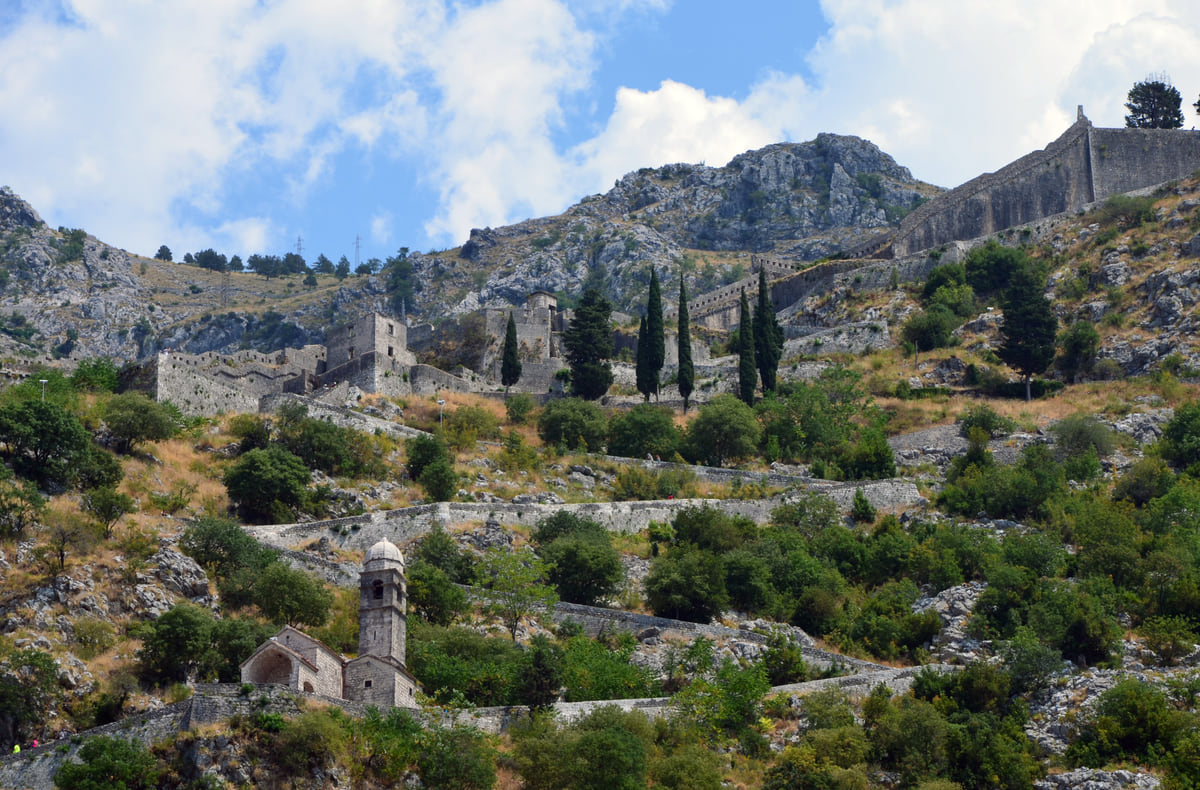
The Bay of Kotor from above
UNESCO describes an inner bay ringed by mountains of almost 1,500 m. Kotor's walls climb 4.5 km in zigzags to St John's Fortress, 300 m above the sea.
the Bay of Kotor -
02 To save money
National parks cost €3 to €5
The National Parks of Montenegro charge €5 a day for Durmitor and Lake Skadar, €4 for Biogradska Gora and €3 for Lovćen and Prokletije. Some of the best-value tickets in the country.
Montenegro's national parks -
03 Worth the splurge
Rafting the Tara
The National Tourism Organisation quotes around €70 for one day and from €90 for two, from April to October. Pricey by local standards, but I'd say it's worth it.
rafting on the Tara -
04 My tip
Get to Ostrog early
The monastery sits at around 900 m, built into the rock above the Zeta valley, and is one of the most visited Orthodox pilgrimage sites. I'd go first thing, before the coach groups.
Ostrog Monastery -
05 Most beautiful
My most beautiful places
For me, the bay from the walls, Black Lake and the river bend at Pavlova strana top the list, with viewpoints marked by National Parks.
the most beautiful places in Montenegro
What I would book
My ranking, scored
The 12 places most worth your time in Montenegro
My own score out of 10. It weighs how unique the place is in Europe, how hard it is to reach and if it can still be enjoyed in high season. It's opinion, backed by figures from UNESCO, the National Parks and the National Tourism Organisation.
0 of 12 seen
-
Bay of Kotor and Kotor Old Town
World Heritage since 1979, with the fortified city added in 2017. The old town, St Tryphon's Cathedral and the climb to St John's are reason enough to come.
9.6 out of 10
-
Durmitor National Park
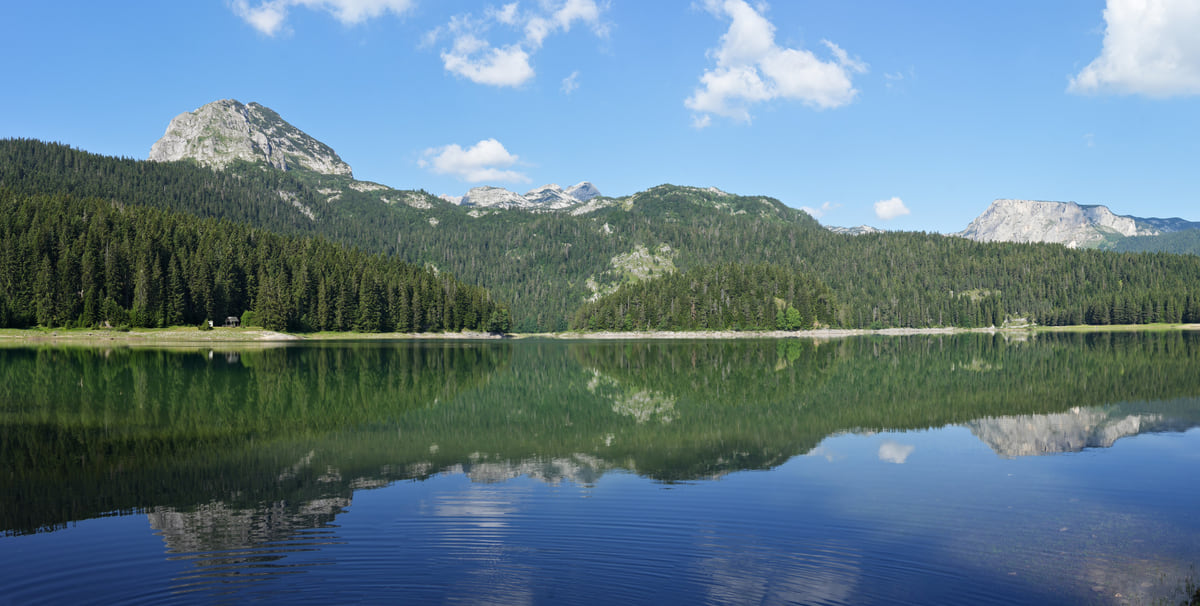
Around fifty peaks over 2,000 m according to UNESCO, the Black Lake at 1,418 m and 25 marked trails. Entry is €5.
9.4 out of 10
-
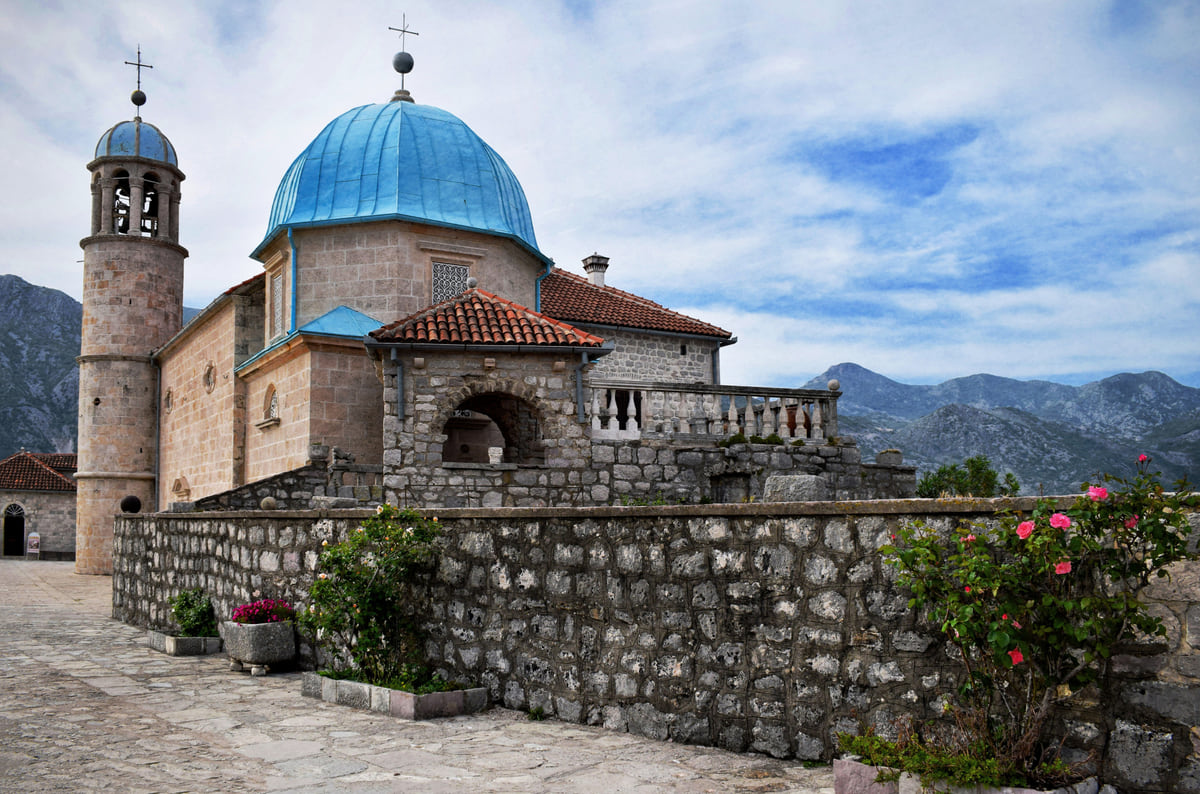
Perast and Our Lady of the Rocks
12 km from Kotor, with the 55 m bell tower of St Nicholas and two islets offshore, one with a church and museum, the other with a monastery.
9.2 out of 10
-
Tara Canyon and the Đurđevića Tara Bridge
UNESCO calls it Europe's deepest gorge. The five-arched, 365 m bridge was finished in 1940 and a zip line runs out from it.
9.0 out of 10
-
Lake Skadar
A national park since 1983, with around 280 bird species and boats from Virpazar, Vranjina and Rijeka Crnojevića. Entry is €5 a day.
8.8 out of 10
-
Ostrog Monastery
Cave churches with 17th-century frescoes set into a cliff at around 900 m. Striking even if you aren't religious.
8.7 out of 10
-
Cetinje
The old royal capital, with the monastery, King Nikola's palace and the Biljarda, home to a relief map of Montenegro at 1:10,000.
8.4 out of 10
-
Biogradska Gora National Park
A 1,600-hectare primeval forest protected since 1878, with trees up to 500 years old around Lake Biograd. Entry is €4.
8.2 out of 10
-
Sveti Stefan from the outside
The hotel islet joined to the shore by a sandbar with two beaches, of 700 and 400 m. Best enjoyed from the viewpoint and the sand.
8.1 out of 10
-
Budva Old Town
More than 2,500 years old according to the National Tourism Organisation, with six churches packed in and the Citadel. Very busy in August.
7.9 out of 10
-
Stari Bar
Ruins of over 260 buildings 5 km from the sea, with an aqueduct, Turkish baths and a clock tower. Far fewer people than Kotor.
7.8 out of 10
-
Njegoš Mausoleum on Lovćen
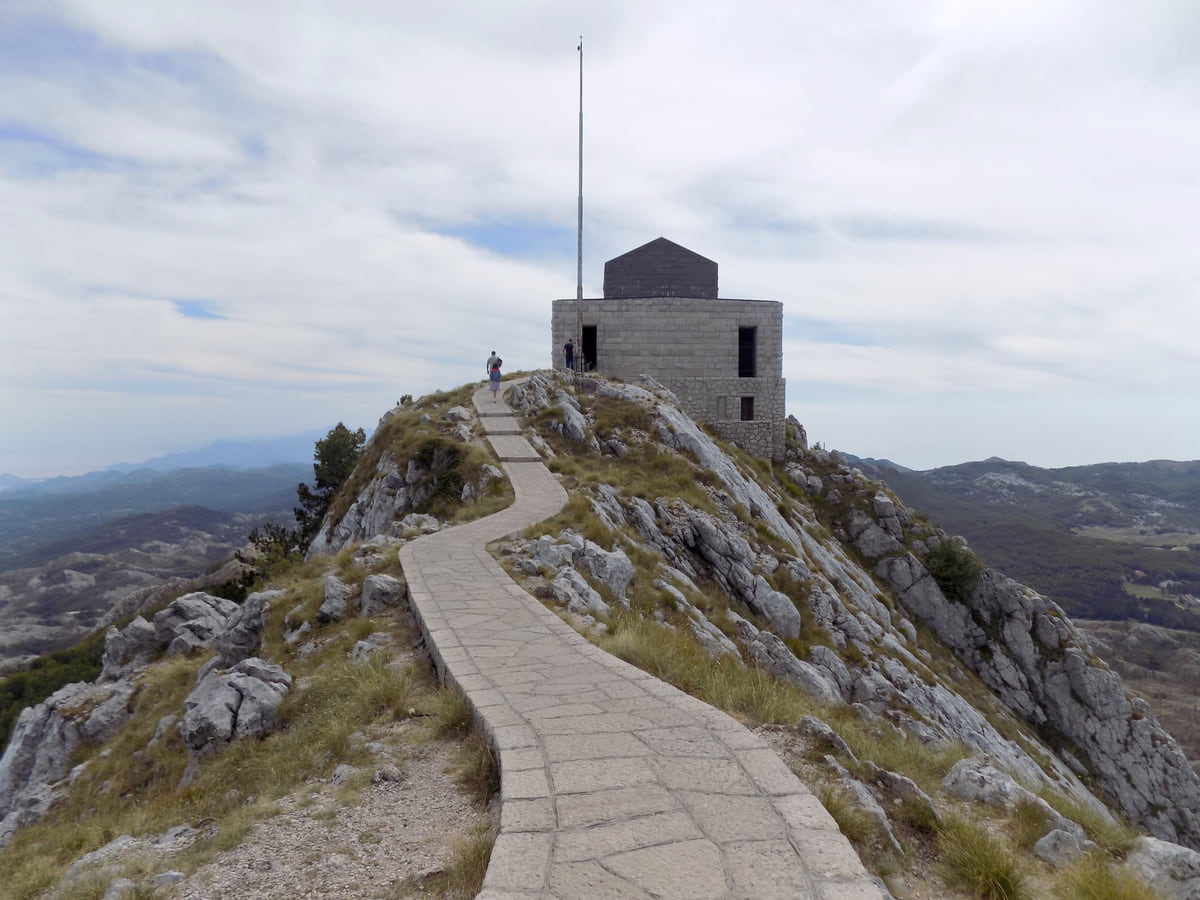
On the summit of Jezerski vrh, where on clear days, the National Parks say, the view reaches Durmitor, the Komovi and Albania.
7.7 out of 10
Most people arrive in Montenegro with one postcard in mind, the Bay of Kotor. It deserves its fame, but it’s only part of the picture. Within 13,883 km² there are four UNESCO listings and five national parks. What I’d tell you to see depends mostly on how far you’re willing to stray from the coast. The ranking above has my scores and reasons; here’s the thinking behind it.
The Bay of Kotor, where everyone starts
There’s no debate about first place. The Kotor region joined the UNESCO list in 1979, and its entry describes two linked bays under mountains close to 1,500 m high, with Kotor and Perast singled out as small towns of unusual authenticity. In 2017 it added the fortified city of Kotor to the Venetian defences listing, so the bay effectively has two entries.
My advice is to climb the walls early. According to the National Tourism Organisation, there are 4.5 km of wall zigzagging up to St John’s Fortress, 300 m above the sea, with around 1,400 steps. From the top the whole bay makes sense. Then head to Perast, 12 km away, to see the two islets from the waterfront. The villages, boat trips and viewpoints around the water are all in the Bay of Kotor.
The north that most visitors skip
Second place goes to Durmitor, which is exactly what a lot of itineraries leave out. UNESCO listed it in 1980 and extended it in 2005, and its entry counts some fifty summits over 2,000 m, glacial lakes that locals call the eyes of the mountain, and the Tara Canyon, which it ranks as the deepest gorge on the continent. The National Parks charge €5 a day and maintain 25 marked trails, about 150 km in all, starting with the loop round the Black Lake at 1,418 m.
The Tara deserves its own morning. The National Tourism Organisation gives the canyon a maximum depth of 1,333 m and dates the Đurđevića Tara Bridge, five arches and 365 m long, to 1940. How to fit the two together is in Durmitor National Park.
Once your dates are set, check which hotels are still free in Kotor before prices climb.
Lake, monastery and the old royal capital
Between the coast and the mountains sits the centre, usually treated as somewhere to drive through, which it doesn’t deserve. Lake Skadar, protected as a national park since 1983, and the National Tourism Organisation puts it at 370 km² in summer, with around 280 bird species. I’d see it by boat from Virpazar or Rijeka Crnojevića, the two harbours I find most pleasant, rather than just looking at it from the road on the way to somewhere else.
Ostrog Monastery stands at about 900 m, set into a rock face above the Zeta valley, with cave churches and 17th-century frescoes. And Cetinje, the old royal capital, has the monastery, King Nikola’s palace and the Biljarda. That loop is covered in Cetinje.
The islands, from Perast to Ada Bojana
Montenegro has no big islands, but several small ones you can visit. Off Perast are Our Lady of the Rocks, with its Catholic church and museum, and St George, with its monastery. Off Budva is Sveti Nikola, reached by boat for €3 or €4 from Slovenska beach or the old town, according to the National Tourism Organisation. Mamula, at the mouth of the bay, is now a hotel. At the southern tip, Ada Bojana, an island where the Bojana meets the sea, has a naturist beach and fish restaurants. Lake Skadar has fortified islets too, such as Lesendro and Grmožur.
If you would rather have a local show you round, book a guided tour in Kotor and choose by the reviews.
What I’d save for a second trip
If time is short, Budva and Sveti Stefan drop down my list. Not because they aren’t pretty, but because the National Tourism Organisation counts around 100,000 people a day on the Budva Riviera’s beaches in high summer, and Sveti Stefan is something you look at from outside, from the viewpoint and its two beaches. Stari Bar, on the other hand, is a pleasant surprise, with more than 260 ruined buildings, an aqueduct and Turkish baths 5 km inland, and a fraction of the crowds.
To turn this ranking into a day-by-day plan, start with the one-week Montenegro itinerary, which spreads all of this across coast, centre and north without too many hours behind the wheel.
Once your dates are set, check which hotels are still free in Kotor before prices climb.
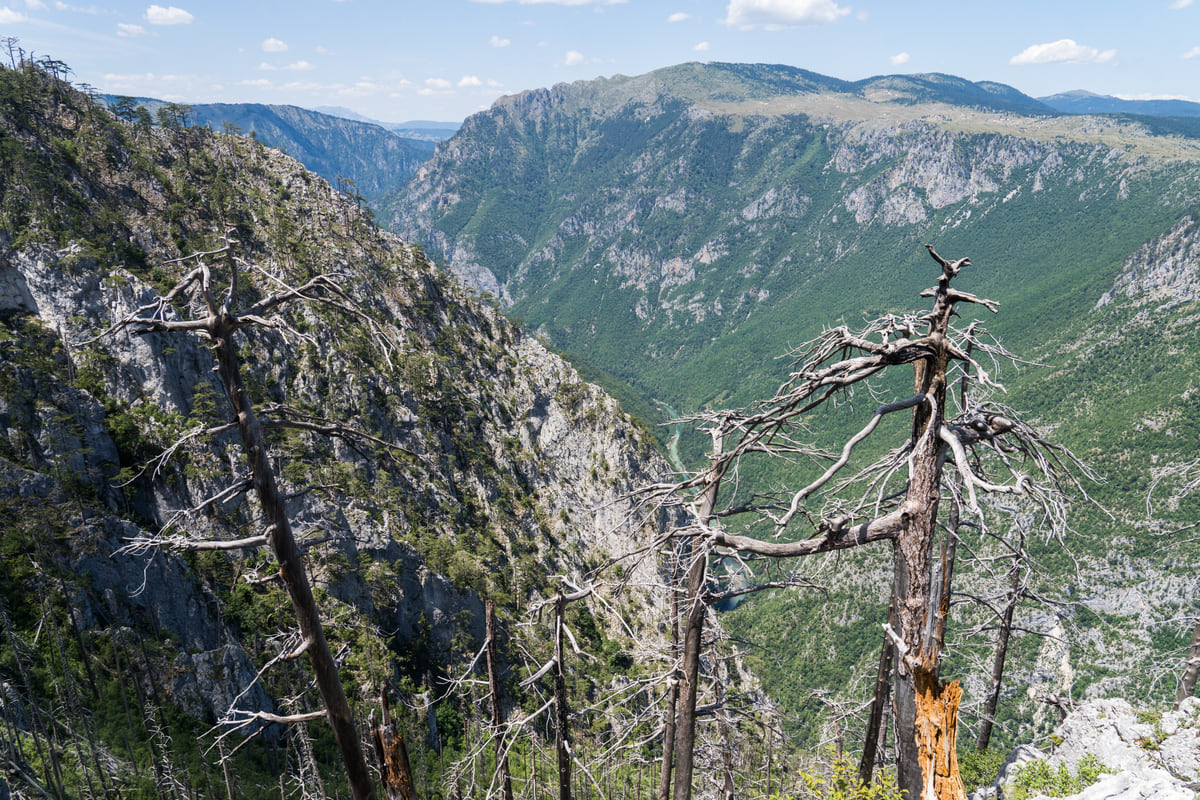
The Tara River canyon from a lookout, with forested walls dropping to the valley floor and dead trees in the foreground
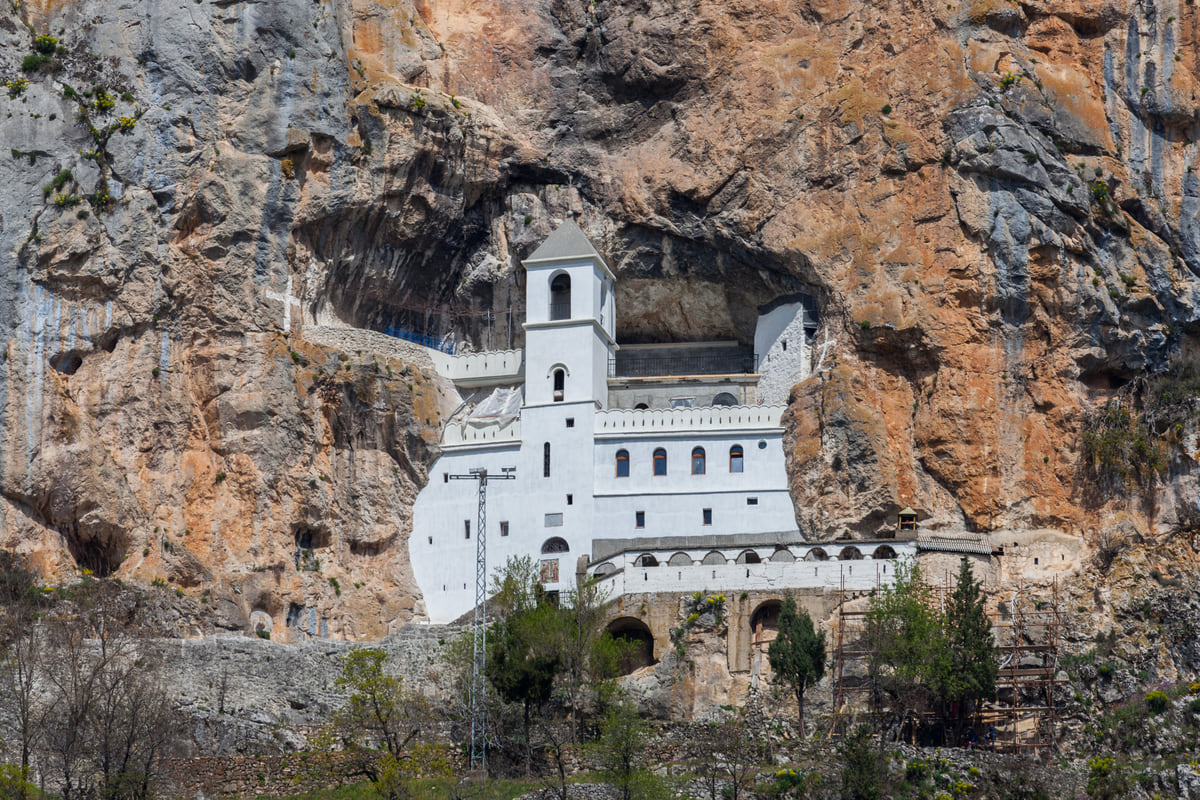
Ostrog Monastery, painted white, built into the reddish rock face of the mountain above the Zeta valley
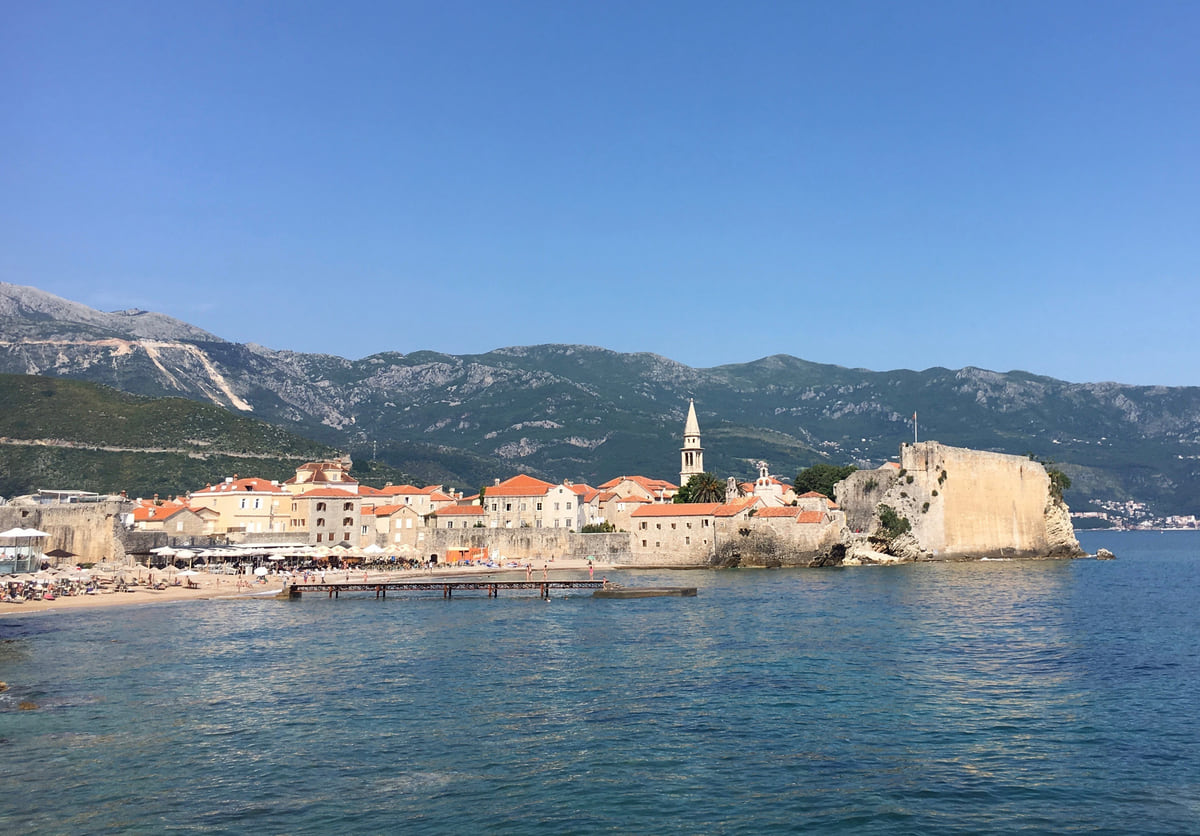
Budva's walled old town and citadel above the sea, with a bell tower rising from the rooftops and mountains in the distance
Test yourself
True or false?
0/3 Pick before you peek.
-
Entry to Durmitor National Park costs €5 per person per day.
See the answer
True. That's the National Parks of Montenegro rate, including the visitor centre and the trails.
-
Ostrog Monastery is on the coast near Budva.
See the answer
False. It's inland, at around 900 m above the Zeta valley, in the centre of the country.
-
The Đurđevića Tara Bridge was completed in 1940.
See the answer
True. The National Tourism Organisation dates it to 1940, with five arches and a length of 365 m.
- UNESCO listings in Montenegro
- 4
- National parks
- 5
- Altitude of Durmitor's Black Lake
- 1,418 m
- Length of the Đurđevića Tara Bridge
- 365 m
What to see
What to see in Things to do
0 of 278 Montenegro guides
Your next stamp
- Most beautiful places
- Kayaking
- One-week itinerary
- Where to stay
- Road trip
- Prettiest villages
- Kotor
- Hotels
- Aman Sveti Stefan
- Budva Old Town
- Haj-Nehaj
- Lučice Beach
- Montenegro's coast
- Peaks of the Balkans
- Porto Montenegro
- Sea Dance Festival
- Splendid Conference & Spa Resort
- Stari Bar
- Ulcinj Old Town
- Bay of Kotor
- Budva Riviera
- Heroj submarine
- Iberostar Bellevue
- Independence Day
- Old olive tree of Mirovica
- Tivat
- Velika plaža
- Ada Bojana
- Beaches in Budva
- Eurostars Queen of Montenegro
- Herceg Novi
- Kotor Old Town
- Mount Rumija
- Igalo
- Kotor city walls
- Mogren Beach
- Montenegro Beach Resort
- Svač
- Vrmac
- Hiking
- Jaz Beach
- Kanli kula
- Luštica peninsula
- St Tryphon Cathedral
- Ulcinj salt pans
- Forte Mare
- Gornja Lastva
- Maritime Museum, Kotor
- Slovenska Beach
- Drobni Pijesak Beach
- Kotor viewpoints
- Mamula
- Žanjic beach
- Kotor cruise port
- Orjen
- Plavi horizonti beach
- Sveti Nikola Island
- Blue Cave
- Restaurants in Budva
- Restaurants in Kotor
- Canyoning
- Perast
- Sutomore
- Sveti Stefan
- Čanj
- Luxury hotels
- Our Lady of the Rocks
- Pržno
- Activities
- All-inclusive hotels
- Bar Riviera
- Bečići
- Hotel Palma
- St George island
- Dobrota
- Hladna uvala
- Petrovac
- Crvena stijena
- Prčanj
- Cycling
- Risan
- UNESCO sites
- Heritage Grand Perast
- Map
- Hyatt Regency Kotor Bay
- Where is it?
- Regions
- Cities
- Beaches in Bar
- Budva
- Central Montenegro
- Hotels in Budva
- Hotels in Kotor
- Iberostar Waves Herceg Novi
- Kitesurfing
- The name
- Beaches in Ulcinj
- Flag
- Hotels in Perast
- Palmon Bay Hotel & Spa
- Podgorica
- Cathedral of the Resurrection
- One&Only Portonovi
- Population
- Sandy beaches
- Azul Beach Resort Montenegro
- Naturist beaches
- Size
- Stara Varoš
- Doclea
- Language
- Mimosa Festival
- Medun
- Religion
- Zipline
- Currency
- Museums in Podgorica
- Dajbabe Monastery
- EU membership
- History
- Restaurants in Podgorica
- Hotels in Podgorica
- Public holidays
- Avala Resort & Villas
- Bar
- Beaches in Kotor
- Birdwatching
- Hotels in Ulcinj
- Kotor carnival
- Time zone
- Tivat beaches
- Tuzi
- Boka Night
- Dukley Hotel & Resort
- Facts
- Hotels in Tivat
- Zeta
- Caves
- Herceg Novi beaches
- National parks
- Šipčanik
- Hotels in Herceg Novi
- Monasteries
- Fortresses
- Fly fishing
- Museums
- Canyons and waterfalls
- Lakes
- Mountains
- Montenegro and Croatia
- Beaches
- Boat trips
- Cetinje
- Montenegro and Albania
- Nightlife
- Ulcinj
- Weather
- Best time to visit
- Cetinje Monastery
- Montenegro and the Balkans
- How to get there
- In summer
- King Nikola's Palace
- Sailing
- Biljarda
- Flights
- In winter
- Airports
- Museums in Cetinje
- New Year's Eve
- Lovćen
- Paragliding
- Tivat Airport
- Njegoš Mausoleum
- Podgorica Airport
- Dubrovnik to Kotor
- Kotor serpentine
- Belgrade to Montenegro
- Njeguši
- Ferry to Italy
- Njeguši prosciutto
- Border crossings
- In January
- Lipa Cave
- In February
- Kamenari-Lepetane ferry
- Pavlova strana
- Getting around
- In March
- Rijeka Crnojevića
- In April
- Trains
- Buses
- In May
- Car hire
- In June
- Driving
- In July
- In August
- Taxis
- Distances
- In September
- In October
- Food
- In November
- Lake Skadar
- Scenic drives
- In December
- Kotor cable car
- Virpazar
- Where to eat
- Budva to Kotor
- Godinje
- Wine
- Podgorica to Kotor
- Vranjina
- Besac fortress
- Prices and budget
- On a budget
- Žabljak Crnojevića
- Danilovgrad
- Entry requirements
- Ostrog Monastery
- Tourist registration
- Customs
- Nikšić
- Crvena Stijena cave
- Safety
- Events
- Healthcare
- Northern Montenegro
- Mobile and roaming
- Žabljak
- Durmitor
- Plugs
- Black Lake
- With kids
- Bobotov Kuk
- Holidays
- Day trips
- Stećci tombstones
- Hotels in Žabljak
- Three-day itinerary
- Five-day itinerary
- Skiing in Montenegro
- Skiing in Žabljak
- Šavnik
- Ten-day itinerary
- Nevidio Canyon
- Tara Canyon
- Tara rafting
- Đurđevića Tara Bridge
- Plužine
- Lake Piva
- Piva Monastery
- Mojkovac
- Brskovo
- Pljevlja
- Husein Pasha Mosque
- Kolašin
- Hotels in Kolašin
- Skiing in Kolašin
- Biogradska Gora National Park
- Komovi
- Morača Monastery
- Morača Canyon
- Bijelo Polje
- Đalovića Cave
- Berane
- Andrijevica
- Petnjica
- Rožaje
- Plav
- Lake Plav
- Gusinje
- Vusanje
- Prokletije National Park
Frequently asked questions
What are the best places to visit in Montenegro?
For me, the Bay of Kotor with Perast and Durmitor National Park. Both are World Heritage sites, listed in 1979 and 1980, and between them they sum up the country, a sea among mountains and proper high mountains.
Is Montenegro worth visiting?
Yes, especially if you leave the coast. A country of 13,883 km² has four UNESCO listings and five national parks, with entry tickets of €3 to €5.
What are the main attractions in Montenegro?
Kotor's old town and walls, Perast and Our Lady of the Rocks, Durmitor and the Black Lake, the Tara Canyon and its bridge, Lake Skadar, Ostrog Monastery and Cetinje.
What is there to see in Montenegro apart from Kotor?
Durmitor and the Tara in the north, Lake Skadar and Ostrog in the centre, Cetinje and Lovćen above Kotor, and Stari Bar and Ulcinj at the southern end of the coast.
How many days do you need to see Montenegro?
A week is the minimum I'd give it to combine coast and mountains without living in the car. With ten days you can add Biogradska Gora and Prokletije.
Which islands can you visit in Montenegro?
Our Lady of the Rocks and St George off Perast, Sveti Nikola off Budva, reached by boat for €3 or €4 according to the National Tourism Organisation, and Ada Bojana, a river island near Ulcinj.
By
Tourism graduate with a master’s in Tourism Management and Planning from the University of Málaga, who has travelled across Europe. He writes every guide from official sources and his own judgement.
Published on . Facts checked on .
Sources
Some links in this guide are affiliate links: if you book through them, the site earns a commission at no extra cost to you. Affiliate disclosure
Photos: Jocelyn Erskine-Kellie from London, UK (CC BY-SA 2.0); Alexkom000 (CC BY 4.0); Diego Delso (CC BY-SA 3.0); Dirgela (CC BY-SA 4.0), via Wikimedia Commons.