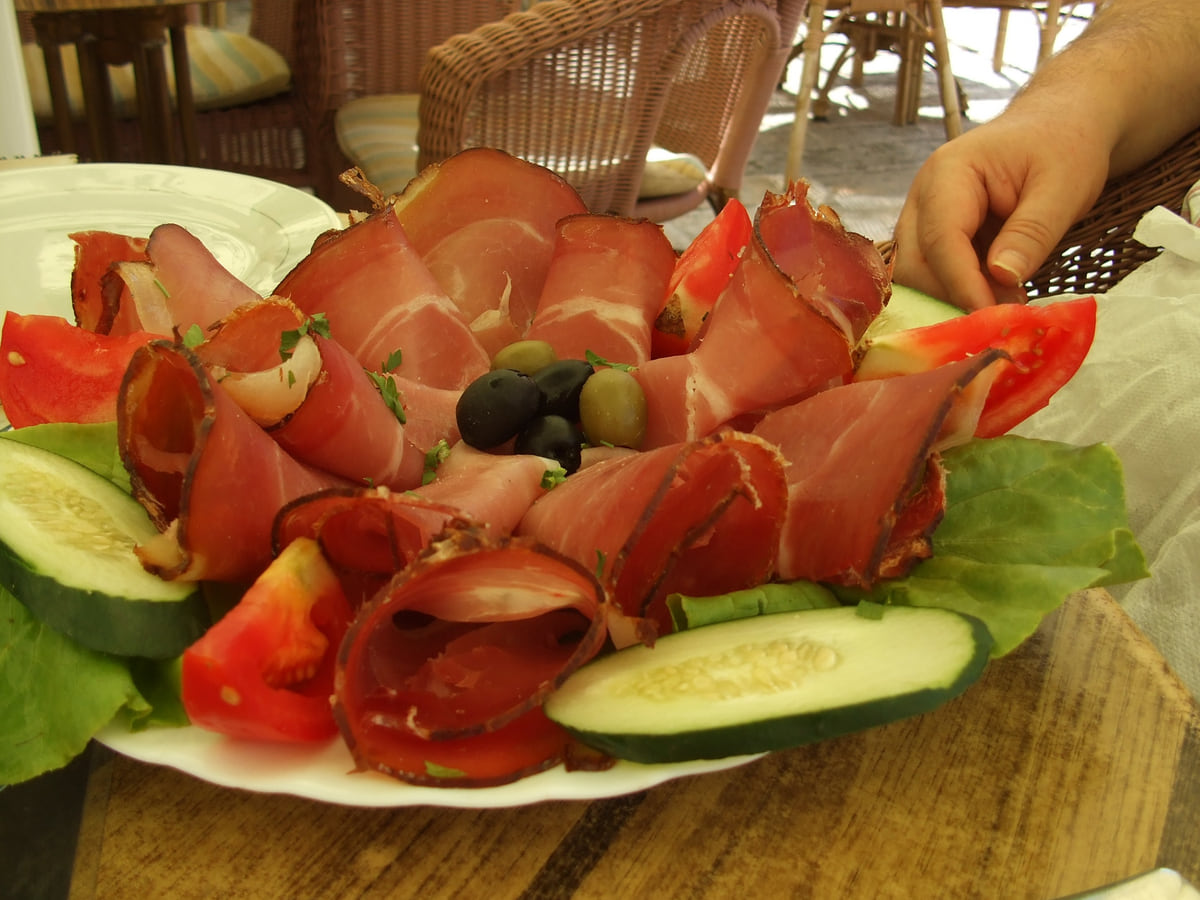
Traditional food of Montenegro
Njeguši pršut, the ham that tastes of sea air and mountains
Njeguški pršut is the cured, smoked ham of Njeguši, on a Lovćen plateau between Kotor and Cetinje. According to the National Tourism Organisation, it's smoked only over beech wood and cured for six months, and owes its flavour to a climate where sea winds meet mountain air. It's eaten with the village's own cheese.
In 30 seconds
Full read: 2 min
- Njeguški pršut is the cured, smoked ham of Njeguši on Mount Lovćen.
- It's smoked only over beech wood and cured for six months.
- It's eaten with the village's cheese, once sold as far as Venice and Malta.
- The best place to try it is Njeguši itself.
I'd order it in Njeguši rather than in a coastal restaurant, on a board with cheese and bread, and compare it in my head with Parma ham. It isn't the same, and that's the point. It's smokier, and you can taste the beech.

Before you go
What I would keep in mind
-
01 Most beautiful
Beech smoke, sea air, mountain air
The National Tourism Organisation credits the flavour to Njeguši's climate, where winds off the sea meet mountain air, and to smoking over beech alone.
-
02 Worth the splurge
A board in the village itself
Njeguši has stone houses with konobas along the Kotor to Cetinje road. Stopping there for pršut and cheese is the natural break on a Lovćen trip.
Njeguši -
03 My tip
It turns up at wine tastings too
The Šipčanik cellar near Podgorica puts home-cured pršut and Njeguši cheese on the bruschetta for one of its tastings, according to Plantaže's website.
Šipčanik wine cellar
If you’ve had Parma ham or Spanish jamón, Njeguši pršut will feel familiar and unfamiliar at once. Familiar because it’s a cured ham sliced thin and eaten with bread and cheese; unfamiliar because it’s smoked, and beech smoke changes the flavour completely. For me it’s one of those foods you should try where it’s made, and that means a stony plateau high above the Bay of Kotor.
How it’s cured and smoked
The National Tourism Organisation puts it simply. Njeguški pršut is smoked exclusively over beech wood and the meat cures for six months before it reaches your plate. The secret, it says, is Njeguši’s climate, where winds rising from the sea meet the mountain air and give it a distinctive aroma. The same source tells a legend about a king so fond of the local pršut that the Montenegrin phrase for eating like a king is said to come from it.
The Cetinje tourist board adds that pršut is still the most important product of Njeguši, and on its national cuisine page calls the ham and cheese of Lovćen an unforgettable pairing.
The cheese and the kastradina
Pršut never comes alone. Njeguši cheese has as much history behind it. The Cetinje tourist board says it was sold in Kotor, along the coast, in Dalmatia, Trieste, Venice, Marseille and even Malta, and the National Tourism Organisation lists smoked Njeguši cheese among those on its food routes, alongside aged Pljevlja cheese and Kolašin’s layered lisnati. The third piece is kastradina, dried mutton, which the local source rates alongside the other two.
On its Cetinje page the National Tourism Organisation sketches the whole local table, with pršut made to traditional recipes, cow’s milk cheese left to dry in the open air for two months before it’s eaten, forest honey, wine and brandy. It also suggests booking a visit to a local household to watch a traditional Montenegrin meal being cooked from start to finish, and nothing would teach you more about where this ham comes from.
To sleep close to everything, search places to stay in Cetinje on Expedia and filter by area before price.
Where to try it
The best place is the village itself, at the stone houses with konobas along the Kotor to Cetinje road, with a board of pršut, cheese and bread. You get there up the Kotor serpentine or from Cetinje on the Lovćen road.
If you don’t pass through Njeguši, you’ll find it on restaurant platters across the country, and the Šipčanik wine cellar near Podgorica serves home-cured pršut with Njeguši cheese on the bruschetta in one of its tasting programmes.
What I can’t promise
Neither the National Tourism Organisation nor the Cetinje tourist board says, in what I’ve read, whether the pršut or the cheese holds a protected designation, so I’m not claiming it. I’m not giving prices either, as there are no official ones. For everything else on the Montenegrin table, see my guide to Montenegro food.
If you are short on time, see the best tours in Cetinje and pick one that fits your day.
To sleep close to everything, search places to stay in Cetinje on Booking.com and filter by area before price.
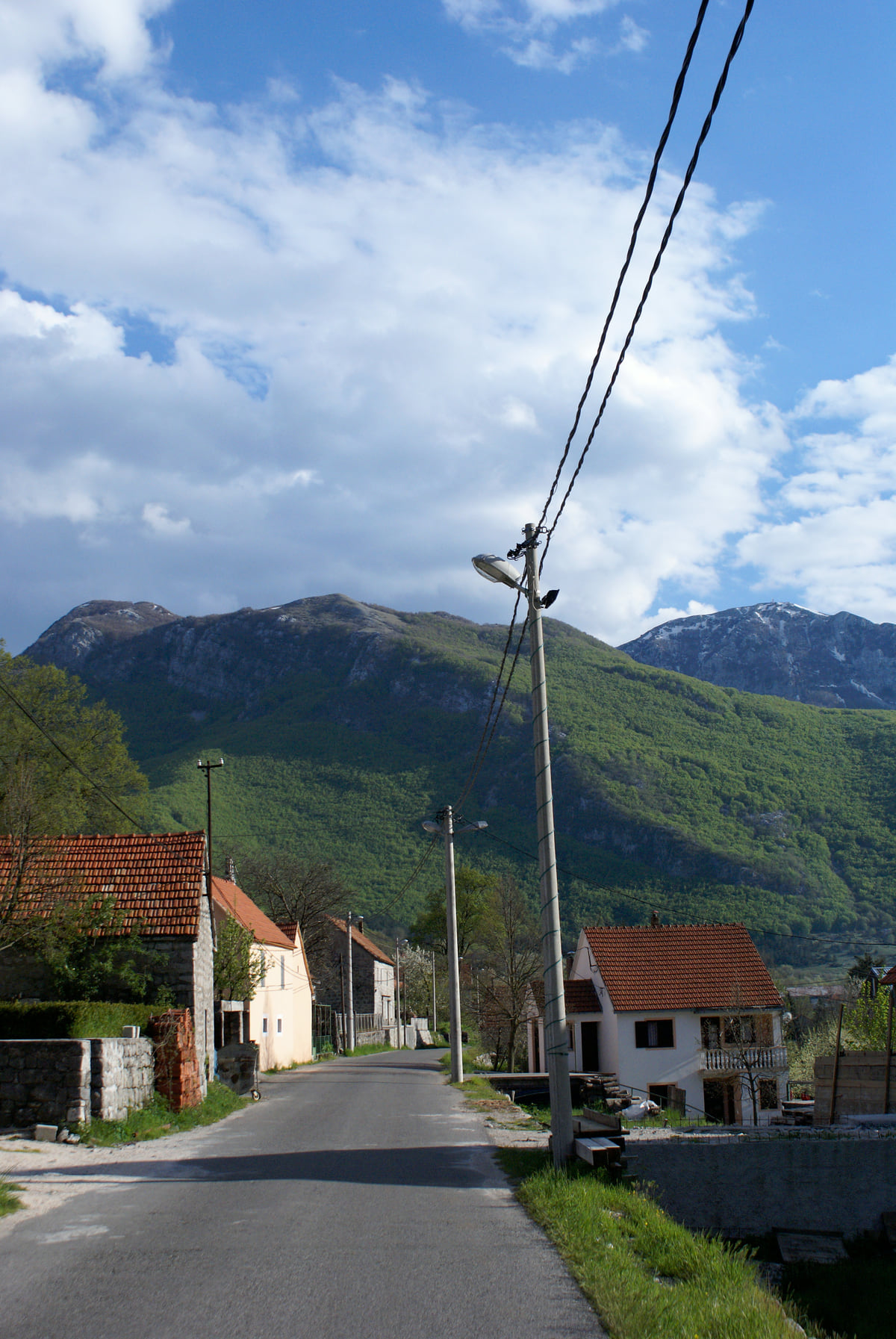
The road through the village of Njeguši between stone houses with red roofs, with the green slopes of Mount Lovćen behind
What Njeguši produces
| Product | What the source says | Source |
|---|---|---|
| Njeguški pršut | Smoked only over beech, cured for six months | National Tourism Organisation |
| Njeguši cheese | Once sold in Kotor, Dalmatia, Trieste, Venice, Marseille and Malta | Cetinje Tourist Organisation |
| Smoked Njeguši cheese | Among the cheeses on the food routes | National Tourism Organisation |
| Kastradina | Dried mutton, as famous as the cheese | Cetinje Tourist Organisation |
Checked on 10-10-2026. I haven't seen an official source stating that the pršut or the cheese has protected status, so I don't claim it.
Test yourself
True or false?
0/3 Pick before you peek.
-
Njeguši pršut is smoked over beech wood.
See the answer
True. Over beech alone, according to the National Tourism Organisation.
-
Njeguši pršut is cured for just a month.
See the answer
False. The National Tourism Organisation talks of six months' curing.
-
Kastradina is dried mutton.
See the answer
True. The Cetinje tourist board lists it with the cheese and pršut among Njeguši's products.
0 of 278 Montenegro guides
Your next stamp
- Njeguši
- Food
- Where to eat
- Prettiest villages
- Nikšić
- Lovćen
- Kolašin
- Perast
- Aman Sveti Stefan
- Budva Old Town
- Haj-Nehaj
- Kotor
- Lučice Beach
- Montenegro's coast
- Peaks of the Balkans
- Porto Montenegro
- Sea Dance Festival
- Splendid Conference & Spa Resort
- Stari Bar
- Ulcinj Old Town
- Bay of Kotor
- Budva Riviera
- Heroj submarine
- Iberostar Bellevue
- Independence Day
- Old olive tree of Mirovica
- Tivat
- Velika plaža
- Ada Bojana
- Beaches in Budva
- Eurostars Queen of Montenegro
- Herceg Novi
- Kotor Old Town
- Mount Rumija
- Igalo
- Kotor city walls
- Mogren Beach
- Montenegro Beach Resort
- Svač
- Vrmac
- Hiking
- Jaz Beach
- Kanli kula
- Luštica peninsula
- St Tryphon Cathedral
- Ulcinj salt pans
- Forte Mare
- Gornja Lastva
- Maritime Museum, Kotor
- Slovenska Beach
- Drobni Pijesak Beach
- Kotor viewpoints
- Mamula
- Žanjic beach
- Kotor cruise port
- Orjen
- Plavi horizonti beach
- Sveti Nikola Island
- Blue Cave
- Restaurants in Budva
- Restaurants in Kotor
- Canyoning
- Hotels
- Sutomore
- Sveti Stefan
- Čanj
- Luxury hotels
- Our Lady of the Rocks
- Pržno
- Things to do
- Activities
- All-inclusive hotels
- Bar Riviera
- Bečići
- Hotel Palma
- St George island
- Dobrota
- Hladna uvala
- Most beautiful places
- Petrovac
- Crvena stijena
- Prčanj
- Cycling
- Risan
- UNESCO sites
- Heritage Grand Perast
- Map
- Hyatt Regency Kotor Bay
- Where is it?
- Regions
- Cities
- Beaches in Bar
- Budva
- Central Montenegro
- Hotels in Budva
- Hotels in Kotor
- Iberostar Waves Herceg Novi
- Kitesurfing
- The name
- Beaches in Ulcinj
- Flag
- Hotels in Perast
- Palmon Bay Hotel & Spa
- Podgorica
- Cathedral of the Resurrection
- One&Only Portonovi
- Population
- Sandy beaches
- Azul Beach Resort Montenegro
- Naturist beaches
- Size
- Stara Varoš
- Doclea
- Language
- Mimosa Festival
- Medun
- Religion
- Zipline
- Currency
- Museums in Podgorica
- Dajbabe Monastery
- EU membership
- History
- Restaurants in Podgorica
- Hotels in Podgorica
- Public holidays
- Avala Resort & Villas
- Bar
- Beaches in Kotor
- Birdwatching
- Hotels in Ulcinj
- Kotor carnival
- Time zone
- Tivat beaches
- Tuzi
- Boka Night
- Dukley Hotel & Resort
- Facts
- Hotels in Tivat
- Zeta
- Caves
- Herceg Novi beaches
- National parks
- Šipčanik
- Hotels in Herceg Novi
- Monasteries
- Fortresses
- Fly fishing
- Museums
- Canyons and waterfalls
- Lakes
- Mountains
- Montenegro and Croatia
- Beaches
- Boat trips
- Cetinje
- Montenegro and Albania
- Nightlife
- Ulcinj
- Weather
- Best time to visit
- Cetinje Monastery
- Kayaking
- Montenegro and the Balkans
- How to get there
- In summer
- King Nikola's Palace
- Sailing
- Biljarda
- Flights
- In winter
- Airports
- Museums in Cetinje
- New Year's Eve
- Paragliding
- Tivat Airport
- Njegoš Mausoleum
- Podgorica Airport
- Dubrovnik to Kotor
- Kotor serpentine
- Belgrade to Montenegro
- Ferry to Italy
- Border crossings
- In January
- Lipa Cave
- Where to stay
- In February
- Kamenari-Lepetane ferry
- Pavlova strana
- Getting around
- In March
- Rijeka Crnojevića
- In April
- Trains
- Buses
- In May
- Car hire
- In June
- Driving
- In July
- In August
- Taxis
- Distances
- In September
- In October
- Road trip
- In November
- Lake Skadar
- Scenic drives
- In December
- Kotor cable car
- Virpazar
- Budva to Kotor
- Godinje
- Wine
- Podgorica to Kotor
- Vranjina
- Besac fortress
- Prices and budget
- On a budget
- Žabljak Crnojevića
- Danilovgrad
- Entry requirements
- Ostrog Monastery
- Tourist registration
- Customs
- Crvena Stijena cave
- Safety
- Events
- Healthcare
- Northern Montenegro
- Mobile and roaming
- Žabljak
- Durmitor
- Plugs
- Black Lake
- With kids
- Bobotov Kuk
- Holidays
- Day trips
- Stećci tombstones
- Hotels in Žabljak
- Three-day itinerary
- Five-day itinerary
- Skiing in Montenegro
- One-week itinerary
- Skiing in Žabljak
- Šavnik
- Ten-day itinerary
- Nevidio Canyon
- Tara Canyon
- Tara rafting
- Đurđevića Tara Bridge
- Plužine
- Lake Piva
- Piva Monastery
- Mojkovac
- Brskovo
- Pljevlja
- Husein Pasha Mosque
- Hotels in Kolašin
- Skiing in Kolašin
- Biogradska Gora National Park
- Komovi
- Morača Monastery
- Morača Canyon
- Bijelo Polje
- Đalovića Cave
- Berane
- Andrijevica
- Petnjica
- Rožaje
- Plav
- Lake Plav
- Gusinje
- Vusanje
- Prokletije National Park
Frequently asked questions
What is Montenegrin prosciutto?
Njeguški pršut, the cured and smoked ham of Njeguši, a village on Mount Lovćen between Kotor and Cetinje. It's smoked only over beech wood and cured for six months, according to the National Tourism Organisation.
How is Njeguši pršut different from Parma ham?
Both are cured hams, but Njeguši pršut is smoked over beech, so it tastes noticeably smokier. The National Tourism Organisation gives a curing time of six months.
Where is the best place to try pršut in Montenegro?
In Njeguši itself, at the konobas in the stone houses along the Kotor to Cetinje road. It also appears on restaurant platters across the country and at wine tastings such as those at Šipčanik.
Does Njeguši pršut have protected status?
I haven't read an official source saying it has a protected designation, so I'm not claiming it. What the National Tourism Organisation and the Cetinje tourist board do describe is how it's made and its reputation.
What cheese goes with pršut?
Njeguši cheese, which the Cetinje tourist board says was once sold in Kotor, Dalmatia, Trieste, Venice, Marseille and even Malta. The National Tourism Organisation also mentions a smoked version.
By
Tourism graduate with a master’s in Tourism Management and Planning from the University of Málaga, who has travelled across Europe. He writes every guide from official sources and his own judgement.
Published on . Facts checked on .
Sources
Some links in this guide are affiliate links: if you book through them, the site earns a commission at no extra cost to you. Affiliate disclosure
Photos: Haydn Blackey from Cardiff, Wales (CC BY-SA 2.0); Mary Ro (Public domain), via Wikimedia Commons.