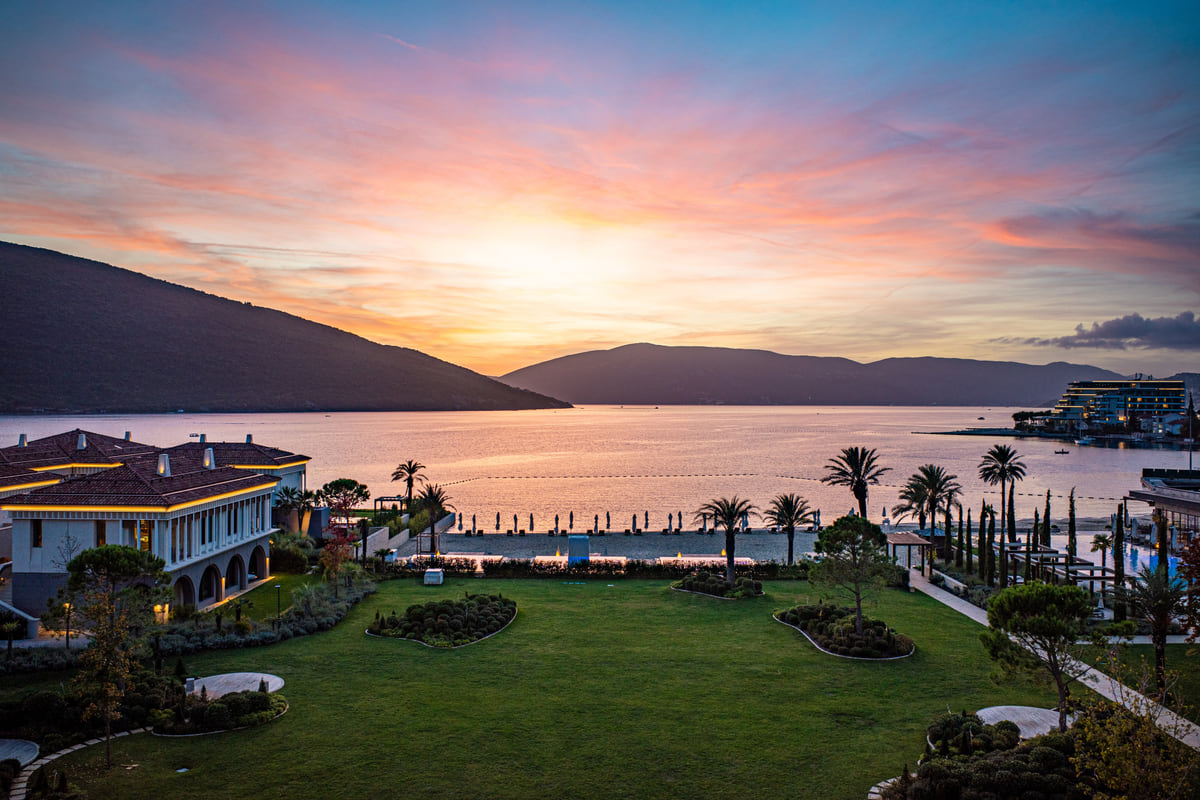
Herceg Novi, the town of steps at the mouth of the bay
Herceg Novi is the town guarding the entrance to the Bay of Kotor, at the foot of Mount Orjen and close to the Croatian border. Founded in 1382, it has a hillside old town with three fortresses (Kanli kula, Forte Mare and Španjola), a clock tower from 1667, Savina monastery and, next door, Igalo with its mud beach. The municipality had 30,824 residents in the 2023 census.
In 30 seconds
Full read: 3 min
Town at the mouth of the Bay of Kotor, founded in 1382, below Mount Orjen.
Hillside old town with three fortresses and a clock tower from 1667.
Summer boats to Žanjic and the Blue Cave from Škver harbour.
Igalo, with its mud beach, is the biggest settlement in the municipality.
Herceg Novi is the town on the bay I'd most happily base myself in for a week. It has the steepest old town, the longest seafront promenade and boats to Luštica's best coves, and it's calmer than Kotor. Spring or September would be my pick.
Sergio LeponeMy advice
Before you go
What I would keep in mind
01 Most beautiful
A town built of steps
The old town climbs from the sea in flights of steps between the clock tower, its squares and the forts. The tourist board markets it as the town of «100,001 steps».
In summer, boats leave Škver harbour for Mirište, Žanjic and the Blue Cave, and there's a year-round service to Rose, according to the official Luštica leaflet.
In February and March the town holds its Mimosa Festival, running since 1969, with parades, concerts and a fish-and-wine party that draws around 20,000 people.
On top of the €1-a-night tourist tax, organised tour groups pay €1 per person to visit the old town. Under-12s are exempt.
06 Worth the splurge
Luxury lives in Kumbor
On the Kumbor shore, inside the Portonovi resort, is One&Only Portonovi, the municipality's top hotel, with a Forbes Travel Guide Five-Star rating according to its website.
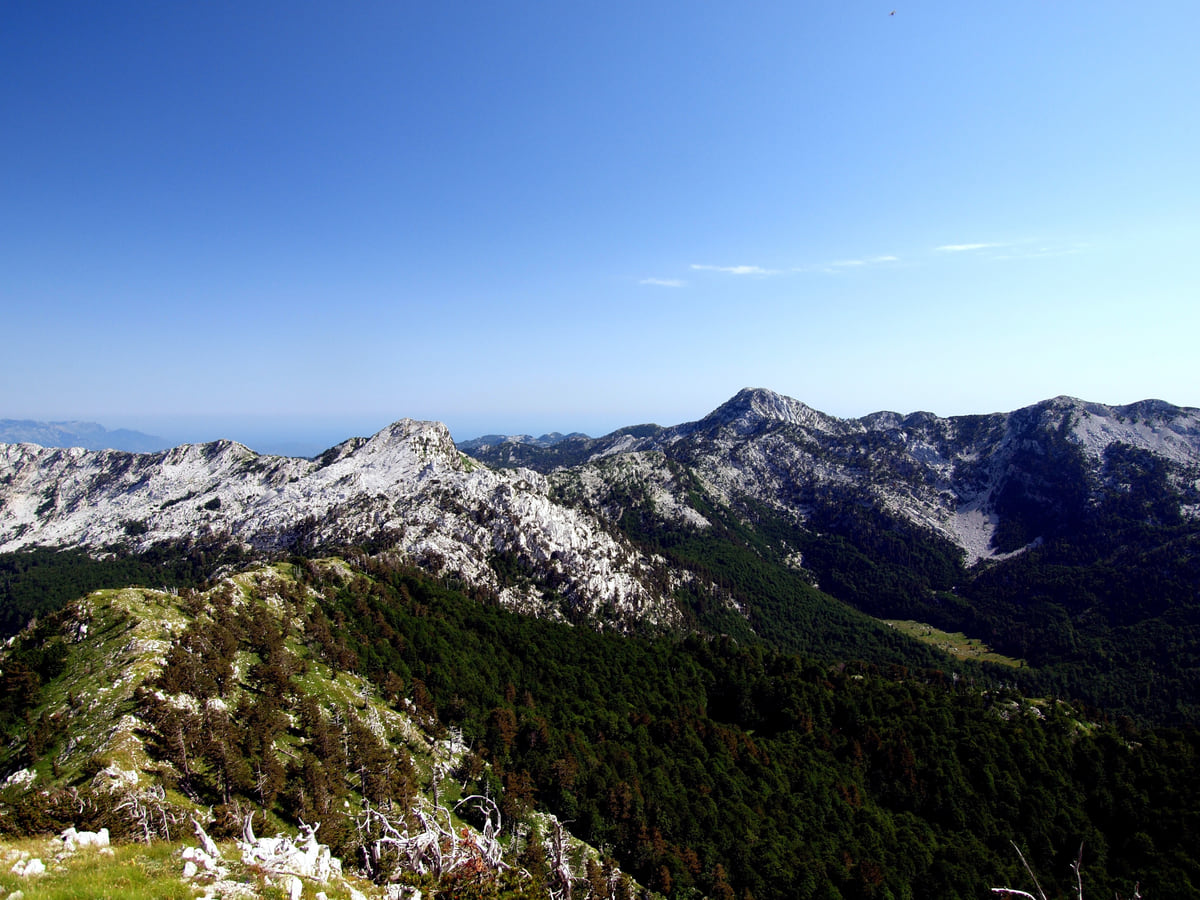
The mountain behind town, with the highest summit on the Adriatic coast, Veliki kabao, at 1,894 m.
Time: Full day
7.8 out of 10
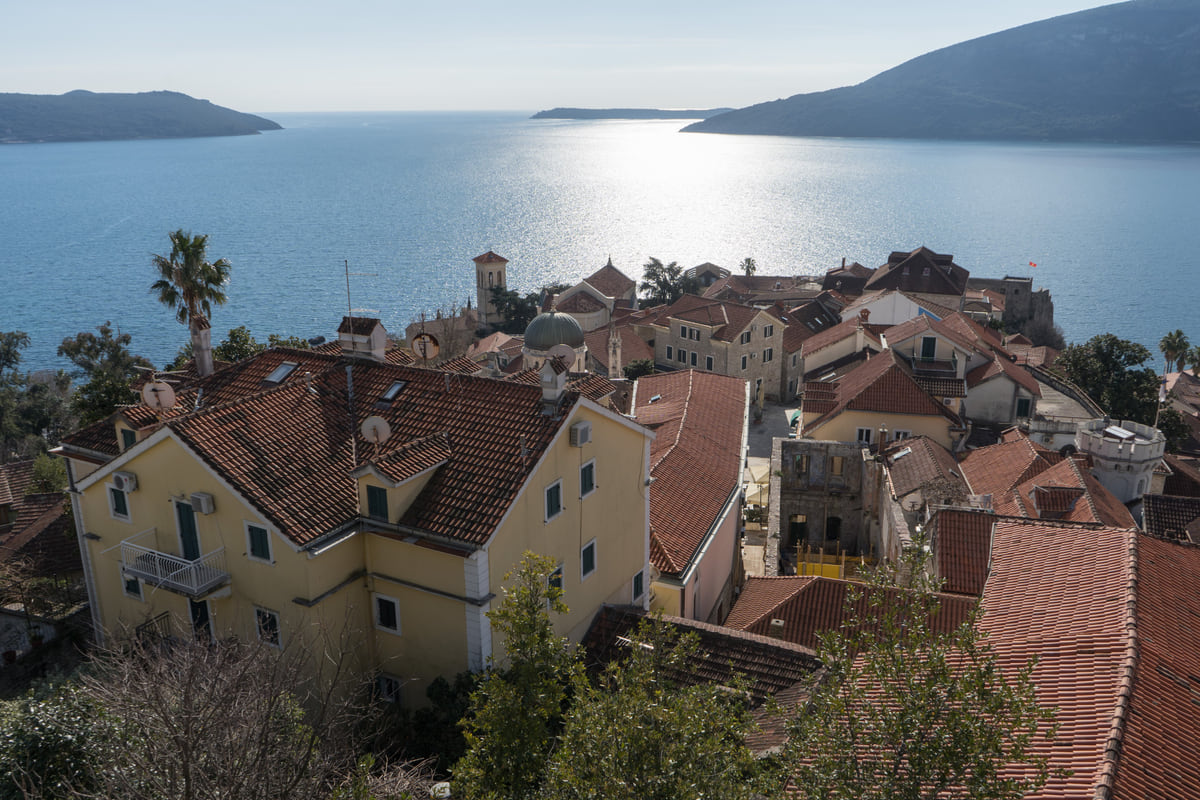
Sail into the Bay of Kotor and Herceg Novi is the first town that looks back at you. It sits on the northern shore of the bay’s mouth, below Mount Orjen and a few kilometres from Croatia, and for me it’s the most pleasant place on the bay to spend a week. It hasn’t got Kotor’s walled old town or Tivat’s marina, but it has steps, fortresses, a very long seafront and boats to the best coves on Luštica. The municipality had 30,824 residents in the 2023 census and welcomed 362,514 tourists in 2024.
Six centuries of owners
According to the tourist board, the Bosnian king Tvrtko I founded the town in 1382 and named it Sveti Stefan. Today’s name comes from Herceg Stjepan Vukčić Kosača, who kept his court here and died in 1466. Then came the Ottomans, who ruled from 1482 to 1687, with a brief Spanish interlude in 1538, followed by the Venetians and the Austro-Hungarians. Each of them built or rebuilt a fortress, which is why the old town feels like layer upon layer of walls.
What to see in Herceg Novi
The natural way in is the clock tower, Sat kula, built in 1667 on the sultan’s orders. It’s 16 m tall, served as the main town gate and still has a bell that Catherine the Great gave the town in 1753. From there the old town climbs in flights of steps; the tourist board brands it the town of «100,001 steps», which I’ll treat as the slogan it is.
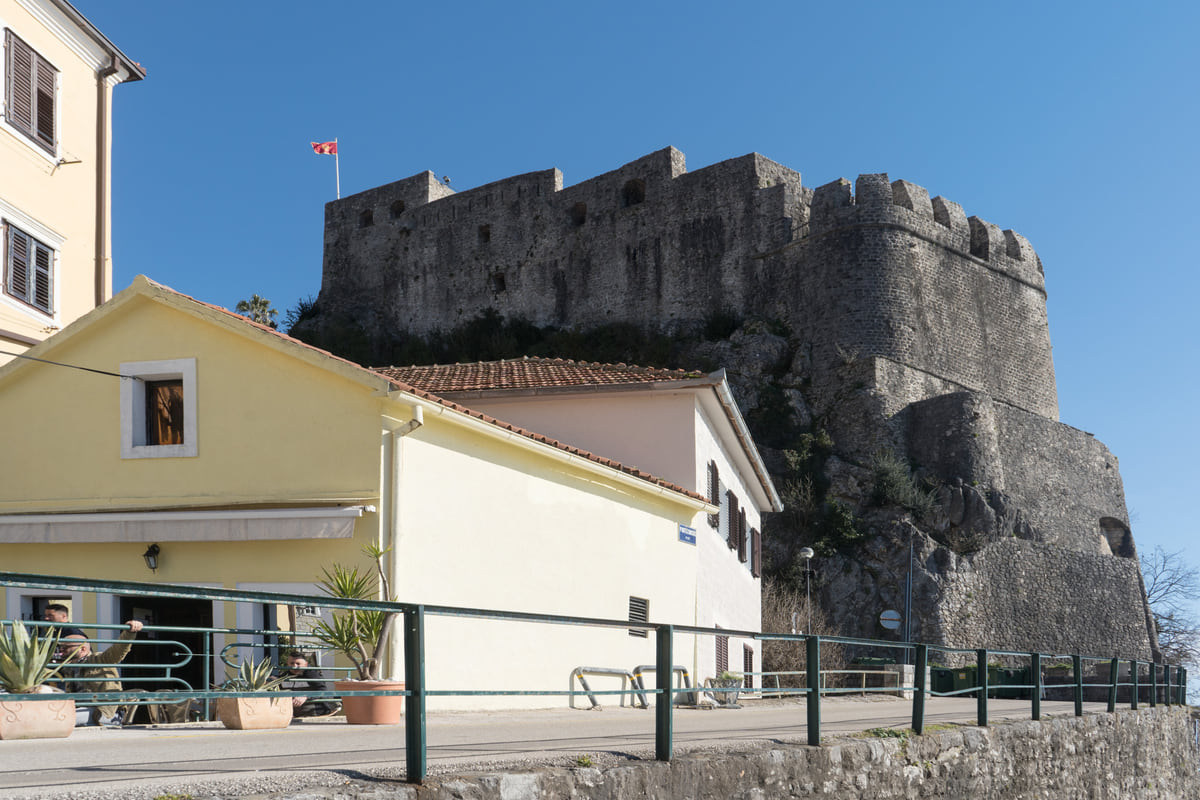
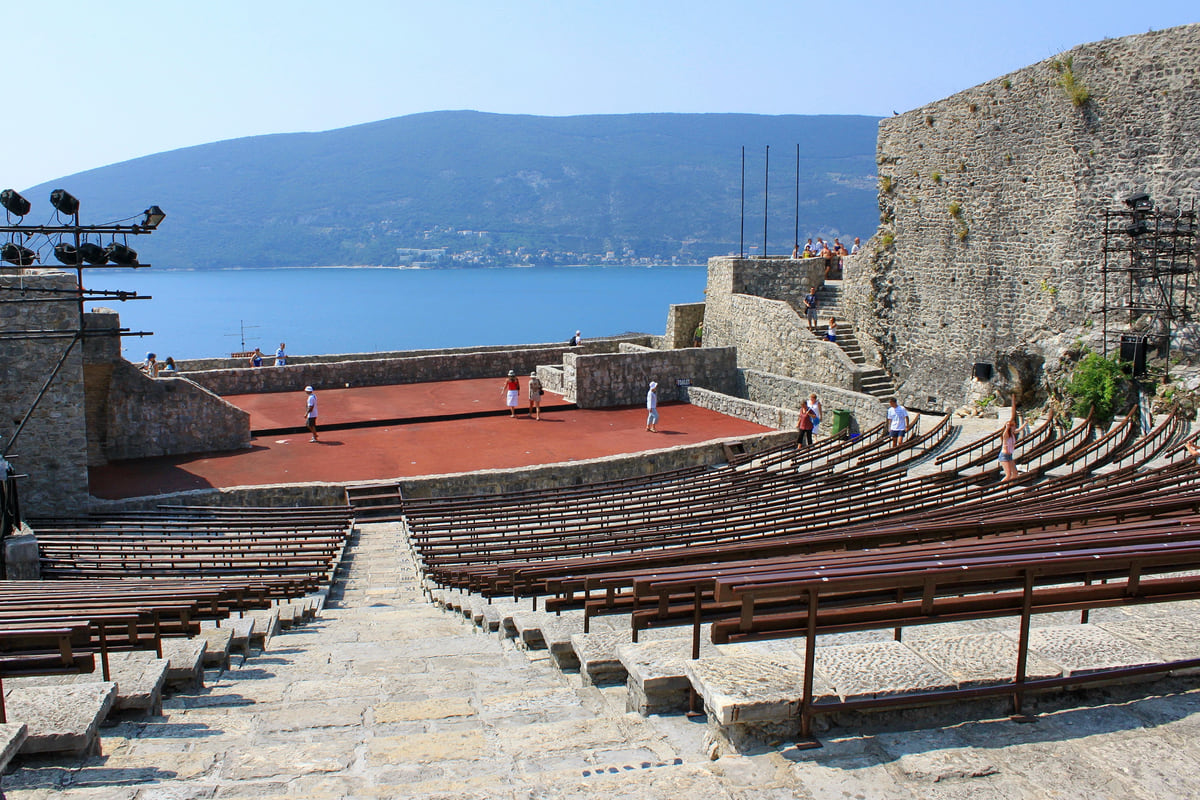
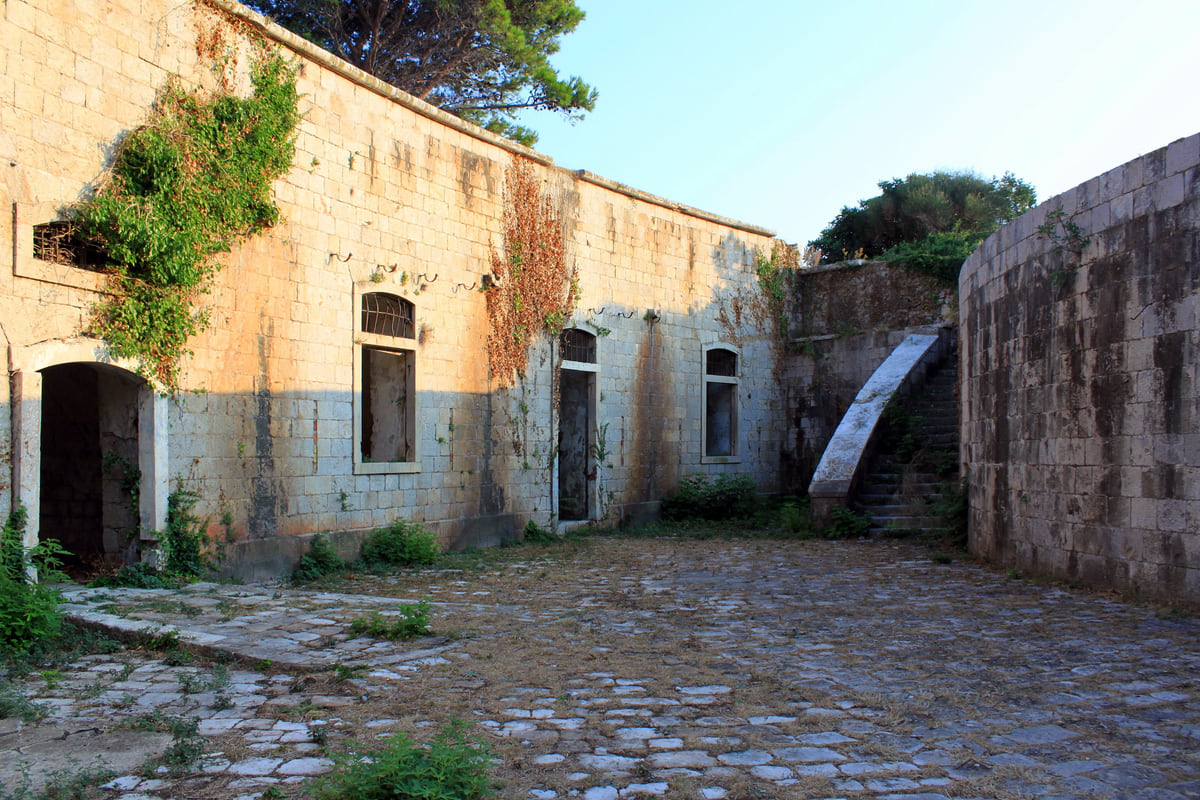
At the very top is Kanli kula, the Ottoman fortress of 1539 with one of the loveliest open-air stages on the coast. Down by the sea, Forte Mare keeps the old Sea Gate and has doubled as a summer cinema for more than sixty years. The third, Španjola, stands 170 m up on Bajer hill with four round bastions; the Spanish started it in 1538 and the Ottomans rebuilt it between 1539 and 1548.
Two kilometres from the centre, among Mediterranean greenery, is Savina monastery, with two churches of the Dormition of the Virgin and a treasury whose star piece is St Sava’s 13th-century crystal cross. The larger church went up between 1777 and 1799, and from the little chapel of St Sava on the hill the view stretches to Lovćen. The tourist board also lists the house of Nobel laureate Ivo Andrić and the Njegoš school.
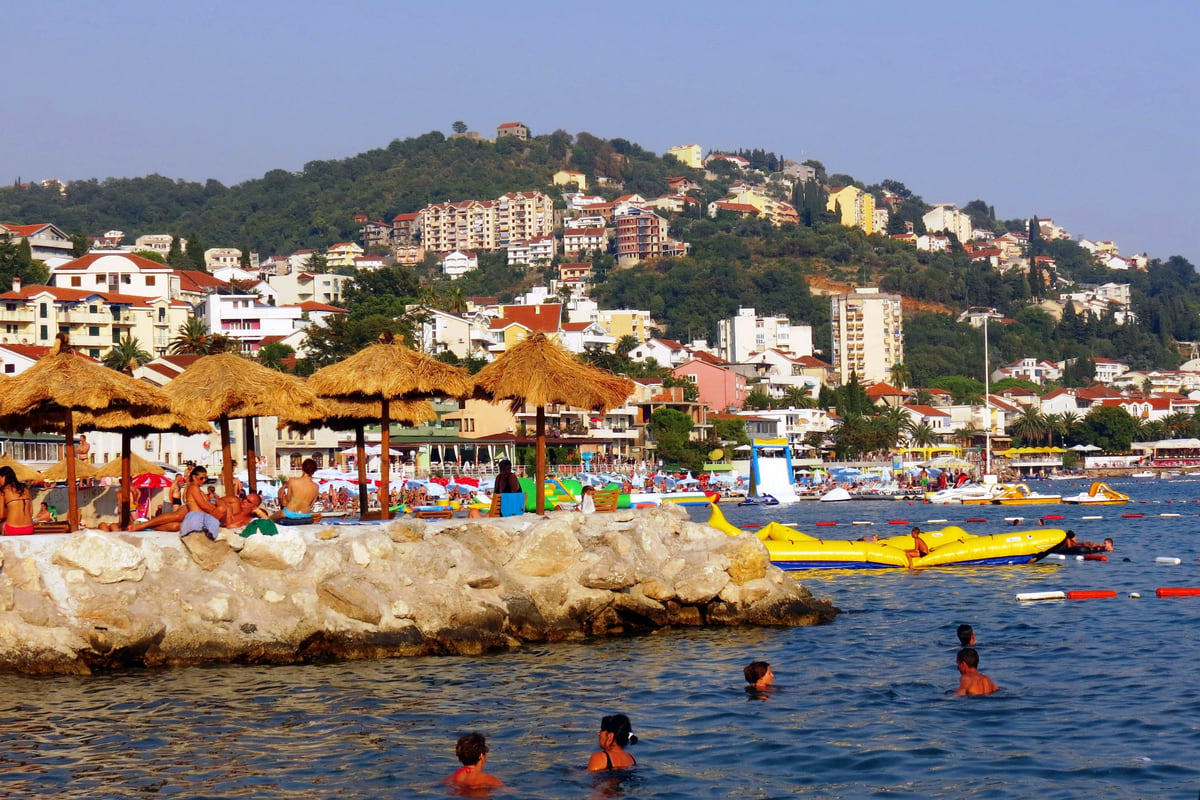
The tourist board talks of a 6 km promenade, more than 70 beaches and 18 km of coastline in the municipality. The promenade links the centre with Igalo, the biggest settlement in the municipality, known for its healing mud beach and large rehabilitation centre. For proper coves and the clearest water, you take the boat. I cover them individually in Herceg Novi beaches.
The mouth of the bay by boat
The best of Herceg Novi is out on the water. According to the official Luštica route leaflet, boats leave Škver harbour in summer for Mirište, Žanjic and the Blue Cave, and there’s a year-round service to Rose. Guarding the mouth of the bay is the island fortress of Mamula, now a hotel. Behind the town, Orjen Nature Park has the highest summit on the Adriatic coast, Veliki kabao, at 1,894 m.
There’s something on all year. February and March bring the Mimosa Festival, held since 1969; April the HAPS theatre festival; June Choose Vision at Forte Mare; 10 to 20 July the Days of Music; and 15 to 20 August the Guitar Art Summer Fest, according to the Herceg Fest cultural centre. In 2024 the local weather station recorded an annual average of 17.8°C and not a single day of snow.
Getting there, staying and paying
Coming from Dubrovnik, you cross the Croatian border at Debeli brijeg, and the Kamenari ferry, in the same municipality, crosses to Lepetane and saves the drive round the bay (€5 per car on the 2026 tariff). Each night costs €1 per adult and €0.50 per teenager in tourist tax, and tour groups also pay €1 each to visit the old town. I compare places to stay by area in hotels in Herceg Novi.
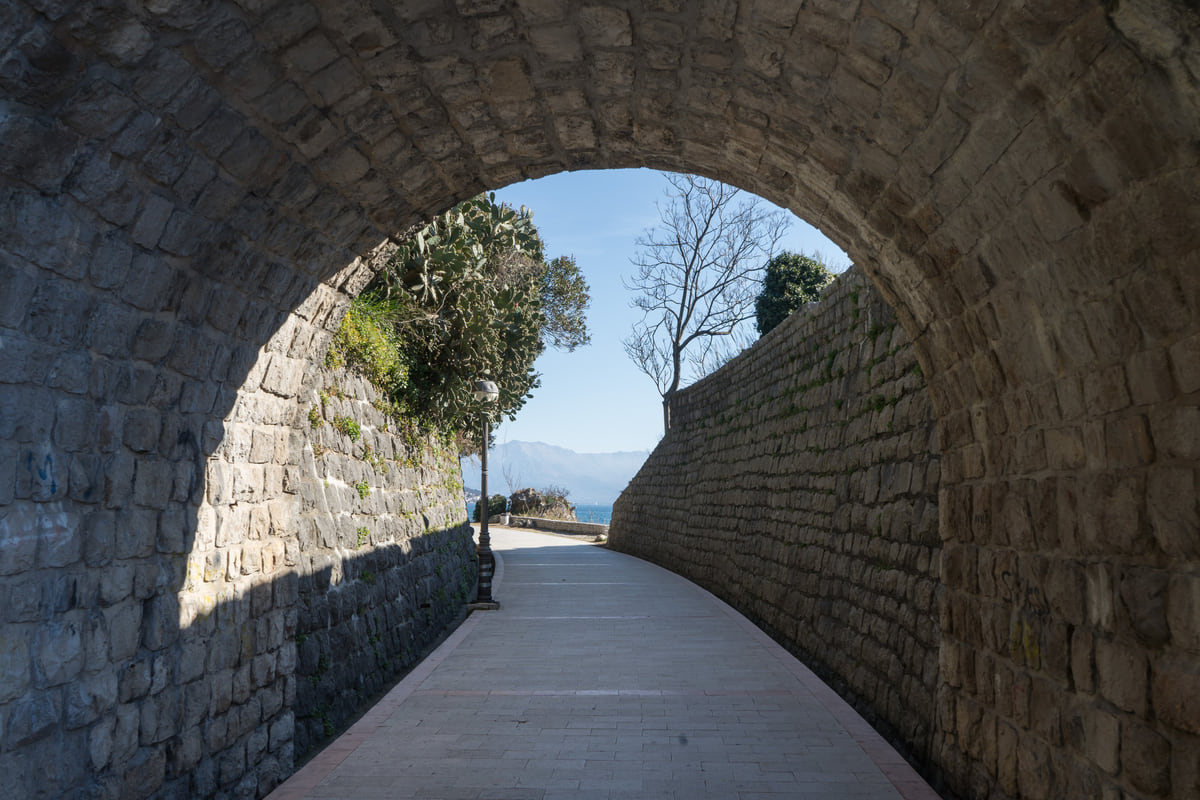
A stone tunnel on Herceg Novi's seafront promenade opening towards the sea, with a dressed-stone wall and trees beyond
The walls and battlements of Forte Mare on the rock above Herceg Novi's seafront, with a yellow house at its foot
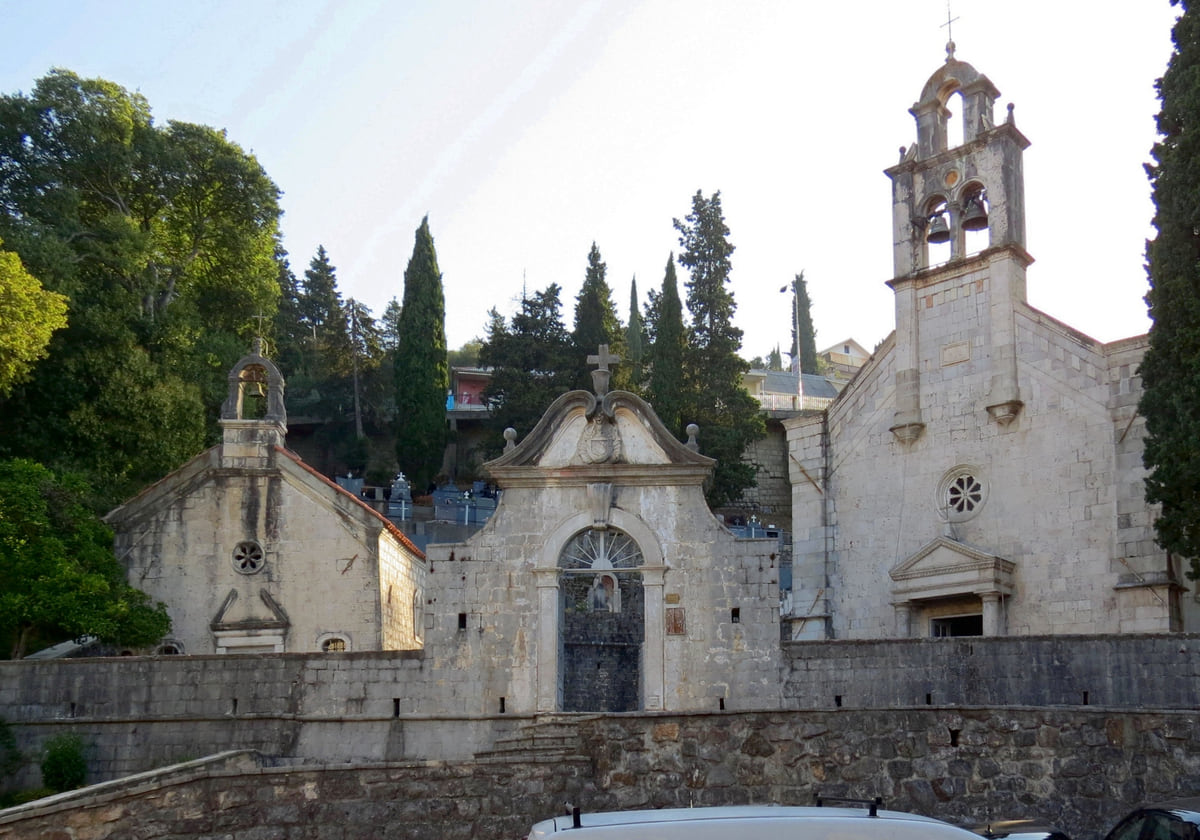
A white stone church with a bell tower in Herceg Novi old town, beside a small chapel, cypress trees and a low wall
Herceg Novi in figures
Fact
Figure
Municipal population (2023 census)
30,824
Area of the municipality
234 km²
Largest settlement
Igalo, 5,897 (preliminary census)
Tourist arrivals in 2024
362,514
Overnight stays in 2024
2,852,004
Source: MONSTAT.
Herceg Novi weather in 2024
Measure
Figure
Annual average
17.8°C
January average
9.5°C
July average
28.1°C
Highest temperature
40.0°C
Rainfall for the year
1,969.5 mm over 127 days
Source: MONSTAT 2025 yearbook, with data from the Institute of Hydrometeorology. A single year, not a long-term average.
Test yourself
True or false?
0/3Pick before you peek.
Herceg Novi was founded by the Ottomans.
See the answer
False. It was founded in 1382 by Tvrtko I, King of Bosnia; the Ottomans ruled it from 1482 to 1687, according to the tourist board.
Herceg Novi's clock tower dates from 1667.
See the answer
True. The tourist board dates it to 1667; it stands 16 m high and was the main town gate.
Igalo is the most populous settlement in Herceg Novi municipality.
See the answer
True. In the preliminary 2023 census Igalo has 5,897 residents and the town of Herceg Novi 5,078.
Municipal population in 2023
30,824
Founded by Tvrtko I
1382
Tourist arrivals in 2024
362,514
Annual average at its station in 2024
17.8°C
Map
Where Herceg Novi is
The Adriatic coast runs from Herceg Novi to Ulcinj; the centre holds Podgorica, Cetinje and Lake Skadar, and the north, Durmitor and the Tara Canyon. Every number opens its guide.
Walk the old town and clock tower, visit Kanli kula, Forte Mare and Španjola fortresses and Savina monastery, follow the seafront to Igalo and take a boat to Žanjic, the Blue Cave and Mamula island.
Is Herceg Novi worth visiting?
Yes, especially as a base for several days. It has three fortresses, beaches and boats to Luštica, and it's quieter than Kotor or Budva. For a single day trip I'd put it behind Kotor and Perast.
What's the weather like in Herceg Novi?
In 2024 its weather station averaged 17.8°C over the year, with 9.5°C in January and 28.1°C in July, and recorded 1,969.5 mm of rain over 127 days. There was no snow.
How do you get from Herceg Novi to Kotor?
By road round the bay, or take the Kamenari-Lepetane ferry across the Verige strait to cut the drive short; a car pays €5 on the official 2026 tariff.
How much is the tourist tax in Herceg Novi?
€1 per adult per night, €0.50 for 12 to 18-year-olds and nothing for under-12s. Organised groups visiting the old town also pay €1 per person.
Is Igalo part of Herceg Novi?
Yes. Igalo is the biggest settlement in Herceg Novi municipality, joined to the town by the seafront promenade and known for its healing mud beach and the Igalo Institute.
Tourism graduate with a master’s in Tourism Management and Planning from the University of Málaga, who has travelled across Europe. He writes every guide from official sources and his own judgement.