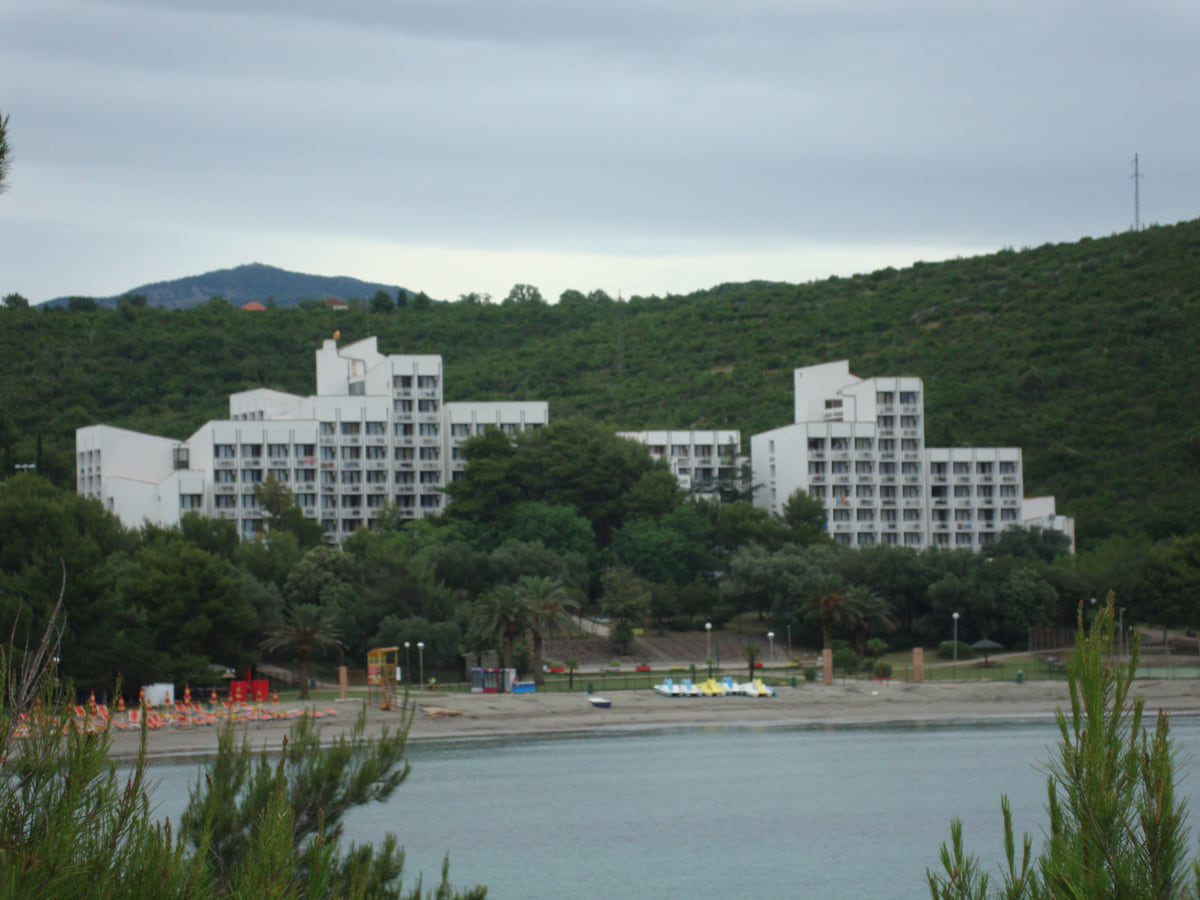
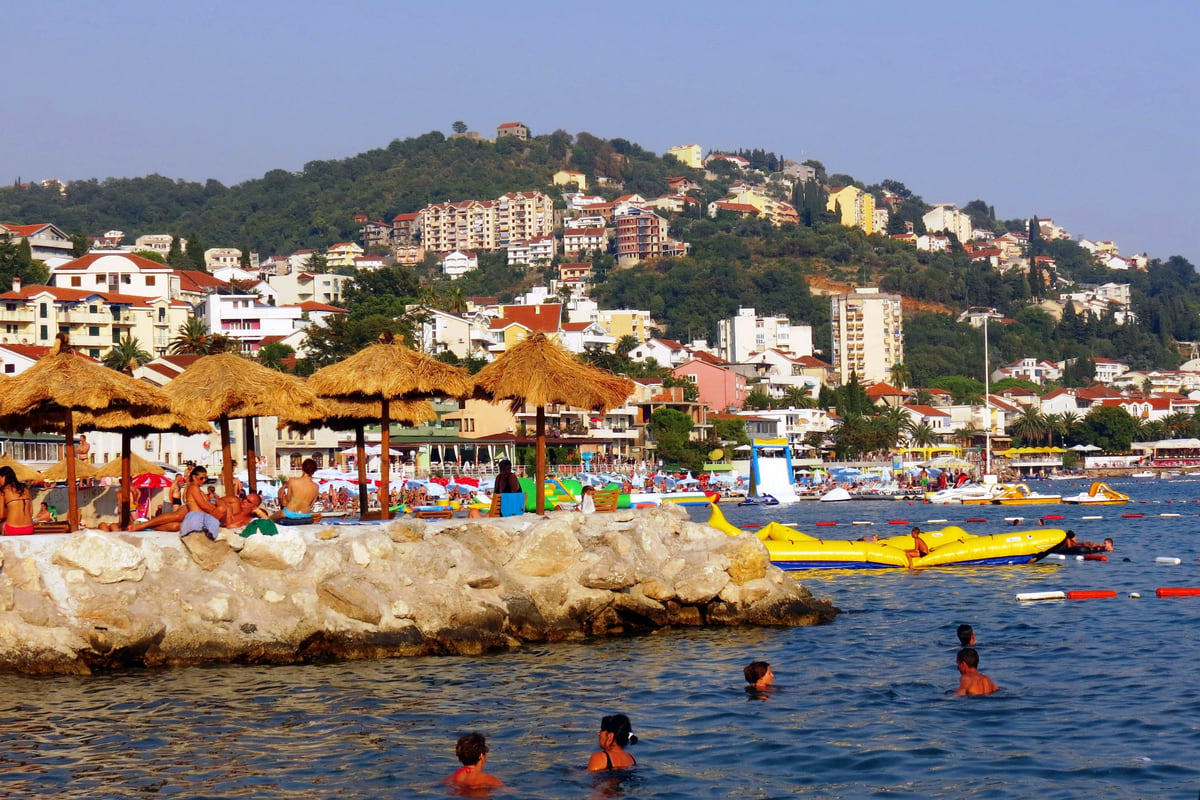
The best beaches in Montenegro, from the Bay of Kotor to Ulcinj
Montenegro has 117 beaches adding up to 52 km, according to the national tourist board, along a coastline of 293.5 km. Most are pebble or rock; the sand is mainly in Ulcinj, with the 13 km Velika plaža, plus a few spots around Budva and Bar. The best known are Sveti Stefan, boat-only Queen's Beach, Mogren, Jaz and Velika plaža.
In 30 seconds
Full read: 3 min
Montenegro has 117 beaches totalling 52 km along 293.5 km of coast.
Most are pebble or rock; fine sand is mainly in Ulcinj.
The best known are Sveti Stefan, Queen's Beach, Mogren, Jaz and Velika plaža.
The swimming season runs from mid-May to mid-October.
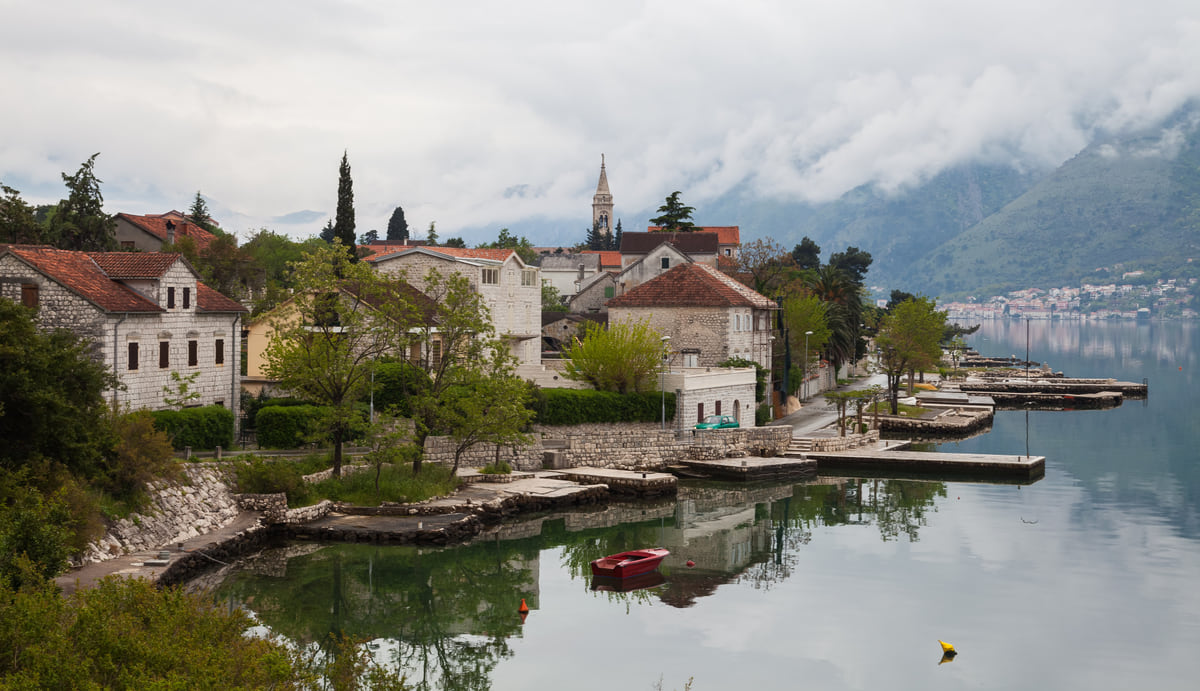
If you asked me for one area, for beaches I'd choose the Budva Riviera for variety and Ulcinj if you want sand. The Bay of Kotor is stunning, but I wouldn't go there for beaches; it's more about a dip off a jetty between sights.
Sergio LeponeMy advice
Before you go
What I would keep in mind
01 Most beautiful
Sveti Stefan, the country's postcard
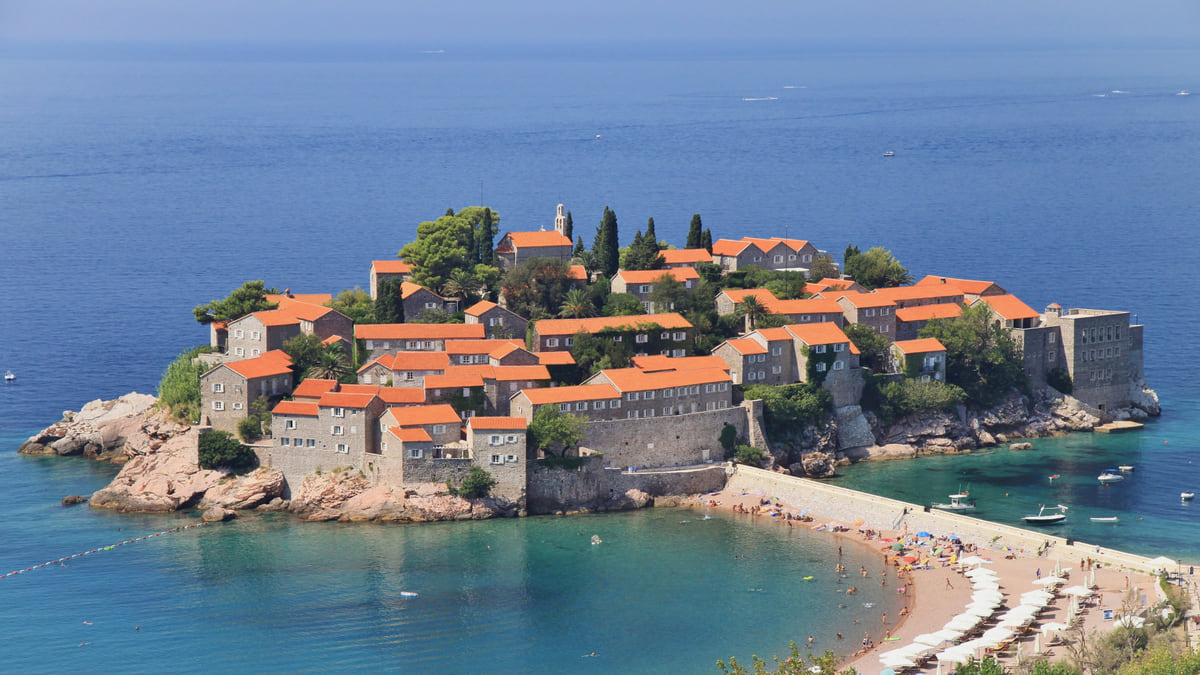
The sandy isthmus with a beach on either side, 700 and 400 metres long, rated among Europe's most beautiful by the London Evening Standard, as the national tourist board likes to point out.
The national tourist board quotes, with no year, about €10 a day for two sunbeds and a parasol in Ulcinj and Igalo and about €20 at Bajova kula in Kotor. Treat it as a rough guide.
03 Watch out
Check Blue Flag status yourself
Some beaches boast a Blue Flag without saying which year. I couldn't read the 2026 list from an official source, so check the Blue Flag website before choosing on that basis.
04 My tip
Coves you can only reach by sea
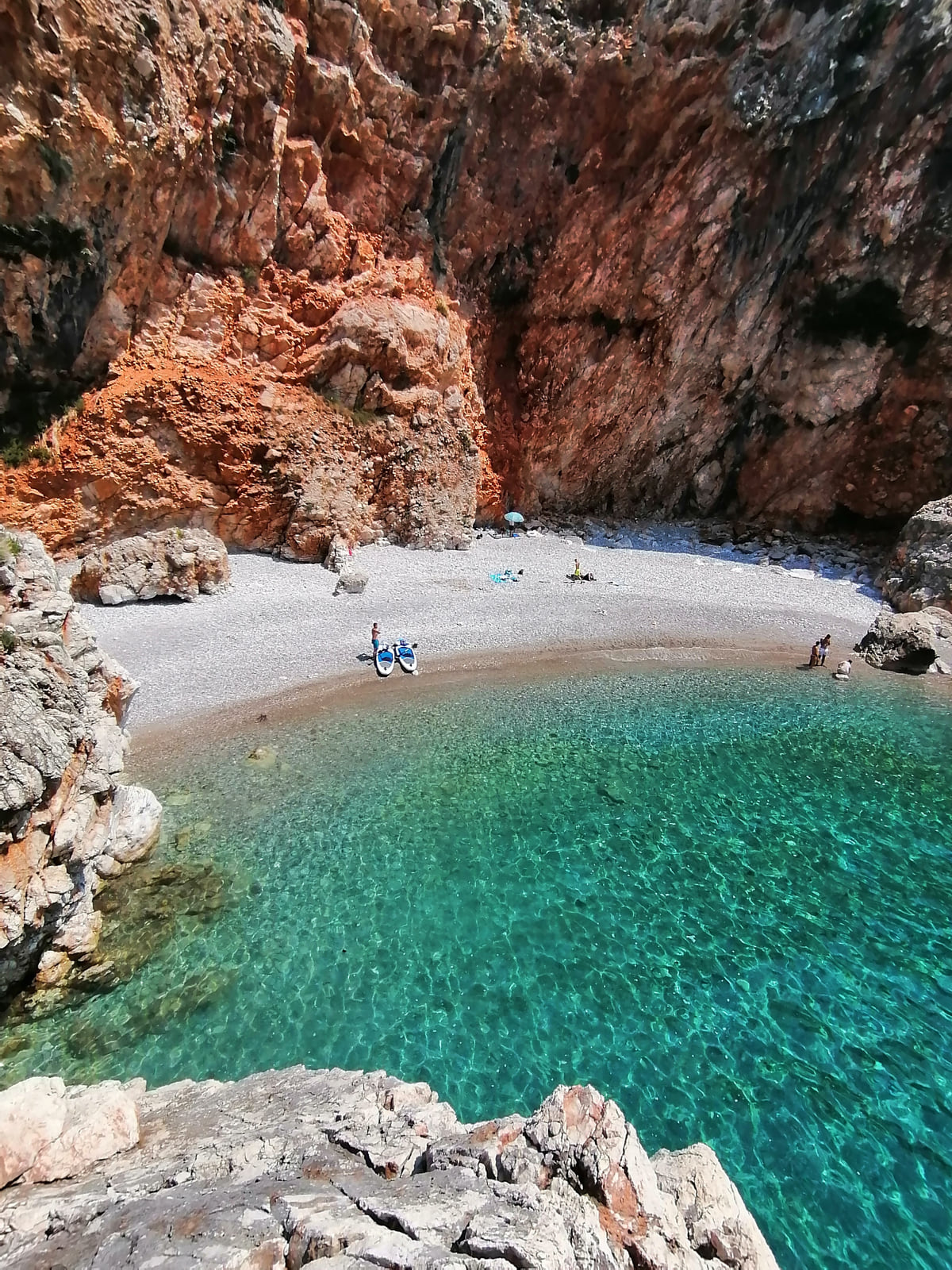
Queen's Beach near Čanj and Crvena stijena behind Volujica hill in Bar are among the country's best, visited on water taxis from Bar marina.
On the Luštica peninsula near Herceg Novi, the Blue Cave is reached by boat, and the whole point is swimming inside when the sun turns the water turquoise.
My own order, scored out of 10, weighing the water, the setting and what makes each one special. The scores are my opinion; the measurements come from the national tourist board and the local tourist boards.
The river island, with about three kilometres of sand, naturism, wind and fish at sunset.
7.9 out of 10
Montenegro sells itself on its beaches, but it pays to arrive knowing what they’re like. The national tourist board counts 117 beaches adding up to 52 km, on a coastline MONSTAT measures at 293.5 km. That means much of the shore is rock, jetty or cliff, and the long sandy beach is the exception rather than the rule. Picking the right area changes the whole holiday.
Five coasts in one
In the north, Herceg Novi and Igalo have concrete and pebble beaches, plus Igalo’s healing mud beach along 1,500 metres of shore. Inside the Bay of Kotor and around Tivat, swimming is mostly off jetties and from small coves, with the best of them on the Luštica peninsula, such as Žanjic and Plavi horizonti. The Budva Riviera is the most complete, with 38 km of sand and pebble beaches, where the national tourist board reckons on about 100,000 swimmers a day in summer. Bar mixes long beaches such as Sutomore and Čanj with coves you can only reach by boat. And Ulcinj, at the end, is the one area with proper fine sand. I go through them individually in beaches in Budva, beaches in Bar and Ulcinj beaches.
The ones worth the trip
Sveti Stefan is the country’s signature image, an islet with its village-hotel joined to the mainland by an isthmus with a beach on either side, 700 and 400 metres long. The national tourist board likes to mention that the London Evening Standard named it among Europe’s most beautiful. Queen’s Beach, in Pećin bay near Čanj, can only be reached by sea and was Queen Milena’s favourite retreat. Mogren, a short walk from Budva Old Town, is two sandy coves linked by a tunnel through the rock. In terms of size, the same riviera has Bečići, about 2,000 metres long, which the Budva tourist board says won the 1935 Grand Prix in Paris as Europe’s most beautiful beach, and Slovenska plaža, 1,600 metres, right by the town. Further south, Petrovac has 600 metres of reddish sand with two islets offshore. And at the southern tip, Velika plaža in Ulcinj offers 13 km of fine sand that shelves very gently.
If sand is a must, head south, with Ulcinj first and some beaches at Budva, Bečići, Petrovac and Sutomore; I cover them in sandy beaches in Montenegro. For naturists, the national tourist board points to Ada Bojana, the island of Sveti Marko off Tivat, Njivice near Herceg Novi and a section of Jaz; they’re all in Montenegro’s naturist beaches. To get away from the crowds, the same site suggests hidden coves such as Kristalna plaža near Kruče, Crvena stijena behind Volujica hill, Hladna uvala by Utjeha, Paljuškovo bay and Pecka on Luštica. And if you want music and a crowd, its list of party beaches includes Oblatno on Luštica, about 100 metres long, the Platamuni-Ploče headland, about 400 metres, Kamenovo between Budva and Pržno, about 330 metres, and Ports, about 220 metres. Bar alone accounts for around twenty beaches adding up to some nine kilometres, according to its tourist board, which shows how much of this coast is made up of short stretches between rocks.
Good to know
The sand belongs to everyone, but sunbeds and parasols at the concessions cost money. The national tourist board quotes, without a year, about €10 a day for two sunbeds and a parasol on the healing beaches of Ulcinj and Igalo and about €20 at Bajova kula in Kotor. On Blue Flag status it refers you to the programme’s own website; I couldn’t read the 2026 list, so I’m not presenting any beach as an award-holder. The Foreign Office asks you to respect the flags and lifeguards and warns about speedboats and jet skis coming close to swimmers in summer. The maritime rescue number is 129.
Bar’s tourist board reckons you can swim from the second half of May into early October, with July sea temperatures averaging 23.2 °C, and Ulcinj’s gives May to October. At the Bar weather station, July 2024 averaged 27.5 °C and stayed almost dry. I’d go for June or September, with the water already warm and far fewer people than in August, when the coast from Herceg Novi to Ulcinj is packed.
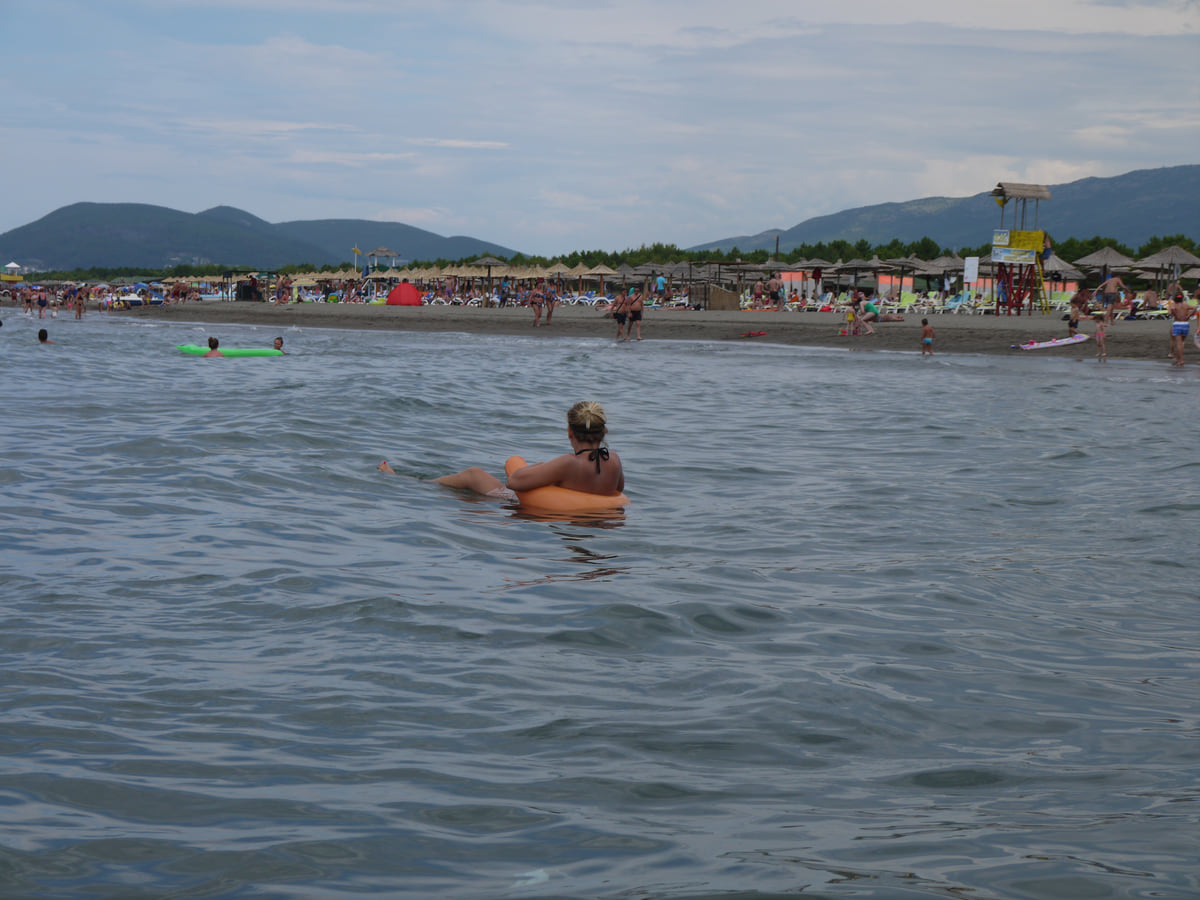
Swimmers in the shallow water off Velika plaža in Ulcinj, with the beach lined with parasols and the mountains behind
Crvena stijena cove below Volujica hill in Bar, with pale pebbles, turquoise water and a wall of reddish rock behind
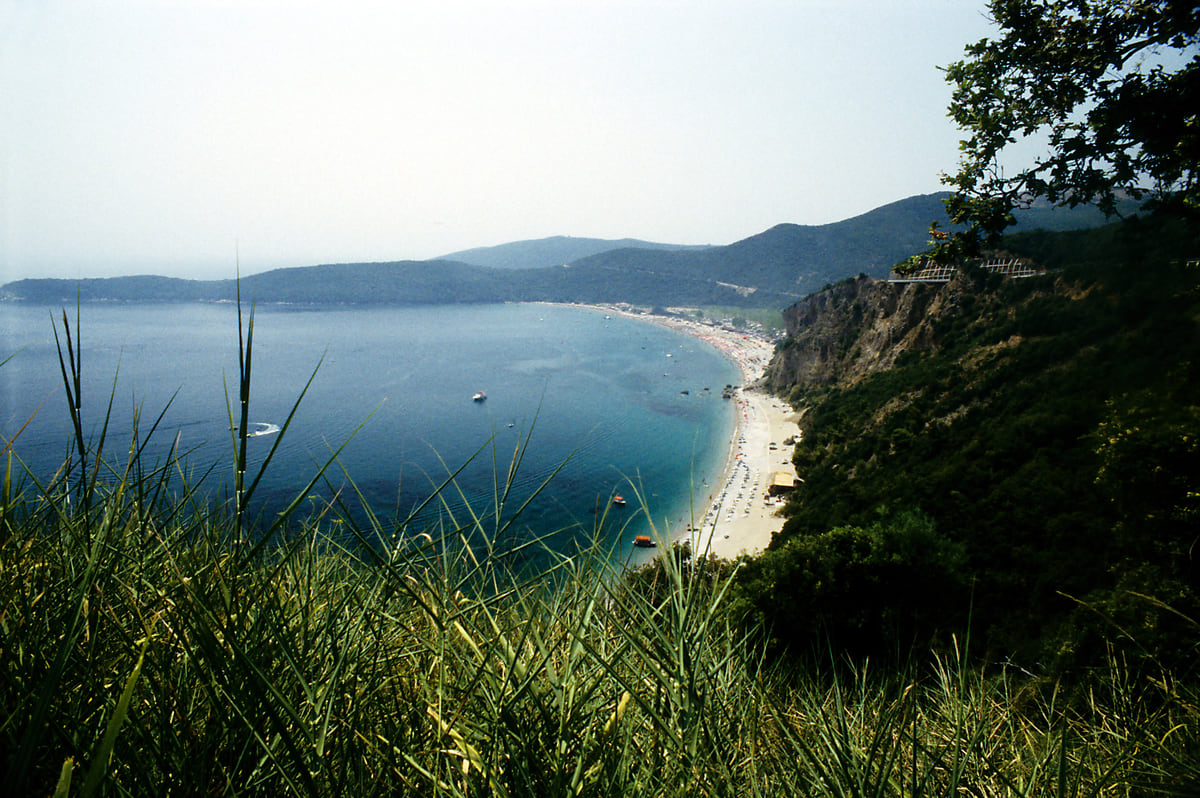
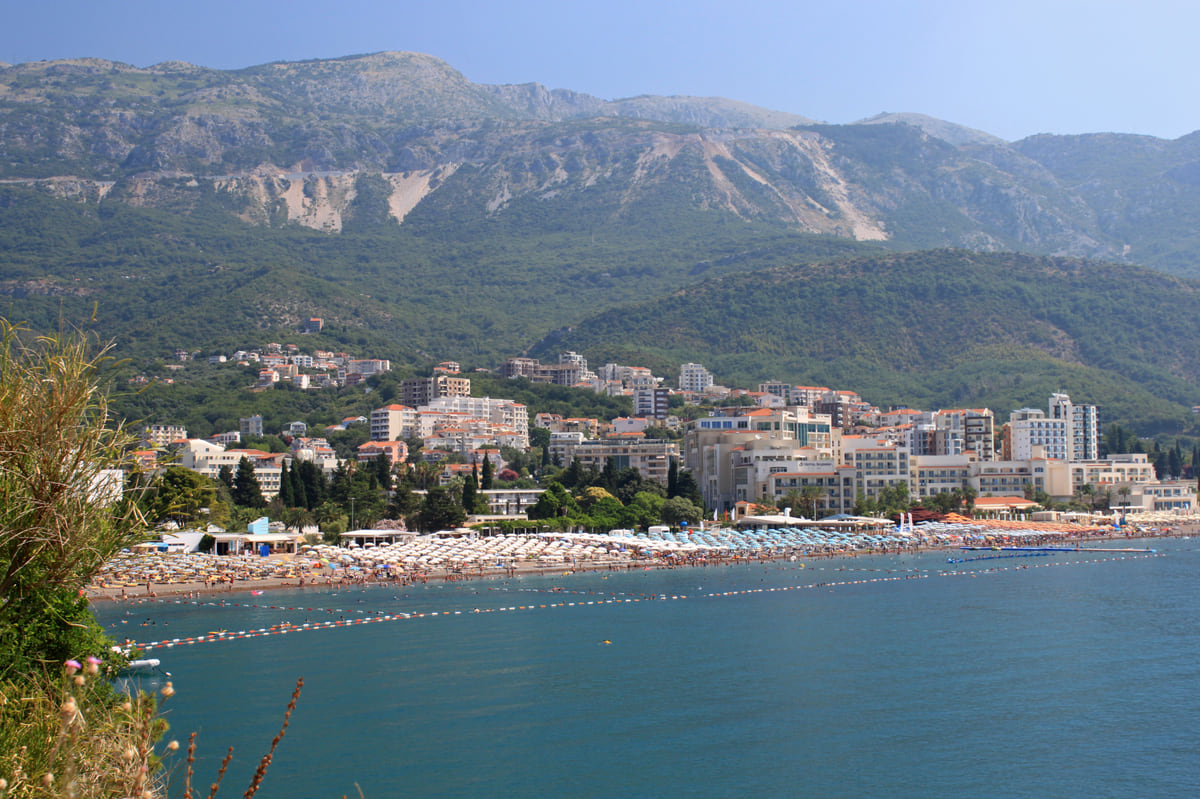
The long sweep of Jaz beach near Budva seen from the hillside, with its curving sand, blue water and greenery in the foreground
Montenegro's beaches by area
Area
Type of beach
My favourites
Herceg Novi and Igalo
Concrete, pebbles and healing mud
Igalo, Njivice, Žanjic (Luštica)
Bay of Kotor and Tivat
Jetties, pebbles and coves
Bajova kula, Plavi horizonti, Pecka
Budva Riviera
Pebbles and sand, 38 km
Mogren, Jaz, Sveti Stefan, Petrovac
Bar
Pebbles, a few sandy beaches and coves
Queen's Beach, Crvena stijena, Čanj
Ulcinj
Fine sand and rocky coves
Velika plaža, Ada Bojana, Valdanos
Montenegro National Tourist Organisation beach pages and the Budva, Bar and Ulcinj tourist boards, checked between 10 and 11-10-2026. The picks in each row are mine.
Test yourself
True or false?
0/3Pick before you peek.
Most of Montenegro's beaches are fine sand.
See the answer
False. Most are pebble or rock. Fine sand is concentrated in Ulcinj, on Velika plaža, Ada Bojana and Mala plaža.
Montenegro's longest beach is over ten kilometres long.
See the answer
True. Velika plaža in Ulcinj is 13 km long, according to the national tourist board.
In summer the Budva Riviera sees around 100,000 swimmers a day.
See the answer
True. That's the national tourist board's figure for its 38 km of sandy and pebble beaches.
For me, Sveti Stefan, Queen's Beach near Čanj, Velika plaža in Ulcinj, Mogren and Jaz in Budva, Crvena stijena in Bar and Petrovac. They're in order in the ranking on this page.
Does Montenegro have sandy beaches?
Some, but most beaches are pebble or rock. Fine sand is mainly in Ulcinj, on Velika plaža, Ada Bojana and Mala plaža, with coarser or reddish sand at a few beaches around Budva, Bar and Petrovac.
How many beaches are there in Montenegro?
117 beaches totalling 52 km, according to the national tourist board. The longest is Velika plaža in Ulcinj, at 13 km.
Which is the best area of Montenegro for a beach holiday?
The Budva Riviera for variety, with 38 km of beaches, and Ulcinj for sand and wind. The Bay of Kotor is more about swimming off jetties than spending the day on a beach.
When is the beach season in Montenegro?
The Bar tourist board puts it from mid-May to mid-October, with an average sea temperature of 23.2 °C in July. Ulcinj gives swimming from May to October.
Do you have to pay on Montenegro's beaches?
The sand is public, but sunbeds and parasols at the concessions cost money. The national tourist board quotes, with no year, around €10 a day in Ulcinj and Igalo and about €20 at Bajova kula in Kotor.
Tourism graduate with a master’s in Tourism Management and Planning from the University of Málaga, who has travelled across Europe. He writes every guide from official sources and his own judgement.