Budva, inside the walls
Budva Old Town, from the Citadel to Santa Maria in Punta
Budva Old Town is a walled quarter on a small peninsula, with more than 2,500 years of history according to the national tourist board. Inside are the Citadel, first recorded in 1425, the church of Santa Maria in Punta, founded in 840, the City Museum and six churches squeezed into a handful of lanes.
In 30 seconds
Full read: 3 min
- Budva Old Town has over 2,500 years of history.
- The Citadel was first recorded in 1425 and has the best view of the old town.
- Santa Maria in Punta, founded in 840, is one of the oldest churches on the coast.
- The City Museum holds Hellenistic gold from a necropolis found in the 1930s.
I'd go in late in the afternoon, when the light drops onto the walls and the lanes fill up for dinner, and save the museum for a cloudy morning. What I wouldn't do is squeeze in at midday in August, because the old town is small and turns into one long queue.

Before you go
What I would keep in mind
-
01 Most beautiful
The view from the Citadel
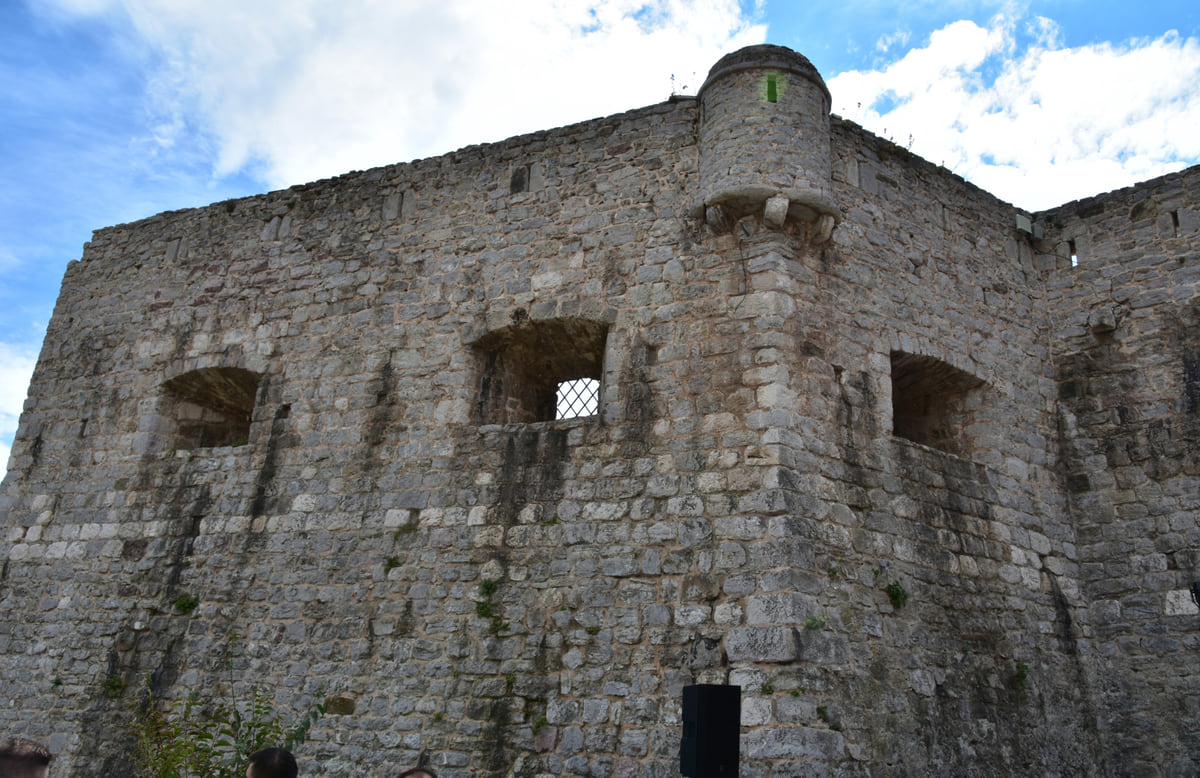
The fortress at the southern tip closes the ring of walls and, according to the national tourist board, has the best view of the town, plus a small museum and a library.
Budva -
02 My tip
Two coves right under the walls
Pizana, 50 metres of pebbles, sits below the Repeno tower, and Ričardova glava leans against the wall itself. Both are quiet first thing; by the afternoon the second has music.
beaches in Budva -
03 Most beautiful
Gold from the necropolis
Digging the foundations of the Avala hotel in the 1930s uncovered a necropolis of 450 Hellenistic and Roman graves. Some of the gold jewellery is in the City Museum.
museums in Montenegro -
04 Getting there
Mogren, a short walk away
From the south gate a 350-metre path leads to the two sandy coves of Mogren at the foot of the cliffs.
Mogren Beach -
05 Worth the splurge
Sleep just outside the walls
Avala Resort & Villas, a four-star, stands beside the old town and the path to Mogren.
Avala Resort & Villas
My ranking, scored
What I wouldn't miss inside the walls
My personal order, scored out of 10, based on how much each place tells you about Budva's past and how well it fits a two or three-hour visit.
0 of 5 seen
-
The Citadel
The fifteenth-century Kaštel, for a while the seat of the Metropolitan of Zeta. It's now privately owned, with a museum and a bar, and has the best view over the old town.
9.2 out of 10
-
City Museum
Over 1,200 archaeological pieces, including Hellenistic gold from the necropolis, 450 folk objects and a second-century Roman mosaic found while building the Avala hotel.
8.9 out of 10
-
St John's Church
A cathedral until 1828, its 1867 bell tower dominates the skyline, and it holds the Madonna in Punta icon and a 40 m² Murano glass mosaic.
8.5 out of 10
-
Santa Maria in Punta
Founded by Benedictines in 840, it's one of the oldest pre-Romanesque churches on this coast. These days it hosts exhibitions and classical concerts.
8.2 out of 10
-
Holy Trinity
An Orthodox church completed in 1804, with an iconostasis by nineteenth-century Greek painters. The writer Stefan Mitrov Ljubiša is buried outside.
7.8 out of 10
You can walk round Budva Old Town in an hour, but it has enough layers for a whole afternoon. It’s a small walled peninsula with the Citadel at one end, the gate onto Slovenska plaža at the other and, in between, narrow lanes of shops, galleries, bars and six churches. Much of what you see has been rebuilt, and knowing that changes how you read the place.
A town that has been rebuilt more than once
The local tourist board counts it among the Adriatic’s oldest towns, already called a “city of Illyria” in ancient sources and known at other times as Butua or Buthos. Greeks, Romans, Slavs, Venetians, Austrians and the French all held it at some point, and two earthquakes left their mark. The one in 1667 brought down the walls and towers, which went up again on the old foundations. The 1979 quake damaged the town once more, and restoration took most of the following decade. So I wouldn’t come looking for untouched medieval stone, but for the shape of a medieval town that has survived.
The walls were already standing in the ninth century, because one wall of the Benedictine monastery of 840, now Santa Maria in Punta, doubled as the sea defence. The oldest known drawing of Budva, from the sixteenth century, shows six towers, two of them tall and one round.
The Citadel and the view
The fortress on the south side, the old Kaštel, is the highest point and where the walls start and finish. It first appears in records in 1425 and was for a time the seat of the Metropolitan of Zeta. A nineteenth-century rebuild swept away the little church of Santa Maria de Castello and brought in a garrison. Today it’s privately owned, with a museum and a bar, and the national tourist board singles out its view over the town, Sveti Nikola island and the Sveti Stefan peninsula, as well as the carved fish that have become Budva’s emblem. Everything outside the walls is in my Budva.
Once your dates are set, check which hotels are still free in Budva before prices climb.
Six churches in a few lanes
St John’s is the one you spot from afar, with its 1867 bell tower. It was the cathedral until the diocese was abolished in 1828 and holds the icon known as the Madonna in Punta, long believed to protect the town from plague and pirates. Behind the altar is a 40 m² Murano glass mosaic by the Croatian painter Ivo Dulčić, and next to the church are the remains of an early Christian basilica. Santa Maria in Punta, from 840, is used for exhibitions and classical concerts, while Holy Trinity, Orthodox and finished in 1804, has an iconostasis by Greek painters and the grave of the writer Stefan Mitrov Ljubiša outside.
The museum and the necropolis
If you only go into one place, make it the City Museum. It occupies an early nineteenth-century building and holds more than 1,200 archaeological pieces spanning the fifth century BC to the Middle Ages, plus 450 folk objects and a lapidarium. The highlight is the Hellenistic gold from the necropolis found while digging the foundations of the Avala hotel, 450 graves in all, including earrings showing an eagle carrying a boy in its talons, linked to the myth of Zeus and Ganymede. It recently gained a second-century Roman mosaic too. For the country’s other museums, see museums in Montenegro.
If you would rather have a local show you round, book a guided tour in Budva Old Town and choose by the reviews.
Swimming under the walls
One of the pleasures here is that you can swim without leaving the old town. Pizana, 50 metres of pebbles, lies below the Repeno tower with the island straight ahead. Ričardova glava backs onto the wall and takes its name from Richard Widmark, who shot The Long Ships in Budva; it’s quiet in the morning and becomes the young crowd’s beach in the afternoon, with music from the bars. For sand, leave by the south gate for Mogren Beach.
When to go in, and where to eat
The Grad teatar festival has turned the old town into a stage every summer since 1987, with plays, concerts and exhibitions, and it’s the best excuse to have dinner inside the walls. On weekdays outside July and August, first thing in the morning, you’ll have it almost to yourself. The official listings don’t give opening hours or prices for the churches or the museum, so check at the door. For dinner inside or just outside the walls, see my notes on restaurants in Budva.
Once your dates are set, check which hotels are still free in Budva before prices climb.
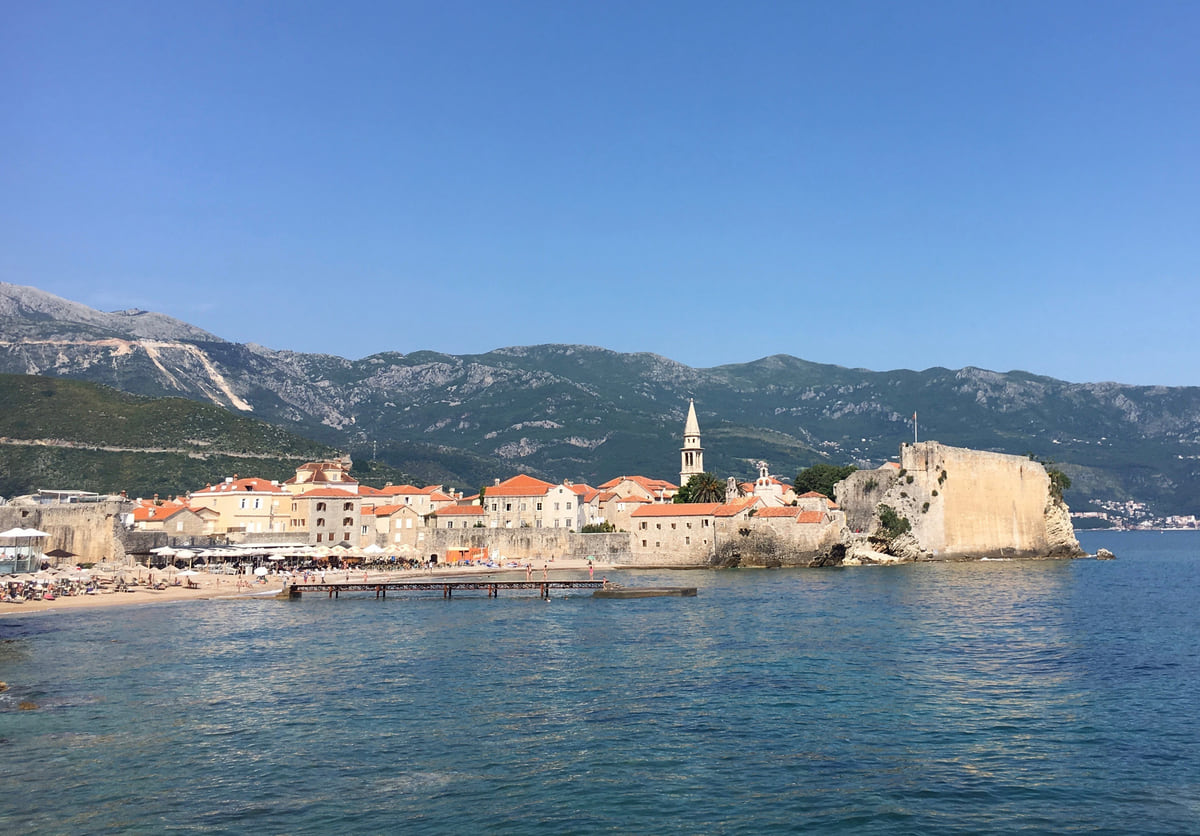
Budva's walled old town and citadel above the sea, with a bell tower rising from the rooftops and mountains in the distance
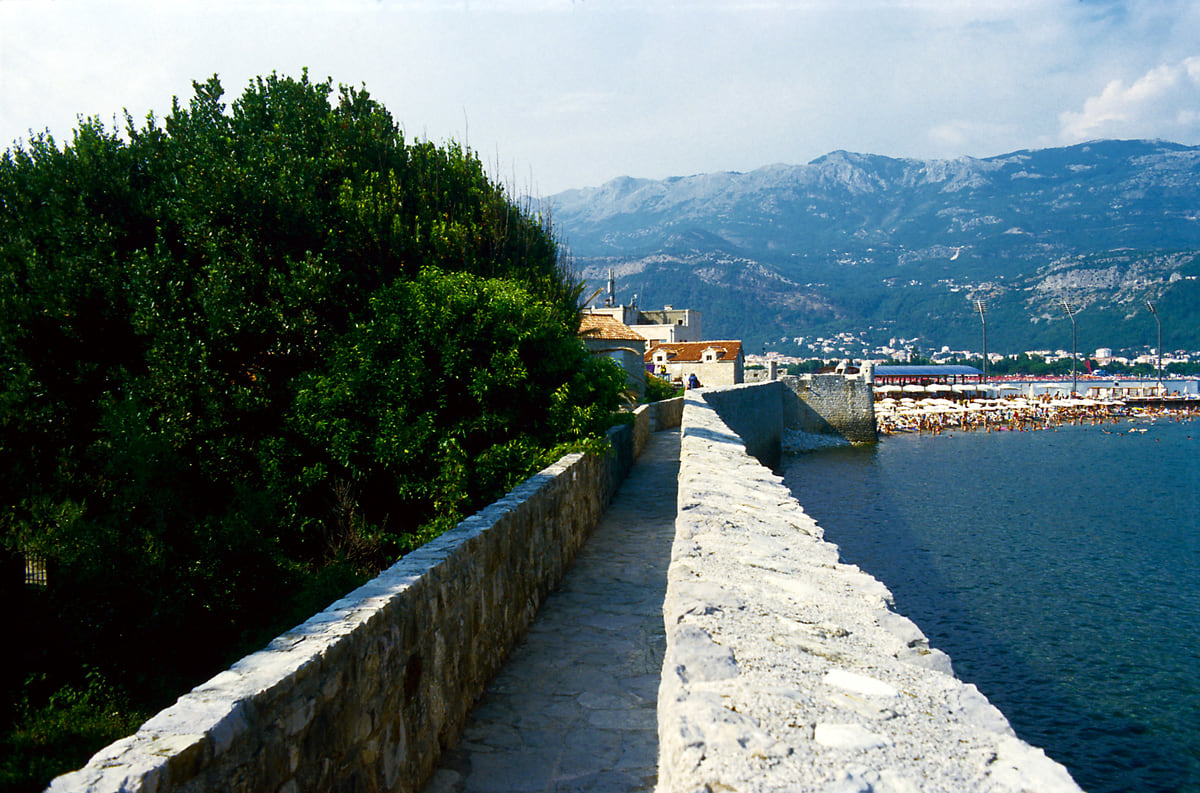
The wall walk of Budva's old town by the sea, with Slovenska plaža and the mountains in the distance
Churches and museums in the old town
| Place | What it is | Date |
|---|---|---|
| Santa Maria in Punta | Former Benedictine, later Franciscan, monastery | 840 |
| St John's | Former cathedral, bell tower of 1867 | 7th century by tradition |
| Holy Trinity | Orthodox church with a Greek iconostasis | 1804 |
| Citadel | Fortress at the southern tip | Recorded in 1425 |
| City Museum | Archaeology, folk collection and lapidarium | Early 19th-century building |
| Modern Gallery | 218 works, contemporary expressionists collection | Opened in 1972 |
| S. M. Ljubiša memorial house | Exhibition in the writer's birthplace | 19th century |
Budva Tourist Organisation, old town listings, checked on 10 October 2026. None of the listings gives opening hours or prices, so check at the door.
Test yourself
True or false?
0/3 Pick before you peek.
-
Budva Citadel is still in public ownership.
See the answer
False. It belonged to the state for a long time and served as a festival stage, but it's now privately owned, with a museum and hospitality, according to the tourist board.
-
Budva's ancient necropolis turned up during building work on a hotel.
See the answer
True. It was found while digging the foundations of the Avala hotel between 1936 and 1938. In all, 450 Hellenistic and Roman graves have been uncovered.
-
Ričardova glava beach is named after an actor.
See the answer
True. The tourist board says it's named after Richard Widmark, who filmed The Long Ships in Budva.
- Santa Maria in Punta founded
- 840
- First record of the Citadel
- 1425
- Graves in the ancient necropolis
- 450
- First Grad teatar festival
- 1987
Map
Where Budva Old Town is
The Adriatic coast runs from Herceg Novi to Ulcinj; the centre holds Podgorica, Cetinje and Lake Skadar, and the north, Durmitor and the Tara Canyon. Every number opens its guide.
 1Budva Old Town 2Budva Riviera 3Mogren Beach 4Jaz Beach 5Slovenska Beach 6Drobni Pijesak Beach 7Sveti Nikola Island 8Sveti Stefan 9Pržno 10Bečići 11Petrovac 12Budva 13Avala Resort & Villas 14Dukley Hotel & Resort
 Map data © OpenStreetMap contributors (ODbL)
- 1Budva Old TownBudva, inside the walls
- 2Budva RivieraMontenegro's busiest coastline
- 3Mogren BeachBudva, round the back of the Citadel
- 4Jaz BeachBudva Riviera, on the road to Kotor
- 5Slovenska BeachBudva, from the harbour to the Park hotel
- 6Drobni Pijesak BeachBudva Riviera, south of Sveti Stefan
- 7Sveti Nikola IslandBudva, less than a kilometre offshore
- 8Sveti StefanBudva Riviera, beyond Pržno and Miločer
- 9PržnoBudva Riviera, between Kamenovo and Sveti Stefan
- 10BečićiBudva Riviera, beyond Zavala headland
- 11PetrovacBudva Riviera, the southern end
- 12BudvaMontenegro's coast
- 13Avala Resort & VillasHistoric hotel next to Budva Old Town
- 14Dukley Hotel & ResortFive-star resort in Budva
0 of 278 Montenegro guides
Your next stamp
- Budva
- Kotor Old Town
- Avala Resort & Villas
- Kotor
- Stara Varoš
- Ulcinj Old Town
- Cetinje
- Aman Sveti Stefan
- Haj-Nehaj
- Lučice Beach
- Montenegro's coast
- Peaks of the Balkans
- Porto Montenegro
- Sea Dance Festival
- Splendid Conference & Spa Resort
- Stari Bar
- Bay of Kotor
- Budva Riviera
- Heroj submarine
- Iberostar Bellevue
- Independence Day
- Old olive tree of Mirovica
- Tivat
- Velika plaža
- Ada Bojana
- Beaches in Budva
- Eurostars Queen of Montenegro
- Herceg Novi
- Mount Rumija
- Igalo
- Kotor city walls
- Mogren Beach
- Montenegro Beach Resort
- Svač
- Vrmac
- Hiking
- Jaz Beach
- Kanli kula
- Luštica peninsula
- St Tryphon Cathedral
- Ulcinj salt pans
- Forte Mare
- Gornja Lastva
- Maritime Museum, Kotor
- Slovenska Beach
- Drobni Pijesak Beach
- Kotor viewpoints
- Mamula
- Žanjic beach
- Kotor cruise port
- Orjen
- Plavi horizonti beach
- Sveti Nikola Island
- Blue Cave
- Restaurants in Budva
- Restaurants in Kotor
- Canyoning
- Hotels
- Perast
- Sutomore
- Sveti Stefan
- Čanj
- Luxury hotels
- Our Lady of the Rocks
- Pržno
- Things to do
- Activities
- All-inclusive hotels
- Bar Riviera
- Bečići
- Hotel Palma
- St George island
- Dobrota
- Hladna uvala
- Most beautiful places
- Petrovac
- Crvena stijena
- Prčanj
- Prettiest villages
- Cycling
- Risan
- UNESCO sites
- Heritage Grand Perast
- Map
- Hyatt Regency Kotor Bay
- Where is it?
- Regions
- Cities
- Beaches in Bar
- Central Montenegro
- Hotels in Budva
- Hotels in Kotor
- Iberostar Waves Herceg Novi
- Kitesurfing
- The name
- Beaches in Ulcinj
- Flag
- Hotels in Perast
- Palmon Bay Hotel & Spa
- Podgorica
- Cathedral of the Resurrection
- One&Only Portonovi
- Population
- Sandy beaches
- Azul Beach Resort Montenegro
- Naturist beaches
- Size
- Doclea
- Language
- Mimosa Festival
- Medun
- Religion
- Zipline
- Currency
- Museums in Podgorica
- Dajbabe Monastery
- EU membership
- History
- Restaurants in Podgorica
- Hotels in Podgorica
- Public holidays
- Bar
- Beaches in Kotor
- Birdwatching
- Hotels in Ulcinj
- Kotor carnival
- Time zone
- Tivat beaches
- Tuzi
- Boka Night
- Dukley Hotel & Resort
- Facts
- Hotels in Tivat
- Zeta
- Caves
- Herceg Novi beaches
- National parks
- Šipčanik
- Hotels in Herceg Novi
- Monasteries
- Fortresses
- Fly fishing
- Museums
- Canyons and waterfalls
- Lakes
- Mountains
- Montenegro and Croatia
- Beaches
- Boat trips
- Montenegro and Albania
- Nightlife
- Ulcinj
- Weather
- Best time to visit
- Cetinje Monastery
- Kayaking
- Montenegro and the Balkans
- How to get there
- In summer
- King Nikola's Palace
- Sailing
- Biljarda
- Flights
- In winter
- Airports
- Museums in Cetinje
- New Year's Eve
- Lovćen
- Paragliding
- Tivat Airport
- Njegoš Mausoleum
- Podgorica Airport
- Dubrovnik to Kotor
- Kotor serpentine
- Belgrade to Montenegro
- Njeguši
- Ferry to Italy
- Njeguši prosciutto
- Border crossings
- In January
- Lipa Cave
- Where to stay
- In February
- Kamenari-Lepetane ferry
- Pavlova strana
- Getting around
- In March
- Rijeka Crnojevića
- In April
- Trains
- Buses
- In May
- Car hire
- In June
- Driving
- In July
- In August
- Taxis
- Distances
- In September
- In October
- Road trip
- Food
- In November
- Lake Skadar
- Scenic drives
- In December
- Kotor cable car
- Virpazar
- Where to eat
- Budva to Kotor
- Godinje
- Wine
- Podgorica to Kotor
- Vranjina
- Besac fortress
- Prices and budget
- On a budget
- Žabljak Crnojevića
- Danilovgrad
- Entry requirements
- Ostrog Monastery
- Tourist registration
- Customs
- Nikšić
- Crvena Stijena cave
- Safety
- Events
- Healthcare
- Northern Montenegro
- Mobile and roaming
- Žabljak
- Durmitor
- Plugs
- Black Lake
- With kids
- Bobotov Kuk
- Holidays
- Day trips
- Stećci tombstones
- Hotels in Žabljak
- Three-day itinerary
- Five-day itinerary
- Skiing in Montenegro
- One-week itinerary
- Skiing in Žabljak
- Šavnik
- Ten-day itinerary
- Nevidio Canyon
- Tara Canyon
- Tara rafting
- Đurđevića Tara Bridge
- Plužine
- Lake Piva
- Piva Monastery
- Mojkovac
- Brskovo
- Pljevlja
- Husein Pasha Mosque
- Kolašin
- Hotels in Kolašin
- Skiing in Kolašin
- Biogradska Gora National Park
- Komovi
- Morača Monastery
- Morača Canyon
- Bijelo Polje
- Đalovića Cave
- Berane
- Andrijevica
- Petnjica
- Rožaje
- Plav
- Lake Plav
- Gusinje
- Vusanje
- Prokletije National Park
Frequently asked questions
What is there to do in Budva Old Town?
Walk the lanes up to the Citadel, look into St John's, Santa Maria in Punta and Holy Trinity, and spend an hour in the City Museum. The Modern Gallery and the Ljubiša memorial house are small and quick. Pizana and Ričardova glava are right under the walls for a swim.
How old is Budva Old Town?
Over 2,500 years, according to the national tourist board. The walls existed by the ninth century, but those you see were rebuilt on the old foundations after the 1667 earthquake.
What is the Budva Citadel?
The fortress on the highest point of the old town, at its southern end, where the walls begin and end. It was first recorded in 1425 and is now privately owned, with a museum and hospitality.
Does Budva Old Town have city walls?
Yes, a ring of medieval walls with towers and gates. A sixteenth-century drawing shows six towers; the 1667 earthquake knocked them down and they were rebuilt on the same footings.
Where is Budva Old Town?
On a small peninsula at the southern end of town, between Slovenska plaža and Mogren Beach, facing Sveti Nikola island.
By
Tourism graduate with a master’s in Tourism Management and Planning from the University of Málaga, who has travelled across Europe. He writes every guide from official sources and his own judgement.
Published on . Facts checked on .
Sources
Some links in this guide are affiliate links: if you book through them, the site earns a commission at no extra cost to you. Affiliate disclosure
Photos: Richard Mortel from Riyadh, Saudi Arabia (CC BY 2.0); Dirgela (CC BY-SA 4.0); Falk2 (CC BY-SA 4.0), via Wikimedia Commons.