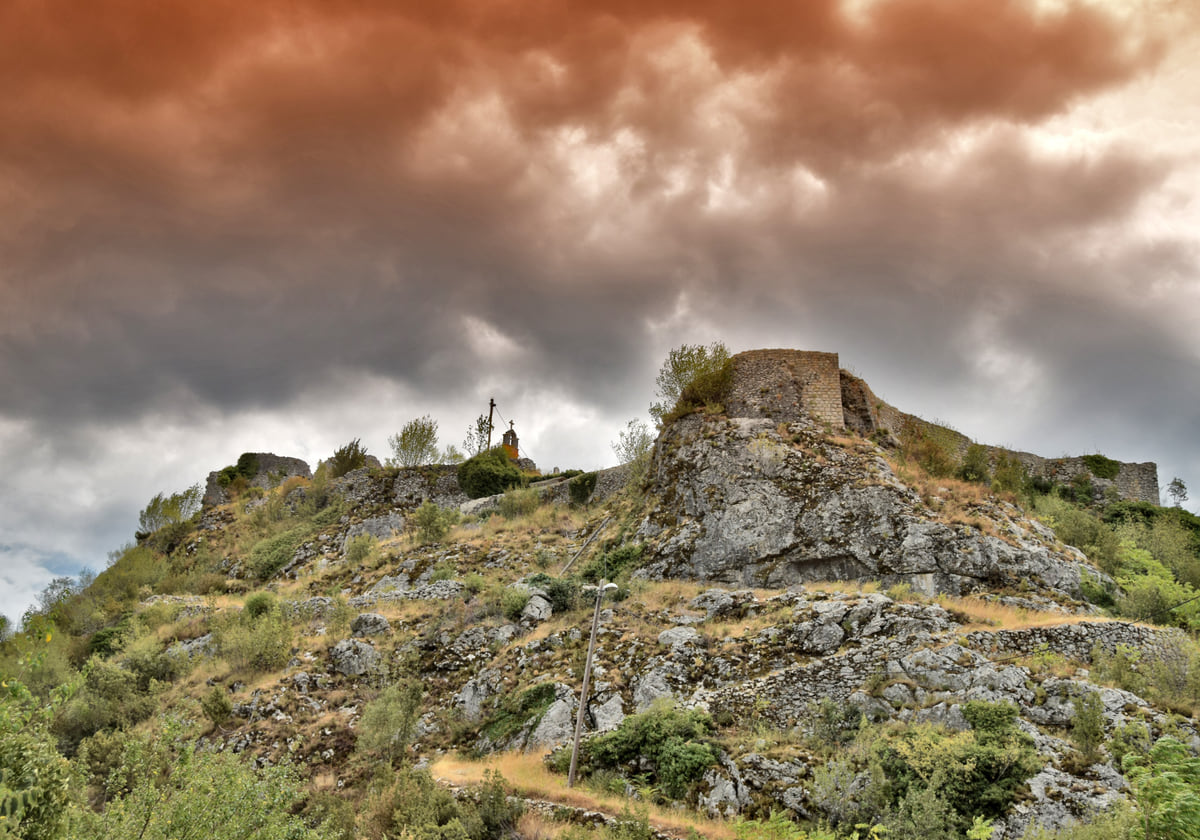
Archaeological site and museum near Podgorica
Medun, a rocky ridge with 2,300 years of walls on top
Medun is a village of 87 people about 12 km north-east of Podgorica, in the Kuči area. On its ridge stand the remains of Meteon, a town of the Illyrian Labeates founded in the late 4th or early 3rd century BC, and below it is the birthplace of Marko Miljanov, a museum since 1971.
In 30 seconds
Full read: 2 min
- Medun is about 12 km north-east of Podgorica, in the Kuči area.
- Its ridge holds the remains of Meteon, an Illyrian town of the 4th-3rd century BC.
- A Turkish fortress was later built on top, and its towers still stand in part.
- Marko Miljanov's birthplace has been a museum since 1971.
For anyone who has already done Doclea, Medun is the best half-day out of Podgorica in my book. I'd climb the ridge first, in low light, and visit the museum afterwards, because Marko Miljanov's life makes more sense once you've seen the plain he was defending.

Before you go
What I would keep in mind
-
01 Most beautiful
Cyclopean Illyrian walls
Parts of Meteon's defensive wall survive, built from huge blocks in what the tourist board calls the Cyclopean technique. It looks out over the whole Medun plain.
-
02 My tip
English audio guide in the museum
The Marko Miljanov Museum has an audio guide in Montenegrin and English, according to the Tourist Organisation of Podgorica. Without it, the cases say little if you can't read the labels.
-
03 Getting there
Twelve kilometres from the capital
Medun lies about 12 km north-east of Podgorica, towards the Kuči mountains. It pairs well with the Roman ruins of Doclea on the other side of town.
Doclea
If I had one stop to show how history piles up in central Montenegro, it would be Medun. On a single limestone ridge you get an Illyrian wall more than two thousand years old, the ruins of a medieval Turkish fortress on top of it, a church holding the grave of a 19th-century hero and, further down, the house where that hero was born. All of it in a village of 87 people, twelve kilometres from the capital.
Meteon, stronghold of the Labeates
The Tourist Organisation of Podgorica explains that Medun was Meteon, one of the centres of the Labeates, the Illyrian tribe that ruled the whole Skadar basin. It was founded in the late 4th or early 3rd century BC on an awkward, hard-to-reach ridge above the Medun plain, and what survives from that period are sections of a massive defensive wall in the so-called Cyclopean style, giant blocks fitted together without mortar.
The contrast with Doclea, the Roman town on the other side of Podgorica, is all in the size of the stones. Doclea has columns and baths from a market town. Medun is a fortress built to keep people out.
The Turkish fort on top
Later builders used the same ridge. The tourist board makes the point that most of what you see of the town today, the scattered corner towers and ramparts, belongs to the medieval Turkish fortress rather than to Meteon. It helps to keep that in mind as you climb. The biggest, roughest blocks are the ancient ones; the towers came afterwards.
I’d go up early or late. The ridge is exposed, the Podgorica valley bakes in summer, and from the top you can see exactly why everyone who passed through wanted this spot.
To sleep close to everything, search places to stay in Podgorica on Expedia and filter by area before price.
Marko Miljanov, his grave and his home
Next to St Nicholas church lie Marko Miljanov and his wife Stefa, and below, on a saddle between the hills, is the house where he was born. Marko Miljanov Popović was a vojvoda, a warrior, a statesman and a writer, and the tourist board counts him among the most significant figures in Montenegro’s 19th century.
His birthplace opened as a museum in 1971. Inside are photographs of his life, personal belongings such as clothing, weapons and jewellery, a collection of manuscripts, editions of his writing and a library of more than 6,000 books. There’s an audio guide in Montenegrin and English, and I’d take it, because without the background the visit is just a case of keepsakes. It counts among the museums in Podgorica even though it sits outside the city.
Fitting it into a day
Medun is about 12 km north-east of Podgorica, on the way to the Kuči mountains. The tourist board doesn’t publish opening hours or a ticket price for the museum, so I’d ask at its office on Ulica slobode before setting off. There’s no official bus timetable to rely on, so a car or a taxi is the practical choice.
Half a morning is enough. For a full day of history, I’d do Doclea early, Medun mid-morning and spend the afternoon in town between the clock tower in Podgorica old town and the cathedral. Three eras in under twenty kilometres.
If you are short on time, see the best tours in Medun and pick one that fits your day.
To sleep close to everything, search places to stay in Podgorica on Booking.com and filter by area before price.
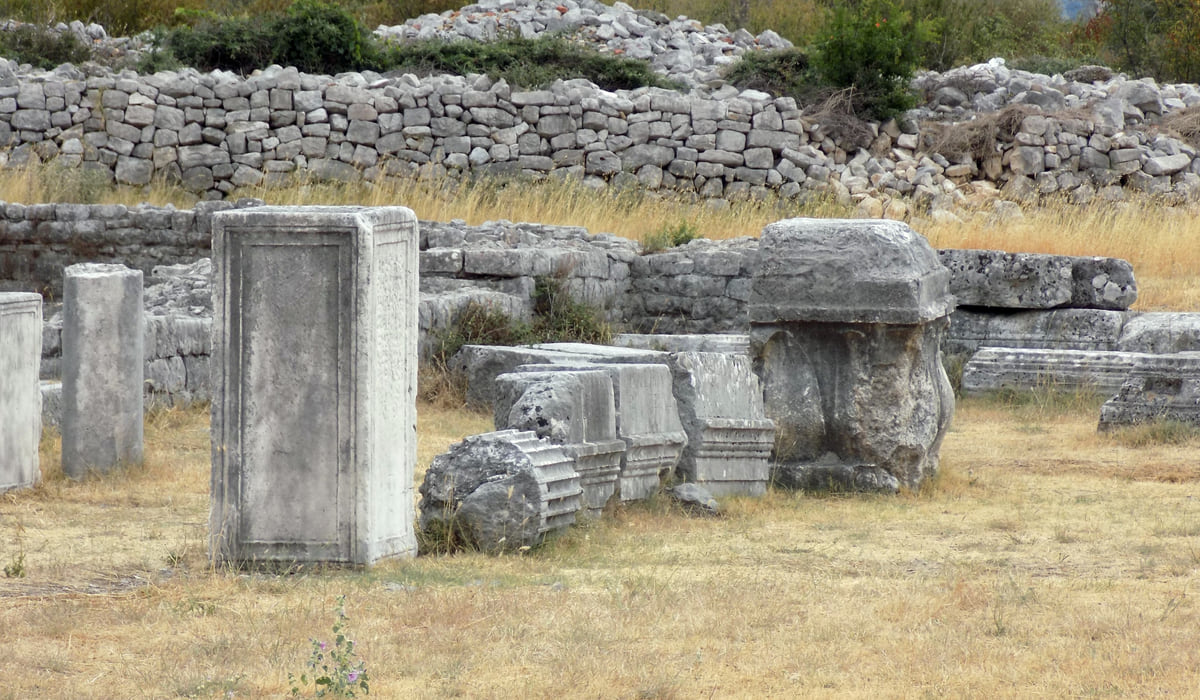
Columns and stone blocks of the Roman town of Doclea near Podgorica, among dry grass and low walls
What you'll find at Medun
| Site | What it is | Period |
|---|---|---|
| Meteon | Labeates town with a Cyclopean wall | Late 4th or early 3rd century BC |
| Fortress | Towers and ramparts of a Turkish fortress | Middle Ages |
| St Nicholas church | Graves of Marko Miljanov and his wife Stefa beside it | No date in the source |
| Marko Miljanov's birthplace | Museum with personal items, manuscripts and a library of over 6,000 books | Museum opened in 1971 |
Source: Tourist Organisation of Podgorica, checked on 10-10-2026. No opening hours or ticket price are published.
Test yourself
True or false?
0/3 Pick before you peek.
-
Meteon was a Roman town.
See the answer
False. It was an Illyrian town of the Labeates, founded in the late 4th or early 3rd century BC. The Roman site is Doclea.
-
Marko Miljanov is buried at Medun.
See the answer
True. His grave and that of his wife Stefa are beside St Nicholas church, according to the Tourist Organisation of Podgorica.
-
The museum's library holds over 6,000 books.
See the answer
True. Alongside manuscripts, editions of his works and personal belongings such as clothing, weapons and jewellery.
Map
Where Medun is
The Adriatic coast runs from Herceg Novi to Ulcinj; the centre holds Podgorica, Cetinje and Lake Skadar, and the north, Durmitor and the Tara Canyon. Every number opens its guide.
 1Podgorica 2Cathedral of the Resurrection 3Stara Varoš 4Doclea 5Medun 6Museums in Podgorica 7Dajbabe Monastery 8Morača Canyon
 Map data © OpenStreetMap contributors (ODbL)
- 1PodgoricaCapital of Montenegro
- 2Cathedral of the ResurrectionPodgorica's Orthodox cathedral
- 3Stara VarošPodgorica's old quarter
- 4DocleaThe Roman site of Duklja
- 5MedunArchaeological site and museum near Podgorica
- 6Museums in PodgoricaMuseums in Montenegro's capital
- 7Dajbabe MonasteryPodgorica's cave monastery
- 8Morača CanyonMorača river, between Kolašin and Podgorica
0 of 278 Montenegro guides
Your next stamp
- Cetinje
- Fortresses
- Tuzi
- Njeguši
- Stećci tombstones
- Museums in Cetinje
- Monasteries
- UNESCO sites
- Aman Sveti Stefan
- Budva Old Town
- Haj-Nehaj
- Kotor
- Lučice Beach
- Montenegro's coast
- Peaks of the Balkans
- Porto Montenegro
- Sea Dance Festival
- Splendid Conference & Spa Resort
- Stari Bar
- Ulcinj Old Town
- Bay of Kotor
- Budva Riviera
- Heroj submarine
- Iberostar Bellevue
- Independence Day
- Old olive tree of Mirovica
- Tivat
- Velika plaža
- Ada Bojana
- Beaches in Budva
- Eurostars Queen of Montenegro
- Herceg Novi
- Kotor Old Town
- Mount Rumija
- Igalo
- Kotor city walls
- Mogren Beach
- Montenegro Beach Resort
- Svač
- Vrmac
- Hiking
- Jaz Beach
- Kanli kula
- Luštica peninsula
- St Tryphon Cathedral
- Ulcinj salt pans
- Forte Mare
- Gornja Lastva
- Maritime Museum, Kotor
- Slovenska Beach
- Drobni Pijesak Beach
- Kotor viewpoints
- Mamula
- Žanjic beach
- Kotor cruise port
- Orjen
- Plavi horizonti beach
- Sveti Nikola Island
- Blue Cave
- Restaurants in Budva
- Restaurants in Kotor
- Canyoning
- Hotels
- Perast
- Sutomore
- Sveti Stefan
- Čanj
- Luxury hotels
- Our Lady of the Rocks
- Pržno
- Things to do
- Activities
- All-inclusive hotels
- Bar Riviera
- Bečići
- Hotel Palma
- St George island
- Dobrota
- Hladna uvala
- Most beautiful places
- Petrovac
- Crvena stijena
- Prčanj
- Prettiest villages
- Cycling
- Risan
- Heritage Grand Perast
- Map
- Hyatt Regency Kotor Bay
- Where is it?
- Regions
- Cities
- Beaches in Bar
- Budva
- Central Montenegro
- Hotels in Budva
- Hotels in Kotor
- Iberostar Waves Herceg Novi
- Kitesurfing
- The name
- Beaches in Ulcinj
- Flag
- Hotels in Perast
- Palmon Bay Hotel & Spa
- Podgorica
- Cathedral of the Resurrection
- One&Only Portonovi
- Population
- Sandy beaches
- Azul Beach Resort Montenegro
- Naturist beaches
- Size
- Stara Varoš
- Doclea
- Language
- Mimosa Festival
- Religion
- Zipline
- Currency
- Museums in Podgorica
- Dajbabe Monastery
- EU membership
- History
- Restaurants in Podgorica
- Hotels in Podgorica
- Public holidays
- Avala Resort & Villas
- Bar
- Beaches in Kotor
- Birdwatching
- Hotels in Ulcinj
- Kotor carnival
- Time zone
- Tivat beaches
- Boka Night
- Dukley Hotel & Resort
- Facts
- Hotels in Tivat
- Zeta
- Caves
- Herceg Novi beaches
- National parks
- Šipčanik
- Hotels in Herceg Novi
- Fly fishing
- Museums
- Canyons and waterfalls
- Lakes
- Mountains
- Montenegro and Croatia
- Beaches
- Boat trips
- Montenegro and Albania
- Nightlife
- Ulcinj
- Weather
- Best time to visit
- Cetinje Monastery
- Kayaking
- Montenegro and the Balkans
- How to get there
- In summer
- King Nikola's Palace
- Sailing
- Biljarda
- Flights
- In winter
- Airports
- New Year's Eve
- Lovćen
- Paragliding
- Tivat Airport
- Njegoš Mausoleum
- Podgorica Airport
- Dubrovnik to Kotor
- Kotor serpentine
- Belgrade to Montenegro
- Ferry to Italy
- Njeguši prosciutto
- Border crossings
- In January
- Lipa Cave
- Where to stay
- In February
- Kamenari-Lepetane ferry
- Pavlova strana
- Getting around
- In March
- Rijeka Crnojevića
- In April
- Trains
- Buses
- In May
- Car hire
- In June
- Driving
- In July
- In August
- Taxis
- Distances
- In September
- In October
- Road trip
- Food
- In November
- Lake Skadar
- Scenic drives
- In December
- Kotor cable car
- Virpazar
- Where to eat
- Budva to Kotor
- Godinje
- Wine
- Podgorica to Kotor
- Vranjina
- Besac fortress
- Prices and budget
- On a budget
- Žabljak Crnojevića
- Danilovgrad
- Entry requirements
- Ostrog Monastery
- Tourist registration
- Customs
- Nikšić
- Crvena Stijena cave
- Safety
- Events
- Healthcare
- Northern Montenegro
- Mobile and roaming
- Žabljak
- Durmitor
- Plugs
- Black Lake
- With kids
- Bobotov Kuk
- Holidays
- Day trips
- Hotels in Žabljak
- Three-day itinerary
- Five-day itinerary
- Skiing in Montenegro
- One-week itinerary
- Skiing in Žabljak
- Šavnik
- Ten-day itinerary
- Nevidio Canyon
- Tara Canyon
- Tara rafting
- Đurđevića Tara Bridge
- Plužine
- Lake Piva
- Piva Monastery
- Mojkovac
- Brskovo
- Pljevlja
- Husein Pasha Mosque
- Kolašin
- Hotels in Kolašin
- Skiing in Kolašin
- Biogradska Gora National Park
- Komovi
- Morača Monastery
- Morača Canyon
- Bijelo Polje
- Đalovića Cave
- Berane
- Andrijevica
- Petnjica
- Rožaje
- Plav
- Lake Plav
- Gusinje
- Vusanje
- Prokletije National Park
Frequently asked questions
Where is Medun in Montenegro?
About 12 km north-east of Podgorica, in the Kuči area, inside the capital's municipality. It's a village of 87 people according to the 2023 census.
What is there to see at Medun?
The remains of Meteon, the Illyrian hilltop town, the Turkish fortress built over it, St Nicholas church with the graves of Marko Miljanov and his wife, and the museum in his birthplace.
Who was Marko Miljanov?
Marko Miljanov Popović was a vojvoda (duke), a warrior, a statesman and a writer, one of the most important figures in 19th-century Montenegrin history according to the Tourist Organisation of Podgorica.
Is the Marko Miljanov Museum worth visiting?
If you like history, yes. It has photographs of his life, clothing, weapons and jewellery, manuscripts, editions of his books and a library of more than 6,000 volumes, with an English audio guide.
Who built Meteon?
The Labeates, an Illyrian tribe that controlled the whole Skadar basin. The town was founded in the late 4th or early 3rd century BC.
By
Tourism graduate with a master’s in Tourism Management and Planning from the University of Málaga, who has travelled across Europe. He writes every guide from official sources and his own judgement.
Published on . Facts checked on .
Sources
Some links in this guide are affiliate links: if you book through them, the site earns a commission at no extra cost to you. Affiliate disclosure
Photos: Miomir Magdevski (CC BY 3.0); BuhaM (CC BY-SA 4.0), via Wikimedia Commons.