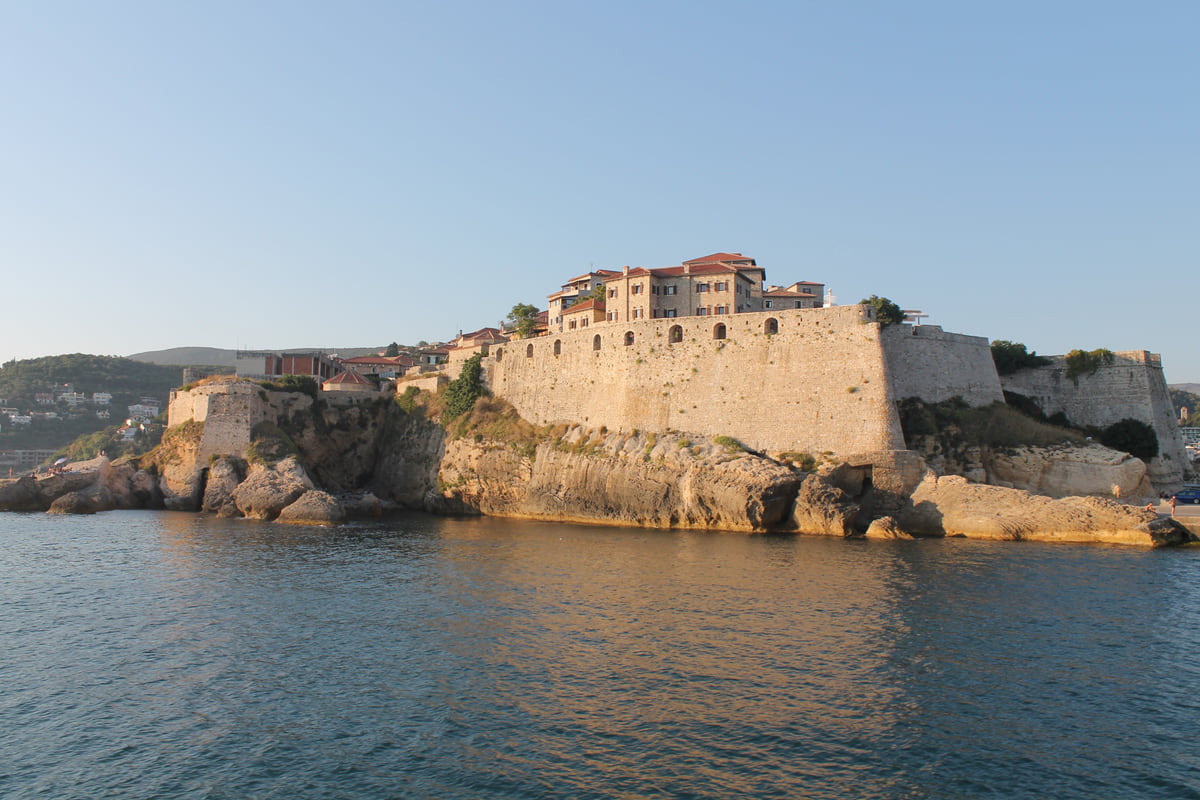
Ulcinj, southern Montenegro
Ulcinj Old Town, a stone ship run aground above the sea
Ulcinj Old Town, Stari grad, sits on a headland above the sea and has been lived in for about 25 centuries, according to the Ulcinj tourist board. It keeps Illyrian walls, the Citadel with the Balšić tower, the old slave square and a small museum, along with two famous stories, the Cervantes legend and the last years of Sabbatai Zevi.
In 30 seconds
Full read: 3 min
- Ulcinj Old Town sits on a headland above the sea and has been inhabited for around 25 centuries.
- Its north wall is Illyrian and its two gates date from the 6th century.
- At the top is the Citadel and the Balšić tower, where Sabbatai Zevi spent his last years.
- The slave square recalls the corsairs' captive market from the 17th century.
It's a small old town that you can walk round in an hour, but it packs in more history per square metre than many better-known ones. I'd go up as the sun drops, come in through the land gate and leave by the sea gate down to Mala plaža.

Before you go
What I would keep in mind
-
01 Most beautiful
The Citadel and the Balšić tower
At the top stands the tower that tradition credits to the Balšić family, lords of Ulcinj from 1360 to 1421. The Ottomans added the third floor, and it looks out to sea on three sides.
-
02 My tip
In at the top, out by the sea
Since the 6th century the town has had two gates, the upper one to the west for arrivals by land and the lower one to the east facing the sea. Do it in that order and you finish by Mala plaža.
-
03 Watch out
Cervantes here is legend, not history
The Ulcinj tourist board itself presents his captivity here as a legend. If anyone shows you the exact cell where Cervantes was held, take it with a pinch of salt.
-
04 Getting there
The whole town on foot
The old town sits right above the town beach and a few minutes from the new centre of Ulcinj, so there's no need for a car to get up there.
Ulcinj -
05 Most beautiful
Another dead town, Svač
To carry on with Ulcinj's history, the ruins of Svač, a medieval bishop's seat, stand above Lake Šas.
Svač ruins -
06 Worth the splurge
Hotels inside and outside the walls
Ulcinj's hotels by area, from Palata Venezia in the old town to those on Velika plaža.
hotels in Ulcinj
What I would book
The Ulcinj tourist board likens its old town to a ship run aground, and the image works perfectly from the beach, with the walls rising out of golden rock and the houses squeezed together on top. It’s small enough to walk round in an hour, yet it holds more history per square metre than plenty of old towns with bigger reputations. Illyrians, Romans, Byzantines, Venetians and Ottomans all passed through, along with corsairs, captives and even an exiled messiah.
The oldest part, the Illyrian wall
According to the tourist board, the old town has been inhabited for about 25 centuries and is one of the oldest urban ensembles on the Adriatic. The oldest thing you can see is the north stretch of wall, Illyrian and built of huge blocks in the Greek manner. In the 6th century the town got its two gates, the lower one to the east, which you entered from the sea, and the upper one to the west for anyone arriving overland. Inside, the lanes are narrow and crooked, lined with two and three-storey stone houses and Renaissance, Baroque and Ottoman details.
The Citadel and the Balšić tower
On the highest terrace stands the Citadel and its tower, which dominates the whole town and faces the sea on three sides. Tradition credits it to the Balšić family, who made Ulcinj their capital from 1360 to 1421, and the Ottomans added the third floor and the vaulted ground floor. These days it’s mostly used as a gallery and for poetry evenings. Close by are Palata Venezia, thought to have housed the Venetian governor, and Dvori Balšića on the southern terrace, both of which are now places to stay.
Once your dates are set, check which hotels are still free in Ulcinj before prices climb.
The slave square and the Cervantes legend
In front of the church-mosque is a small arcaded square that, from the mid-17th century, served as the slave market of the Ulcinj corsairs. The tourist board explains that most captives came from Italy and Dalmatia and were held for ransom rather than put to work. This is where the town’s favourite legend starts, that Cervantes was held here as a captive and that Dulcinea owes her name to Dulcigno, the town’s old Italian name. The same site calls it a legend and says the certain part is that Cervantes was freed in September 1580. To me it’s a lovely story to tell in the square, not a fact to repeat as gospel.
A messiah in the tower
The other story has firmer dates. Sabbatai Zevi, the rabbi from Smyrna who proclaimed himself the Messiah in 1666 and ended up converting to Islam before the sultan, was confined to Ulcinj, according to the tourist board, and spent his last ten years on the third floor of the Balšić tower, where he died in 1676. A Star of David carved in white marble survives on that floor.
If you would rather have a local show you round, book a guided tour in Ulcinj Old Town and choose by the reviews.
The museum and visiting
The old town museum holds an ancient pedestal with a Greek inscription from the stonemasons to Artemis, a cameo of Athena and two Bronze Age axes, while the lapidarium has an Ionic capital and pieces from a 9th-century church. Its tourism office doesn’t publish opening hours or prices, but wandering the streets costs nothing. If walled towns are your thing, compare it with Budva Old Town, more polished and much busier, or the ruins of Stari Bar, and find the rest in Montenegro’s castles and fortresses. For food and a bed, head down to the new town of Ulcinj.
Once your dates are set, check which hotels are still free in Ulcinj before prices climb.
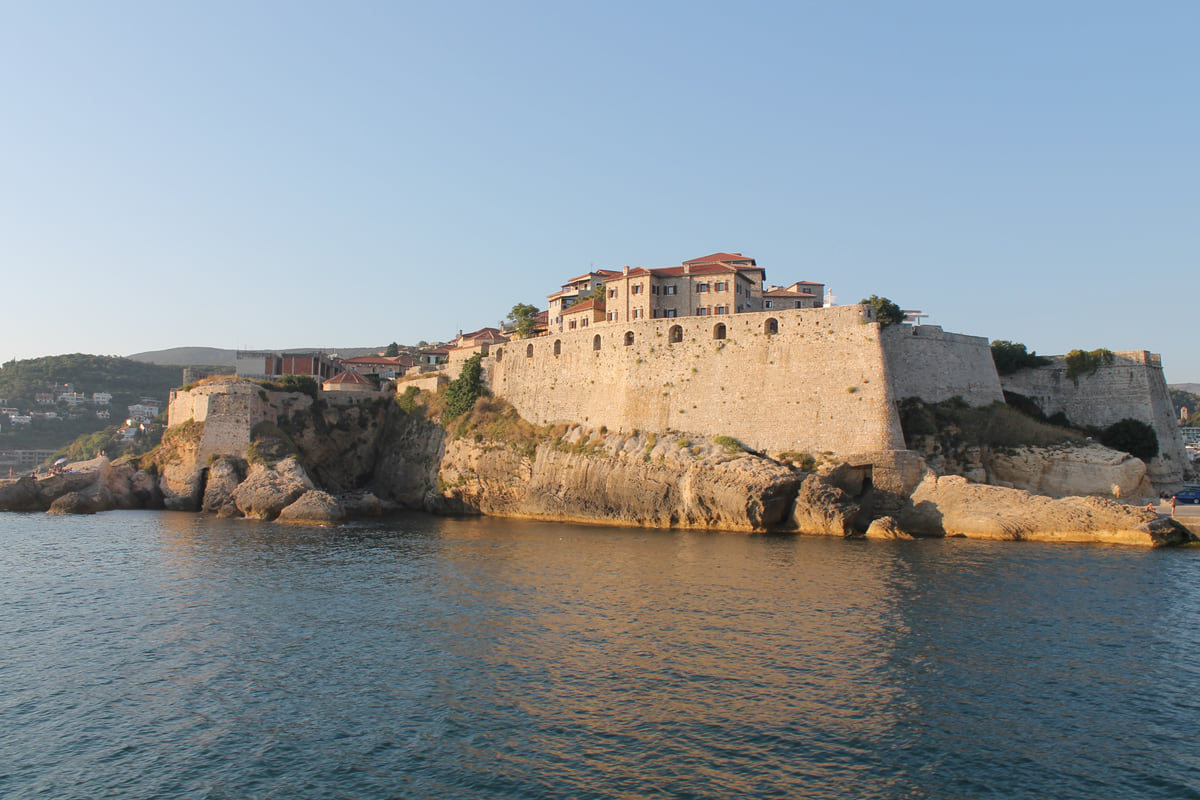
Ulcinj old town on its rocky headland, with walls and stone houses lit by the late afternoon sun
What's inside the old town
| Place | What it is | Detail |
|---|---|---|
| North wall | Illyrian wall of huge blocks | The oldest part, 5th century BC |
| Upper and lower gates | Entrances from land and from the sea | 6th century |
| Citadel and Balšić tower | Fortress at the top of the town | Now a gallery and poetry venue |
| Palata Venezia | Residence of the Venetian governor | Now accommodation |
| Dvori Balšića | Building on the southern terrace | Now accommodation |
| Slave square | Arcaded square by the church-mosque | Slave market from the mid-17th century |
| Museum | Archaeology and lapidarium | Greek inscription to Artemis, cameo of Athena |
Ulcinj Tourist Organisation, old town page, checked on 11-10-2026. Museum opening hours and prices aren't published.
Test yourself
True or false?
0/3 Pick before you peek.
-
The Balšić tower was built entirely by the Ottomans.
See the answer
False. Tradition credits it to the Balšić family, who ruled Ulcinj from 1360 to 1421. The Ottomans added the third floor and the vault on the ground floor.
-
Ulcinj Old Town once had a slave market.
See the answer
True. From the mid-17th century, according to the Ulcinj tourist board, the square by the church-mosque was a market for captives, mostly from Italy and Dalmatia, held for ransom.
-
The old town has only one gate.
See the answer
False. It has had two since the 6th century, an upper one to the west for arrivals by land and a lower one to the east facing the sea.
Map
Where Ulcinj Old Town is
The Adriatic coast runs from Herceg Novi to Ulcinj; the centre holds Podgorica, Cetinje and Lake Skadar, and the north, Durmitor and the Tara Canyon. Every number opens its guide.
 1Ulcinj Old Town 2Velika plaža 3Ada Bojana 4Svač 5Ulcinj salt pans 6Azul Beach Resort Montenegro 7Ulcinj
 Map data © OpenStreetMap contributors (ODbL)
- 1Ulcinj Old TownUlcinj, southern Montenegro
- 2Velika plažaUlcinj, southern Montenegro
- 3Ada BojanaMouth of the Bojana, Ulcinj municipality
- 4SvačLake Šas, inland from Ulcinj
- 5Ulcinj salt pansUlcinj, next to Velika plaža
- 6Azul Beach Resort MontenegroBeach resort in Ulcinj
- 7UlcinjSouthern Montenegro, by the Albanian border
0 of 278 Montenegro guides
Your next stamp
- Ulcinj
- Budva Old Town
- Kotor Old Town
- Svač
- Stara Varoš
- Cetinje
- Aman Sveti Stefan
- Haj-Nehaj
- Kotor
- Lučice Beach
- Montenegro's coast
- Peaks of the Balkans
- Porto Montenegro
- Sea Dance Festival
- Splendid Conference & Spa Resort
- Stari Bar
- Bay of Kotor
- Budva Riviera
- Heroj submarine
- Iberostar Bellevue
- Independence Day
- Old olive tree of Mirovica
- Tivat
- Velika plaža
- Ada Bojana
- Beaches in Budva
- Eurostars Queen of Montenegro
- Herceg Novi
- Mount Rumija
- Igalo
- Kotor city walls
- Mogren Beach
- Montenegro Beach Resort
- Vrmac
- Hiking
- Jaz Beach
- Kanli kula
- Luštica peninsula
- St Tryphon Cathedral
- Ulcinj salt pans
- Forte Mare
- Gornja Lastva
- Maritime Museum, Kotor
- Slovenska Beach
- Drobni Pijesak Beach
- Kotor viewpoints
- Mamula
- Žanjic beach
- Kotor cruise port
- Orjen
- Plavi horizonti beach
- Sveti Nikola Island
- Blue Cave
- Restaurants in Budva
- Restaurants in Kotor
- Canyoning
- Hotels
- Perast
- Sutomore
- Sveti Stefan
- Čanj
- Luxury hotels
- Our Lady of the Rocks
- Pržno
- Things to do
- Activities
- All-inclusive hotels
- Bar Riviera
- Bečići
- Hotel Palma
- St George island
- Dobrota
- Hladna uvala
- Most beautiful places
- Petrovac
- Crvena stijena
- Prčanj
- Prettiest villages
- Cycling
- Risan
- UNESCO sites
- Heritage Grand Perast
- Map
- Hyatt Regency Kotor Bay
- Where is it?
- Regions
- Cities
- Beaches in Bar
- Budva
- Central Montenegro
- Hotels in Budva
- Hotels in Kotor
- Iberostar Waves Herceg Novi
- Kitesurfing
- The name
- Beaches in Ulcinj
- Flag
- Hotels in Perast
- Palmon Bay Hotel & Spa
- Podgorica
- Cathedral of the Resurrection
- One&Only Portonovi
- Population
- Sandy beaches
- Azul Beach Resort Montenegro
- Naturist beaches
- Size
- Doclea
- Language
- Mimosa Festival
- Medun
- Religion
- Zipline
- Currency
- Museums in Podgorica
- Dajbabe Monastery
- EU membership
- History
- Restaurants in Podgorica
- Hotels in Podgorica
- Public holidays
- Avala Resort & Villas
- Bar
- Beaches in Kotor
- Birdwatching
- Hotels in Ulcinj
- Kotor carnival
- Time zone
- Tivat beaches
- Tuzi
- Boka Night
- Dukley Hotel & Resort
- Facts
- Hotels in Tivat
- Zeta
- Caves
- Herceg Novi beaches
- National parks
- Šipčanik
- Hotels in Herceg Novi
- Monasteries
- Fortresses
- Fly fishing
- Museums
- Canyons and waterfalls
- Lakes
- Mountains
- Montenegro and Croatia
- Beaches
- Boat trips
- Montenegro and Albania
- Nightlife
- Weather
- Best time to visit
- Cetinje Monastery
- Kayaking
- Montenegro and the Balkans
- How to get there
- In summer
- King Nikola's Palace
- Sailing
- Biljarda
- Flights
- In winter
- Airports
- Museums in Cetinje
- New Year's Eve
- Lovćen
- Paragliding
- Tivat Airport
- Njegoš Mausoleum
- Podgorica Airport
- Dubrovnik to Kotor
- Kotor serpentine
- Belgrade to Montenegro
- Njeguši
- Ferry to Italy
- Njeguši prosciutto
- Border crossings
- In January
- Lipa Cave
- Where to stay
- In February
- Kamenari-Lepetane ferry
- Pavlova strana
- Getting around
- In March
- Rijeka Crnojevića
- In April
- Trains
- Buses
- In May
- Car hire
- In June
- Driving
- In July
- In August
- Taxis
- Distances
- In September
- In October
- Road trip
- Food
- In November
- Lake Skadar
- Scenic drives
- In December
- Kotor cable car
- Virpazar
- Where to eat
- Budva to Kotor
- Godinje
- Wine
- Podgorica to Kotor
- Vranjina
- Besac fortress
- Prices and budget
- On a budget
- Žabljak Crnojevića
- Danilovgrad
- Entry requirements
- Ostrog Monastery
- Tourist registration
- Customs
- Nikšić
- Crvena Stijena cave
- Safety
- Events
- Healthcare
- Northern Montenegro
- Mobile and roaming
- Žabljak
- Durmitor
- Plugs
- Black Lake
- With kids
- Bobotov Kuk
- Holidays
- Day trips
- Stećci tombstones
- Hotels in Žabljak
- Three-day itinerary
- Five-day itinerary
- Skiing in Montenegro
- One-week itinerary
- Skiing in Žabljak
- Šavnik
- Ten-day itinerary
- Nevidio Canyon
- Tara Canyon
- Tara rafting
- Đurđevića Tara Bridge
- Plužine
- Lake Piva
- Piva Monastery
- Mojkovac
- Brskovo
- Pljevlja
- Husein Pasha Mosque
- Kolašin
- Hotels in Kolašin
- Skiing in Kolašin
- Biogradska Gora National Park
- Komovi
- Morača Monastery
- Morača Canyon
- Bijelo Polje
- Đalovića Cave
- Berane
- Andrijevica
- Petnjica
- Rožaje
- Plav
- Lake Plav
- Gusinje
- Vusanje
- Prokletije National Park
Frequently asked questions
What is there to see in Ulcinj Old Town?
The Illyrian north wall, the two 6th-century gates, the Citadel with the Balšić tower, the old slave square by the church-mosque and the museum, which has a Greek inscription dedicated to Artemis.
Is Ulcinj Old Town free to visit?
Walking the streets is free. The museum is a separate visit, but the Ulcinj tourist board doesn't publish its opening hours or prices.
Was Cervantes really held prisoner in Ulcinj?
It's a local legend, which the Ulcinj tourist board tells as such, linking Dulcinea with Dulcigno, the town's old Italian name. The same site says the certain part is that Cervantes was freed in September 1580.
Who was Sabbatai Zevi and why is he linked to Ulcinj?
A rabbi from Smyrna who proclaimed himself the Messiah in the 17th century. According to the Ulcinj tourist board, the sultan confined him here, and he spent his last ten years in the Balšić tower, dying in 1676.
How long do you need in Ulcinj Old Town?
An hour for a wander, a bit longer with the museum. I'd save it for late afternoon, when the low light catches the walls.
By
Tourism graduate with a master’s in Tourism Management and Planning from the University of Málaga, who has travelled across Europe. He writes every guide from official sources and his own judgement.
Published on . Facts checked on .
Sources
Some links in this guide are affiliate links: if you book through them, the site earns a commission at no extra cost to you. Affiliate disclosure
Photos: Mjuzikxhankej (CC BY-SA 3.0); Mjuzikxhankej (CC BY-SA 3.0), via Wikimedia Commons.