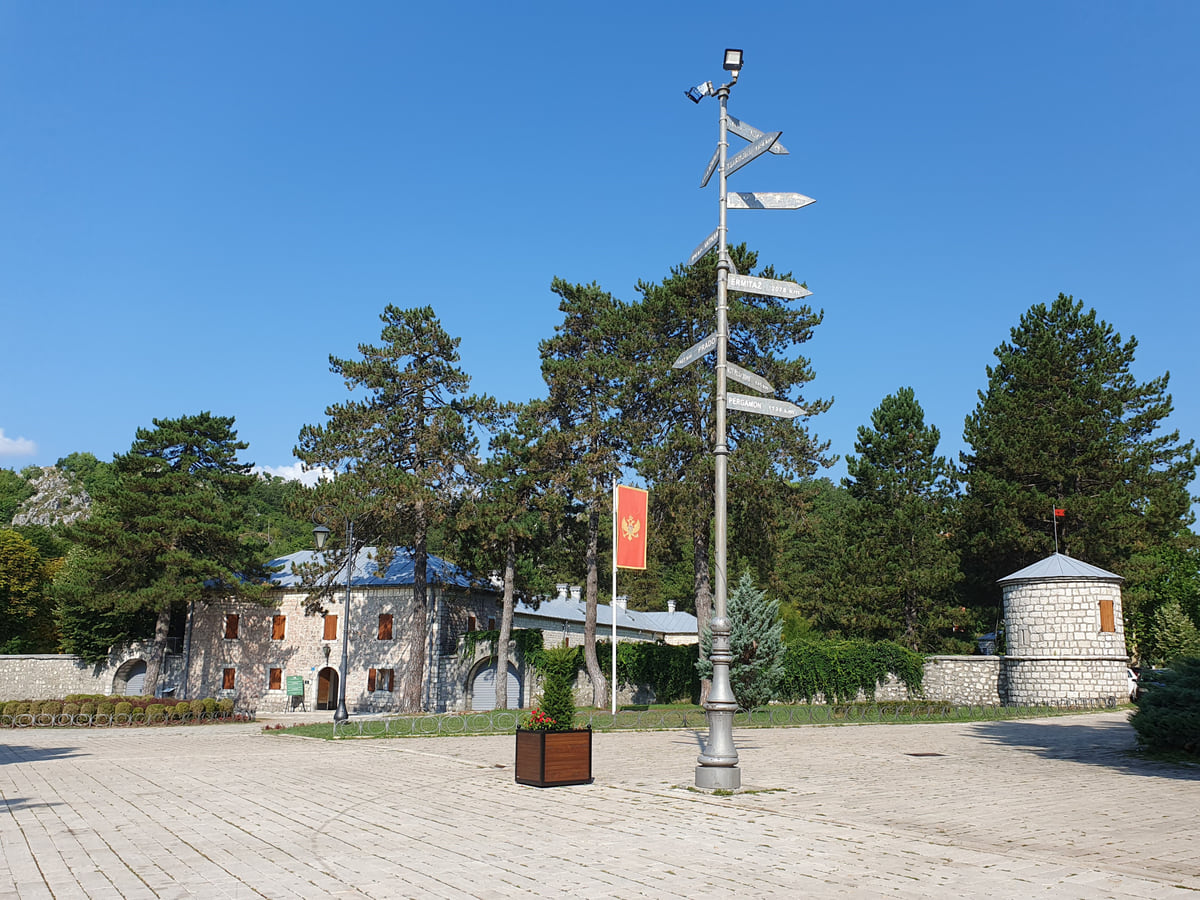
Njegoš Museum in Cetinje
The Biljarda, the house that took its name from a billiard table
The Biljarda is the residence Petar II Petrović Njegoš had built in Cetinje in 1838, a building about 72 metres long with 25 rooms, courtyards and four corner towers. It's named after its owner's billiard table. Today it's the museum devoted to Njegoš, and beside it stands the great 1:10,000 relief map of Montenegro from 1916.
In 30 seconds
Full read: 2 min
- The Biljarda is Njegoš's residence in Cetinje, built in 1838.
- It's named after the ruler's billiard table.
- Today it's the Njegoš Museum, with a lapidarium in the courtyard since 2012.
- Beside it is the 1:10,000 relief map of Montenegro.
The Biljarda is the one stop in Cetinje I wouldn't skip, mainly for the relief map next to it. Five minutes in front of that model and you understand why this country held out so long and why everything takes so long to drive to.

Before you go
What I would keep in mind
-
01 Most beautiful
The whole country to scale
The relief, built after the Austro-Hungarian occupation of Cetinje in 1916, shows Montenegro at 1:10,000. The National Tourism Organisation describes a concrete model about 20 by 20 metres.
-
02 My tip
A lapidarium in the courtyard
Since 2012 the Biljarda's courtyard has held a lapidarium with 11 carved stone stelae from the Nikšić and Pljevlja areas, according to the Cetinje tourist board.
Pljevlja -
03 Getting there
Wall to wall with the monastery
The Biljarda was built beside Cetinje Monastery to move political life out of it. Today you see them one after the other.
Cetinje Monastery
Of all Cetinje’s buildings, the Biljarda tells best how a land of clans and monasteries became a state with institutions. It also comes with one of those stories that stick, because it’s named after a billiard table. I think it’s the most rewarding visit in town, because right beside the museum is the relief map of Montenegro, and that model explains the country at a glance.
Njegoš and his new house
The Cetinje tourist board says that until Petar II Petrović Njegoš came along there was nothing like a modern town here. The young metropolitan, well read and alert to what was happening in Europe, set about modernising his little capital, and in 1838 he built, next to Cetinje Monastery, a building that was huge by the country’s standards, designed by the Russian Jakov Ozereckovski.
The measurements say it all. About 72 metres long and 8 wide, with two 13-metre annexes, ground and first floors and 25 rooms, set among walled courtyards with gates and four corner towers. It was called the Biljarda after billiards, its owner’s favourite game. With it, much of political and cultural life moved out of the monastery. Montenegrin leaders and foreign visitors met here, and it housed the Senate and the perjanici, the armed guard. Until 1910 it held ministries, state institutions and schools.
The relief map of Montenegro
During the Austro-Hungarian occupation in the First World War, a pavilion holding a relief model of the whole country was built on the Biljarda’s south side. The Cetinje tourist board gives the scale, 1:10,000, and dates it to after the Lovćen front collapsed and Cetinje was occupied in 1916. The National Tourism Organisation describes a concrete model roughly 20 by 20 metres, made with a jeweller’s precision.
My tip is to look at it with a map open on your phone. Seeing Durmitor, Lake Skadar, the Bay of Kotor and the northern canyons all at once helps you plan the rest of the trip better than any guidebook.
To sleep close to everything, search places to stay in Cetinje on Expedia and filter by area before price.
The Njegoš Museum and the lapidarium
Today the Biljarda is the museum devoted to Njegoš, bishop, poet and ruler, and part of the National Museum of Montenegro. In the courtyard, since European Heritage Days in 2012, there’s a lapidarium of carved stone brought from sites around the country; at present 11 stelae from the Nikšić and Pljevlja areas are on show. It’s run by the Archaeological Museum of Montenegro.
The museum doesn’t publish prices or hours online. I’d ask about a joint ticket, since several museums in Cetinje belong to the same institution.
After the Biljarda
To follow the Njegoš thread, the next stop is his tomb. The Njegoš Mausoleum, on Jezerski vrh in the Lovćen range, is about 20 km from Cetinje and 461 steps above the car park. And to see where he was born, his birthplace is in Njeguši, on the road to Kotor.
If you are short on time, see the best tours in Biljarda and pick one that fits your day.
To sleep close to everything, search places to stay in Cetinje on Booking.com and filter by area before price.
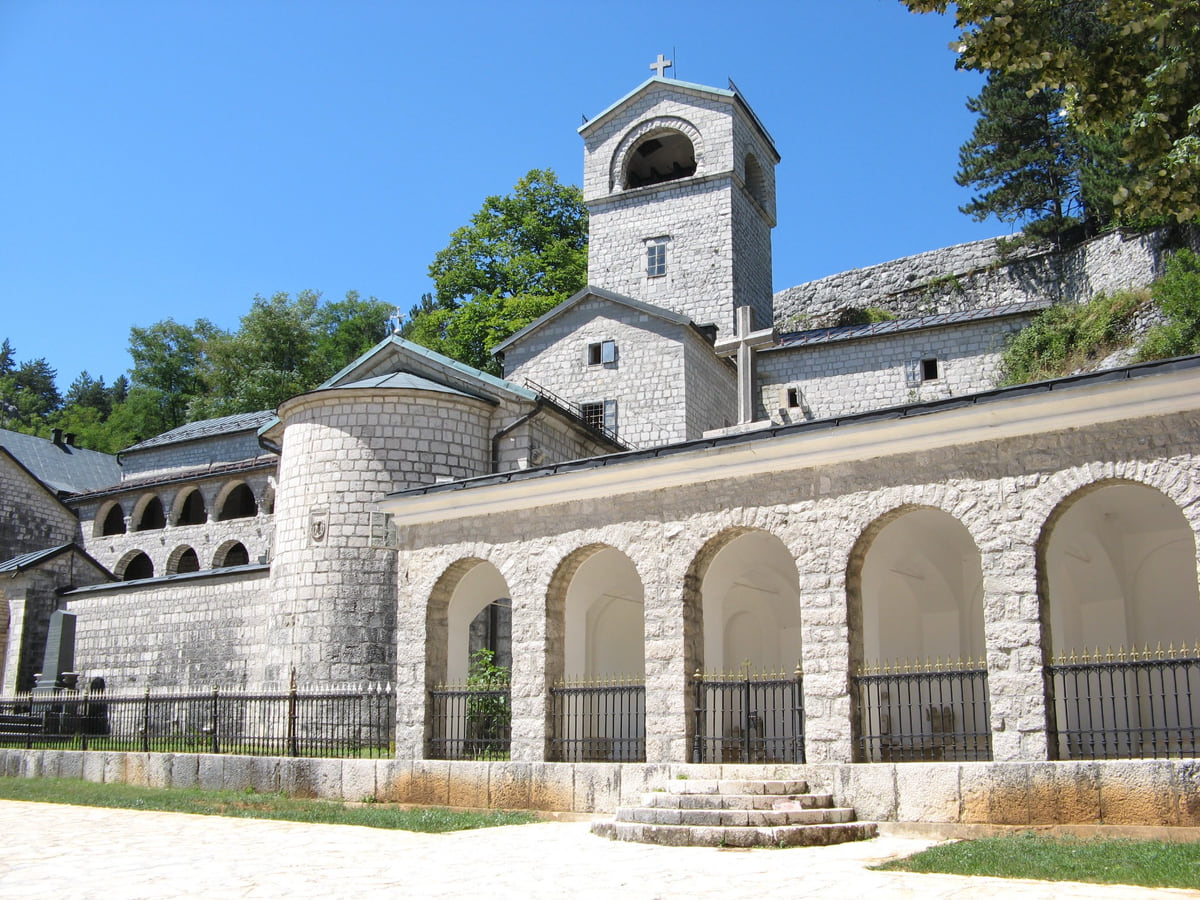
Cetinje Monastery in pale stone, with its bell tower and arcaded gallery along the front under a blue sky
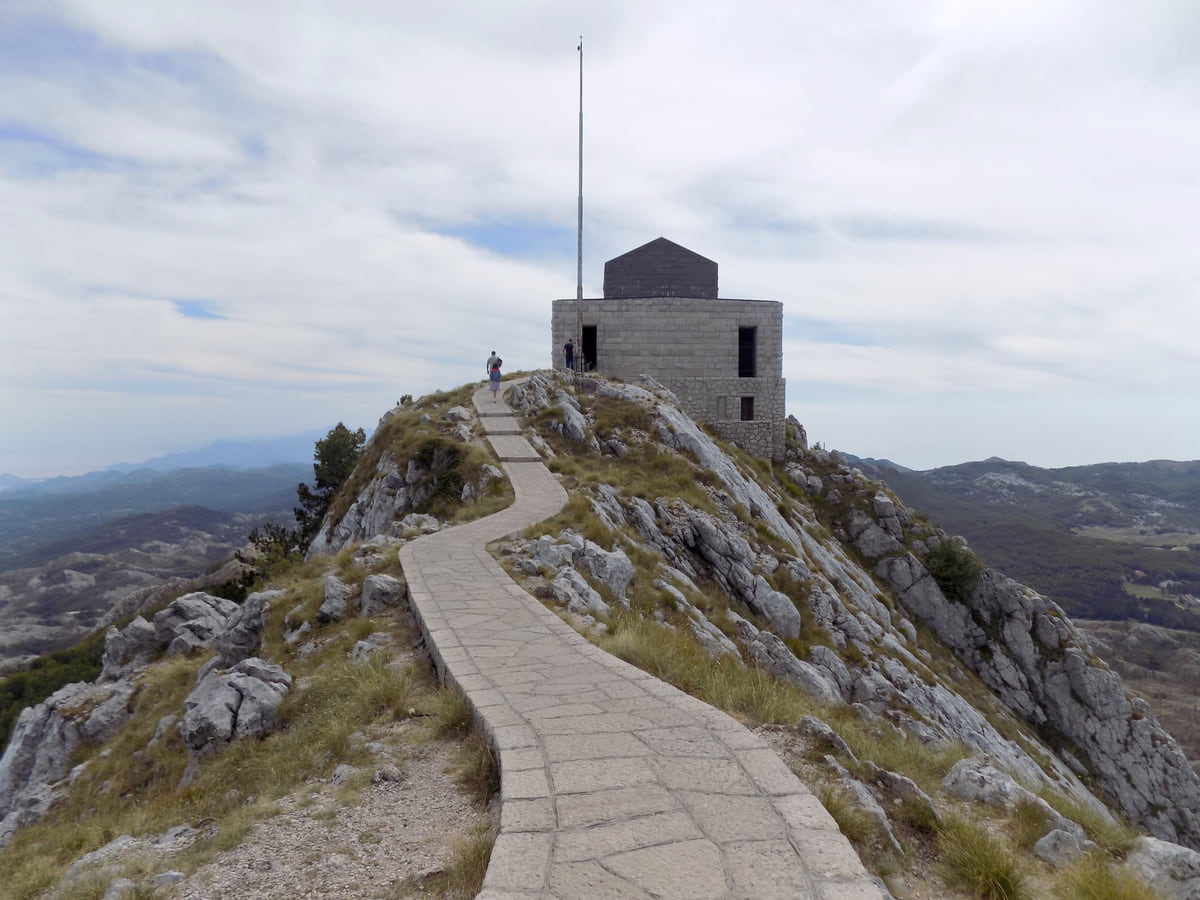
The stone path leading to Njegoš's mausoleum on the summit of Jezerski vrh, on Mount Lovćen, among rocks and mountains
The Biljarda in figures
| Item | Detail |
|---|---|
| Built | 1838 |
| Designed by | The Russian Jakov Ozereckovski |
| Main building | About 72 m long and 8 wide, with two 13 m annexes |
| Rooms | 25, on ground and first floors |
| Uses until 1910 | Senate, the perjanici guard, ministries and schools |
| Relief map of Montenegro | 1:10,000, pavilion from the 1916 occupation |
| Lapidarium | Since 2012, 11 stelae |
Source: Cetinje Tourist Organisation and National Tourism Organisation, checked on 10-10-2026. Museum prices and hours aren't published.
Test yourself
True or false?
0/3 Pick before you peek.
-
The Biljarda is named after a game.
See the answer
True. It takes its name from billiards, Njegoš's favourite game, according to the Cetinje tourist board.
-
The relief map dates from Njegoš's lifetime.
See the answer
False. It was built during the Austro-Hungarian occupation in the First World War, from 1916.
-
The Senate and several ministries were housed in the Biljarda.
See the answer
True. Along with the Senate and the perjanici guard, it held ministries, state bodies and schools until 1910.
Map
Where Biljarda is
The Adriatic coast runs from Herceg Novi to Ulcinj; the centre holds Podgorica, Cetinje and Lake Skadar, and the north, Durmitor and the Tara Canyon. Every number opens its guide.
 1Cetinje 2Cetinje Monastery 3King Nikola's Palace 4Biljarda 5Museums in Cetinje 6Lovćen 7Njeguši 8Lipa Cave 9Rijeka Crnojevića
 Map data © OpenStreetMap contributors (ODbL)
- 1CetinjeMontenegro's historic capital
- 2Cetinje MonasteryOrthodox monastery in Cetinje
- 3King Nikola's PalaceKing Nikola Museum, Cetinje
- 4BiljardaNjegoš Museum in Cetinje
- 5Museums in CetinjeNational Museum of Montenegro
- 6LovćenNational park since 1952
- 7NjegušiLovćen villages, Cetinje municipality
- 8Lipa CaveShow cave near Cetinje
- 9Rijeka CrnojevićaLake Skadar village, Cetinje municipality
0 of 278 Montenegro guides
Your next stamp
- Museums in Cetinje
- Cetinje
- Njeguši
- King Nikola's Palace
- Cetinje Monastery
- Njegoš Mausoleum
- Medun
- Museums
- Aman Sveti Stefan
- Budva Old Town
- Haj-Nehaj
- Kotor
- Lučice Beach
- Montenegro's coast
- Peaks of the Balkans
- Porto Montenegro
- Sea Dance Festival
- Splendid Conference & Spa Resort
- Stari Bar
- Ulcinj Old Town
- Bay of Kotor
- Budva Riviera
- Heroj submarine
- Iberostar Bellevue
- Independence Day
- Old olive tree of Mirovica
- Tivat
- Velika plaža
- Ada Bojana
- Beaches in Budva
- Eurostars Queen of Montenegro
- Herceg Novi
- Kotor Old Town
- Mount Rumija
- Igalo
- Kotor city walls
- Mogren Beach
- Montenegro Beach Resort
- Svač
- Vrmac
- Hiking
- Jaz Beach
- Kanli kula
- Luštica peninsula
- St Tryphon Cathedral
- Ulcinj salt pans
- Forte Mare
- Gornja Lastva
- Maritime Museum, Kotor
- Slovenska Beach
- Drobni Pijesak Beach
- Kotor viewpoints
- Mamula
- Žanjic beach
- Kotor cruise port
- Orjen
- Plavi horizonti beach
- Sveti Nikola Island
- Blue Cave
- Restaurants in Budva
- Restaurants in Kotor
- Canyoning
- Hotels
- Perast
- Sutomore
- Sveti Stefan
- Čanj
- Luxury hotels
- Our Lady of the Rocks
- Pržno
- Things to do
- Activities
- All-inclusive hotels
- Bar Riviera
- Bečići
- Hotel Palma
- St George island
- Dobrota
- Hladna uvala
- Most beautiful places
- Petrovac
- Crvena stijena
- Prčanj
- Prettiest villages
- Cycling
- Risan
- UNESCO sites
- Heritage Grand Perast
- Map
- Hyatt Regency Kotor Bay
- Where is it?
- Regions
- Cities
- Beaches in Bar
- Budva
- Central Montenegro
- Hotels in Budva
- Hotels in Kotor
- Iberostar Waves Herceg Novi
- Kitesurfing
- The name
- Beaches in Ulcinj
- Flag
- Hotels in Perast
- Palmon Bay Hotel & Spa
- Podgorica
- Cathedral of the Resurrection
- One&Only Portonovi
- Population
- Sandy beaches
- Azul Beach Resort Montenegro
- Naturist beaches
- Size
- Stara Varoš
- Doclea
- Language
- Mimosa Festival
- Religion
- Zipline
- Currency
- Museums in Podgorica
- Dajbabe Monastery
- EU membership
- History
- Restaurants in Podgorica
- Hotels in Podgorica
- Public holidays
- Avala Resort & Villas
- Bar
- Beaches in Kotor
- Birdwatching
- Hotels in Ulcinj
- Kotor carnival
- Time zone
- Tivat beaches
- Tuzi
- Boka Night
- Dukley Hotel & Resort
- Facts
- Hotels in Tivat
- Zeta
- Caves
- Herceg Novi beaches
- National parks
- Šipčanik
- Hotels in Herceg Novi
- Monasteries
- Fortresses
- Fly fishing
- Canyons and waterfalls
- Lakes
- Mountains
- Montenegro and Croatia
- Beaches
- Boat trips
- Montenegro and Albania
- Nightlife
- Ulcinj
- Weather
- Best time to visit
- Kayaking
- Montenegro and the Balkans
- How to get there
- In summer
- Sailing
- Flights
- In winter
- Airports
- New Year's Eve
- Lovćen
- Paragliding
- Tivat Airport
- Podgorica Airport
- Dubrovnik to Kotor
- Kotor serpentine
- Belgrade to Montenegro
- Ferry to Italy
- Njeguši prosciutto
- Border crossings
- In January
- Lipa Cave
- Where to stay
- In February
- Kamenari-Lepetane ferry
- Pavlova strana
- Getting around
- In March
- Rijeka Crnojevića
- In April
- Trains
- Buses
- In May
- Car hire
- In June
- Driving
- In July
- In August
- Taxis
- Distances
- In September
- In October
- Road trip
- Food
- In November
- Lake Skadar
- Scenic drives
- In December
- Kotor cable car
- Virpazar
- Where to eat
- Budva to Kotor
- Godinje
- Wine
- Podgorica to Kotor
- Vranjina
- Besac fortress
- Prices and budget
- On a budget
- Žabljak Crnojevića
- Danilovgrad
- Entry requirements
- Ostrog Monastery
- Tourist registration
- Customs
- Nikšić
- Crvena Stijena cave
- Safety
- Events
- Healthcare
- Northern Montenegro
- Mobile and roaming
- Žabljak
- Durmitor
- Plugs
- Black Lake
- With kids
- Bobotov Kuk
- Holidays
- Day trips
- Stećci tombstones
- Hotels in Žabljak
- Three-day itinerary
- Five-day itinerary
- Skiing in Montenegro
- One-week itinerary
- Skiing in Žabljak
- Šavnik
- Ten-day itinerary
- Nevidio Canyon
- Tara Canyon
- Tara rafting
- Đurđevića Tara Bridge
- Plužine
- Lake Piva
- Piva Monastery
- Mojkovac
- Brskovo
- Pljevlja
- Husein Pasha Mosque
- Kolašin
- Hotels in Kolašin
- Skiing in Kolašin
- Biogradska Gora National Park
- Komovi
- Morača Monastery
- Morača Canyon
- Bijelo Polje
- Đalovića Cave
- Berane
- Andrijevica
- Petnjica
- Rožaje
- Plav
- Lake Plav
- Gusinje
- Vusanje
- Prokletije National Park
Frequently asked questions
What is the Biljarda in Cetinje?
The residence Petar II Petrović Njegoš had built in 1838 beside Cetinje Monastery. Today it's the museum dedicated to him, part of the National Museum of Montenegro.
Why is it called the Biljarda?
After the billiard table, Njegoš's favourite game, which he kept inside, according to the Cetinje tourist board.
Where is the relief map of Montenegro?
In a pavilion on the south side of the Biljarda. It was built during the Austro-Hungarian occupation in the First World War and shows the country at 1:10,000.
Who was Njegoš?
Petar II Petrović Njegoš was a bishop, poet and ruler of Montenegro. He modernised Cetinje, built the Biljarda and lies in his mausoleum on Jezerski vrh, on Mount Lovćen.
How much is entry to the Biljarda?
The National Museum doesn't publish prices or hours online, so I'm not quoting any. Ask at the desk whether there's a combined ticket with Cetinje's other museums.
By
Tourism graduate with a master’s in Tourism Management and Planning from the University of Málaga, who has travelled across Europe. He writes every guide from official sources and his own judgement.
Published on . Facts checked on .
Sources
Some links in this guide are affiliate links: if you book through them, the site earns a commission at no extra cost to you. Affiliate disclosure
Photos: Qasinka (CC0 1.0); Koroner (CC BY-SA 3.0); Milica Buha (CC BY-SA 4.0), via Wikimedia Commons.