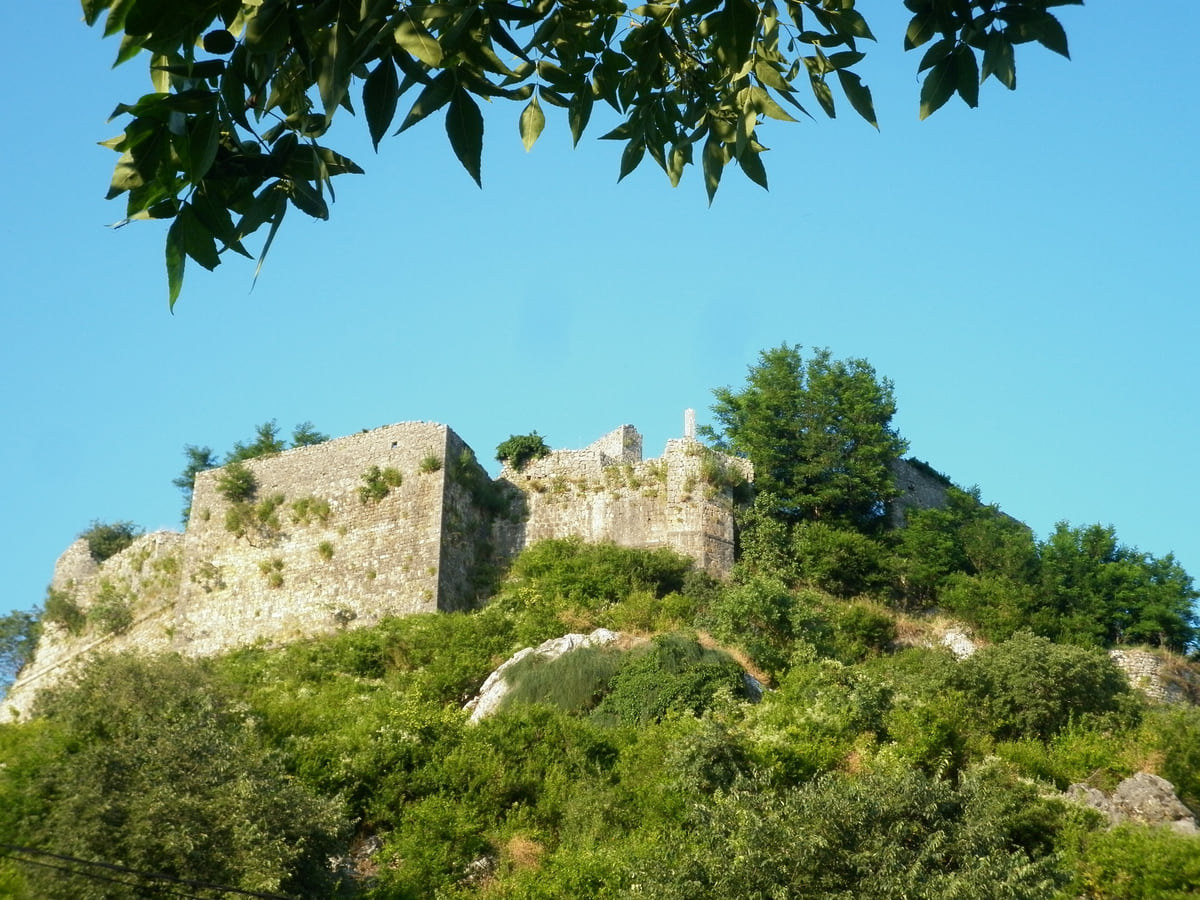
Medieval fortress on Lake Skadar
Žabljak Crnojevića, the lost capital of the Crnojević rulers
Žabljak Crnojevića is a medieval fortress on a hill where the Morača river flows into Lake Skadar. It was founded in the 10th century by the Vojislavljević princes of Zeta, became the Crnojević capital in the 15th century with 300 houses, and fell to the Turks in 1479. Its walls still stand up to 15 metres high, with six towers.
In 30 seconds
Full read: 2 min
- Žabljak Crnojevića is a medieval fortress where the Morača meets Lake Skadar.
- Founded by the Vojislavljević in the 10th century, it was the Crnojević capital in the 15th.
- It fell to the Turks in 1479 and stayed Turkish for almost four centuries.
- Its walls rise up to 15 metres and are two metres thick, with six towers.
Of all the Lake Skadar fortresses, this is the one I wouldn't skip. Not for what's left inside, which isn't much, but for the setting, a lone hill between the river and the lake, with the village cemetery and church at its foot. I'd go first thing.

Before you go
What I would keep in mind
-
01 Most beautiful
An almost surreal view of the lake
The National Tourism Organisation describes an almost surreal view of the lake from the fortress and calls it an unavoidable stop for anyone visiting Skadar.
-
02 My tip
Read the stonework
Turkish repairs show up as careless masonry; the oldest sections and the semicircular tower are pressed stone in lime mortar; the newest have Venetian features, according to Cetinje's tourist board.
-
03 Getting there
By mountain bike from Dodoši
National Parks of Montenegro includes the Dodoši to Žabljak Crnojevića mountain-bike route among the Lake Skadar park trails. Pick up the map at Vranjina or Virpazar.
Vranjina -
04 To save money
Just the park ticket
The fortress lies within Lake Skadar National Park, where entry costs €5 per person per day. I haven't found any separate charge for the fortress itself.
Žabljak Crnojevića is a lone hill beside the spot where the Morača runs into Lake Skadar, ringed at the top by walls. Below are a cemetery, a small church and the houses of people who live off the lake. The Cetinje tourist board’s write-up mentions a mysterious atmosphere, which sums it up well.
From frontier fort to capital
According to Cetinje’s tourist board, it was founded in the 10th century by the Vojislavljević princes of Zeta as a military post, and the army of the despot Stefan Nemanjić is thought to have been stationed here. In the 15th century it became a capital, and fierce battles broke out around it. By then it was a small town of 300 houses at the mouth of the Morača, a busy place of trade.
Ivan Crnojević, who ruled from 1465 to 1490, fought the Turks until 1479, when the fortress fell. To keep out of their way, the same source says, he moved his capital to Obod, in today’s Rijeka Crnojevića, and later to Cetinje.
Four centuries under the Turks
The fortress stayed in Turkish hands for almost four centuries. The Crnojević castle became a barracks, St George’s church was turned into a mosque and a school was built later. There was only one way into the town, through a single heavy iron gate.
What survives today is a circuit of walls up to 15 metres high and two metres thick, with six towers. My favourite part is the way the same source teaches you to read the stone. The Turkish repairs give themselves away with careless masonry, the old sections and the semicircular tower are pressed stone in lime mortar, and the newest parts carry the hallmarks of Venetian work.
To sleep close to everything, search places to stay in Podgorica on Expedia and filter by area before price.
The view and the visit
The National Tourism Organisation singles out the almost surreal view of the lake from the top and calls it an unavoidable stop on Skadar. National Parks of Montenegro counts it among the great Crnojević complexes of the second half of the 15th century within the park, alongside Kom monastery and Obod at Rijeka Crnojevića. In other words, this is where the story that continues upriver begins.
None of the official sites I checked lists opening times or a ticket price. The walls crown a hill above the village, so I’d take water and avoid the middle of the day in summer.
Getting there
OpenStreetMap places it in Zeta municipality, near Vranjina and the road from Podgorica down to the lake. The park suggests reaching it by mountain bike on the Dodoši to Žabljak Crnojevića route. I’d pair it with Lesendro and the Vranjina visitor centre on the same morning. For the others, from Herceg Novi to Ulcinj, see my round-up of Montenegro’s fortresses.
If you are short on time, see the best tours in Žabljak Crnojevića and pick one that fits your day.
To sleep close to everything, search places to stay in Podgorica on Booking.com and filter by area before price.
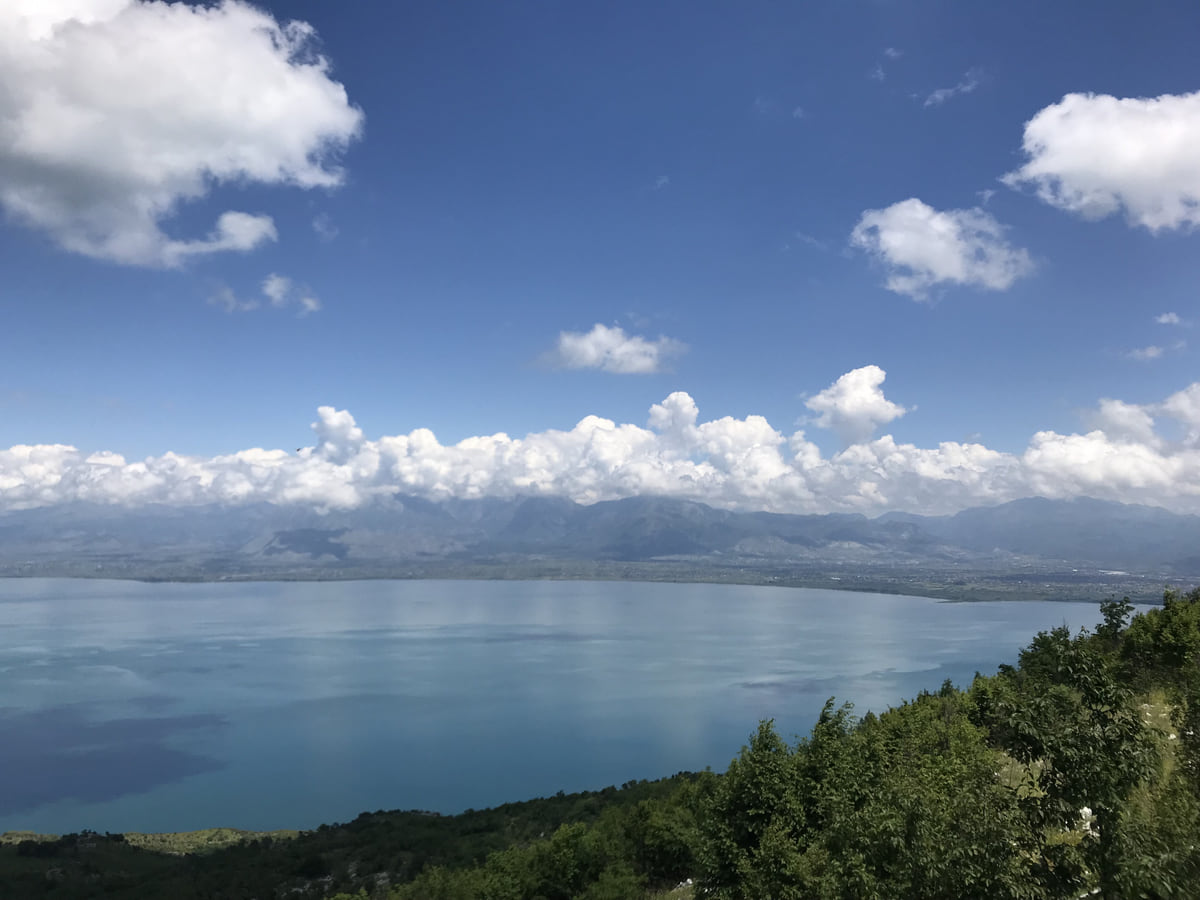
Lake Skadar from the Montenegrin shore, its blue water stretching to the mountains with white clouds on the horizon
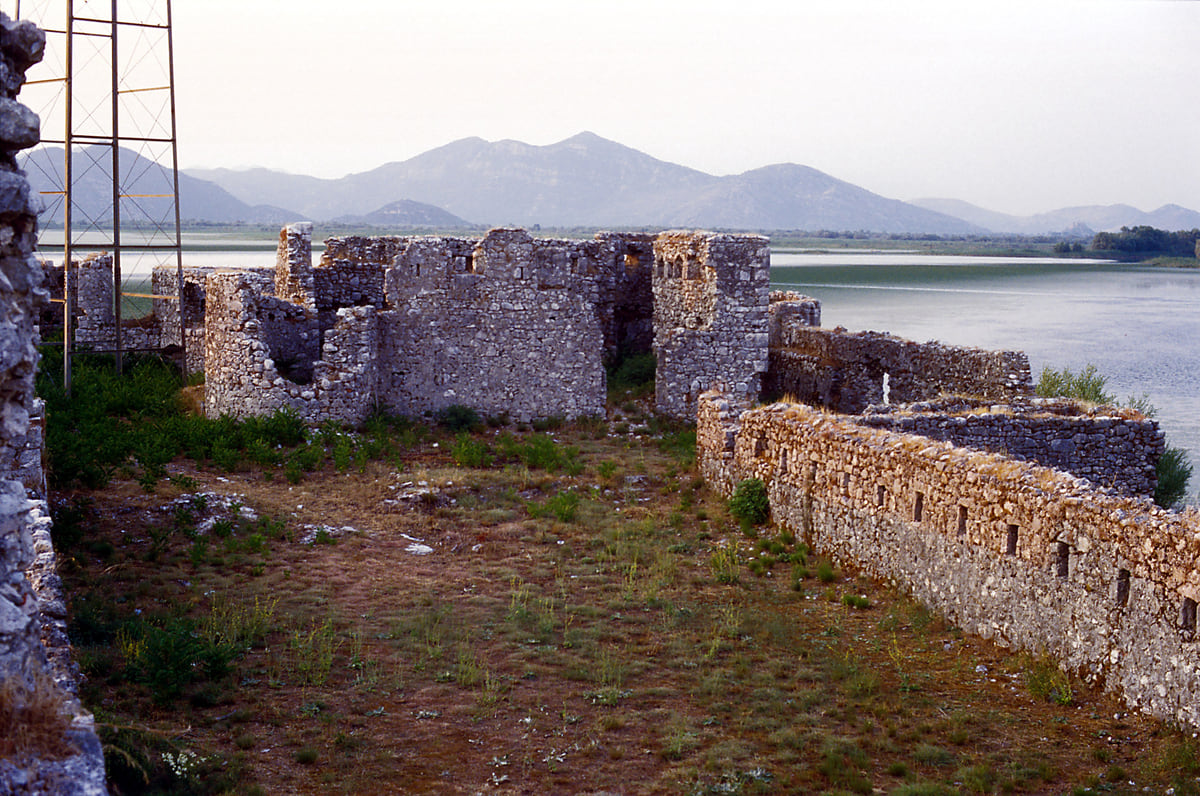
The stone walls of Lesendro fortress beside Vranjina, with Lake Skadar and the mountains behind in the evening light
Žabljak Crnojevića through the centuries
| Period | What happened |
|---|---|
| 10th century | Founded by the Vojislavljević princes of Zeta for military purposes |
| 15th century | Crnojević capital, a trading town of 300 houses |
| 1465-1490 | Ivan Crnojević rules and fights the Turks |
| 1479 | The fortress falls to the Turks |
| Almost four centuries | Turkish rule: the castle becomes a barracks and St George's church a mosque |
Source: Cetinje Tourist Board, checked on 10 October 2026.
Test yourself
True or false?
0/3 Pick before you peek.
-
Žabljak Crnojevića is in Durmitor National Park.
See the answer
False. It's on Lake Skadar, at the mouth of the Morača. Žabljak in Durmitor is a different place in the north of the country.
-
The fortress town had a single iron gate.
See the answer
True. Cetinje's tourist board says the only way into the town was through one heavy iron gate.
-
The Turks turned St George's church into a mosque.
See the answer
True. According to Cetinje's tourist board, the Crnojević castle became a barracks and St George's church a mosque, and a school was built later.
Map
Where Žabljak Crnojevića is
The Adriatic coast runs from Herceg Novi to Ulcinj; the centre holds Podgorica, Cetinje and Lake Skadar, and the north, Durmitor and the Tara Canyon. Every number opens its guide.

0 of 278 Montenegro guides
Your next stamp
- Rijeka Crnojevića
- Fortresses
- Vranjina
- Besac fortress
- Central Montenegro
- Hotels in Žabljak
- Žabljak
- Aman Sveti Stefan
- Budva Old Town
- Haj-Nehaj
- Kotor
- Lučice Beach
- Montenegro's coast
- Peaks of the Balkans
- Porto Montenegro
- Sea Dance Festival
- Splendid Conference & Spa Resort
- Stari Bar
- Ulcinj Old Town
- Bay of Kotor
- Budva Riviera
- Heroj submarine
- Iberostar Bellevue
- Independence Day
- Old olive tree of Mirovica
- Tivat
- Velika plaža
- Ada Bojana
- Beaches in Budva
- Eurostars Queen of Montenegro
- Herceg Novi
- Kotor Old Town
- Mount Rumija
- Igalo
- Kotor city walls
- Mogren Beach
- Montenegro Beach Resort
- Svač
- Vrmac
- Hiking
- Jaz Beach
- Kanli kula
- Luštica peninsula
- St Tryphon Cathedral
- Ulcinj salt pans
- Forte Mare
- Gornja Lastva
- Maritime Museum, Kotor
- Slovenska Beach
- Drobni Pijesak Beach
- Kotor viewpoints
- Mamula
- Žanjic beach
- Kotor cruise port
- Orjen
- Plavi horizonti beach
- Sveti Nikola Island
- Blue Cave
- Restaurants in Budva
- Restaurants in Kotor
- Canyoning
- Hotels
- Perast
- Sutomore
- Sveti Stefan
- Čanj
- Luxury hotels
- Our Lady of the Rocks
- Pržno
- Things to do
- Activities
- All-inclusive hotels
- Bar Riviera
- Bečići
- Hotel Palma
- St George island
- Dobrota
- Hladna uvala
- Most beautiful places
- Petrovac
- Crvena stijena
- Prčanj
- Prettiest villages
- Cycling
- Risan
- UNESCO sites
- Heritage Grand Perast
- Map
- Hyatt Regency Kotor Bay
- Where is it?
- Regions
- Cities
- Beaches in Bar
- Budva
- Hotels in Budva
- Hotels in Kotor
- Iberostar Waves Herceg Novi
- Kitesurfing
- The name
- Beaches in Ulcinj
- Flag
- Hotels in Perast
- Palmon Bay Hotel & Spa
- Podgorica
- Cathedral of the Resurrection
- One&Only Portonovi
- Population
- Sandy beaches
- Azul Beach Resort Montenegro
- Naturist beaches
- Size
- Stara Varoš
- Doclea
- Language
- Mimosa Festival
- Medun
- Religion
- Zipline
- Currency
- Museums in Podgorica
- Dajbabe Monastery
- EU membership
- History
- Restaurants in Podgorica
- Hotels in Podgorica
- Public holidays
- Avala Resort & Villas
- Bar
- Beaches in Kotor
- Birdwatching
- Hotels in Ulcinj
- Kotor carnival
- Time zone
- Tivat beaches
- Tuzi
- Boka Night
- Dukley Hotel & Resort
- Facts
- Hotels in Tivat
- Zeta
- Caves
- Herceg Novi beaches
- National parks
- Šipčanik
- Hotels in Herceg Novi
- Monasteries
- Fly fishing
- Museums
- Canyons and waterfalls
- Lakes
- Mountains
- Montenegro and Croatia
- Beaches
- Boat trips
- Cetinje
- Montenegro and Albania
- Nightlife
- Ulcinj
- Weather
- Best time to visit
- Cetinje Monastery
- Kayaking
- Montenegro and the Balkans
- How to get there
- In summer
- King Nikola's Palace
- Sailing
- Biljarda
- Flights
- In winter
- Airports
- Museums in Cetinje
- New Year's Eve
- Lovćen
- Paragliding
- Tivat Airport
- Njegoš Mausoleum
- Podgorica Airport
- Dubrovnik to Kotor
- Kotor serpentine
- Belgrade to Montenegro
- Njeguši
- Ferry to Italy
- Njeguši prosciutto
- Border crossings
- In January
- Lipa Cave
- Where to stay
- In February
- Kamenari-Lepetane ferry
- Pavlova strana
- Getting around
- In March
- In April
- Trains
- Buses
- In May
- Car hire
- In June
- Driving
- In July
- In August
- Taxis
- Distances
- In September
- In October
- Road trip
- Food
- In November
- Lake Skadar
- Scenic drives
- In December
- Kotor cable car
- Virpazar
- Where to eat
- Budva to Kotor
- Godinje
- Wine
- Podgorica to Kotor
- Prices and budget
- On a budget
- Danilovgrad
- Entry requirements
- Ostrog Monastery
- Tourist registration
- Customs
- Nikšić
- Crvena Stijena cave
- Safety
- Events
- Healthcare
- Northern Montenegro
- Mobile and roaming
- Durmitor
- Plugs
- Black Lake
- With kids
- Bobotov Kuk
- Holidays
- Day trips
- Stećci tombstones
- Three-day itinerary
- Five-day itinerary
- Skiing in Montenegro
- One-week itinerary
- Skiing in Žabljak
- Šavnik
- Ten-day itinerary
- Nevidio Canyon
- Tara Canyon
- Tara rafting
- Đurđevića Tara Bridge
- Plužine
- Lake Piva
- Piva Monastery
- Mojkovac
- Brskovo
- Pljevlja
- Husein Pasha Mosque
- Kolašin
- Hotels in Kolašin
- Skiing in Kolašin
- Biogradska Gora National Park
- Komovi
- Morača Monastery
- Morača Canyon
- Bijelo Polje
- Đalovića Cave
- Berane
- Andrijevica
- Petnjica
- Rožaje
- Plav
- Lake Plav
- Gusinje
- Vusanje
- Prokletije National Park
Frequently asked questions
What is Žabljak Crnojevića?
A medieval fortress where the Morača flows into Lake Skadar. It was the Crnojević capital in the 15th century and keeps walls up to 15 metres high with six towers.
Which municipality is Žabljak Crnojevića in?
OpenStreetMap places it in Zeta municipality, near Vranjina at the northern end of Lake Skadar, although its tourist information is published by Cetinje's tourist board.
What is the history of Žabljak Crnojevića fortress?
The Vojislavljević princes founded it in the 10th century, the Crnojević made it their capital in the 15th and the Turks took it in 1479. For almost four centuries it was Turkish, with the castle used as a barracks and the church as a mosque.
How do you get to Žabljak Crnojevića?
Drive to the village at the foot of the hill and walk up to the walls, or ride the national park's Dodoši to Žabljak Crnojevića mountain-bike route.
Is it the same place as Žabljak in Durmitor?
No. Žabljak Crnojevića is this fortress on Lake Skadar; Žabljak is the mountain town in the north that serves as the base for Durmitor.
By
Tourism graduate with a master’s in Tourism Management and Planning from the University of Málaga, who has travelled across Europe. He writes every guide from official sources and his own judgement.
Published on . Facts checked on .
Sources
Some links in this guide are affiliate links: if you book through them, the site earns a commission at no extra cost to you. Affiliate disclosure
Photos: Andrija12345678 (CC BY-SA 4.0); 井上子木 (CC BY-SA 4.0); Falk2 (CC BY-SA 4.0), via Wikimedia Commons.