Podgorica, the capital you can get to grips with in a day
Podgorica is Montenegro's capital and largest city, with 179,505 residents in the municipality at the 2023 census. It sits 44.5 metres above sea level where the Ribnica meets the Morača, and has an Ottoman quarter with a clock tower, a huge Orthodox cathedral, museums, the Roman ruins of Doclea 4 km away and Lake Skadar 19 km away.
In 30 seconds
Full read: 4 min
Podgorica is Montenegro's capital, with 179,505 residents in the municipality in 2023.
One day covers Stara Varoš, the cathedral, the Sastavci bridge and Doclea, 4 km out.
It's the best base for Lake Skadar (19 km), Cetinje (30 km) and Ostrog.
July 2024 averaged 30.9 °C, so sightsee early in summer.
Podgorica isn't a city for a week, but it's well worth one good evening. I use it as a base for Lake Skadar, Cetinje and Ostrog, and give an afternoon to Stara Varoš, the cathedral and the old bridge at Sastavci at sunset.
Sergio LeponeMy advice
Before you go
What I would keep in mind
01 Most beautiful
The old stone bridge at Sastavci
Where the Ribnica flows into the Morača there's a single-arch stone bridge the tourist board believes is the city's oldest, possibly Roman. It's the local sunset spot.
If you're in a private flat, the Tourist Organisation of Podgorica registers foreign visitors at Ulica slobode 47, Monday to Friday 9 to 15:30 and Saturday 9 to 13.
05 Getting there
Twelve kilometres to the airport
Podgorica Airport is 12 km from the centre, at Golubovci. Tivat Airport is 81 km away and Dubrovnik 153 km.
06 Getting there
To the bay in 90 minutes
Kotor is about 72 km from central Podgorica, and the route via Cetinje and the serpentine is the most scenic.
My own ranking, based on what each place adds to a one or two-day stay. The scores out of 10 are my opinion, built on information from the Tourist Organisation of Podgorica.
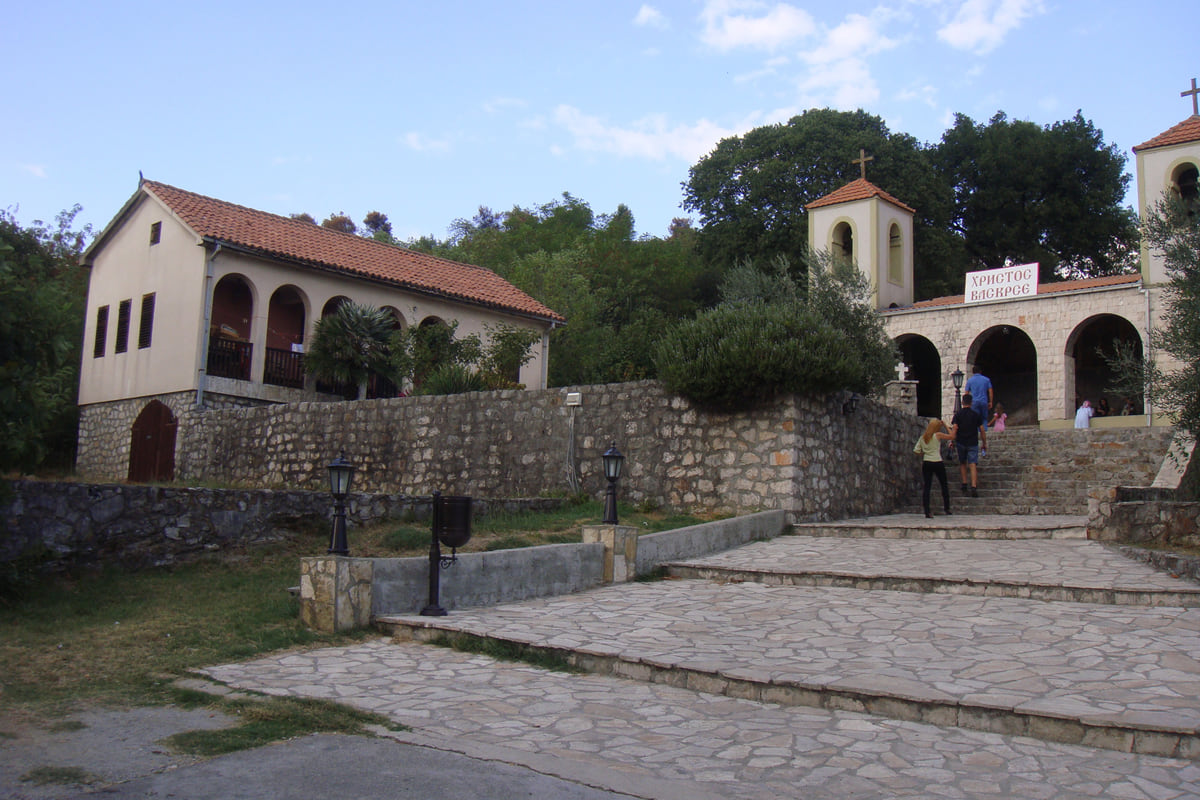
A church carved into a cave in 1897 and painted by its founder until 1941, on the southern edge of the city.
Time: 45 min
7.4 out of 10
Podgorica has a poor reputation among travellers, and I think it’s unfair, even if I can see where it comes from. There’s no walled old town like Kotor’s and no bay out front, and the July heat in the valley is fierce. But it’s the capital and the biggest city, with 179,505 people in the municipality at the 2023 census, and it’s the most practical base for the whole of the centre. Give it one well-planned afternoon and it makes a lot of sense.
A city between two rivers
The National Tourism Organisation puts the city at 44.5 metres above sea level, at the northern edge of the Zeta plain, with its historic core where the Ribnica flows into the Morača. That little delta is where it all started, and it’s still where locals go to swim and picnic. Right at the mouth there’s a single-arch stone bridge, only a few metres high, that the Tourist Organisation of Podgorica considers the oldest in the city and believes to be Roman. Locals call the spot Sastavci or Skaline, and it’s where I’d wait for the sunset.
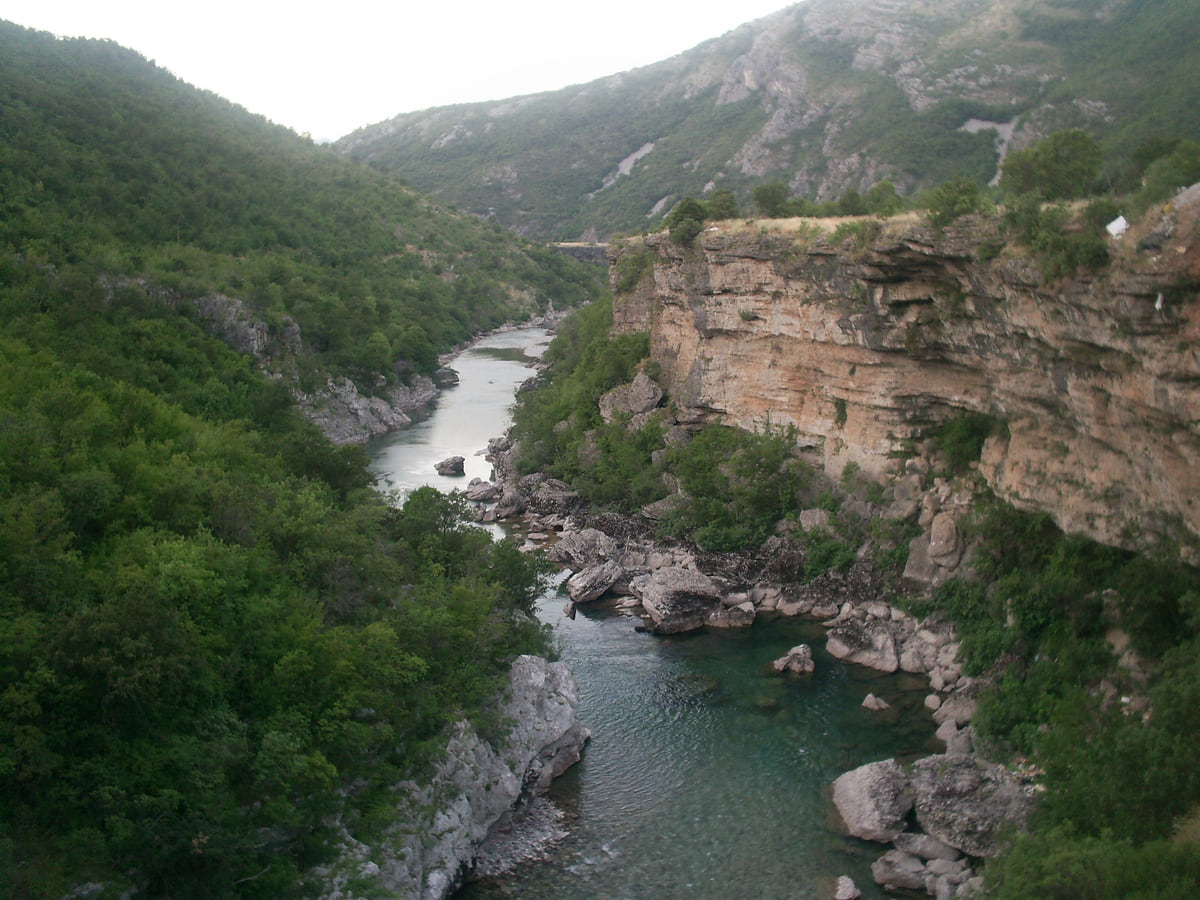
The Morača is the city’s river. It rises in the north, cuts the canyon that leads up to Kolašin and, once joined by the Zeta, crosses the plain to Lake Skadar. MONSTAT gives it a length of 99.5 km.
Ottoman, Orthodox and Roman
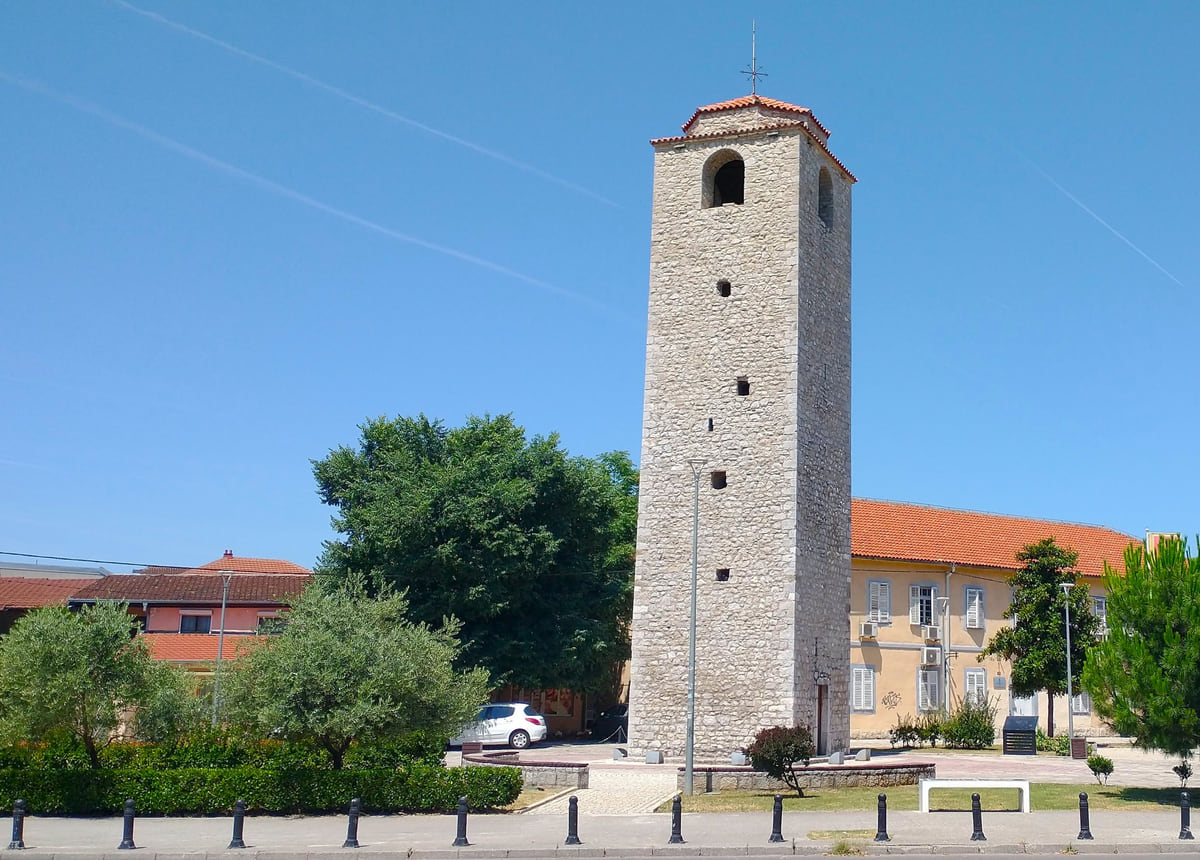
Stara Varoš was the heart of Podgorica in the Ottoman period, from 1474 to 1879. Its landmark is the Sahat kula, the 18th-century clock tower, one of the few Ottoman buildings to survive the Second World War, according to the National Tourism Organisation. Next door is the Čubranović house of 1630, which became the first seat of local government after the Ottomans left in January 1879.
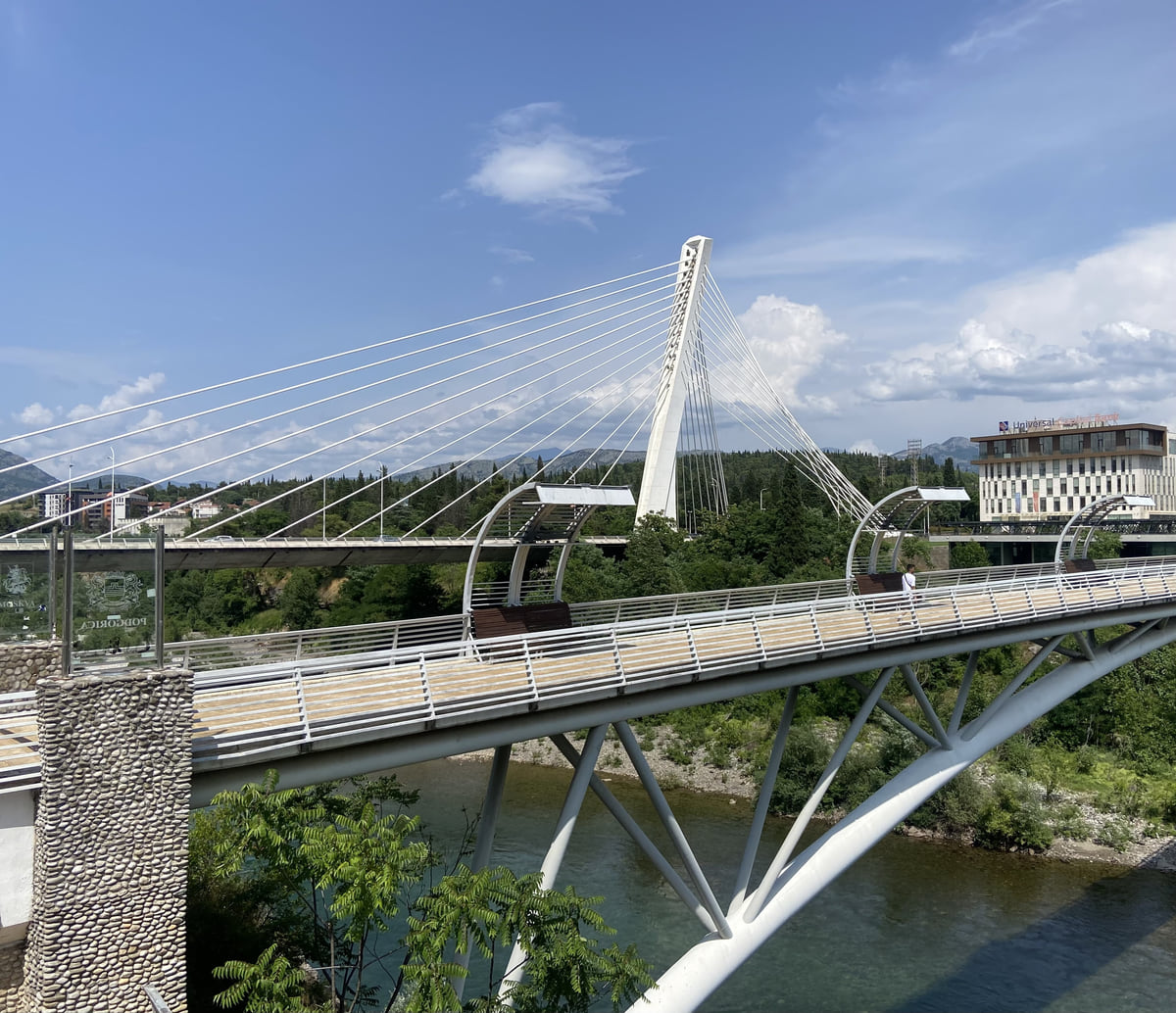
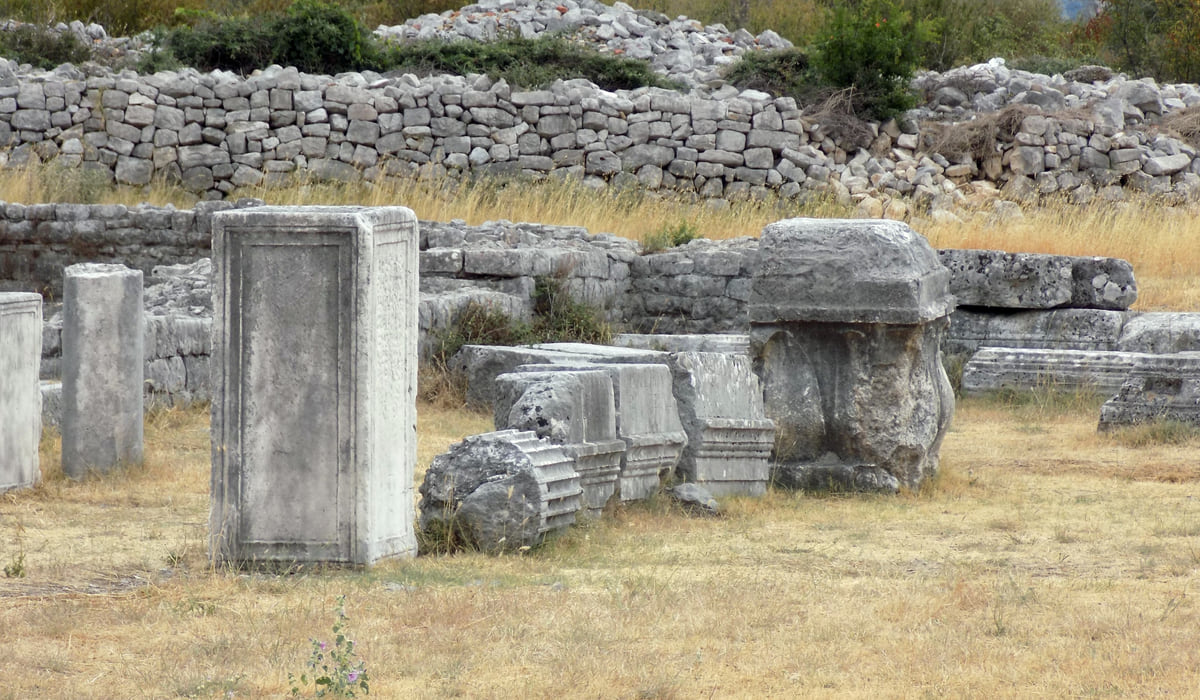
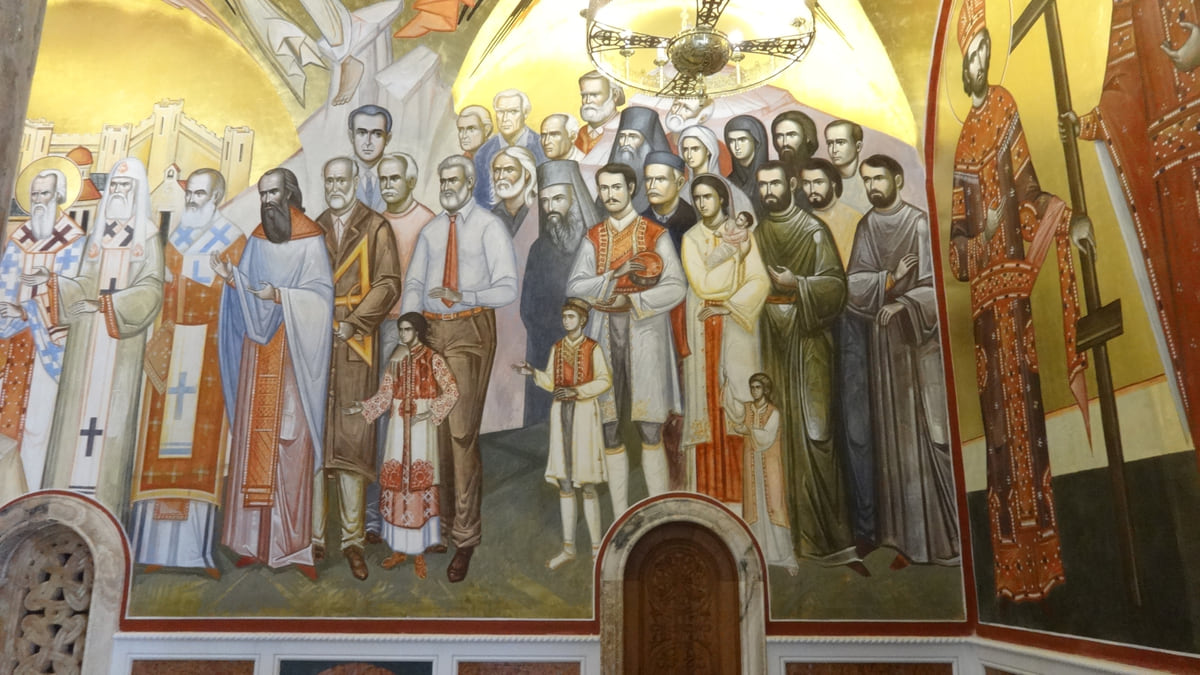
Across the river rises the Cathedral of the Resurrection of Christ, begun in 1993 and finished twenty years later, with two 26.7-metre towers and 17 bells. Four kilometres from the centre, between the Širijana, the Zeta and the Morača, lie the ruins of Doclea, a 1st-century Roman town. The National Tourism Organisation points out that Podgorica has Orthodox, Catholic, Muslim and Jewish places of worship you can visit, and in Stara Varoš the Osmanagić and Skender Čauš mosques are only a few steps apart.
For a rainy or scorching day there’s a decent set of museums in Podgorica. My favourite is the Titograd ’80s Museum, a city-centre flat furnished as an eighties home, because it tells the story of the recent city better than any glass case. The Risto Stijović Gallery is in the sculptor’s birthplace in Stara Varoš, and Kuslev’s House, built in the 1920s, is one of the few that came through the 1944 bombing.
In Kruševac Park, by the Morača, stands the Petrović Palace, a residence of the royal dynasty built in 1891, with its pink façade and the Centre for Contemporary Art inside. The other green lung is Gorica hill, which gives the city its name, with pine woods, trails, an adventure park and the Partisan memorial.
Eating, drinking and sleeping
Nightlife centres on Bokeška Street, lined with bars and cafés, and in winter the Podgorica holiday market livens up the centre. For Montenegrin food, the tourist board singles out places like Pod Volat, on the clock tower square, and Lanterna, in a house dating from 1630. I’ve pulled them together in my guide to Podgorica restaurants.
Hotels range from the Hilton near the centre to small places in the pedestrian zone, sorted by area in hotels in Podgorica. If you book a private flat, remember the 24-hour registration of foreign visitors. In Podgorica it’s done at the tourist office at Ulica slobode 47.
The best of Podgorica is within an hour. Lake Skadar is 19 km away, Cetinje 30 km and Ostrog towards Nikšić. The Cijevna waterfalls, nicknamed Niagara, are a few kilometres out, and in the same direction is Ćemovsko polje, the single-plot vineyard the National Tourism Organisation calls Europe’s largest, with the Šipčanik cellar underground. Heading north, Kolašin is 65 km away through the Morača canyon. If you fly into Podgorica rather than Tivat, these are the trips worth doing before you head for the coast.
When to go
The National Tourism Organisation recommends Podgorica in any season. I’d avoid walking about at midday in July and August. In 2024 July averaged 30.9 °C and the thermometer reached 41.1 °C, while January averaged 7.8 °C without a single day of snow. Spring and autumn are ideal, and in winter the city is a good alternative to a deserted coast.
Podgorica's Ottoman clock tower in grey stone, standing in the old quarter's square with trees and low buildings around it
Columns and stone blocks of the Roman town of Doclea near Podgorica, among dry grass and low walls
Saints painted on a gold background inside the Cathedral of the Resurrection of Christ in Podgorica, beneath a painted vault
Road distances from Podgorica
Destination
Distance
Lake Skadar
19 km
Cetinje
30 km
Bar (via the Sozina tunnel)
60 km
Budva
65 km
Kolašin
65 km
Kotor
90 km
Ulcinj
95 km
Herceg Novi
125 km
Source: Tourist Organisation of Podgorica and National Tourism Organisation (Kolašin), checked on 10-10-2026.
Trains from Podgorica (ZPCG)
To
Trains a day
Journey
2nd / 1st class
Bar
10
59 min to 1 h 09
€2.80 / €4.20
Nikšić
5
1 h 06
€3.20 / €4.80
Bijelo Polje
4
2 h to 2 h 24
€5.20 / €7.80
Belgrade
1
9 h 48
€21.60 / €32.40
ZPCG timetable and fares checked on 04-10-2026.
Test yourself
True or false?
0/3Pick before you peek.
Podgorica was called Titograd during the Yugoslav period.
See the answer
True. The Tourist Organisation of Podgorica notes the city was Titograd in the 1980s, and there's a whole museum about that decade.
Podgorica's clock tower dates from Roman times.
See the answer
False. The Sahat kula was built in the 18th century by Hadži Mehmed-paša Osmanagić, under Ottoman rule.
Podgorica Airport is about 12 km from the city.
See the answer
True. The tourist board puts it 12 km out, and Airports of Montenegro gives its address at Golubovci, in Zeta municipality.
Residents of the municipality in 2023
179,505
Altitude of the city
44.5 m
Tourist arrivals in 2024
204,548
Ottoman period of Stara Varoš
1474-1879
Map
Where Podgorica is
The Adriatic coast runs from Herceg Novi to Ulcinj; the centre holds Podgorica, Cetinje and Lake Skadar, and the north, Durmitor and the Tara Canyon. Every number opens its guide.
Walk the Ottoman quarter of Stara Varoš and its clock tower, see the Cathedral of the Resurrection, watch the sunset at Sastavci, visit Kruševac Park and the museums, and head out to Doclea, Medun and Dajbabe Monastery.
Is Podgorica the capital of Montenegro?
Yes. The Constitution names Podgorica as the capital and Cetinje as the Old Royal Capital.
Why was Podgorica called Titograd?
That was its name in the Yugoslav period. The Titograd '80s Museum recreates everyday life in the city during that decade.
How do you get from Podgorica to Kotor?
It's about 90 km by road according to the Tourist Organisation of Podgorica. There's no train to Kotor, so it's a hire car, a coach or a transfer.
How far is Podgorica from Lake Skadar?
19 km according to the Tourist Organisation of Podgorica, or about 20 minutes' drive according to the National Tourism Organisation.
What is the weather like in Podgorica?
Hot summers and mild winters. In 2024 Podgorica averaged 7.8 °C in January and 30.9 °C in July, with a high of 41.1 °C, on figures published by MONSTAT.
Tourism graduate with a master’s in Tourism Management and Planning from the University of Málaga, who has travelled across Europe. He writes every guide from official sources and his own judgement.

 1Central Montenegro 2Podgorica 3Tuzi 4Zeta 5Cetinje 6Lake Skadar 7Danilovgrad 8Nikšić