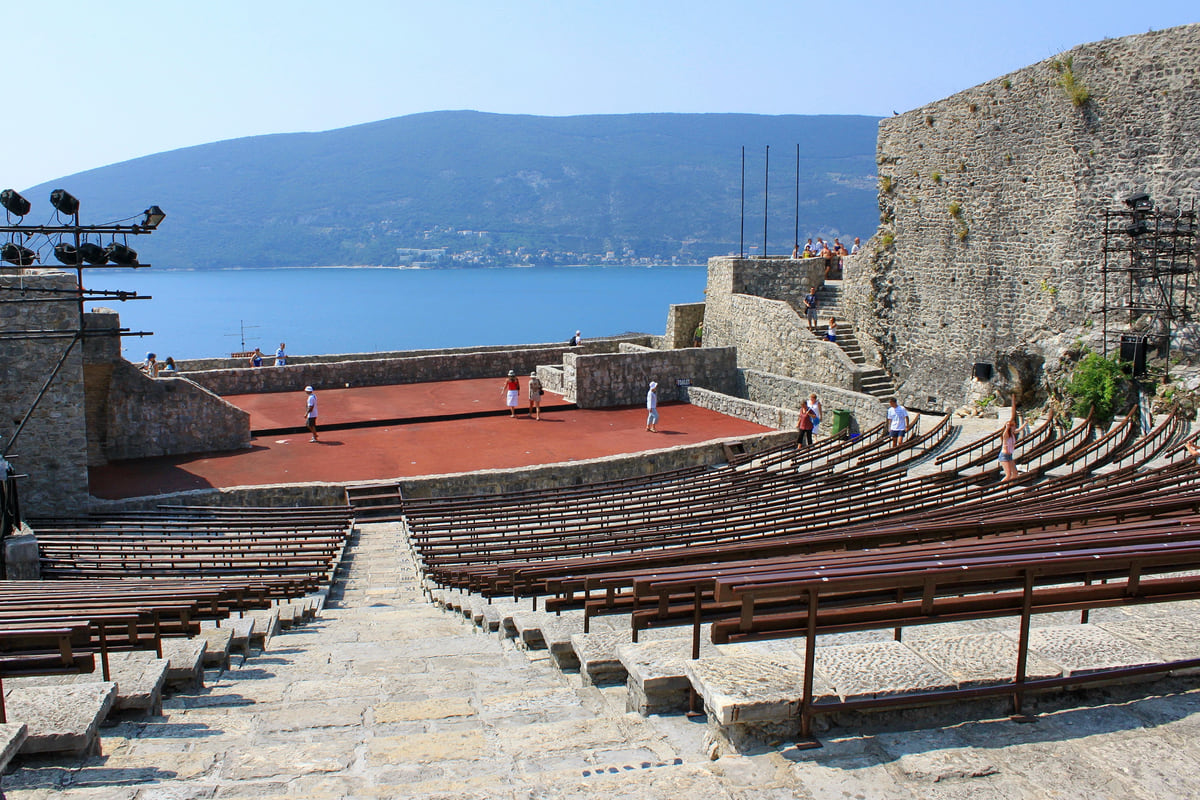
Fortress in Herceg Novi's old town
Kanli kula, from Ottoman prison to open-air stage
Kanli kula, the «bloody tower», is the fortress the Ottomans built in 1539 at the highest, northernmost point of Herceg Novi's old town, 85 m above the sea. It was a feared prison under Ottoman rule and is now an open-air stage for 1,000 people, expandable to 1,500, home to the town's film festival and summer concerts.
In 30 seconds
Full read: 2 min
- Ottoman fortress from 1539 at the top of Herceg Novi's old town.
- Once a feared prison, hence the name, «bloody tower».
- Summer stage for 1,000, expandable to 1,500, since 1960.
- Home of the Herceg Novi Film Festival since 1987.
I'd climb up to Kanli kula in the afternoon and, if I could, come back after dark for a concert or a festival screening. Watching a show with Ottoman walls around you and the bay behind is the best thing you can do in Herceg Novi on a summer night.

Before you go
What I would keep in mind
-
01 Most beautiful
Graffiti carved into the walls
The tourist board says you can still make out drawings of galleys, crosses, dates and coats of arms on the walls, plus the remains of a cannon with a Turkish inscription.
-
02 Worth the splurge
A film under the stars
The Herceg Novi Film Festival has been held at Kanli kula since 1987, when it hosted the first Yugoslav festival of film direction, according to Herceg Fest.
-
03 My tip
Walk up from the clock tower
Kanli kula sits at the northern tip of the old town. Enter through the clock tower and keep climbing the old town's steps.
Herceg Novi
What I would book
Of Herceg Novi’s three fortresses, Kanli kula is the most visible and the one that has found the best second life. It stands at the northernmost point of the old town, 85 m above the sea, and its name leaves little room for doubt, it means «bloody tower». These days it holds festival audiences rather than prisoners.
A prison with a grim reputation
The tourist board explains that the Ottomans built it in 1539 on the foundations of an older fort, and that during their rule of the town, from 1482 to 1687, it earned its name as a prison. The first written mention dates from 1664, in the travel accounts of Evliya Çelebi. Its old cistern, which eventually fell out of use, ended up serving as a cell. There’s an irony to it. Set in the stone is an inscription reading «pro pace», for peace, which suggests whatever stood here before had a very different purpose.
What you see inside
The plan is irregular, roughly 70 by 60 m, with well-preserved outer walls and towers at the corners. Its present shape is Ottoman work, but the Venetians repaired it after taking the town in 1687 and the Austro-Hungarians left their mark too. Inside are the remains of a cannon with a damaged base and a Turkish inscription, and on the walls you can still pick out drawings of galleys, crosses, dates and coats of arms. Centuries-old graffiti like that interests me far more than any information panel.
If you are staying the night, see the best hotel deals in Herceg Novi for your dates: the well-placed rooms go fast.
From the 1960 stage to today’s festival
In 1960 the interior was first converted into a summer stage, with 1,000 seats expandable to 1,500 and an amphitheatre the tourist board ranks among the loveliest on the Adriatic. The 1979 earthquake left it almost destroyed, and it was rebuilt in Venetian style, more practical than the original. The Herceg Fest cultural centre notes that in 1987 it hosted the first Yugoslav festival of film direction, forerunner of today’s Herceg Novi Film Festival. It also stages the Guitar Art Fest, the Operosa opera festival, pop and classical concerts and folk shows.
Fitting in a visit
Kanli kula slots easily into a morning in the old town. I’d go in through the clock tower, climb the steps up to the fortress for the view over the rooftops and the mouth of the bay, then head down to Forte Mare by the water. The tourist board’s website gives no hours or ticket price, so if you find it closed for a stage set-up, come back for an evening show. Herceg Fest, the cultural centre behind the Mimosa Festival, also programmes the events at Kanli kula, Forte Mare and Španjola, so its listings are the ones to check. For somewhere to stay nearby, see hotels in Herceg Novi.
So you do not lose the morning at the ticket office, browse tickets and tours in Kanli kula on GetYourGuide.
If you are staying the night, see the best hotel deals in Herceg Novi for your dates: the well-placed rooms go fast.
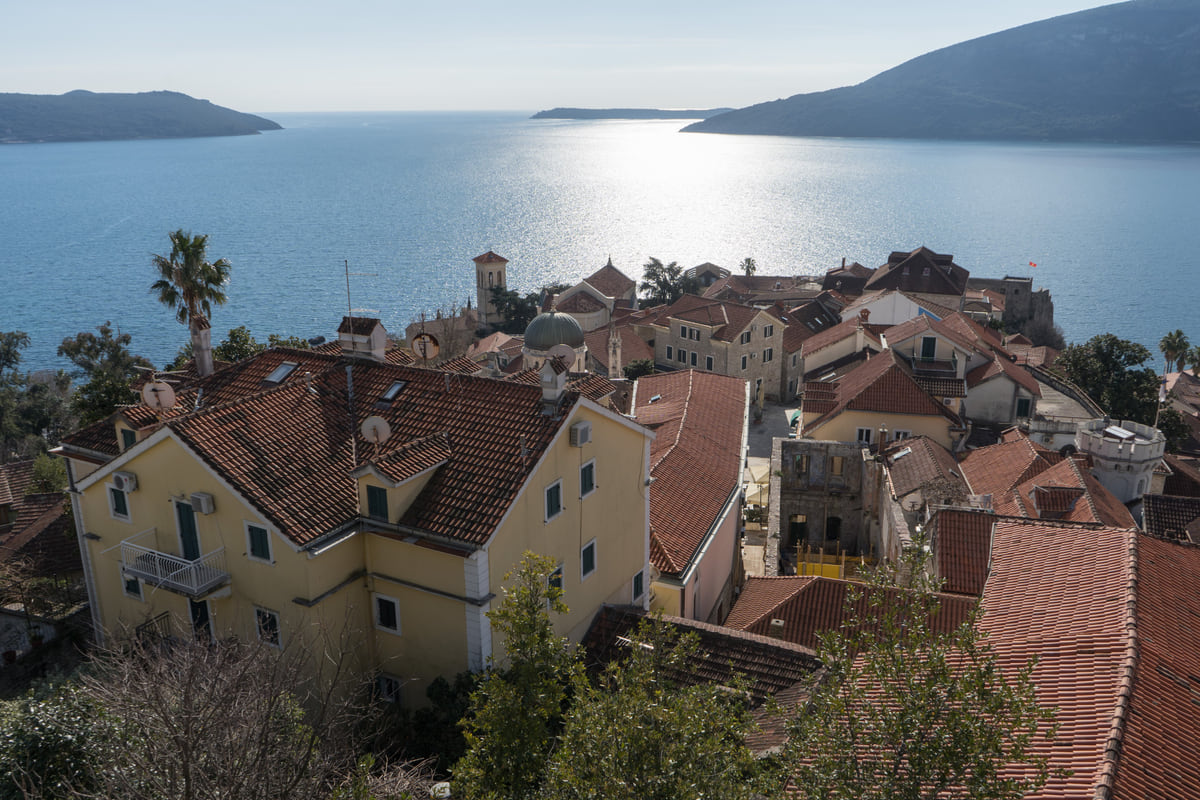
Old-town rooftops of Herceg Novi from the Kanli Kula fortress, with palm trees and the mouth of the Bay of Kotor behind
Kanli kula at a glance
| Fact | Detail |
|---|---|
| Built | 1539, by the Ottomans, on an earlier fortress |
| First written mention | 1664, in Evliya Çelebi's travels |
| Height above the sea | 85 m |
| Approximate footprint | 70 by 60 m |
| First summer stage | 1960, 1,000 seats expandable to 1,500 |
| Second rebuild | After the 1979 earthquake, in Venetian style |
Herceg Novi Tourist Organisation, checked on 11-10-2026. Its website gives no opening hours or admission price.
Test yourself
True or false?
0/3 Pick before you peek.
-
Kanli kula means «bloody tower».
See the answer
True. That's the Herceg Novi tourist board's translation, a nod to its past as an Ottoman prison.
-
The Venetians built the fortress.
See the answer
False. The Ottomans built it in 1539; the Venetians repaired it after taking the town in 1687.
-
Kanli kula's summer stage was rebuilt after the 1979 earthquake.
See the answer
True. The tourist board says the interior was all but destroyed and rebuilt in Venetian style.
- Year built
- 1539
- Height above the sea
- 85 m
- Maximum seats on the stage
- 1,500
Map
Where Kanli kula is
The Adriatic coast runs from Herceg Novi to Ulcinj; the centre holds Podgorica, Cetinje and Lake Skadar, and the north, Durmitor and the Tara Canyon. Every number opens its guide.
 1Herceg Novi 2Igalo 3Kanli kula 4Forte Mare 5Mamula 6Orjen 7Iberostar Waves Herceg Novi 8One&Only Portonovi
 Map data © OpenStreetMap contributors (ODbL)
- 1Herceg NoviTown on the coast
- 2IgaloSettlement in Herceg Novi municipality
- 3Kanli kulaFortress in Herceg Novi's old town
- 4Forte MareFortress in Herceg Novi's old town
- 5MamulaIsland fortress off Herceg Novi
- 6OrjenNature park in Herceg Novi municipality
- 7Iberostar Waves Herceg NoviFour-star hotel in Herceg Novi
- 8One&Only PortonoviLuxury hotel in Kumbor, Herceg Novi
0 of 278 Montenegro guides
Your next stamp
- Forte Mare
- Herceg Novi
- Mamula
- Žabljak Crnojevića
- Aman Sveti Stefan
- Budva Old Town
- Haj-Nehaj
- Kotor
- Lučice Beach
- Montenegro's coast
- Peaks of the Balkans
- Porto Montenegro
- Sea Dance Festival
- Splendid Conference & Spa Resort
- Stari Bar
- Ulcinj Old Town
- Bay of Kotor
- Budva Riviera
- Heroj submarine
- Iberostar Bellevue
- Independence Day
- Old olive tree of Mirovica
- Tivat
- Velika plaža
- Ada Bojana
- Beaches in Budva
- Eurostars Queen of Montenegro
- Kotor Old Town
- Mount Rumija
- Igalo
- Kotor city walls
- Mogren Beach
- Montenegro Beach Resort
- Svač
- Vrmac
- Hiking
- Jaz Beach
- Luštica peninsula
- St Tryphon Cathedral
- Ulcinj salt pans
- Gornja Lastva
- Maritime Museum, Kotor
- Slovenska Beach
- Drobni Pijesak Beach
- Kotor viewpoints
- Žanjic beach
- Kotor cruise port
- Orjen
- Plavi horizonti beach
- Sveti Nikola Island
- Blue Cave
- Restaurants in Budva
- Restaurants in Kotor
- Canyoning
- Hotels
- Perast
- Sutomore
- Sveti Stefan
- Čanj
- Luxury hotels
- Our Lady of the Rocks
- Pržno
- Things to do
- Activities
- All-inclusive hotels
- Bar Riviera
- Bečići
- Hotel Palma
- St George island
- Dobrota
- Hladna uvala
- Most beautiful places
- Petrovac
- Crvena stijena
- Prčanj
- Prettiest villages
- Cycling
- Risan
- UNESCO sites
- Heritage Grand Perast
- Map
- Hyatt Regency Kotor Bay
- Where is it?
- Regions
- Cities
- Beaches in Bar
- Budva
- Central Montenegro
- Hotels in Budva
- Hotels in Kotor
- Iberostar Waves Herceg Novi
- Kitesurfing
- The name
- Beaches in Ulcinj
- Flag
- Hotels in Perast
- Palmon Bay Hotel & Spa
- Podgorica
- Cathedral of the Resurrection
- One&Only Portonovi
- Population
- Sandy beaches
- Azul Beach Resort Montenegro
- Naturist beaches
- Size
- Stara Varoš
- Doclea
- Language
- Mimosa Festival
- Medun
- Religion
- Zipline
- Currency
- Museums in Podgorica
- Dajbabe Monastery
- EU membership
- History
- Restaurants in Podgorica
- Hotels in Podgorica
- Public holidays
- Avala Resort & Villas
- Bar
- Beaches in Kotor
- Birdwatching
- Hotels in Ulcinj
- Kotor carnival
- Time zone
- Tivat beaches
- Tuzi
- Boka Night
- Dukley Hotel & Resort
- Facts
- Hotels in Tivat
- Zeta
- Caves
- Herceg Novi beaches
- National parks
- Šipčanik
- Hotels in Herceg Novi
- Monasteries
- Fortresses
- Fly fishing
- Museums
- Canyons and waterfalls
- Lakes
- Mountains
- Montenegro and Croatia
- Beaches
- Boat trips
- Cetinje
- Montenegro and Albania
- Nightlife
- Ulcinj
- Weather
- Best time to visit
- Cetinje Monastery
- Kayaking
- Montenegro and the Balkans
- How to get there
- In summer
- King Nikola's Palace
- Sailing
- Biljarda
- Flights
- In winter
- Airports
- Museums in Cetinje
- New Year's Eve
- Lovćen
- Paragliding
- Tivat Airport
- Njegoš Mausoleum
- Podgorica Airport
- Dubrovnik to Kotor
- Kotor serpentine
- Belgrade to Montenegro
- Njeguši
- Ferry to Italy
- Njeguši prosciutto
- Border crossings
- In January
- Lipa Cave
- Where to stay
- In February
- Kamenari-Lepetane ferry
- Pavlova strana
- Getting around
- In March
- Rijeka Crnojevića
- In April
- Trains
- Buses
- In May
- Car hire
- In June
- Driving
- In July
- In August
- Taxis
- Distances
- In September
- In October
- Road trip
- Food
- In November
- Lake Skadar
- Scenic drives
- In December
- Kotor cable car
- Virpazar
- Where to eat
- Budva to Kotor
- Godinje
- Wine
- Podgorica to Kotor
- Vranjina
- Besac fortress
- Prices and budget
- On a budget
- Danilovgrad
- Entry requirements
- Ostrog Monastery
- Tourist registration
- Customs
- Nikšić
- Crvena Stijena cave
- Safety
- Events
- Healthcare
- Northern Montenegro
- Mobile and roaming
- Žabljak
- Durmitor
- Plugs
- Black Lake
- With kids
- Bobotov Kuk
- Holidays
- Day trips
- Stećci tombstones
- Hotels in Žabljak
- Three-day itinerary
- Five-day itinerary
- Skiing in Montenegro
- One-week itinerary
- Skiing in Žabljak
- Šavnik
- Ten-day itinerary
- Nevidio Canyon
- Tara Canyon
- Tara rafting
- Đurđevića Tara Bridge
- Plužine
- Lake Piva
- Piva Monastery
- Mojkovac
- Brskovo
- Pljevlja
- Husein Pasha Mosque
- Kolašin
- Hotels in Kolašin
- Skiing in Kolašin
- Biogradska Gora National Park
- Komovi
- Morača Monastery
- Morača Canyon
- Bijelo Polje
- Đalovića Cave
- Berane
- Andrijevica
- Petnjica
- Rožaje
- Plav
- Lake Plav
- Gusinje
- Vusanje
- Prokletije National Park
Frequently asked questions
What is Kanli kula?
An Ottoman fortress from 1539 at the top of Herceg Novi's old town. The name means «bloody tower» because it was a notorious prison; today it's an open-air stage.
Why is it called the bloody tower?
Because during Ottoman rule over Herceg Novi, from 1482 to 1687, it served as a prison with a dreadful reputation. Its old cistern was even used as a cell.
What happens at Kanli kula now?
It's a summer venue for the Herceg Novi Film Festival, the Guitar Art Fest, the Operosa opera festival, pop and classical concerts and folk performances.
How many people does the Kanli kula stage hold?
The tourist board gives 1,000 seats, expandable to 1,500, since it was first converted into a summer stage in 1960.
How much does it cost to visit Kanli kula?
The Herceg Novi tourist board's website doesn't publish an admission price or opening hours. Concerts and screenings are ticketed separately.
By
Tourism graduate with a master’s in Tourism Management and Planning from the University of Málaga, who has travelled across Europe. He writes every guide from official sources and his own judgement.
Published on . Facts checked on .
Sources
Some links in this guide are affiliate links: if you book through them, the site earns a commission at no extra cost to you. Affiliate disclosure
Photos: Marcin Konsek (CC BY-SA 4.0); Alexkom000 (CC BY 4.0), via Wikimedia Commons.