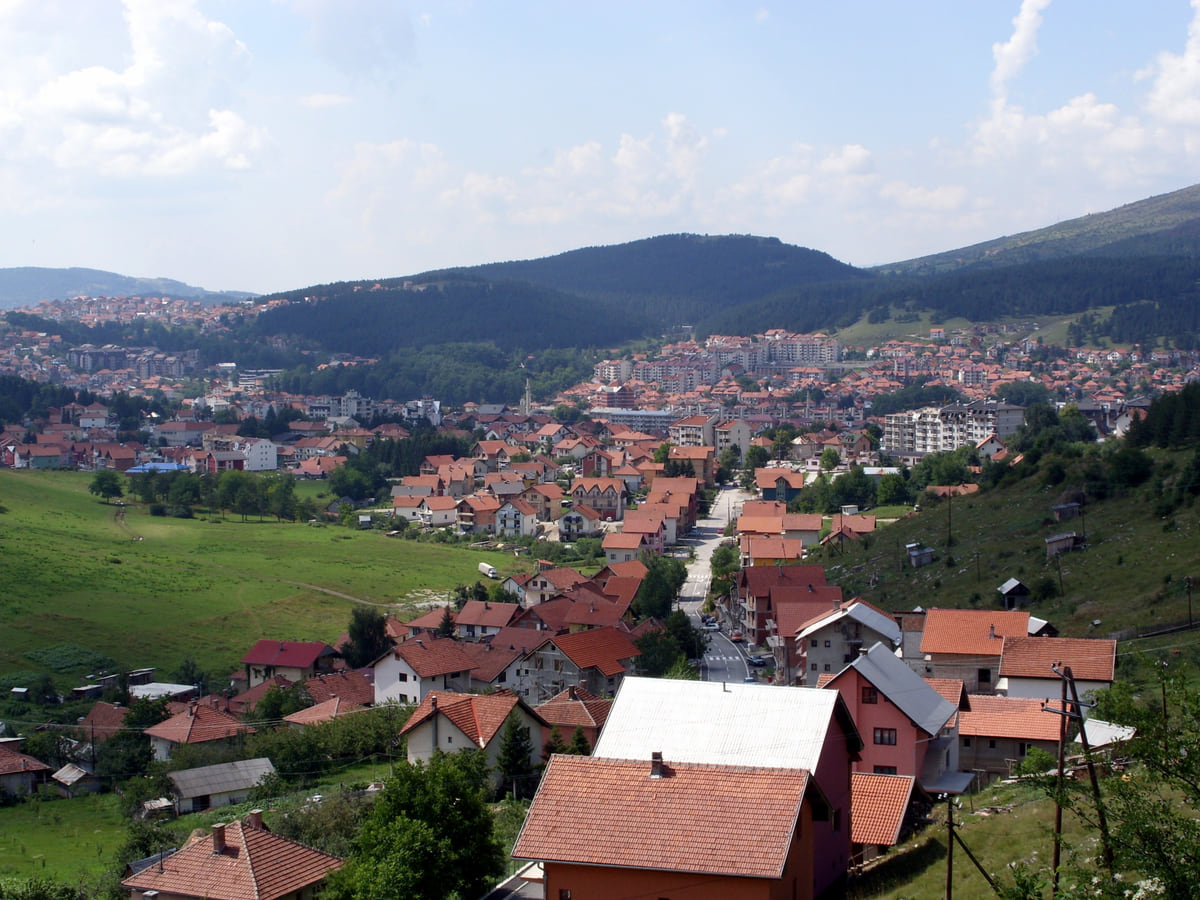
Town in northern Montenegro
Pljevlja, the northern town where church and mosque meet
Pljevlja is the seat of a municipality of 24,134 people (2023) in Montenegro's far north, bordering Bosnia and Herzegovina and Serbia. In its basin below Golubinja hill stand the 16th-century Husein Pasha Mosque and the Holy Trinity Monastery, and nearby are the Roman graves of Municipium S, the meanders of the Ćehotina and the Đurđevića Tara Bridge.
In 30 seconds
Full read: 3 min
- Pljevlja is Montenegro's northernmost town, with 24,134 people in the municipality in 2023.
- It has the Husein Pasha Mosque, from 1569, and the Holy Trinity Monastery.
- Nearby are the Roman finds of Municipium S and the meanders of the Ćehotina.
- In 2024 the January mean was 0.2 °C, with 43 days of snow on the ground.
Pljevlja isn't a beach stop or a quick photo, it's an inland town with a lot of history and very few visitors. I'd give it a day, the mosque and monastery in the morning, the Ćehotina meanders in the afternoon, and the Tara Bridge on the way if I were heading on to Žabljak.

Before you go
What I would keep in mind
-
01 Most beautiful
A 42-metre minaret
The Husein Pasha Mosque, from 1569 according to the local tourist board, has a 42-metre minaret that the national tourist board calls the tallest in the Balkans.
Husein Pasha Mosque -
02 Worth the splurge
The diatreta glass of Municipium S
The local museum holds over 1,200 finds from the Roman graves of Municipium S, including a diatreta, an extremely rare luxury glass cup, according to the national tourist board.
-
03 My tip
The Ćehotina meanders
Between Pljevlja and the Bosnian border the Ćehotina loops through its canyon, with viewpoints over the bends, according to the Pljevlja tourist board.
-
04 To save money
Pljevlja cheese
The national tourist board singles out Pljevlja's cheese as the town's signature flavour. It's what I'd take home.
What I would book
Pljevlja is the north’s great unknown. It sits at the top of the country, far from the coast and the usual routes, and hardly anyone builds it into their trip. Yet it has one of the finest mosques in the Balkans, a monastery with a library of manuscripts, the remains of a Roman town whose name is a mystery and a river that winds through spectacular meanders. In the national tourist board’s words it’s where Christianity and Islam meet, and that’s exactly what you see walking round.
A border town and a crossroads
Pljevlja lies in the middle of a broad basin below Golubinja hill, where the Breznica, Ćehotina and Vezišnica rivers meet, according to its tourist board. The municipality borders Bosnia and Herzegovina to the west and Serbia to the north, and it contains Montenegro’s northernmost point, Moćevići, according to MONSTAT. It’s upland country under forest, which covers 70% of the municipality, and it had 24,134 people at the 2023 census, 16,419 of them in the town.
Trade caravans heading east to Constantinople passed this way, and that crossroads past, the tourist board says, is where its reputation for two faiths living side by side comes from.
From Municipium S to Taslidža
The story goes back a long way. The tourist board mentions Palaeolithic remains in a cave below Gospića vrh, on the upper Ćehotina. In Roman times there was a town at Komini, in the province of Dalmatia, whose full name isn’t known, so archaeologists call it Municipium S. The national tourist board says its graves, from the 1st to the 4th century, have yielded more than 1,200 objects, now in the local museum, among them a diatreta, an extremely rare luxury glass cup.
When the Slavs arrived the Roman town was abandoned and a new one grew up nearby. The tourist board records it as Breznik in the 9th century and says that in 1465, under the Ottomans, it was renamed Taslidža. The main street, the Čaršija, takes its name from that period and is still where the shops, cafés and social life are.
Once your dates are set, check which hotels are still free in Pljevlja before prices climb.
The mosque and the monastery
The best-known monument is the Husein Pasha Mosque, built in 1569 according to the tourist board, with a 42-metre minaret, domes, a 16th-century Quran manuscript and an Egyptian carpet more than 400 years old. The clock tower stands beside it.
The Holy Trinity Monastery is the town’s other great symbol. The tourist board explains that there’s no reliable date for its founding, but that the first written record is from 1537, that for more than a century it was an important copying centre, and that its library and treasury hold manuscripts, icons and goldsmiths’ work, along with relics including a hand of St Sava.
Nature around the town
Between Pljevlja and the Bosnian border, the Ćehotina forms deeply cut meanders that the tourist board considers one of the most striking natural features in the north, with viewpoints over the bends. To the south, the municipality looks into the Tara Canyon and the Draga canyon, up to 800 metres deep, and the Đurđevića Tara Bridge, with its zip line, stands where the roads to Pljevlja, Žabljak and Mojkovac meet.
The tourist board also recommends two medieval forts, Koznik in the village of Kozica, about 20 km south-east, and the ruins of a herceg’s summer residence on Kukanj hill above the Ćehotina, about 10 km north-west. The town and its surroundings also have Second World War memorials, such as the 1961 one at Stražica to those killed in the 1941 battle of Pljevlja, and the one to the Italian partisan division Garibaldi at Rabitlje.
If you would rather have a local show you round, book a guided tour in Pljevlja and choose by the reviews.
Climate and when to go
Pljevlja has cold winters. In 2024 the town’s weather station recorded a January mean of 0.2 °C and a July mean of 21.8 °C, with 43 days of snow on the ground, according to MONSTAT. I’d go between May and September, when the mountain roads to the Tara and Durmitor are at their best and Vodice park makes for a pleasant evening stroll. Pljevlja isn’t on ZPCG’s passenger network, so plan on driving, on the right, or on an intercity bus.
Without a car, the coach is the only option. The ticket site busticket4.me showed four coaches from Podgorica to Pljevlja for 21-10-2026, at 07:30, 10:00, 14:38 and 17:05, taking just under four hours for about €13.
Once your dates are set, check which hotels are still free in Pljevlja before prices climb.
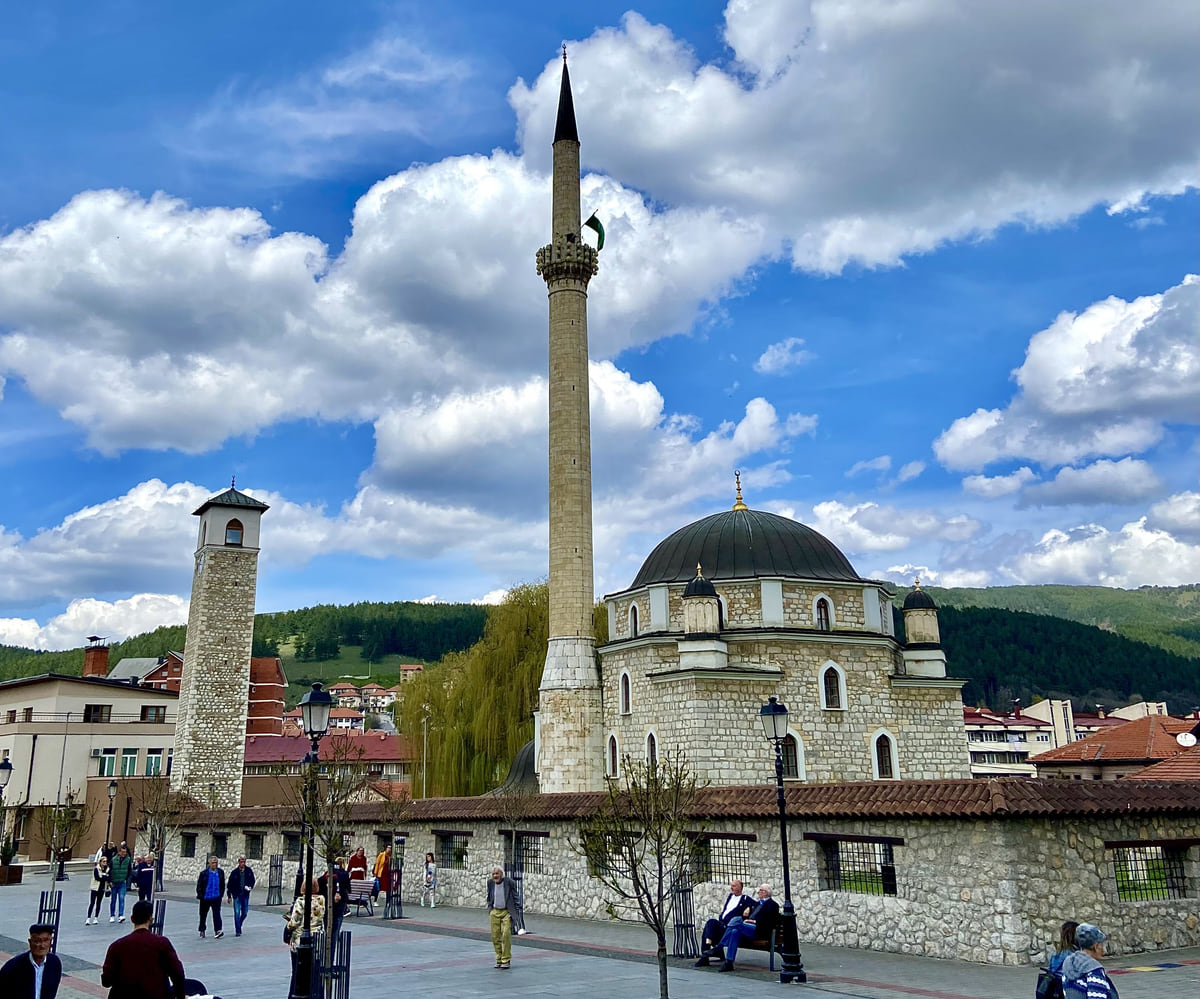
The Husein Pasha Mosque in Pljevlja, with its tall white minaret and dome, beside the stone clock tower
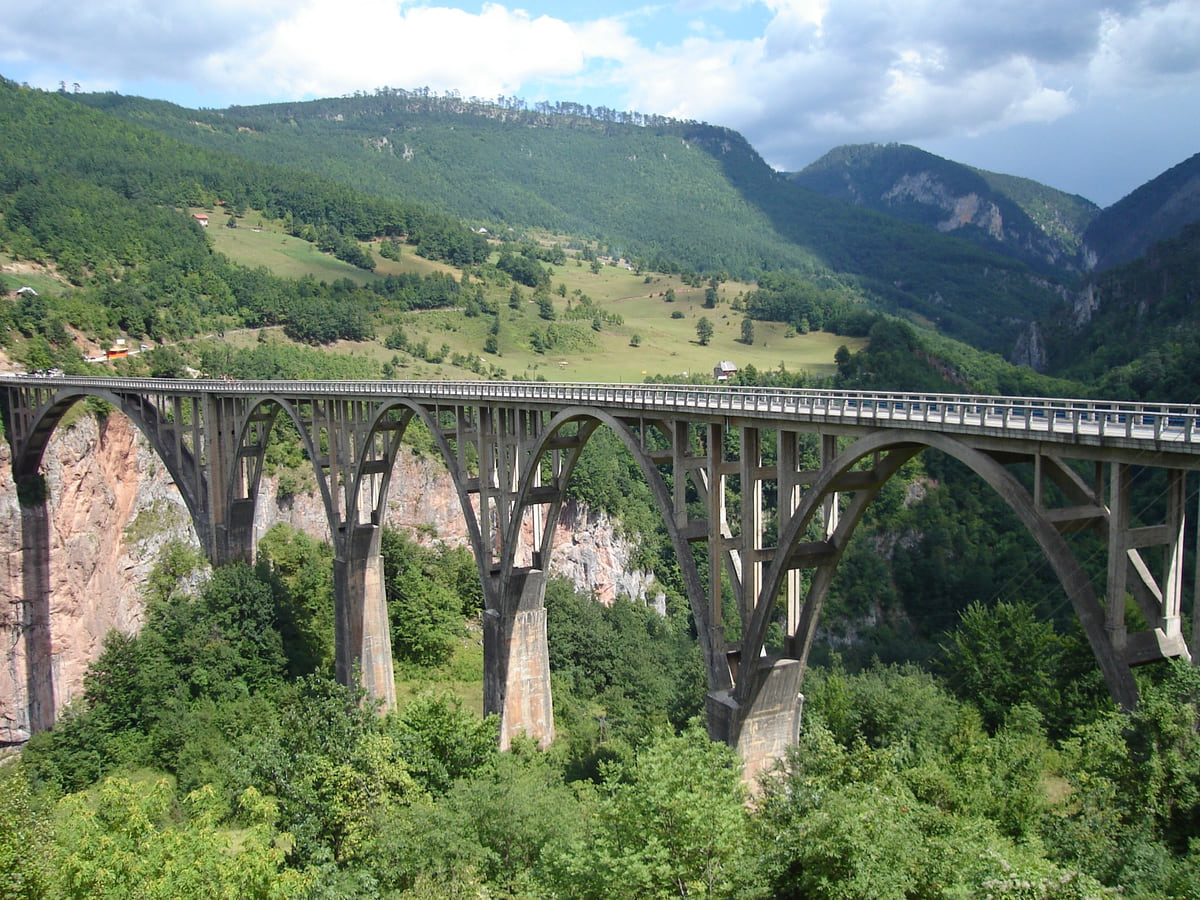
The Đurđevića Tara Bridge with its concrete arches spanning the Tara canyon, between forested slopes
Pljevlja's weather in 2024
| Measure | Value |
|---|---|
| Annual mean | 11.2 °C |
| January mean | 0.2 °C |
| July mean | 21.8 °C |
| Highest recorded | 36.7 °C |
| Rainfall for the year | 750.8 mm over 137 days |
| Days with snow cover | 43, up to 33 cm |
Source: MONSTAT, Statistical Yearbook 2025, 2024 data from the Hydrometeorological Institute. A single year, not long-term averages.
Pljevlja in figures
| Measure | Value |
|---|---|
| Municipal population (2023) | 24,134 |
| Municipal population (2011) | 30,786 |
| Area | 1,343 km² |
| Settlements | 159 |
| Arrivals and overnight stays (2024) | 10,735 and 24,855 |
Source: MONSTAT (2023 census, 2025 yearbook and 2024 tourism survey).
Test yourself
True or false?
0/3 Pick before you peek.
-
Montenegro's northernmost point is in Pljevlja municipality.
See the answer
True. It's Moćevići, according to MONSTAT's statistical yearbook.
-
Pljevlja was called Taslidža in Ottoman times.
See the answer
True. According to its tourist board, the town was renamed Taslidža in 1465, and its main street is still called the Čaršija.
-
It never snows in Pljevlja.
See the answer
False. In 2024 there were 43 days with snow on the ground and up to 33 cm, according to figures published by MONSTAT.
- Municipal population in 2023
- 24,134
- Year of the Husein Pasha Mosque
- 1569
- Objects from the graves of Municipium S
- 1,200
- Share of the municipality under forest
- 70%
Map
Where Pljevlja is
The Adriatic coast runs from Herceg Novi to Ulcinj; the centre holds Podgorica, Cetinje and Lake Skadar, and the north, Durmitor and the Tara Canyon. Every number opens its guide.
 1Northern Montenegro 2Žabljak 3Šavnik 4Tara Canyon 5Plužine 6Mojkovac 7Pljevlja 8Kolašin 9Bijelo Polje 10Berane 11Andrijevica 12Petnjica 13Rožaje 14Plav 15Gusinje
 Map data © OpenStreetMap contributors (ODbL)
- 1Northern MontenegroMontenegro's northern region
- 2ŽabljakNorthern Montenegro, Žabljak municipality
- 3ŠavnikNorthern Montenegro, south of Durmitor
- 4Tara CanyonDurmitor National Park, northern Montenegro
- 5PlužineNorthern Montenegro, the Piva area
- 6MojkovacNorthern Montenegro, the Tara valley
- 7PljevljaTown in northern Montenegro
- 8KolašinNorthern Montenegro, Bjelasica
- 9Bijelo PoljeNorthern Montenegro, Lim valley
- 10BeraneNorthern Montenegro, Lim valley
- 11AndrijevicaNorthern Montenegro, upper Lim
- 12PetnjicaNorthern Montenegro, Bihor
- 13RožajeNorthern Montenegro, Ibar valley
- 14PlavNorthern Montenegro, upper Lim
- 15GusinjeNorthern Montenegro, Prokletije
What to see
What to see in Pljevlja
0 of 278 Montenegro guides
Your next stamp
- Husein Pasha Mosque
- Monasteries
- Religion
- Northern Montenegro
- Plav
- Petnjica
- Šavnik
- Cetinje
- Aman Sveti Stefan
- Budva Old Town
- Haj-Nehaj
- Kotor
- Lučice Beach
- Montenegro's coast
- Peaks of the Balkans
- Porto Montenegro
- Sea Dance Festival
- Splendid Conference & Spa Resort
- Stari Bar
- Ulcinj Old Town
- Bay of Kotor
- Budva Riviera
- Heroj submarine
- Iberostar Bellevue
- Independence Day
- Old olive tree of Mirovica
- Tivat
- Velika plaža
- Ada Bojana
- Beaches in Budva
- Eurostars Queen of Montenegro
- Herceg Novi
- Kotor Old Town
- Mount Rumija
- Igalo
- Kotor city walls
- Mogren Beach
- Montenegro Beach Resort
- Svač
- Vrmac
- Hiking
- Jaz Beach
- Kanli kula
- Luštica peninsula
- St Tryphon Cathedral
- Ulcinj salt pans
- Forte Mare
- Gornja Lastva
- Maritime Museum, Kotor
- Slovenska Beach
- Drobni Pijesak Beach
- Kotor viewpoints
- Mamula
- Žanjic beach
- Kotor cruise port
- Orjen
- Plavi horizonti beach
- Sveti Nikola Island
- Blue Cave
- Restaurants in Budva
- Restaurants in Kotor
- Canyoning
- Hotels
- Perast
- Sutomore
- Sveti Stefan
- Čanj
- Luxury hotels
- Our Lady of the Rocks
- Pržno
- Things to do
- Activities
- All-inclusive hotels
- Bar Riviera
- Bečići
- Hotel Palma
- St George island
- Dobrota
- Hladna uvala
- Most beautiful places
- Petrovac
- Crvena stijena
- Prčanj
- Prettiest villages
- Cycling
- Risan
- UNESCO sites
- Heritage Grand Perast
- Map
- Hyatt Regency Kotor Bay
- Where is it?
- Regions
- Cities
- Beaches in Bar
- Budva
- Central Montenegro
- Hotels in Budva
- Hotels in Kotor
- Iberostar Waves Herceg Novi
- Kitesurfing
- The name
- Beaches in Ulcinj
- Flag
- Hotels in Perast
- Palmon Bay Hotel & Spa
- Podgorica
- Cathedral of the Resurrection
- One&Only Portonovi
- Population
- Sandy beaches
- Azul Beach Resort Montenegro
- Naturist beaches
- Size
- Stara Varoš
- Doclea
- Language
- Mimosa Festival
- Medun
- Zipline
- Currency
- Museums in Podgorica
- Dajbabe Monastery
- EU membership
- History
- Restaurants in Podgorica
- Hotels in Podgorica
- Public holidays
- Avala Resort & Villas
- Bar
- Beaches in Kotor
- Birdwatching
- Hotels in Ulcinj
- Kotor carnival
- Time zone
- Tivat beaches
- Tuzi
- Boka Night
- Dukley Hotel & Resort
- Facts
- Hotels in Tivat
- Zeta
- Caves
- Herceg Novi beaches
- National parks
- Šipčanik
- Hotels in Herceg Novi
- Fortresses
- Fly fishing
- Museums
- Canyons and waterfalls
- Lakes
- Mountains
- Montenegro and Croatia
- Beaches
- Boat trips
- Montenegro and Albania
- Nightlife
- Ulcinj
- Weather
- Best time to visit
- Cetinje Monastery
- Kayaking
- Montenegro and the Balkans
- How to get there
- In summer
- King Nikola's Palace
- Sailing
- Biljarda
- Flights
- In winter
- Airports
- Museums in Cetinje
- New Year's Eve
- Lovćen
- Paragliding
- Tivat Airport
- Njegoš Mausoleum
- Podgorica Airport
- Dubrovnik to Kotor
- Kotor serpentine
- Belgrade to Montenegro
- Njeguši
- Ferry to Italy
- Njeguši prosciutto
- Border crossings
- In January
- Lipa Cave
- Where to stay
- In February
- Kamenari-Lepetane ferry
- Pavlova strana
- Getting around
- In March
- Rijeka Crnojevića
- In April
- Trains
- Buses
- In May
- Car hire
- In June
- Driving
- In July
- In August
- Taxis
- Distances
- In September
- In October
- Road trip
- Food
- In November
- Lake Skadar
- Scenic drives
- In December
- Kotor cable car
- Virpazar
- Where to eat
- Budva to Kotor
- Godinje
- Wine
- Podgorica to Kotor
- Vranjina
- Besac fortress
- Prices and budget
- On a budget
- Žabljak Crnojevića
- Danilovgrad
- Entry requirements
- Ostrog Monastery
- Tourist registration
- Customs
- Nikšić
- Crvena Stijena cave
- Safety
- Events
- Healthcare
- Mobile and roaming
- Žabljak
- Durmitor
- Plugs
- Black Lake
- With kids
- Bobotov Kuk
- Holidays
- Day trips
- Stećci tombstones
- Hotels in Žabljak
- Three-day itinerary
- Five-day itinerary
- Skiing in Montenegro
- One-week itinerary
- Skiing in Žabljak
- Ten-day itinerary
- Nevidio Canyon
- Tara Canyon
- Tara rafting
- Đurđevića Tara Bridge
- Plužine
- Lake Piva
- Piva Monastery
- Mojkovac
- Brskovo
- Kolašin
- Hotels in Kolašin
- Skiing in Kolašin
- Biogradska Gora National Park
- Komovi
- Morača Monastery
- Morača Canyon
- Bijelo Polje
- Đalovića Cave
- Berane
- Andrijevica
- Rožaje
- Lake Plav
- Gusinje
- Vusanje
- Prokletije National Park
Frequently asked questions
What is there to see in Pljevlja?
The Husein Pasha Mosque and its clock tower, the Holy Trinity Monastery, the local museum with the finds from Municipium S, Vodice park, the Ćehotina meanders and, on the way to Žabljak, the Đurđevića Tara Bridge.
Where is Pljevlja?
In Montenegro's far north, in a basin below Golubinja hill, close to the borders with Bosnia and Herzegovina and Serbia. The country's northernmost point, Moćevići, is in the municipality, according to MONSTAT.
What is the population of Pljevlja?
The municipality had 24,134 residents at the 2023 census and the town 16,419, according to MONSTAT, down from 30,786 in the municipality in 2011.
What is the weather like in Pljevlja?
Cold in winter and mild in summer. In 2024 the January mean was 0.2 °C and the July mean 21.8 °C, with 43 days of snow on the ground, according to MONSTAT.
What is Municipium S?
A Roman town in Pljevlja municipality, at Komini, whose full name is unknown, so it's named after the initial S on its inscriptions. Its graves have yielded more than 1,200 objects, according to the national tourist board.
By
Tourism graduate with a master’s in Tourism Management and Planning from the University of Málaga, who has travelled across Europe. He writes every guide from official sources and his own judgement.
Published on . Facts checked on .
Sources
Some links in this guide are affiliate links: if you book through them, the site earns a commission at no extra cost to you. Affiliate disclosure
Photos: Julian Nyča (CC BY-SA 3.0); Desemeus (CC0); Cornelius Bechtler (CC BY-SA 3.0), via Wikimedia Commons.