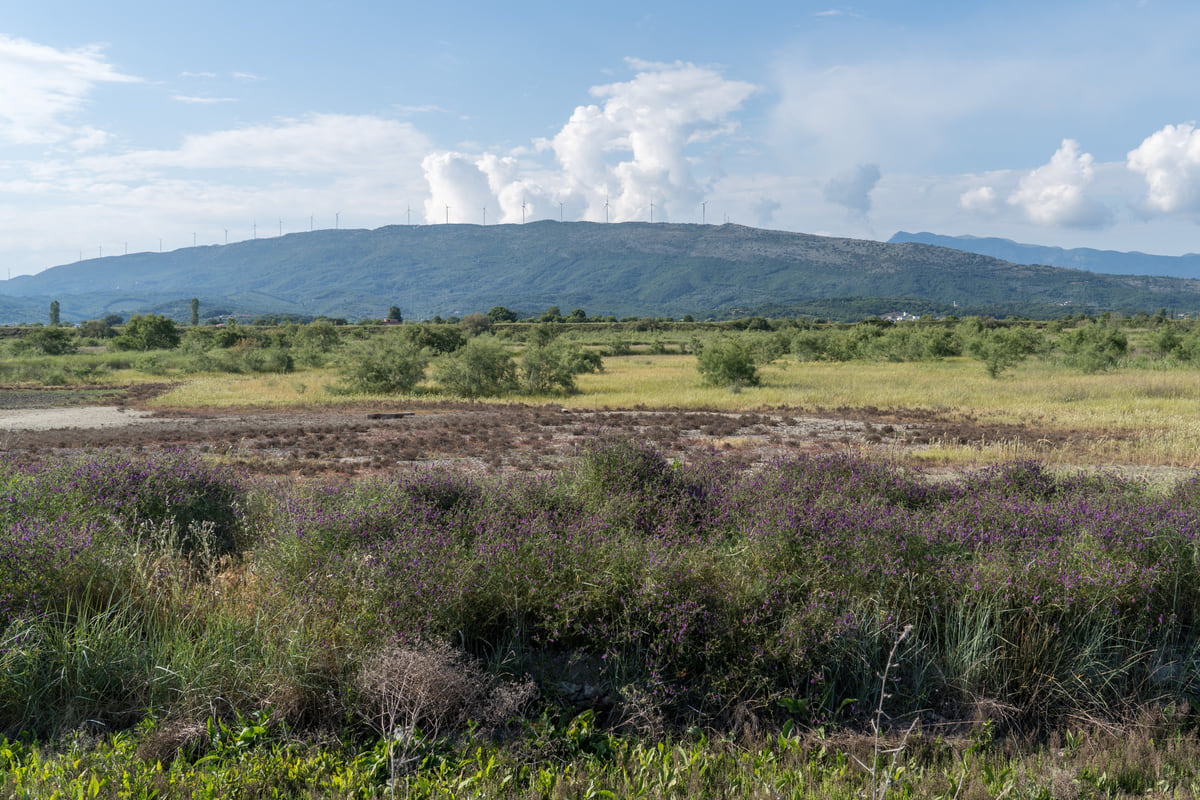
Ulcinj, next to Velika plaža
Ulcinj salina, a bird airport between the town and Long Beach
The Ulcinj salina (Ulcinjska solana) is a large wetland of old salt pans between the town and Velika plaža. It has been an Important Bird Area since 1989 and, since 2004, Montenegro's first private nature park, according to the national tourist board, which counts 240 species. In winter the Ulcinj tourist board records more than 20,000 birds.
In 30 seconds
Full read: 2 min
- The Ulcinj salina is a wetland of old salt pans between the town and Velika plaža.
- It has been an Important Bird Area since 1989 and a private nature park since 2004.
- The national tourist board counts 240 species; winter brings more than 20,000 birds.
- Its current state and access rules have no official source I could read.
Unless you're a serious birder, the salt pans make most sense from the edge, with binoculars, in autumn or late winter. I wouldn't promise anything about getting in until you've checked locally, as I couldn't find up-to-date official visiting rules.

Before you go
What I would keep in mind
-
01 Most beautiful
Stilts among the salt pools
The national tourist board suggests walking between the saltwater pools to spot collared pratincoles, little terns, purple sandpipers and black-winged stilts, among others.
-
02 My tip
Go during migration, not in August
Birds are easiest to see on passage at the end of February, in April and from August to November, and most active in the breeding season from March to July, says the national tourist board.
birdwatching in Montenegro -
03 Watch out
Don't assume you can walk straight in
I couldn't confirm the current state of the salt pans or their access rules on an official website. Ask at the Ulcinj tourist office before you go.
Ulcinj -
04 Getting there
Svač and Lake Šas
Inland from the salt pans, Lake Šas and the ruins of Svač round off a loop through Ulcinj's hinterland.
Svač ruins
What I would book
Between the town of Ulcinj and Velika plaža lies a flat stretch of pools, channels and low scrub that looks like nothing much from the road. This is the old Ulcinj salina, and for birds heading down the Adriatic it’s one of the great stopovers on the journey. For visitors, it’s a place for binoculars and patience rather than a quick look.
A wetland made by salt
The Ulcinj tourist board dates the salt works to the 1930s, the same decade the town’s first hotels went up. Alongside the salt, its website highlights the mineral mud that forms around the pans about two kilometres from the sea, which it rates among the best studied on the Adriatic, and the unrefined sea salt it describes as concentrated sea. OpenStreetMap marks the whole area as Ulcinjska solana Nature Park and flags a viewpoint over the pools.
Why the birds come
The national tourist board explains that Montenegro sits on the Adriatic migration corridor, which is why millions of birds pass over every year. At the salina it counts 240 species and suggests walking between the saltwater pools to see collared pratincoles, little terns, purple sandpipers and black-winged stilts. The Ulcinj tourist board adds that more than 20,000 birds are recorded in winter, mostly waders, with pelicans, herons, ducks, cormorants, birds of prey and songbirds wintering here too. In the fields nearby, on the way to Velika plaža, the national tourist board mentions crested larks, stone-curlews and bee-eaters.
If you are staying the night, see the best hotel deals in Ulcinj for your dates: the well-placed rooms go fast.
Protection, what’s known and what isn’t
According to the national tourist board, the salina has been an Important Bird Area since 1989, Montenegro’s first private nature park since 2004 and an Emerald site under the Bern Convention. What I couldn’t confirm on any official website is whether salt is still produced and on what terms you can go in, so I’m not presenting either as fact. It’s exactly the kind of detail that changes, and worth asking about at the tourist office in Ulcinj.
Mud, salt and the road south
The salina is part of what made Ulcinj a health resort. Since 1992 Ulcinj has held the title of spa and climate resort, and its tourist board lists the mud around the pans and the unrefined salt alongside the sand of its beaches and the sulphurous water of Ženska plaža; dissolved in water at home, it says, the salt does the job of sea water. For a visitor, the natural route strings the salt pans together with Velika plaža and ends at Ada Bojana, where the river and its delta add yet more birdlife. The tourist board also notes that pelicans winter at the salina, which is worth knowing if you’re coming outside the summer season and want something other than a beach day.
So you do not lose the morning at the ticket office, browse tickets and tours in Ulcinj salt pans on GetYourGuide.
Best time of year
According to the national tourist board, migration peaks in late February, in April and in the August to November window, with breeding from March to July. Winter brings the biggest numbers, while summer heat and harsh light make it harder going. If birds are your thing, my guide to birdwatching in Montenegro adds Lake Skadar, the Tivat salt pans and the national parks of the north.
If you are staying the night, see the best hotel deals in Ulcinj for your dates: the well-placed rooms go fast.
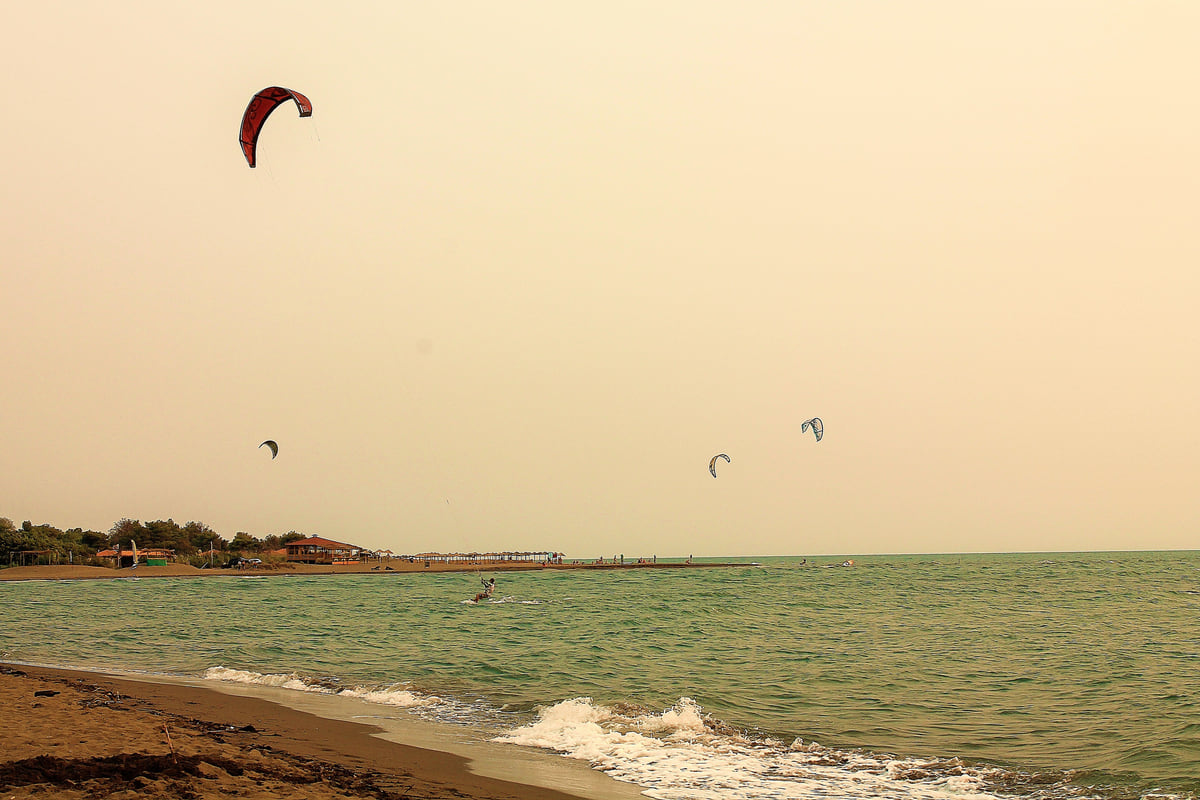
Kitesurf kites over the sea at Velika Plaža in Ulcinj, with gentle waves breaking on the sandy shore
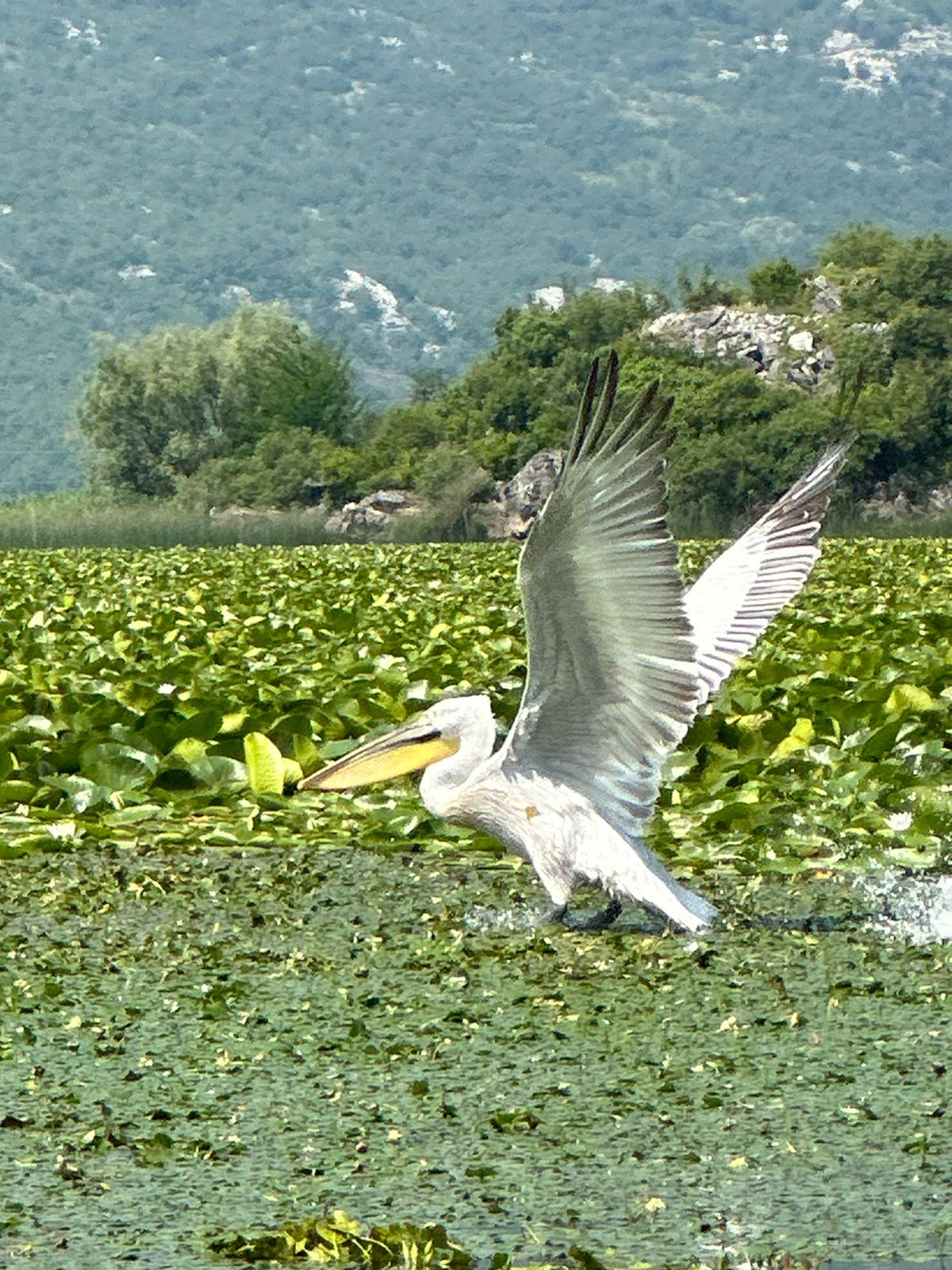
A Dalmatian pelican spreads its wings over the water lilies of Lake Skadar, with shrubs and the rocky mountainside behind
Ulcinj salina at a glance
| What | Detail | Source |
|---|---|---|
| Protection | Important Bird Area since 1989; private nature park since 2004; Emerald site under the Bern Convention | Montenegro National Tourist Organisation |
| Bird species | 240 | Montenegro National Tourist Organisation |
| Birds in winter | Over 20,000, mostly waders | Ulcinj Tourist Organisation |
| Built | 1930s | Ulcinj Tourist Organisation |
| Mineral mud | Around the pans, about 2 km from the sea | Ulcinj Tourist Organisation |
Checked on 11-10-2026. OpenStreetMap marks the area as Ulcinjska solana Nature Park, with a viewpoint. Salt production and visiting arrangements have no official source I could read.
Test yourself
True or false?
0/3 Pick before you peek.
-
The Ulcinj salina has been an Important Bird Area since the 1980s.
See the answer
True. The national tourist board gives 1989 as the year it was designated an IBA.
-
The salt pans only have birds in summer.
See the answer
False. Quite the opposite: the Ulcinj tourist board records more than 20,000 birds in the winter months, mostly waders.
-
The salt pans were built in the 19th century.
See the answer
False. The Ulcinj tourist board dates them to the 1930s, the same decade as the town's first hotels.
Map
Where Ulcinj salt pans is
The Adriatic coast runs from Herceg Novi to Ulcinj; the centre holds Podgorica, Cetinje and Lake Skadar, and the north, Durmitor and the Tara Canyon. Every number opens its guide.
 1Ulcinj Old Town 2Velika plaža 3Ada Bojana 4Svač 5Ulcinj salt pans 6Azul Beach Resort Montenegro 7Ulcinj
 Map data © OpenStreetMap contributors (ODbL)
- 1Ulcinj Old TownUlcinj, southern Montenegro
- 2Velika plažaUlcinj, southern Montenegro
- 3Ada BojanaMouth of the Bojana, Ulcinj municipality
- 4SvačLake Šas, inland from Ulcinj
- 5Ulcinj salt pansUlcinj, next to Velika plaža
- 6Azul Beach Resort MontenegroBeach resort in Ulcinj
- 7UlcinjSouthern Montenegro, by the Albanian border
0 of 278 Montenegro guides
Your next stamp
- Birdwatching
- Ulcinj
- Beaches in Ulcinj
- Hotels in Ulcinj
- Velika plaža
- Kitesurfing
- Slovenska Beach
- Aman Sveti Stefan
- Budva Old Town
- Haj-Nehaj
- Kotor
- Lučice Beach
- Montenegro's coast
- Peaks of the Balkans
- Porto Montenegro
- Sea Dance Festival
- Splendid Conference & Spa Resort
- Stari Bar
- Ulcinj Old Town
- Bay of Kotor
- Budva Riviera
- Heroj submarine
- Iberostar Bellevue
- Independence Day
- Old olive tree of Mirovica
- Tivat
- Ada Bojana
- Beaches in Budva
- Eurostars Queen of Montenegro
- Herceg Novi
- Kotor Old Town
- Mount Rumija
- Igalo
- Kotor city walls
- Mogren Beach
- Montenegro Beach Resort
- Svač
- Vrmac
- Hiking
- Jaz Beach
- Kanli kula
- Luštica peninsula
- St Tryphon Cathedral
- Forte Mare
- Gornja Lastva
- Maritime Museum, Kotor
- Drobni Pijesak Beach
- Kotor viewpoints
- Mamula
- Žanjic beach
- Kotor cruise port
- Orjen
- Plavi horizonti beach
- Sveti Nikola Island
- Blue Cave
- Restaurants in Budva
- Restaurants in Kotor
- Canyoning
- Hotels
- Perast
- Sutomore
- Sveti Stefan
- Čanj
- Luxury hotels
- Our Lady of the Rocks
- Pržno
- Things to do
- Activities
- All-inclusive hotels
- Bar Riviera
- Bečići
- Hotel Palma
- St George island
- Dobrota
- Hladna uvala
- Most beautiful places
- Petrovac
- Crvena stijena
- Prčanj
- Prettiest villages
- Cycling
- Risan
- UNESCO sites
- Heritage Grand Perast
- Map
- Hyatt Regency Kotor Bay
- Where is it?
- Regions
- Cities
- Beaches in Bar
- Budva
- Central Montenegro
- Hotels in Budva
- Hotels in Kotor
- Iberostar Waves Herceg Novi
- The name
- Flag
- Hotels in Perast
- Palmon Bay Hotel & Spa
- Podgorica
- Cathedral of the Resurrection
- One&Only Portonovi
- Population
- Sandy beaches
- Azul Beach Resort Montenegro
- Naturist beaches
- Size
- Stara Varoš
- Doclea
- Language
- Mimosa Festival
- Medun
- Religion
- Zipline
- Currency
- Museums in Podgorica
- Dajbabe Monastery
- EU membership
- History
- Restaurants in Podgorica
- Hotels in Podgorica
- Public holidays
- Avala Resort & Villas
- Bar
- Beaches in Kotor
- Kotor carnival
- Time zone
- Tivat beaches
- Tuzi
- Boka Night
- Dukley Hotel & Resort
- Facts
- Hotels in Tivat
- Zeta
- Caves
- Herceg Novi beaches
- National parks
- Šipčanik
- Hotels in Herceg Novi
- Monasteries
- Fortresses
- Fly fishing
- Museums
- Canyons and waterfalls
- Lakes
- Mountains
- Montenegro and Croatia
- Beaches
- Boat trips
- Cetinje
- Montenegro and Albania
- Nightlife
- Weather
- Best time to visit
- Cetinje Monastery
- Kayaking
- Montenegro and the Balkans
- How to get there
- In summer
- King Nikola's Palace
- Sailing
- Biljarda
- Flights
- In winter
- Airports
- Museums in Cetinje
- New Year's Eve
- Lovćen
- Paragliding
- Tivat Airport
- Njegoš Mausoleum
- Podgorica Airport
- Dubrovnik to Kotor
- Kotor serpentine
- Belgrade to Montenegro
- Njeguši
- Ferry to Italy
- Njeguši prosciutto
- Border crossings
- In January
- Lipa Cave
- Where to stay
- In February
- Kamenari-Lepetane ferry
- Pavlova strana
- Getting around
- In March
- Rijeka Crnojevića
- In April
- Trains
- Buses
- In May
- Car hire
- In June
- Driving
- In July
- In August
- Taxis
- Distances
- In September
- In October
- Road trip
- Food
- In November
- Lake Skadar
- Scenic drives
- In December
- Kotor cable car
- Virpazar
- Where to eat
- Budva to Kotor
- Godinje
- Wine
- Podgorica to Kotor
- Vranjina
- Besac fortress
- Prices and budget
- On a budget
- Žabljak Crnojevića
- Danilovgrad
- Entry requirements
- Ostrog Monastery
- Tourist registration
- Customs
- Nikšić
- Crvena Stijena cave
- Safety
- Events
- Healthcare
- Northern Montenegro
- Mobile and roaming
- Žabljak
- Durmitor
- Plugs
- Black Lake
- With kids
- Bobotov Kuk
- Holidays
- Day trips
- Stećci tombstones
- Hotels in Žabljak
- Three-day itinerary
- Five-day itinerary
- Skiing in Montenegro
- One-week itinerary
- Skiing in Žabljak
- Šavnik
- Ten-day itinerary
- Nevidio Canyon
- Tara Canyon
- Tara rafting
- Đurđevića Tara Bridge
- Plužine
- Lake Piva
- Piva Monastery
- Mojkovac
- Brskovo
- Pljevlja
- Husein Pasha Mosque
- Kolašin
- Hotels in Kolašin
- Skiing in Kolašin
- Biogradska Gora National Park
- Komovi
- Morača Monastery
- Morača Canyon
- Bijelo Polje
- Đalovića Cave
- Berane
- Andrijevica
- Petnjica
- Rožaje
- Plav
- Lake Plav
- Gusinje
- Vusanje
- Prokletije National Park
Frequently asked questions
What is the Ulcinj salina?
A wetland of old salt pans between the town of Ulcinj and Velika plaža. The national tourist board lists it as an Important Bird Area since 1989 and Montenegro's first private nature park since 2004.
What birds can you see at Ulcinj salina?
The national tourist board mentions 240 species, including collared pratincole, little tern, purple sandpiper and black-winged stilt. In winter, the Ulcinj tourist board adds pelicans, herons, ducks, cormorants and birds of prey.
Are there flamingos at Ulcinj salina?
The national tourist board's list for the salina doesn't name them; it mentions flamingos at the Solila salt pans in Tivat. I wouldn't plan a trip to Ulcinj around them.
When is the best time for birdwatching in Ulcinj?
During migration at the end of February, in April and from August to November, and in winter, when more than 20,000 birds gather at the salt pans.
Can you visit the Ulcinj salt pans?
The national tourist board suggests a walk between the pools, but I couldn't find current official access rules. OpenStreetMap marks a viewpoint. I'd ask at the Ulcinj tourist office first.
By
Tourism graduate with a master’s in Tourism Management and Planning from the University of Málaga, who has travelled across Europe. He writes every guide from official sources and his own judgement.
Published on . Facts checked on .
Sources
Some links in this guide are affiliate links: if you book through them, the site earns a commission at no extra cost to you. Affiliate disclosure
Photos: Alexkom000 (CC BY 4.0); Mjuzikxhankej (CC BY-SA 3.0); ShotaNino (CC0 1.0), via Wikimedia Commons.