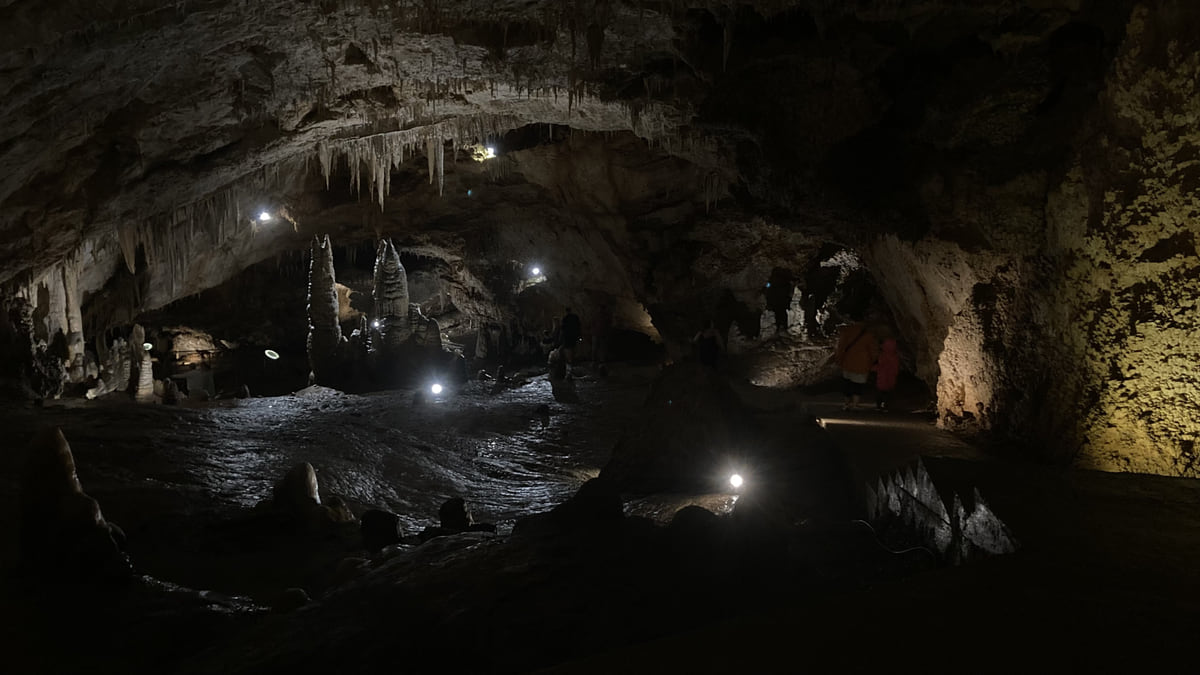
Lipa, Đalovića, Luštica, Durmitor and Bar
Montenegro's caves, from Lipa to the Durmitor ice cave
Montenegro is karst country with some huge caves, but only one, Lipa near Cetinje, is open for organised tourist visits, according to the national tourist board. Đalovića near Bijelo Polje is the longest at 17,500 m and is strictly for cavers, while the Blue Cave on the Luštica peninsula is reached by boat and best enjoyed with a swim.
In 30 seconds
Full read: 3 min
- Montenegro is karst country, but only Lipa Cave runs organised tourist visits.
- Lipa is 5 km from Cetinje; the tour lasts 60 minutes and costs from €16.90 in 2026.
- Đalovića is the country's longest cave, at 17,500 m, and is explored only on expeditions.
- The Blue Cave on Luštica is reached by boat and you can swim inside.
Unless you're a caver, Lipa is the cave you'll actually walk into, and I'd pair it with Cetinje on the same day. In summer I'd add the Blue Cave by boat from Herceg Novi or Kotor, swimsuit on.

Before you go
What I would keep in mind
-
01 My tip
Arrive half an hour early at Lipa
Lipa's operator asks you to arrive 30 minutes early for your ticket; 2026 departures are at 10:00, 11:30, 13:00, 14:30 and 16:00.
Lipa Cave -
02 Money
What Lipa costs
A Lipa Cave visit costs from €16.90 in the 2026 season, from 1 April to 30 November, according to the national tourist board.
-
03 Most beautiful
A chamber the size of a football pitch
In Đalovića cave, the Veliki Brat chamber is 100 m long and 40 m wide, and the Dugo jezero lake runs for 220 m.
Đalovića Cave -
04 Getting there
Crvena stijena, cave and beach
The prehistoric Crvena stijena cave is near Nikšić; don't mix it up with Red Rock beach, which shares the name, on the Bar coast.
Crvena stijena beach -
05 Worth the splurge
Diving Mikovića cave
South of the Volujica peninsula near Bar, Mikovića cave runs for 150 m, has red stalactites and an entrance 7 to 8 m underwater.
Bar -
06 Getting there
From caves to canyons
If rock and water underground appeal, canyoning is the natural next step; Grlja at Vusanje has unlit stretches and water below 5°C.
canyoning in Montenegro
What I would book
Montenegro is karst country, and beneath its mountains lies a world of passages, shafts and underground lakes. The national tourist board quotes some surprising figures for such a small place, like a 1,027 m pit, Željezna jama on Maganik, a 429 m vertical drop in the NYX cave on Trešten peak in the same massif, or a 17,500 m cave near Bijelo Polje. But there’s one thing to know before you go. Only one cave, Lipa, is open for organised tourist visits; all the others can only be entered with a permit from the Environmental Protection Agency, an experienced caving guide and as part of an expedition.
Lipa Cave, the one you can visit
Lipa Cave is 5 km from the centre of Cetinje. Nature took about six million years to shape it and it was discovered around 200 years ago, says the national tourist board. Its operator talks of 2.5 km of passages and chambers, with stalactites, stalagmites and other formations. The tour lasts 60 minutes and starts with a little tourist train to the entrance, and there’s an adventure version you book by email. The 2026 season runs from 1 April to 30 November, with tickets from €16.90 and departures at 10:00, 11:30, 13:00, 14:30 and 16:00, and they ask you to arrive half an hour early. There’s parking and it suits the whole family.
Đalovića, the longest
Đalovića cave, above Vražji firovi in the Đalovića gorge near Bijelo Polje, is the country’s longest at 17,500 m. Inside are Montenegro’s tallest stalagmite, Monolit, 18 m high or about six storeys, the Veliki Brat chamber at 100 by 40 m, the 220 m Dugo jezero lake, a channel of about 5 km and the 70 m Češki siphon. The national tourist board also mentions lakes crossed in small inflatable boats, chambers more than 30 m high and crystal roses, among other very rare formations. The gorge is a protected natural monument. This is a cave for very experienced cavers, not a tourist visit.
Once your dates are set, check which hotels are still free in Cetinje before prices climb.
The Blue Cave, by sea
The Blue Cave lies on the Luštica coast across from Herceg Novi, and takes its name from the turquoise of the water when the sun shines in and bounces off the walls. You reach it by sea, and the whole point is to jump in for a swim.
Durmitor’s ice cave
High on Obla glava in Durmitor there’s a cave where the water stays frozen in midsummer, with ice formations as tall as a person all year round. You get down by rope or by sliding in feet first, and the best time is June to October. The national park has a trail from Black Lake to the cave via Lokvice, one of the routes in my guide to hiking in Montenegro.
If you would rather have a local show you round, book a guided tour in Cetinje and choose by the reviews.
Other caves
Near Bar, Mikovića cave, south of Volujica, is 150 m long, has red stalactites and partly rises above the water; according to the Bar tourist board, those who’ve seen it rate it the country’s best cave for recreational diving. Near Nikšić, Crvena stijena is a prehistoric site 180,000 years old. In Petnjica, Jerina’s cave in the Radmanci gorge has a stone wall across its mouth and belongs to Turin, one of the country’s most important archaeological sites, which has yielded arrowheads, bronze coins, iron tools, pottery and a Bronze Age house just half a metre down. The finds, including a female figurine about 5,000 years old, are in the Polimlje Museum in Berane. And 28 km from Bijelo Polje lies Novakovića cave, easy going apart from the Kula, or Tower, a narrow squeeze with a 3 to 4 m drop at the end, and with chambers named the Hidden Chamber, the Enchanted City, Picasso and the Dado Đurić Gallery.
Once your dates are set, check which hotels are still free in Cetinje before prices climb.
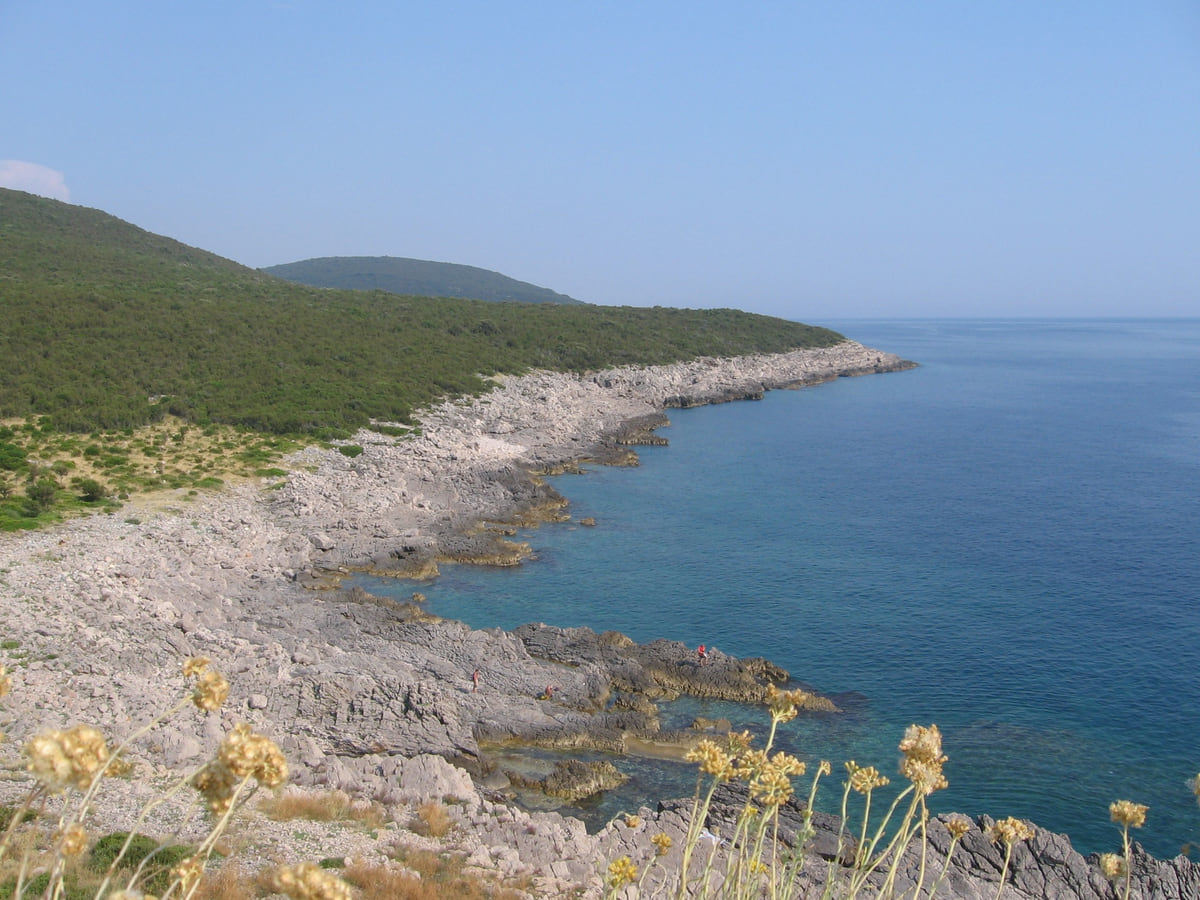
The rocky shoreline of the Luštica peninsula, with blue sea and a hillside covered in scrub and yellow flowers
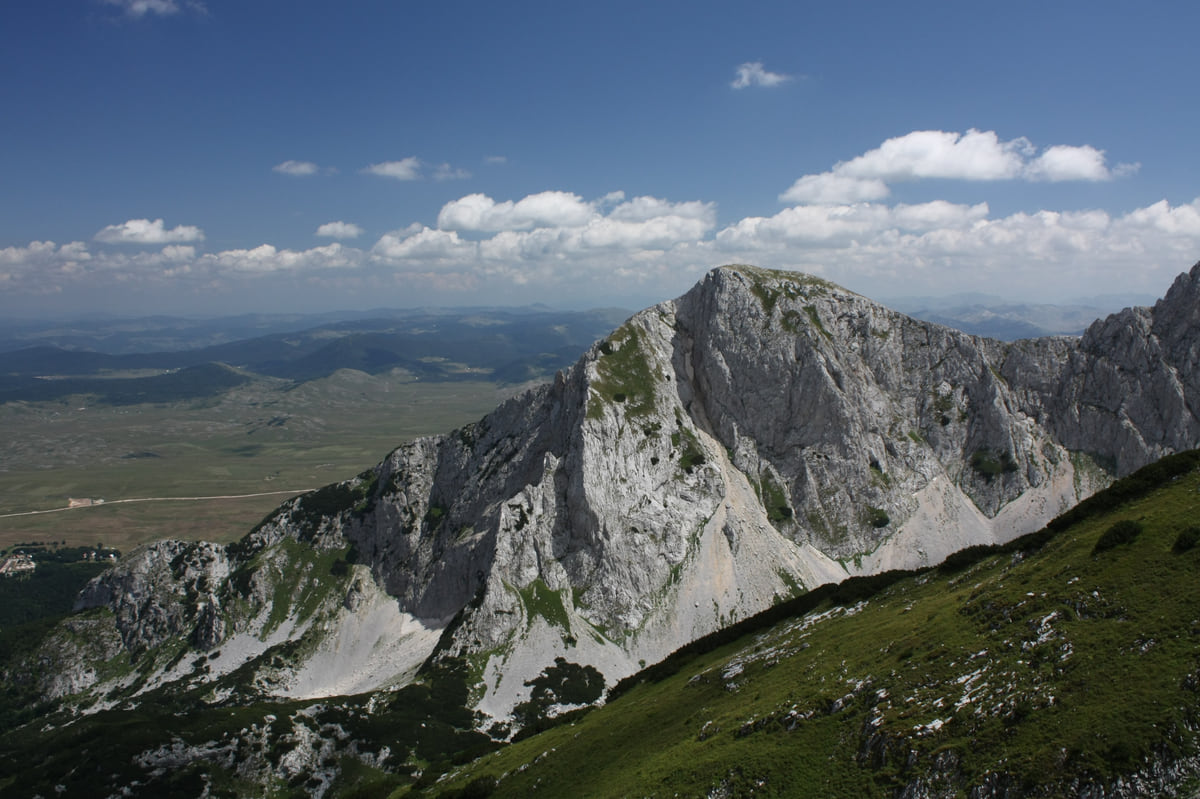
Savin Kuk in Durmitor, with its pale rock face and green meadows in the foreground under a cloudy sky
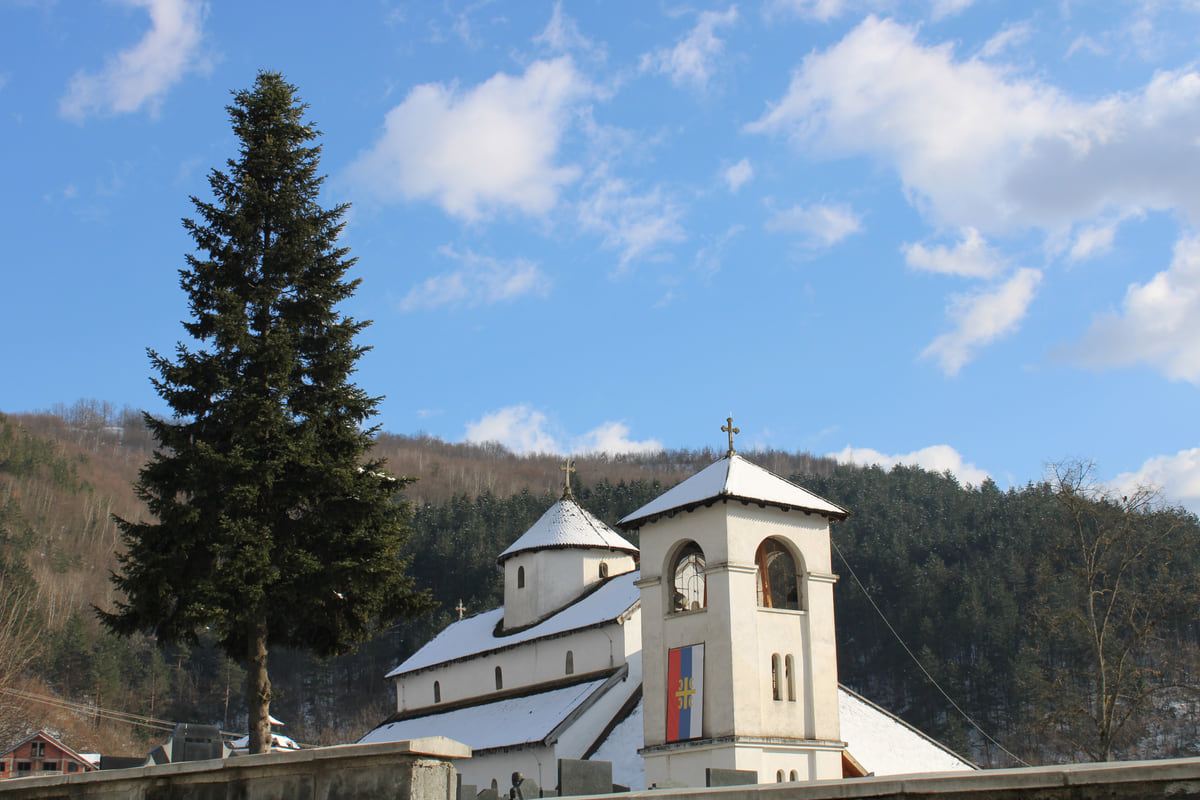
St Nicholas Church in Bijelo Polje, white with a bell tower, beside a tall fir tree and wooded hills
Caves you can see in Montenegro
| Cave | Where | How to visit |
|---|---|---|
| Lipa | 5 km from Cetinje | 60-minute guided tour, with a train to the entrance |
| Blue Cave | Luštica, near Herceg Novi | By boat, with a swim in the turquoise water |
| Ice cave | Obla glava, Durmitor | On foot from Black Lake; June to October |
| Mikovića | Volujica, Bar | Diving, entrance at 7 to 8 m |
| Đalovića | Near Bijelo Polje | Expeditions only, with a permit |
| Novakovića | Vraneška valley, 28 km from Bijelo Polje | No published organised visits |
Montenegro National Tourist Organisation, caves, checked on 11 October 2026; Lipa Cave operator's website, 10 October 2026; Bar Tourist Organisation, activities.
Test yourself
True or false?
0/3 Pick before you peek.
-
Several caves in Montenegro are open for organised tourist visits.
See the answer
False. According to the national tourist board, only Lipa Cave is.
-
Montenegro's longest cave is near Bijelo Polje.
See the answer
True. It's Đalovića, above Vražji firovi, at 17,500 m.
-
Durmitor's ice cave only has ice in winter.
See the answer
False. The water stays frozen in midsummer and there are ice formations all year.
0 of 278 Montenegro guides
Your next stamp
- Đalovića Cave
- Lipa Cave
- Blue Cave
- Hiking
- Things to do
- Žabljak
- Durmitor
- Lakes
- Aman Sveti Stefan
- Budva Old Town
- Haj-Nehaj
- Kotor
- Lučice Beach
- Montenegro's coast
- Peaks of the Balkans
- Porto Montenegro
- Sea Dance Festival
- Splendid Conference & Spa Resort
- Stari Bar
- Ulcinj Old Town
- Bay of Kotor
- Budva Riviera
- Heroj submarine
- Iberostar Bellevue
- Independence Day
- Old olive tree of Mirovica
- Tivat
- Velika plaža
- Ada Bojana
- Beaches in Budva
- Eurostars Queen of Montenegro
- Herceg Novi
- Kotor Old Town
- Mount Rumija
- Igalo
- Kotor city walls
- Mogren Beach
- Montenegro Beach Resort
- Svač
- Vrmac
- Jaz Beach
- Kanli kula
- Luštica peninsula
- St Tryphon Cathedral
- Ulcinj salt pans
- Forte Mare
- Gornja Lastva
- Maritime Museum, Kotor
- Slovenska Beach
- Drobni Pijesak Beach
- Kotor viewpoints
- Mamula
- Žanjic beach
- Kotor cruise port
- Orjen
- Plavi horizonti beach
- Sveti Nikola Island
- Restaurants in Budva
- Restaurants in Kotor
- Canyoning
- Hotels
- Perast
- Sutomore
- Sveti Stefan
- Čanj
- Luxury hotels
- Our Lady of the Rocks
- Pržno
- Activities
- All-inclusive hotels
- Bar Riviera
- Bečići
- Hotel Palma
- St George island
- Dobrota
- Hladna uvala
- Most beautiful places
- Petrovac
- Crvena stijena
- Prčanj
- Prettiest villages
- Cycling
- Risan
- UNESCO sites
- Heritage Grand Perast
- Map
- Hyatt Regency Kotor Bay
- Where is it?
- Regions
- Cities
- Beaches in Bar
- Budva
- Central Montenegro
- Hotels in Budva
- Hotels in Kotor
- Iberostar Waves Herceg Novi
- Kitesurfing
- The name
- Beaches in Ulcinj
- Flag
- Hotels in Perast
- Palmon Bay Hotel & Spa
- Podgorica
- Cathedral of the Resurrection
- One&Only Portonovi
- Population
- Sandy beaches
- Azul Beach Resort Montenegro
- Naturist beaches
- Size
- Stara Varoš
- Doclea
- Language
- Mimosa Festival
- Medun
- Religion
- Zipline
- Currency
- Museums in Podgorica
- Dajbabe Monastery
- EU membership
- History
- Restaurants in Podgorica
- Hotels in Podgorica
- Public holidays
- Avala Resort & Villas
- Bar
- Beaches in Kotor
- Birdwatching
- Hotels in Ulcinj
- Kotor carnival
- Time zone
- Tivat beaches
- Tuzi
- Boka Night
- Dukley Hotel & Resort
- Facts
- Hotels in Tivat
- Zeta
- Herceg Novi beaches
- National parks
- Šipčanik
- Hotels in Herceg Novi
- Monasteries
- Fortresses
- Fly fishing
- Museums
- Canyons and waterfalls
- Mountains
- Montenegro and Croatia
- Beaches
- Boat trips
- Cetinje
- Montenegro and Albania
- Nightlife
- Ulcinj
- Weather
- Best time to visit
- Cetinje Monastery
- Kayaking
- Montenegro and the Balkans
- How to get there
- In summer
- King Nikola's Palace
- Sailing
- Biljarda
- Flights
- In winter
- Airports
- Museums in Cetinje
- New Year's Eve
- Lovćen
- Paragliding
- Tivat Airport
- Njegoš Mausoleum
- Podgorica Airport
- Dubrovnik to Kotor
- Kotor serpentine
- Belgrade to Montenegro
- Njeguši
- Ferry to Italy
- Njeguši prosciutto
- Border crossings
- In January
- Where to stay
- In February
- Kamenari-Lepetane ferry
- Pavlova strana
- Getting around
- In March
- Rijeka Crnojevića
- In April
- Trains
- Buses
- In May
- Car hire
- In June
- Driving
- In July
- In August
- Taxis
- Distances
- In September
- In October
- Road trip
- Food
- In November
- Lake Skadar
- Scenic drives
- In December
- Kotor cable car
- Virpazar
- Where to eat
- Budva to Kotor
- Godinje
- Wine
- Podgorica to Kotor
- Vranjina
- Besac fortress
- Prices and budget
- On a budget
- Žabljak Crnojevića
- Danilovgrad
- Entry requirements
- Ostrog Monastery
- Tourist registration
- Customs
- Nikšić
- Crvena Stijena cave
- Safety
- Events
- Healthcare
- Northern Montenegro
- Mobile and roaming
- Plugs
- Black Lake
- With kids
- Bobotov Kuk
- Holidays
- Day trips
- Stećci tombstones
- Hotels in Žabljak
- Three-day itinerary
- Five-day itinerary
- Skiing in Montenegro
- One-week itinerary
- Skiing in Žabljak
- Šavnik
- Ten-day itinerary
- Nevidio Canyon
- Tara Canyon
- Tara rafting
- Đurđevića Tara Bridge
- Plužine
- Lake Piva
- Piva Monastery
- Mojkovac
- Brskovo
- Pljevlja
- Husein Pasha Mosque
- Kolašin
- Hotels in Kolašin
- Skiing in Kolašin
- Biogradska Gora National Park
- Komovi
- Morača Monastery
- Morača Canyon
- Bijelo Polje
- Berane
- Andrijevica
- Petnjica
- Rožaje
- Plav
- Lake Plav
- Gusinje
- Vusanje
- Prokletije National Park
Frequently asked questions
Which caves can you visit in Montenegro?
The only one open for organised tourist visits is Lipa, near Cetinje. The Blue Cave on Luštica is visited by boat, and the rest can only be explored with a permit from the Environmental Protection Agency, an experienced caving guide and as an expedition.
What is the biggest cave in Montenegro?
Đalovića, above Vražji firovi near Bijelo Polje, at 17,500 m. It also has the country's tallest stalagmite, Monolit, at 18 m.
How much does Lipa Cave cost?
From €16.90 in the 2026 season, which runs from 1 April to 30 November, according to the national tourist board.
Where is the Blue Cave in Montenegro?
On the Luštica peninsula, near Herceg Novi. It's named after the turquoise colour of the water when the sun shines in.
Is there an ice cave in Montenegro?
Yes, on Obla glava in Durmitor, with ice formations as tall as a person all year round. June to October is the best time to go.
By
Tourism graduate with a master’s in Tourism Management and Planning from the University of Málaga, who has travelled across Europe. He writes every guide from official sources and his own judgement.
Published on . Facts checked on .
Sources
Some links in this guide are affiliate links: if you book through them, the site earns a commission at no extra cost to you. Affiliate disclosure
Photos: Mitia Morovov-Sheiner (CC BY-SA 4.0); BrsJvnvc (CC BY 3.0); Mercy (CC BY-SA 3.0); Steffpop (CC BY-SA 4.0), via Wikimedia Commons.