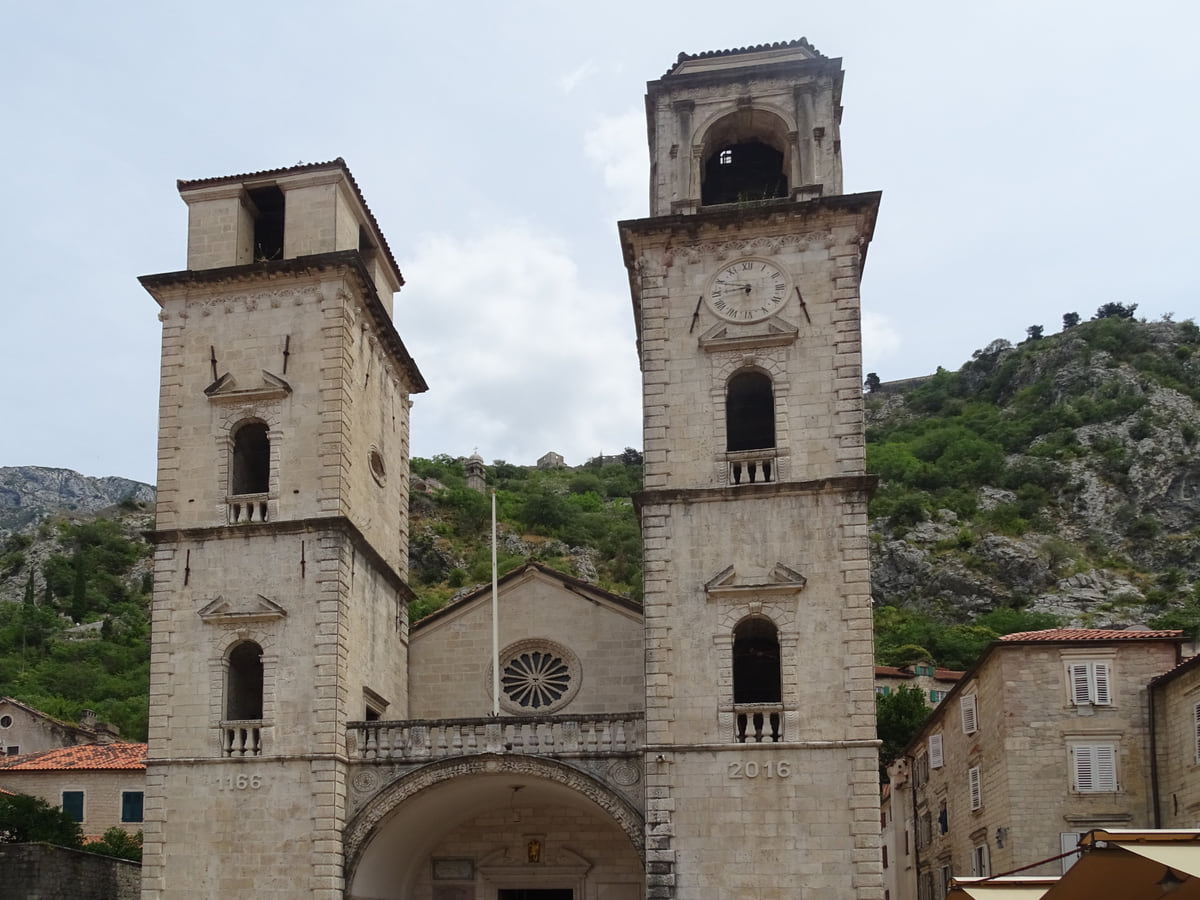
Sveti Tripun, since 1166
St Tryphon Cathedral, the building that defines Kotor
St Tryphon Cathedral (Sveti Tripun) is Kotor's Catholic cathedral, on the square of the same name inside the old town. The present church dates from 1166 and replaced an 8th-century one, according to UNESCO. It holds the relics of the town's patron saint, is covered by the €19 City Pass S and is closed to sightseers during masses, weddings and baptisms.
In 30 seconds
Full read: 2 min
- Kotor's Catholic cathedral, consecrated in 1166 over an 8th-century church.
- It keeps the relics of St Tryphon, the town's patron saint.
- Covered by City Pass S at €19 or City Pass M at €30, both valid for a month.
- No sightseeing during masses, weddings, baptisms or other ceremonies.
Go in late in the afternoon, when the tour groups have left and the low sun catches the façade. If you walk into a wedding, don't hang about; come back another day, because the city pass gives you a whole month.

Before you go
What I would keep in mind
-
01 To save money
Better value with the city pass
The cathedral is in the €19 City Pass S, along with the Maritime Museum, Boka Aquarium and two Orthodox churches, and the pass lasts a month.
Kotor old town -
02 My tip
Check for services before you go
Kotor's tourist board says visits are off during masses, weddings, baptisms and other ceremonies. Summer weekends are when most weddings happen.
-
03 Most beautiful
The patron's feast and the sailors' dance
At the St Tryphon celebrations the Boka Navy brotherhood performs its kolo, a dance with twelve named figures, on the Square of Arms, according to the National Tourism Organisation.
the Bay of Kotor
What I would book
Walk in through the Sea Gate, cross the Square of Arms and two lanes later you’re facing a pale stone front with twin towers and a rose window between them. This is St Tryphon Cathedral, which Kotor’s tourist board calls, without much modesty, the town’s signature landmark. Fair enough. Here’s what’s inside, when to go in and why the city pass should already be in your pocket.
A church of 1166 on older foundations
UNESCO’s summary of the Region of Kotor calls the cathedral the largest and most impressive building in town, with a first church built in the 8th century and the present one dating from 1166. The National Tourism Organisation goes a step further and bills it as older than Notre-Dame in Paris. I’ll leave that as its claim; the dates speak for themselves.
You can see it has been rebuilt. The National Tourism Organisation describes a building scarred by earthquakes, and UNESCO notes that the 1979 quake badly damaged four Romanesque churches in the old town as well as the walls, and that the town was restored largely with its help.
What’s inside
The National Tourism Organisation describes an interior holding work by painters, fresco artists, stonemasons and goldsmiths across the centuries, along with the relics of the saints and patrons of the town, Tryphon first among them. UNESCO adds that medieval Kotor had its own schools of stonemasonry and icon painting, and this is where that craft shows best.
I won’t walk you altar by altar through details no official source I’ve read confirms. My advice is to go in slowly and look up, because the carved stone is what this place is about.
If you are staying the night, see the best hotel deals in Kotor for your dates: the well-placed rooms go fast.
How and when to visit
The easy way in is the tourist board’s city pass. City Pass S costs €19, lasts a month and, besides the cathedral, covers the Maritime Museum of Montenegro, Boka Aquarium and two Orthodox churches on St Luke’s Square. The official pages I read don’t give a single-entry price or opening hours.
One condition catches plenty of people out. Visits stop during masses, weddings, baptisms and any other ceremony. Summer Saturdays are wedding days in Kotor, so I’d save the cathedral for a weekday afternoon, once the cruise passengers are back on board. I list the heaviest ship days under Kotor cruise port.
St Tryphon, the town’s patron
Kotor’s tourist board includes the Savindan and St Tryphon festivities, in January, in its calendar of events; I cover them in Montenegro weather in January. That’s when you’ll see the Boka Navy, the bay’s seafaring brotherhood, which the National Tourism Organisation dates back to 809. Its dance, the kolo of St Tryphon, has twelve named figures and is performed on the Square of Arms. If you’re coming in winter, it’s worth timing your trip for it.
If you are staying the night, see the best hotel deals in Kotor for your dates: the well-placed rooms go fast.
Don’t mix them up
Search for La Catedral in Kotor and you’ll also find a pasta bar of that name a few steps away. Nothing to do with the church, though the mix-up is easy to make. The cathedral is on its own square, a short walk from the rest of Kotor Old Town.
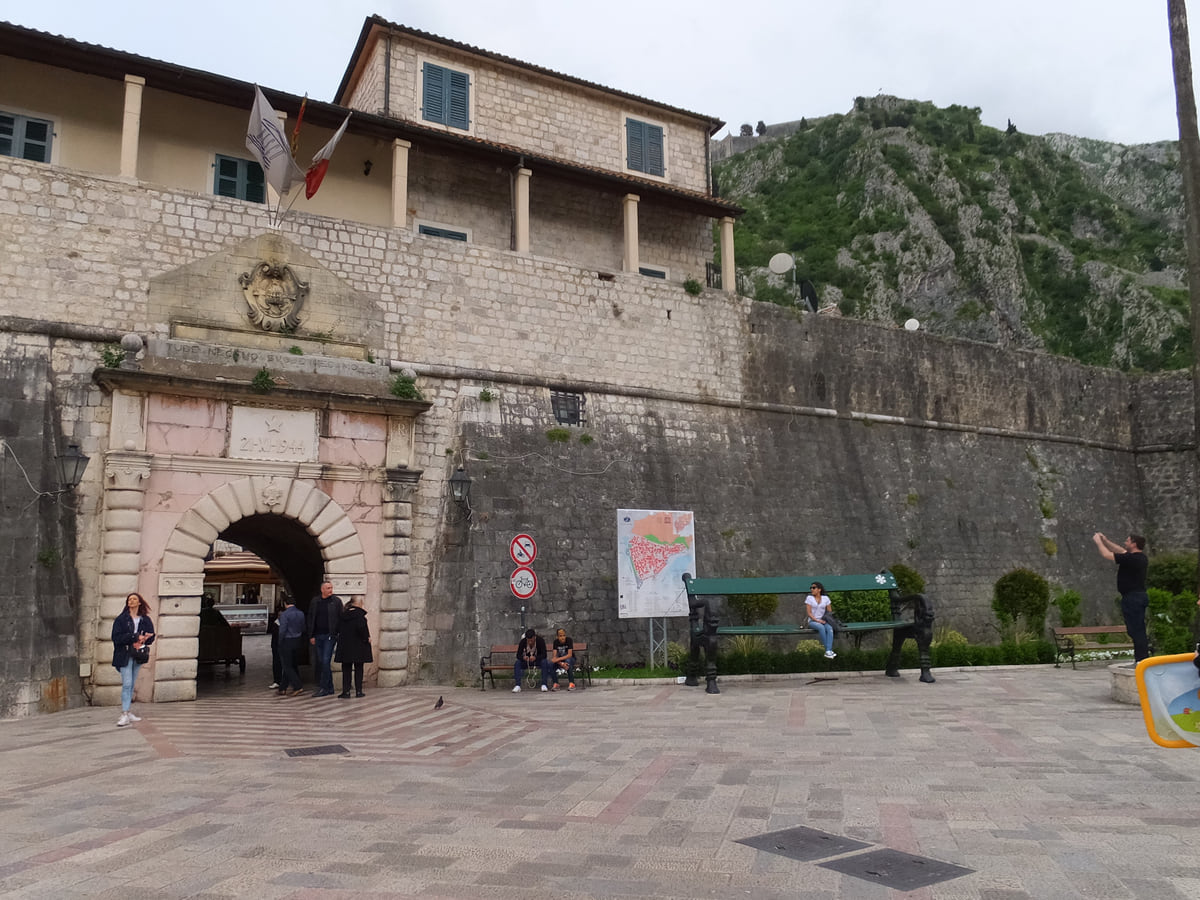
The Sea Gate, the main entrance to Kotor old town, set in the stone wall with the mountain rising behind it
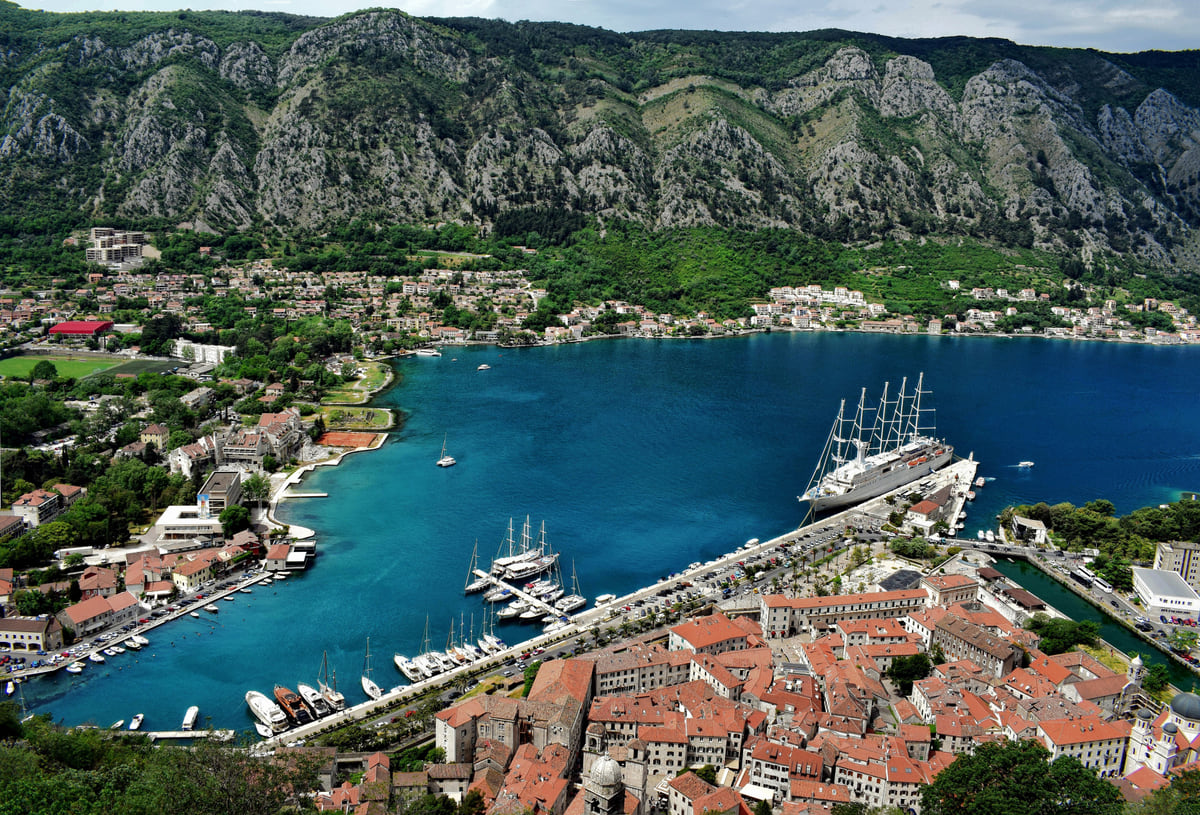
The Bay of Kotor from high on the town walls, with the old town's red roofs, the harbour and a sailing ship moored beneath the mountain
The cathedral in dates and facts
| Fact | Detail | Source |
|---|---|---|
| First church | 8th century | UNESCO (Dutch summary) |
| Present church | 1166 | UNESCO (Dutch summary) |
| Earthquake damage | 1979 | UNESCO |
| Visiting | Included in City Pass S and M | Kotor Tourist Board |
| Patron's feast | Savindan and St Tryphon, January | Kotor Tourist Board |
Checked on 10-10-2026. The tourist board pages I read give no opening hours and no single-entry price.
Test yourself
True or false?
0/3 Pick before you peek.
-
St Tryphon Cathedral is Orthodox.
See the answer
False. It's Kotor's Catholic cathedral. The Orthodox churches in the old town are St Nicholas and St Luke.
-
The present cathedral dates from the 12th century.
See the answer
True. UNESCO dates the new church to 1166, built over an earlier one from the 8th century.
-
You can look round the cathedral whether or not a service is on.
See the answer
False. Kotor's tourist board says visits are suspended during masses, weddings, baptisms and other ceremonies.
- Date of the present church
- 1166
- The first church on the site
- 8th century
- City Pass S, which includes it
- €19
Map
Where St Tryphon Cathedral is
The Adriatic coast runs from Herceg Novi to Ulcinj; the centre holds Podgorica, Cetinje and Lake Skadar, and the north, Durmitor and the Tara Canyon. Every number opens its guide.
 1Kotor 2Bay of Kotor 3Kotor Old Town 4Kotor city walls 5St Tryphon Cathedral 6Maritime Museum, Kotor 7Kotor viewpoints 8Kotor cruise port 9Perast 10Dobrota 11Prčanj 12Risan 13Kotor cable car
 Map data © OpenStreetMap contributors (ODbL)
- 1KotorTown on the coast
- 2Bay of KotorBoka Kotorska
- 3Kotor Old TownStari grad, inside the walls
- 4Kotor city wallsAround 1,400 steps
- 5St Tryphon CathedralSveti Tripun, since 1166
- 6Maritime Museum, KotorGrgurina Palace, Kotor Old Town
- 7Kotor viewpointsFour heights above the bay
- 8Kotor cruise portPort of Kotor, right by the walls
- 9Perast12 km from Kotor
- 10DobrotaNorth of Kotor, on the water
- 11Prčanj1,030 residents opposite Kotor
- 12RisanThe bay's most sheltered corner
- 13Kotor cable car3.9 km of cable above the bay
0 of 278 Montenegro guides
Your next stamp
- Kotor Old Town
- Kotor
- Kotor cruise port
- Aman Sveti Stefan
- Budva Old Town
- Haj-Nehaj
- Lučice Beach
- Montenegro's coast
- Peaks of the Balkans
- Porto Montenegro
- Sea Dance Festival
- Splendid Conference & Spa Resort
- Stari Bar
- Ulcinj Old Town
- Bay of Kotor
- Budva Riviera
- Heroj submarine
- Iberostar Bellevue
- Independence Day
- Old olive tree of Mirovica
- Tivat
- Velika plaža
- Ada Bojana
- Beaches in Budva
- Eurostars Queen of Montenegro
- Herceg Novi
- Mount Rumija
- Igalo
- Kotor city walls
- Mogren Beach
- Montenegro Beach Resort
- Svač
- Vrmac
- Hiking
- Jaz Beach
- Kanli kula
- Luštica peninsula
- Ulcinj salt pans
- Forte Mare
- Gornja Lastva
- Maritime Museum, Kotor
- Slovenska Beach
- Drobni Pijesak Beach
- Kotor viewpoints
- Mamula
- Žanjic beach
- Orjen
- Plavi horizonti beach
- Sveti Nikola Island
- Blue Cave
- Restaurants in Budva
- Restaurants in Kotor
- Canyoning
- Hotels
- Perast
- Sutomore
- Sveti Stefan
- Čanj
- Luxury hotels
- Our Lady of the Rocks
- Pržno
- Things to do
- Activities
- All-inclusive hotels
- Bar Riviera
- Bečići
- Hotel Palma
- St George island
- Dobrota
- Hladna uvala
- Most beautiful places
- Petrovac
- Crvena stijena
- Prčanj
- Prettiest villages
- Cycling
- Risan
- UNESCO sites
- Heritage Grand Perast
- Map
- Hyatt Regency Kotor Bay
- Where is it?
- Regions
- Cities
- Beaches in Bar
- Budva
- Central Montenegro
- Hotels in Budva
- Hotels in Kotor
- Iberostar Waves Herceg Novi
- Kitesurfing
- The name
- Beaches in Ulcinj
- Flag
- Hotels in Perast
- Palmon Bay Hotel & Spa
- Podgorica
- Cathedral of the Resurrection
- One&Only Portonovi
- Population
- Sandy beaches
- Azul Beach Resort Montenegro
- Naturist beaches
- Size
- Stara Varoš
- Doclea
- Language
- Mimosa Festival
- Medun
- Religion
- Zipline
- Currency
- Museums in Podgorica
- Dajbabe Monastery
- EU membership
- History
- Restaurants in Podgorica
- Hotels in Podgorica
- Public holidays
- Avala Resort & Villas
- Bar
- Beaches in Kotor
- Birdwatching
- Hotels in Ulcinj
- Kotor carnival
- Time zone
- Tivat beaches
- Tuzi
- Boka Night
- Dukley Hotel & Resort
- Facts
- Hotels in Tivat
- Zeta
- Caves
- Herceg Novi beaches
- National parks
- Šipčanik
- Hotels in Herceg Novi
- Monasteries
- Fortresses
- Fly fishing
- Museums
- Canyons and waterfalls
- Lakes
- Mountains
- Montenegro and Croatia
- Beaches
- Boat trips
- Cetinje
- Montenegro and Albania
- Nightlife
- Ulcinj
- Weather
- Best time to visit
- Cetinje Monastery
- Kayaking
- Montenegro and the Balkans
- How to get there
- In summer
- King Nikola's Palace
- Sailing
- Biljarda
- Flights
- In winter
- Airports
- Museums in Cetinje
- New Year's Eve
- Lovćen
- Paragliding
- Tivat Airport
- Njegoš Mausoleum
- Podgorica Airport
- Dubrovnik to Kotor
- Kotor serpentine
- Belgrade to Montenegro
- Njeguši
- Ferry to Italy
- Njeguši prosciutto
- Border crossings
- In January
- Lipa Cave
- Where to stay
- In February
- Kamenari-Lepetane ferry
- Pavlova strana
- Getting around
- In March
- Rijeka Crnojevića
- In April
- Trains
- Buses
- In May
- Car hire
- In June
- Driving
- In July
- In August
- Taxis
- Distances
- In September
- In October
- Road trip
- Food
- In November
- Lake Skadar
- Scenic drives
- In December
- Kotor cable car
- Virpazar
- Where to eat
- Budva to Kotor
- Godinje
- Wine
- Podgorica to Kotor
- Vranjina
- Besac fortress
- Prices and budget
- On a budget
- Žabljak Crnojevića
- Danilovgrad
- Entry requirements
- Ostrog Monastery
- Tourist registration
- Customs
- Nikšić
- Crvena Stijena cave
- Safety
- Events
- Healthcare
- Northern Montenegro
- Mobile and roaming
- Žabljak
- Durmitor
- Plugs
- Black Lake
- With kids
- Bobotov Kuk
- Holidays
- Day trips
- Stećci tombstones
- Hotels in Žabljak
- Three-day itinerary
- Five-day itinerary
- Skiing in Montenegro
- One-week itinerary
- Skiing in Žabljak
- Šavnik
- Ten-day itinerary
- Nevidio Canyon
- Tara Canyon
- Tara rafting
- Đurđevića Tara Bridge
- Plužine
- Lake Piva
- Piva Monastery
- Mojkovac
- Brskovo
- Pljevlja
- Husein Pasha Mosque
- Kolašin
- Hotels in Kolašin
- Skiing in Kolašin
- Biogradska Gora National Park
- Komovi
- Morača Monastery
- Morača Canyon
- Bijelo Polje
- Đalovića Cave
- Berane
- Andrijevica
- Petnjica
- Rožaje
- Plav
- Lake Plav
- Gusinje
- Vusanje
- Prokletije National Park
Frequently asked questions
How much does it cost to visit Kotor cathedral?
Kotor's tourist board includes it in City Pass S at €19 and City Pass M at €30, both valid for a month. The official pages I read don't list a single-entry price.
What are the mass times at Kotor cathedral?
The tourist board doesn't publish them. What it does say is that sightseeing visits are suspended during masses, weddings, baptisms and other ceremonies, so check on the door when you arrive.
How old is St Tryphon Cathedral?
The present church dates from 1166 and replaced one built in the 8th century, according to UNESCO's summary. It was damaged in the 1979 earthquake and restored afterwards.
Is St Tryphon Cathedral Catholic or Orthodox?
It's Kotor's Catholic cathedral. The Orthodox churches of St Nicholas and St Luke are a few lanes away, and both are in the same city pass.
Who was St Tryphon?
He's Kotor's patron saint. The cathedral keeps his relics, and his feast is celebrated in January together with Savindan, according to Kotor's tourist board.
Is it really older than Notre-Dame?
That's the National Tourism Organisation's comparison. I'd stick to UNESCO's dates, an 8th-century church and the present one from 1166, which tell the story well enough.
By
Tourism graduate with a master’s in Tourism Management and Planning from the University of Málaga, who has travelled across Europe. He writes every guide from official sources and his own judgement.
Published on . Facts checked on .
Sources
Some links in this guide are affiliate links: if you book through them, the site earns a commission at no extra cost to you. Affiliate disclosure
Photos: Ad Meskens (CC BY-SA 4.0); lienyuan lee (CC BY 3.0); Jocelyn Erskine-Kellie from London, UK (CC BY 2.0), via Wikimedia Commons.