Budva Riviera, beyond Pržno and Miločer
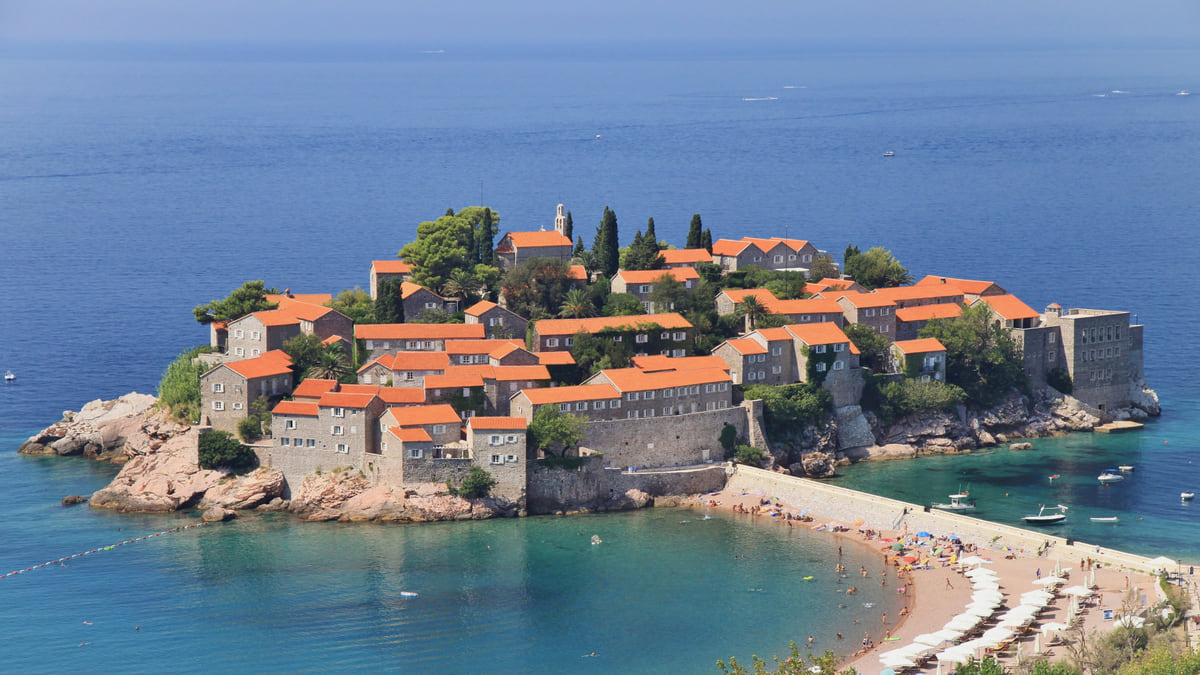
Sveti Stefan, the most photographed islet on the Adriatic
Sveti Stefan is an islet of stone houses on the Budva Riviera, joined to the mainland by a sandbar with a beach on each side. Tradition says the Paštrovići clans fortified it in 1442; it was a fishing village until the 1950s and opened as a hotel on 13 July 1960. Today the island is a seasonal hotel.
In 30 seconds
Full read: 3 min
- Sveti Stefan is a fifteenth-century islet linked to the shore by a sandbar with two beaches.
- Tradition says the Paštrovići fortified it in 1442; it opened as a hotel in 1960.
- It's now the Aman Sveti Stefan; the island closes from 31 October 2026 to 1 May 2027.
- The town bus from Budva runs every ten minutes.
To me Sveti Stefan looks better from outside than from inside, and luckily the outside is free. I'd head down to the sandbar beach first thing, then climb to the coast road for the photo and save Miločer park for the afternoon.

Before you go
What I would keep in mind
-
01 Most beautiful
The view from the road above
The classic Sveti Stefan shot is taken from the coast road above the sandbar. In morning light the two beaches and the islet line up perfectly.
the Budva Riviera -
02 Worth the splurge
Sleeping on the islet
The island and Villa Miločer are now the Aman Sveti Stefan hotel. Its website says the island closes on 31 October 2026 and reopens on 1 May 2027, while the villa opens year-round.
Aman Sveti Stefan -
03 To save money
A bus from Budva every ten minutes
The Budva to Sveti Stefan town bus runs every ten minutes from 06:00 to 22:00 and continues until 01:30, so you don't need a car or a parking space.
Budva -
04 My tip
Miločer park next door
Right by the sandbar is Miločer park, with Lebanese cedars, eucalyptus and mimosa, and beyond it King's Beach and Queen's Beach.
Pržno
What I would book
My ranking, scored
What I'd do at Sveti Stefan
My personal order, scored out of 10, for a half-day visit without staying at the hotel.
0 of 5 seen
-
The sandbar beach
Pinkish sand and turquoise water on both sides of the causeway to the islet. For me, the most photogenic swim in the country.
9.2 out of 10
-
The coast road viewpoint
From above you see the shape of the islet, the sandbar and the two beaches. It's the shot everyone is after.
9.0 out of 10
-
Miločer park and King's Beach
The garden of the former Karađorđević summer palace and the 280-metre fine-sand beach in front of it.
8.7 out of 10
-
Praskvica monastery
Close to Sveti Stefan, with a 1413 charter from Balša III and a church painted in 1681. For those after more than a beach.
7.9 out of 10
-
Crvena glavica and Drobni pijesak
The reddish and pale-sand coves running south, with far fewer people than the sandbar.
7.8 out of 10
Few images of Montenegro get used as often as Sveti Stefan, and it’s easy to see why. An islet packed with stone houses and red roofs, tied to the coast by a tongue of sand with a beach either side. What many people don’t realise before they go is that the island isn’t a village you wander round but a hotel, so it pays to plan around what you actually can see.
From Paštrovići refuge to hotel-town
The Budva tourist board explains that the houses on the islet went up more than five centuries ago to shelter people from the nearby villages against pirates and Ottoman raids. Tradition has it that the Paštrovići fortified it in 1442 with loot from Ottoman galleys and built twelve houses, one per clan. It was the district’s trading hub and, for almost three hundred years, the seat of the Bankada, its court. The name comes from the church at the top, dedicated to St Stephen, and there are two more on the island, the Transfiguration and St Alexander Nevsky. It remained a fishing village until the mid-1950s, when its conversion began, and on 13 July 1960 it opened as a hotel-town.
Who came here
For decades this was the place to be seen. The Budva tourist board names Sophia Loren and Carlo Ponti, Alberto Moravia, André Malraux, Kirk Douglas, Monica Vitti, Sylvester Stallone, Yuri Gagarin and the chess players Boris Spassky and Bobby Fischer. The national tourist board adds that the Beckhams, Robert De Niro and Claudia Schiffer have summered at Sveti Stefan and Miločer.
If you are staying the night, see the best hotel deals in Sveti Stefan for your dates: the well-placed rooms go fast.
The island today
These days the island and Villa Miločer make up the Aman Sveti Stefan. According to its website, the island opens seasonally and the villa all year, with the current island season ending on 31 October 2026 and resuming on 1 May 2027. The hotel describes it as a private island, and nothing official I’ve read says whether non-residents can go in, so I’d rather not promise it. If you fancy treating yourself, I cover it under Aman Sveti Stefan.
The two sandbar beaches
What is open to everyone are the two beaches either side of the sandbar, east and west. The Budva tourist board describes them as sand with pinkish and reddish tones and clear water, about 1,170 metres between them, while the national tourist board measures them at 700 and 400 metres. They’re among the prettiest on the coast, and no official source publishes lounger prices or access rules. For alternatives, see beaches in Budva.
So you do not lose the morning at the ticket office, browse tickets and tours in Sveti Stefan on GetYourGuide.
Around Sveti Stefan
Immediately north are Miločer park and the royal family’s beaches, which I describe under Pržno. To the south come the coves of Crvena glavica and Drobni pijesak. And inland, a few kilometres away, is Praskvica monastery, with a 1413 charter from Balša III, with Rustovo and Duljevo a little higher up. The village of Sveti Stefan had 325 residents in the preliminary 2023 census.
Getting there
Without a car, the easy option is the town bus from the roundabout on Mediteranska Street in Budva. From six in the morning to ten at night there’s one every ten minutes, then every 15 to 30 minutes until 01:30, and it calls at the riviera villages along the way, from Bečići to Miločer. To see where it fits on the wider coast, start with the Budva Riviera.
If you are staying the night, see the best hotel deals in Sveti Stefan for your dates: the well-placed rooms go fast.
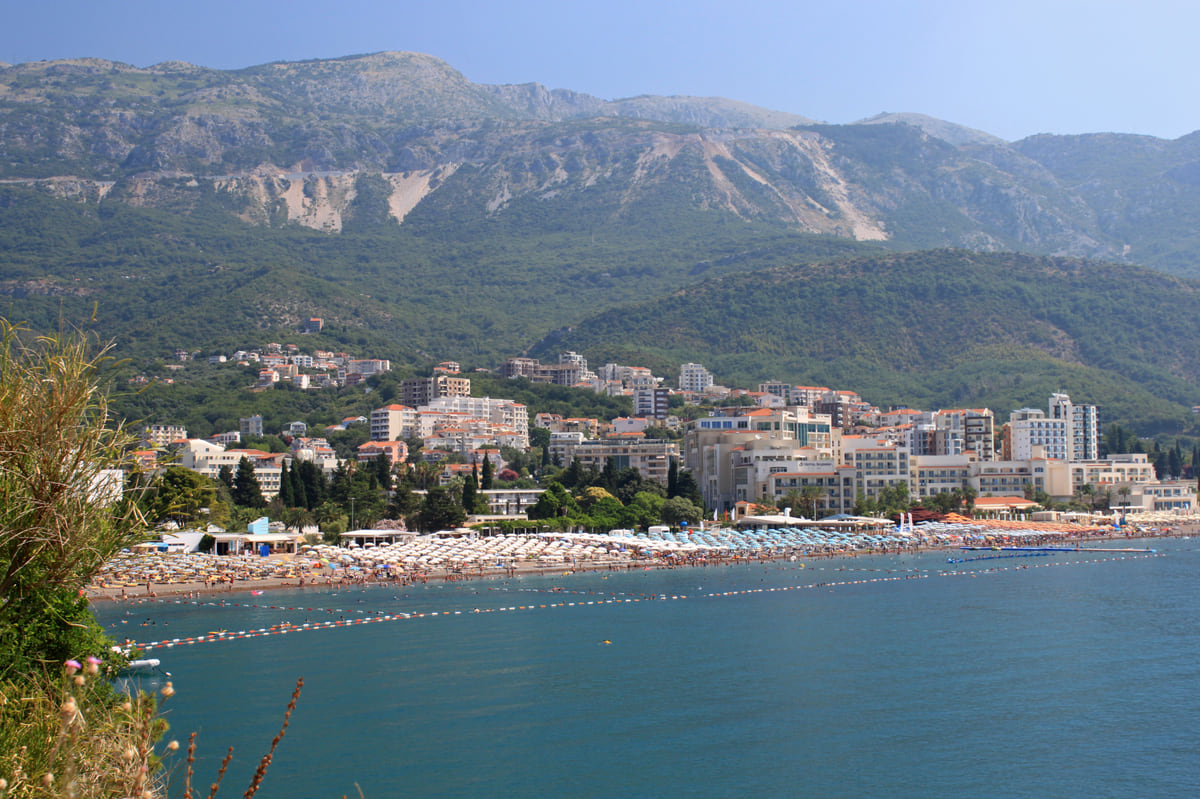
Bečići beach with hotels lining the sand and mountains behind, seen from across the bay on a clear day
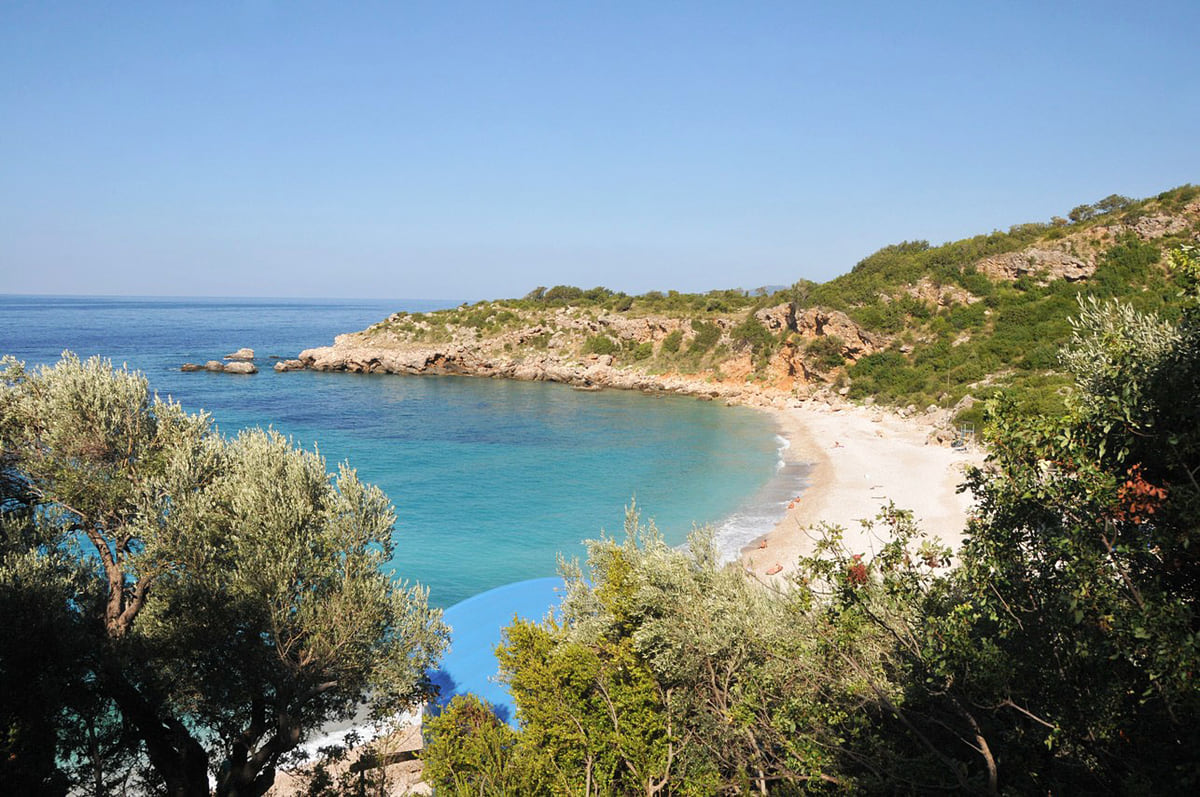
Drobni pijesak cove seen through olive trees, with its pale sandy beach, turquoise water and a rocky, scrub-covered slope
Sveti Stefan through the years
| Year | What happened |
|---|---|
| 1442 | The Paštrovići fortify the islet with twelve houses, one per clan (tradition) |
| For almost 300 years | Seat of the Bankada, the Paštrovići clan court |
| Mid-1950s | Stops being a fishing village and its conversion into a hotel begins |
| 13 July 1960 | Opens as a hotel-town |
| 31 October 2026 | Island season ends, according to the hotel |
| 1 May 2027 | Planned reopening of the island, according to the hotel |
Budva tourist board (history and beaches) and the Aman Sveti Stefan website (season), checked on 10 October 2026.
Test yourself
True or false?
0/3 Pick before you peek.
-
Sveti Stefan became a hotel in 1960.
See the answer
True. The hotel-town opened on 13 July 1960, after it stopped being a fishing village in the mid-1950s.
-
Sveti Stefan is named after a king.
See the answer
False. It takes its name from the church at the top of the islet, dedicated to St Stephen the Archdeacon. There are two other churches on the island.
-
The sandbar beaches are grey pebble.
See the answer
False. They're sand, with pinkish and reddish tones, according to the Budva tourist board.
- Islet fortified, by tradition
- 1442
- Opened as a hotel
- 1960
- Sandbar beaches
- 1,170 m
- Original houses, one per clan
- 12
Map
Where Sveti Stefan is
The Adriatic coast runs from Herceg Novi to Ulcinj; the centre holds Podgorica, Cetinje and Lake Skadar, and the north, Durmitor and the Tara Canyon. Every number opens its guide.
 1Budva Old Town 2Budva Riviera 3Mogren Beach 4Jaz Beach 5Slovenska Beach 6Drobni Pijesak Beach 7Sveti Nikola Island 8Sveti Stefan 9Pržno 10Bečići 11Petrovac 12Budva 13Avala Resort & Villas 14Dukley Hotel & Resort
 Map data © OpenStreetMap contributors (ODbL)
- 1Budva Old TownBudva, inside the walls
- 2Budva RivieraMontenegro's busiest coastline
- 3Mogren BeachBudva, round the back of the Citadel
- 4Jaz BeachBudva Riviera, on the road to Kotor
- 5Slovenska BeachBudva, from the harbour to the Park hotel
- 6Drobni Pijesak BeachBudva Riviera, south of Sveti Stefan
- 7Sveti Nikola IslandBudva, less than a kilometre offshore
- 8Sveti StefanBudva Riviera, beyond Pržno and Miločer
- 9PržnoBudva Riviera, between Kamenovo and Sveti Stefan
- 10BečićiBudva Riviera, beyond Zavala headland
- 11PetrovacBudva Riviera, the southern end
- 12BudvaMontenegro's coast
- 13Avala Resort & VillasHistoric hotel next to Budva Old Town
- 14Dukley Hotel & ResortFive-star resort in Budva
What to see
What to see in Sveti Stefan
0 of 278 Montenegro guides
Your next stamp
- Beaches
- Aman Sveti Stefan
- Fortresses
- Sandy beaches
- Where to stay
- Mamula
- Hotels
- Luxury hotels
- Budva Old Town
- Haj-Nehaj
- Kotor
- Lučice Beach
- Montenegro's coast
- Peaks of the Balkans
- Porto Montenegro
- Sea Dance Festival
- Splendid Conference & Spa Resort
- Stari Bar
- Ulcinj Old Town
- Bay of Kotor
- Budva Riviera
- Heroj submarine
- Iberostar Bellevue
- Independence Day
- Old olive tree of Mirovica
- Tivat
- Velika plaža
- Ada Bojana
- Beaches in Budva
- Eurostars Queen of Montenegro
- Herceg Novi
- Kotor Old Town
- Mount Rumija
- Igalo
- Kotor city walls
- Mogren Beach
- Montenegro Beach Resort
- Svač
- Vrmac
- Hiking
- Jaz Beach
- Kanli kula
- Luštica peninsula
- St Tryphon Cathedral
- Ulcinj salt pans
- Forte Mare
- Gornja Lastva
- Maritime Museum, Kotor
- Slovenska Beach
- Drobni Pijesak Beach
- Kotor viewpoints
- Žanjic beach
- Kotor cruise port
- Orjen
- Plavi horizonti beach
- Sveti Nikola Island
- Blue Cave
- Restaurants in Budva
- Restaurants in Kotor
- Canyoning
- Perast
- Sutomore
- Čanj
- Our Lady of the Rocks
- Pržno
- Things to do
- Activities
- All-inclusive hotels
- Bar Riviera
- Bečići
- Hotel Palma
- St George island
- Dobrota
- Hladna uvala
- Most beautiful places
- Petrovac
- Crvena stijena
- Prčanj
- Prettiest villages
- Cycling
- Risan
- UNESCO sites
- Heritage Grand Perast
- Map
- Hyatt Regency Kotor Bay
- Where is it?
- Regions
- Cities
- Beaches in Bar
- Budva
- Central Montenegro
- Hotels in Budva
- Hotels in Kotor
- Iberostar Waves Herceg Novi
- Kitesurfing
- The name
- Beaches in Ulcinj
- Flag
- Hotels in Perast
- Palmon Bay Hotel & Spa
- Podgorica
- Cathedral of the Resurrection
- One&Only Portonovi
- Population
- Azul Beach Resort Montenegro
- Naturist beaches
- Size
- Stara Varoš
- Doclea
- Language
- Mimosa Festival
- Medun
- Religion
- Zipline
- Currency
- Museums in Podgorica
- Dajbabe Monastery
- EU membership
- History
- Restaurants in Podgorica
- Hotels in Podgorica
- Public holidays
- Avala Resort & Villas
- Bar
- Beaches in Kotor
- Birdwatching
- Hotels in Ulcinj
- Kotor carnival
- Time zone
- Tivat beaches
- Tuzi
- Boka Night
- Dukley Hotel & Resort
- Facts
- Hotels in Tivat
- Zeta
- Caves
- Herceg Novi beaches
- National parks
- Šipčanik
- Hotels in Herceg Novi
- Monasteries
- Fly fishing
- Museums
- Canyons and waterfalls
- Lakes
- Mountains
- Montenegro and Croatia
- Boat trips
- Cetinje
- Montenegro and Albania
- Nightlife
- Ulcinj
- Weather
- Best time to visit
- Cetinje Monastery
- Kayaking
- Montenegro and the Balkans
- How to get there
- In summer
- King Nikola's Palace
- Sailing
- Biljarda
- Flights
- In winter
- Airports
- Museums in Cetinje
- New Year's Eve
- Lovćen
- Paragliding
- Tivat Airport
- Njegoš Mausoleum
- Podgorica Airport
- Dubrovnik to Kotor
- Kotor serpentine
- Belgrade to Montenegro
- Njeguši
- Ferry to Italy
- Njeguši prosciutto
- Border crossings
- In January
- Lipa Cave
- In February
- Kamenari-Lepetane ferry
- Pavlova strana
- Getting around
- In March
- Rijeka Crnojevića
- In April
- Trains
- Buses
- In May
- Car hire
- In June
- Driving
- In July
- In August
- Taxis
- Distances
- In September
- In October
- Road trip
- Food
- In November
- Lake Skadar
- Scenic drives
- In December
- Kotor cable car
- Virpazar
- Where to eat
- Budva to Kotor
- Godinje
- Wine
- Podgorica to Kotor
- Vranjina
- Besac fortress
- Prices and budget
- On a budget
- Žabljak Crnojevića
- Danilovgrad
- Entry requirements
- Ostrog Monastery
- Tourist registration
- Customs
- Nikšić
- Crvena Stijena cave
- Safety
- Events
- Healthcare
- Northern Montenegro
- Mobile and roaming
- Žabljak
- Durmitor
- Plugs
- Black Lake
- With kids
- Bobotov Kuk
- Holidays
- Day trips
- Stećci tombstones
- Hotels in Žabljak
- Three-day itinerary
- Five-day itinerary
- Skiing in Montenegro
- One-week itinerary
- Skiing in Žabljak
- Šavnik
- Ten-day itinerary
- Nevidio Canyon
- Tara Canyon
- Tara rafting
- Đurđevića Tara Bridge
- Plužine
- Lake Piva
- Piva Monastery
- Mojkovac
- Brskovo
- Pljevlja
- Husein Pasha Mosque
- Kolašin
- Hotels in Kolašin
- Skiing in Kolašin
- Biogradska Gora National Park
- Komovi
- Morača Monastery
- Morača Canyon
- Bijelo Polje
- Đalovića Cave
- Berane
- Andrijevica
- Petnjica
- Rožaje
- Plav
- Lake Plav
- Gusinje
- Vusanje
- Prokletije National Park
Frequently asked questions
Can you visit Sveti Stefan island?
The hotel presents it as a private island for its guests, open seasonally. I haven't found an official source on visits for non-residents, so the safe bet is to enjoy it from the sandbar beaches and the viewpoint.
What is Sveti Stefan?
A fifteenth-century islet of stone houses on the Budva Riviera, linked to the mainland by a sandbar. Once a fishing village, it has been a hotel since 1960, now the Aman Sveti Stefan.
How do you get to Sveti Stefan from Budva?
On the Budva to Sveti Stefan town bus, which leaves every ten minutes from the Mediteranska Street roundabout and calls at Bečići, Rafailovići, Kamenovo, Pržno and Miločer.
Is Sveti Stefan beach public?
The Budva tourist board describes two beaches, east and west, either side of the sandbar, with pinkish and reddish sand and about 1,170 metres in total. It doesn't publish prices or access rules.
Where is Sveti Stefan?
On the Budva Riviera, south of the town, past Pržno and Miločer. It's in Budva municipality and the village had 325 residents in the preliminary 2023 census.
Who has stayed at Sveti Stefan?
The Budva tourist board lists Sophia Loren and Carlo Ponti, Kirk Douglas, Monica Vitti, Sylvester Stallone, Yuri Gagarin and the chess players Boris Spassky and Bobby Fischer, among others.
By
Tourism graduate with a master’s in Tourism Management and Planning from the University of Málaga, who has travelled across Europe. He writes every guide from official sources and his own judgement.
Published on . Facts checked on .
Sources
Some links in this guide are affiliate links: if you book through them, the site earns a commission at no extra cost to you. Affiliate disclosure
Photos: Marcin Konsek (CC BY-SA 4.0); Liilia Moroz (CC0); anjči (CC BY 2.0), via Wikimedia Commons.