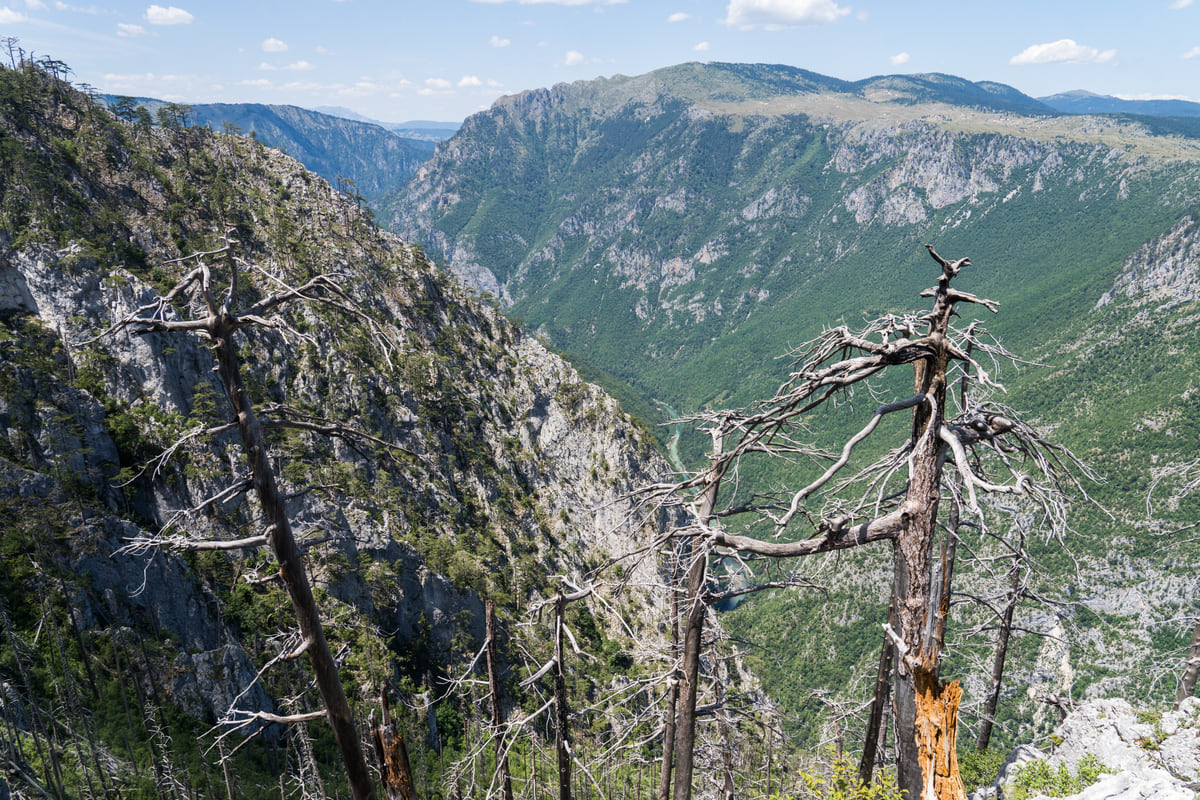
Tara Canyon, northern Montenegro
Rafting the Tara, the river inside the canyon
Rafting on the Tara is Durmitor's best-known activity. Agencies run stretches of 14 to 60 km over one to three days, and National Parks gives 1 July to 15 September as the safest period. The national tourist board puts a day at around €70 per person and two-day trips from €90.
In 30 seconds
Full read: 2 min
- Tara rafting runs over stretches of 14 to 60 km, from one to three days.
- Safest from 1 July to 15 September; wildest during the spring snowmelt.
- A day costs about €70 per person with an agency, according to the national tourist board.
- The water stays below 15 °C even in summer, so helmet, buoyancy aid and wetsuit are a must.
I'd raft the Tara in July or August, when the water is calmer, and pick the one-day run from Splavište so you see the bridge from below. If you're after thrills, spring is another story, but then I'd only go with a very experienced agency.

Before you go
What I would keep in mind
-
01 My tip
July and August for an easy ride
National Parks and the Žabljak tourist board agree that rafting is safest from 1 July to 15 September, when the water level is right.
-
02 Worth the splurge
The April and May snowmelt
The national tourist board says the real thrills come with the spring snowmelt in April and May, when the rapids are wildest. That's one for people with experience.
-
03 Money
Around €70 a day
The national tourist board quotes about €70 per person for a day and from €90 for two. In 2026 it advertised agency deals from €75 and €125, from May to early October.
-
04 Watch out
Pick your agency carefully
The national tourist board stresses helmets, buoyancy aids and proper suits and choosing a reliable operator, and points you to National Parks' recommendations.
What I would book
If there’s one activity in northern Montenegro that everyone has heard of, it’s this. National Parks calls it Durmitor’s best-known tourist brand, and I can see why. Rafting the Tara is the only way to see the canyon from inside, with the walls rising either side, waterfalls tumbling into the river and stretches where the current picks up between boulders. The good news is that you don’t need experience, as long as you choose your timing and your agency well.
When to go, and why it matters so much
The season runs from April to October, according to the national tourist board, but it isn’t the same river throughout. In spring the snowmelt makes it faster and the rapids wilder, and that’s the period the board itself recommends if you want an adrenaline hit. National Parks and the Žabljak tourist board, on the other hand, give 1 July to 15 September as the safest window, when the water level is right.
My advice is simple. With children, first-timers or anyone who mainly wants the scenery, go in July or August. If you want proper excitement, go in spring, but only with a very experienced outfit. The national tourist board even mentions January trips, with the water at 5 or 6 °C.
The stretches
National Parks recommends three routes starting at Splavište, known as the second camp, within sight of the Đurđevića Tara Bridge. The short one, to Žugića luka, is 14 km and 3 to 4 hours in a day, with the mouth of the Ljutica and the bridge as highlights. The middle one carries on to Radovan luka, 24 km and 5 to 6 hours, past the Trešnjica rapids, the Monastery of the Archangel Michael and the mouth of the Draga. The long one runs to Šćepan Polje, 60 km and 10 to 11 hours spread over two or three days.
The national tourist board also describes a one-day trip from Brštanovica, which it rates as the most exciting stretch, with cascades, rapids, glades, churches and mills, and which its mountain towns page puts at 18 km to Šćepan Polje, in Plužine municipality.
If you are staying the night, see the best hotel deals in Žabljak for your dates: the well-placed rooms go fast.
Prices and what’s included
The national tourist board quotes about €70 per person for a day and from €90 for two, and in 2026 it advertised agency deals from €75 and €125 between May and early October. Treat those as a guide. Agencies typically pair the rafting with home cooking at their camps, says the same source, pršut, kajmak, cheeses and hot pies, and many also offer horse riding or canyoning.
Safety and what to bring
The Tara never tops 15 °C even in high summer, so the wetsuit matters as much as the helmet and buoyancy aid. The national tourist board urges you to choose a reliable operator, points out that 112 is the emergency number and refers you to National Parks’ guidance. If you fancy something more traditional, ask about the wooden rafts, steered by the people who once floated timber down the river.
On longer trips, National Parks mentions the motel at Radovan luka, bungalows, the kayakers’ lodge, an equipped campsite and tents along the bank. And if you’d rather just look down on the river, the Tara Canyon has viewpoints such as Ćurevac, near Žabljak.
If you are staying the night, see the best hotel deals in Žabljak for your dates: the well-placed rooms go fast.
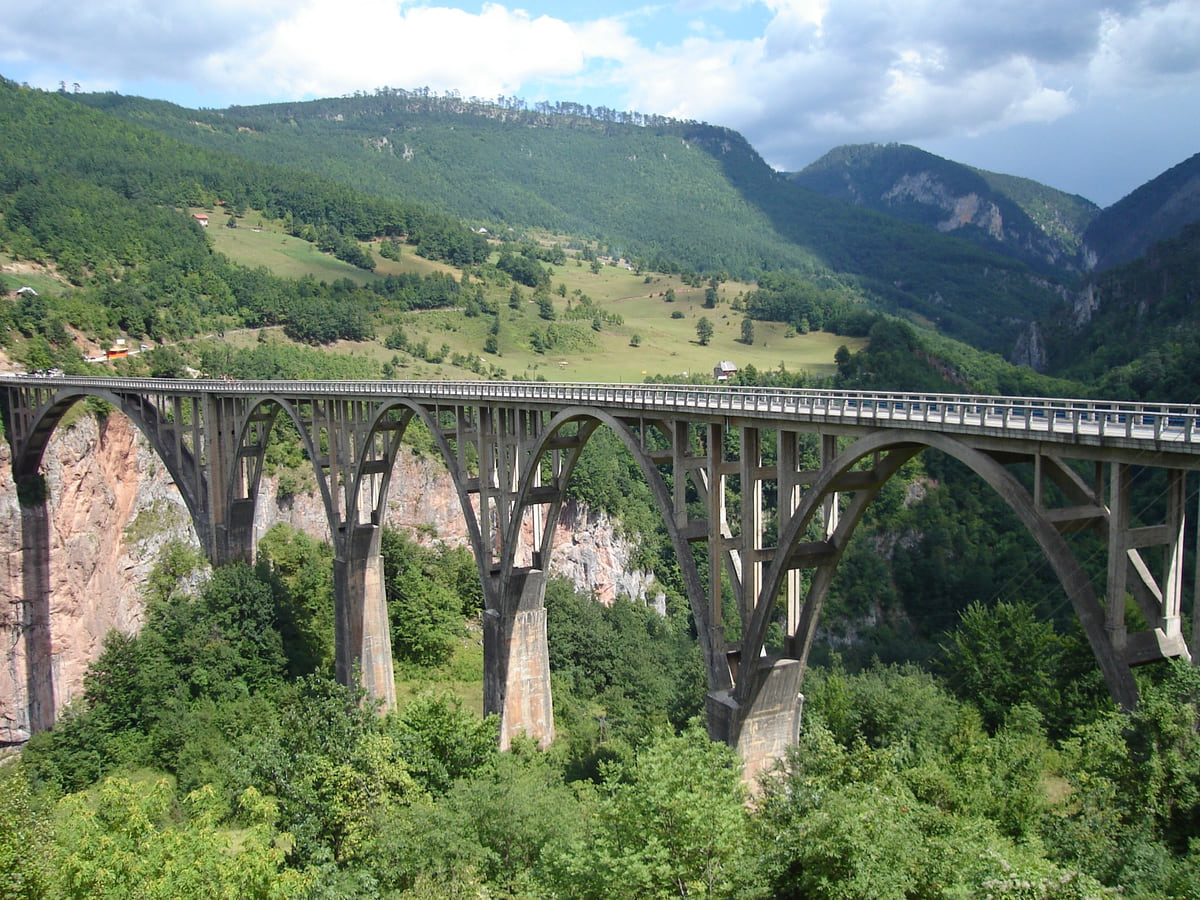
The Đurđevića Tara Bridge with its concrete arches spanning the Tara canyon, between forested slopes
Rafting stretches recommended by National Parks
| Stretch | Length | Time | Format |
|---|---|---|---|
| Splavište to Žugića luka | 14 km | 3 to 4 hrs | One day |
| Splavište to Radovan luka | 24 km | 5 to 6 hrs | One or two days |
| Splavište to Šćepan Polje | 60 km | 10 to 11 hrs | Two or three days |
| Brštanovica to Šćepan Polje | 18 km | No figure | One day |
Sources: National Parks of Montenegro and Žabljak Tourist Board (first three) and the national tourist board (the last), checked on 11 October 2026.
Test yourself
True or false?
0/3 Pick before you peek.
-
There's rafting on the Tara in winter too.
See the answer
True. The national tourist board mentions January trips with the water at 5 to 6 °C.
-
The Tara warms up to over 20 °C in August.
See the answer
False. According to the national tourist board, the water stays below 15 °C even in summer.
-
Before rubber rafts, the Tara was run on wooden rafts.
See the answer
True. The national tourist board says you can still ride the traditional wooden rafts, steered by the people who used to float timber down this way.
- Guide price for a day
- €70
- Longest stretch, to Šćepan Polje
- 60 km
- Top water temperature in summer
- 15 °C
- Safest period according to National Parks
- 1 Jul-15 Sep
Map
Where Tara rafting is
The Adriatic coast runs from Herceg Novi to Ulcinj; the centre holds Podgorica, Cetinje and Lake Skadar, and the north, Durmitor and the Tara Canyon. Every number opens its guide.

0 of 278 Montenegro guides
Your next stamp
- Activities
- Durmitor
- Tara Canyon
- One-week itinerary
- Kayaking
- Best time to visit
- National parks
- Fly fishing
- Aman Sveti Stefan
- Budva Old Town
- Haj-Nehaj
- Kotor
- Lučice Beach
- Montenegro's coast
- Peaks of the Balkans
- Porto Montenegro
- Sea Dance Festival
- Splendid Conference & Spa Resort
- Stari Bar
- Ulcinj Old Town
- Bay of Kotor
- Budva Riviera
- Heroj submarine
- Iberostar Bellevue
- Independence Day
- Old olive tree of Mirovica
- Tivat
- Velika plaža
- Ada Bojana
- Beaches in Budva
- Eurostars Queen of Montenegro
- Herceg Novi
- Kotor Old Town
- Mount Rumija
- Igalo
- Kotor city walls
- Mogren Beach
- Montenegro Beach Resort
- Svač
- Vrmac
- Hiking
- Jaz Beach
- Kanli kula
- Luštica peninsula
- St Tryphon Cathedral
- Ulcinj salt pans
- Forte Mare
- Gornja Lastva
- Maritime Museum, Kotor
- Slovenska Beach
- Drobni Pijesak Beach
- Kotor viewpoints
- Mamula
- Žanjic beach
- Kotor cruise port
- Orjen
- Plavi horizonti beach
- Sveti Nikola Island
- Blue Cave
- Restaurants in Budva
- Restaurants in Kotor
- Canyoning
- Hotels
- Perast
- Sutomore
- Sveti Stefan
- Čanj
- Luxury hotels
- Our Lady of the Rocks
- Pržno
- Things to do
- All-inclusive hotels
- Bar Riviera
- Bečići
- Hotel Palma
- St George island
- Dobrota
- Hladna uvala
- Most beautiful places
- Petrovac
- Crvena stijena
- Prčanj
- Prettiest villages
- Cycling
- Risan
- UNESCO sites
- Heritage Grand Perast
- Map
- Hyatt Regency Kotor Bay
- Where is it?
- Regions
- Cities
- Beaches in Bar
- Budva
- Central Montenegro
- Hotels in Budva
- Hotels in Kotor
- Iberostar Waves Herceg Novi
- Kitesurfing
- The name
- Beaches in Ulcinj
- Flag
- Hotels in Perast
- Palmon Bay Hotel & Spa
- Podgorica
- Cathedral of the Resurrection
- One&Only Portonovi
- Population
- Sandy beaches
- Azul Beach Resort Montenegro
- Naturist beaches
- Size
- Stara Varoš
- Doclea
- Language
- Mimosa Festival
- Medun
- Religion
- Zipline
- Currency
- Museums in Podgorica
- Dajbabe Monastery
- EU membership
- History
- Restaurants in Podgorica
- Hotels in Podgorica
- Public holidays
- Avala Resort & Villas
- Bar
- Beaches in Kotor
- Birdwatching
- Hotels in Ulcinj
- Kotor carnival
- Time zone
- Tivat beaches
- Tuzi
- Boka Night
- Dukley Hotel & Resort
- Facts
- Hotels in Tivat
- Zeta
- Caves
- Herceg Novi beaches
- Šipčanik
- Hotels in Herceg Novi
- Monasteries
- Fortresses
- Museums
- Canyons and waterfalls
- Lakes
- Mountains
- Montenegro and Croatia
- Beaches
- Boat trips
- Cetinje
- Montenegro and Albania
- Nightlife
- Ulcinj
- Weather
- Cetinje Monastery
- Montenegro and the Balkans
- How to get there
- In summer
- King Nikola's Palace
- Sailing
- Biljarda
- Flights
- In winter
- Airports
- Museums in Cetinje
- New Year's Eve
- Lovćen
- Paragliding
- Tivat Airport
- Njegoš Mausoleum
- Podgorica Airport
- Dubrovnik to Kotor
- Kotor serpentine
- Belgrade to Montenegro
- Njeguši
- Ferry to Italy
- Njeguši prosciutto
- Border crossings
- In January
- Lipa Cave
- Where to stay
- In February
- Kamenari-Lepetane ferry
- Pavlova strana
- Getting around
- In March
- Rijeka Crnojevića
- In April
- Trains
- Buses
- In May
- Car hire
- In June
- Driving
- In July
- In August
- Taxis
- Distances
- In September
- In October
- Road trip
- Food
- In November
- Lake Skadar
- Scenic drives
- In December
- Kotor cable car
- Virpazar
- Where to eat
- Budva to Kotor
- Godinje
- Wine
- Podgorica to Kotor
- Vranjina
- Besac fortress
- Prices and budget
- On a budget
- Žabljak Crnojevića
- Danilovgrad
- Entry requirements
- Ostrog Monastery
- Tourist registration
- Customs
- Nikšić
- Crvena Stijena cave
- Safety
- Events
- Healthcare
- Northern Montenegro
- Mobile and roaming
- Žabljak
- Plugs
- Black Lake
- With kids
- Bobotov Kuk
- Holidays
- Day trips
- Stećci tombstones
- Hotels in Žabljak
- Three-day itinerary
- Five-day itinerary
- Skiing in Montenegro
- Skiing in Žabljak
- Šavnik
- Ten-day itinerary
- Nevidio Canyon
- Đurđevića Tara Bridge
- Plužine
- Lake Piva
- Piva Monastery
- Mojkovac
- Brskovo
- Pljevlja
- Husein Pasha Mosque
- Kolašin
- Hotels in Kolašin
- Skiing in Kolašin
- Biogradska Gora National Park
- Komovi
- Morača Monastery
- Morača Canyon
- Bijelo Polje
- Đalovića Cave
- Berane
- Andrijevica
- Petnjica
- Rožaje
- Plav
- Lake Plav
- Gusinje
- Vusanje
- Prokletije National Park
Frequently asked questions
Where can I go rafting in Montenegro?
The classic is the Tara Canyon, in the north, inside Durmitor National Park. Trips start at Splavište, by the Đurđevića Tara Bridge, or at Brštanovica, and finish at the latest at Šćepan Polje.
How much does Tara river rafting cost?
The national tourist board quotes about €70 per person for a day and from €90 for two days. They're agency guide prices, so confirm when you book.
Is white water rafting in Montenegro suitable for beginners?
In summer and with a reputable agency, yes. The national tourist board says the trips suit beginners and experienced rafters alike. You'll wear a helmet, buoyancy aid and wetsuit, as the water stays below 15 °C.
Can I go rafting on the Tara from Kotor or Budva?
You can, but it's a lot of hours on mountain roads in one day. With time to spare, I'd stay in Žabljak or at a riverside camp.
When is the best time for rafting in Montenegro?
The season runs from April to October. National Parks considers 1 July to 15 September the safest window, while April and May bring the wildest water.
Where do you sleep on a multi-day rafting trip?
National Parks mentions the motel at Radovan luka, bungalows, the kayakers' lodge, an equipped campsite and tents along the river.
By
Tourism graduate with a master’s in Tourism Management and Planning from the University of Málaga, who has travelled across Europe. He writes every guide from official sources and his own judgement.
Published on . Facts checked on .
Sources
Some links in this guide are affiliate links: if you book through them, the site earns a commission at no extra cost to you. Affiliate disclosure
Photos: Alexkom000 (CC BY 4.0); Cornelius Bechtler (CC BY-SA 3.0), via Wikimedia Commons.