Lovćen villages, Cetinje municipality
Njeguši, the plateau that gave Montenegro its rulers and its ham
Njeguši is a cluster of villages on a plateau of Mount Lovćen, between Kotor and Cetinje, on the old caravan road. It's the cradle of the clan that gave Montenegro seven rulers of the Petrović dynasty, keeps the birthplace of Petar II Petrović Njegoš and lends its name to njeguški pršut, the country's smoked ham.
In 30 seconds
Full read: 2 min
- Njeguši is a group of villages on a Lovćen plateau between Kotor and Cetinje.
- It's where the clan that gave Montenegro seven Petrović rulers came from.
- You can visit Njegoš's birthplace, part of the National Museum.
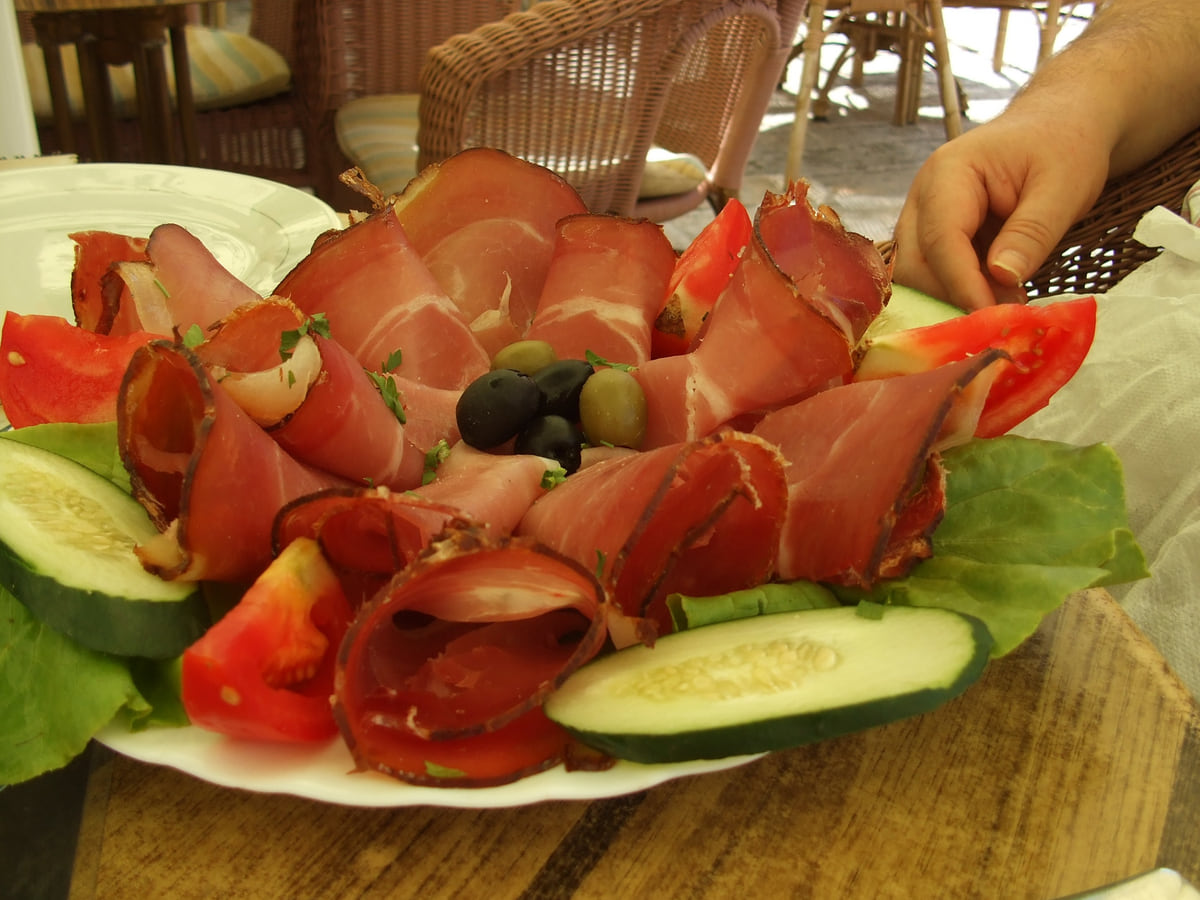
- It's the home of njeguški pršut, smoked over beech and cured for six months.
Njeguši is the stop I'd make without fail between Kotor and Cetinje, to eat pršut and cheese where they're made and see Njegoš's birthplace. An hour and a half is enough, but without it a trip over Lovćen feels incomplete.

Before you go
What I would keep in mind
-
01 Most beautiful
The house where Njegoš was born
A rectangular stone house with a vaulted konoba, plain folk architecture without decoration, now part of the National Museum of Montenegro.
museums in Cetinje -
02 Worth the splurge
Pršut on its home ground
The National Tourism Organisation explains that njeguški pršut is smoked only over beech wood and cured for six months. Eating it here is a different experience.
Njeguši prosciutto -
03 Getting there
Between the serpentine and Lovćen
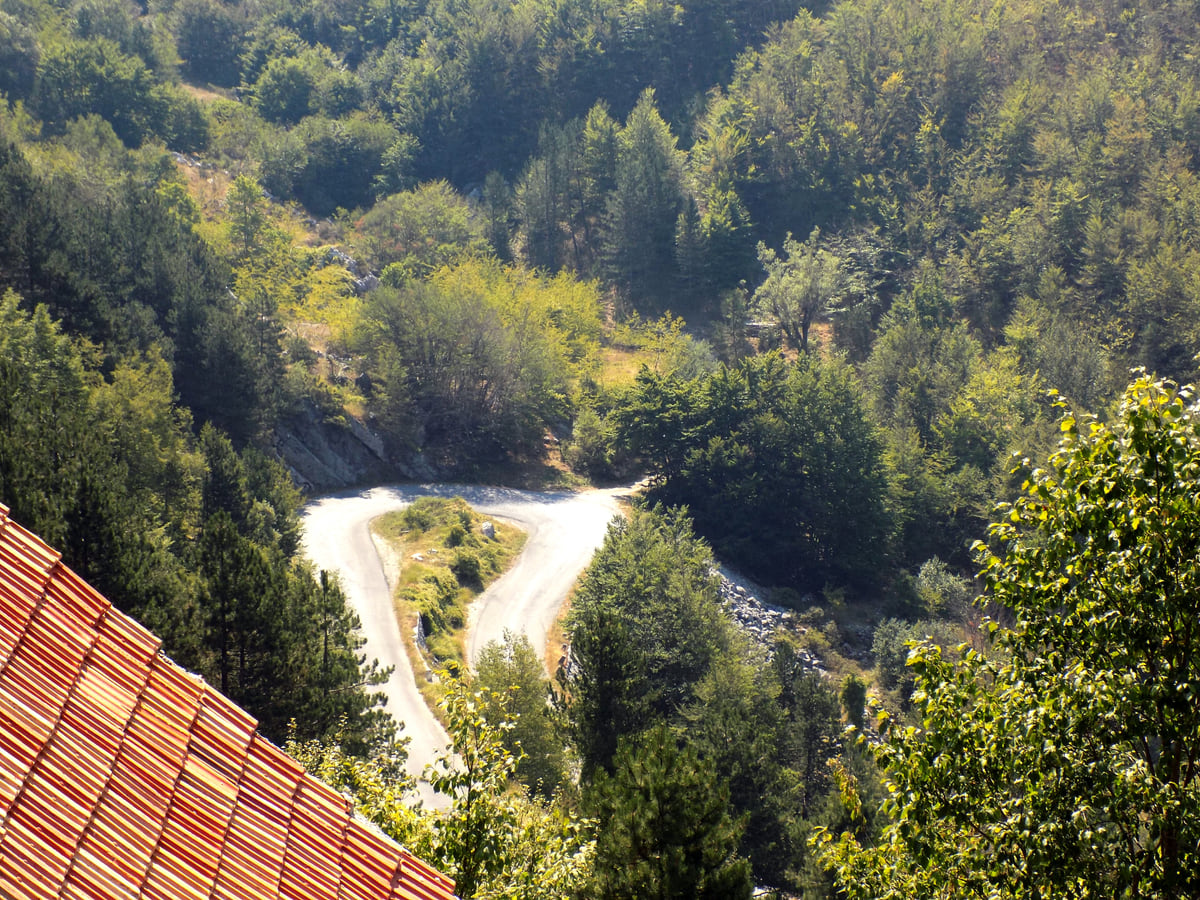
You arrive from Kotor up the serpentine, the old caravan road, and from here the road continues into Lovćen National Park and on to Cetinje.
Kotor serpentine
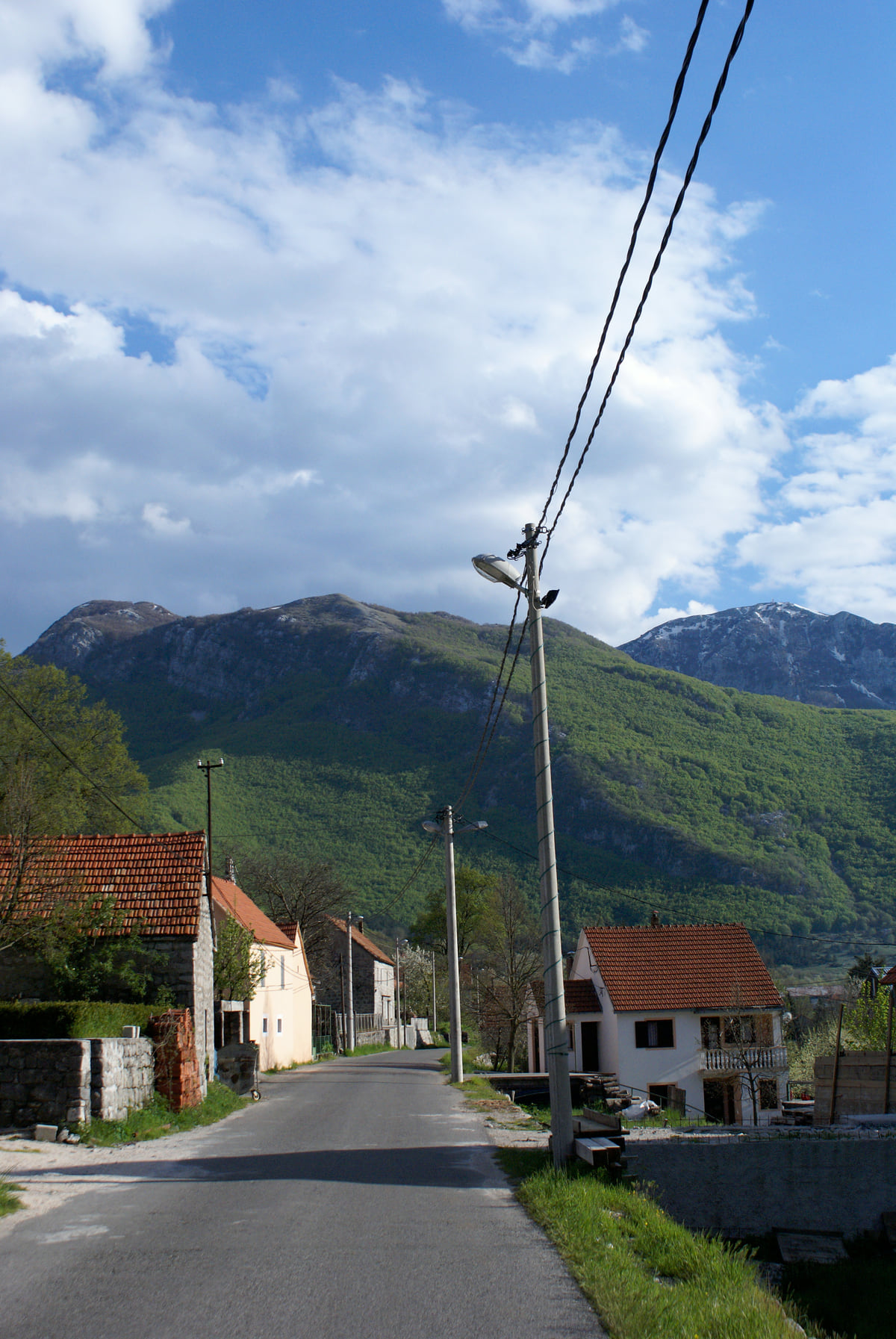
Njeguši isn’t a picture-postcard village; it’s something better, a place where you start to see where Montenegro came from. It sits on a plateau of Mount Lovćen, halfway between the Bay of Kotor and Cetinje, surrounded by limestone, and at first glance it’s little more than a string of stone houses along the road. Yet the Petrović family came from here, Njegoš was born here and the country’s most famous ham is made here.
A fertile field among the stones
The Cetinje tourist board explains that the heart of Njeguši is its field, Njeguško polje, which locals simply call «Polje», a pocket of fertile ground in the middle of the karst. Around it are villages and hamlets, Žanjev Do, Mirac, Kopito, Dugi Do, Erakovići, Raičevići, Vrba, Velji Kraj and Veliki and Mali Zalazi, each belonging to a brotherhood with its own church and graveyard. The largest are Erakovići and Raičevići.
Being so close to Kotor and the sea made the place economically and politically important. The caravan route from Kotor up to Cetinje ran through here, the road that is now the Kotor serpentine. Njeguši cheese was sold in Kotor, Dalmatia, Trieste, Venice, Marseille and as far as Malta, and dried mutton and pršut were just as well known.
Cradle of the Petrović dynasty
The Njeguši clan, National Parks of Montenegro explains, put seven Petrović rulers at the head of the country across two centuries, and five of them led church and state together. By the road stands a group of stone family houses, Njegoš’s own, the Petrović tower house and those of Rade and Tomo Petrović, and in the same yard as Njegoš’s is the house of Vojvoda Mirko Petrović.
Njegoš’s birthplace is a rectangular stone house with a vaulted konoba, simple and undecorated in the local folk style. Today it belongs to the National Museum, like the museums in Cetinje. Another curiosity is the number of churches. The tourist board counts 15 today, and 17 before the Second World War.
Once your dates are set, check which hotels are still free in Cetinje before prices climb.
Pršut and cheese
The reason most people stop is the food. The National Tourism Organisation explains that njeguški pršut is smoked only over beech wood and cured for six months, and that the secret is the climate, where sea winds meet mountain air. The Cetinje tourist board adds that it is still the village’s most important product. I go into it in more detail under Njeguši prosciutto.
The natural thing is to try it at one of the stone houses with a konoba along the road, with cheese and bread, before carrying on to Lovćen.
Fitting it into your trip
Njeguši belongs to Cetinje municipality and lies within the Lovćen area. From Kotor you climb the serpentine; from Cetinje you take the park road. I’d do the whole route in a day, Kotor, the serpentine, lunch in Njeguši, the Njegoš Mausoleum in the afternoon and a night in Cetinje. The National Tourism Organisation also mentions a zipline at Njeguši for anyone after a bit more adrenaline.
If you would rather have a local show you round, book a guided tour in Cetinje and choose by the reviews.
Once your dates are set, check which hotels are still free in Cetinje before prices climb.
A plate of thinly sliced Njeguši pršut with tomato, cucumber and olives on a terrace table
The hairpin bends of the mountain road between Kotor and Cetinje, zigzagging down through woodland and rocky slopes
Njeguši in figures
| Item | Figure | Source |
|---|---|---|
| Population of the area | About 230 | Cetinje Tourist Organisation |
| Njeguši settlement (preliminary 2023 census) | 33 | MONSTAT |
| Erakovići, with the Petrović houses (2023) | 94 | MONSTAT |
| Churches | 15 today; 17 before the Second World War | Cetinje Tourist Organisation |
| Petrović rulers from Njeguši | 7, five of them heads of state and church | National Parks of Montenegro |
Test yourself
True or false?
0/3 Pick before you peek.
-
Njegoš was born in Cetinje.
See the answer
False. He was born in Njeguši, where his birthplace, a stone house now part of the National Museum, still stands.
-
Njeguši has more than ten churches.
See the answer
True. The Cetinje tourist board counts 15, and 17 before the Second World War.
-
Njeguši cheese used to be sold in Venice.
See the answer
True. The Cetinje tourist board says it was sold in Kotor, Dalmatia, Trieste, Venice, Marseille and even Malta.
Map
Where Njeguši is
The Adriatic coast runs from Herceg Novi to Ulcinj; the centre holds Podgorica, Cetinje and Lake Skadar, and the north, Durmitor and the Tara Canyon. Every number opens its guide.
 1Cetinje 2Cetinje Monastery 3King Nikola's Palace 4Biljarda 5Museums in Cetinje 6Lovćen 7Njeguši 8Lipa Cave 9Rijeka Crnojevića
 Map data © OpenStreetMap contributors (ODbL)
- 1CetinjeMontenegro's historic capital
- 2Cetinje MonasteryOrthodox monastery in Cetinje
- 3King Nikola's PalaceKing Nikola Museum, Cetinje
- 4BiljardaNjegoš Museum in Cetinje
- 5Museums in CetinjeNational Museum of Montenegro
- 6LovćenNational park since 1952
- 7NjegušiLovćen villages, Cetinje municipality
- 8Lipa CaveShow cave near Cetinje
- 9Rijeka CrnojevićaLake Skadar village, Cetinje municipality
What to see
What to see in Njeguši
0 of 278 Montenegro guides
Your next stamp
- Njeguši prosciutto
- Prettiest villages
- Biljarda
- Njegoš Mausoleum
- Godinje
- Lovćen
- Food
- Kotor serpentine
- Aman Sveti Stefan
- Budva Old Town
- Haj-Nehaj
- Kotor
- Lučice Beach
- Montenegro's coast
- Peaks of the Balkans
- Porto Montenegro
- Sea Dance Festival
- Splendid Conference & Spa Resort
- Stari Bar
- Ulcinj Old Town
- Bay of Kotor
- Budva Riviera
- Heroj submarine
- Iberostar Bellevue
- Independence Day
- Old olive tree of Mirovica
- Tivat
- Velika plaža
- Ada Bojana
- Beaches in Budva
- Eurostars Queen of Montenegro
- Herceg Novi
- Kotor Old Town
- Mount Rumija
- Igalo
- Kotor city walls
- Mogren Beach
- Montenegro Beach Resort
- Svač
- Vrmac
- Hiking
- Jaz Beach
- Kanli kula
- Luštica peninsula
- St Tryphon Cathedral
- Ulcinj salt pans
- Forte Mare
- Gornja Lastva
- Maritime Museum, Kotor
- Slovenska Beach
- Drobni Pijesak Beach
- Kotor viewpoints
- Mamula
- Žanjic beach
- Kotor cruise port
- Orjen
- Plavi horizonti beach
- Sveti Nikola Island
- Blue Cave
- Restaurants in Budva
- Restaurants in Kotor
- Canyoning
- Hotels
- Perast
- Sutomore
- Sveti Stefan
- Čanj
- Luxury hotels
- Our Lady of the Rocks
- Pržno
- Things to do
- Activities
- All-inclusive hotels
- Bar Riviera
- Bečići
- Hotel Palma
- St George island
- Dobrota
- Hladna uvala
- Most beautiful places
- Petrovac
- Crvena stijena
- Prčanj
- Cycling
- Risan
- UNESCO sites
- Heritage Grand Perast
- Map
- Hyatt Regency Kotor Bay
- Where is it?
- Regions
- Cities
- Beaches in Bar
- Budva
- Central Montenegro
- Hotels in Budva
- Hotels in Kotor
- Iberostar Waves Herceg Novi
- Kitesurfing
- The name
- Beaches in Ulcinj
- Flag
- Hotels in Perast
- Palmon Bay Hotel & Spa
- Podgorica
- Cathedral of the Resurrection
- One&Only Portonovi
- Population
- Sandy beaches
- Azul Beach Resort Montenegro
- Naturist beaches
- Size
- Stara Varoš
- Doclea
- Language
- Mimosa Festival
- Medun
- Religion
- Zipline
- Currency
- Museums in Podgorica
- Dajbabe Monastery
- EU membership
- History
- Restaurants in Podgorica
- Hotels in Podgorica
- Public holidays
- Avala Resort & Villas
- Bar
- Beaches in Kotor
- Birdwatching
- Hotels in Ulcinj
- Kotor carnival
- Time zone
- Tivat beaches
- Tuzi
- Boka Night
- Dukley Hotel & Resort
- Facts
- Hotels in Tivat
- Zeta
- Caves
- Herceg Novi beaches
- National parks
- Šipčanik
- Hotels in Herceg Novi
- Monasteries
- Fortresses
- Fly fishing
- Museums
- Canyons and waterfalls
- Lakes
- Mountains
- Montenegro and Croatia
- Beaches
- Boat trips
- Cetinje
- Montenegro and Albania
- Nightlife
- Ulcinj
- Weather
- Best time to visit
- Cetinje Monastery
- Kayaking
- Montenegro and the Balkans
- How to get there
- In summer
- King Nikola's Palace
- Sailing
- Flights
- In winter
- Airports
- Museums in Cetinje
- New Year's Eve
- Paragliding
- Tivat Airport
- Podgorica Airport
- Dubrovnik to Kotor
- Belgrade to Montenegro
- Ferry to Italy
- Border crossings
- In January
- Lipa Cave
- Where to stay
- In February
- Kamenari-Lepetane ferry
- Pavlova strana
- Getting around
- In March
- Rijeka Crnojevića
- In April
- Trains
- Buses
- In May
- Car hire
- In June
- Driving
- In July
- In August
- Taxis
- Distances
- In September
- In October
- Road trip
- In November
- Lake Skadar
- Scenic drives
- In December
- Kotor cable car
- Virpazar
- Where to eat
- Budva to Kotor
- Wine
- Podgorica to Kotor
- Vranjina
- Besac fortress
- Prices and budget
- On a budget
- Žabljak Crnojevića
- Danilovgrad
- Entry requirements
- Ostrog Monastery
- Tourist registration
- Customs
- Nikšić
- Crvena Stijena cave
- Safety
- Events
- Healthcare
- Northern Montenegro
- Mobile and roaming
- Žabljak
- Durmitor
- Plugs
- Black Lake
- With kids
- Bobotov Kuk
- Holidays
- Day trips
- Stećci tombstones
- Hotels in Žabljak
- Three-day itinerary
- Five-day itinerary
- Skiing in Montenegro
- One-week itinerary
- Skiing in Žabljak
- Šavnik
- Ten-day itinerary
- Nevidio Canyon
- Tara Canyon
- Tara rafting
- Đurđevića Tara Bridge
- Plužine
- Lake Piva
- Piva Monastery
- Mojkovac
- Brskovo
- Pljevlja
- Husein Pasha Mosque
- Kolašin
- Hotels in Kolašin
- Skiing in Kolašin
- Biogradska Gora National Park
- Komovi
- Morača Monastery
- Morača Canyon
- Bijelo Polje
- Đalovića Cave
- Berane
- Andrijevica
- Petnjica
- Rožaje
- Plav
- Lake Plav
- Gusinje
- Vusanje
- Prokletije National Park
Frequently asked questions
What is there to see in Njeguši?
Njegoš's birthplace, the Petrović family's stone houses in Erakovići, the village churches and the Njeguši plain. Above all, try the pršut and cheese at the houses that make them.
How do you get from Kotor to Njeguši?
Up the Kotor serpentine, the 32-bend road that climbs the side of Lovćen along the old caravan route. From Cetinje you come in on the national park road.
Why is Njeguši famous?
As the cradle of the Petrović-Njegoš dynasty, which gave Montenegro seven rulers, for Njegoš's birthplace and for njeguški pršut and Njeguši cheese.
How many people live in Njeguši?
The Cetinje tourist board talks of about 230 in the area. In the census, Njeguši settlement had 33 people and neighbouring Erakovići 94, according to MONSTAT.
Is Njeguši part of Cetinje?
Yes, it belongs to Cetinje municipality and lies within the Lovćen area, on the road between Kotor and the old royal capital.
By
Tourism graduate with a master’s in Tourism Management and Planning from the University of Málaga, who has travelled across Europe. He writes every guide from official sources and his own judgement.
Published on . Facts checked on .
Sources
Some links in this guide are affiliate links: if you book through them, the site earns a commission at no extra cost to you. Affiliate disclosure
Photos: Mary Ro (Public domain); Haydn Blackey from Cardiff, Wales (CC BY-SA 2.0); Milica Buha (CC BY-SA 4.0), via Wikimedia Commons.