Northern Montenegro, Prokletije
Gusinje, gateway to the Grbaja and Ropojana valleys
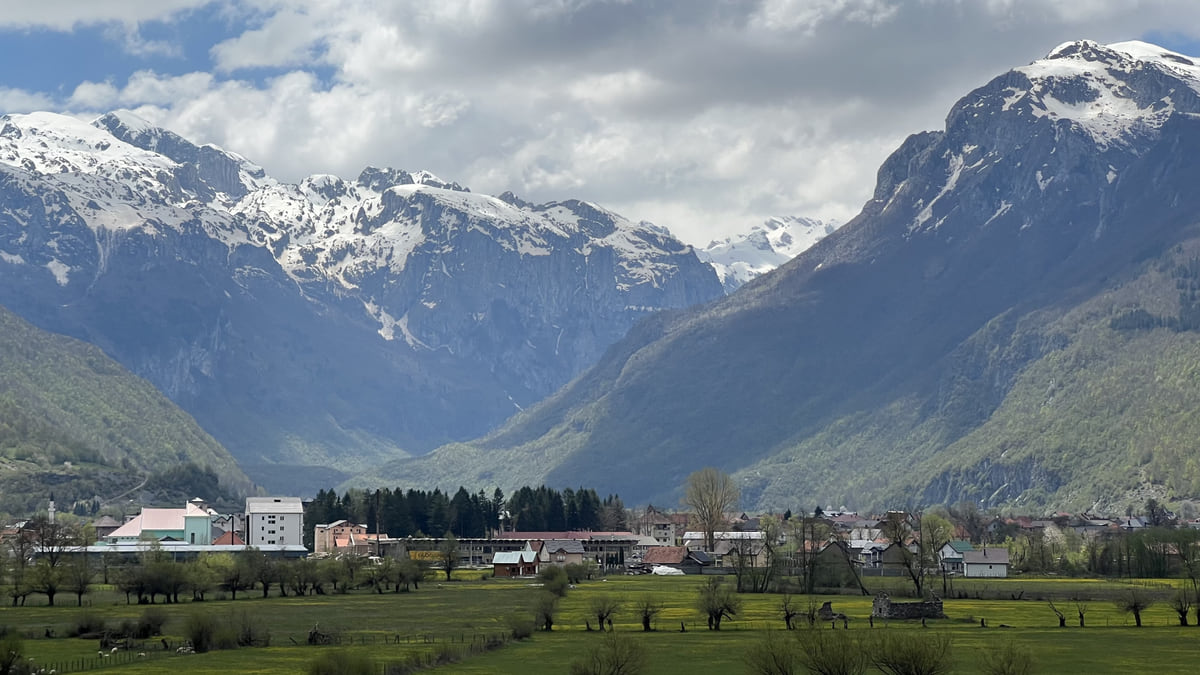
Gusinje (Albanian Guci) is a small town of about 2,200 people at the foot of the Prokletije, on the Albanian border, and the seat of a municipality of 3,933 that has existed since 2014. From here you head up to the Grbaja and Ropojana valleys, to Ali Pasha's springs 1 km away, and to Zla Kolata, which National Parks gives as the country's highest summit.
In 30 seconds
Full read: 3 min
- Gusinje (Guci) has 3,933 people in its municipality, created in February 2014.
- Ali Pasha's springs are 1 km from town, at 925 metres.
- It's the gateway to the Grbaja and Ropojana valleys in the Prokletije.
- A mosque, an Orthodox church and a Catholic church share one street.
Gusinje is the nearest town to the best of the Prokletije, so I'd use it for early starts to Grbaja or Ropojana even if I slept in Plav. What I wouldn't miss is the street with the Vizier's Mosque, the Orthodox church of St George and the Catholic church of St Anthony, which says more about the area than any guidebook.

Before you go
What I would keep in mind
-
01 Most beautiful
Three places of worship on one street
The national tourist board points out that the Vizier's Mosque, the Orthodox church of St George and the Catholic church of St Anthony stand on the same street in Gusinje.
-
02 My tip
Ali Pasha's springs
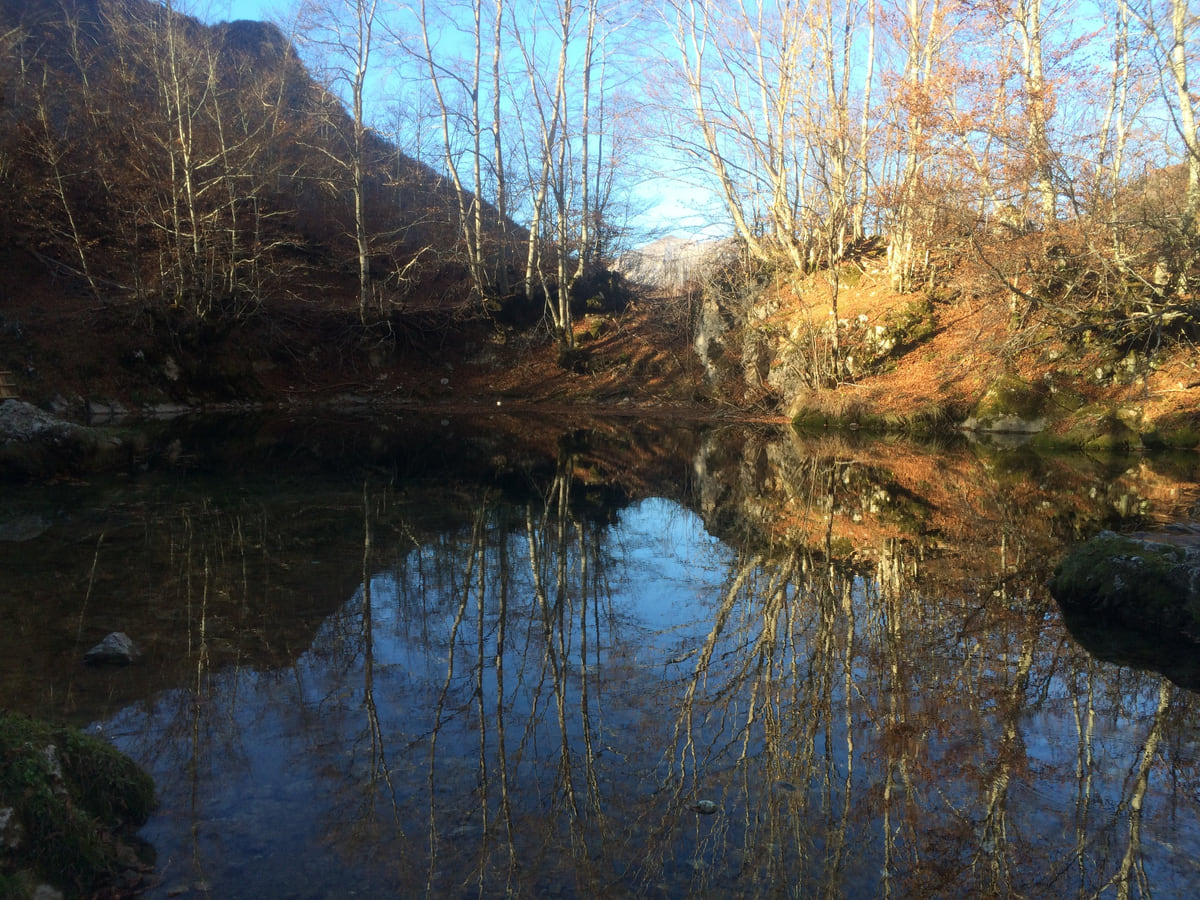
Gusinje Tourist Board calls them Montenegro's largest permanent karst spring, 1 km from town at 925 metres, with water welling up along a front about a hundred metres wide.
-
03 Worth the splurge
The Grbaja valley
At 1,100 metres, Gusinje Tourist Board describes it as the main starting point for mountaineering and climbing expeditions in the Prokletije.
Prokletije -
04 Getting there
Vusanje and Oko Skakavice
Vusanje, the municipality's other sizeable village, sits by the Oko Skakavice spring, the mouth of the Grlja canyon and the Ropojana valley.
Vusanje
What I would book
Gusinje is the last town before the big mountains. Its tourist board describes it as an ancient crossroads, a Balkan trading hub and the main gateway to the Prokletije, and the national tourist board as a town of around 2,000 people at the foot of the range, on the Albanian border, that was once an important market. For me it’s the most direct starting point for the Grbaja and Ropojana valleys, the finest part of the national park.
A trading town where faiths share a street
The municipality had 3,933 people in the 2023 census, down from 4,027 in 2011, and Gusinje town 2,225. The tourist board explains that the municipality was abolished in 1953 and re-created in February 2014, after a consultative referendum and a change to the law on territorial organisation. Its land registry divides 157 km² into ten cadastral districts with 42 settlements, among them Vusanje, which alone covers almost 50 km².
The national tourist board picks out what struck me most, that the Vizier’s Mosque, the Orthodox church of St George and the Catholic church of St Anthony all stand on the same street. National Parks lists the Vizier’s Mosque, which it dates to the 18th century, the Balić Tower and St George’s church as cultural monuments, while the national board dates the mosque to the 17th. On market day, says the board, you can buy dairy produce, sheep’s cheese and skorup, a rich clotted cream, and in town there’s burek, baklava and boza to try.
Ali Pasha’s springs and the waterfalls
One kilometre from town, Gusinje Tourist Board places Ali Pasha’s springs, at 925 metres, which it calls Montenegro’s largest permanent karst spring. The water wells up along a front about a hundred metres wide at the foot of Vezirova brada, only a few degrees above freezing, and in spring it spills out towards the Vruja river. The national board says thousands gather here at the end of August, and repeats the local tale that 30 weddings were once held by the springs in a single day.
Two kilometres away are the Kusije waterfalls, on a circular walk that also takes in the Grlja waterfall, a 15 metre plume at the edge of the canyon, according to the tourist board. The national board adds the springs of Savino oko, Bajrovića vrelo and Dragija.
To sleep close to everything, search places to stay in Gusinje on Expedia and filter by area before price.
Grbaja and Ropojana, the two valleys
The Grbaja valley, at 1,100 metres, is in Gusinje Tourist Board’s words the main starting point for mountaineering and climbing expeditions, with the Karanfili peaks above. That’s where the Volušnica and Popadija circuit I describe in the guide to the Prokletije begins. Lake Ropojana is 12 km from town, in the valley of the same name, beside Vusanje and Oko Skakavice. National Parks suggests getting there by bike, about 23 km there and back with 290 metres of climbing.
The national tourist board lists Grbaja among the area’s easy walking spots, with walking possible from June into late October. The tourist board runs guided hikes, such as the Vezirova brada walk on 27 September 2026, and hosts Prokletije Skyrunning, which it bills as the toughest mountain race in the former Yugoslavia.
Fitting Gusinje into your trip
Gusinje is a short drive from Plav, at the end of the Lim valley and past Lake Plav. In 2024 the municipality logged 4,636 arrivals and 12,511 overnight stays according to MONSTAT, more arrivals than Plav, a sign that plenty of people enter the Prokletije this way. There are small guesthouses, but for more choice I’d stay in Plav and drive down each morning. The Grnčar border crossing, which the national board lists as one of the crossings into Albania, takes its name from two villages in Gusinje municipality, according to OpenStreetMap.
Without a car you come by coach. On busticket4.me, the ticket site the Kotor bus station and the capital’s airport use as their timetable, 21 October 2026 showed four direct departures from Podgorica to Gusinje, at 08:25, 10:25, 13:28 and 17:14, taking about four hours for €15 and calling at Plav, 12 to 20 minutes and €2 away. Back to the capital they left at 05:46, 12:21, 15:45 and 16:45. For the Grbaja or Ropojana trails you’ll then need a taxi or an organised trip, because the coaches stop in town.
If you are short on time, see the best tours in Gusinje and pick one that fits your day.
To sleep close to everything, search places to stay in Gusinje on Booking.com and filter by area before price.
What to see in and around Gusinje
| Place | Distance or altitude | What it is |
|---|---|---|
| Ali Pasha's springs | 1 km from town, 925 m | Big karst spring at the foot of Vezirova brada |
| Kusije waterfalls | 2 km from town | Waterfalls on a circular walk |
| Grbaja valley | 1,100 m | Trailhead for hiking and climbing |
| Lake Ropojana | 12 km from town | Glacial lake in the Ropojana valley, by Vusanje |
| Vizier's Mosque | In town | 18th century per National Parks, 17th per the national tourist board |
| Balić Tower and St George's church | In town | Listed cultural monuments, per National Parks |
Sources: Gusinje Tourist Board, National Tourism Organisation and National Parks of Montenegro, checked on 12 October 2026.
Test yourself
True or false?
0/3 Pick before you peek.
-
Gusinje has been a municipality since 2014.
See the answer
True. Gusinje Tourist Board says it has been one since February 2014, after a consultative referendum.
-
Ali Pasha's springs are high up in the Ropojana valley.
See the answer
False. They're just 1 km from town, at 925 metres, at the foot of Vezirova brada.
-
Gusinje municipality has more people than Plav.
See the answer
False. Gusinje had 3,933 in 2023 and Plav 9,050, according to MONSTAT.
- Municipal population in 2023
- 3,933
- Altitude of Ali Pasha's springs
- 925 m
- Altitude of the Grbaja valley
- 1,100 m
- From town to Lake Ropojana
- 12 km
Map
Where Gusinje is
The Adriatic coast runs from Herceg Novi to Ulcinj; the centre holds Podgorica, Cetinje and Lake Skadar, and the north, Durmitor and the Tara Canyon. Every number opens its guide.
 1Northern Montenegro 2Žabljak 3Šavnik 4Tara Canyon 5Plužine 6Mojkovac 7Pljevlja 8Kolašin 9Bijelo Polje 10Berane 11Andrijevica 12Petnjica 13Rožaje 14Plav 15Gusinje
 Map data © OpenStreetMap contributors (ODbL)
- 1Northern MontenegroMontenegro's northern region
- 2ŽabljakNorthern Montenegro, Žabljak municipality
- 3ŠavnikNorthern Montenegro, south of Durmitor
- 4Tara CanyonDurmitor National Park, northern Montenegro
- 5PlužineNorthern Montenegro, the Piva area
- 6MojkovacNorthern Montenegro, the Tara valley
- 7PljevljaTown in northern Montenegro
- 8KolašinNorthern Montenegro, Bjelasica
- 9Bijelo PoljeNorthern Montenegro, Lim valley
- 10BeraneNorthern Montenegro, Lim valley
- 11AndrijevicaNorthern Montenegro, upper Lim
- 12PetnjicaNorthern Montenegro, Bihor
- 13RožajeNorthern Montenegro, Ibar valley
- 14PlavNorthern Montenegro, upper Lim
- 15GusinjeNorthern Montenegro, Prokletije
What to see
What to see in Gusinje
0 of 278 Montenegro guides
Your next stamp
- Vusanje
- Peaks of the Balkans
- Prokletije National Park
- Montenegro and Albania
- Plav
- Kolašin
- Ulcinj
- Hiking
- Aman Sveti Stefan
- Budva Old Town
- Haj-Nehaj
- Kotor
- Lučice Beach
- Montenegro's coast
- Porto Montenegro
- Sea Dance Festival
- Splendid Conference & Spa Resort
- Stari Bar
- Ulcinj Old Town
- Bay of Kotor
- Budva Riviera
- Heroj submarine
- Iberostar Bellevue
- Independence Day
- Old olive tree of Mirovica
- Tivat
- Velika plaža
- Ada Bojana
- Beaches in Budva
- Eurostars Queen of Montenegro
- Herceg Novi
- Kotor Old Town
- Mount Rumija
- Igalo
- Kotor city walls
- Mogren Beach
- Montenegro Beach Resort
- Svač
- Vrmac
- Jaz Beach
- Kanli kula
- Luštica peninsula
- St Tryphon Cathedral
- Ulcinj salt pans
- Forte Mare
- Gornja Lastva
- Maritime Museum, Kotor
- Slovenska Beach
- Drobni Pijesak Beach
- Kotor viewpoints
- Mamula
- Žanjic beach
- Kotor cruise port
- Orjen
- Plavi horizonti beach
- Sveti Nikola Island
- Blue Cave
- Restaurants in Budva
- Restaurants in Kotor
- Canyoning
- Hotels
- Perast
- Sutomore
- Sveti Stefan
- Čanj
- Luxury hotels
- Our Lady of the Rocks
- Pržno
- Things to do
- Activities
- All-inclusive hotels
- Bar Riviera
- Bečići
- Hotel Palma
- St George island
- Dobrota
- Hladna uvala
- Most beautiful places
- Petrovac
- Crvena stijena
- Prčanj
- Prettiest villages
- Cycling
- Risan
- UNESCO sites
- Heritage Grand Perast
- Map
- Hyatt Regency Kotor Bay
- Where is it?
- Regions
- Cities
- Beaches in Bar
- Budva
- Central Montenegro
- Hotels in Budva
- Hotels in Kotor
- Iberostar Waves Herceg Novi
- Kitesurfing
- The name
- Beaches in Ulcinj
- Flag
- Hotels in Perast
- Palmon Bay Hotel & Spa
- Podgorica
- Cathedral of the Resurrection
- One&Only Portonovi
- Population
- Sandy beaches
- Azul Beach Resort Montenegro
- Naturist beaches
- Size
- Stara Varoš
- Doclea
- Language
- Mimosa Festival
- Medun
- Religion
- Zipline
- Currency
- Museums in Podgorica
- Dajbabe Monastery
- EU membership
- History
- Restaurants in Podgorica
- Hotels in Podgorica
- Public holidays
- Avala Resort & Villas
- Bar
- Beaches in Kotor
- Birdwatching
- Hotels in Ulcinj
- Kotor carnival
- Time zone
- Tivat beaches
- Tuzi
- Boka Night
- Dukley Hotel & Resort
- Facts
- Hotels in Tivat
- Zeta
- Caves
- Herceg Novi beaches
- National parks
- Šipčanik
- Hotels in Herceg Novi
- Monasteries
- Fortresses
- Fly fishing
- Museums
- Canyons and waterfalls
- Lakes
- Mountains
- Montenegro and Croatia
- Beaches
- Boat trips
- Cetinje
- Nightlife
- Weather
- Best time to visit
- Cetinje Monastery
- Kayaking
- Montenegro and the Balkans
- How to get there
- In summer
- King Nikola's Palace
- Sailing
- Biljarda
- Flights
- In winter
- Airports
- Museums in Cetinje
- New Year's Eve
- Lovćen
- Paragliding
- Tivat Airport
- Njegoš Mausoleum
- Podgorica Airport
- Dubrovnik to Kotor
- Kotor serpentine
- Belgrade to Montenegro
- Njeguši
- Ferry to Italy
- Njeguši prosciutto
- Border crossings
- In January
- Lipa Cave
- Where to stay
- In February
- Kamenari-Lepetane ferry
- Pavlova strana
- Getting around
- In March
- Rijeka Crnojevića
- In April
- Trains
- Buses
- In May
- Car hire
- In June
- Driving
- In July
- In August
- Taxis
- Distances
- In September
- In October
- Road trip
- Food
- In November
- Lake Skadar
- Scenic drives
- In December
- Kotor cable car
- Virpazar
- Where to eat
- Budva to Kotor
- Godinje
- Wine
- Podgorica to Kotor
- Vranjina
- Besac fortress
- Prices and budget
- On a budget
- Žabljak Crnojevića
- Danilovgrad
- Entry requirements
- Ostrog Monastery
- Tourist registration
- Customs
- Nikšić
- Crvena Stijena cave
- Safety
- Events
- Healthcare
- Northern Montenegro
- Mobile and roaming
- Žabljak
- Durmitor
- Plugs
- Black Lake
- With kids
- Bobotov Kuk
- Holidays
- Day trips
- Stećci tombstones
- Hotels in Žabljak
- Three-day itinerary
- Five-day itinerary
- Skiing in Montenegro
- One-week itinerary
- Skiing in Žabljak
- Šavnik
- Ten-day itinerary
- Nevidio Canyon
- Tara Canyon
- Tara rafting
- Đurđevića Tara Bridge
- Plužine
- Lake Piva
- Piva Monastery
- Mojkovac
- Brskovo
- Pljevlja
- Husein Pasha Mosque
- Hotels in Kolašin
- Skiing in Kolašin
- Biogradska Gora National Park
- Komovi
- Morača Monastery
- Morača Canyon
- Bijelo Polje
- Đalovića Cave
- Berane
- Andrijevica
- Petnjica
- Rožaje
- Lake Plav
Frequently asked questions
What is there to see in Gusinje, Montenegro?
In town, Ali Pasha's springs, the Vizier's Mosque, St George's church, the Catholic church of St Anthony and the Balić Tower; beyond it, the Grbaja and Ropojana valleys, the Kusije waterfalls and Lake Ropojana.
Where is Gusinje?
In Montenegro's far south-east, at the foot of the Prokletije on the Albanian border, a short drive from Plav.
Is Gusinje the same as Guci?
Yes. Guci is the Albanian name, in everyday use alongside Gusinje, and the local tourist board uses it on its website.
When did Gusinje become a municipality?
According to Gusinje Tourist Board, in February 2014, after a consultative referendum. It had previously been a municipality until 1953.
How many people live in Gusinje?
The municipality had 3,933 people in the 2023 census according to MONSTAT, and Gusinje town 2,225. Vusanje, the second-largest village, had 716.
How do you get to Gusinje?
By road from Plav, a short drive away, having come up the Lim valley from Berane. There's no railway, and you'll be driving on the right.
By
Tourism graduate with a master’s in Tourism Management and Planning from the University of Málaga, who has travelled across Europe. He writes every guide from official sources and his own judgement.
Published on . Facts checked on .
Sources
Some links in this guide are affiliate links: if you book through them, the site earns a commission at no extra cost to you. Affiliate disclosure
Photos: Planeti (CC BY-SA 4.0), via Wikimedia Commons.