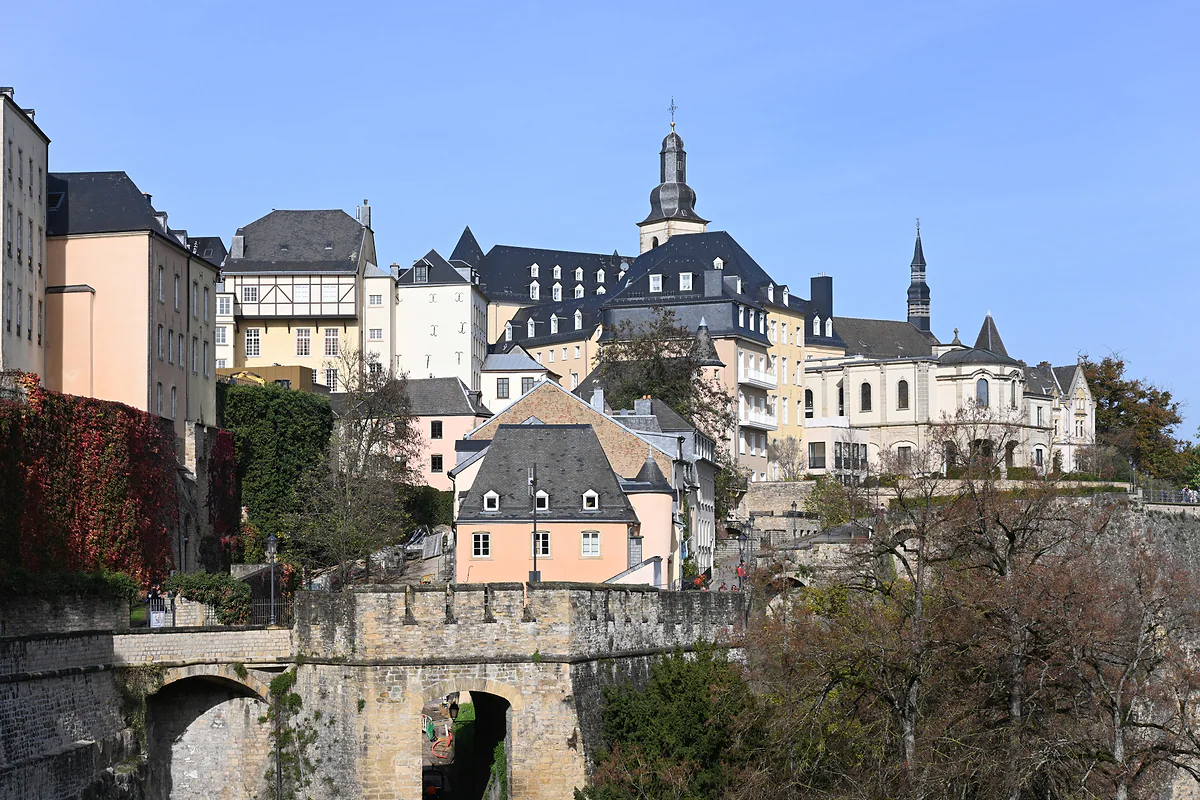
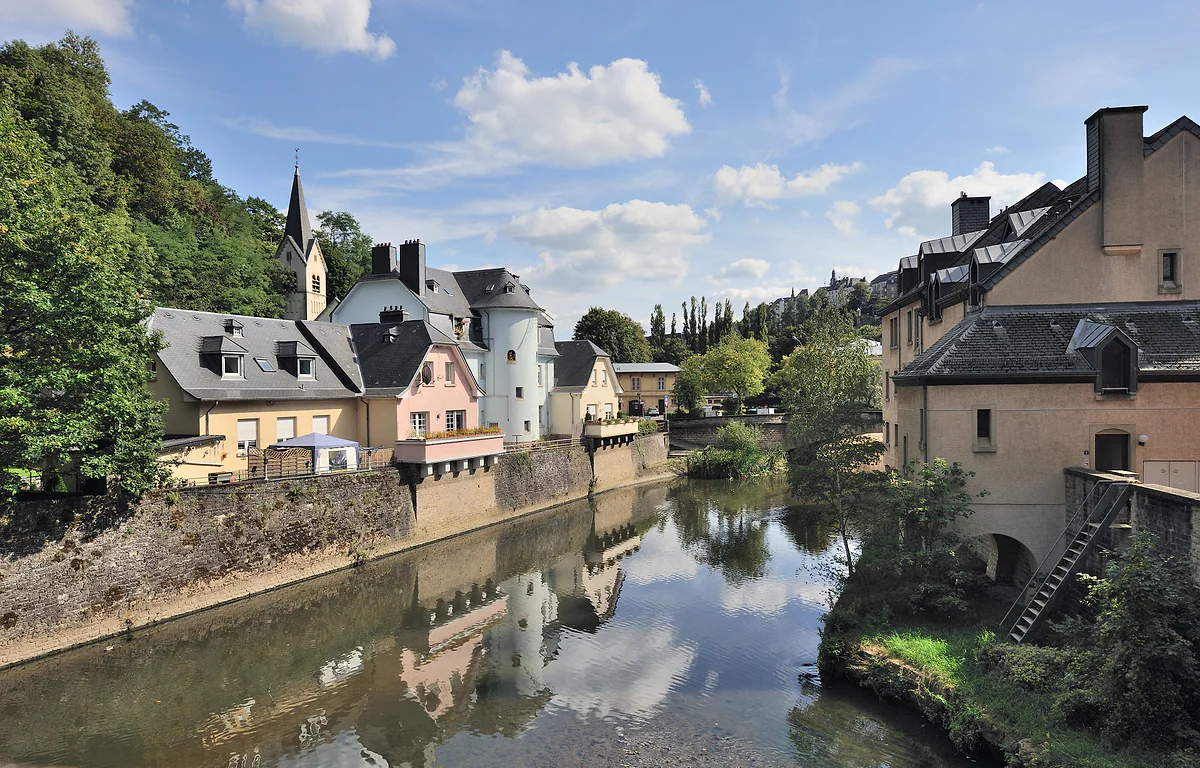
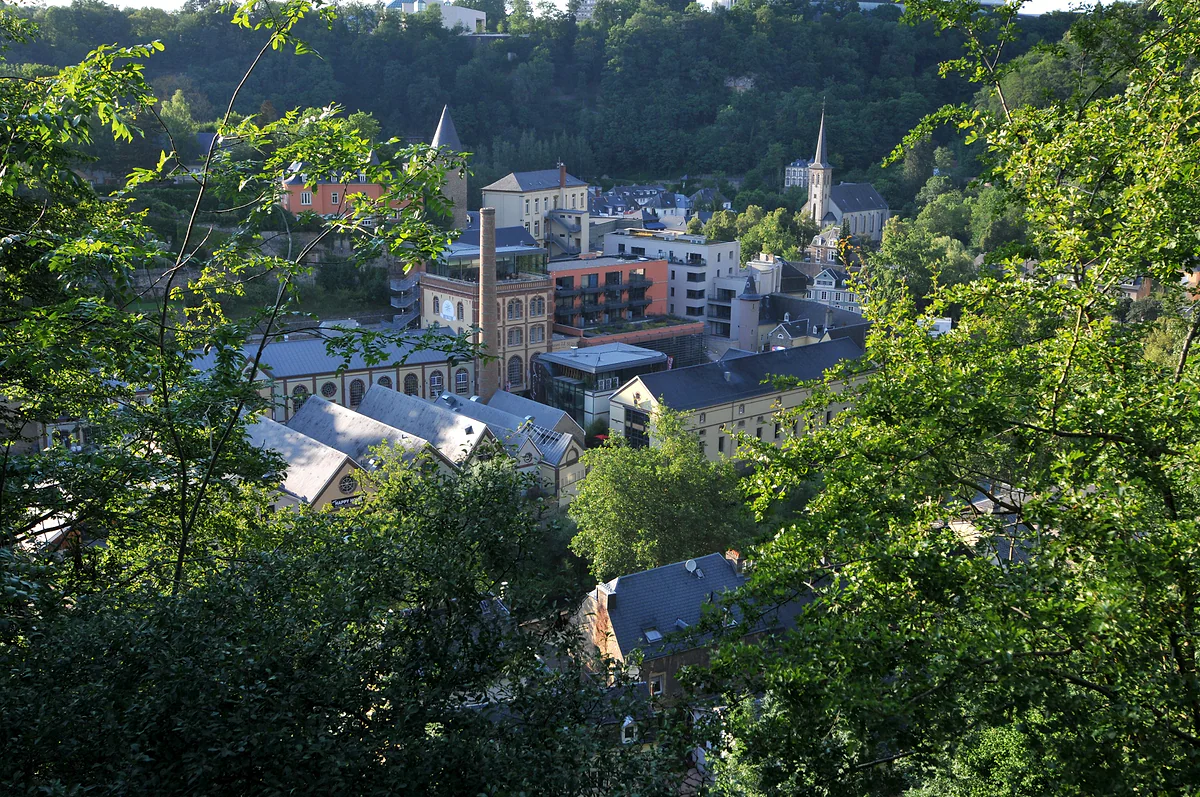
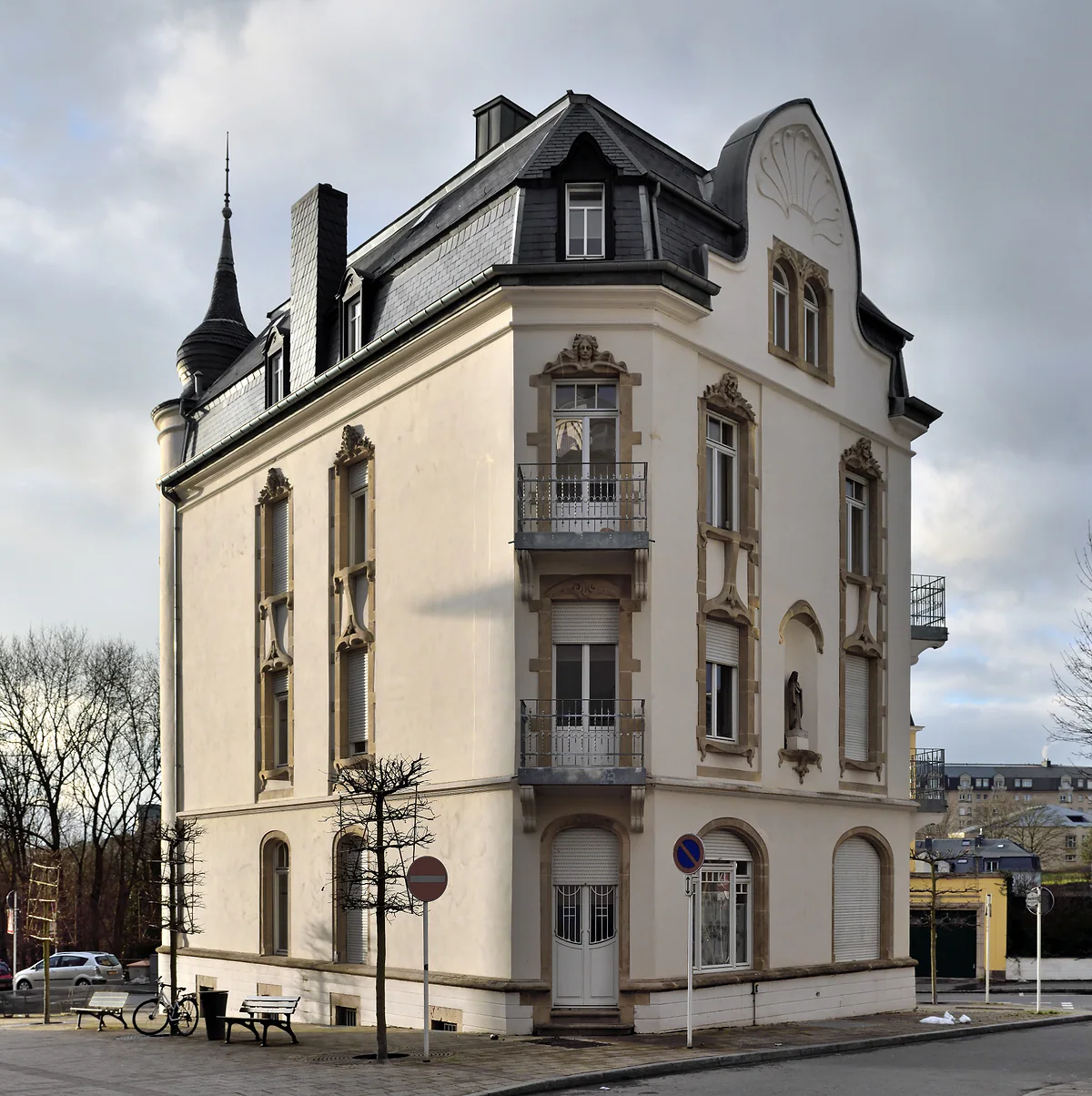
Luxembourg City (Lëtzebuerg) is the capital of Luxembourg, with 137,696 residents on 31 December 2025 according to the city council. It grew from a rock called the Bock in 963, and its old quarters and fortifications have been a UNESCO World Heritage Site since 1994. The essentials fit into a day on foot.
In 30 seconds
Full read: 4 min
The capital of Luxembourg is Luxembourg City (Lëtzebuerg), with 137,696 residents on 31-12-2025 and 24 districts.
Its old quarters and fortifications have been on the UNESCO World Heritage list since 1994.
The essentials are the upper town, the Corniche, the Bock casemates and the Grund, all on foot.
Public transport has been free for everyone since 1-3-2020, including the tram from the airport.
Don't treat it as a lunch stop between Brussels and Strasbourg. The upper town takes a morning, but what makes the place special is down in the valleys, and that means walking without a timetable and letting the free lift carry you back up.
Sergio LeponeMy advice
Before you go
What I would keep in mind
01 Most beautiful
The Corniche, a balcony over the Grund
The writer Batty Weber called this walk along the ramparts «the most beautiful balcony in Europe». It runs from the Bock rock to the old Holy Spirit citadel, looking down on the Alzette and the rooftops of the Grund. Free and always open.
Since 1 March 2020 buses, trams, the funicular and second-class trains have been free across the country, visitors included. The T1 tram runs from the airport into town and you won't need a ticket.
The city tourist office now sells them as a one-hour guided visit at €20, in groups of no more than 20. It's the one thing I'd pay for before any museum, because it shows you the city from inside the rock.
The Stater Maart fills Place Guillaume II on Wednesday and Saturday mornings with about 40 stalls of regional produce. It's the square at its liveliest, and a good place to pick up a picnic for the Corniche.
From London the rail route runs via Brussels, where you change onto a CFL or SNCB train for a direct run of just under three hours, according to CFL. Luxair also flies from London City.
My own marks out of 10. I've weighed how much each place tells you about a city that spent centuries as a fortress, and what it gives back for your time or money. Museums have their own page.
Galleries cut into the rock, part of a 23 km network. You see them with a guide, and from the gun openings you understand the nickname Gibraltar of the North.
The war memorial on an old bastion, looking across the Pétrusse valley to the Adolphe Bridge.
Price: Free
7.8 out of 10
Luxembourg City looks like no other small European capital because war drew its outline. For centuries it was a fortress perched on rock, and when the walls came down after 1867 what was left was a city on two floors, with squares on top and river quarters below, stitched together by stairs, bridges and lifts. Here’s how I’d tackle it.
Why it sits where it does
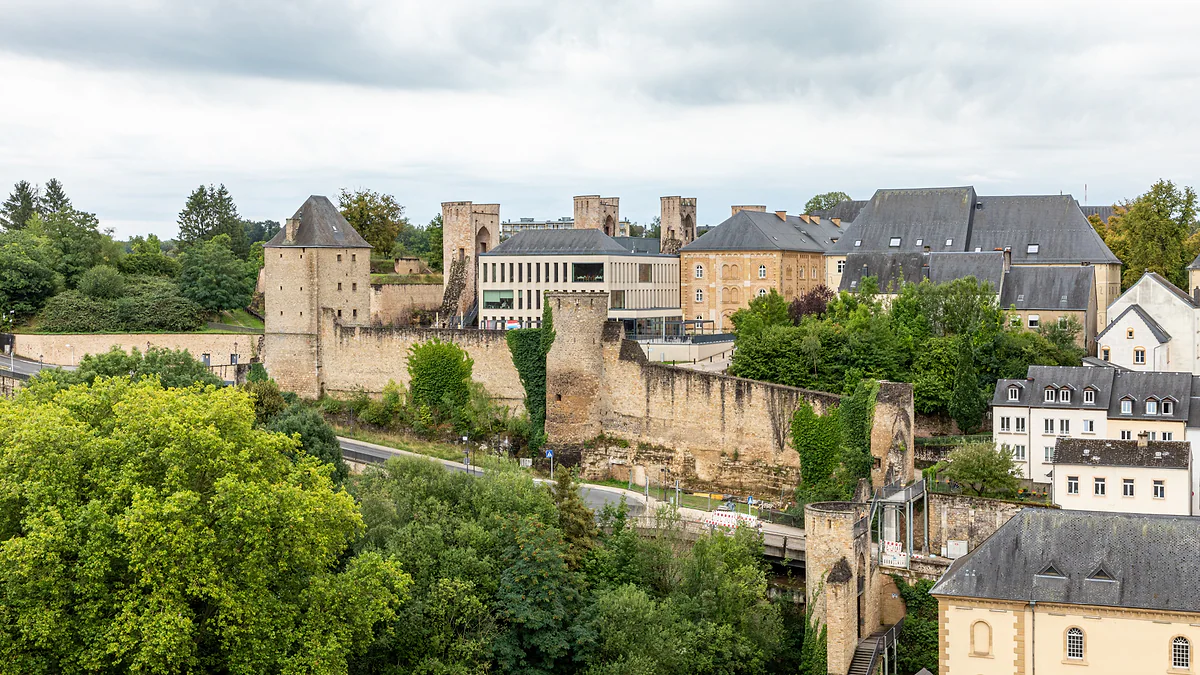
It all starts with the Bock, a rock ringed on three sides by the Alzette valley and reachable only from the west. In 963 Count Sigefroi obtained it from the abbey of St Maximin in Trier and built a small castle, «Lucilinburhuc», which gave the country its name. A town grew around it, and the Burgundians, the Spanish Habsburgs, the French, the Austrians and the Prussians strengthened it so often that it earned the nickname Gibraltar of the North.
The Treaty of London in 1867 ordered the fortress dismantled, and much of it went. What survives, together with the old quarters, joined the World Heritage list in 1994. I find that the best way to read the place, a city that took off its armour but left the skeleton on show. I tell the full story in my guide to Luxembourg fortress.
The upper town, the top floor
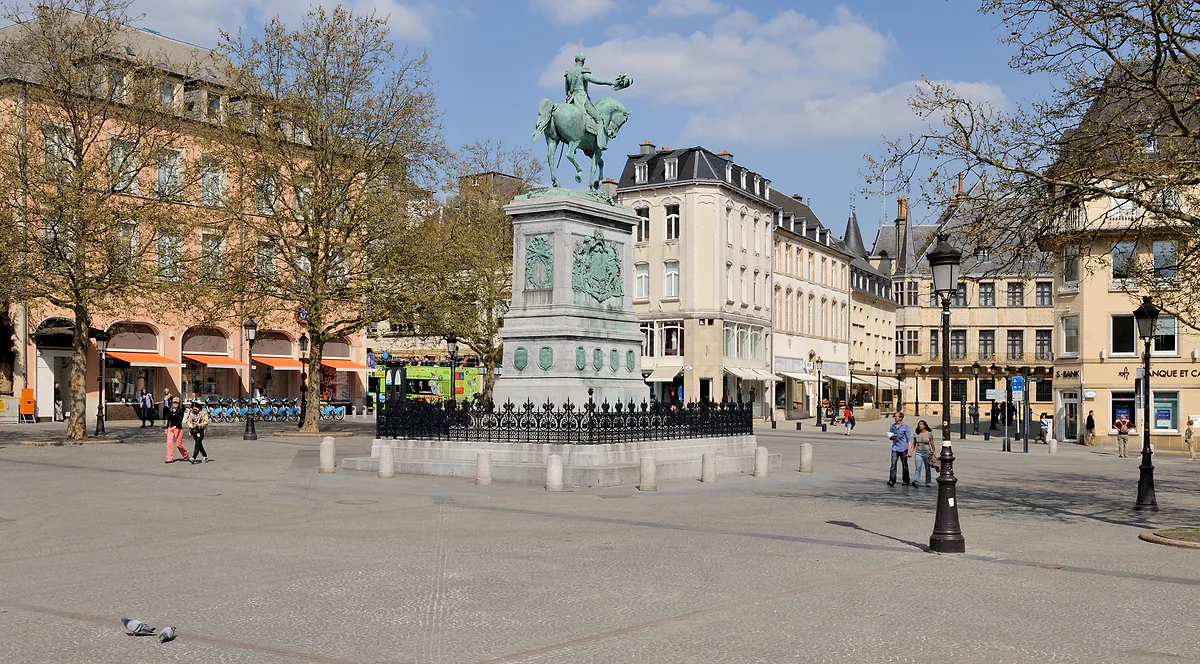
The old town sits on the plateau and you can walk all of it in a morning. The Luxembourg old town is framed by three squares. Place Guillaume II, home to the Hôtel de Ville and the tourist office; Place d’Armes, with its bandstand and café tables; and Place de la Constitution, where the golden figure of the Gëlle Fra gazes across the Pétrusse valley. The Grand Ducal Palace and Notre-Dame Cathedral lie between them, and you’ll have seen the lot in an hour if you skip the museums.
My advice is not to stay up there. The upper town is handsome, but until you reach its edges it’s a town of shops and offices like many others.
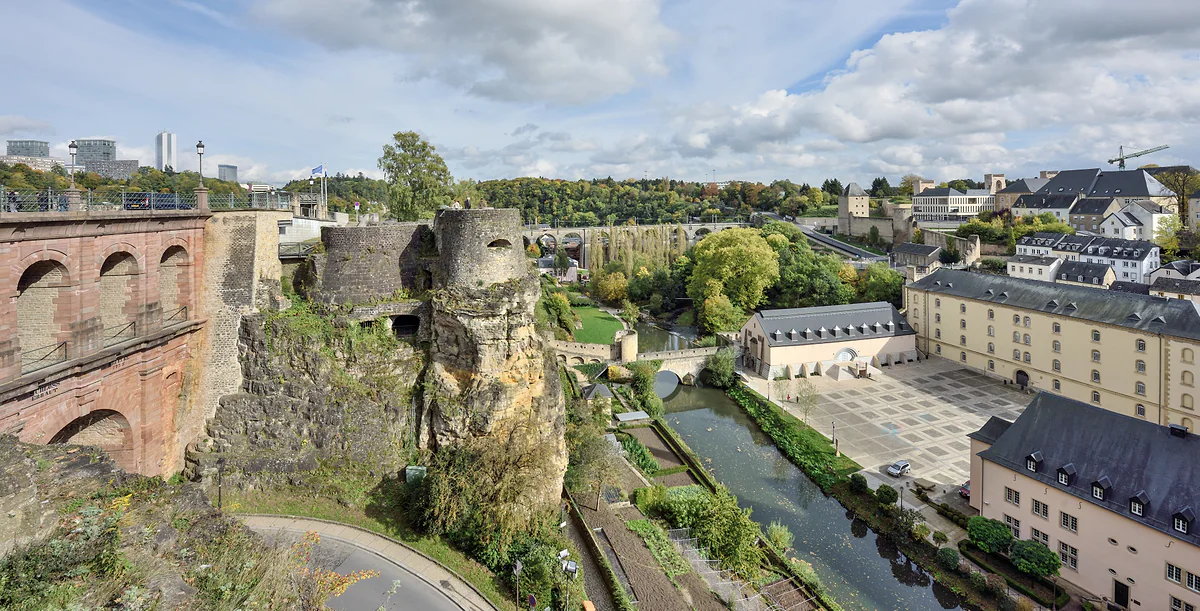
The Chemin de la Corniche is my favourite spot in the whole capital. It runs along 17th-century ramparts from the Bock to the old citadel, with the Grund at your feet. At the start are the casemates, galleries cut into the rock that were part of a 23 km network and which the city tourist office now shows with a guide.
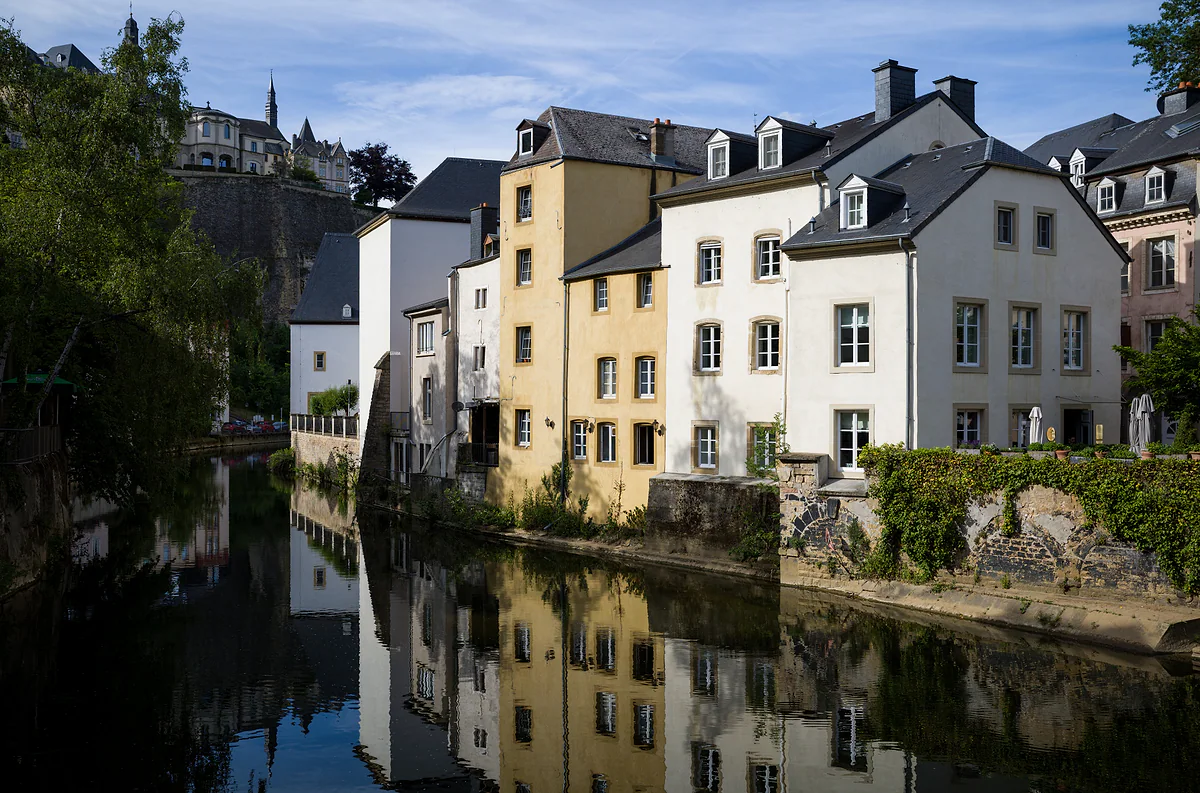
From the Corniche you drop down into the Grund, the river quarter, with Neumünster Abbey and houses crowding the Alzette. You can then follow the river to the Pfaffenthal and ride the panoramic lift back up, free and running from 5:45 to 1:00. That loop, up, down and up again, is what makes sense of the city.
What I’d pay for and what I wouldn’t
Almost everything worth doing here is free. Walking, crossing the Adolphe Bridge or stepping into the cathedral costs nothing, and neither does public transport since 1 March 2020, for residents and visitors alike. Where I’d spend is the Bock casemates, €20 with a guide as of September 2026, because it’s the only way into the rock.
The Grand Ducal Palace opens only in summer and tickets go fast. In 2026 they sold out, and the 2027 dates haven’t been announced. I’d treat it as a treat if it fits your trip, not a reason to pick your dates. The Pétrusse casemates, at €24, I’d save for a second visit or for anyone who has already done the Bock.
A day covers the old town, the Corniche and the Grund without rushing, and I’ve laid it out hour by hour in Luxembourg in one day. Two days let you add the casemates at leisure, Kirchberg, the European quarter of towers and museums across the valley, and an afternoon in a gallery.
For a bed, the upper town or the station area is the most practical, with the tram at the door. I go through the options in hotels in Luxembourg City centre. If you fly in, the T1 tram reaches the centre from the airport without a change and without a ticket.
The practical bits
The city tourist office sits on Place Guillaume II itself and opens every day except New Year’s Day and Christmas Day, with shorter hours on Sundays. That’s where you book the casemates and the palace. The city covers 51.73 km² and has 24 official districts, though visitors rarely leave five or six of them. Trier is 48 km away and Metz 60, so the capital also works as a base for a hop over the border. British travellers arrive from outside Schengen, which means registering with the EES biometric system at the first border they cross into the area.
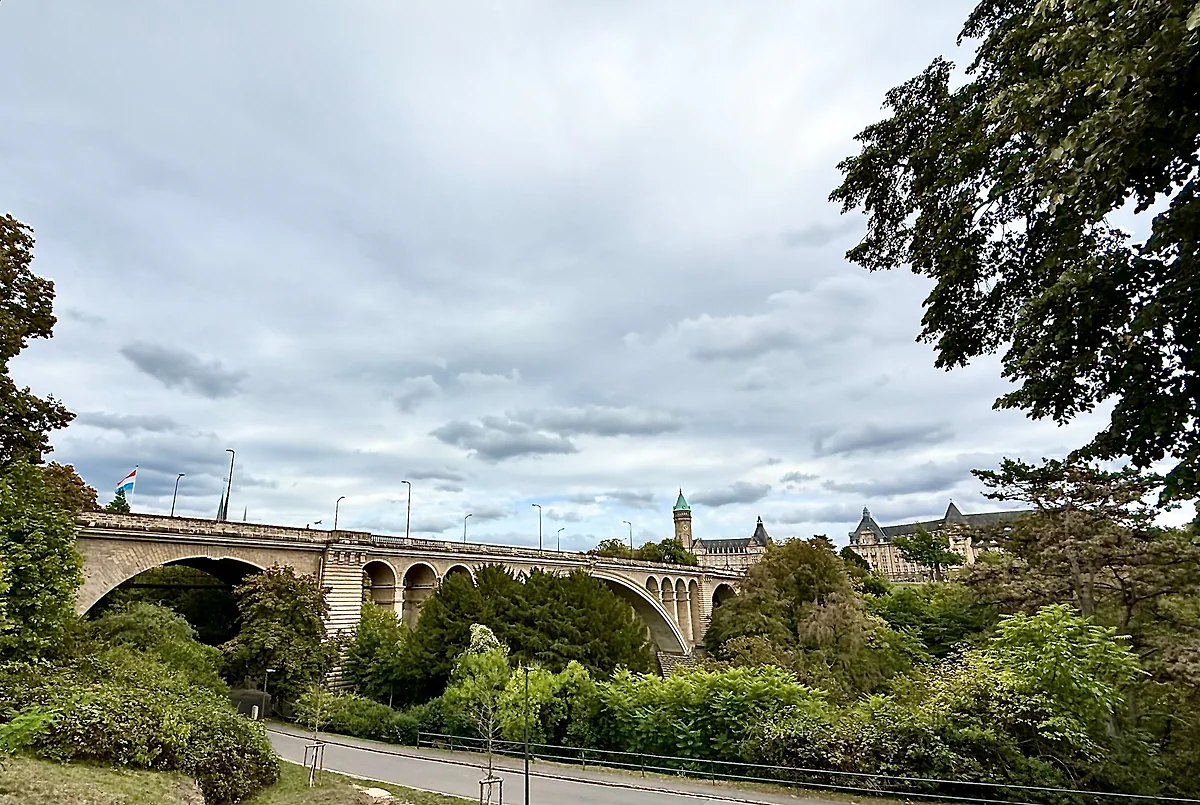
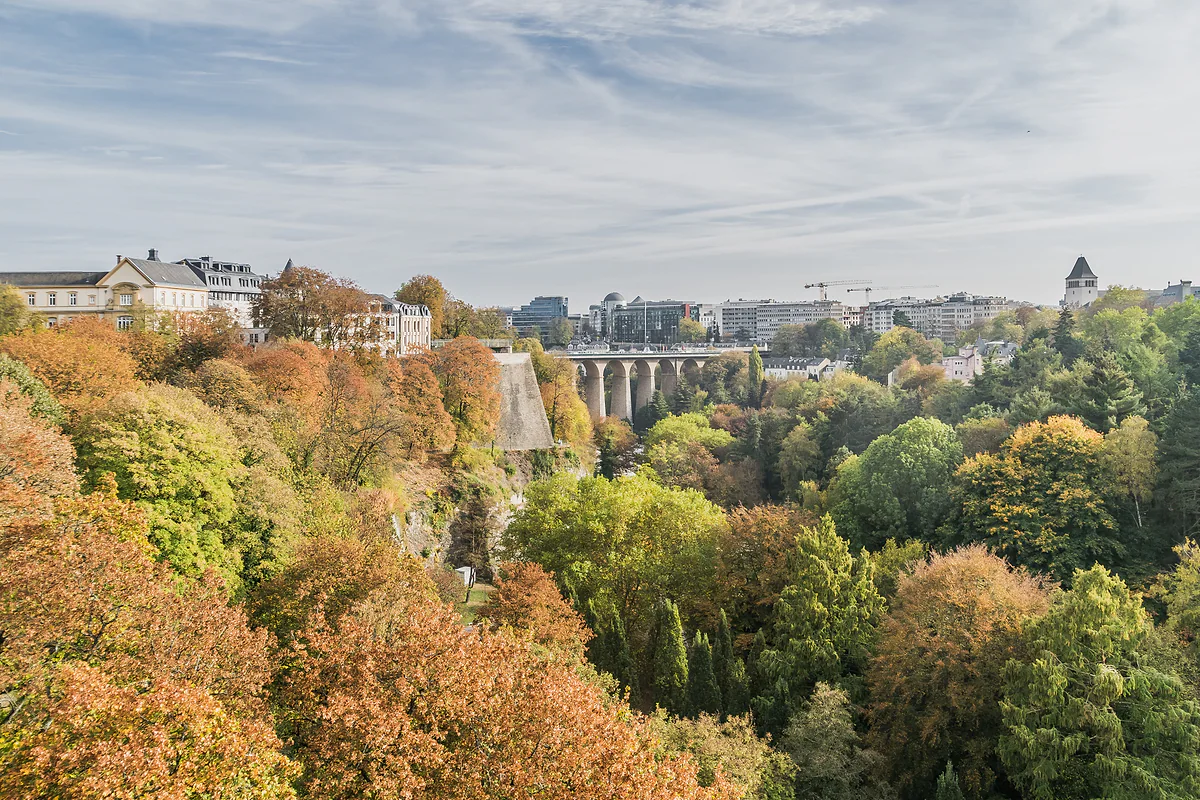
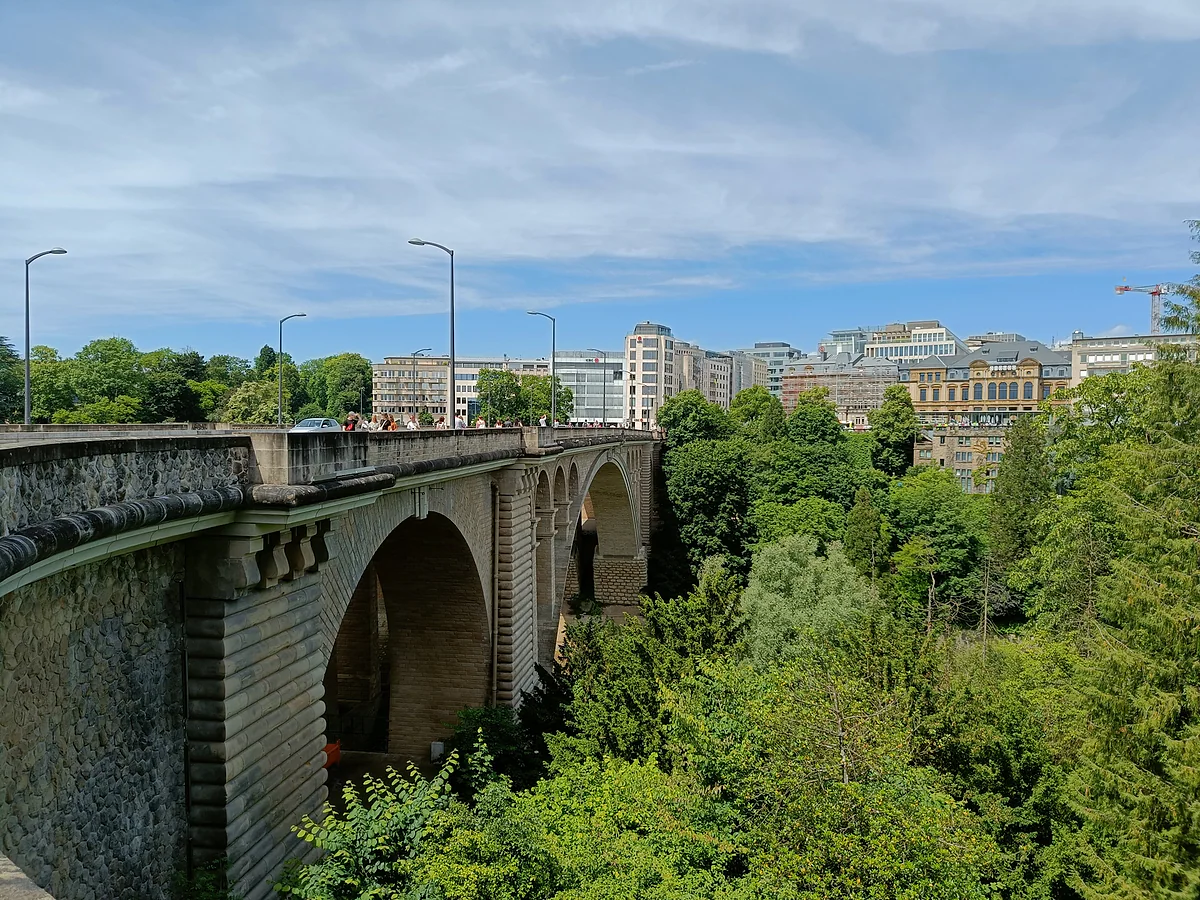
The Adolphe Bridge with its great stone arch over the wooded Pétrusse valley and the city on the far side
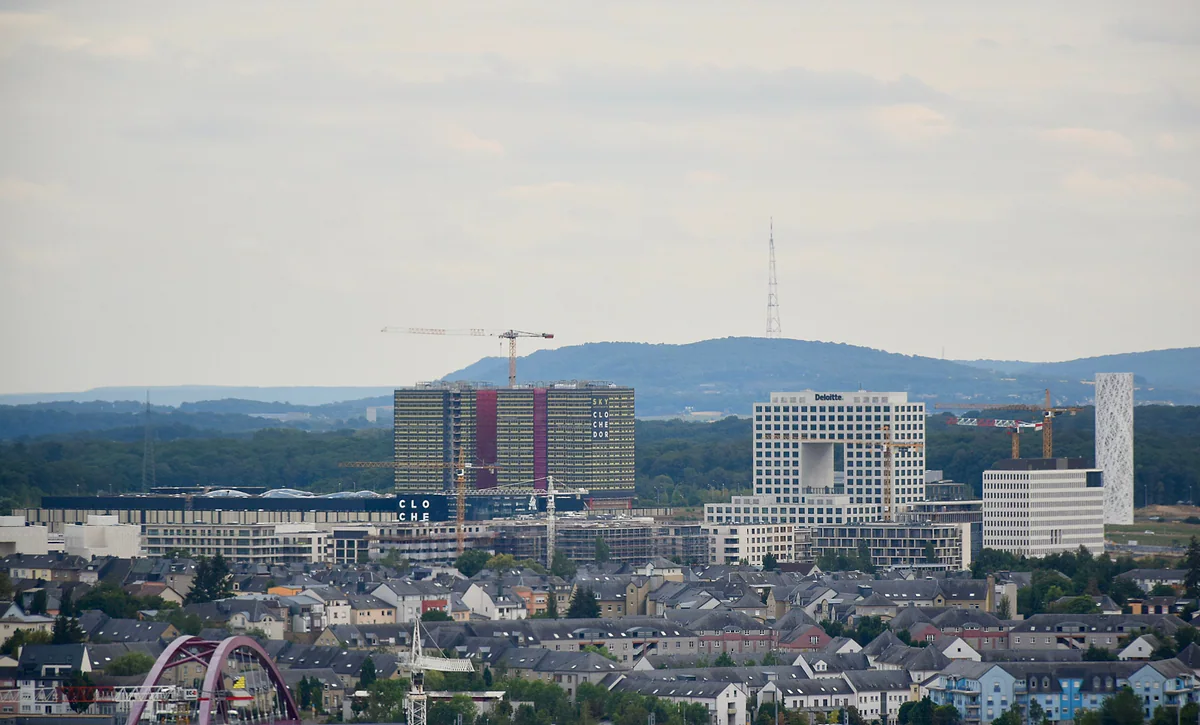
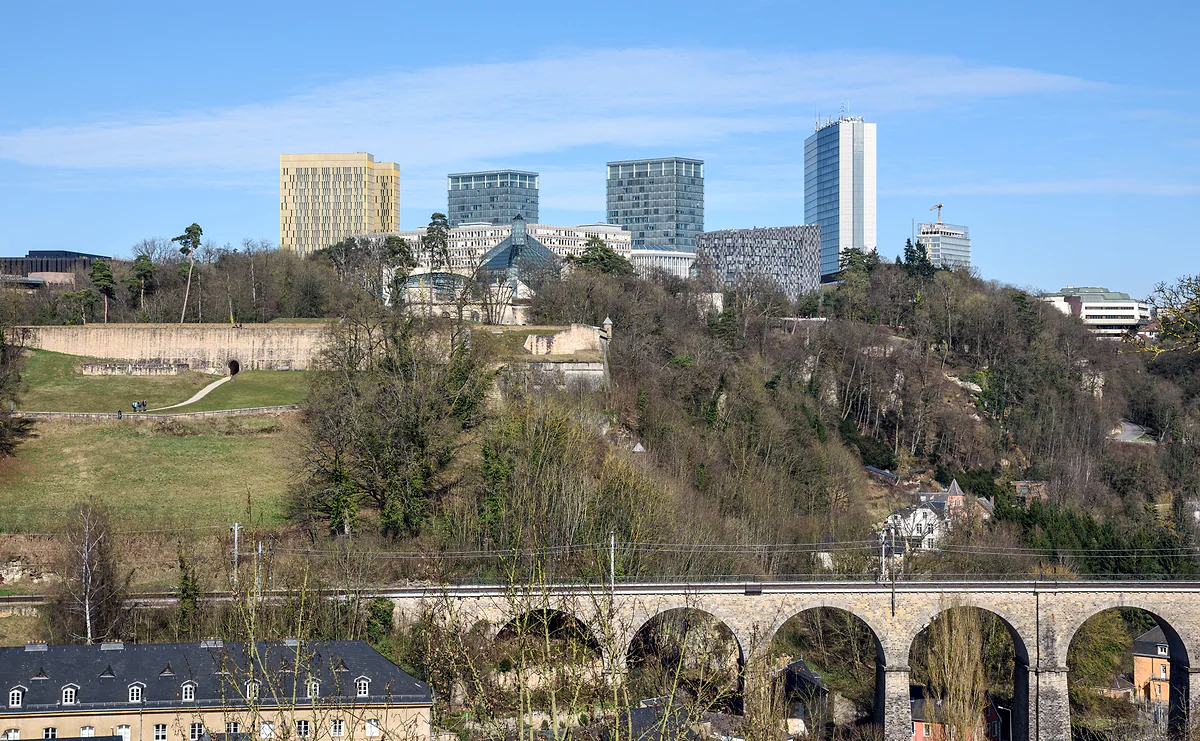
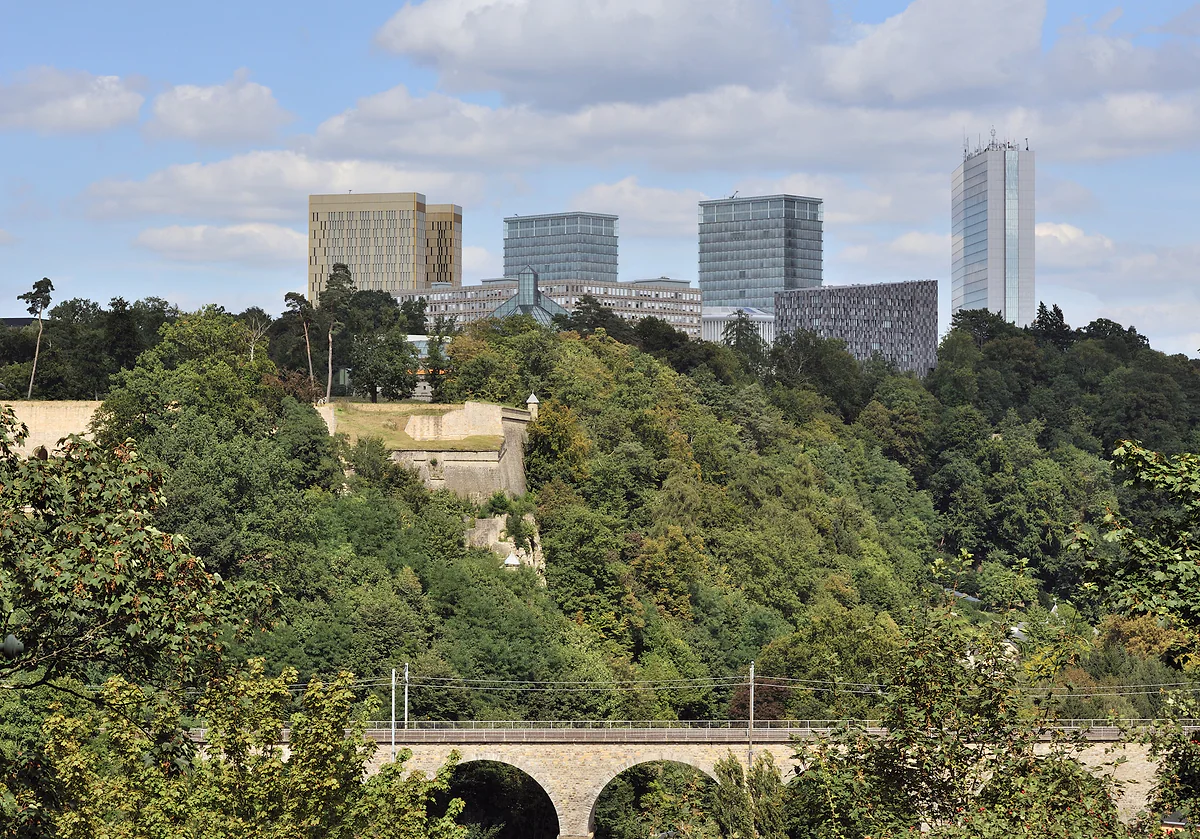
The office towers of Kirchberg above a wooded slope, with a stone railway viaduct in the foreground
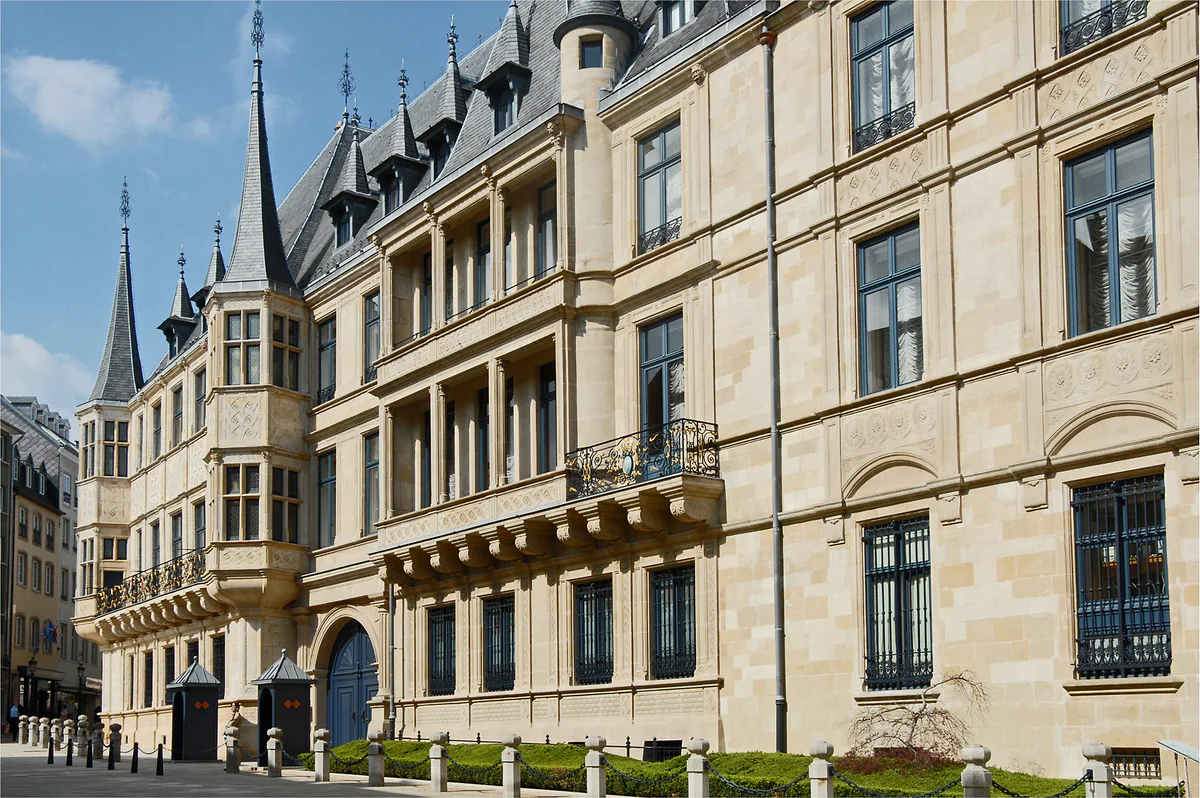
The Renaissance façade of the Grand Ducal Palace in Luxembourg, with slate turrets, balconies and a sentry box
Paid visits in the old town (prices as of September 2026)
Visit
Adult
Concession
When
Bock Casemates, guided
€20
€16 (students and over-60s); €10 aged 4 to 12
Tours listed up to 27-12-2026
Pétrusse Casemates, guided
€24
€19.50; €12 aged 4 to 12
Friday to Sunday up to 20-12-2026
Grand Ducal Palace, guided
€18
€9 aged 4 to 12
Summer only; 2027 dates not yet out
Notre-Dame Cathedral
Free
Free
Monday to Saturday 08:00-18:00
Prices from the Luxembourg City Tourist Office and monarchie.lu, checked on 29-09-2026. visitluxembourg lists a different casemates ticket (€11 for the Bock), which the city office doesn't sell as an unguided visit.
Road distances from the capital
City
Distance
Trier
48 km
Metz
60 km
Brussels
225 km
Paris
370 km
Ville de Luxembourg, the city in figures, checked on 29-09-2026.
Test yourself
True or false?
0/4Pick before you peek.
Luxembourg City began on a rock called the Bock.
See the answer
True. In 963 Count Sigefroi acquired the Bock and built a small castle there, «Lucilinburhuc», from which the city and the country take their name.
The whole of Luxembourg City is a UNESCO World Heritage Site.
See the answer
False. The 1994 listing covers the old quarters and fortifications, about 30 hectares with a buffer zone around them. Districts such as Kirchberg or the Gare are outside it.
Visitors need to buy a ticket to ride the capital's tram.
See the answer
False. Public transport has been free for everyone since 1 March 2020. You only pay for first class on trains and for journeys that cross the border.
Luxembourg City is one of the three seats of the European Union.
See the answer
True. The government's portal calls it the «third euro-capital», alongside Brussels and Strasbourg. Most of its EU institutions sit on the Kirchberg plateau.
Year Count Sigefroi acquired the Bock
963
Residents on 31-12-2025 (city council)
137,696
Official districts
24
Year of UNESCO listing
1994
Map
Where Luxembourg City is
The thick dashed line is the border with Belgium, France and Germany, and the fine ones divide the twelve cantons. The Éislek lies to the north and the Moselle to the east. Every number opens its guide.
Luxembourg City, Lëtzebuerg in Luxembourgish. The country and its capital share a name, which is why locals and guidebooks say Luxembourg City when they mean the capital alone.
Is Luxembourg City worth visiting?
I think so, as long as you give it at least a full day. The old town is pleasant, but the real draw is the ramparts, the casemates and the valley quarters below, and none of that shows from a coach window.
How many days do you need in Luxembourg City?
One day covers the old town, the Corniche and the Grund. Two let you add the casemates at an easy pace, Kirchberg and a museum. Both itineraries are on their own pages, hour by hour.
How do you get from London to Luxembourg City?
By rail, take the Eurostar to Brussels and change there; CFL puts the Brussels to Luxembourg leg at just under three hours. By air, Luxair flies from London City, and the free T1 tram links the airport with the centre.
Is Luxembourg City expensive for visitors?
Hotels and restaurants, yes. The rest costs less than people expect, because public transport is free and the Corniche, the Grund and the squares cost nothing. The priciest visit in the old town is the Pétrusse casemates at €24.
Where is the old town in Luxembourg City?
The historic centre is the Ville Haute, the upper town on the plateau above the Alzette and Pétrusse valleys. The squares, the palace, the cathedral and the pedestrian shopping streets are all there.
Tourism graduate with a master’s in Tourism Management and Planning from the University of Málaga, who has travelled across Europe. He writes every guide from official sources and his own judgement.

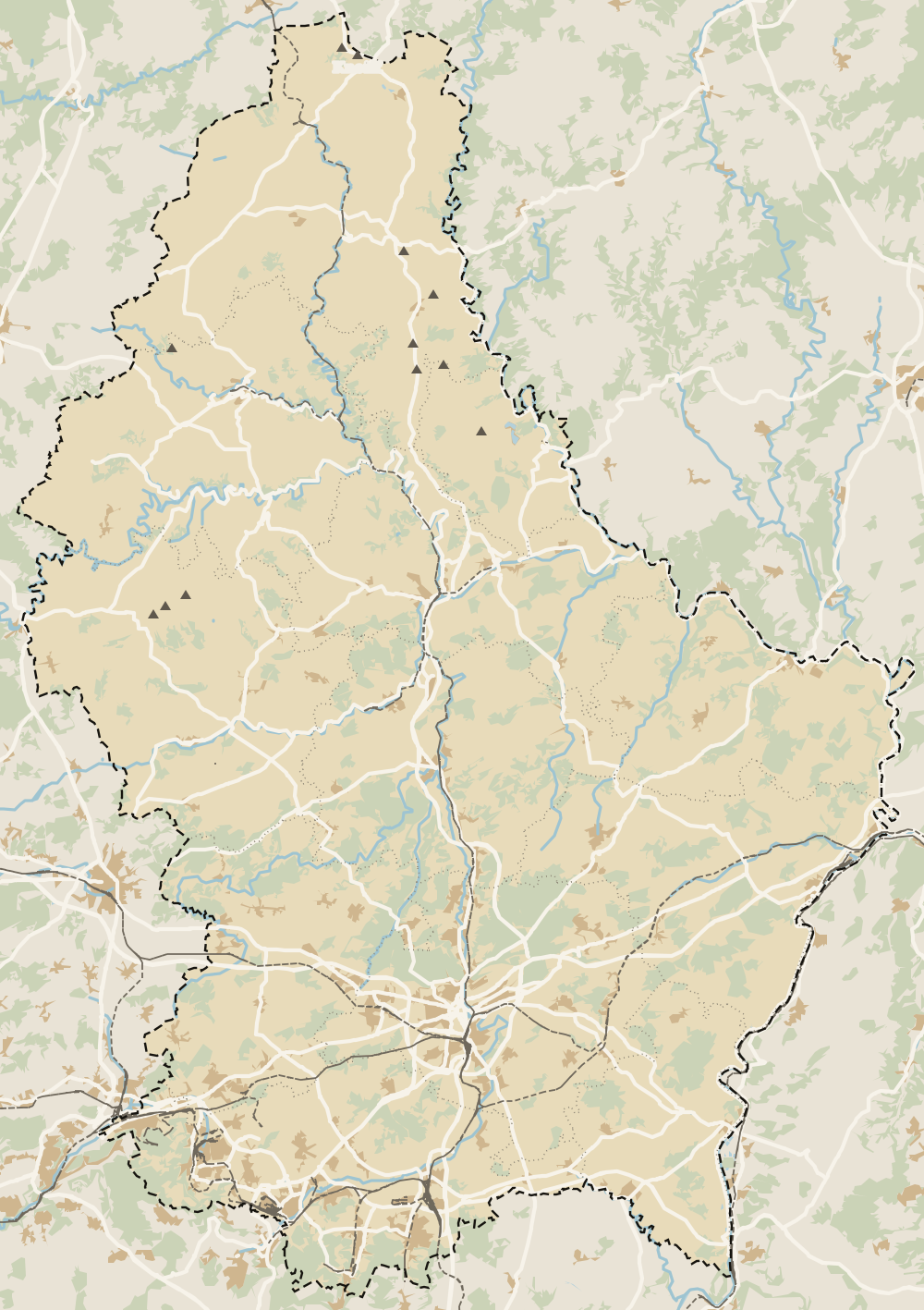 1Ville Haute 2Luxembourg City 3Grund 4Pfaffenthal 5Clausen 6Kirchberg 7Gare 8Hamm 9Luxembourg fortress 10Limpertsberg 11Pulvermühl 12Bonnevoie 13Hollerich 14Gasperich 15Belair 16Merl 17Cents 18Neudorf 19Weimerskirch 20Beggen 21Eich 22Dommeldange 23Mühlenbach 24Pétrusse Valley 25Rollingergrund 26Cessange 27Rham Plateau 28Tram and Bus Museum