Canton of Redange, merged in 2023
Groussbus-Wal, Luxembourg's newest commune
Groussbus-Wal is the commune formed on 1 September 2023 by merging Grosbous and Wahl, in the canton of Redange. It had 2,390 residents on 1 January 2026, spread over ten localities. The place to visit is Rindschleiden, Luxembourg's smallest village, with a church covered in 15th and 16th-century frescoes and a rural museum.
In 30 seconds
Full read: 3 min
- Groussbus-Wal was created on 1 September 2023 by merging Grosbous and Wahl.
- It had 2,390 residents on 1 January 2026 in ten localities in the canton of Redange.
- Rindschleiden, the smallest village in the country, has a church with 170 m² of frescoes.
- The Thillenvogtei rural museum costs €5 and mostly works with groups.
I'd come for Rindschleiden and nothing else, and that's plenty. A church with 170 m² of wall paintings, a farm museum and a short woodland path in a village with no residents is an hour well spent if you're driving west anyway.

Before you go
What I would keep in mind
-
01 Most beautiful
Medieval frescoes in Rindschleiden
St Willibrord's church holds more than 170 m² of 15th and 16th-century wall paintings, rediscovered in 1952. It's a national monument and free to visit; in late September 2026 it opened from 8:00 to 19:00.
-
02 My tip
The meditation path starts behind the church
The Randschleider Pad is 1.5 km long with 12 stations. It starts at the information board behind the church and ends with the village silhouetted across a pond.
-
03 To save money
A €5 farm museum
The Thillenvogtei rural museum in Rindschleiden charges €5 per person, according to visitluxembourg. Its hands-on sessions, from threshing to baking bread, are booked by groups.
-
04 Most beautiful
A fairy-tale castle on Grosbous land
Turelbaach Castle, one man's lifetime project, stands on Grosbous land even though the neighbouring commune owns it. You can only see it from outside.
Mertzig
Groussbus-Wal is the youngest commune in Luxembourg. In February 2023 the Ministry of the Interior announced that Grosbous and Wahl, along with Bous and Waldbredimus, would merge on 1 September that year, leaving Luxembourg with exactly 100 communes, a number not seen since at least 1840, according to the announcement. The seat went to Grosbous. STATEC counted 2,390 residents on 1 January 2026.
The name causes some confusion. STATEC and the national register use Groussbus-Wal, the Luxembourgish spelling, while the commune’s website also uses Grosbous-Wahl. I go with the first because it’s the one in the official statistics, but expect to see both on signs.
Ten villages on the western plateau
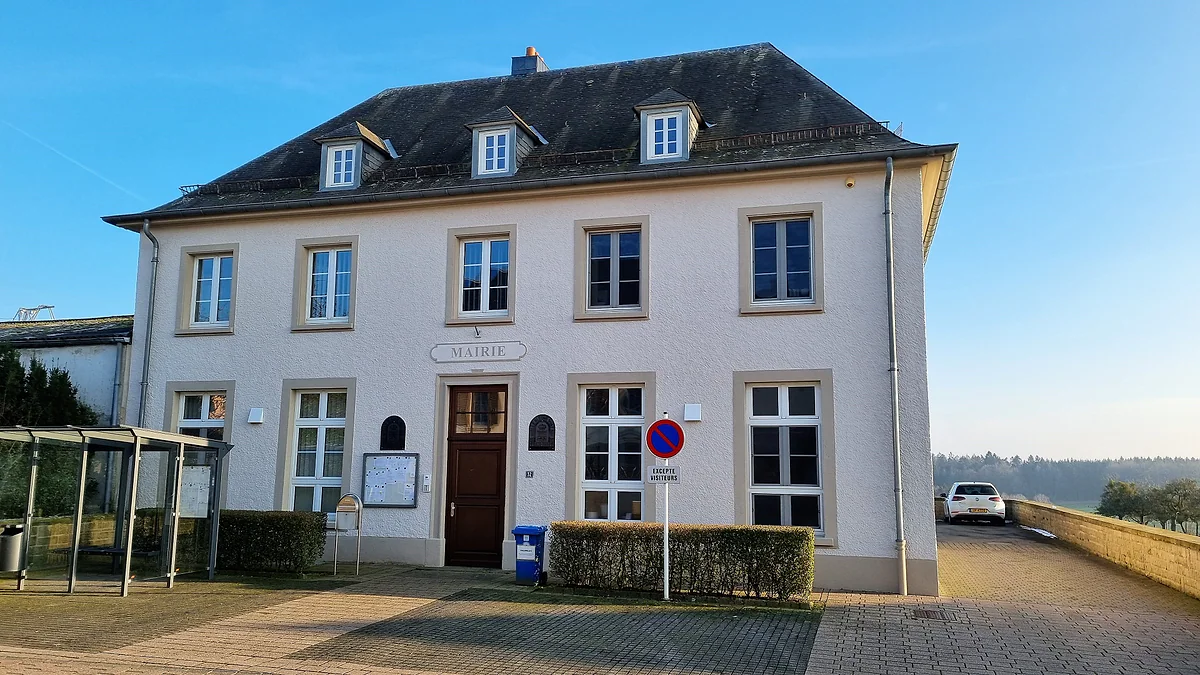
The commune has ten localities and the council website lists the altitude of each. Grosbous, the main village, sits at 347 metres where the N12 meets the N21, and it’s mostly somewhere you pass through. Grevels climbs to 530, Heispelt to 503 and Lehrhof to 507. Wahl, the other half of the name, is at 459 alongside Redingshof, and the header photo shows its old town hall.
This is open, rolling farmland with whitewashed farmhouses like the one pictured in Grosbous. Don’t expect a historic centre or a high street. What’s worth your time is all in one spot.
Rindschleiden, the village with no residents
visitluxembourg calls Rindschleiden the smallest village in Luxembourg and adds that nobody lives there, at least no people, since at night there are only cats, pigs and hens. From the car park you can take in the whole place at a glance, the church, the museum, a bistro and a small park with apple trees. The commune’s website notes it was an independent commune up to 1823, and the tourist board says it was built on an old Celtic place of worship.
I like it precisely because there’s nothing else around. You park, and within an hour you’ve seen an exceptional church and walked through the woods. Coming from Britain, this is the sort of stop that justifies a hire car, since you’d struggle to build it into a day on public transport, and it pairs naturally with other villages in the west of the country.
If you are staying the night, see the best hotel deals in Diekirch for your dates: the well-placed rooms go fast.
The St Willibrord frescoes
St Willibrord’s church is the reason to make the trip. visitluxembourg explains that it began in the 10th century as a chapel of 5 by 10 metres and was enlarged several times from 1535, which is why the styles are mixed. Its 15th and 16th-century wall paintings cover more than 170 m² and weren’t rediscovered until 1952. Some scenes are damaged, but most are still legible, and they were painted so that people who couldn’t read could follow the Bible stories. It’s a national monument.
A grille set into the floor between nave and choir shows the foundations of the first chapel. Outside is St Willibrord’s spring, recorded as early as 1590, where on Whit Sunday the priests of Arsdorf, Buschrodt, Rambrouch, Rindschleiden and Wahl hold an open-air service. In the week of 29 September 2026 the church opened from 8:00 to 19:00, and in winter it closes at dusk, around 17:00.
Farm museum and meditation path
Next to the church is the Thillenvogtei, a living rural museum. visitluxembourg says groups can thresh wheat, dig potatoes, bake bread or sit at the desks of an old schoolroom, and individual entry is €5. If you turn up on your own, expect to see the building rather than the workshops.
Behind the church starts the Randschleider Pad, a 1.5 km meditation path with 12 stations that goes into a fir wood and comes back past a pond with the village beyond. For longer walks, the commune marks routes with each village’s initial (W for Wahl, G for Grevels, B for Buschrodt), and the Grosbous circular walk covers 8.55 km with 177 metres of climbing.
If you are staying the night, see the best hotel deals in Diekirch for your dates: the well-placed rooms go fast.
Fitting it into a trip
Groussbus-Wal belongs to Visit Guttland, one of its 27 communes, and lies east of Rambrouch, home to the Haut-Martelange slate museum. I’d combine the two in a morning’s drive. One odd detail to finish the loop, Turelbaach Castle, run by neighbouring Mertzig, actually stands on Grosbous land near Dellen. For the wider picture, see the guide to the Guttland.
So you do not lose the morning at the ticket office, browse tickets and tours in Diekirch on GetYourGuide.
If you would rather go at your own pace, see the car hire deals in Luxembourg: the earlier you book, the more cars are left to choose from.
Before you fix your dates, compare tickets to Luxembourg: the same journey can cost very different amounts from one day to the next.
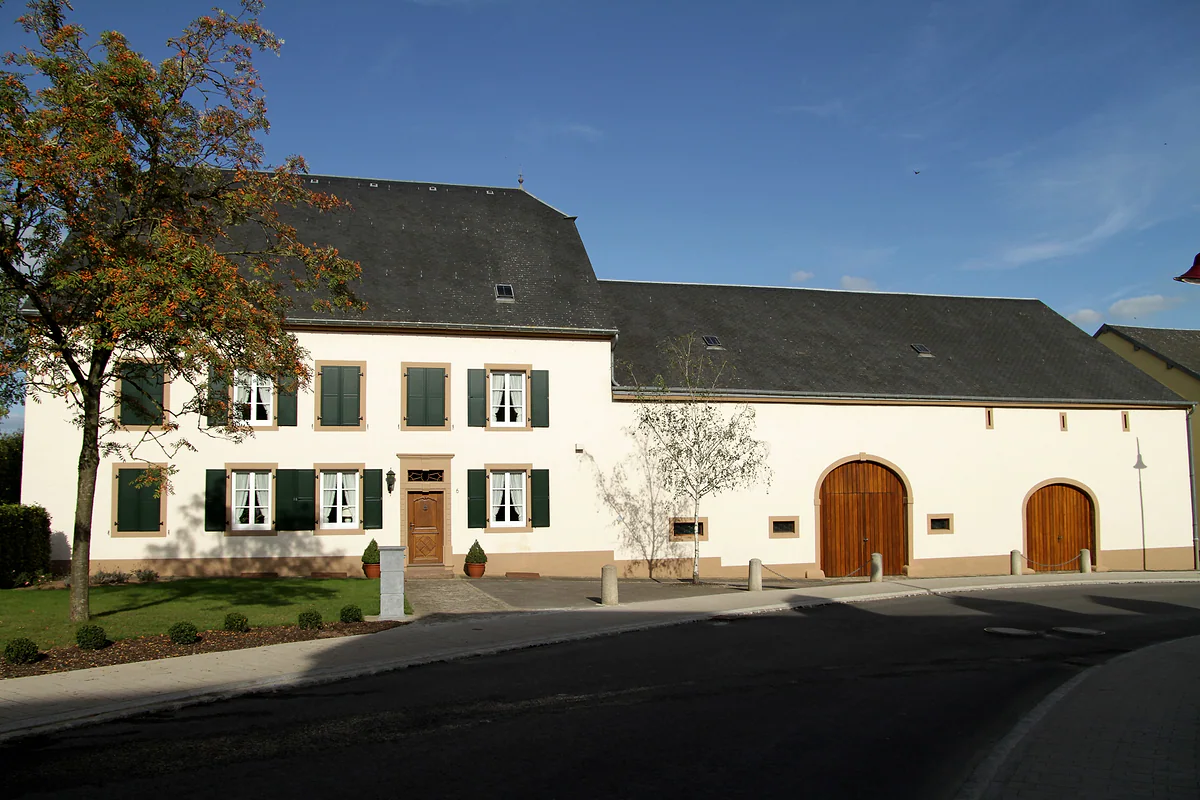
A traditional farmhouse in Grosbous, whitewashed with green shutters and two arched wooden barn doors
The villages of Groussbus-Wal by altitude
| Village | Altitude | Note |
|---|---|---|
| Grosbous | 347 m | Main village, on the N12 and N21 |
| Grevels | 530 m | Highest on the list |
| Heispelt | 503 m | Start of the GW-1 walk |
| Wahl | 459 m | With Redingshof |
| Rindschleiden | 473 m | A commune in its own right until 1823 |
| Buschrodt | 339 m | Lowest |
Commune website (g-w.lu). The other localities are Kuborn (481 m), Lehrhof (507 m), Dellen (472 m) and Brattert (492 m).
Groussbus-Wal in figures
| Figure | Value | Source |
|---|---|---|
| Residents on 1 Jan 2026 | 2,390 | STATEC |
| Residents on 1 Jan 2025 | 2,352 | STATEC |
| Official localities | 10 | CACLR |
| Approximate area | 39.85 km² | Own calculation from STATEC data |
| Merger date | 1 Sep 2023 | Ministry of the Interior |
The area comes from dividing population by the density STATEC publishes, so treat it as approximate.
Test yourself
True or false?
0/3 Pick before you peek.
-
Groussbus-Wal has existed as a commune since 1 September 2023.
See the answer
True. That day Grosbous and Wahl merged, as did Bous and Waldbredimus, leaving Luxembourg with 100 communes.
-
Rindschleiden has always been a hamlet of Wahl.
See the answer
False. According to the commune's website, Rindschleiden was a commune in its own right until 1823.
-
The Rindschleiden frescoes have been on view for centuries.
See the answer
False. They were hidden until 1952, when they were rediscovered, uncovered and restored.
- Residents on 1 January 2026
- 2,390
- Official localities
- 10
- Frescoes in Rindschleiden church
- 170 m²
- Altitude of Grevels
- 530 m
Map
Where Groussbus-Wal is
The thick dashed line is the border with Belgium, France and Germany, and the fine ones divide the twelve cantons. The Éislek lies to the north and the Moselle to the east. Every number opens its guide.
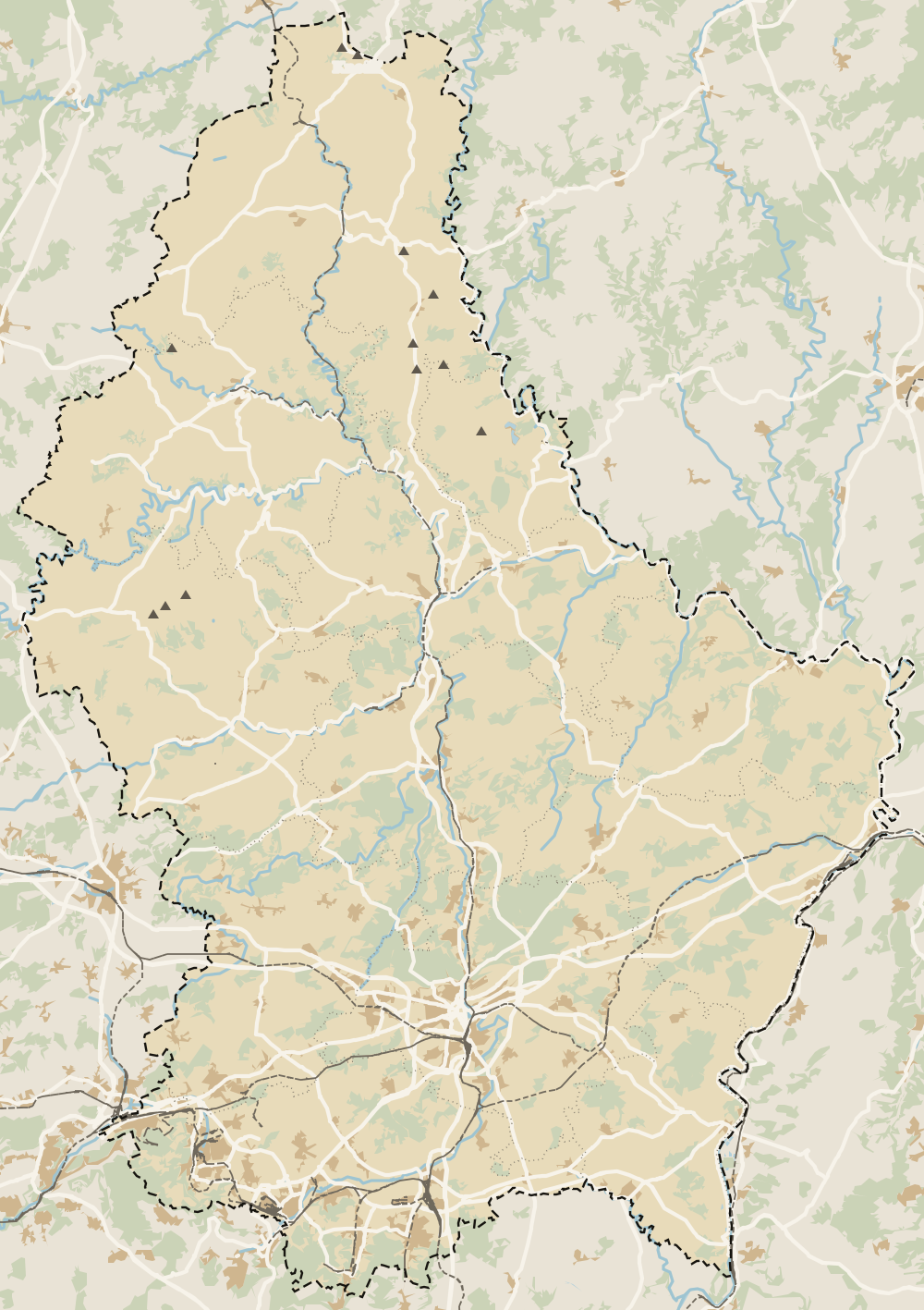 1Valley of the Seven Castles 2Guttland 3Garnich 4Mersch 5Kehlen 6Lintgen 7Kopstal 8Lorentzweiler 9Bissen 10Koerich 11Steinfort 12Habscht 13Helperknapp 14Mamer 15Redange 16Beckerich 17Ell 18Useldange 19Saeul 20Vichten 21Préizerdaul 22Groussbus-Wal 23Rambrouch 24Mertzig 25Sandweiler 26Walferdange 27Steinsel 28Niederanven 29Schuttrange 30Contern 31Weiler-la-Tour
 Map data © OpenStreetMap contributors (ODbL)
- 1Valley of the Seven CastlesEisch valley, Mersch to Koerich
- 2GuttlandTourist region of the centre and west
- 3GarnichCanton of Capellen, Guttland region
- 4MerschCanton of Mersch, Guttland
- 5KehlenCanton of Capellen, Guttland region
- 6LintgenCanton of Mersch, 3 localities
- 7KopstalCanton of Capellen, Guttland region
- 8LorentzweilerCanton of Mersch, 7 localities
- 9BissenCanton of Mersch, 2 localities
- 10KoerichCanton of Capellen, Guttland region
- 11SteinfortCanton of Capellen, Guttland region
- 12HabschtCanton of Capellen, Eisch valley
- 13HelperknappCanton of Mersch, Guttland region
- 14MamerCommune in the canton of Capellen, Guttland region
- 15RedangeMain town of the canton of Redange
- 16BeckerichCanton of Redange, 8 localities
- 17EllCanton of Redange, 5 localities
- 18UseldangeCanton of Redange, 4 localities
- 19SaeulCanton of Redange, 5 localities
- 20VichtenCanton of Redange, 2 localities
- 21PréizerdaulCanton of Redange, 4 localities
- 22Groussbus-WalCanton of Redange, merged in 2023
- 23RambrouchCanton of Redange, 17 localities
- 24MertzigCanton of Diekirch, a commune since 1875
- 25SandweilerMunicipality in the canton of Luxembourg, Guttland
- 26WalferdangeMunicipality in the canton of Luxembourg, Guttland
- 27SteinselMunicipality in the canton of Luxembourg, Guttland
- 28NiederanvenMunicipality in the canton of Luxembourg, Guttland
- 29SchuttrangeMunicipality in the canton of Luxembourg, Guttland
- 30ConternMunicipality in the canton of Luxembourg, Guttland
- 31Weiler-la-TourMunicipality in the canton of Luxembourg, Guttland
What to see
What to see in Groussbus-Wal
0 of 425 Luxembourg guides
Your next stamp
- Rindschleiden
- Bous-Waldbredimus
- Stadtbredimus
- Rambrouch
- Reckange-sur-Mess
- Feulen
- Kiischpelt
- Bourscheid
- A Possen Museum
- American Cemetery
- Ansembourg
- Ansembourg Castles
- Asselborn
- Bascharage
- Beaufort castles
- Belval
- Belval blast furnaces
- Berg Castle
- Bernard-Massard cellars
- Bourglinster Castle
- Bourscheid Castle
- Brandenbourg
- Brandenbourg Castle
- Caves St Martin
- Christmas
- Clervaux Castle
- Echternach
- Echternach Abbey
- Ehnen
- Ehnen Wine Museum
- Esch-sur-Alzette
- Esch-sur-Sûre Castle
- European Museum Schengen
- Fond-de-Gras
- General Patton Museum
- German war cemetery
- Haff Réimech
- Hohllay
- Hollenfels Castle
- Hosingen
- Kautenbach
- Kneiff
- Koerich Castle
- Larochette Castle
- Lasauvage
- Mersch Castle
- Military History Museum
- Moersdorf
- Mondorf Domaine Thermal
- Munsbach Castle
- National Mining Museum
- Parc Merveilleux
- Park Sënnesräich
- Places to visit
- Remich
- Schiessentümpel
- Septfontaines Castle
- Slate Museum
- Stolzembourg
- Tudor Museum
- Useldange Castle
- Valley of the Seven Castles
- Vianden
- Vianden Castle
- Ville Haute
- Wasserbillig Aquarium
- Weiswampach lakes
- Wiltz Castle
- Ahn
- Berdorf
- Bourscheid-Plage
- Butterfly garden
- Clervaux
- Differdange
- Echternach lake
- Grevenmacher
- Heringer Millen
- Hollenfels
- Luxembourg City
- Luxembourg Science Center
- Meysembourg Castle
- Mullerthal
- National Day
- National Resistance Museum
- Perekop
- Remerschen
- Schoenfels Castle
- The Family of Man
- Things to do
- Upper Sûre Lake
- Vianden chairlift
- Wasserbillig
- Clervaux Abbey
- Echternach Roman villa
- Éislek
- Insenborn
- Kallektuffquell
- Machtum
- Most beautiful places
- Our Nature Park
- Pétange
- Pettingen Castle
- Schueberfouer
- Schwebsingen
- Victor Hugo House
- Waldbillig
- Dudelange
- Kuelscheier
- Lultzhausen
- Moselle Valley
- Octave
- Prettiest villages
- Sanem
- Schengen
- Wellenstein
- Wiltz
- Wolfsschlucht
- Beaufort
- Bech-Kleinmacher
- Éimaischen
- Gaalgebierg
- Guttland
- Marnach
- Mondorf-les-Bains
- Putscheid
- Schifflange
- UNESCO World Heritage
- Carnival
- Consdorf
- Ellergronn
- Käerjeng
- Kayl
- Map
- Minett
- Munshausen
- Tandel
- Bech
- Buergbrennen
- Esch-sur-Sûre
- Rumelange
- Where is Luxembourg
- Is it a country?
- Lac de la Haute-Sûre (commune)
- Rosport-Mompach
- Wormeldange
- Larochette
- Mondercange
- Regions
- Bettembourg
- Bock Casemates
- Cantons
- Dancing procession
- Diekirch
- Fischbach
- Garnich
- Mersch
- Moselle wine route
- Ettelbruck
- Grund
- Heffingen
- Kehlen
- Lintgen
- Moselle river cruises
- Pétrusse Casemates
- Towns and villages
- Chemin de la Corniche
- Erpeldange-sur-Sûre
- Junglinster
- Kopstal
- Lorentzweiler
- Nommern
- Pfaffenthal
- Population
- Bissen
- Clausen
- Grand Ducal Palace
- Koerich
- Schieren
- Size
- Vallée de l'Ernz
- Kirchberg
- Languages
- Notre-Dame Cathedral
- Reisdorf
- Steinfort
- Bettendorf
- Habscht
- St Michael's Church
- Helperknapp
- Luxembourgish
- Place Guillaume II
- Name
- Place d'Armes
- History
- Place de la Constitution
- Grand Duke
- Colmar-Berg
- Flaxweiler
- Gare
- Hamm
- Kirchberg funicular
- Luxembourg fortress
- Mamer
- Mertert
- Minett Trail
- Mullerthal Trail
- Neumünster Abbey
- Parc Hosingen
- Pfaffenthal lift
- Political system
- Redange
- The Passerelle
- Wine festivals
- Winseler
- Beckerich
- Biwer
- EU institutions
- Goesdorf
- Limpertsberg
- Mudam
- Natur Musée
- Pulvermühl
- Troisvierges
- Wenzel walk
- Bonnevoie
- Ell
- Flag
- Manternach
- Philharmonie
- Vauban circuit
- Weiswampach
- Betzdorf
- Boulaide
- Dräi Eechelen Museum
- Facts
- Hollerich
- Lenningen
- Useldange
- Wincrange
- Dalheim
- Gasperich
- Public holidays
- Red Bridge
- Saeul
- Belair
- Second World War
- Vichten
- Battle of the Bulge
- Merl
- Préizerdaul
- Cents
- EU and Schengen
- Entry requirements
- Neudorf
- Currency and payments
- Mertzig
- Weimerskirch
- Adolphe Bridge
- Beggen
- Escapardenne
- How to get there
- International March of Diekirch
- MNHA (National Museum)
- Rock climbing
- Sandweiler
- Bridges
- Eich
- Flights
- Golf
- Hesperange
- Lëtzebuerg City Museum
- Canoeing and kayaking
- Dommeldange
- Luxembourg airport
- Strassen
- Villa Vauban
- Airport to city centre
- Bertrange
- Casino Luxembourg
- Mühlenbach
- Swimming pools
- From Brussels
- Pétrusse Valley
- Rollingergrund
- Walferdange
- Cessange
- Day trip from Brussels
- Municipal Park
- Steinsel
- Free walking tours
- From Paris
- Niederanven
- From Frankfurt
- Schuttrange
- Sightseeing train and bus
- By train
- Contern
- By coach
- Weiler-la-Tour
- Driving
- Luxembourg in one day
- Pretzel Sunday
- Rham Plateau
- Tour de Luxembourg
- Candlemas (Liichtmëssdag)
- Car hire
- Luxembourg in two days
- Saint-Esprit Plateau
- Luxembourg in three days
- Melusina statue
- Parking
- St Nicholas Day (Kleeschen)
- Fête de la Musique
- Luxembourg in four days
- Museums in Luxembourg
- Petrol
- Place de Clairefontaine
- A week in Luxembourg
- Getting around
- Luxembourg Marathon
- Tram and Bus Museum
- Free public transport
- Parks in Luxembourg City
- Road trip
- Belgium and Luxembourg
- Tram
- Buses
- Viewpoints
- Trains
- Luxembourg station
- Cycling
- LuxembourgPass
- Prices and budget
- On a budget
- Free things to do
- Mobile and roaming
- Healthcare
- Safety
- Scams
- Tourist information
- Packing list
- Swimming lakes
- With a dog
- Markets
- Tipping
- Shopping
- What to buy
- Shopping centres
- With kids
- For couples
- Playgrounds
- Adventure parks
- Nightlife
- Castles
- Theatres and concert venues
- Leudelange
- Nature parks
- Where to stay
- City-centre hotels
- Hiking
- Nature reserves
- Hotels near the station
- Roeser
- Frisange
- Hotels in Kirchberg
- Airport hotels
- Dippach
- Hotels in Vianden
- Hotels in Echternach
- Hotels in Clervaux
- Hotels in Mondorf-les-Bains
- Hotels in Esch-sur-Alzette
- Hotels on the Moselle
- Mullerthal hotels
- Upper Sûre lake hotels
- Hotels in Diekirch and Ettelbruck
- Cheap hotels
- Luxury hotels
- Boutique hotels
- Spa hotels
- Family hotels
- Apartments
- Weather
- Youth hostels
- Best time to visit
- Campsites
- Holiday cottages
- In winter
- Castle hotels
- In spring
- Day trips
- In summer
- Around Luxembourg
- In autumn
- Ice skating
- Trier day trip
- Metz day trip
- Arlon day trip
- In January
- In February
- In March
- In April
- In May
- In June
- In July
- In August
- In September
- Food
- In October
- In November
- Where to eat
- In December
- Michelin restaurants
- Cheap eats
- Judd mat Gaardebounen
- Bouneschlupp
- Gromperekichelcher
- Kniddelen
- Quetschentaart
- Rieslingspaschtéit
- Events
- Wine
- Crémant
- Beer
Frequently asked questions
What is Groussbus-Wal?
A commune in the canton of Redange created on 1 September 2023 by merging Grosbous and Wahl. Together with Bous-Waldbredimus, that merger brought Luxembourg down to 100 communes. The seat is in Grosbous.
Is it Groussbus-Wal or Grosbous-Wahl?
Both are in use. STATEC and the national register use Groussbus-Wal, the Luxembourgish form. The commune's own website and Visit Guttland also write Grosbous-Wahl.
What is the smallest village in Luxembourg?
Rindschleiden, in Groussbus-Wal. visitluxembourg calls it the smallest village in the country and says nobody lives there, at least no humans. It has a church, a museum, a bistro and a little park.
What is there to see in Groussbus-Wal?
St Willibrord's church in Rindschleiden with its 15th and 16th-century frescoes, the Thillenvogtei rural museum and the 1.5 km meditation path. For a longer walk, the Grosbous circular route is 8.55 km.
Where should I stay near Groussbus-Wal?
It isn't a place to stay. Diekirch or Ettelbruck, to the north-east, have trains and hotels, and Rindschleiden is an easy drive from either.
By
Tourism graduate with a master’s in Tourism Management and Planning from the University of Málaga, who has travelled across Europe. He writes every guide from official sources and his own judgement.
Published on . Facts checked on .
Sources
Some links in this guide are affiliate links: if you book through them, the site earns a commission at no extra cost to you. Affiliate disclosure
Photos: GilPe (CC BY-SA 4.0); Claude Schomer (CC BY-SA 3.0 lu), via Wikimedia Commons.