The last grand duchy in the world
Is Luxembourg a country or a city?
Yes, Luxembourg is a country. It's an independent state, the Grand Duchy of Luxembourg, a parliamentary democracy in the form of a constitutional monarchy, with Grand Duke Guillaume as head of state since 3 October 2025. Its capital shares its name, Luxembourg City, which is where most of the confusion starts.
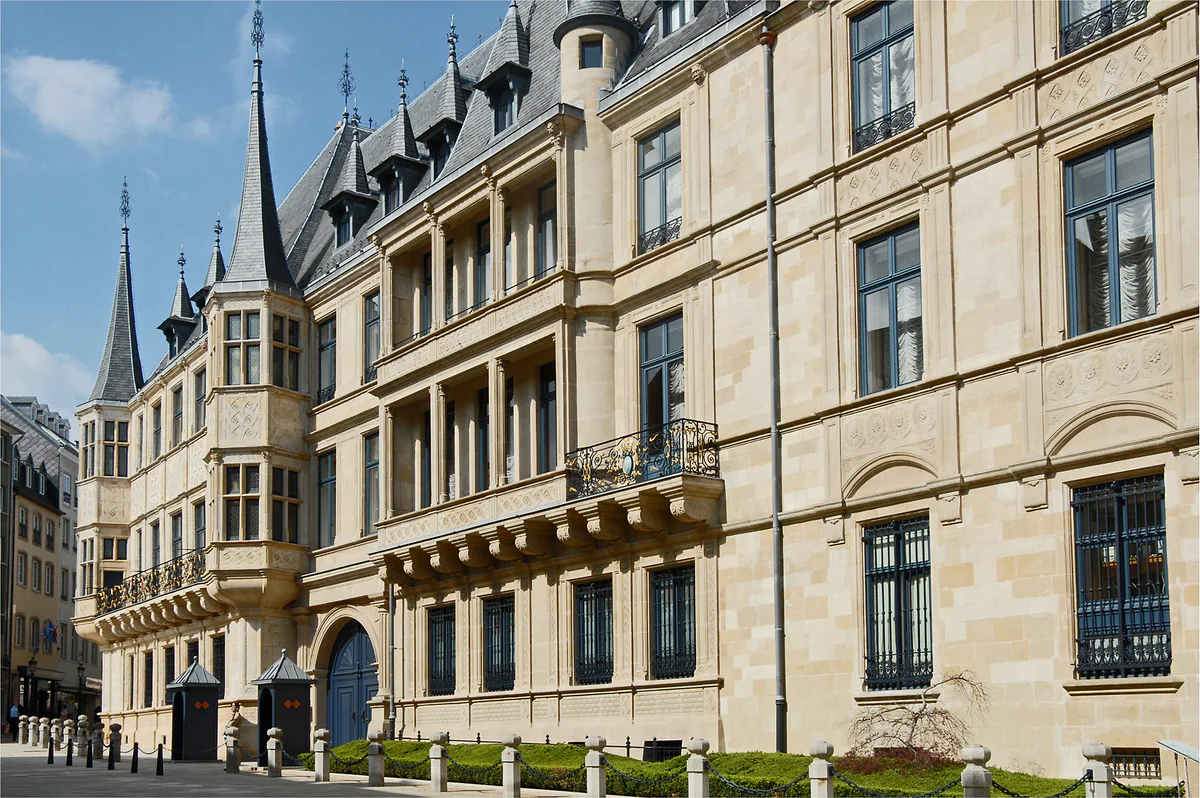
If you want to understand the place, I'd book the summer guided tour of the Grand Ducal Palace. It's the head of state's official seat, right in the old town next to the Chamber of Deputies, and it explains how a grand duchy works better than any book.

Before you go
What I would keep in mind
-
01 My tip
The country and the capital share a name
The state is the Grand Duchy of Luxembourg and its capital is Luxembourg City, with 137,700 people in 2026. To keep it clear, in this guide I say Luxembourg for the country and Luxembourg City for the capital.
Luxembourg City -
02 Worth the splurge
Inside the Grand Duke's palace
The Grand Ducal Palace opens to the public for a few weeks in summer, on 75-minute guided tours at €18 an adult. In 2026 that ran from 18 July to 30 August and sold out; the 2027 dates haven't been published.
Grand Ducal Palace -
03 Most beautiful
Two treaties signed in London
The Treaty of London of 1839 fixed Luxembourg's present borders, and the second, in 1867, had its fortress pulled down and declared it neutral. During the Second World War its government went into exile in London too.
history of Luxembourg
What I would book
Few questions about Luxembourg come up as often as this one, and fair enough. The country is so small, and its capital so identically named, that plenty of people assume it’s a Belgian, German or French city. It isn’t. Luxembourg is an independent state with its own laws, head of state and government, and it’s also the only grand duchy left anywhere. That and other oddities are in my facts about Luxembourg.
A grand duchy, and the only one in the world
The official name is Grand-Duché de Luxembourg, the Grand Duchy of Luxembourg in English. The government’s portal puts it with some pride, saying there is only one grand duchy in the world. In practice it’s a parliamentary democracy in the form of a constitutional monarchy, as article 2 of the constitution says, and the Grand Duke is head of state under article 44. Every act he takes needs a minister’s countersignature; he promulgates laws and has to stay politically neutral.
Since 3 October 2025 that role has belonged to Grand Duke Guillaume, who was sworn in after his father Henri abdicated following 25 years on the throne. His heir is Prince Charles, born in 2020. Guillaume, incidentally, trained at Sandhurst in 2001-2002. The family, from the Grand Duke to his heir, has its own page, Grand Duke of Luxembourg.
Who actually runs the country?
The government. It’s led by Luc Frieden of the CSV, in coalition with the DP since 17 November 2023, following the election of 8 October that year. The Chamber of Deputies has 60 seats, elected every five years, and voting is compulsory. In 2023 almost 90% of the electorate turned out, according to the official portal. The constitution was thoroughly revised and the new version has been in force since 1 July 2023. There’s also a Council of State, created in 1856, whose 21 members must give an opinion on every bill. The detail is in Luxembourg government.
If you are staying the night, see the best hotel deals in Luxembourg for your dates: the well-placed rooms go fast.
How it became a country
The story begins in 963, when Count Sigefroi acquired the Bock rock and built a small castle on it, the seed of the city. The country’s name comes from that castle too, as I explain in Luxembourg name meaning. For centuries the territory changed hands. There were the Habsburgs, including a long spell when Luxembourg was a piece of Spanish Habsburg power facing France, until Louis XIV took the city in 1684 and Vauban rebuilt the fortress. After that came the Austrian Habsburgs and revolutionary France.
The modern country was born in the 19th century, and London keeps turning up. The Congress of Vienna made it a grand duchy in 1815, but tied it to the King of the Netherlands and put a Prussian garrison in the fortress. The Treaty of London of 1839 split it in two, gave the western part to Belgium and fixed the borders it still has. A second Treaty of London in 1867 had the fortress dismantled and declared the country neutral in perpetuity. And in 1890, when the last King of the Netherlands who was also grand duke died, Luxembourg got its own dynasty, the Nassau-Weilburgs. In the 20th century the German invasion of 10 May 1940 sent Grand Duchess Charlotte and the government into exile, with spells in Portugal, Canada and London, until the US Army liberated the country on 10 September 1944. The full timeline is in history of Luxembourg.
Not part of Belgium, France or Germany
The Belgian mix-up has a reason. Belgium has a province called Luxembourg, which is precisely the part that was split off in 1839. Ties with Belgium run deep, too. The Belgium-Luxembourg Economic Union dates from 1921, and in 1944, with the government in exile in London, the country signed the customs convention that became Benelux. It shares borders, some history and two of its languages with Germany and France. But it’s a separate state, a founding member of the UN in 1945 and of the European Communities, and a member of NATO, the OECD and the Council of Europe.
If you are staying the night, see the best hotel deals in Luxembourg for your dates: the well-placed rooms go fast.
A small country at the centre of the EU
Its international weight is out of proportion to its size. Luxembourg has been in the European Union since 1 January 1958, the euro since 1999 and Schengen since 1995, and its capital hosts the EU Court of Justice and the European Investment Bank. What that means for a British visitor, from passport rules to roaming, is in is Luxembourg in the EU.
So you do not lose the morning at the ticket office, browse tickets and tours in Luxembourg on GetYourGuide.
If you would rather go at your own pace, see the car hire deals in Luxembourg: the earlier you book, the more cars are left to choose from.
Before you fix your dates, compare tickets to Luxembourg: the same journey can cost very different amounts from one day to the next.
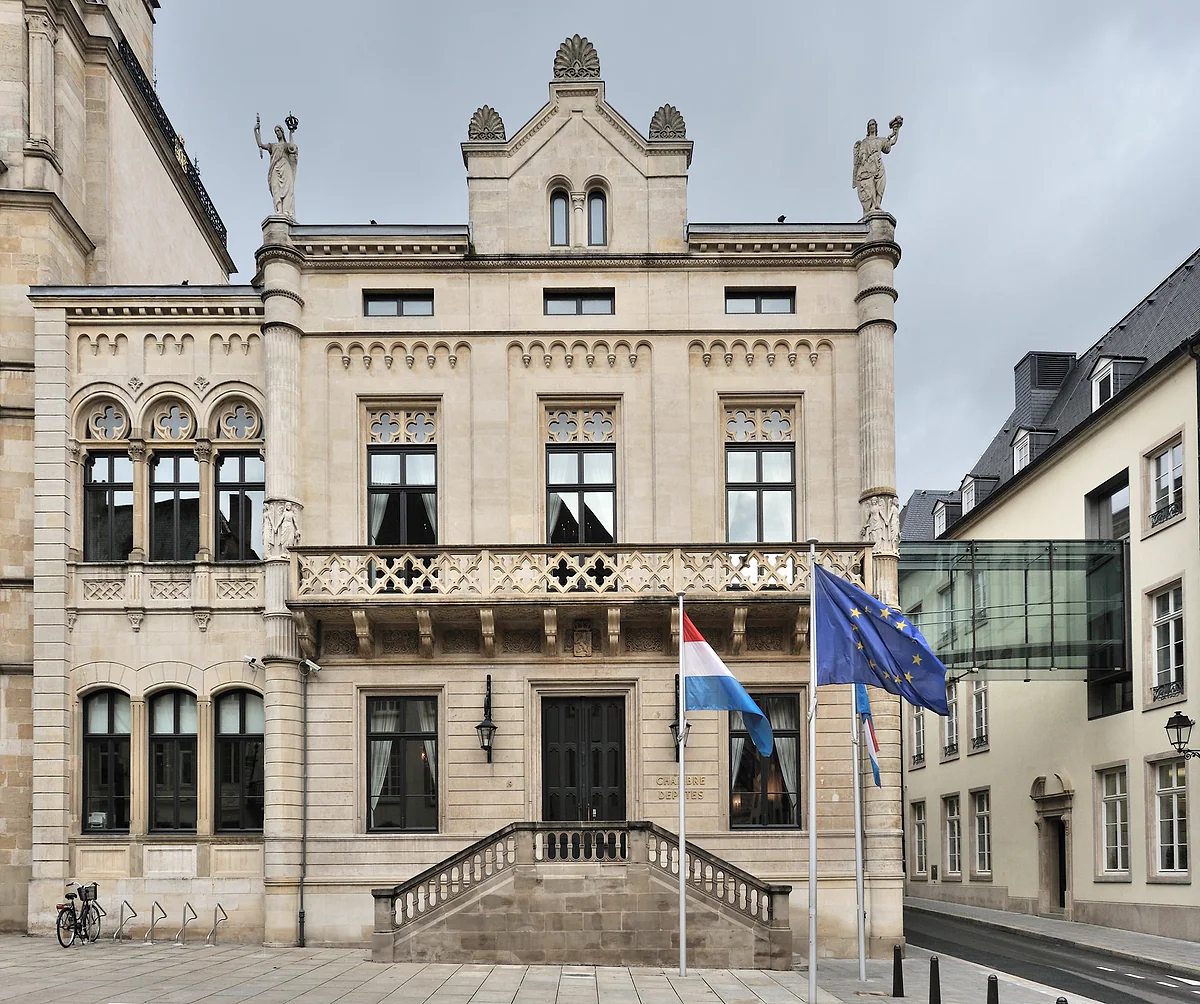
The Hôtel de la Chambre des Députés, seat of Luxembourg's Parliament, with a neo-Renaissance façade and flags
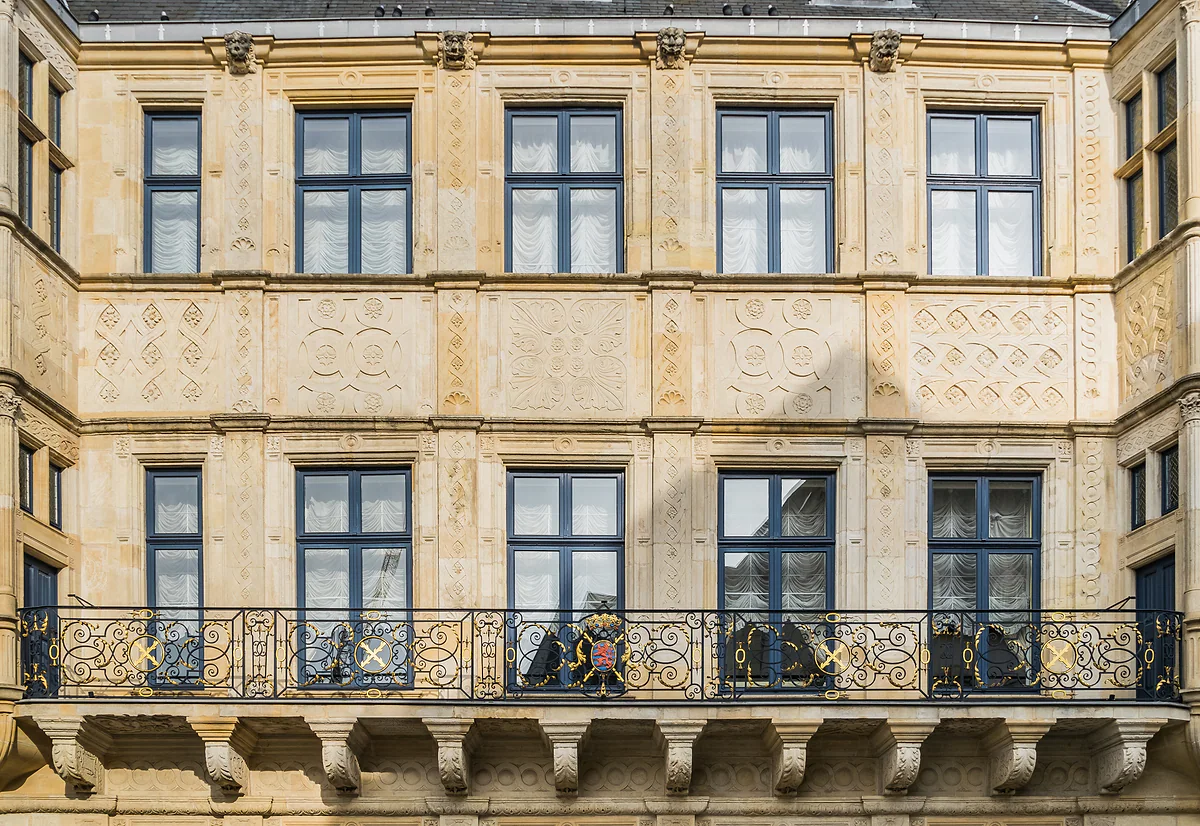
Detail of the Grand Ducal Palace façade, with geometric reliefs in the stone, windows and a wrought-iron balcony
Luxembourg as a state, in facts
| Fact | Detail |
|---|---|
| Official name | Grand-Duché de Luxembourg |
| System | Parliamentary democracy, constitutional monarchy |
| Head of state | Grand Duke Guillaume, since 3-10-2025 |
| Government | CSV-DP coalition led by Luc Frieden, since 17-11-2023 |
| Parliament | Chamber of Deputies, 60 seats, compulsory voting |
| Next general election | October 2028 |
| Memberships | UN (founder), EU (founder), NATO, Benelux, Council of Europe, OECD |
How it became a country
| Year | What happened |
|---|---|
| 963 | Count Sigefroi acquires the Bock rock, where the city began |
| 1815 | The Congress of Vienna creates the grand duchy, tied to the King of the Netherlands |
| 1839 | Treaty of London; the western part goes to Belgium and today's borders are set |
| 1867 | Second Treaty of London; the fortress is dismantled and neutrality declared |
| 1890 | The country gets its own dynasty, the Nassau-Weilburgs |
| 1958 | Founding member of what is now the EU |
Figures from luxembourg.public.lu, monarchie.lu and gouvernement.lu, checked on 29-09-2026.
Test yourself
True or false?
0/4 Pick before you peek.
-
Luxembourg is a province of Belgium.
See the answer
False. It's an independent country. Belgium has a province called Luxembourg because the 1839 Treaty of London gave it the western part of the old territory.
-
Luxembourg's Grand Duke trained at Sandhurst.
See the answer
True. According to the Cour grand-ducale, Guillaume attended the Royal Military Academy Sandhurst in 2001-2002. He speaks Luxembourgish, French, German, English and Spanish.
-
Luxembourg was a founding member of the United Nations.
See the answer
True. It signed the San Francisco Charter on 25 June 1945. It's also a founder of the EU, a member since 1 January 1958.
-
Voting in Luxembourg's general elections is optional.
See the answer
False. Voting is compulsory. Sixty deputies are elected for five years in four constituencies, and the next general election is due in October 2028.
0 of 425 Luxembourg guides
Your next stamp
- Grand Duke
- Political system
- Where is Luxembourg
- EU and Schengen
- Facts
- History
- Name
- A Possen Museum
- American Cemetery
- Ansembourg
- Ansembourg Castles
- Asselborn
- Bascharage
- Beaufort castles
- Belval
- Belval blast furnaces
- Berg Castle
- Bernard-Massard cellars
- Bourglinster Castle
- Bourscheid Castle
- Brandenbourg
- Brandenbourg Castle
- Caves St Martin
- Christmas
- Clervaux Castle
- Echternach
- Echternach Abbey
- Ehnen
- Ehnen Wine Museum
- Esch-sur-Alzette
- Esch-sur-Sûre Castle
- European Museum Schengen
- Fond-de-Gras
- General Patton Museum
- German war cemetery
- Haff Réimech
- Hohllay
- Hollenfels Castle
- Hosingen
- Kautenbach
- Kneiff
- Koerich Castle
- Larochette Castle
- Lasauvage
- Mersch Castle
- Military History Museum
- Moersdorf
- Mondorf Domaine Thermal
- Munsbach Castle
- National Mining Museum
- Parc Merveilleux
- Park Sënnesräich
- Places to visit
- Remich
- Rindschleiden
- Schiessentümpel
- Septfontaines Castle
- Slate Museum
- Stolzembourg
- Tudor Museum
- Useldange Castle
- Valley of the Seven Castles
- Vianden
- Vianden Castle
- Ville Haute
- Wasserbillig Aquarium
- Weiswampach lakes
- Wiltz Castle
- Ahn
- Berdorf
- Bourscheid-Plage
- Butterfly garden
- Clervaux
- Differdange
- Echternach lake
- Grevenmacher
- Heringer Millen
- Hollenfels
- Luxembourg City
- Luxembourg Science Center
- Meysembourg Castle
- Mullerthal
- National Day
- National Resistance Museum
- Perekop
- Remerschen
- Schoenfels Castle
- The Family of Man
- Things to do
- Upper Sûre Lake
- Vianden chairlift
- Wasserbillig
- Clervaux Abbey
- Echternach Roman villa
- Éislek
- Insenborn
- Kallektuffquell
- Machtum
- Most beautiful places
- Our Nature Park
- Pétange
- Pettingen Castle
- Schueberfouer
- Schwebsingen
- Victor Hugo House
- Waldbillig
- Dudelange
- Kuelscheier
- Lultzhausen
- Moselle Valley
- Octave
- Prettiest villages
- Sanem
- Schengen
- Wellenstein
- Wiltz
- Wolfsschlucht
- Beaufort
- Bech-Kleinmacher
- Éimaischen
- Gaalgebierg
- Guttland
- Marnach
- Mondorf-les-Bains
- Putscheid
- Schifflange
- UNESCO World Heritage
- Carnival
- Consdorf
- Ellergronn
- Käerjeng
- Kayl
- Map
- Minett
- Munshausen
- Tandel
- Bech
- Buergbrennen
- Esch-sur-Sûre
- Rumelange
- Lac de la Haute-Sûre (commune)
- Rosport-Mompach
- Wormeldange
- Larochette
- Mondercange
- Regions
- Bettembourg
- Bock Casemates
- Cantons
- Dancing procession
- Diekirch
- Fischbach
- Garnich
- Mersch
- Moselle wine route
- Ettelbruck
- Grund
- Heffingen
- Kehlen
- Lintgen
- Moselle river cruises
- Pétrusse Casemates
- Towns and villages
- Chemin de la Corniche
- Erpeldange-sur-Sûre
- Junglinster
- Kopstal
- Lorentzweiler
- Nommern
- Pfaffenthal
- Population
- Bissen
- Clausen
- Grand Ducal Palace
- Koerich
- Schieren
- Size
- Vallée de l'Ernz
- Feulen
- Kirchberg
- Languages
- Notre-Dame Cathedral
- Reisdorf
- Steinfort
- Bettendorf
- Habscht
- St Michael's Church
- Helperknapp
- Luxembourgish
- Place Guillaume II
- Place d'Armes
- Place de la Constitution
- Colmar-Berg
- Flaxweiler
- Gare
- Hamm
- Kirchberg funicular
- Luxembourg fortress
- Mamer
- Mertert
- Minett Trail
- Mullerthal Trail
- Neumünster Abbey
- Parc Hosingen
- Pfaffenthal lift
- Redange
- The Passerelle
- Wine festivals
- Winseler
- Beckerich
- Biwer
- EU institutions
- Goesdorf
- Limpertsberg
- Mudam
- Natur Musée
- Pulvermühl
- Stadtbredimus
- Troisvierges
- Wenzel walk
- Bonnevoie
- Bous-Waldbredimus
- Ell
- Flag
- Kiischpelt
- Manternach
- Philharmonie
- Vauban circuit
- Weiswampach
- Betzdorf
- Boulaide
- Dräi Eechelen Museum
- Hollerich
- Lenningen
- Useldange
- Wincrange
- Bourscheid
- Dalheim
- Gasperich
- Public holidays
- Red Bridge
- Saeul
- Belair
- Second World War
- Vichten
- Battle of the Bulge
- Merl
- Préizerdaul
- Cents
- Groussbus-Wal
- Entry requirements
- Neudorf
- Rambrouch
- Currency and payments
- Mertzig
- Weimerskirch
- Adolphe Bridge
- Beggen
- Escapardenne
- How to get there
- International March of Diekirch
- MNHA (National Museum)
- Rock climbing
- Sandweiler
- Bridges
- Eich
- Flights
- Golf
- Hesperange
- Lëtzebuerg City Museum
- Canoeing and kayaking
- Dommeldange
- Luxembourg airport
- Strassen
- Villa Vauban
- Airport to city centre
- Bertrange
- Casino Luxembourg
- Mühlenbach
- Swimming pools
- From Brussels
- Pétrusse Valley
- Rollingergrund
- Walferdange
- Cessange
- Day trip from Brussels
- Municipal Park
- Steinsel
- Free walking tours
- From Paris
- Niederanven
- From Frankfurt
- Schuttrange
- Sightseeing train and bus
- By train
- Contern
- By coach
- Weiler-la-Tour
- Driving
- Luxembourg in one day
- Pretzel Sunday
- Rham Plateau
- Tour de Luxembourg
- Candlemas (Liichtmëssdag)
- Car hire
- Luxembourg in two days
- Saint-Esprit Plateau
- Luxembourg in three days
- Melusina statue
- Parking
- St Nicholas Day (Kleeschen)
- Fête de la Musique
- Luxembourg in four days
- Museums in Luxembourg
- Petrol
- Place de Clairefontaine
- A week in Luxembourg
- Getting around
- Luxembourg Marathon
- Tram and Bus Museum
- Free public transport
- Parks in Luxembourg City
- Road trip
- Belgium and Luxembourg
- Tram
- Buses
- Viewpoints
- Trains
- Luxembourg station
- Cycling
- LuxembourgPass
- Prices and budget
- On a budget
- Free things to do
- Mobile and roaming
- Healthcare
- Safety
- Scams
- Tourist information
- Packing list
- Swimming lakes
- With a dog
- Markets
- Tipping
- Shopping
- What to buy
- Shopping centres
- With kids
- For couples
- Playgrounds
- Adventure parks
- Nightlife
- Castles
- Theatres and concert venues
- Leudelange
- Nature parks
- Where to stay
- City-centre hotels
- Hiking
- Nature reserves
- Reckange-sur-Mess
- Hotels near the station
- Roeser
- Frisange
- Hotels in Kirchberg
- Airport hotels
- Dippach
- Hotels in Vianden
- Hotels in Echternach
- Hotels in Clervaux
- Hotels in Mondorf-les-Bains
- Hotels in Esch-sur-Alzette
- Hotels on the Moselle
- Mullerthal hotels
- Upper Sûre lake hotels
- Hotels in Diekirch and Ettelbruck
- Cheap hotels
- Luxury hotels
- Boutique hotels
- Spa hotels
- Family hotels
- Apartments
- Weather
- Youth hostels
- Best time to visit
- Campsites
- Holiday cottages
- In winter
- Castle hotels
- In spring
- Day trips
- In summer
- Around Luxembourg
- In autumn
- Ice skating
- Trier day trip
- Metz day trip
- Arlon day trip
- In January
- In February
- In March
- In April
- In May
- In June
- In July
- In August
- In September
- Food
- In October
- In November
- Where to eat
- In December
- Michelin restaurants
- Cheap eats
- Judd mat Gaardebounen
- Bouneschlupp
- Gromperekichelcher
- Kniddelen
- Quetschentaart
- Rieslingspaschtéit
- Events
- Wine
- Crémant
- Beer
Frequently asked questions
Is Luxembourg its own country?
Yes. It's an independent state, the Grand Duchy of Luxembourg, with its own institutions, head of state and government. It isn't part of Belgium, France or Germany, although it borders all three.
Is Luxembourg a country or a city?
Both. The country is the Grand Duchy of Luxembourg, 2,586 km² in size, and its capital is Luxembourg City, which has the same name and around 137,700 residents.
What is a grand duchy?
In Luxembourg's case, a constitutional monarchy whose head of state is a grand duke. Its constitution defines it as a parliamentary democracy, and every act of the Grand Duke needs the countersignature of a government minister.
Who runs Luxembourg?
The head of state has been Grand Duke Guillaume since 3 October 2025, after his father Henri abdicated. The government is led by Prime Minister Luc Frieden of the CSV, in coalition with the DP since November 2023.
Is Luxembourg a kingdom?
No, it's a grand duchy, the only one in the world according to the government's official portal. From 1815 to 1890 its sovereign was the King of the Netherlands, but since 1890 it has had its own dynasty.
When did Luxembourg become independent?
The Congress of Vienna made it a grand duchy in 1815, though tied to the King of the Netherlands. The Treaty of London of 1839 set its borders, the 1867 treaty declared it neutral and in 1890 it got its own dynasty.
By
Tourism graduate with a master’s in Tourism Management and Planning from the University of Málaga, who has travelled across Europe. He writes every guide from official sources and his own judgement.
Published on . Facts checked on .
Sources
Some links in this guide are affiliate links: if you book through them, the site earns a commission at no extra cost to you. Affiliate disclosure
Photos: Cayambe (CC BY-SA 3.0); Cayambe (CC BY-SA 3.0); Krzysztof Golik (CC BY-SA 4.0), via Wikimedia Commons.