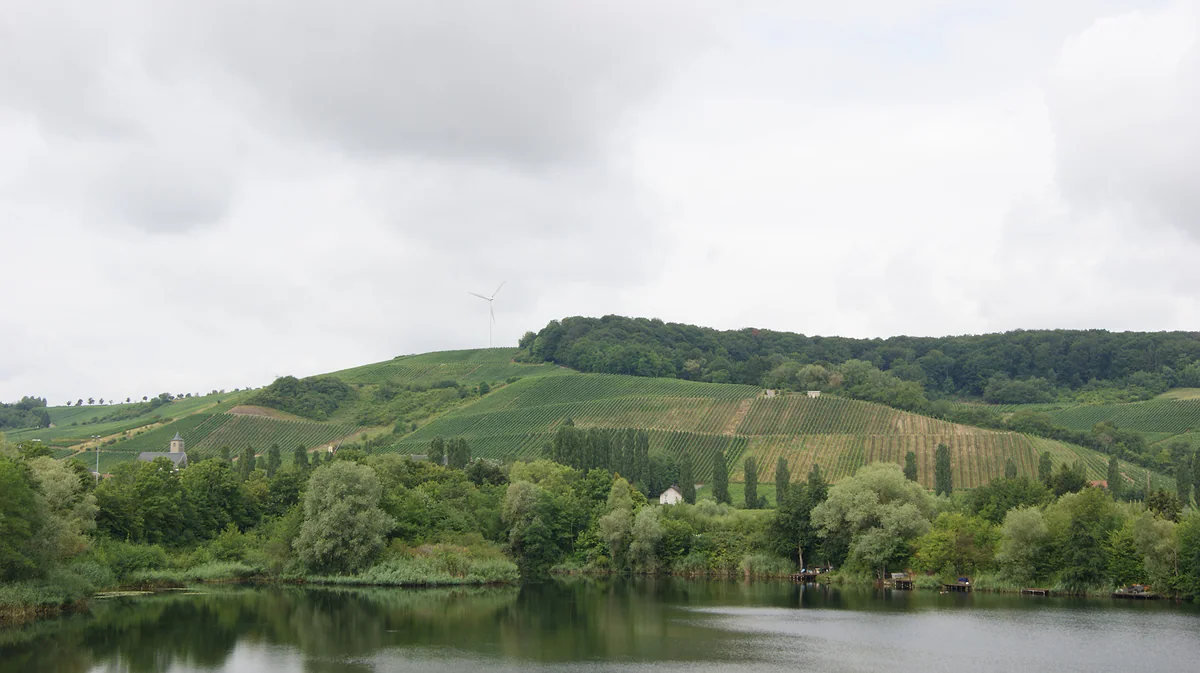
Protected sites with a trail
Luxembourg's nature reserves, from red mining land to wetlands
Most of Luxembourg's visitable nature reserves are in the south. In the Minett, former opencast mines such as Haard-Hesselsbierg-Staebierg (600 ha, the country's largest), Prënzebierg-Giele Botter and the Ellergronn have become dry grassland full of orchids and butterflies. For birds, head to the Haff Réimech on the Moselle and the 375-hectare Schlammwiss reedbed.
In 30 seconds
Full read: 3 min
- Luxembourg's most visited nature reserves are former Minett mines and wetlands.
- The largest is Haard-Hesselsbierg-Staebierg, 600 ha across Dudelange, Kayl and Rumelange.
- Prënzebierg-Giele Botter has over twenty orchids, and Brucherbierg over 500 butterfly species.
- For birds, the Haff Réimech on the Moselle and the 375-hectare Schlammwiss reedbed.
- The trails have no published charge; guided group walks start at €90.
If you only see one, make it a Minett mine. To me they're the most distinctive nature in the country, because in a single walk you see a landscape wrecked by industry now covered in orchids. For birdwatching, though, nothing beats the Haff Réimech in spring or autumn.

Before you go
What I would keep in mind
-
01 Most beautiful
Red earth and orchids
The old opencast workings of the Minett still show reddish walls of ore, with dry grassland grown over them. The Prënzebierg alone has more than twenty orchid species.
Minett -
02 To save money
Trails with no ticket office
The official listings give no entry charge for the reserve trails, and the Biodiversum at the Haff Réimech is free. What you pay for are guided group walks.
Haff Réimech nature reserve -
03 My tip
Schlammwiss, mornings only
The Schlammwiss bird-ringing station opened from 8:00 to 12:00 in the week of 30 September 2026 and closes in rain. For other dates, you ask by email.
Schuttrange -
04 Getting there
Two visitor centres
The state runs nature centres at the Ellergronn, next to Esch, and at the Haff Réimech. They're the best starting point, because they explain the reserve before you set foot in it.
Ellergronn nature reserve -
05 My tip
With children, add the Gaalgebierg
If you're doing the Ellergronn with kids, the Gaalgebierg hill is 2 km away, with a free animal park of more than 25 species. It's the best way to round off the morning.
Gaalgebierg in Esch-sur-Alzette
My ranking, scored
The nature reserves I'd visit, in order
My scores out of 10, for a visitor with half a day. They weigh what you see, how easy it is to find your way (panels, visitor centre, waymarked trail) and how different it is from the rest of the country. My opinion, not an official ranking.
0 of 9 seen
-
Haff Réimech (Remerschen)
The country's richest wetland, with up to 76% of the bird species recorded in Luxembourg, hides and the free Biodiversum. It's the reserve best set up for visitors.
9.1 out of 10
-
Prënzebierg-Giele Botter (Differdange and Pétange)
A 255-hectare former opencast mine with more than twenty orchids, a 7 km discovery trail and a 2.5 km geology trail with nine panels on the minette ore.
8.8 out of 10
-
Haard-Hesselsbierg-Staebierg (Dudelange, Kayl, Rumelange)
The largest reserve in the country, 600 ha protected since 1994, with layers of ore and limestone on show and 16 information panels.
8.6 out of 10
-
Ellergronn (Esch-sur-Alzette)
The easiest to reach from a town, with a nature centre in the old Cockerill mine, a mining museum and a three-loop Natura 2000 trail.
8.4 out of 10
-
Brucherbierg-Lallengerbierg (Esch, Kayl, Schifflange)
267 ha of former mine that went from moonscape to dry grassland, with more than 500 butterfly species according to visitluxembourg. Walkable or rideable by bike.
8.0 out of 10
-
Schlammwiss (Uebersyren)
The country's largest reedbed, 375 ha of wetland with a bird-ringing station. Morning hours only, and closed when it rains.
7.8 out of 10
-
Léiffrächen (Kayl)
Red rock cliffs, dense woodland and dry meadows, with the National Miners' Monument next door. visitluxembourg rates it among the loveliest spots in the Minett.
7.7 out of 10
-
Beetebuerger Bësch (Bettembourg)
A quiet beech wood with streams, ponds and the Léiffraeweier pool, home to three woodpeckers and two scarce bats.
7.3 out of 10
-
Dumontshaff (Schifflange)
A family nature trail through the restored Alzette valley, with protected Natura 2000 birds.
7.0 out of 10
Mention nature in Luxembourg and most people picture the Mullerthal’s rocks or the valleys of the north. The nature reserves tell a different story, and to me it’s the most interesting one in the country. Most of the visitable ones are in the south, in the Minett, and they’re former opencast iron mines that industry left bare and nature has since moved back into. The rest are wetlands, including two of the best birdwatching spots between France and Germany.
A reserve isn’t a nature park
It’s worth clearing this up because the two get mixed up. Luxembourg’s nature parks are three large inhabited areas, with villages, roads and things to do. A nature reserve is a different beast, a small protected site, nearly always within the EU’s Natura 2000 network, that you walk along a specific trail with information panels. This guide covers those with an official visitor listing and a waymarked path.
Red mines turned orchid meadows
The country’s biggest is Haard-Hesselsbierg-Staebierg, spread over 600 ha of Dudelange, Kayl and Rumelange. Nearly all of it was opencast workings; it was declared a reserve in 1994, and you can still see the bands of iron ore and limestone. Sixteen panels line the way.
In the western Minett, the Prënzebierg and Giele Botter, protected since 20 November 1991 and covering 255.30 ha, is my favourite of the mining reserves. Pétange council counts more than twenty orchid species, and there’s a 7 km discovery trail plus a 2.5 km geology trail with nine panels on how the minette ore formed and was dug out. Some 500 sheep graze it on the move, which stops the meadows scrubbing over.
Between Esch, Kayl and Schifflange, the Brucherbierg-Lallengerbierg covers 267 ha. visitluxembourg describes a moonscape of red soil gradually clothed in dry grassland, with bats and more than 500 butterfly species among the orchids, and you can explore it on foot or by bike. Kayl’s Léiffrächen adds red cliffs, woodland and meadows beside the National Miners’ Monument. And just south of Esch lies the Ellergronn, the easiest of the lot because it has a visitor centre in the old Cockerill mine.
Several of these reserves lie on the Minett Trail, which threads through them stage by stage.
Once your dates are set, check which hotels are still free in Esch-sur-Alzette before prices climb.
Where will you see the most birds?
On the Moselle, the Haff Réimech at Remerschen is in a league of its own. Of all the bird species on Luxembourg’s list, as many as 76% have turned up here, on about a thousandth of its territory. It’s a Ramsar site, with hides and the Biodiversum, which is free to enter.
Closer to the capital, the Schlammwiss wetland at Uebersyren covers 375 ha and is the country’s largest reedbed. Its bird-ringing station opened from 8:00 to 12:00 in the week of 30 September 2026 and shuts when it rains. It’s right next to Munsbach Castle, so the two make a tidy morning together. In Schifflange, the Dumontshaff trail follows the Alzette valley as it looks since being restored, with plenty of protected birds, and the 3.06 km Am Brill path follows the same river’s wetlands.
An old wood between Bettembourg and Leudelange
The Beetebuerger Bësch is the south’s odd one out, a beech wood rather than a mine. A path follows streams and ponds to the Léiffraeweier pool, and visitluxembourg suggests watching for three woodpeckers (grey-headed, black and middle spotted) and, once dusk falls, for Natterer’s and Bechstein’s bats. It’s the reserve I’d pick for an unhurried stroll with no particular goal.
Once your dates are set, check which hotels are still free in Esch-sur-Alzette before prices climb.
Planning your visit
The official listings put no price on the trails, and I wouldn’t pay anything to walk them on your own. If you’d like someone to explain what you’re seeing, the Ellergronn centre runs guided walks through several southern reserves from €90 per group (€115 for the Prënzebierg). More ideas for walking across the country are in hiking in Luxembourg. And one rule the Minett Trail website repeats is to keep dogs on a lead, especially in the breeding season.
If you would rather have a local show you round, book a guided tour in Esch-sur-Alzette and choose by the reviews.
A car frees you from timetables: search car hire in Luxembourg on DiscoverCars and compare companies.
So you do not pay over the odds, look at trains, coaches and flights to Luxembourg on Omio and pick the one that suits you.
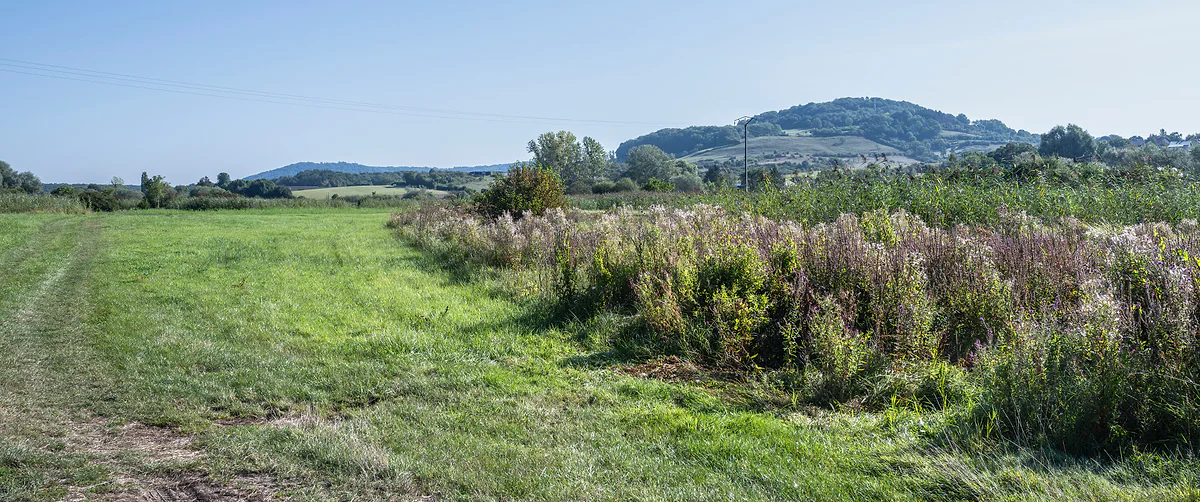
The Schlammwiss wetland in the Syre valley, in Schuttrange, with meadows, flowering scrub and a hill beyond
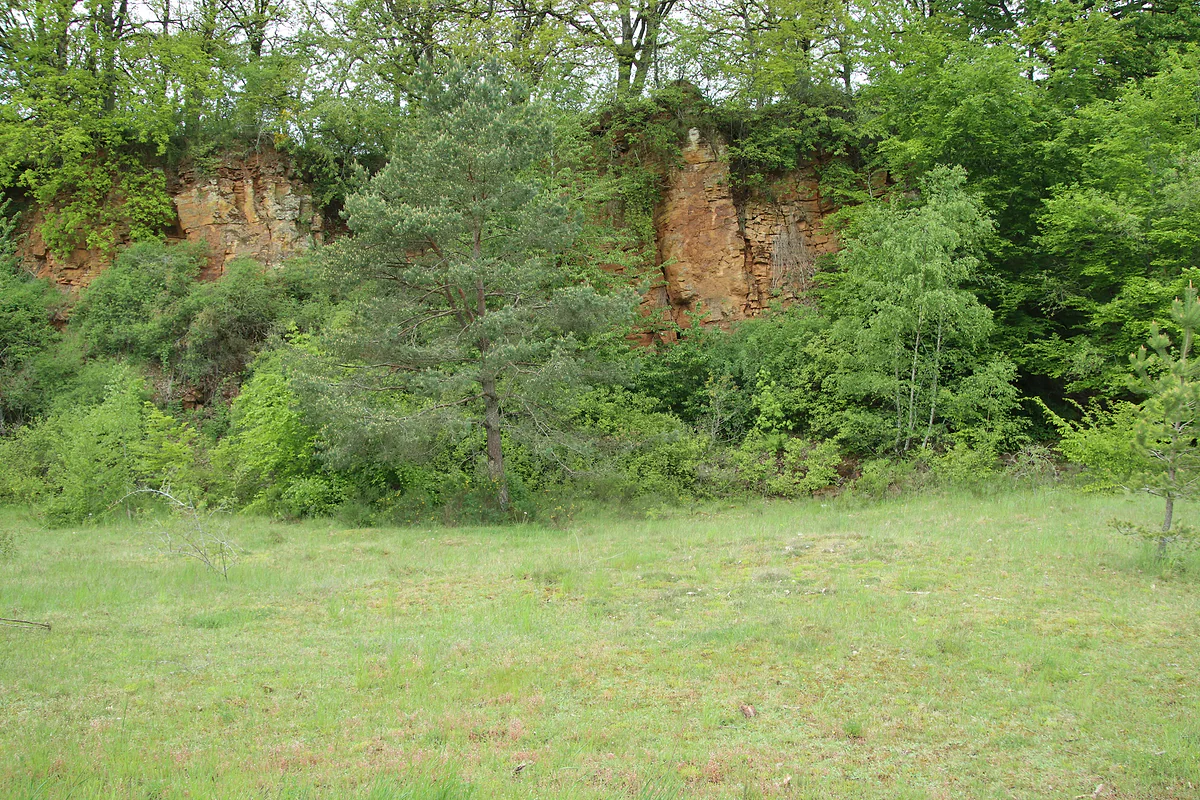
A reddish outcrop of minette ironstone in the Léiffrächen nature reserve at Kayl, among trees and grassland
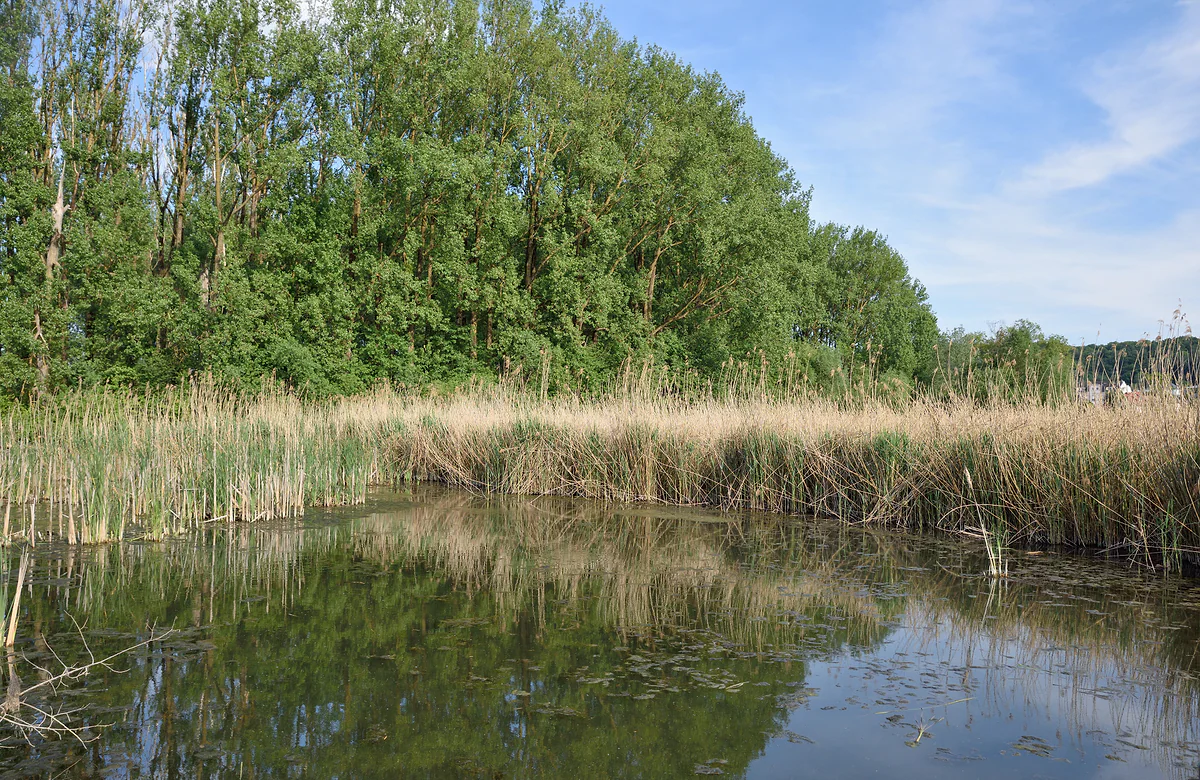
A pond ringed by reeds and trees in the Brill nature reserve at Schifflange, with the sky reflected in the water
Visitable nature reserves at a glance
| Reserve | Where | Key fact | Trails |
|---|---|---|---|
| Haard-Hesselsbierg-Staebierg | Dudelange, Kayl and Rumelange | 600 ha, a reserve since 1994 | Dudelange 2 auto-pedestrian, CFL 22, reserve trail |
| Prënzebierg-Giele Botter | Differdange and Pétange | 255.30 ha, protected since 1991 | 7 km discovery trail, 2.5 km geology trail |
| Brucherbierg-Lallengerbierg | Esch, Kayl and Schifflange | 267 ha, over 500 butterfly species | Schifflange auto-pedestrian, CFL 25, Um Réimerwee |
| Ellergronn | Esch-sur-Alzette | Former mine, visitor centre | Three-loop Natura 2000 trail, Nobert Theis |
| Léiffrächen | Kayl | Red rock and dry grassland | Kayl auto-pedestrian circuit |
| Beetebuerger Bësch | Bettembourg and Leudelange | Beech wood and Léiffraeweier pool | Abweiler auto-pedestrian, CFL 20 |
| Dumontshaff and Brill | Schifflange | Restored Alzette | Dumontshaff trail; Am Brill 3.06 km |
| Schlammwiss | Uebersyren (Schuttrange) | 375 ha, the country's largest reedbed | Reserve trail |
| Haff Réimech | Remerschen (Schengen) | Ramsar site, up to 76% of the country's birds | 2 km and 3.9 km |
visitluxembourg (individual reserve pages), petange.lu, environnement.public.lu and the Haff Réimech leaflet, checked on 30-09-2026.
Guided walks from the Ellergronn centre
| Walk | Price from |
|---|---|
| Haard-Hesselsbierg-Staebierg reserve trail | €90 |
| Prënzebierg-Giele Botter reserve trail | €115 per group |
| Brucherbierg-Lallengerbierg reserve trail | €90 |
| Dumontshaff reserve trail | €90 per group |
| Ellergronn reserve trail | €90 per group |
Offers listed on visitluxembourg's Ellergronn centre page, checked on 30-09-2026.
Test yourself
True or false?
0/3 Pick before you peek.
-
Luxembourg's largest nature reserve is a former mining area in the south.
See the answer
True. Haard-Hesselsbierg-Staebierg, at 600 ha, is largely made up of old opencast workings in Dudelange, Kayl and Rumelange.
-
Schlammwiss, in Uebersyren, is the country's largest reedbed.
See the answer
True. visitluxembourg describes it as a 375-hectare wetland and Luxembourg's most extensive reedbed, with a bird-ringing station.
-
Giele Botter was an artificial lake before it became a reserve.
See the answer
False. It was an opencast iron mine. When extraction stopped, nature reclaimed the ground, and today it has orchids, amphibians, reptiles and bats.
- Haard-Hesselsbierg-Staebierg, the largest reserve
- 600 ha
- Schlammwiss wetland, the largest reedbed
- 375 ha
- Butterfly species at Brucherbierg-Lallengerbierg
- 500+
- Of the country's bird species, seen at the Haff Réimech
- 76%
0 of 425 Luxembourg guides
Your next stamp
- Haff Réimech
- Minett
- Minett Trail
- Remerschen
- Steinfort
- UNESCO World Heritage
- Holiday cottages
- Our Nature Park
- A Possen Museum
- American Cemetery
- Ansembourg
- Ansembourg Castles
- Asselborn
- Bascharage
- Beaufort castles
- Belval
- Belval blast furnaces
- Berg Castle
- Bernard-Massard cellars
- Bourglinster Castle
- Bourscheid Castle
- Brandenbourg
- Brandenbourg Castle
- Caves St Martin
- Christmas
- Clervaux Castle
- Echternach
- Echternach Abbey
- Ehnen
- Ehnen Wine Museum
- Esch-sur-Alzette
- Esch-sur-Sûre Castle
- European Museum Schengen
- Fond-de-Gras
- General Patton Museum
- German war cemetery
- Hohllay
- Hollenfels Castle
- Hosingen
- Kautenbach
- Kneiff
- Koerich Castle
- Larochette Castle
- Lasauvage
- Mersch Castle
- Military History Museum
- Moersdorf
- Mondorf Domaine Thermal
- Munsbach Castle
- National Mining Museum
- Parc Merveilleux
- Park Sënnesräich
- Places to visit
- Remich
- Rindschleiden
- Schiessentümpel
- Septfontaines Castle
- Slate Museum
- Stolzembourg
- Tudor Museum
- Useldange Castle
- Valley of the Seven Castles
- Vianden
- Vianden Castle
- Ville Haute
- Wasserbillig Aquarium
- Weiswampach lakes
- Wiltz Castle
- Ahn
- Berdorf
- Bourscheid-Plage
- Butterfly garden
- Clervaux
- Differdange
- Echternach lake
- Grevenmacher
- Heringer Millen
- Hollenfels
- Luxembourg City
- Luxembourg Science Center
- Meysembourg Castle
- Mullerthal
- National Day
- National Resistance Museum
- Perekop
- Schoenfels Castle
- The Family of Man
- Things to do
- Upper Sûre Lake
- Vianden chairlift
- Wasserbillig
- Clervaux Abbey
- Echternach Roman villa
- Éislek
- Insenborn
- Kallektuffquell
- Machtum
- Most beautiful places
- Pétange
- Pettingen Castle
- Schueberfouer
- Schwebsingen
- Victor Hugo House
- Waldbillig
- Dudelange
- Kuelscheier
- Lultzhausen
- Moselle Valley
- Octave
- Prettiest villages
- Sanem
- Schengen
- Wellenstein
- Wiltz
- Wolfsschlucht
- Beaufort
- Bech-Kleinmacher
- Éimaischen
- Gaalgebierg
- Guttland
- Marnach
- Mondorf-les-Bains
- Putscheid
- Schifflange
- Carnival
- Consdorf
- Ellergronn
- Käerjeng
- Kayl
- Map
- Munshausen
- Tandel
- Bech
- Buergbrennen
- Esch-sur-Sûre
- Rumelange
- Where is Luxembourg
- Is it a country?
- Lac de la Haute-Sûre (commune)
- Rosport-Mompach
- Wormeldange
- Larochette
- Mondercange
- Regions
- Bettembourg
- Bock Casemates
- Cantons
- Dancing procession
- Diekirch
- Fischbach
- Garnich
- Mersch
- Moselle wine route
- Ettelbruck
- Grund
- Heffingen
- Kehlen
- Lintgen
- Moselle river cruises
- Pétrusse Casemates
- Towns and villages
- Chemin de la Corniche
- Erpeldange-sur-Sûre
- Junglinster
- Kopstal
- Lorentzweiler
- Nommern
- Pfaffenthal
- Population
- Bissen
- Clausen
- Grand Ducal Palace
- Koerich
- Schieren
- Size
- Vallée de l'Ernz
- Feulen
- Kirchberg
- Languages
- Notre-Dame Cathedral
- Reisdorf
- Bettendorf
- Habscht
- St Michael's Church
- Helperknapp
- Luxembourgish
- Place Guillaume II
- Name
- Place d'Armes
- History
- Place de la Constitution
- Grand Duke
- Colmar-Berg
- Flaxweiler
- Gare
- Hamm
- Kirchberg funicular
- Luxembourg fortress
- Mamer
- Mertert
- Mullerthal Trail
- Neumünster Abbey
- Parc Hosingen
- Pfaffenthal lift
- Political system
- Redange
- The Passerelle
- Wine festivals
- Winseler
- Beckerich
- Biwer
- EU institutions
- Goesdorf
- Limpertsberg
- Mudam
- Natur Musée
- Pulvermühl
- Stadtbredimus
- Troisvierges
- Wenzel walk
- Bonnevoie
- Bous-Waldbredimus
- Ell
- Flag
- Kiischpelt
- Manternach
- Philharmonie
- Vauban circuit
- Weiswampach
- Betzdorf
- Boulaide
- Dräi Eechelen Museum
- Facts
- Hollerich
- Lenningen
- Useldange
- Wincrange
- Bourscheid
- Dalheim
- Gasperich
- Public holidays
- Red Bridge
- Saeul
- Belair
- Second World War
- Vichten
- Battle of the Bulge
- Merl
- Préizerdaul
- Cents
- EU and Schengen
- Groussbus-Wal
- Entry requirements
- Neudorf
- Rambrouch
- Currency and payments
- Mertzig
- Weimerskirch
- Adolphe Bridge
- Beggen
- Escapardenne
- How to get there
- International March of Diekirch
- MNHA (National Museum)
- Rock climbing
- Sandweiler
- Bridges
- Eich
- Flights
- Golf
- Hesperange
- Lëtzebuerg City Museum
- Canoeing and kayaking
- Dommeldange
- Luxembourg airport
- Strassen
- Villa Vauban
- Airport to city centre
- Bertrange
- Casino Luxembourg
- Mühlenbach
- Swimming pools
- From Brussels
- Pétrusse Valley
- Rollingergrund
- Walferdange
- Cessange
- Day trip from Brussels
- Municipal Park
- Steinsel
- Free walking tours
- From Paris
- Niederanven
- From Frankfurt
- Schuttrange
- Sightseeing train and bus
- By train
- Contern
- By coach
- Weiler-la-Tour
- Driving
- Luxembourg in one day
- Pretzel Sunday
- Rham Plateau
- Tour de Luxembourg
- Candlemas (Liichtmëssdag)
- Car hire
- Luxembourg in two days
- Saint-Esprit Plateau
- Luxembourg in three days
- Melusina statue
- Parking
- St Nicholas Day (Kleeschen)
- Fête de la Musique
- Luxembourg in four days
- Museums in Luxembourg
- Petrol
- Place de Clairefontaine
- A week in Luxembourg
- Getting around
- Luxembourg Marathon
- Tram and Bus Museum
- Free public transport
- Parks in Luxembourg City
- Road trip
- Belgium and Luxembourg
- Tram
- Buses
- Viewpoints
- Trains
- Luxembourg station
- Cycling
- LuxembourgPass
- Prices and budget
- On a budget
- Free things to do
- Mobile and roaming
- Healthcare
- Safety
- Scams
- Tourist information
- Packing list
- Swimming lakes
- With a dog
- Markets
- Tipping
- Shopping
- What to buy
- Shopping centres
- With kids
- For couples
- Playgrounds
- Adventure parks
- Nightlife
- Castles
- Theatres and concert venues
- Leudelange
- Nature parks
- Where to stay
- City-centre hotels
- Hiking
- Reckange-sur-Mess
- Hotels near the station
- Roeser
- Frisange
- Hotels in Kirchberg
- Airport hotels
- Dippach
- Hotels in Vianden
- Hotels in Echternach
- Hotels in Clervaux
- Hotels in Mondorf-les-Bains
- Hotels in Esch-sur-Alzette
- Hotels on the Moselle
- Mullerthal hotels
- Upper Sûre lake hotels
- Hotels in Diekirch and Ettelbruck
- Cheap hotels
- Luxury hotels
- Boutique hotels
- Spa hotels
- Family hotels
- Apartments
- Weather
- Youth hostels
- Best time to visit
- Campsites
- In winter
- Castle hotels
- In spring
- Day trips
- In summer
- Around Luxembourg
- In autumn
- Ice skating
- Trier day trip
- Metz day trip
- Arlon day trip
- In January
- In February
- In March
- In April
- In May
- In June
- In July
- In August
- In September
- Food
- In October
- In November
- Where to eat
- In December
- Michelin restaurants
- Cheap eats
- Judd mat Gaardebounen
- Bouneschlupp
- Gromperekichelcher
- Kniddelen
- Quetschentaart
- Rieslingspaschtéit
- Events
- Wine
- Crémant
- Beer
Frequently asked questions
What is the largest nature reserve in Luxembourg?
Haard-Hesselsbierg-Staebierg, covering 600 ha across Dudelange, Kayl and Rumelange. Much of it is a former opencast mine; it became a reserve in 1994 and is part of the Natura 2000 network.
What's the difference between a nature park and a nature reserve in Luxembourg?
The nature parks are three large inhabited areas, the Our, the Upper Sûre and the Mëllerdall, with villages and activities. Nature reserves are much smaller protected sites, such as old mines, wetlands or woods, that you explore along a set trail.
Where can I see orchids in Luxembourg?
In the Minett's former mines. The Prënzebierg and Giele Botter has more than twenty orchid species according to Pétange council, and visitluxembourg describes butterflies among the orchids at Brucherbierg-Lallengerbierg.
Where is the best birdwatching in Luxembourg?
The Haff Réimech, by the Moselle, is the country's richest wetland, and the Biodiversum is free. The Schlammwiss reedbed at Uebersyren has a ringing station, and Schifflange's Dumontshaff holds plenty of protected birds.
Do you have to pay to enter Luxembourg's nature reserves?
The official listings give no price for walking the reserve trails, and the Haff Réimech's Biodiversum is free. Guided group walks do cost money, from €90.
Can I take my dog to the Minett reserves?
The Minett Trail website, which crosses several of them, asks for dogs to be kept on a lead so as not to disturb wildlife, especially breeding birds. It's common sense in any reserve.
By
Tourism graduate with a master’s in Tourism Management and Planning from the University of Málaga, who has travelled across Europe. He writes every guide from official sources and his own judgement.
Published on . Facts checked on .
Sources
Some links in this guide are affiliate links: if you book through them, the site earns a commission at no extra cost to you. Affiliate disclosure
Photos: Asurnipal (CC BY-SA 4.0); Cayambe (CC BY-SA 4.0); Paul Braun (CC0); Cayambe (CC BY-SA 4.0), via Wikimedia Commons.