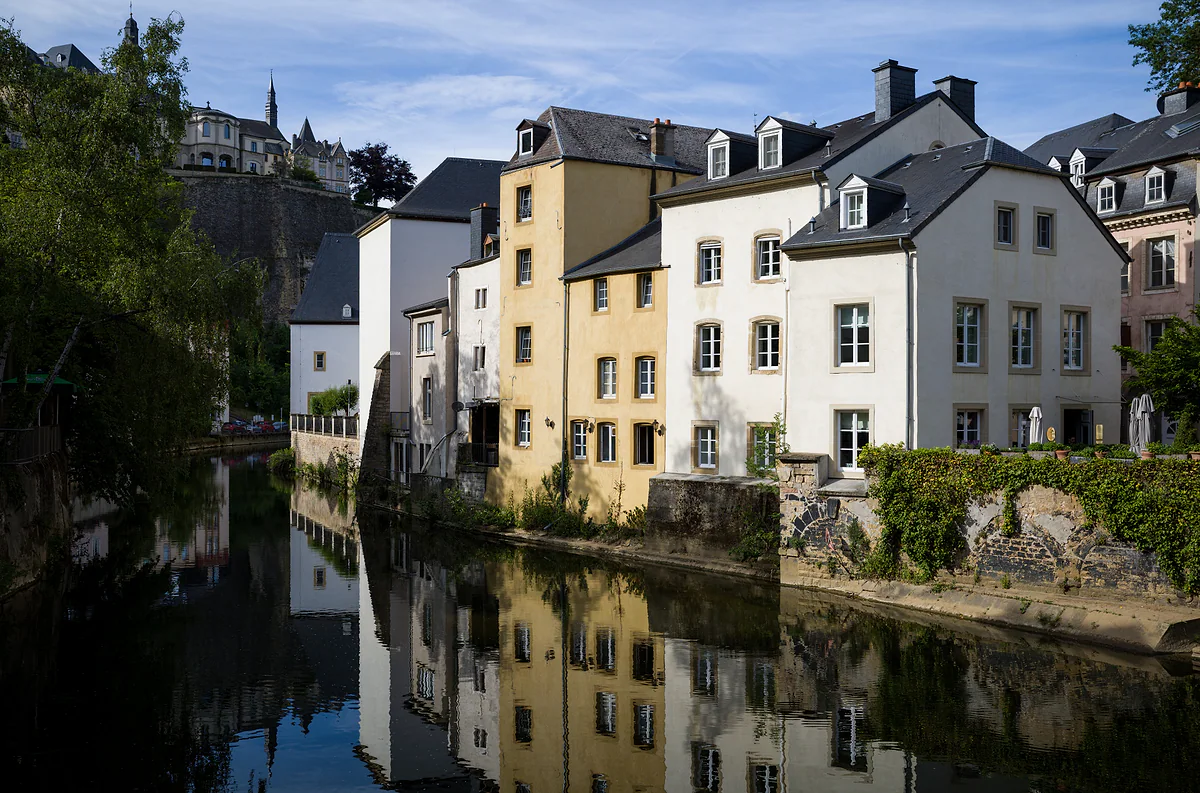
Luxembourg City district on the Alzette
The Grund, the low town that makes sense of the high one
The Grund is the district at the bottom of the Alzette valley, right beneath the cliff of Luxembourg's upper town. It covers 30 hectares with about a thousand residents and holds Neumünster Abbey, the National Natural History Museum and St John's Church. You reach it on foot from the Corniche or by the free public lift from the Plateau du Saint-Esprit.
I'd do the Grund downhill rather than up. Start at the top on the Corniche, take the steps down while looking over the rooftops, and when your legs have had enough, ride the free public lift from the valley back up to the Plateau du Saint-Esprit.

Before you go
What I would keep in mind
-
01 Most beautiful
Neumünster from the bridge
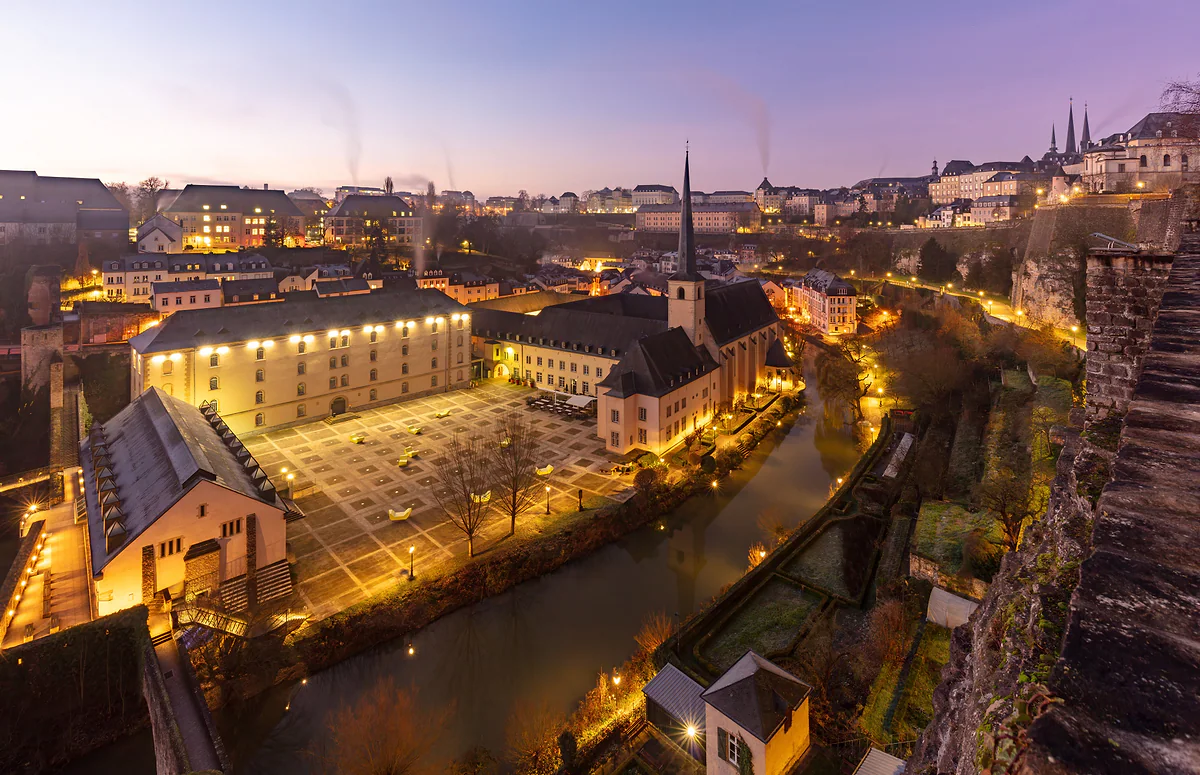
From the bridge on rue Münster you get the abbey, St John's Church and the upper town's walls in one frame. It's the picture that explains why this city is a World Heritage Site.
Neumünster Abbey -
02 To save money
A free lift saves the climb
The city runs a public lift between the Plateau du Saint-Esprit, next to the Cité judiciaire, and the Grund. Like all urban transport in Luxembourg it costs nothing, and it spares you the hill at the end of the day.
-
03 My tip
Tuesday evening, the museum is free
The Natur Musée at 25 rue Münster waives admission on Tuesdays from 17:30 and stays open until 20:00 that day. Otherwise adults pay €7, and under-21s always go free.
Natural History Museum -
04 Most beautiful
An art market on the bridge
From May to October, on the first Sunday of each month, the Grund bridge hosts the Konscht am Gronn art market with painting, sculpture, photography and glass by local and visiting artists, according to the tourist office.
Everyone looks at Luxembourg from the top. What I think really explains the city is going down to the Grund and looking up. From the valley floor you see the rock, the ramparts and the casemates stacked above your head, and “fortress” stops being an abstract word. The district covers 30 hectares along the Alzette, counted 1,008 residents in late 2023, and the tourist office calls it “a village within a city”. Fair description.
An old district at the bottom of the valley
The Grund is among the capital’s oldest quarters, with written references from the 14th century. It sat inside the fortifications that grew over the centuries and were pulled down after the Treaty of London in 1867. The city counts it within the UNESCO buffer zone, and its own listing highlights the historic character and the many footpaths. That’s the point of the place. You don’t come here to tick off monuments; you come to walk by the river.
Above you is the Luxembourg old town, with the palace and the squares. Down here it’s narrow houses with their feet in the water, stone bridges and a much slower pace than the centre. With a single day in the capital, I’d still keep at least two hours for this part.
Getting down without the slog
Two good options. The first is to walk down from the Chemin de la Corniche, which is a stroll in its own right, and follow the steps and ramps to rue Münster. The second is the city’s public lift from the Plateau du Saint-Esprit, by the Cité judiciaire, down to the Grund. It’s free, like all local transport, and that’s my pick for the climb back up.
Don’t mix it up with the glass panoramic lift, which is in a different district, Pfaffenthal, further north. If you’re driving, the tourist office reckons the city-centre car parks are around ten minutes away on foot.
To sleep close to everything, search places to stay in Luxembourg on Booking.com and filter by area before price.
What’s worth your time
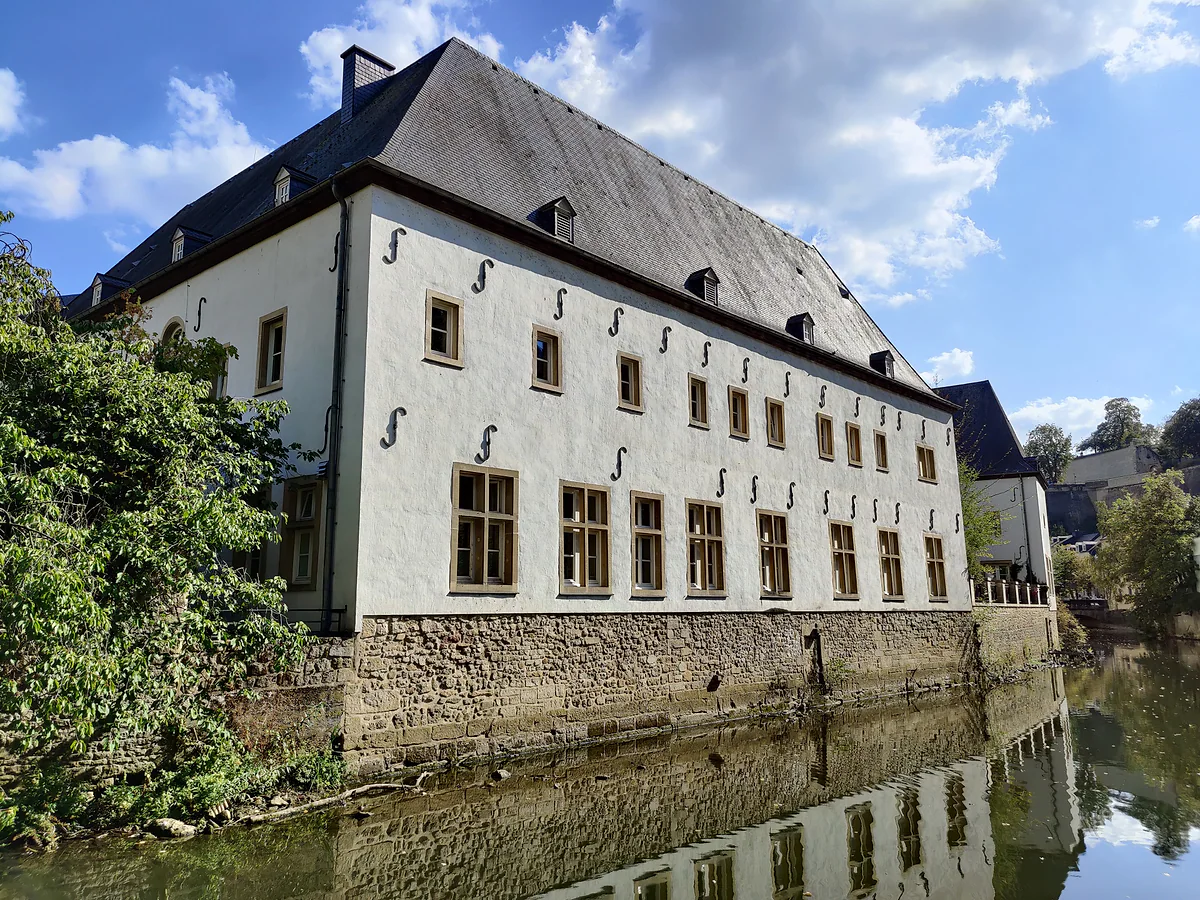
The centrepiece is Neumünster Abbey, a Benedictine complex that served as a military hospital until 1867 and a men’s prison until 1980, and is now a cultural centre with its own brasserie. Right beside it stands St John’s Church, first mentioned in 1309 and given its present look between 1688 and 1705, with an organ from 1710 and a 14th-century Black Madonna. The tourist office also calls it Saint-Jean-Baptiste and singles out the Renaissance doorway, the lavish Baroque furnishings and the Black Madonna, a miraculous image from the Parler school of Cologne. It was rebuilt together with the abbey in 1606, and I’d step inside even if churches aren’t your thing, because it’s the richest interior you’ll see anywhere in the Grund.
A few steps along the same street is the Natural History Museum, whose permanent galleries reopened in 2017 and which ranks among the best rainy-day options with children. By the river, Serge Ecker’s Melusina statue from 2015 tells the city’s founding legend. The mermaid agreed to marry Count Sigefroi, who founded Luxembourg in 963, on one condition, that her Saturdays were her own. He spied on her, saw the fish’s tail, and she vanished into the Alzette.
Which bridges should you cross?
Two. The bridge on rue Münster links both banks and, from May to October, hosts the Konscht am Gronn art market on the first Sunday of the month. The capital’s other markets, from food stalls to the antiques fair, are in markets in Luxembourg. The Stierchen Bridge beside Neumünster dates from the mid-15th century and belonged to the Wenceslas Wall; its upper section was rebuilt in 1983. The rest are gathered in bridges in Luxembourg City.
Across the river rises the Plateau du Rham, wrapped by the Alzette on three sides. Vauban had four barracks built up there in the late 17th century, and since the late 19th they’ve housed social institutions. From the plateau you face the Corniche and the Plateau du Saint-Esprit head-on.
To sleep close to everything, search places to stay in Luxembourg on Expedia and filter by area before price.
Best time of day
I like the Grund first thing or towards the end of the afternoon, when low light slides into the valley. Around midday the groups come down from the upper town and the calm goes with them. Tuesday suits museum-goers, as entry is free from 17:30 and it stays open until 20:00. On that evening I’d leave the museum until last and then walk downriver for dinner.
Keep following the river downstream and you reach Clausen, the district for dinner and a drink. The pair make a full afternoon without needing a single bus, and if it rains, the museum and the abbey buildings give you somewhere dry to wait it out before heading on.
The Alzette valley beyond the Grund
The Grund is only one stop on the Alzette valley, which the tourist office suggests as a walk or ride in its own right. Downstream lies the Pfaffenthal, the old working-class quarter, with the view from the Grand Duchess Charlotte Bridge and the crossing of the Béinchen. Upstream, towards Pulvermühl and Hamm, the valley turns greener, with shaded trails, free outdoor fitness stations and playgrounds. The forest paths carry animal and tree names such as Écureuil, Tilleul and Fouine, and tracks drop from Fort Thüngen to link Kirchberg with the valley floor. With a free morning and decent weather, I think it’s the cheapest way to see the city from below.
If you are short on time, see the best tours in Luxembourg and pick one that fits your day.
Where the bus does not go, a car does: compare car hire in Luxembourg before you arrive rather than at the desk.
If you still need a way in, check the best ticket deals to Luxembourg from where you are.
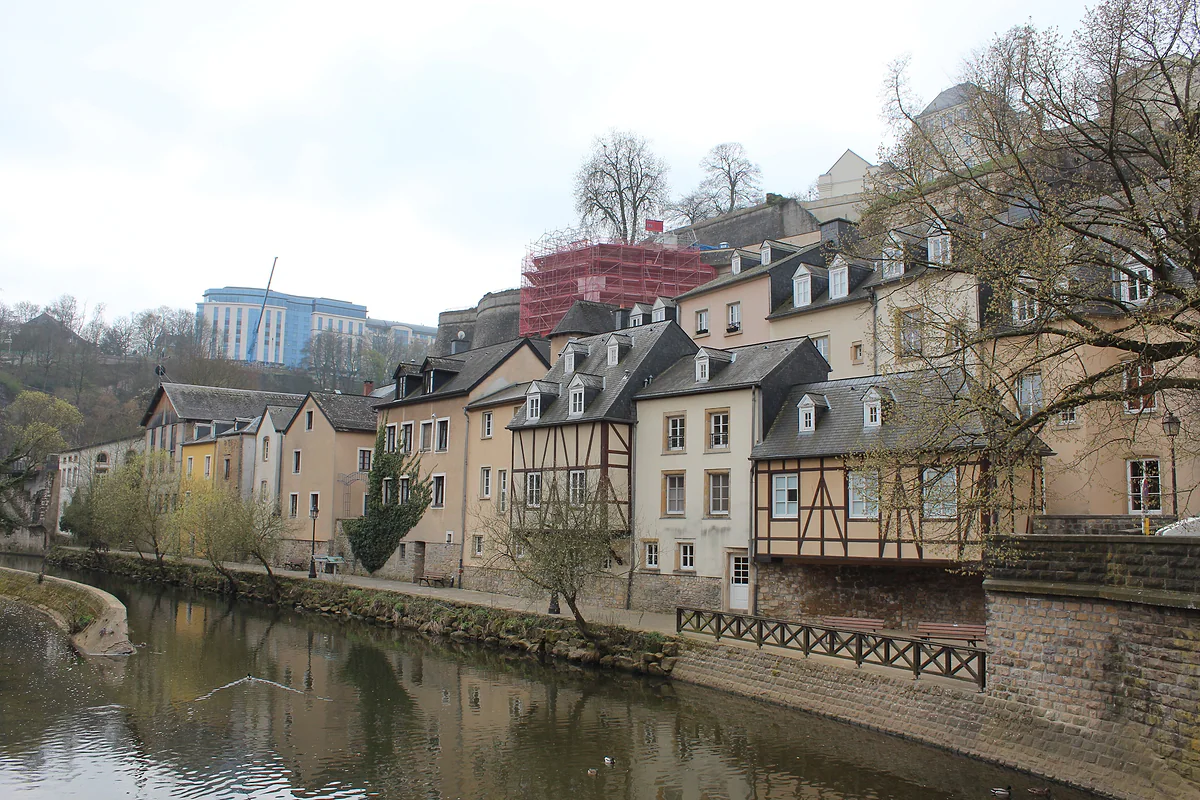
Old houses on rue Saint-Ulric in the Grund, one half-timbered, overlooking the River Alzette in spring
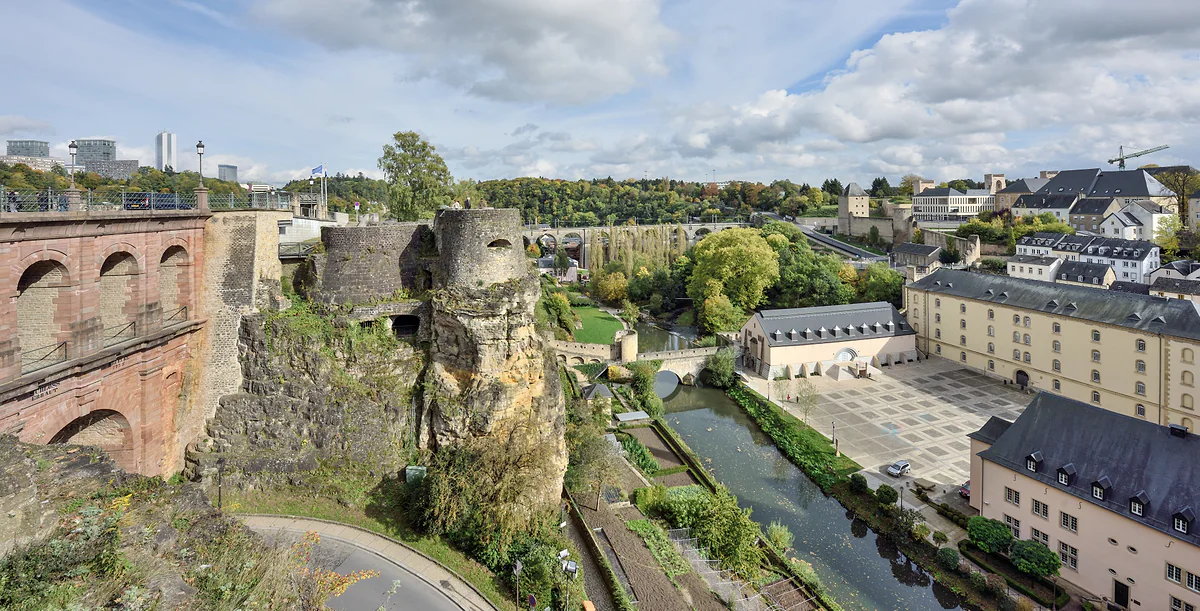
The Bock rock with remains of the fortress, the River Alzette and the buildings of the Grund below the upper town
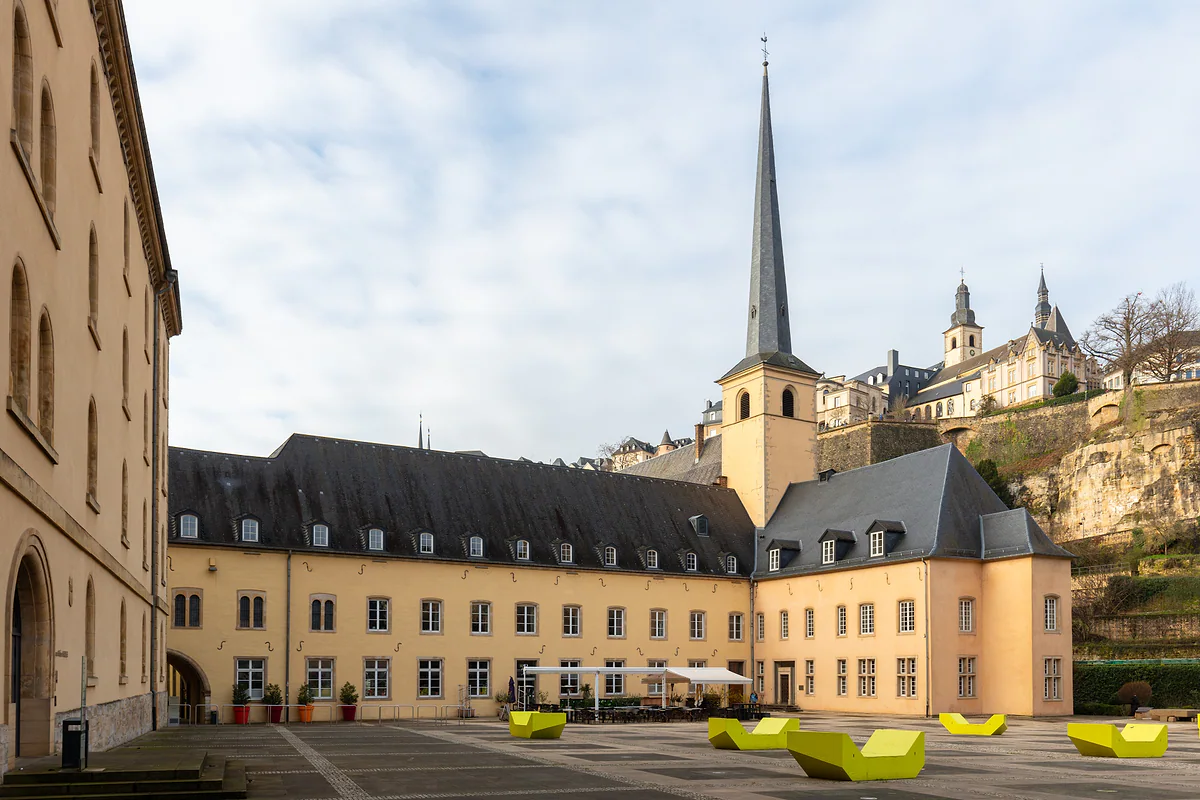
The courtyard of Neumünster Abbey with the bell tower of St John's and the upper town on the rock behind
What's in the Grund
| Place | What it is | Detail |
|---|---|---|
| Neumünster Abbey | Former abbey, later hospital and prison | Cultural centre, open daily |
| Natur Musée | National Natural History Museum | €7 adults, free for under-21s |
| St John's Church | Baroque church of the abbey | Organ from 1710, 14th-century Black Madonna |
| Melusina statue | 3D-printed work by Serge Ecker | Installed by the Alzette in 2015 |
| Stierchen Bridge | Part of the Wenceslas Wall | Mid-15th century |
| Plateau du Rham | Plateau ringed by the Alzette | Vauban barracks from the late 1600s |
Sources: City of Luxembourg and LCTO listings and the museum's website, checked on 29-09-2026.
Test yourself
True or false?
0/3 Pick before you peek.
-
The Grund is one of the most populated districts of the capital.
See the answer
False. It had 1,008 residents on 31-12-2023, according to the city. It's one of the smallest; Bonnevoie-Sud, the largest, had over 13,000.
-
You can reach the Grund by a public lift from the upper town.
See the answer
True. The City of Luxembourg runs a lift between the Plateau du Saint-Esprit, next to the Cité judiciaire, and the Grund.
-
The Melusina statue in the Grund dates from the 19th century.
See the answer
False. It's by Serge Ecker, made with 3D printing and installed beside the Alzette in 2015, according to the tourist office.
Map
Where Grund is
The thick dashed line is the border with Belgium, France and Germany, and the fine ones divide the twelve cantons. The Éislek lies to the north and the Moselle to the east. Every number opens its guide.
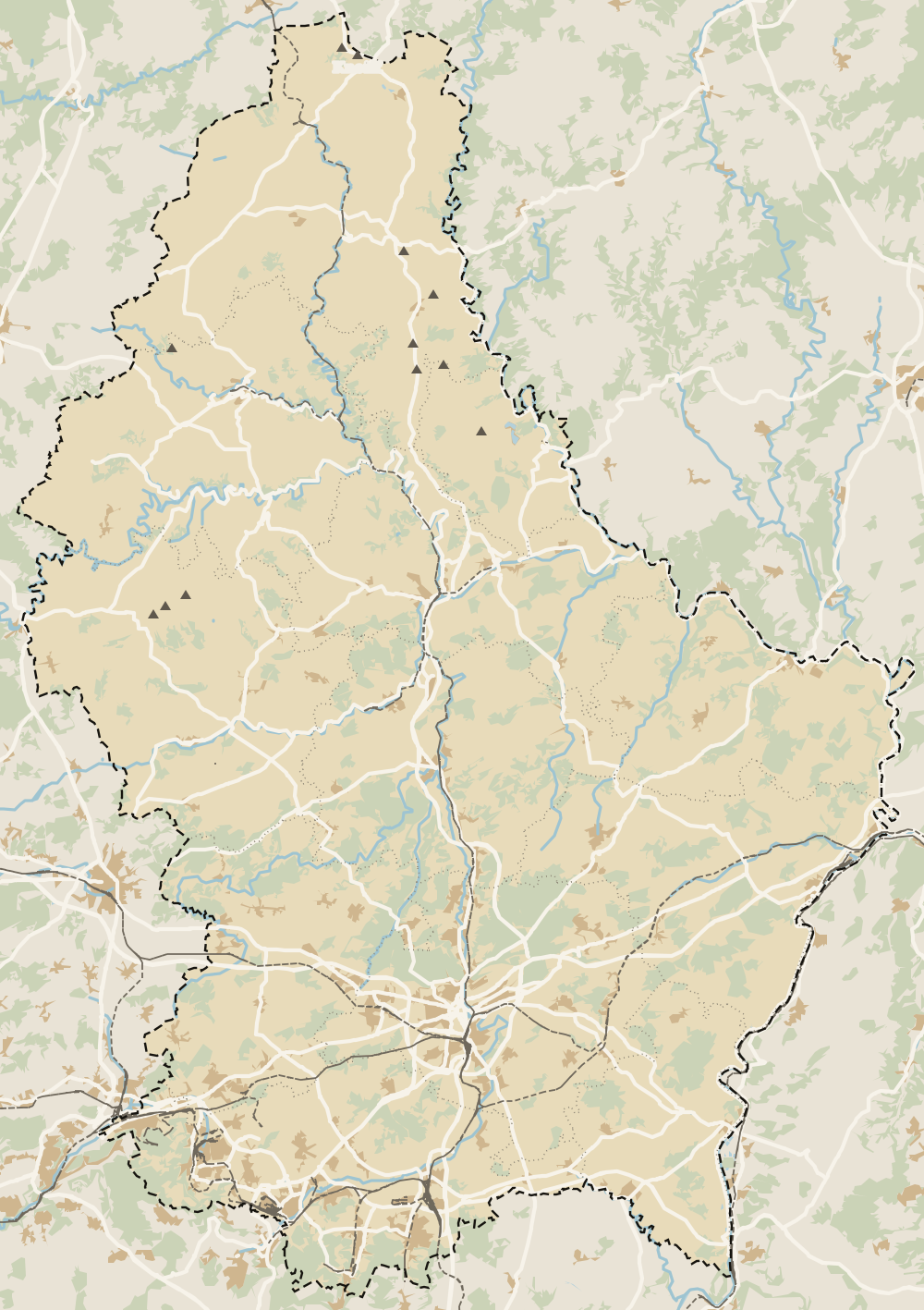 1Ville Haute 2Luxembourg City 3Grund 4Pfaffenthal 5Clausen 6Kirchberg 7Gare 8Hamm 9Luxembourg fortress 10Limpertsberg 11Pulvermühl 12Bonnevoie 13Hollerich 14Gasperich 15Belair 16Merl 17Cents 18Neudorf 19Weimerskirch 20Beggen 21Eich 22Dommeldange 23Mühlenbach 24Pétrusse Valley 25Rollingergrund 26Cessange 27Rham Plateau 28Tram and Bus Museum
 Map data © OpenStreetMap contributors (ODbL)
- 1Ville HauteA district of Luxembourg City
- 2Luxembourg CityCapital of the Grand Duchy
- 3GrundLuxembourg City district on the Alzette
- 4PfaffenthalLuxembourg City district in the Alzette valley
- 5ClausenLuxembourg City district in the Alzette valley
- 6KirchbergLuxembourg City's European and business district
- 7GareLuxembourg City district south of the Pétrusse
- 8HammDistrict on the eastern side of Luxembourg City
- 9Luxembourg fortressUNESCO World Heritage since 1994
- 10LimpertsbergLuxembourg City district north of the Ville Haute
- 11PulvermühlLuxembourg City's smallest district
- 12BonnevoieBonnevoie-Nord / Verlorenkost and Bonnevoie-Sud
- 13HollerichLuxembourg City district west of the Gare
- 14GasperichDistrict in the south of Luxembourg City
- 15BelairResidential district west of the Ville Haute
- 16MerlResidential district on the capital's west side
- 17CentsResidential district east of the city centre
- 18NeudorfAlzette valley district below Kirchberg
- 19WeimerskirchNorthern district on the Alzette valley slope
- 20BeggenDistrict at the northern tip of the capital
- 21EichNorthern district in the Alzette valley
- 22DommeldangeNorthern district with a village centre
- 23MühlenbachNorthern district on the edge of the Bambësch
- 24Pétrusse ValleyPark and walk between the old town and the Gare
- 25RollingergrundNorth-west district, including Belair-Nord
- 26CessangeSouth-west district of the capital
- 27Rham PlateauLuxembourg City fortifications
- 28Tram and Bus MuseumMuseum in Hollerich
What to see
What to see in Grund
0 of 425 Luxembourg guides
Your next stamp
- Rham Plateau
- City-centre hotels
- Luxembourg in one day
- Luxembourg in two days
- Ville Haute
- Natur Musée
- Neumünster Abbey
- Bridges
- A Possen Museum
- American Cemetery
- Ansembourg
- Ansembourg Castles
- Asselborn
- Bascharage
- Beaufort castles
- Belval
- Belval blast furnaces
- Berg Castle
- Bernard-Massard cellars
- Bourglinster Castle
- Bourscheid Castle
- Brandenbourg
- Brandenbourg Castle
- Caves St Martin
- Christmas
- Clervaux Castle
- Echternach
- Echternach Abbey
- Ehnen
- Ehnen Wine Museum
- Esch-sur-Alzette
- Esch-sur-Sûre Castle
- European Museum Schengen
- Fond-de-Gras
- General Patton Museum
- German war cemetery
- Haff Réimech
- Hohllay
- Hollenfels Castle
- Hosingen
- Kautenbach
- Kneiff
- Koerich Castle
- Larochette Castle
- Lasauvage
- Mersch Castle
- Military History Museum
- Moersdorf
- Mondorf Domaine Thermal
- Munsbach Castle
- National Mining Museum
- Parc Merveilleux
- Park Sënnesräich
- Places to visit
- Remich
- Rindschleiden
- Schiessentümpel
- Septfontaines Castle
- Slate Museum
- Stolzembourg
- Tudor Museum
- Useldange Castle
- Valley of the Seven Castles
- Vianden
- Vianden Castle
- Wasserbillig Aquarium
- Weiswampach lakes
- Wiltz Castle
- Ahn
- Berdorf
- Bourscheid-Plage
- Butterfly garden
- Clervaux
- Differdange
- Echternach lake
- Grevenmacher
- Heringer Millen
- Hollenfels
- Luxembourg City
- Luxembourg Science Center
- Meysembourg Castle
- Mullerthal
- National Day
- National Resistance Museum
- Perekop
- Remerschen
- Schoenfels Castle
- The Family of Man
- Things to do
- Upper Sûre Lake
- Vianden chairlift
- Wasserbillig
- Clervaux Abbey
- Echternach Roman villa
- Éislek
- Insenborn
- Kallektuffquell
- Machtum
- Most beautiful places
- Our Nature Park
- Pétange
- Pettingen Castle
- Schueberfouer
- Schwebsingen
- Victor Hugo House
- Waldbillig
- Dudelange
- Kuelscheier
- Lultzhausen
- Moselle Valley
- Octave
- Prettiest villages
- Sanem
- Schengen
- Wellenstein
- Wiltz
- Wolfsschlucht
- Beaufort
- Bech-Kleinmacher
- Éimaischen
- Gaalgebierg
- Guttland
- Marnach
- Mondorf-les-Bains
- Putscheid
- Schifflange
- UNESCO World Heritage
- Carnival
- Consdorf
- Ellergronn
- Käerjeng
- Kayl
- Map
- Minett
- Munshausen
- Tandel
- Bech
- Buergbrennen
- Esch-sur-Sûre
- Rumelange
- Where is Luxembourg
- Is it a country?
- Lac de la Haute-Sûre (commune)
- Rosport-Mompach
- Wormeldange
- Larochette
- Mondercange
- Regions
- Bettembourg
- Bock Casemates
- Cantons
- Dancing procession
- Diekirch
- Fischbach
- Garnich
- Mersch
- Moselle wine route
- Ettelbruck
- Heffingen
- Kehlen
- Lintgen
- Moselle river cruises
- Pétrusse Casemates
- Towns and villages
- Chemin de la Corniche
- Erpeldange-sur-Sûre
- Junglinster
- Kopstal
- Lorentzweiler
- Nommern
- Pfaffenthal
- Population
- Bissen
- Clausen
- Grand Ducal Palace
- Koerich
- Schieren
- Size
- Vallée de l'Ernz
- Feulen
- Kirchberg
- Languages
- Notre-Dame Cathedral
- Reisdorf
- Steinfort
- Bettendorf
- Habscht
- St Michael's Church
- Helperknapp
- Luxembourgish
- Place Guillaume II
- Name
- Place d'Armes
- History
- Place de la Constitution
- Grand Duke
- Colmar-Berg
- Flaxweiler
- Gare
- Hamm
- Kirchberg funicular
- Luxembourg fortress
- Mamer
- Mertert
- Minett Trail
- Mullerthal Trail
- Parc Hosingen
- Pfaffenthal lift
- Political system
- Redange
- The Passerelle
- Wine festivals
- Winseler
- Beckerich
- Biwer
- EU institutions
- Goesdorf
- Limpertsberg
- Mudam
- Pulvermühl
- Stadtbredimus
- Troisvierges
- Wenzel walk
- Bonnevoie
- Bous-Waldbredimus
- Ell
- Flag
- Kiischpelt
- Manternach
- Philharmonie
- Vauban circuit
- Weiswampach
- Betzdorf
- Boulaide
- Dräi Eechelen Museum
- Facts
- Hollerich
- Lenningen
- Useldange
- Wincrange
- Bourscheid
- Dalheim
- Gasperich
- Public holidays
- Red Bridge
- Saeul
- Belair
- Second World War
- Vichten
- Battle of the Bulge
- Merl
- Préizerdaul
- Cents
- EU and Schengen
- Groussbus-Wal
- Entry requirements
- Neudorf
- Rambrouch
- Currency and payments
- Mertzig
- Weimerskirch
- Adolphe Bridge
- Beggen
- Escapardenne
- How to get there
- International March of Diekirch
- MNHA (National Museum)
- Rock climbing
- Sandweiler
- Eich
- Flights
- Golf
- Hesperange
- Lëtzebuerg City Museum
- Canoeing and kayaking
- Dommeldange
- Luxembourg airport
- Strassen
- Villa Vauban
- Airport to city centre
- Bertrange
- Casino Luxembourg
- Mühlenbach
- Swimming pools
- From Brussels
- Pétrusse Valley
- Rollingergrund
- Walferdange
- Cessange
- Day trip from Brussels
- Municipal Park
- Steinsel
- Free walking tours
- From Paris
- Niederanven
- From Frankfurt
- Schuttrange
- Sightseeing train and bus
- By train
- Contern
- By coach
- Weiler-la-Tour
- Driving
- Pretzel Sunday
- Tour de Luxembourg
- Candlemas (Liichtmëssdag)
- Car hire
- Saint-Esprit Plateau
- Luxembourg in three days
- Melusina statue
- Parking
- St Nicholas Day (Kleeschen)
- Fête de la Musique
- Luxembourg in four days
- Museums in Luxembourg
- Petrol
- Place de Clairefontaine
- A week in Luxembourg
- Getting around
- Luxembourg Marathon
- Tram and Bus Museum
- Free public transport
- Parks in Luxembourg City
- Road trip
- Belgium and Luxembourg
- Tram
- Buses
- Viewpoints
- Trains
- Luxembourg station
- Cycling
- LuxembourgPass
- Prices and budget
- On a budget
- Free things to do
- Mobile and roaming
- Healthcare
- Safety
- Scams
- Tourist information
- Packing list
- Swimming lakes
- With a dog
- Markets
- Tipping
- Shopping
- What to buy
- Shopping centres
- With kids
- For couples
- Playgrounds
- Adventure parks
- Nightlife
- Castles
- Theatres and concert venues
- Leudelange
- Nature parks
- Where to stay
- Hiking
- Nature reserves
- Reckange-sur-Mess
- Hotels near the station
- Roeser
- Frisange
- Hotels in Kirchberg
- Airport hotels
- Dippach
- Hotels in Vianden
- Hotels in Echternach
- Hotels in Clervaux
- Hotels in Mondorf-les-Bains
- Hotels in Esch-sur-Alzette
- Hotels on the Moselle
- Mullerthal hotels
- Upper Sûre lake hotels
- Hotels in Diekirch and Ettelbruck
- Cheap hotels
- Luxury hotels
- Boutique hotels
- Spa hotels
- Family hotels
- Apartments
- Weather
- Youth hostels
- Best time to visit
- Campsites
- Holiday cottages
- In winter
- Castle hotels
- In spring
- Day trips
- In summer
- Around Luxembourg
- In autumn
- Ice skating
- Trier day trip
- Metz day trip
- Arlon day trip
- In January
- In February
- In March
- In April
- In May
- In June
- In July
- In August
- In September
- Food
- In October
- In November
- Where to eat
- In December
- Michelin restaurants
- Cheap eats
- Judd mat Gaardebounen
- Bouneschlupp
- Gromperekichelcher
- Kniddelen
- Quetschentaart
- Rieslingspaschtéit
- Events
- Wine
- Crémant
- Beer
Frequently asked questions
What is the Grund in Luxembourg?
It's one of the capital's 24 official districts, at the bottom of the Alzette valley below the upper town. It covers 30.03 hectares, had 1,008 residents on 31 December 2023 and sits in the buffer zone of the UNESCO World Heritage Site.
How do I get down to the Grund?
On foot, using the steps and ramps from the Corniche or the Montée du Grund, or by the public lift between the Plateau du Saint-Esprit and the district. The tourist office reckons the city-centre car parks are about 10 minutes' walk away.
Is there a lift to the Grund?
Yes. The City of Luxembourg runs a lift between the Plateau du Saint-Esprit, by the Cité judiciaire, and the Grund. It isn't the glass panoramic lift; that one is in Pfaffenthal, further north.
What is there to do in the Grund?
See Neumünster Abbey and St John's Church, the Natur Musée, the Melusina statue by the river, the Stierchen Bridge and the Plateau du Rham. And look up, with the rock and the ramparts towering above you.
Is the Grund a UNESCO site?
The City of Luxembourg places it in the buffer zone of the site 'City of Luxembourg: its Old Quarters and Fortifications', inscribed in 1994, while the tourist office presents it as part of the site. Either way, it falls within what UNESCO protects around the old town.
Where can I eat in the Grund?
Neumünster Abbey has a brasserie on site, and there are cafés and restaurants along the riverbank. I don't name places because I have no up-to-date official list; for eating out, the capital's restaurant guide serves you better.
By
Tourism graduate with a master’s in Tourism Management and Planning from the University of Málaga, who has travelled across Europe. He writes every guide from official sources and his own judgement.
Published on . Updated on . Facts checked on .
Sources
Some links in this guide are affiliate links: if you book through them, the site earns a commission at no extra cost to you. Affiliate disclosure
Photos: rboed* (CC BY 2.0); Zinneke (CC BY-SA 3.0 lu); Cayambe (CC BY-SA 4.0); Diego Delso (CC BY-SA 4.0), via Wikimedia Commons.