Luxembourg wine
Luxembourg wine, a small vineyard of fine whites on the Moselle
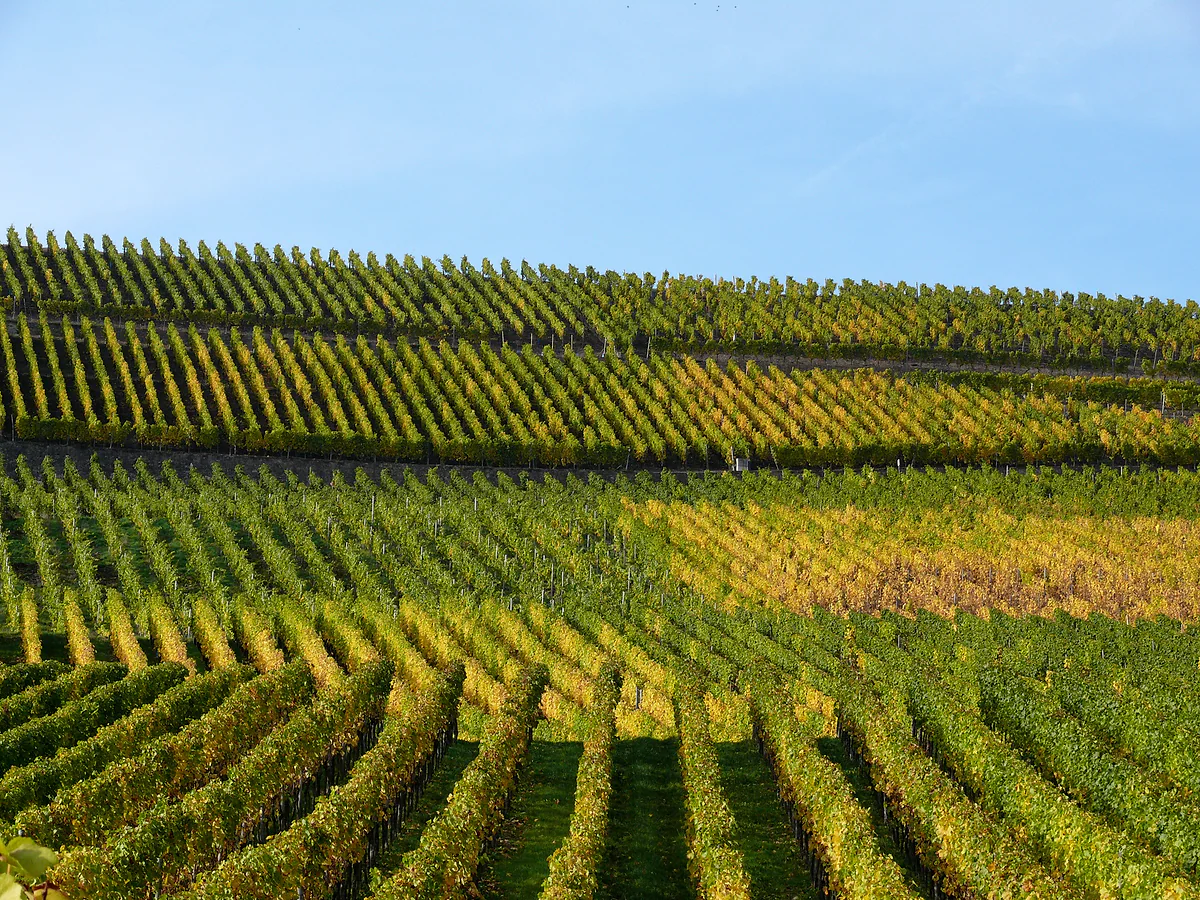
Luxembourg makes its wine on the Moselle, with 1,189 hectares and 234 growers in 2025 according to STATEC. It's white wine country, led by Rivaner, Auxerrois, Pinot Gris, Pinot Blanc and Riesling, all under the Moselle luxembourgeoise PDO, which runs from Schengen to Wasserbillig. There's crémant too, since 1991, plus ice wine and straw wine.
In 30 seconds
Full read: 3 min
- Luxembourg had 1,189 hectares of vines and 234 growers in 2025, all on the Moselle.
- It's white wine country, with Rivaner, Auxerrois, Pinot Gris, Pinot Blanc and Riesling.
- The Moselle luxembourgeoise PDO runs from Schengen to Wasserbillig and covers crémant and special wines.
- The capital's Fête des Vins et Crémants runs from 27 to 29 November 2026.
If I could only open two Luxembourg bottles, I'd pick an Auxerrois, because it's the grape you'll hardly ever see outside the country, and a Riesling from around Grevenmacher, for the limestone. I'd save the crémant for a toast, which is what Luxembourg does best.

On the calendar
The date at a glance
-
Fête des Vins et Crémants
Luxembourg City
Before you go
What I would keep in mind
-
01 Most beautiful
A degree or two warmer
The tourist board explains that the Moselle vineyards are always a degree or two warmer than the rest of the country, with the sun full on the slopes.
Luxembourg Moselle Valley -
02 My tip
Clay or limestone
The official portal splits the Moselle in two, clay soils and rounder wines from Schengen to Greiveldange, limestone and finer wines in the canton of Grevenmacher.
-
03 Worth the splurge
Ice wine and straw wine
The PDO also covers late harvest, vin de paille and vin de glace. Special-occasion wines, and ice wine needs grapes frozen on the vine.
-
04 Getting there
For visiting wineries
Tastings, cellar visits and the 115 km road through the vineyards have their own guide. Here I stick to the grapes and how to pick a bottle.
Luxembourg Moselle wine route
What I would book
My ranking, scored
The wines I'd try first
My own scores out of 10, weighing how distinctively Luxembourgish each one is, how hard it is to find at home and how well it goes with the local food. Opinion, based on STATEC figures and the official portal.
0 of 5 seen
-
Crémant de Luxembourg
Not a grape but the PDO's sparkling wine, made since 1991 with at least nine months on the lees. The best thing the country makes.
9.4 out of 10
-
Auxerrois
17.9% of the vineyard in production and rarely seen outside the region. For me it's the bottle that best explains the Luxembourg Moselle.
9.2 out of 10
-
Riesling
153 hectares, 13.1%, with Wormeldange as its capital and a festival of its own in September. The natural partner to Rieslingspaschtéit.
9.0 out of 10
-
Pinot Gris
16.2% of the vineyard, and the tourist board singles it out among the varietal wines that made the region's name.
8.5 out of 10
-
Rivaner
Joint most planted with Auxerrois at 17.9%. An easy everyday white, good with fried Moselle fish.
7.8 out of 10
Luxembourg rarely appears on British wine lists, and when it does it’s usually for its crémant. I think that’s a real missed opportunity, and a shame for anyone who enjoys crisp whites. It’s a small vineyard, packed into a strip of the Moselle, and precisely because of that it has a very clear identity, fresh, mineral, well-made whites. Here’s what’s planted, how to read a label and which bottle I’d open if I had just one evening in the country. For visiting cellars, see the Luxembourg Moselle wine route.
Where is Luxembourg wine made?
On the Moselle, in the south-east of the country. The appellation, the Moselle luxembourgeoise PDO, covers the vineyards from Schengen, on the French border, to Wasserbillig, plus those near Rosport, as the wine institute explains on the official portal. STATEC counted 1,189 hectares of vines and 234 growers in 2025, small-country figures for a region the same portal describes as home to more than 40 cellars and estates.
The tourist board adds a detail that explains a lot. The riverside vineyards are always a degree or two warmer than the rest of the country, with the sun full on the slopes, which is why the grapes for the best wines ripen there. The Romans, it says, already prized this terroir. More on the region in Luxembourg Moselle valley.
The nine grapes, and which ones lead
The tourist board lists nine varieties, Riesling, Pinot Noir, Pinot Blanc, Pinot Gris, Gewürztraminer, Auxerrois, Rivaner, Elbling and Chardonnay. STATEC’s 2025 figures rank the vineyard in production like this. Rivaner and Auxerrois tie at the top with 17.9% each, followed by Pinot Gris at 16.2%, Pinot Blanc at 13.3% and Riesling at 13.1%, which is 153 hectares. Pinot Noir, the only red among the big players, reaches 11.1%.
What interests me most in that table is Auxerrois. It’s a grape you’ll barely see outside the region and here it covers as much ground as the most planted variety, so if you’re after something you can’t find at home, that’s the first one I’d order.
If you are staying the night, see the best hotel deals in Remich for your dates: the well-placed rooms go fast.
Two Moselles in one
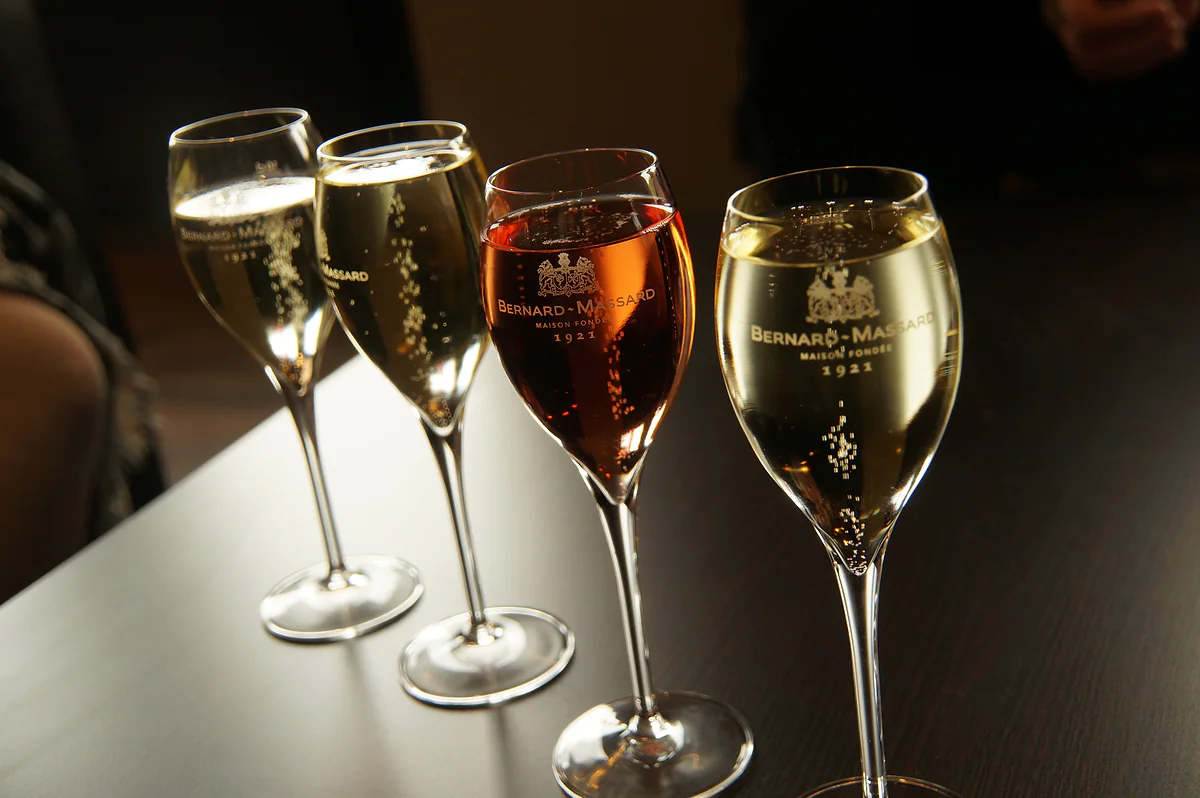
The official portal divides the vineyard by soil. From Schengen to Greiveldange, clay dominates and the wines are rounder. Further north, in Grevenmacher canton, the soil turns to limestone and the wines become finer and tauter. Wormeldange, in that second stretch, calls itself the Riesling capital and has the Koeppchen, a vineyard with slopes of more than 70 degrees and the chapel of St Donatus at the top. Luxembourg has had a wine institute in Remich since 1925. At the other end of the scale from the small growers, Caves Bernard-Massard in Grevenmacher fills nearly 3.5 million bottles a year and calls itself Luxembourg’s top family house, which gives you an idea of how far a small vineyard can stretch.
How to read a label
Every quality wine in the country carries the PDO, regulated by the European Union and checked by the state. To earn it, each wine passes an analytical and tasting exam. On the label you’ll see the terms the official portal lists, Côtes de, Coteaux de and Lieu-dit, the last naming a specific site. I’d read them as clues to where the wine comes from rather than as a ranking. The same PDO covers still whites, rosés and reds, crémant de Luxembourg and the special wines, late harvest, vin de paille and vin de glace. In autumn there’s also Fiederwäissen, which the portal lists as a seasonal special and which I’d look for during the harvest.
If you are staying the night, see the best hotel deals in Remich for your dates: the well-placed rooms go fast.
When to go and what to buy
If you can choose your dates, the wine festivals are the best way in. In the capital, the crémant and wine fair fills three days, Friday 27 to Sunday 29 November 2026, and Wormeldange’s Riesling festival lasts three days over the third weekend of September. To buy, I’d do it at the cellar door, tasting first. For other souvenirs, see what to buy in Luxembourg. The Domaines Vinsmoselle cooperative, founded in 1921, brings together more than 240 growers, and its Caves du Sud at Remerschen offered tastings from €10 a head in September 2026. Heading home to Britain, gov.uk allows 18 litres of still wine plus either 9 litres of sparkling or 4 of spirits, so a case of crémant fits comfortably.
So you do not lose the morning at the ticket office, browse tickets and tours in Remich on GetYourGuide.
If you would rather go at your own pace, see the car hire deals in Luxembourg: the earlier you book, the more cars are left to choose from.
Before you fix your dates, compare tickets to Luxembourg: the same journey can cost very different amounts from one day to the next.
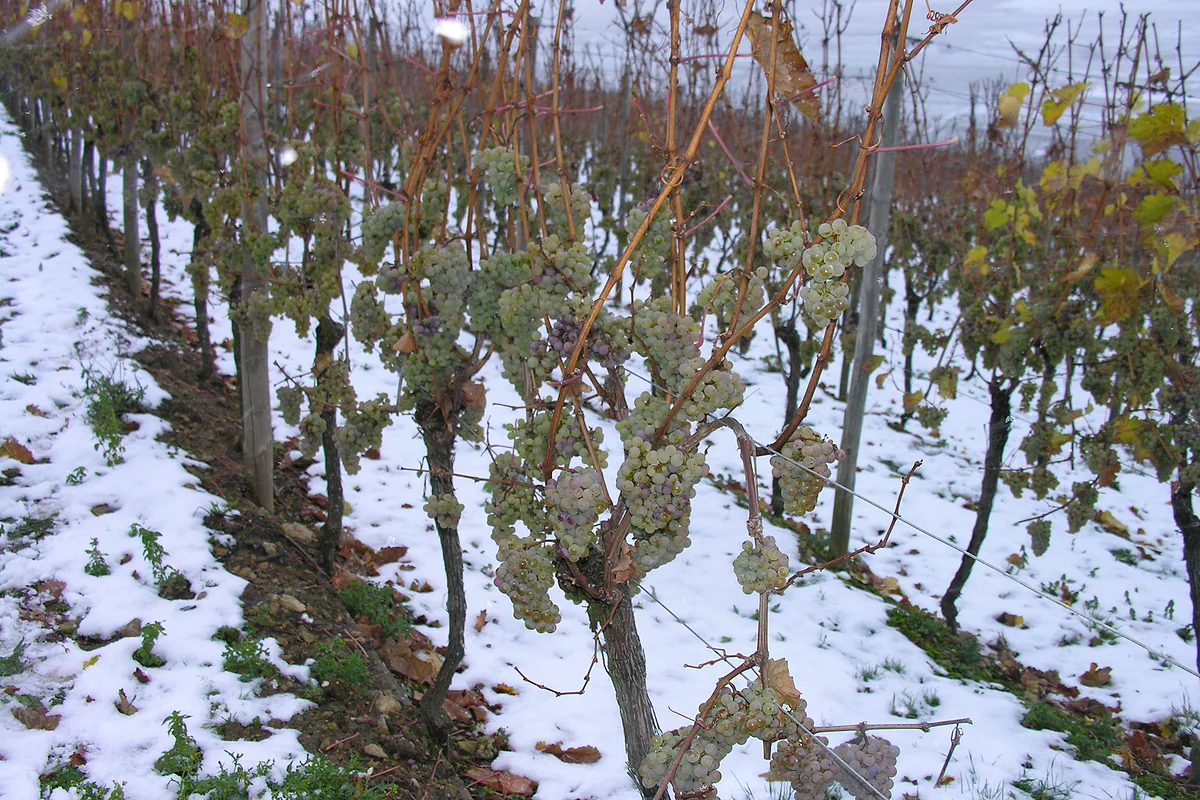
Frozen bunches of grapes hanging from the vines amid the snow, kept for ice wine on the Luxembourg Moselle
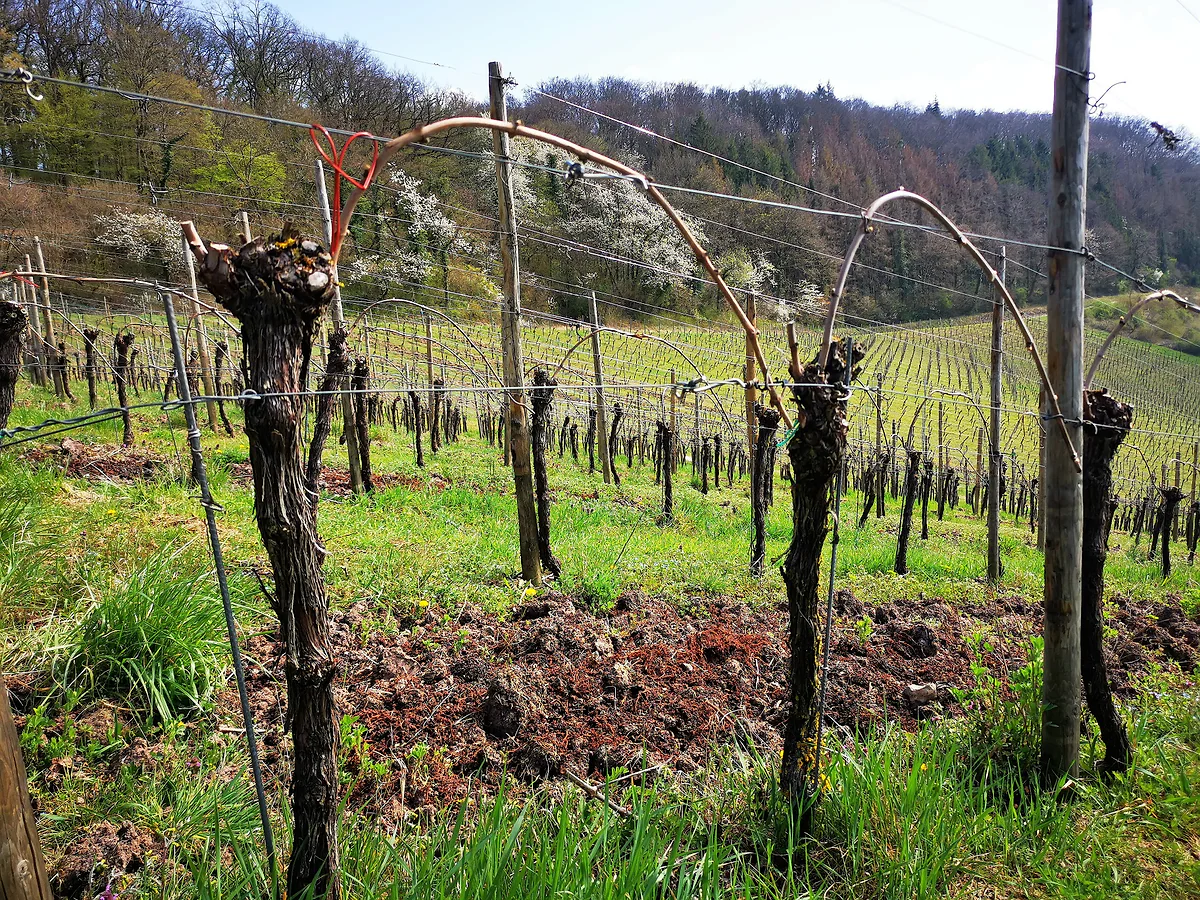
Old vines tied to their posts in the vineyards at Schwebsingen, with the green Moselle hillside behind
Grapes of the Luxembourg Moselle (2025, % of area in production)
| Grape | Share |
|---|---|
| Rivaner | 17.9% |
| Auxerrois | 17.9% |
| Pinot Gris | 16.2% |
| Pinot Blanc | 13.3% |
| Riesling | 13.1% (153 ha) |
| Pinot Noir | 11.1% |
| Chardonnay | 5.03% |
| Elbling | 4.1% |
| Gewürztraminer | 1.58% |
| Others | 2.67% |
STATEC, 2025 wine statistics, checked on 29-09-2026.
What the Moselle luxembourgeoise PDO covers
| Type | What it is |
|---|---|
| Still wines | White, rosé and red |
| Crémant de Luxembourg | Bottle-fermented sparkling wine, at least 9 months on the lees |
| Late harvest | Wine from late-picked grapes |
| Vin de paille | Straw wine from dried grapes |
| Vin de glace | Ice wine from grapes frozen on the vine |
| Label terms | Lieu-dit, Coteaux de, Côtes de |
luxembourg.public.lu (PDO, grapes and vineyards, special wines), 29-09-2026. To carry the PDO, every wine passes an analytical and tasting exam.
Test yourself
True or false?
0/3 Pick before you peek.
-
Riesling is Luxembourg's most planted grape.
See the answer
False. In 2025 the most planted were Rivaner and Auxerrois, at 17.9% each. Riesling covers 13.1%.
-
Luxembourg's Moselle PDO also covers ice wine.
See the answer
True. The official portal includes late harvest, vin de paille and vin de glace in the PDO, along with still wines and crémant.
-
The Moselle vineyards are colder than the rest of the country.
See the answer
False. The tourist board says the opposite, that they're always a degree or two warmer than the rest of Luxembourg.
What to see
What to see in Wine
0 of 425 Luxembourg guides
Your next stamp
- Moselle wine route
- Crémant
- Moselle Valley
- Prettiest villages
- What to buy
- Places to visit
- Wine festivals
- Hotels on the Moselle
- A Possen Museum
- American Cemetery
- Ansembourg
- Ansembourg Castles
- Asselborn
- Bascharage
- Beaufort castles
- Belval
- Belval blast furnaces
- Berg Castle
- Bernard-Massard cellars
- Bourglinster Castle
- Bourscheid Castle
- Brandenbourg
- Brandenbourg Castle
- Caves St Martin
- Christmas
- Clervaux Castle
- Echternach
- Echternach Abbey
- Ehnen
- Ehnen Wine Museum
- Esch-sur-Alzette
- Esch-sur-Sûre Castle
- European Museum Schengen
- Fond-de-Gras
- General Patton Museum
- German war cemetery
- Haff Réimech
- Hohllay
- Hollenfels Castle
- Hosingen
- Kautenbach
- Kneiff
- Koerich Castle
- Larochette Castle
- Lasauvage
- Mersch Castle
- Military History Museum
- Moersdorf
- Mondorf Domaine Thermal
- Munsbach Castle
- National Mining Museum
- Parc Merveilleux
- Park Sënnesräich
- Remich
- Rindschleiden
- Schiessentümpel
- Septfontaines Castle
- Slate Museum
- Stolzembourg
- Tudor Museum
- Useldange Castle
- Valley of the Seven Castles
- Vianden
- Vianden Castle
- Ville Haute
- Wasserbillig Aquarium
- Weiswampach lakes
- Wiltz Castle
- Ahn
- Berdorf
- Bourscheid-Plage
- Butterfly garden
- Clervaux
- Differdange
- Echternach lake
- Grevenmacher
- Heringer Millen
- Hollenfels
- Luxembourg City
- Luxembourg Science Center
- Meysembourg Castle
- Mullerthal
- National Day
- National Resistance Museum
- Perekop
- Remerschen
- Schoenfels Castle
- The Family of Man
- Things to do
- Upper Sûre Lake
- Vianden chairlift
- Wasserbillig
- Clervaux Abbey
- Echternach Roman villa
- Éislek
- Insenborn
- Kallektuffquell
- Machtum
- Most beautiful places
- Our Nature Park
- Pétange
- Pettingen Castle
- Schueberfouer
- Schwebsingen
- Victor Hugo House
- Waldbillig
- Dudelange
- Kuelscheier
- Lultzhausen
- Octave
- Sanem
- Schengen
- Wellenstein
- Wiltz
- Wolfsschlucht
- Beaufort
- Bech-Kleinmacher
- Éimaischen
- Gaalgebierg
- Guttland
- Marnach
- Mondorf-les-Bains
- Putscheid
- Schifflange
- UNESCO World Heritage
- Carnival
- Consdorf
- Ellergronn
- Käerjeng
- Kayl
- Map
- Minett
- Munshausen
- Tandel
- Bech
- Buergbrennen
- Esch-sur-Sûre
- Rumelange
- Where is Luxembourg
- Is it a country?
- Lac de la Haute-Sûre (commune)
- Rosport-Mompach
- Wormeldange
- Larochette
- Mondercange
- Regions
- Bettembourg
- Bock Casemates
- Cantons
- Dancing procession
- Diekirch
- Fischbach
- Garnich
- Mersch
- Ettelbruck
- Grund
- Heffingen
- Kehlen
- Lintgen
- Moselle river cruises
- Pétrusse Casemates
- Towns and villages
- Chemin de la Corniche
- Erpeldange-sur-Sûre
- Junglinster
- Kopstal
- Lorentzweiler
- Nommern
- Pfaffenthal
- Population
- Bissen
- Clausen
- Grand Ducal Palace
- Koerich
- Schieren
- Size
- Vallée de l'Ernz
- Feulen
- Kirchberg
- Languages
- Notre-Dame Cathedral
- Reisdorf
- Steinfort
- Bettendorf
- Habscht
- St Michael's Church
- Helperknapp
- Luxembourgish
- Place Guillaume II
- Name
- Place d'Armes
- History
- Place de la Constitution
- Grand Duke
- Colmar-Berg
- Flaxweiler
- Gare
- Hamm
- Kirchberg funicular
- Luxembourg fortress
- Mamer
- Mertert
- Minett Trail
- Mullerthal Trail
- Neumünster Abbey
- Parc Hosingen
- Pfaffenthal lift
- Political system
- Redange
- The Passerelle
- Winseler
- Beckerich
- Biwer
- EU institutions
- Goesdorf
- Limpertsberg
- Mudam
- Natur Musée
- Pulvermühl
- Stadtbredimus
- Troisvierges
- Wenzel walk
- Bonnevoie
- Bous-Waldbredimus
- Ell
- Flag
- Kiischpelt
- Manternach
- Philharmonie
- Vauban circuit
- Weiswampach
- Betzdorf
- Boulaide
- Dräi Eechelen Museum
- Facts
- Hollerich
- Lenningen
- Useldange
- Wincrange
- Bourscheid
- Dalheim
- Gasperich
- Public holidays
- Red Bridge
- Saeul
- Belair
- Second World War
- Vichten
- Battle of the Bulge
- Merl
- Préizerdaul
- Cents
- EU and Schengen
- Groussbus-Wal
- Entry requirements
- Neudorf
- Rambrouch
- Currency and payments
- Mertzig
- Weimerskirch
- Adolphe Bridge
- Beggen
- Escapardenne
- How to get there
- International March of Diekirch
- MNHA (National Museum)
- Rock climbing
- Sandweiler
- Bridges
- Eich
- Flights
- Golf
- Hesperange
- Lëtzebuerg City Museum
- Canoeing and kayaking
- Dommeldange
- Luxembourg airport
- Strassen
- Villa Vauban
- Airport to city centre
- Bertrange
- Casino Luxembourg
- Mühlenbach
- Swimming pools
- From Brussels
- Pétrusse Valley
- Rollingergrund
- Walferdange
- Cessange
- Day trip from Brussels
- Municipal Park
- Steinsel
- Free walking tours
- From Paris
- Niederanven
- From Frankfurt
- Schuttrange
- Sightseeing train and bus
- By train
- Contern
- By coach
- Weiler-la-Tour
- Driving
- Luxembourg in one day
- Pretzel Sunday
- Rham Plateau
- Tour de Luxembourg
- Candlemas (Liichtmëssdag)
- Car hire
- Luxembourg in two days
- Saint-Esprit Plateau
- Luxembourg in three days
- Melusina statue
- Parking
- St Nicholas Day (Kleeschen)
- Fête de la Musique
- Luxembourg in four days
- Museums in Luxembourg
- Petrol
- Place de Clairefontaine
- A week in Luxembourg
- Getting around
- Luxembourg Marathon
- Tram and Bus Museum
- Free public transport
- Parks in Luxembourg City
- Road trip
- Belgium and Luxembourg
- Tram
- Buses
- Viewpoints
- Trains
- Luxembourg station
- Cycling
- LuxembourgPass
- Prices and budget
- On a budget
- Free things to do
- Mobile and roaming
- Healthcare
- Safety
- Scams
- Tourist information
- Packing list
- Swimming lakes
- With a dog
- Markets
- Tipping
- Shopping
- Shopping centres
- With kids
- For couples
- Playgrounds
- Adventure parks
- Nightlife
- Castles
- Theatres and concert venues
- Leudelange
- Nature parks
- Where to stay
- City-centre hotels
- Hiking
- Nature reserves
- Reckange-sur-Mess
- Hotels near the station
- Roeser
- Frisange
- Hotels in Kirchberg
- Airport hotels
- Dippach
- Hotels in Vianden
- Hotels in Echternach
- Hotels in Clervaux
- Hotels in Mondorf-les-Bains
- Hotels in Esch-sur-Alzette
- Mullerthal hotels
- Upper Sûre lake hotels
- Hotels in Diekirch and Ettelbruck
- Cheap hotels
- Luxury hotels
- Boutique hotels
- Spa hotels
- Family hotels
- Apartments
- Weather
- Youth hostels
- Best time to visit
- Campsites
- Holiday cottages
- In winter
- Castle hotels
- In spring
- Day trips
- In summer
- Around Luxembourg
- In autumn
- Ice skating
- Trier day trip
- Metz day trip
- Arlon day trip
- In January
- In February
- In March
- In April
- In May
- In June
- In July
- In August
- In September
- Food
- In October
- In November
- Where to eat
- In December
- Michelin restaurants
- Cheap eats
- Judd mat Gaardebounen
- Bouneschlupp
- Gromperekichelcher
- Kniddelen
- Quetschentaart
- Rieslingspaschtéit
- Events
- Beer
Frequently asked questions
Is Luxembourg wine any good?
Yes, especially the whites and sparkling wines. The official portal says the Moselle PDO wines have fine minerality and fruit, and that their quality is a match for better-known regions, even if they lack their size.
Where is wine made in Luxembourg?
On the Moselle, in the south-east of the country. The Moselle luxembourgeoise PDO runs from Schengen, on the French border, to Wasserbillig, plus the vineyards near Rosport.
What grapes grow in Luxembourg?
Nine, according to the tourist board. Riesling, Pinot Noir, Pinot Blanc, Pinot Gris, Gewürztraminer, Auxerrois, Rivaner, Elbling and Chardonnay. The most planted in 2025 were Rivaner and Auxerrois, at 17.9% each.
How much wine can I bring back to the UK?
gov.uk sets the allowance at 18 litres of still wine plus either 9 litres of drinks up to 22%, sparkling wine included, or 4 litres of spirits, as long as it's for personal use. Crémant counts as sparkling.
Where can I buy Luxembourg wine?
At the Moselle wineries, which the official portal counts at more than 40 cellars and estates, where you can taste first. The Caves du Sud at Remerschen run tastings from €10 per person as of September 2026.
When are Luxembourg's wine festivals?
There are several. The Fête des Vins et Crémants in the capital runs from 27 to 29 November 2026, and Wormeldange's Riesling festival takes place on the third weekend of September.
By
Tourism graduate with a master’s in Tourism Management and Planning from the University of Málaga, who has travelled across Europe. He writes every guide from official sources and his own judgement.
Published on . Facts checked on .
Sources
Some links in this guide are affiliate links: if you book through them, the site earns a commission at no extra cost to you. Affiliate disclosure
Photos: Denise Hastert (CC BY-SA 4.0); Mya (CC BY 2.0); GilPe (CC BY-SA 4.0), via Wikimedia Commons.