Tunnels in a World Heritage Site
The Bock Casemates, the fortress inside the rock
The Bock Casemates (Casemates du Bock in French) are galleries cut into the rock beneath the outcrop where Luxembourg City began, part of a 23 km underground network. As of September 2026 the city tourist office shows them on a one-hour guided tour for up to 20 people, at €20 for adults and €10 for children aged 4 to 12.
In 30 seconds
Full read: 4 min
- The Bock Casemates are galleries cut into the rock where Luxembourg City began, part of a 23 km network.
- As of September 2026 they're shown on a one-hour guided tour by the city tourist office, up to 20 people, €20 per adult.
- The published calendar has tours mainly at weekends until 27 December 2026.
- The €11 walk-in ticket listed by visitluxembourg isn't on sale on the tourist office's website.
This is the paid visit I'd put ahead of any museum in the capital. Book a morning slot, and the Corniche and the Grund are right there for the rest of the day. Just make sure you pick an English-language tour before you pay.

Before you go
What I would keep in mind
-
01 Most beautiful
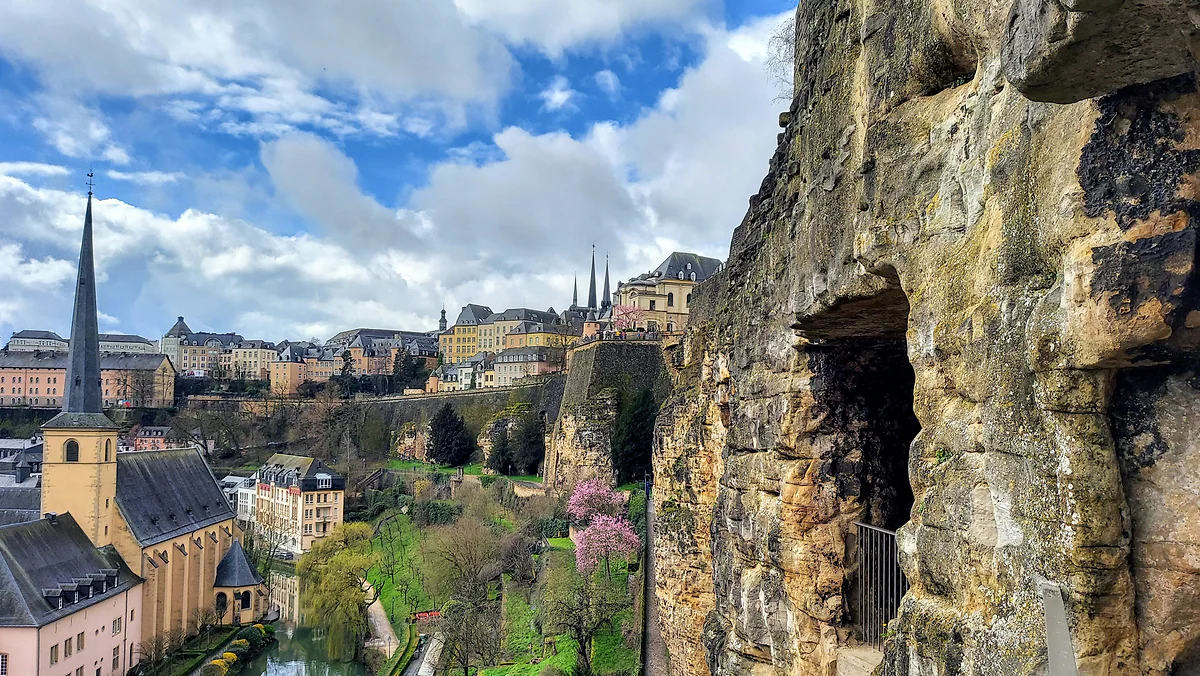
The Grund framed by a gun port
Through the openings and loopholes you look straight down on the lower town. visitluxembourg mentions views over the Grund, Clausen and the Pfaffenthal, which from inside the rock you read for what they were, a field of fire.
the Grund -
02 Worth the splurge
A guide to yourselves
The city tourist office hires out a private guide for groups of 1 to 20 from €100, plus a ticket per person. It costs more than joining a group tour, but you choose the day, the time and the language.
-
03 My tip
Book with time to spare
Private-guide requests made less than ten working days ahead carry a €50 surcharge, according to the tourist office. For the group tour, the published calendar has few weekday slots from October 2026.
-
04 Getting there
The bus drops you on top
Lines 9, 14 and 15 stop at Bockkasematten, right on the Montée de Clausen. Like all public transport in Luxembourg, they're free.
Luxembourg free public transport
What I would book
Plenty of cities have walls. Very few have their defences buried inside the rock, and that’s what sets the Bock Casemates apart. They’re galleries and chambers carved beneath the outcrop where everything started, with openings trained on the valley, and for centuries they were the reason Luxembourg was nicknamed the Gibraltar of the North. This is how I’d do them.
What exactly are the Bock Casemates?
The Bock is the rock that the Alzette valley wraps around on three sides. It could only be reached from the west, which is why Count Sigefroi picked it for his castle in 963. That little castle is where the Luxembourg name meaning comes from. Centuries later, under Spanish rule, galleries began to be dug into the rock; visitluxembourg places them in the 17th century and says they were enlarged twice. The official Vauban walk dates the 25 gun emplacements we now call the Bock Casemates to 1744 and 1745, under Empress Maria Theresa.
According to the city tourist office they belong to an underground web of tunnels and galleries stretching 23 km. What you visit is only a stretch, but it’s enough to grasp the scale. After 1867, when the fortress was to be dismantled, the openings were widened so they could no longer serve as gun positions, and that’s how they remain.
Rocher du Bock, the free viewpoint above the Casemates du Bock
You can stand on the rock before spending a penny. The Rocher du Bock is the outcrop Sigefroi obtained in 963 by swapping land with the abbey of Saint Maximin in Trier, and the tourist office calls it the cradle of the city. The Montée de Clausen, an ordinary street, runs over the top, so looking down into the valley from up here is free. The same street is where the Luxembourg sightseeing train sets off, with an audio guide. It’s my favourite no-cost viewpoint in this corner of the capital, because the Grund, the Alzette and the Rham Plateau opposite all fit in one glance.
Sheltered by the rock are three things visitors tend to blur together. The archaeological crypt, which the tourist office presents as the antechamber of the casemates, preserves castle structures of the first Dukes of Luxembourg alongside remains of the fortress. Then come the tunnels. And the Schlassbréck, the castle bridge, links the Ville Haute to the Bock. It was built in red sandstone in 1735 to replace a wooden bridge with a drawbridge, and its trick is that it joined the two sides on the surface and underground, on several levels. It was fully restored in 1992 and 1993.
To sleep close to everything, search places to stay in Luxembourg on Booking.com and filter by area before price.
What the tour is like now
As of September 2026, the Luxembourg City Tourist Office sells them as a one-hour guided tour for up to 20 people, in English, French or German. The meeting point is on the Montée de Clausen. Adults pay €20, students and over-60s €16 and children aged 4 to 12 €10. visitluxembourg also mentions the archaeological crypt, which it calls the antechamber of the casemates.
There’s a muddle here worth clearing up. visitluxembourg still shows opening hours of 09:45 to 17:00 and an €11 ticket, as if you could simply walk in. On the tourist office’s own website, on 29 September 2026, that €11 appears only as the per-person ticket when you hire a private guide. I’d trust the city office and book there, and if you find a walk-in ticket on the day, so much the better.
When do the tours run?
The calendar published at the end of September 2026 puts most autumn tours at weekends. In October there are tours on Fridays, Saturdays and Sundays, and in November and December on Saturdays and Sundays, with the last one listed on 27 December. Start times change from day to day, so check them when you book.
If you’re over on a weekday in autumn, the option is a private guide for groups of 1 to 20 from €100, plus the reduced ticket per person. The office warns that requests made less than ten working days ahead carry a €50 surcharge, and that its booking service works Monday to Friday.
To sleep close to everything, search places to stay in Luxembourg on Expedia and filter by area before price.
What I’d do before and after
The casemates sit at the start of one of the finest walks in the city. Step out and you have the castle bridge and the beginning of the Chemin de la Corniche, which follows the ramparts south with the Grund below. If military history is your thing, the Wenzel walk starts here too and drops into the valley along the medieval wall.
My order would be this. Casemates first thing, the Corniche heading south, then down to the Grund for lunch by the river. With time to spare, the Pétrusse Casemates are a different visit altogether, more theatrical and pricier, beneath Place de la Constitution.
Are they worth paying for?
For me, yes, and it’s one of the few paid things in the capital I’d recommend to anyone. You can see the old town free from outside, but only here are you inside the fortress, in the rock that made it famous. The one thing I’d insist on is checking the language of the slot before paying, because an hour of commentary you can’t follow is a long hour.
If you have small children with you, bear in mind these are galleries cut out of the rock. The website publishes no accessibility details for this tour, so if in doubt I’d ring the tourist office on +352 22 28 09 79. From the UK, remember your GHIC for anything medical, just as you would anywhere else in the EU.
Finally, keep in mind that the casemates, the Corniche and the rest of the old quarters form a single UNESCO World Heritage Site, listed in 1994. Seen in that light, the €20 ticket is the price of stepping inside the monument rather than just walking around it.
If you are short on time, see the best tours in Bock Casemates and pick one that fits your day.
Where the bus does not go, a car does: compare car hire in Luxembourg before you arrive rather than at the desk.
If you still need a way in, check the best ticket deals to Luxembourg from where you are.
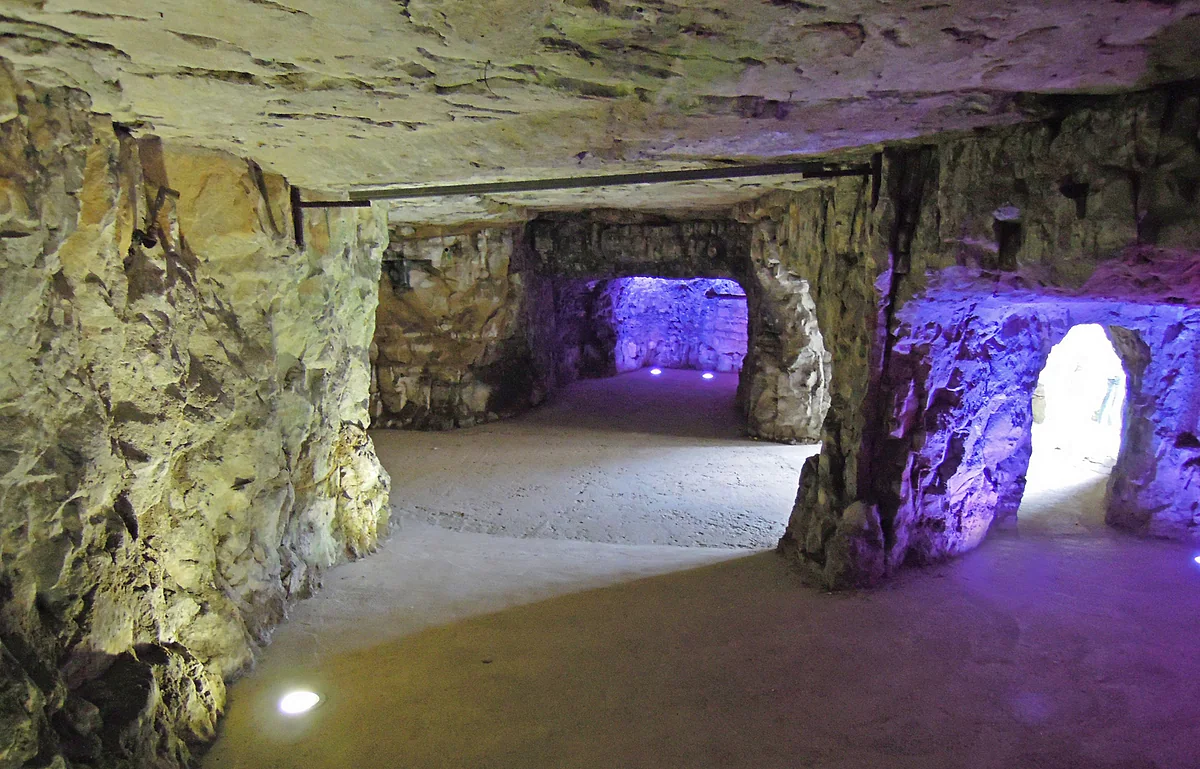
A gallery cut into the rock of the Bock Casemates, with passages lit in shades of purple and gold
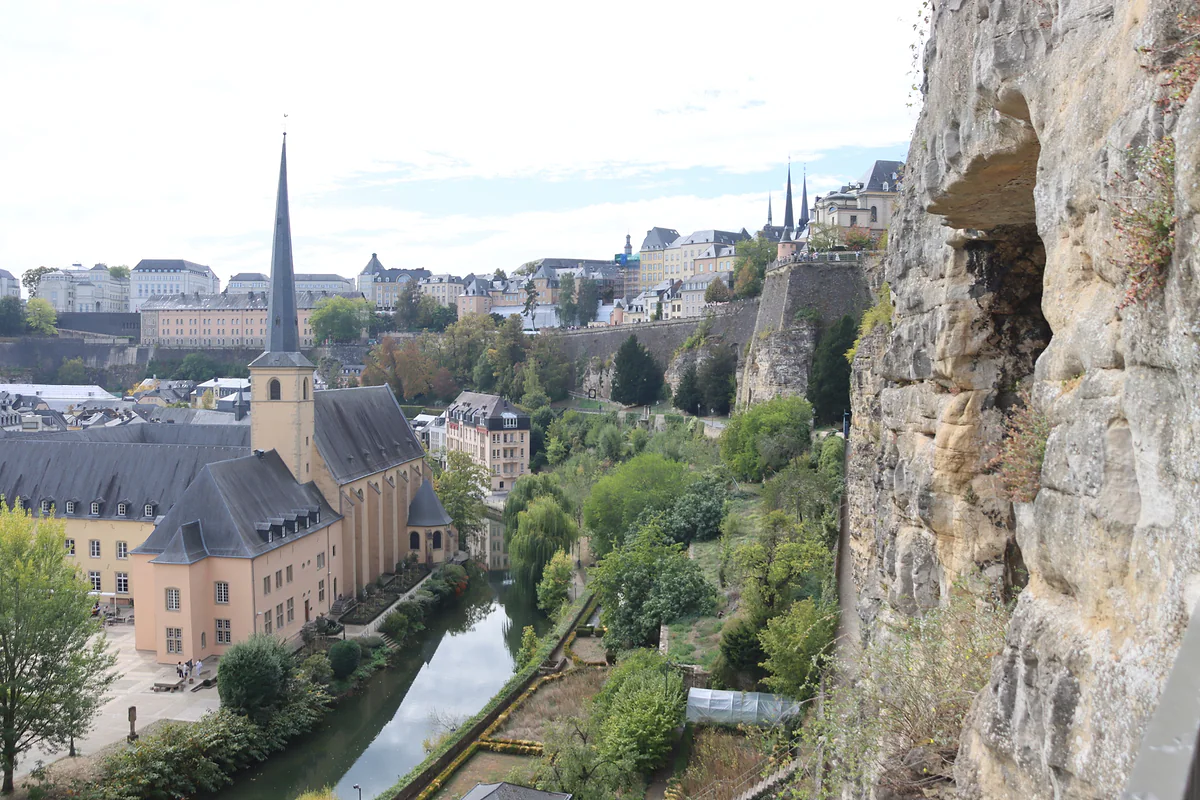
The rock face of the Bock Casemates beside Neumünster Abbey and the Alzette, with the upper town in the background
Guided tour prices (city tourist office, September 2026)
| Ticket | Group tour | With a private guide |
|---|---|---|
| Adult | €20 | €11 plus the guide |
| Students and over-60s | €16 | €9 plus the guide |
| Aged 4 to 12 | €10 | €5.50 plus the guide |
| Private guide (group of 1 to 20) | Not applicable | From €100 |
Luxembourg City Tourist Office, checked on 29-09-2026. visitluxembourg lists opening hours of 09:45 to 17:00 and an €11 ticket that the city office doesn't sell as an unguided visit; check before you go.
When the group tours run (calendar published on 29-09-2026)
| Period | Days with tours |
|---|---|
| End of September | 29 and 30 September |
| October 2026 | Fridays, Saturdays and Sundays |
| November 2026 | Weekends, plus Friday the 6th |
| December 2026 | Weekends, until Sunday the 27th |
Start times vary by day; check and book on luxembourg-city.com.
Test yourself
True or false?
0/3 Pick before you peek.
-
The Bock Casemates are part of an underground network of about 23 km.
See the answer
True. The city tourist office describes them as part of a 23 km system of galleries and tunnels cut into the rock for defence.
-
The Bock Casemates were dug in the Middle Ages, when Sigefroi built his castle.
See the answer
False. Sigefroi acquired the Bock in 963, but the galleries were cut in the 17th century under Spanish rule and later enlarged, according to visitluxembourg.
-
The Bock could only be approached from one side.
See the answer
True. The Alzette valley surrounds it on three sides, and the tourist office explains it was reachable only from the west, which made it easy to defend.
- Network of underground galleries and tunnels
- 23 km
- Year Sigefroi acquired the Bock
- 963
- Gun positions of the Bock
- 1744-45
- Adult guided tour, September 2026
- €20
Map
Where Bock Casemates is
The thick dashed line is the border with Belgium, France and Germany, and the fine ones divide the twelve cantons. The Éislek lies to the north and the Moselle to the east. Every number opens its guide.
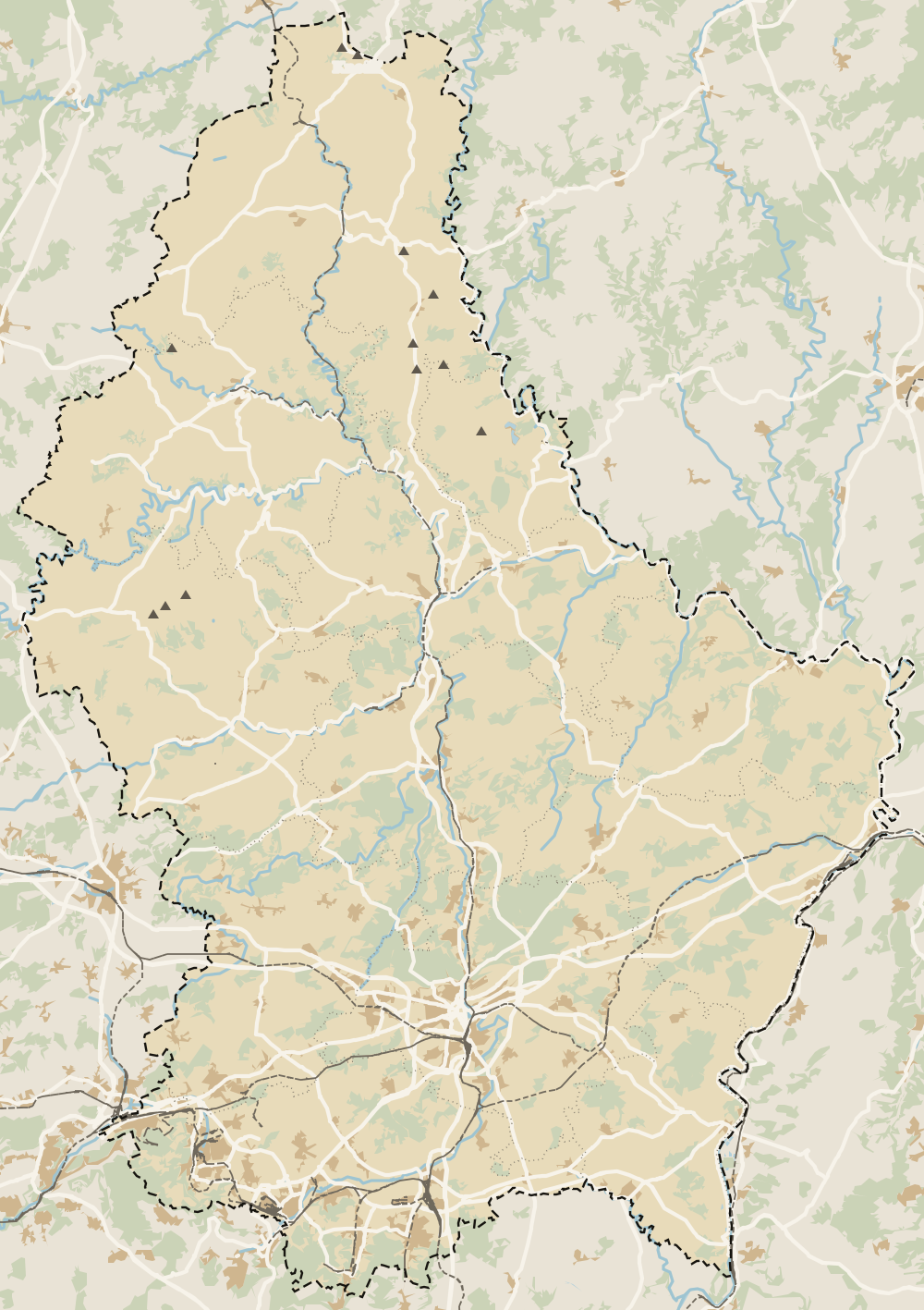 1Ville Haute 2Bock Casemates 3Pétrusse Casemates 4Chemin de la Corniche 5Grand Ducal Palace 6Notre-Dame Cathedral 7St Michael's Church 8Place Guillaume II 9Place d'Armes 10Place de la Constitution 11Adolphe Bridge 12MNHA (National Museum) 13Lëtzebuerg City Museum 14Villa Vauban 15Casino Luxembourg 16Municipal Park 17Saint-Esprit Plateau 18Place de Clairefontaine
 Map data © OpenStreetMap contributors (ODbL)
- 1Ville HauteA district of Luxembourg City
- 2Bock CasematesTunnels in a World Heritage Site
- 3Pétrusse CasematesSandstone galleries by the Gëlle Fra
- 4Chemin de la CornicheThe rampart walk of the old town
- 5Grand Ducal PalaceOfficial seat in the old town
- 6Notre-Dame CathedralThe country's only cathedral
- 7St Michael's ChurchOne of the capital's oldest places of worship
- 8Place Guillaume IITown hall square and William II
- 9Place d'ArmesPedestrian square in the old town
- 10Place de la ConstitutionMonument of Remembrance on the Beck bastion
- 11Adolphe BridgeThe capital's emblem, between the Ville Haute and the Gare
- 12MNHA (National Museum)National museum on the Marché-aux-Poissons, old town
- 13Lëtzebuerg City MuseumThe capital's history museum, old town
- 14Villa VaubanThe city's art museum, in the municipal park
- 15Casino LuxembourgForum d'art contemporain, old town
- 16Municipal ParkParc municipal Édouard André, old town
- 17Saint-Esprit PlateauCitadel in the Ville Haute
- 18Place de ClairefontaineSquare in the Ville Haute
0 of 425 Luxembourg guides
Your next stamp
- Pétrusse Casemates
- Places to visit
- Chemin de la Corniche
- Grand Ducal Palace
- Luxembourg City
- Feulen
- Wenzel walk
- A Possen Museum
- American Cemetery
- Ansembourg
- Ansembourg Castles
- Asselborn
- Bascharage
- Beaufort castles
- Belval
- Belval blast furnaces
- Berg Castle
- Bernard-Massard cellars
- Bourglinster Castle
- Bourscheid Castle
- Brandenbourg
- Brandenbourg Castle
- Caves St Martin
- Christmas
- Clervaux Castle
- Echternach
- Echternach Abbey
- Ehnen
- Ehnen Wine Museum
- Esch-sur-Alzette
- Esch-sur-Sûre Castle
- European Museum Schengen
- Fond-de-Gras
- General Patton Museum
- German war cemetery
- Haff Réimech
- Hohllay
- Hollenfels Castle
- Hosingen
- Kautenbach
- Kneiff
- Koerich Castle
- Larochette Castle
- Lasauvage
- Mersch Castle
- Military History Museum
- Moersdorf
- Mondorf Domaine Thermal
- Munsbach Castle
- National Mining Museum
- Parc Merveilleux
- Park Sënnesräich
- Remich
- Rindschleiden
- Schiessentümpel
- Septfontaines Castle
- Slate Museum
- Stolzembourg
- Tudor Museum
- Useldange Castle
- Valley of the Seven Castles
- Vianden
- Vianden Castle
- Ville Haute
- Wasserbillig Aquarium
- Weiswampach lakes
- Wiltz Castle
- Ahn
- Berdorf
- Bourscheid-Plage
- Butterfly garden
- Clervaux
- Differdange
- Echternach lake
- Grevenmacher
- Heringer Millen
- Hollenfels
- Luxembourg Science Center
- Meysembourg Castle
- Mullerthal
- National Day
- National Resistance Museum
- Perekop
- Remerschen
- Schoenfels Castle
- The Family of Man
- Things to do
- Upper Sûre Lake
- Vianden chairlift
- Wasserbillig
- Clervaux Abbey
- Echternach Roman villa
- Éislek
- Insenborn
- Kallektuffquell
- Machtum
- Most beautiful places
- Our Nature Park
- Pétange
- Pettingen Castle
- Schueberfouer
- Schwebsingen
- Victor Hugo House
- Waldbillig
- Dudelange
- Kuelscheier
- Lultzhausen
- Moselle Valley
- Octave
- Prettiest villages
- Sanem
- Schengen
- Wellenstein
- Wiltz
- Wolfsschlucht
- Beaufort
- Bech-Kleinmacher
- Éimaischen
- Gaalgebierg
- Guttland
- Marnach
- Mondorf-les-Bains
- Putscheid
- Schifflange
- UNESCO World Heritage
- Carnival
- Consdorf
- Ellergronn
- Käerjeng
- Kayl
- Map
- Minett
- Munshausen
- Tandel
- Bech
- Buergbrennen
- Esch-sur-Sûre
- Rumelange
- Where is Luxembourg
- Is it a country?
- Lac de la Haute-Sûre (commune)
- Rosport-Mompach
- Wormeldange
- Larochette
- Mondercange
- Regions
- Bettembourg
- Cantons
- Dancing procession
- Diekirch
- Fischbach
- Garnich
- Mersch
- Moselle wine route
- Ettelbruck
- Grund
- Heffingen
- Kehlen
- Lintgen
- Moselle river cruises
- Towns and villages
- Erpeldange-sur-Sûre
- Junglinster
- Kopstal
- Lorentzweiler
- Nommern
- Pfaffenthal
- Population
- Bissen
- Clausen
- Koerich
- Schieren
- Size
- Vallée de l'Ernz
- Kirchberg
- Languages
- Notre-Dame Cathedral
- Reisdorf
- Steinfort
- Bettendorf
- Habscht
- St Michael's Church
- Helperknapp
- Luxembourgish
- Place Guillaume II
- Name
- Place d'Armes
- History
- Place de la Constitution
- Grand Duke
- Colmar-Berg
- Flaxweiler
- Gare
- Hamm
- Kirchberg funicular
- Luxembourg fortress
- Mamer
- Mertert
- Minett Trail
- Mullerthal Trail
- Neumünster Abbey
- Parc Hosingen
- Pfaffenthal lift
- Political system
- Redange
- The Passerelle
- Wine festivals
- Winseler
- Beckerich
- Biwer
- EU institutions
- Goesdorf
- Limpertsberg
- Mudam
- Natur Musée
- Pulvermühl
- Stadtbredimus
- Troisvierges
- Bonnevoie
- Bous-Waldbredimus
- Ell
- Flag
- Kiischpelt
- Manternach
- Philharmonie
- Vauban circuit
- Weiswampach
- Betzdorf
- Boulaide
- Dräi Eechelen Museum
- Facts
- Hollerich
- Lenningen
- Useldange
- Wincrange
- Bourscheid
- Dalheim
- Gasperich
- Public holidays
- Red Bridge
- Saeul
- Belair
- Second World War
- Vichten
- Battle of the Bulge
- Merl
- Préizerdaul
- Cents
- EU and Schengen
- Groussbus-Wal
- Entry requirements
- Neudorf
- Rambrouch
- Currency and payments
- Mertzig
- Weimerskirch
- Adolphe Bridge
- Beggen
- Escapardenne
- How to get there
- International March of Diekirch
- MNHA (National Museum)
- Rock climbing
- Sandweiler
- Bridges
- Eich
- Flights
- Golf
- Hesperange
- Lëtzebuerg City Museum
- Canoeing and kayaking
- Dommeldange
- Luxembourg airport
- Strassen
- Villa Vauban
- Airport to city centre
- Bertrange
- Casino Luxembourg
- Mühlenbach
- Swimming pools
- From Brussels
- Pétrusse Valley
- Rollingergrund
- Walferdange
- Cessange
- Day trip from Brussels
- Municipal Park
- Steinsel
- Free walking tours
- From Paris
- Niederanven
- From Frankfurt
- Schuttrange
- Sightseeing train and bus
- By train
- Contern
- By coach
- Weiler-la-Tour
- Driving
- Luxembourg in one day
- Pretzel Sunday
- Rham Plateau
- Tour de Luxembourg
- Candlemas (Liichtmëssdag)
- Car hire
- Luxembourg in two days
- Saint-Esprit Plateau
- Luxembourg in three days
- Melusina statue
- Parking
- St Nicholas Day (Kleeschen)
- Fête de la Musique
- Luxembourg in four days
- Museums in Luxembourg
- Petrol
- Place de Clairefontaine
- A week in Luxembourg
- Getting around
- Luxembourg Marathon
- Tram and Bus Museum
- Free public transport
- Parks in Luxembourg City
- Road trip
- Belgium and Luxembourg
- Tram
- Buses
- Viewpoints
- Trains
- Luxembourg station
- Cycling
- LuxembourgPass
- Prices and budget
- On a budget
- Free things to do
- Mobile and roaming
- Healthcare
- Safety
- Scams
- Tourist information
- Packing list
- Swimming lakes
- With a dog
- Markets
- Tipping
- Shopping
- What to buy
- Shopping centres
- With kids
- For couples
- Playgrounds
- Adventure parks
- Nightlife
- Castles
- Theatres and concert venues
- Leudelange
- Nature parks
- Where to stay
- City-centre hotels
- Hiking
- Nature reserves
- Reckange-sur-Mess
- Hotels near the station
- Roeser
- Frisange
- Hotels in Kirchberg
- Airport hotels
- Dippach
- Hotels in Vianden
- Hotels in Echternach
- Hotels in Clervaux
- Hotels in Mondorf-les-Bains
- Hotels in Esch-sur-Alzette
- Hotels on the Moselle
- Mullerthal hotels
- Upper Sûre lake hotels
- Hotels in Diekirch and Ettelbruck
- Cheap hotels
- Luxury hotels
- Boutique hotels
- Spa hotels
- Family hotels
- Apartments
- Weather
- Youth hostels
- Best time to visit
- Campsites
- Holiday cottages
- In winter
- Castle hotels
- In spring
- Day trips
- In summer
- Around Luxembourg
- In autumn
- Ice skating
- Trier day trip
- Metz day trip
- Arlon day trip
- In January
- In February
- In March
- In April
- In May
- In June
- In July
- In August
- In September
- Food
- In October
- In November
- Where to eat
- In December
- Michelin restaurants
- Cheap eats
- Judd mat Gaardebounen
- Bouneschlupp
- Gromperekichelcher
- Kniddelen
- Quetschentaart
- Rieslingspaschtéit
- Events
- Wine
- Crémant
- Beer
Frequently asked questions
What are the Bock Casemates?
Galleries and chambers cut into the Bock rock to defend the fortress of Luxembourg. visitluxembourg says they were dug in the 17th century under Spanish rule and enlarged twice; the official Vauban walk dates the 25 gun positions from the reign of Empress Maria Theresa to 1744-1745.
How much are Bock Casemates tickets?
As of September 2026 the city tourist office sells the guided tour at €20 for adults, €16 for students and over-60s and €10 for children aged 4 to 12. visitluxembourg shows an €11 ticket that the city office doesn't offer as a walk-in visit, so it's worth checking first.
Can you visit the Bock Casemates without a guide?
The city tourist office currently sells them only as a guided visit, either in a group or with a private guide. visitluxembourg still shows hours of 09:45 to 17:00, but I couldn't find a walk-in ticket on sale on the office's website on 29 September 2026.
How long is the Bock Casemates tour?
One hour, in groups of no more than 20. Tours run in English, French or German, and other languages can be arranged with a private guide.
Are the Bock and Pétrusse Casemates the same thing?
No. They're two separate systems with separate tours. The Bock Casemates are on the Montée de Clausen under the founding rock; the Pétrusse Casemates lie beneath Place de la Constitution, with a light-and-sound tour at €24.
Are the Bock Casemates the caves people mean by underground Luxembourg?
Mostly, yes. They aren't natural caves but man-made galleries cut into the rock for defence, and the city tourist office counts them as part of a 23 km underground network. The Pétrusse Casemates are the other stretch you can visit.
Where are the best photos of the Bock Casemates taken?
Inside, from the openings facing the valley, since visitluxembourg singles out the views over the Grund, Clausen and Pfaffenthal. Outside, I'd try the castle bridge and the first few metres of the Corniche, which frame the whole rock with the Alzette beneath it.
Are the Bock Casemates suitable for wheelchairs or buggies?
The website gives no accessibility information for this tour, and these are galleries hollowed out of rock. I'd ring the tourist office before booking if you have limited mobility or a pushchair.
By
Tourism graduate with a master’s in Tourism Management and Planning from the University of Málaga, who has travelled across Europe. He writes every guide from official sources and his own judgement.
Published on . Updated on . Facts checked on .
Sources
- Luxembourg City Tourist Office, Bock Casemates
- visitluxembourg, Bock Casemates
- Luxembourg City Tourist Office, the Bock rock
- visitluxembourg, Vauban walk
- Luxembourg City Tourist Office, archaeological crypt
- Luxembourg City Tourist Office, castle bridge
- UNESCO, City of Luxembourg: its Old Quarters and Fortifications
Some links in this guide are affiliate links: if you book through them, the site earns a commission at no extra cost to you. Affiliate disclosure
Photos: P. Hughes (CC BY-SA 4.0); LoKiLeCh (CC BY-SA 3.0); FrDr (CC BY-SA 4.0), via Wikimedia Commons.