Germany, France and Belgium, next door
Places to visit near Luxembourg, across three borders
The nearest place to Luxembourg City with real weight of its own is Trier, in Germany, 48 km by road according to the Ville de Luxembourg, with its UNESCO-listed Roman monuments. Metz, in France, is 60 km away, and Arlon, in Belgium, about 20 minutes on the direct train. Right on the country's edge, Schengen marks the spot where Luxembourg, Germany and France meet.
In 30 seconds
Full read: 3 min
- Trier is 48 km from Luxembourg City and Metz 60 km, according to the Ville de Luxembourg.
- Arlon, in Belgium, is about 20 minutes on the direct train.
- At Schengen, Luxembourg, Germany and France meet.
- Outside Luxembourg, the train is no longer free.
If I had to pick one place across the border, I'd choose Trier. It has the best-preserved Roman gate north of the Alps, it's about 50 minutes away by train and it tells the same story as the Roman villa at Echternach, only on a grand scale.

Before you go
What I would keep in mind
-
01 Most beautiful
Trier, Rome north of the Alps
The Porta Nigra, the Basilica of Constantine, the amphitheatre and the cathedral have formed a UNESCO site since 1986. The direct train takes about 50 minutes.
Luxembourg to Trier -
02 Most beautiful
Metz and its Chagall windows
Saint-Étienne cathedral has 6,500 m² of stained glass, including work by Chagall, and the city adds the Centre Pompidou-Metz. It's 60 km away.
Luxembourg to Metz -
03 My tip
Three countries on one walk
At Schengen, Luxembourg, Germany and France meet. The 7.71 km Schengen grenzenlos loop crosses from one to the next with no visible border.
Schengen village -
04 Getting there
Beyond the border, you pay the fare
Luxembourg's free public transport stops at the frontier. To Trier, Metz or Arlon, the foreign leg is charged separately.
train to Luxembourg
What I would book
- Places to stayBooking.com Hotels near Luxembourg station Trains to Trier, Arlon and Metz leave from there. It's the easiest base for seeing the area without a car.
- Tours in SpanishCivitatis Organised trips around the region Only if you want several countries in one day without driving. Independently, the train to Trier or Arlon is direct.
My ranking, scored
What I'd see near Luxembourg
My scores weigh up what each place offers, how close it is to the capital and how easy it is to reach without a car. It's my opinion, not an official rating.
0 of 5 seen
-
Trier (Germany)
Roman monuments, the cathedral and the Liebfrauenkirche, UNESCO-listed since 1986, about 50 minutes away on the direct train.
9.2 out of 10
-
Metz (France)
A Gothic cathedral with Europe's largest area of stained glass according to its tourist office, the Centre Pompidou-Metz and a monumental station.
8.8 out of 10
-
Schengen and the tripoint
The village of the agreement, the point where three countries meet and the Remerschen lakes next door. Without leaving Luxembourg.
8.1 out of 10
-
Arlon (Belgium)
Roman towers, an archaeological museum and Maitrank, about 20 minutes by train. A good half day.
7.6 out of 10
-
The Belgian Ardennes on the Éislek Trail
The long-distance path carries on from Asselborn to Houffalize, Nadrin and La Roche-en-Ardenne, in Belgium. For walkers with time.
7.4 out of 10
Luxembourg offers something few countries can. From the capital, Trier is 48 km away, Metz 60 and Arlon about 20 minutes by train, and each of those borders hides a city with a history of its own. It’s no surprise that anyone here for a few days ends up crossing at least one of them. Here’s what’s nearby, how far it is and what I’d choose; the practicalities of each trip are on their own pages.
Distances first
The Ville de Luxembourg publishes road distances from the capital. Trier, in Germany, is 48 km; Metz, in France, 60; Saarbrücken 100; Liège 168; Cologne 197; Strasbourg 222; and Brussels 225. Arlon isn’t on its list, but the direct line 50 train takes about 20 minutes, on the CFL timetable valid until 12 December 2026.
One point worth being clear on. Luxembourg’s free public transport only covers journeys that don’t cross the border. As soon as you leave, you pay for the foreign leg. I haven’t seen the cross-border fare published by an official source, so look it up on mobiliteit.lu or at the station before travelling, rather than stepping on the train assuming the free ride carries on to Trier.
Trier, the one I’d recommend most
For me, it comes first. Trier was a great Roman capital, and in 1986 UNESCO listed its Roman remains, together with the cathedral and the Church of Our Lady, as one World Heritage Site. The Porta Nigra, whose foundation stone was laid around AD 170 according to the city’s tourist office, is the Roman city gate that has survived best north of the Alps. In 2026 the city is also marking 40 years since that inscription, with special tours and exhibitions. Just before Trier the train calls at Igel, whose 23-metre Roman funerary column, the biggest still standing north of the Alps by Trier’s account, costs nothing to see.
The direct RE on line 30 takes about 50 minutes. The full day is in Luxembourg to Trier.
To sleep close to everything, search places to stay in Luxembourg on Booking.com and filter by area before price.
Metz or Arlon?
Metz is the big visit on the French side. Its tourist office is proud of a Gothic cathedral built between 1220 and 1522, 42 metres high under the vaults, with 6,500 m² of stained glass, the largest collection in Europe, including windows by Chagall. Add the Centre Pompidou-Metz, designed by Shigeru Ban, and a neo-Romanesque station from the period of German annexation. I cover it in Luxembourg to Metz.
Arlon is smaller and closer. Arlon’s tourist office calls it one of Belgium’s three oldest towns, the Roman Orolaunum, with two Roman towers, an archaeological museum and an aperitif of its own, Maitrank. Half a day is enough; the detail is in Luxembourg to Arlon.
The border you can cross on foot
Without leaving the country, there’s a place that explains Europe better than any museum. At Schengen, in the south-east, Luxembourg, Germany and France meet, opposite Perl and Contz-les-Bains. The 7.71 km Schengen grenzenlos loop walk passes from one country to another without you noticing the line. Next to it are the Remerschen lakes and the Haff Réimech nature reserve. It’s all in Schengen.
To sleep close to everything, search places to stay in Luxembourg on Expedia and filter by area before price.
The Moselle by boat
The river is another way to reach the neighbours. According to luxembourg.public.lu, river boats run along the Moselle as far as Trier, Bernkastel and Saarburg in Germany, and downstream to Thionville in France. It’s not the quickest way, but it’s the loveliest in summer; departures and prices depend on each operator. I’d pair it with a night in Remich or Grevenmacher, setting off from the riverbank itself and coming back without rushing, with the afternoon free for a wine cellar.
The Belgian Ardennes, on foot
For walkers, there’s a very special border crossing. The Éislek Trail, part of the Escapardenne network, sets off from Kautenbach, passes through Clervaux and Asselborn and carries on into Belgium towards Houffalize, then Nadrin and finally La Roche-en-Ardenne. Of its 106 km, about 50 are in Luxembourg. It’s a way to see the Belgian Ardennes without separating them from the Luxembourg ones, which are, after all, the same upland.
If what you’re after is day trips that start and finish in the capital, within the country or beyond, they’re ranked in day trips from Luxembourg.
If you are short on time, see the best tours in Luxembourg and pick one that fits your day.
Where the bus does not go, a car does: compare car hire in Luxembourg before you arrive rather than at the desk.
If you still need a way in, check the best ticket deals to Luxembourg from where you are.
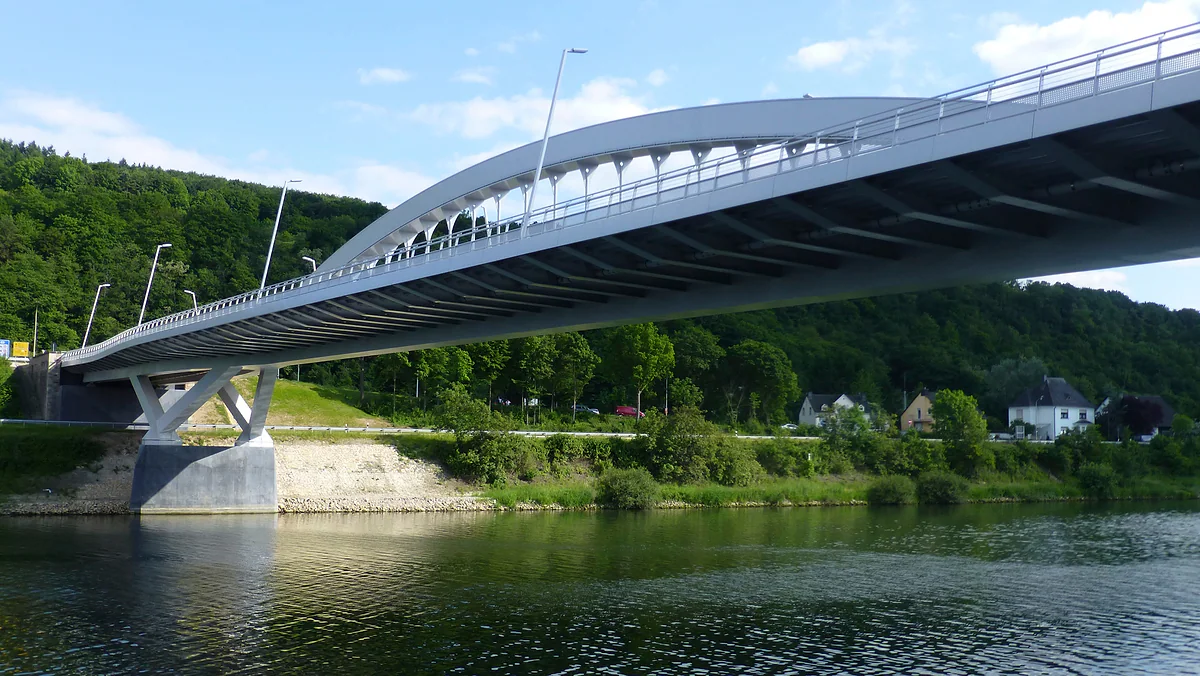
The new bridge at Grevenmacher over the Moselle, with a white arch and concrete piers between tree-lined banks
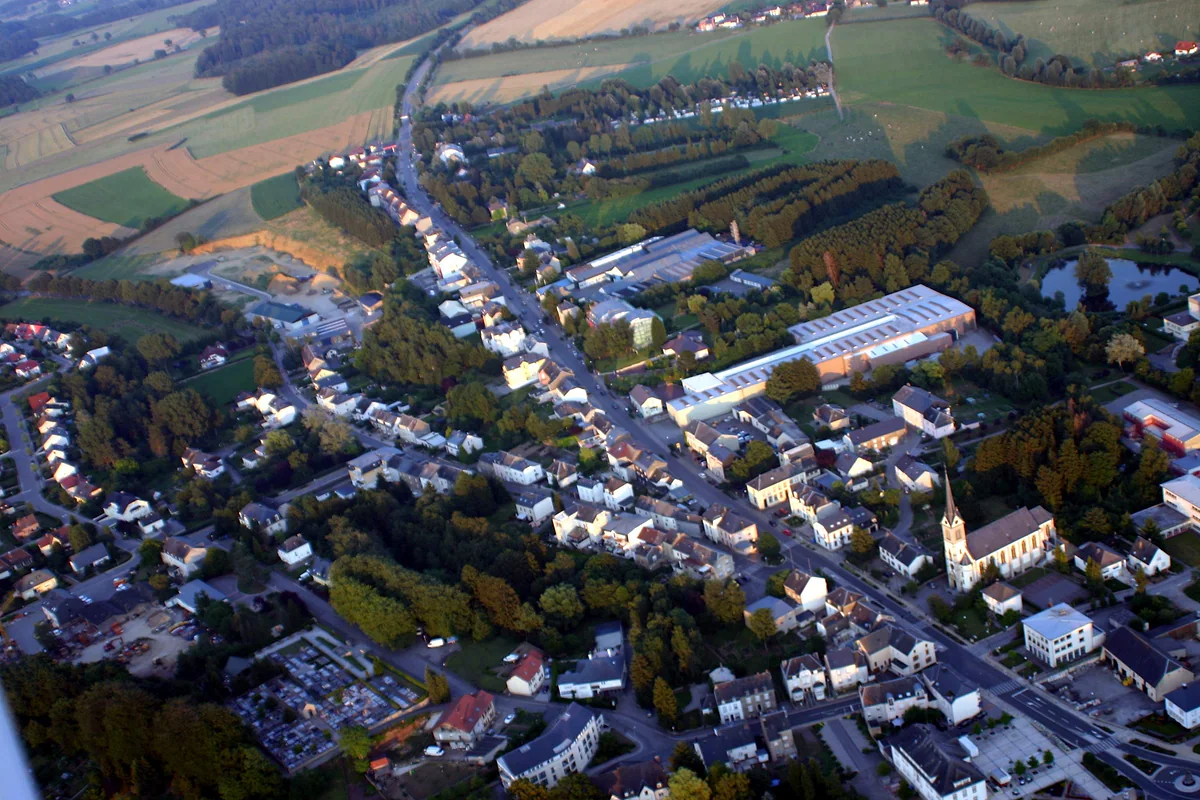
Aerial view of Steinfort with its main street, the church, industrial buildings and farmland all around
Road distances from Luxembourg City
| City | Country | Distance |
|---|---|---|
| Trier | Germany | 48 km |
| Metz | France | 60 km |
| Saarbrücken | Germany | 100 km |
| Liège | Belgium | 168 km |
| Cologne | Germany | 197 km |
| Strasbourg | France | 222 km |
| Brussels | Belgium | 225 km |
Ville de Luxembourg, the city in figures. Arlon isn't on that list; the direct train takes about 20 minutes on the CFL timetable valid until 12 December 2026.
Test yourself
True or false?
0/3 Pick before you peek.
-
Trier is closer to Luxembourg City than Metz is.
See the answer
True. The Ville de Luxembourg gives 48 km by road to Trier and 60 km to Metz.
-
At Schengen, the borders of Luxembourg, Germany and Belgium meet.
See the answer
False. At Schengen it's Luxembourg, Germany and France that meet. Belgium lies to the west of the country.
-
Luxembourg's free trains take you to Trier at no cost.
See the answer
False. Free travel ends at the border; the German leg has to be paid for.
- To Trier by road
- 48 km
- To Metz by road
- 60 km
- To Arlon by direct train
- 20 min
- Trier, UNESCO-listed
- 1986
What to see
What to see in Around Luxembourg
0 of 425 Luxembourg guides
Your next stamp
- Arlon day trip
- Metz day trip
- Trier day trip
- Day trips
- Hiking
- Belgium and Luxembourg
- Where is Luxembourg
- Luxembourg in three days
- A Possen Museum
- American Cemetery
- Ansembourg
- Ansembourg Castles
- Asselborn
- Bascharage
- Beaufort castles
- Belval
- Belval blast furnaces
- Berg Castle
- Bernard-Massard cellars
- Bourglinster Castle
- Bourscheid Castle
- Brandenbourg
- Brandenbourg Castle
- Caves St Martin
- Christmas
- Clervaux Castle
- Echternach
- Echternach Abbey
- Ehnen
- Ehnen Wine Museum
- Esch-sur-Alzette
- Esch-sur-Sûre Castle
- European Museum Schengen
- Fond-de-Gras
- General Patton Museum
- German war cemetery
- Haff Réimech
- Hohllay
- Hollenfels Castle
- Hosingen
- Kautenbach
- Kneiff
- Koerich Castle
- Larochette Castle
- Lasauvage
- Mersch Castle
- Military History Museum
- Moersdorf
- Mondorf Domaine Thermal
- Munsbach Castle
- National Mining Museum
- Parc Merveilleux
- Park Sënnesräich
- Places to visit
- Remich
- Rindschleiden
- Schiessentümpel
- Septfontaines Castle
- Slate Museum
- Stolzembourg
- Tudor Museum
- Useldange Castle
- Valley of the Seven Castles
- Vianden
- Vianden Castle
- Ville Haute
- Wasserbillig Aquarium
- Weiswampach lakes
- Wiltz Castle
- Ahn
- Berdorf
- Bourscheid-Plage
- Butterfly garden
- Clervaux
- Differdange
- Echternach lake
- Grevenmacher
- Heringer Millen
- Hollenfels
- Luxembourg City
- Luxembourg Science Center
- Meysembourg Castle
- Mullerthal
- National Day
- National Resistance Museum
- Perekop
- Remerschen
- Schoenfels Castle
- The Family of Man
- Things to do
- Upper Sûre Lake
- Vianden chairlift
- Wasserbillig
- Clervaux Abbey
- Echternach Roman villa
- Éislek
- Insenborn
- Kallektuffquell
- Machtum
- Most beautiful places
- Our Nature Park
- Pétange
- Pettingen Castle
- Schueberfouer
- Schwebsingen
- Victor Hugo House
- Waldbillig
- Dudelange
- Kuelscheier
- Lultzhausen
- Moselle Valley
- Octave
- Prettiest villages
- Sanem
- Schengen
- Wellenstein
- Wiltz
- Wolfsschlucht
- Beaufort
- Bech-Kleinmacher
- Éimaischen
- Gaalgebierg
- Guttland
- Marnach
- Mondorf-les-Bains
- Putscheid
- Schifflange
- UNESCO World Heritage
- Carnival
- Consdorf
- Ellergronn
- Käerjeng
- Kayl
- Map
- Minett
- Munshausen
- Tandel
- Bech
- Buergbrennen
- Esch-sur-Sûre
- Rumelange
- Is it a country?
- Lac de la Haute-Sûre (commune)
- Rosport-Mompach
- Wormeldange
- Larochette
- Mondercange
- Regions
- Bettembourg
- Bock Casemates
- Cantons
- Dancing procession
- Diekirch
- Fischbach
- Garnich
- Mersch
- Moselle wine route
- Ettelbruck
- Grund
- Heffingen
- Kehlen
- Lintgen
- Moselle river cruises
- Pétrusse Casemates
- Towns and villages
- Chemin de la Corniche
- Erpeldange-sur-Sûre
- Junglinster
- Kopstal
- Lorentzweiler
- Nommern
- Pfaffenthal
- Population
- Bissen
- Clausen
- Grand Ducal Palace
- Koerich
- Schieren
- Size
- Vallée de l'Ernz
- Feulen
- Kirchberg
- Languages
- Notre-Dame Cathedral
- Reisdorf
- Steinfort
- Bettendorf
- Habscht
- St Michael's Church
- Helperknapp
- Luxembourgish
- Place Guillaume II
- Name
- Place d'Armes
- History
- Place de la Constitution
- Grand Duke
- Colmar-Berg
- Flaxweiler
- Gare
- Hamm
- Kirchberg funicular
- Luxembourg fortress
- Mamer
- Mertert
- Minett Trail
- Mullerthal Trail
- Neumünster Abbey
- Parc Hosingen
- Pfaffenthal lift
- Political system
- Redange
- The Passerelle
- Wine festivals
- Winseler
- Beckerich
- Biwer
- EU institutions
- Goesdorf
- Limpertsberg
- Mudam
- Natur Musée
- Pulvermühl
- Stadtbredimus
- Troisvierges
- Wenzel walk
- Bonnevoie
- Bous-Waldbredimus
- Ell
- Flag
- Kiischpelt
- Manternach
- Philharmonie
- Vauban circuit
- Weiswampach
- Betzdorf
- Boulaide
- Dräi Eechelen Museum
- Facts
- Hollerich
- Lenningen
- Useldange
- Wincrange
- Bourscheid
- Dalheim
- Gasperich
- Public holidays
- Red Bridge
- Saeul
- Belair
- Second World War
- Vichten
- Battle of the Bulge
- Merl
- Préizerdaul
- Cents
- EU and Schengen
- Groussbus-Wal
- Entry requirements
- Neudorf
- Rambrouch
- Currency and payments
- Mertzig
- Weimerskirch
- Adolphe Bridge
- Beggen
- Escapardenne
- How to get there
- International March of Diekirch
- MNHA (National Museum)
- Rock climbing
- Sandweiler
- Bridges
- Eich
- Flights
- Golf
- Hesperange
- Lëtzebuerg City Museum
- Canoeing and kayaking
- Dommeldange
- Luxembourg airport
- Strassen
- Villa Vauban
- Airport to city centre
- Bertrange
- Casino Luxembourg
- Mühlenbach
- Swimming pools
- From Brussels
- Pétrusse Valley
- Rollingergrund
- Walferdange
- Cessange
- Day trip from Brussels
- Municipal Park
- Steinsel
- Free walking tours
- From Paris
- Niederanven
- From Frankfurt
- Schuttrange
- Sightseeing train and bus
- By train
- Contern
- By coach
- Weiler-la-Tour
- Driving
- Luxembourg in one day
- Pretzel Sunday
- Rham Plateau
- Tour de Luxembourg
- Candlemas (Liichtmëssdag)
- Car hire
- Luxembourg in two days
- Saint-Esprit Plateau
- Melusina statue
- Parking
- St Nicholas Day (Kleeschen)
- Fête de la Musique
- Luxembourg in four days
- Museums in Luxembourg
- Petrol
- Place de Clairefontaine
- A week in Luxembourg
- Getting around
- Luxembourg Marathon
- Tram and Bus Museum
- Free public transport
- Parks in Luxembourg City
- Road trip
- Tram
- Buses
- Viewpoints
- Trains
- Luxembourg station
- Cycling
- LuxembourgPass
- Prices and budget
- On a budget
- Free things to do
- Mobile and roaming
- Healthcare
- Safety
- Scams
- Tourist information
- Packing list
- Swimming lakes
- With a dog
- Markets
- Tipping
- Shopping
- What to buy
- Shopping centres
- With kids
- For couples
- Playgrounds
- Adventure parks
- Nightlife
- Castles
- Theatres and concert venues
- Leudelange
- Nature parks
- Where to stay
- City-centre hotels
- Nature reserves
- Reckange-sur-Mess
- Hotels near the station
- Roeser
- Frisange
- Hotels in Kirchberg
- Airport hotels
- Dippach
- Hotels in Vianden
- Hotels in Echternach
- Hotels in Clervaux
- Hotels in Mondorf-les-Bains
- Hotels in Esch-sur-Alzette
- Hotels on the Moselle
- Mullerthal hotels
- Upper Sûre lake hotels
- Hotels in Diekirch and Ettelbruck
- Cheap hotels
- Luxury hotels
- Boutique hotels
- Spa hotels
- Family hotels
- Apartments
- Weather
- Youth hostels
- Best time to visit
- Campsites
- Holiday cottages
- In winter
- Castle hotels
- In spring
- In summer
- In autumn
- Ice skating
- In January
- In February
- In March
- In April
- In May
- In June
- In July
- In August
- In September
- Food
- In October
- In November
- Where to eat
- In December
- Michelin restaurants
- Cheap eats
- Judd mat Gaardebounen
- Bouneschlupp
- Gromperekichelcher
- Kniddelen
- Quetschentaart
- Rieslingspaschtéit
- Events
- Wine
- Crémant
- Beer
Frequently asked questions
What cities are near Luxembourg?
Trier, in Germany, 48 km away; Metz, in France, 60 km; and Arlon, in Belgium, about 20 minutes by train. A little further, Saarbrücken at 100 km and Liège at 168 km, according to the Ville de Luxembourg.
How would you combine Luxembourg with its neighbours in a few days?
Two days for the capital, one for Vianden or the Mullerthal and one for Trier. With time to spare, half a day in Arlon or a full day in Metz.
What's at the border between Luxembourg, Germany and France?
Schengen, the Luxembourg village where the agreement was signed. The three countries meet there, opposite Perl and Contz-les-Bains, and a 7.71 km loop walk crosses from one to another.
Can you take a boat from Luxembourg to Germany?
The Luxembourg government portal mentions boat trips on the Moselle to Trier, Bernkastel and Saarburg in Germany, and Thionville in France. Departures and prices depend on each operator.
Is the train from Luxembourg to Trier or Arlon free?
Not entirely. Free travel only covers journeys within Luxembourg, so the leg that crosses the border has to be paid for.
By
Tourism graduate with a master’s in Tourism Management and Planning from the University of Málaga, who has travelled across Europe. He writes every guide from official sources and his own judgement.
Published on . Facts checked on .
Sources
Some links in this guide are affiliate links: if you book through them, the site earns a commission at no extra cost to you. Affiliate disclosure
Photos: Cayambe (CC BY-SA 3.0); Denise Hastert (CC BY-SA 4.0); Les Meloures (CC BY-SA 3.0), via Wikimedia Commons.