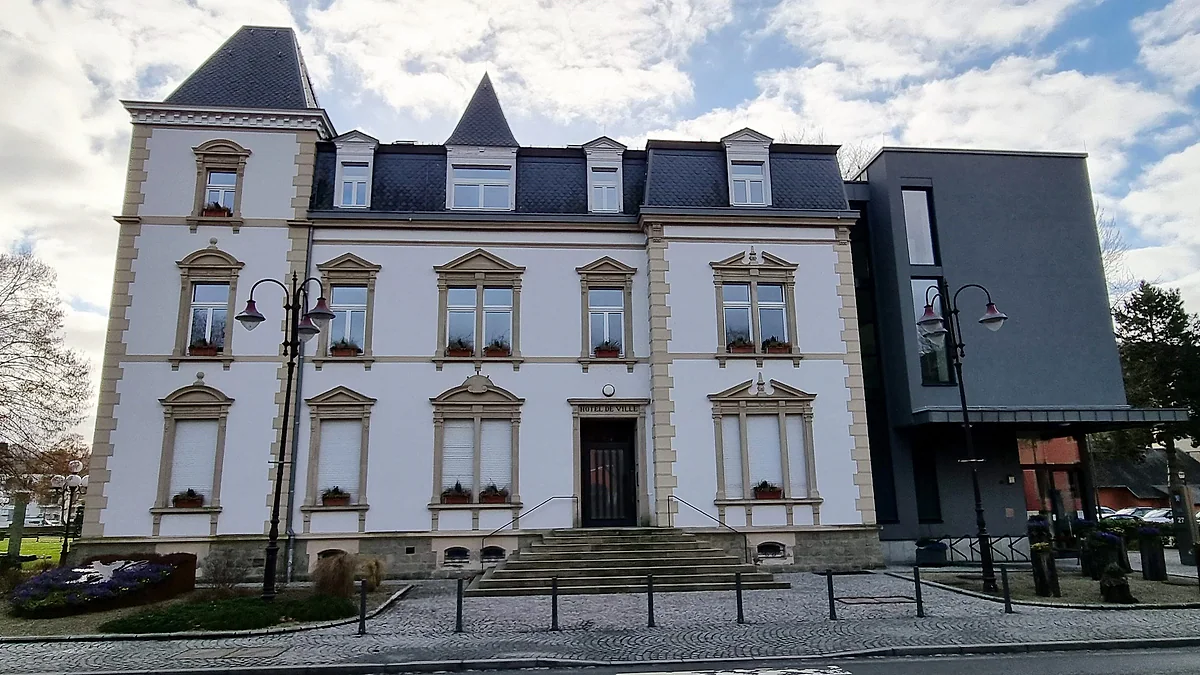
Diekirch, a walking event since 1968
The International March of Diekirch, walking with civilians and soldiers
The International March of Diekirch (Marche Internationale de Diekirch) is an annual two-day walk through the hills of the Éislek, open to civilians and military personnel of any age. Each day offers routes of 40, 20 and 12 km, and every completed walk earns a medal. It began in 1968 as the Marche de l'Armée. The 2027 date hasn't been published yet.
In 30 seconds
Full read: 3 min
- A two-day walk in Diekirch with daily routes of 40, 20 and 12 km.
- Open to civilians and military walkers of any age; uniform is optional.
- Every completed walk earns a medal, claimed on site.
- It began in 1968 as the Marche de l'Armée; the 2027 date isn't out yet.
I'd treat it as a sociable way to see the north on foot rather than an endurance test. Twenty kilometres on the Saturday and the Sunday free for the Diekirch military museum makes a very good weekend.

Before you go
What I would keep in mind
-
01 My tip
No chip, no medal
The organisers require the transponder for medals, for IML and IVV stamps and for the participation certificate, which is only printed on request. Everything is collected on site after your walk.
-
02 My tip
Bring your own cup
The feed stations no longer hand out disposable plastic cups. Bring a reusable one or buy one for €2 at the event.
-
03 Getting there
It all starts by the station
visitluxembourg places the march at the Al Seeërei cultural centre on rue de l'Industrie, which the organisers describe as close to the railway station. Trains from Luxembourg City are free.
Diekirch -
04 To save money
Accommodation on the entry form
When you register you can book the organisers' own accommodation and meals. They ask you to bring your own sleeping bag.
The International March of Diekirch barely registers in Spanish searches, yet it turns up again and again in American ones, and many of those questions are about the medal and the ribbon. It’s an annual two-day walk based in Diekirch, open to civilians and military walkers from any country, and visitluxembourg sums it up as a walk through the green hills of the Éislek covering between 12 and 80 kilometres.
From army march to everyone’s march
The organisers’ own history starts in 1968 with the first Marche de l’Armée. It was organised by the Amicale des Anciens Artilleurs Luxembourgeois, an old artillerymen’s association, which chose for the medal the seal of John the Blind, Count of Luxembourg and King of Bohemia, killed at the Battle of Crécy in 1346 fighting on the French side against Edward III.
The march website gives him a whole page. Born in Luxembourg Castle in 1296, he became count at fourteen, then King of Bohemia, and, already blind, led the Luxembourg knights into the charge at Crécy against the corps commanded by the Prince of Wales. He’s buried in the crypt of Notre-Dame Cathedral in the capital. His seal was adopted in 1962 as the badge of the army General Staff and in 1964 became the emblem on every Luxembourg army uniform.
Today the army is among the sponsors and partners listed on the march website, alongside the Luxembourg popular walking federation and the international IML and IVV networks, and the spirit is sport, comradeship and international friendship, with routes for every age. That mix is what appeals to me, as there aren’t many chances to walk alongside soldiers from several countries without it being a parade.
How it works
You can walk on Saturday, Sunday or both, choosing each day between 40, 20 and 12 kilometres. The 40 km walkers start between 7:00 and 9:00, the 20 and 12 km walkers between 7:00 and 12:00, and everyone has to finish before 17:00, as the desks close at 17:15. Start cards are handed out on Friday (14:00-20:00) and Saturday from 6:45 to 11:45, and last-minute entries are taken at the Al Seeërei cultural centre by the station.
You can register online or on the spot. There are no refunds, for the walk or for accommodation, and no virtual version. The 12 km route takes pushchairs, dogs must be on a lead and bikes aren’t allowed. Route maps for each day and distance are on marche.lu.
To sleep close to everything, search places to stay in Diekirch on Booking.com and filter by area before price.
The medal question
Every completed walk earns a medal under a system the organisers publish on their website, with jubilee medals for the 5th, 10th and 20th participation and for completing two days at 20 or 40 km. To qualify you need the transponder, the chip that logs your progress and also counts for IML and IVV stamps and the participation certificate, which is printed only on request. All of it is claimed at the event after your walk, never later.
For military walkers, the rules are clear on two points, there’s no pack weight limit and uniform is optional. What the official site doesn’t cover is whether any army, British or otherwise, recognises the medal or ribbon on uniform, and I wouldn’t assume anything without asking your own chain of command.
Sleeping and eating
You can book accommodation and meals when you register. The organisers ask you to bring a sleeping bag, ban fridges, stoves and barbecues in the accommodation and expect you to follow the camp director’s instructions. There are feed stations along the route, but no more disposable cups, so bring your own or buy a reusable one for €2.
If you’d rather have a hotel bed, bear in mind that Diekirch had just two hotels in 2025. Check hotels in Diekirch and Ettelbruck the moment the date is announced.
To sleep close to everything, search places to stay in Diekirch on Expedia and filter by area before price.
Making a weekend of it
If you’re coming to walk, stay an extra day. From Britain the easiest way in is to fly to Luxembourg and take the free train north, so there’s no need for a car at all. The Diekirch military museum tells the story of the Battle of the Bulge around the town, and Ettelbruck, next door, has the Patton museum. To see what else is on in Luxembourg, check the Luxembourg events calendar.
If you are short on time, see the best tours in Diekirch and pick one that fits your day.
Where the bus does not go, a car does: compare car hire in Luxembourg before you arrive rather than at the desk.
If you still need a way in, check the best ticket deals to Luxembourg from where you are.
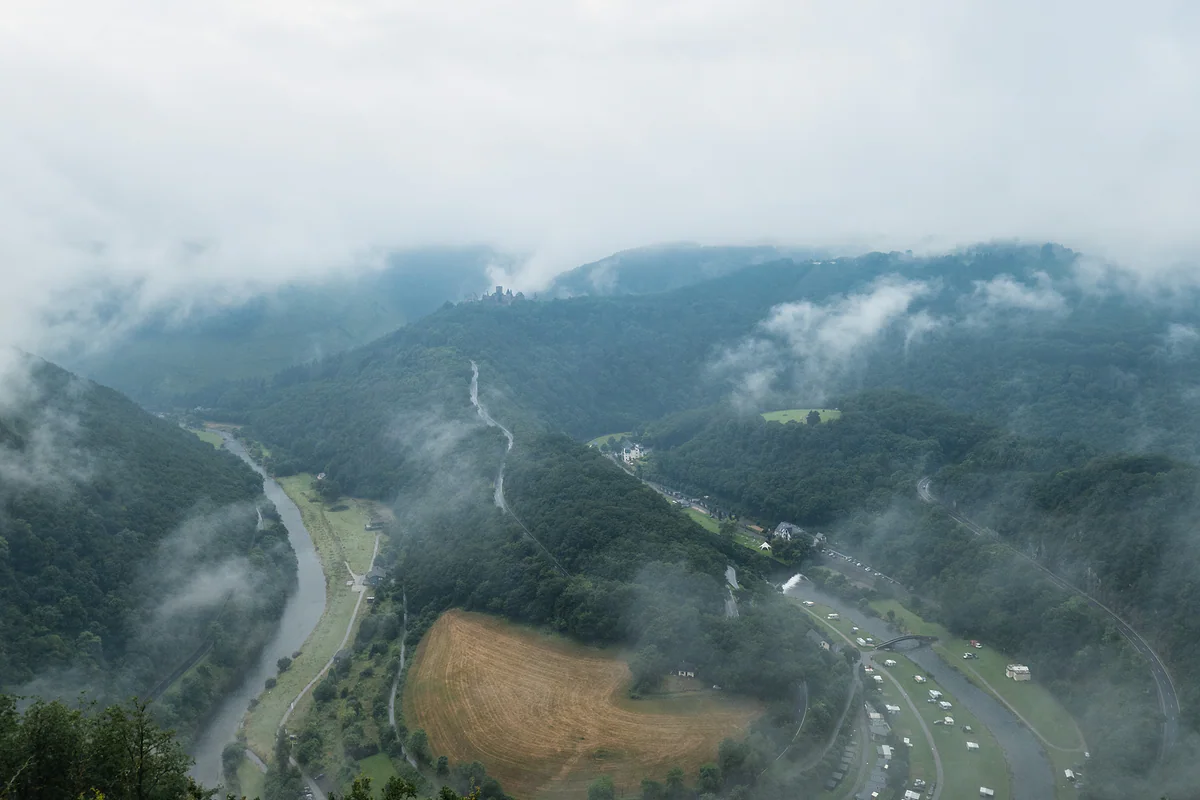
The Sûre valley in the Luxembourg Ardennes after rain, with mist between wooded hills and the river below
Start and finish times
| Route | Start | Finish | Desks close |
|---|---|---|---|
| 40 km | 7:00 to 9:00 | Before 17:00 | 17:15 |
| 20 km | 7:00 to 12:00 | Before 17:00 | 17:15 |
| 12 km | 7:00 to 12:00 | Before 17:00 | 17:15 |
marche.lu, checked on 30 September 2026. Start cards can be picked up between 14:00 and 20:00 on Friday, and on Saturday from 6:45 to 11:45. You can walk on Saturday, Sunday or both.
Key rules
| Topic | What the organisers say |
|---|---|
| Age | No limit; under-10s with an adult |
| Military walkers | No pack weight limit; uniform optional |
| Dogs | Welcome, on a lead on the route and at start and finish |
| Pushchairs | 12 km route only |
| Bikes | Not allowed |
| Refunds | None, for the walk or accommodation |
marche.lu rules and FAQ. There is no virtual version.
Test yourself
True or false?
0/3 Pick before you peek.
-
The Diekirch march is only open to soldiers.
See the answer
False. The rules admit civilians and military walkers of any age, alone or in groups.
-
You can do the march on a bike.
See the answer
False. The FAQ is clear that it's a walking event, not a bike ride.
-
The medal shows the seal of John the Blind.
See the answer
True. The association behind the first march in 1968 chose the seal of John the Blind, Count of Luxembourg and King of Bohemia, for the medal.
- First held, as the Marche de l'Armée
- 1968
- Longest route per day
- 40 km
- Maximum over both days
- 80 km
- Reusable cup at the event
- €2
0 of 425 Luxembourg guides
Your next stamp
- Military History Museum
- Hiking
- Luxembourg Marathon
- Diekirch
- Luxembourg in two days
- Carnival
- A Possen Museum
- American Cemetery
- Ansembourg
- Ansembourg Castles
- Asselborn
- Bascharage
- Beaufort castles
- Belval
- Belval blast furnaces
- Berg Castle
- Bernard-Massard cellars
- Bourglinster Castle
- Bourscheid Castle
- Brandenbourg
- Brandenbourg Castle
- Caves St Martin
- Christmas
- Clervaux Castle
- Echternach
- Echternach Abbey
- Ehnen
- Ehnen Wine Museum
- Esch-sur-Alzette
- Esch-sur-Sûre Castle
- European Museum Schengen
- Fond-de-Gras
- General Patton Museum
- German war cemetery
- Haff Réimech
- Hohllay
- Hollenfels Castle
- Hosingen
- Kautenbach
- Kneiff
- Koerich Castle
- Larochette Castle
- Lasauvage
- Mersch Castle
- Moersdorf
- Mondorf Domaine Thermal
- Munsbach Castle
- National Mining Museum
- Parc Merveilleux
- Park Sënnesräich
- Places to visit
- Remich
- Rindschleiden
- Schiessentümpel
- Septfontaines Castle
- Slate Museum
- Stolzembourg
- Tudor Museum
- Useldange Castle
- Valley of the Seven Castles
- Vianden
- Vianden Castle
- Ville Haute
- Wasserbillig Aquarium
- Weiswampach lakes
- Wiltz Castle
- Ahn
- Berdorf
- Bourscheid-Plage
- Butterfly garden
- Clervaux
- Differdange
- Echternach lake
- Grevenmacher
- Heringer Millen
- Hollenfels
- Luxembourg City
- Luxembourg Science Center
- Meysembourg Castle
- Mullerthal
- National Day
- National Resistance Museum
- Perekop
- Remerschen
- Schoenfels Castle
- The Family of Man
- Things to do
- Upper Sûre Lake
- Vianden chairlift
- Wasserbillig
- Clervaux Abbey
- Echternach Roman villa
- Éislek
- Insenborn
- Kallektuffquell
- Machtum
- Most beautiful places
- Our Nature Park
- Pétange
- Pettingen Castle
- Schueberfouer
- Schwebsingen
- Victor Hugo House
- Waldbillig
- Dudelange
- Kuelscheier
- Lultzhausen
- Moselle Valley
- Octave
- Prettiest villages
- Sanem
- Schengen
- Wellenstein
- Wiltz
- Wolfsschlucht
- Beaufort
- Bech-Kleinmacher
- Éimaischen
- Gaalgebierg
- Guttland
- Marnach
- Mondorf-les-Bains
- Putscheid
- Schifflange
- UNESCO World Heritage
- Consdorf
- Ellergronn
- Käerjeng
- Kayl
- Map
- Minett
- Munshausen
- Tandel
- Bech
- Buergbrennen
- Esch-sur-Sûre
- Rumelange
- Where is Luxembourg
- Is it a country?
- Lac de la Haute-Sûre (commune)
- Rosport-Mompach
- Wormeldange
- Larochette
- Mondercange
- Regions
- Bettembourg
- Bock Casemates
- Cantons
- Dancing procession
- Fischbach
- Garnich
- Mersch
- Moselle wine route
- Ettelbruck
- Grund
- Heffingen
- Kehlen
- Lintgen
- Moselle river cruises
- Pétrusse Casemates
- Towns and villages
- Chemin de la Corniche
- Erpeldange-sur-Sûre
- Junglinster
- Kopstal
- Lorentzweiler
- Nommern
- Pfaffenthal
- Population
- Bissen
- Clausen
- Grand Ducal Palace
- Koerich
- Schieren
- Size
- Vallée de l'Ernz
- Feulen
- Kirchberg
- Languages
- Notre-Dame Cathedral
- Reisdorf
- Steinfort
- Bettendorf
- Habscht
- St Michael's Church
- Helperknapp
- Luxembourgish
- Place Guillaume II
- Name
- Place d'Armes
- History
- Place de la Constitution
- Grand Duke
- Colmar-Berg
- Flaxweiler
- Gare
- Hamm
- Kirchberg funicular
- Luxembourg fortress
- Mamer
- Mertert
- Minett Trail
- Mullerthal Trail
- Neumünster Abbey
- Parc Hosingen
- Pfaffenthal lift
- Political system
- Redange
- The Passerelle
- Wine festivals
- Winseler
- Beckerich
- Biwer
- EU institutions
- Goesdorf
- Limpertsberg
- Mudam
- Natur Musée
- Pulvermühl
- Stadtbredimus
- Troisvierges
- Wenzel walk
- Bonnevoie
- Bous-Waldbredimus
- Ell
- Flag
- Kiischpelt
- Manternach
- Philharmonie
- Vauban circuit
- Weiswampach
- Betzdorf
- Boulaide
- Dräi Eechelen Museum
- Facts
- Hollerich
- Lenningen
- Useldange
- Wincrange
- Bourscheid
- Dalheim
- Gasperich
- Public holidays
- Red Bridge
- Saeul
- Belair
- Second World War
- Vichten
- Battle of the Bulge
- Merl
- Préizerdaul
- Cents
- EU and Schengen
- Groussbus-Wal
- Entry requirements
- Neudorf
- Rambrouch
- Currency and payments
- Mertzig
- Weimerskirch
- Adolphe Bridge
- Beggen
- Escapardenne
- How to get there
- MNHA (National Museum)
- Rock climbing
- Sandweiler
- Bridges
- Eich
- Flights
- Golf
- Hesperange
- Lëtzebuerg City Museum
- Canoeing and kayaking
- Dommeldange
- Luxembourg airport
- Strassen
- Villa Vauban
- Airport to city centre
- Bertrange
- Casino Luxembourg
- Mühlenbach
- Swimming pools
- From Brussels
- Pétrusse Valley
- Rollingergrund
- Walferdange
- Cessange
- Day trip from Brussels
- Municipal Park
- Steinsel
- Free walking tours
- From Paris
- Niederanven
- From Frankfurt
- Schuttrange
- Sightseeing train and bus
- By train
- Contern
- By coach
- Weiler-la-Tour
- Driving
- Luxembourg in one day
- Pretzel Sunday
- Rham Plateau
- Tour de Luxembourg
- Candlemas (Liichtmëssdag)
- Car hire
- Saint-Esprit Plateau
- Luxembourg in three days
- Melusina statue
- Parking
- St Nicholas Day (Kleeschen)
- Fête de la Musique
- Luxembourg in four days
- Museums in Luxembourg
- Petrol
- Place de Clairefontaine
- A week in Luxembourg
- Getting around
- Tram and Bus Museum
- Free public transport
- Parks in Luxembourg City
- Road trip
- Belgium and Luxembourg
- Tram
- Buses
- Viewpoints
- Trains
- Luxembourg station
- Cycling
- LuxembourgPass
- Prices and budget
- On a budget
- Free things to do
- Mobile and roaming
- Healthcare
- Safety
- Scams
- Tourist information
- Packing list
- Swimming lakes
- With a dog
- Markets
- Tipping
- Shopping
- What to buy
- Shopping centres
- With kids
- For couples
- Playgrounds
- Adventure parks
- Nightlife
- Castles
- Theatres and concert venues
- Leudelange
- Nature parks
- Where to stay
- City-centre hotels
- Nature reserves
- Reckange-sur-Mess
- Hotels near the station
- Roeser
- Frisange
- Hotels in Kirchberg
- Airport hotels
- Dippach
- Hotels in Vianden
- Hotels in Echternach
- Hotels in Clervaux
- Hotels in Mondorf-les-Bains
- Hotels in Esch-sur-Alzette
- Hotels on the Moselle
- Mullerthal hotels
- Upper Sûre lake hotels
- Hotels in Diekirch and Ettelbruck
- Cheap hotels
- Luxury hotels
- Boutique hotels
- Spa hotels
- Family hotels
- Apartments
- Weather
- Youth hostels
- Best time to visit
- Campsites
- Holiday cottages
- In winter
- Castle hotels
- In spring
- Day trips
- In summer
- Around Luxembourg
- In autumn
- Ice skating
- Trier day trip
- Metz day trip
- Arlon day trip
- In January
- In February
- In March
- In April
- In May
- In June
- In July
- In August
- In September
- Food
- In October
- In November
- Where to eat
- In December
- Michelin restaurants
- Cheap eats
- Judd mat Gaardebounen
- Bouneschlupp
- Gromperekichelcher
- Kniddelen
- Quetschentaart
- Rieslingspaschtéit
- Events
- Wine
- Crémant
- Beer
Frequently asked questions
What is the International March of Diekirch?
An annual two-day walking event in Diekirch, open to civilians and military walkers from around the world. Each day you choose 40, 20 or 12 km, and visitluxembourg describes it as a walk through the Éislek hills totalling between 12 and 80 km.
When is the Diekirch march in 2027?
As of 30 September 2026 the organisers hadn't published the 2027 date on marche.lu. Check the site or its online registration before booking travel.
Can civilians take part?
Yes. The rules say civilians and military personnel of any age may take part, alone or in a group. Children under 10 must be with an adult.
What medal do you get?
Every completed walk earns a medal under the march's own system, with extra jubilee medals for the 5th, 10th and 20th participation and for walking two days of 20 or 40 km. Awards must be claimed at the event, never afterwards.
Do military walkers have to wear uniform?
No, it's optional, and there's no weight limit for military packs. The official site says nothing about whether any army recognises the medal or ribbon on uniform, so check with your own chain of command.
Where do walkers stay?
The organisers offer accommodation at registration; bring a sleeping bag, and fridges, stoves and barbecues aren't allowed. For a hotel, Diekirch had only 2 in 2025, so book early or look at Ettelbruck.
By
Tourism graduate with a master’s in Tourism Management and Planning from the University of Málaga, who has travelled across Europe. He writes every guide from official sources and his own judgement.
Published on . Facts checked on .
Sources
Some links in this guide are affiliate links: if you book through them, the site earns a commission at no extra cost to you. Affiliate disclosure
Photos: GilPe (CC BY-SA 4.0); Tristan Schmurr from Luxembourg, Luxembourg (CC BY 2.0), via Wikimedia Commons.