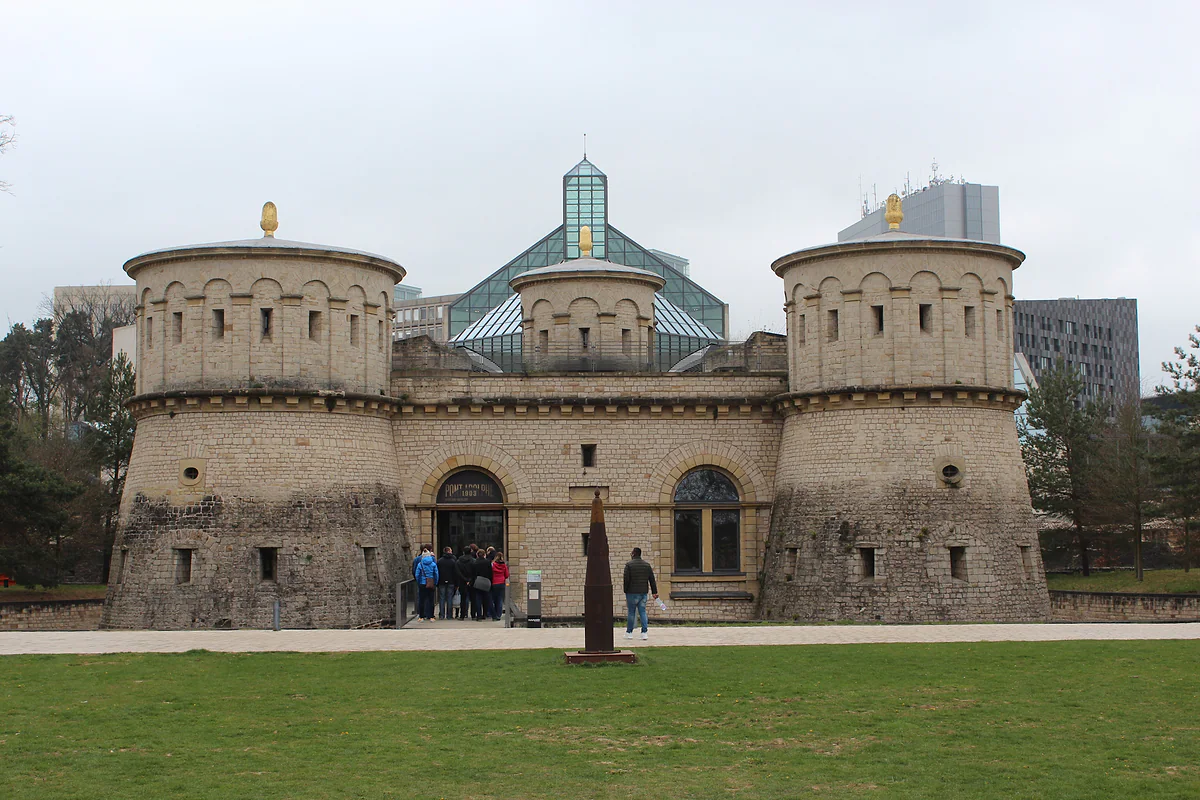
History museum in Fort Thüngen, Kirchberg
Dräi Eechelen Museum in Fort Thüngen, the fortress told from the inside
The Dräi Eechelen Museum, Luxembourgish for 'three acorns', occupies the redoubt of Fort Thüngen in Kirchberg and tells the story of the fortress and the country from 1443 to 1903 through some 600 objects. As of September 2026 it opens Tuesday to Sunday, 10:00 to 18:00, until 20:00 on Wednesdays, and costs €7; under-26s go free.
If you only see one history museum in Luxembourg, I'd pick this one, because it explains the city from inside one of its own forts. And if you're heading to the Nationalmusée anyway, the €12 combined ticket makes perfect sense.

Before you go
What I would keep in mind
-
01 To save money
Four ways in for free
Under-26s never pay, nobody pays on Wednesdays from 17:30 to 20:00 or during the last opening hour, and the Luxembourg Card, now the LuxembourgPass, gets you in. Few museums make it this easy.
LuxembourgPass -
02 Money
Combined with the Nationalmusée, €12
A ticket for both national museums, Dräi Eechelen and the Nationalmusée um Fëschmaart in the old town, costs €12 and is valid on the same day only.
National Museum of History and Art -
03 Most beautiful
The fort's three acorns
Fort Thüngen's three round towers are the Dräi Eechelen, the three acorns, or Trois Glands in French. Along with the foundations, they're all that stood after the fort was pulled down in the 1870s.
-
04 My tip
Watch the bank holidays
It's closed on 1 January, 23 June, 15 August, 1 November and 25 December. But it opens on Easter Monday, 1 May, Ascension Day and Whit Monday.
You can read Luxembourg’s fortress in the walls of the Ville Haute, in the casemates or in books. But the place where it clicks, for me, is here, inside one of its forts. The Dräi Eechelen Museum occupies the redoubt of Fort Thüngen, at the end of Kirchberg that faces the old town, and tells the story of the fortified city and the country through some 600 objects. It’s one of the museums I most recommend to anyone who wants to understand Luxembourg rather than just photograph it.
Three acorns and a fort
The fort takes its name from Baron von Thüngen, the fortress commander, and was built in 1732 around an earlier defensive work, the Park Redoubt, which Vauban had laid out fifty years before. A deep ditch surrounded it, and a 169-metre gallery cut through the rock linked it with Fort Obergrünewald. The Prussians enlarged it in 1836 and strengthened it in 1860.
After the Treaty of London in 1867 came the dismantling, and between 1870 and 1874 the fort was demolished. Only its three round towers and the foundations survived, the latter rediscovered in 1991. Those towers are the Dräi Eechelen, the three acorns, or Trois Glands in French, and they lend their name to the museum, the park and half the neighbourhood.
Forts Obergrünewald and Niedergrünewald, and Three Acorns Park
Thüngen wasn’t on its own. The museum itself counts four Kirchberg forts, Obergrünewald, Thüngen, Niedergrünewald and Olizy, and of the last only fragments survive underground. Obergrünewald began as the Parc hornwork in Vauban’s 1684 plan and took its name under the Austrians in 1716; the 169-metre gallery let soldiers reach its ditch safely during a bombardment. Niedergrünewald, further down, was a crownwork of three bastions undermined by tunnels, and its partly rebuilt keep is open to the public, with the countermine galleries reached from the ditch.
Three Acorns Park (Parc des Trois Glands) ties it all together, stretching behind the Philharmonie, the Mudam and the fort according to visitluxembourg. Landscape architect Michel Desvigne redesigned it and it’s open all year. For me it’s the best free part of the visit, because from the terrace in front of the fort the old town faces you and you grasp in a minute why someone wanted guns exactly here.
To sleep close to everything, search places to stay in Luxembourg on Booking.com and filter by area before price.
What does the museum cover?
The full name sums it up, Musée Dräi Eechelen, Forteresse, Histoire, Identités. The story runs from 1443 to 1903, four and a half centuries during which the city was one of Europe’s great fortified strongholds until, after 1867, it no longer was. In between come the sieges, the changes of ruler, Vauban, the Prussian garrison and finally the forging of a national identity, which is the third word in the title. If that thread interests you, the Luxembourg fortress has its own page.
What strikes me most is the container. Walking through the fortress’s history inside a fort, with the walls and the underground gallery around you, changes how you take in everything else. I’d set aside at least an hour and a half, and a good deal more if you’re the sort who reads every panel. It also works well before a walk along the old ramparts, since you’ll then know what you’re looking at.
Price, and when it’s free
A single ticket is €7 as of September 2026, and the combined ticket with the National Museum of History and Art, the Nationalmusée um Fëschmaart, is €12, valid on the same day only. Groups of six or more pay €5 each.
My maths is simple. If you’re seeing both national museums and you’re 26 or over, the combined ticket saves you €2 and commits you to doing them on the same day, which the tram between Kirchberg and the Ville Haute makes easy. If you’re under 26, forget the sums, because you won’t pay at either.
The free list is generous. Under-26s, visitors with reduced mobility plus a companion, and holders of the Kulturpass, an ICOM card, the Friends of the Museums card or the Luxembourg Card, now the LuxembourgPass, go free. For everyone, entry is free on Wednesdays from 17:30 to 20:00 and during the last opening hour of each day.
To sleep close to everything, search places to stay in Luxembourg on Expedia and filter by area before price.
Opening hours and bank holidays
Doors open at 10:00 and close at 18:00 from Tuesday to Sunday, except Wednesday, when they stay open until 20:00. Mondays are closed. Bank holidays follow their own logic, so check before you go. There are five closing days a year, 1 January, 23 June, 15 August, 1 November and 25 December. Easter Monday, 1 May, Ascension Day, Whit Monday and 26 December keep normal hours; on 24 December it shuts at 14:00, and on 31 December at 16:30.
Getting there and pairing it up
It’s at 5 Park Dräi Eechelen in Kirchberg. The tram stops at Philharmonie / Mudam, the bus at Rout Bréck-Pafendall and the train at Pfaffenthal-Kirchberg, where the funicular climbs up. Driving, the Trois Glands car park is on rue du Fort Thüngen. The exhibition, underground gallery included, is accessible to visitors with reduced mobility. For any questions, the museum’s number is (+352) 26 86 98 02.
Mudam is right next to the fort. I’d do both on a Wednesday, Dräi Eechelen first from 17:30, then Mudam from 18:00, both free.
If you are short on time, see the best tours in Dräi Eechelen Museum and pick one that fits your day.
Where the bus does not go, a car does: compare car hire in Luxembourg before you arrive rather than at the desk.
If you still need a way in, check the best ticket deals to Luxembourg from where you are.
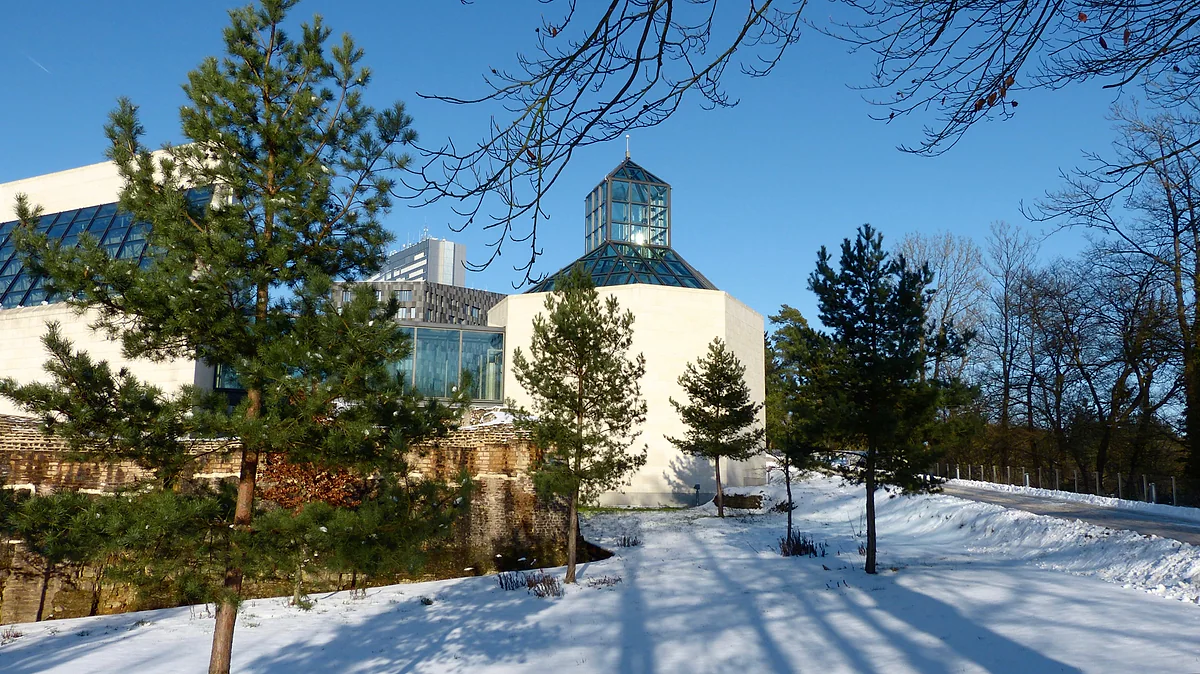
Mudam, the modern art museum in Kirchberg, with its glass dome among pine trees and snow on a sunny day
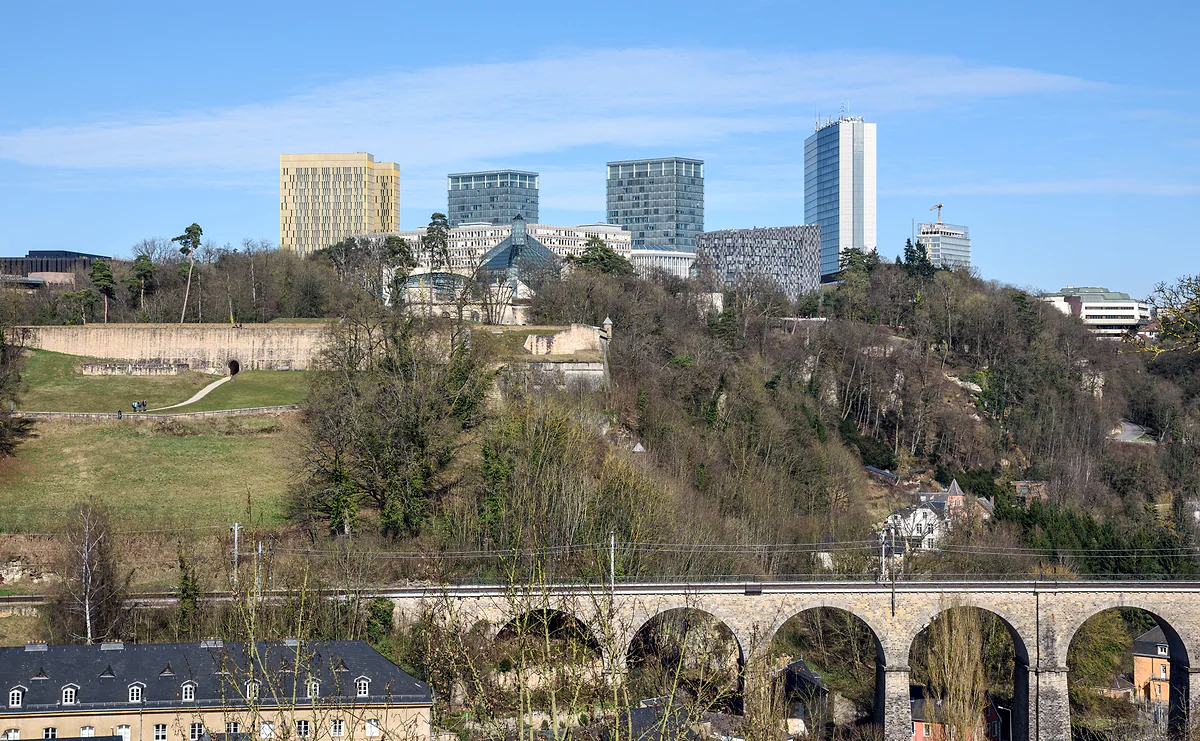
The towers of Kirchberg above the slopes of Fort Obergrünewald and a stone viaduct, seen from the ramparts
Opening hours (September 2026)
| Day | Hours |
|---|---|
| Monday | Closed |
| Tuesday, Thursday to Sunday | 10:00 to 18:00 |
| Wednesday | 10:00 to 20:00 (free from 17:30) |
| 1-1, 23-6, 15-8, 1-11 and 25-12 | Closed |
| 24-12 | 10:00 to 14:00 |
| 31-12 | 10:00 to 16:30 |
Source: m3e.public.lu, checked on 29-09-2026.
Prices (September 2026)
| Ticket | Price |
|---|---|
| Individual | €7 |
| With the Nationalmusée, same day | €12 |
| Groups of 6 or more | €5 per person |
| Under-26s and visitors with reduced mobility (plus one) | Free |
| Wednesdays 17:30-20:00 and last opening hour | Free |
Source: m3e.public.lu, checked on 29-09-2026.
Test yourself
True or false?
0/4 Pick before you peek.
-
Fort Thüngen survives intact.
See the answer
False. It was pulled down in the 1870s. Only the three round towers and the foundations, uncovered in 1991, remain, according to the tourist office.
-
A 25-year-old visitor gets into Dräi Eechelen free.
See the answer
True. The museum is free for under-26s, according to its official website.
-
The museum covers Luxembourg's history from Roman times.
See the answer
False. Its displays run from 1443 to 1903, according to the tourist office, with around 600 objects.
-
An underground gallery once linked Fort Thüngen with Fort Obergrünewald.
See the answer
True. It was a 169-metre gallery cut into the rock, according to the tourist office.
Map
Where Dräi Eechelen Museum is
The thick dashed line is the border with Belgium, France and Germany, and the fine ones divide the twelve cantons. The Éislek lies to the north and the Moselle to the east. Every number opens its guide.
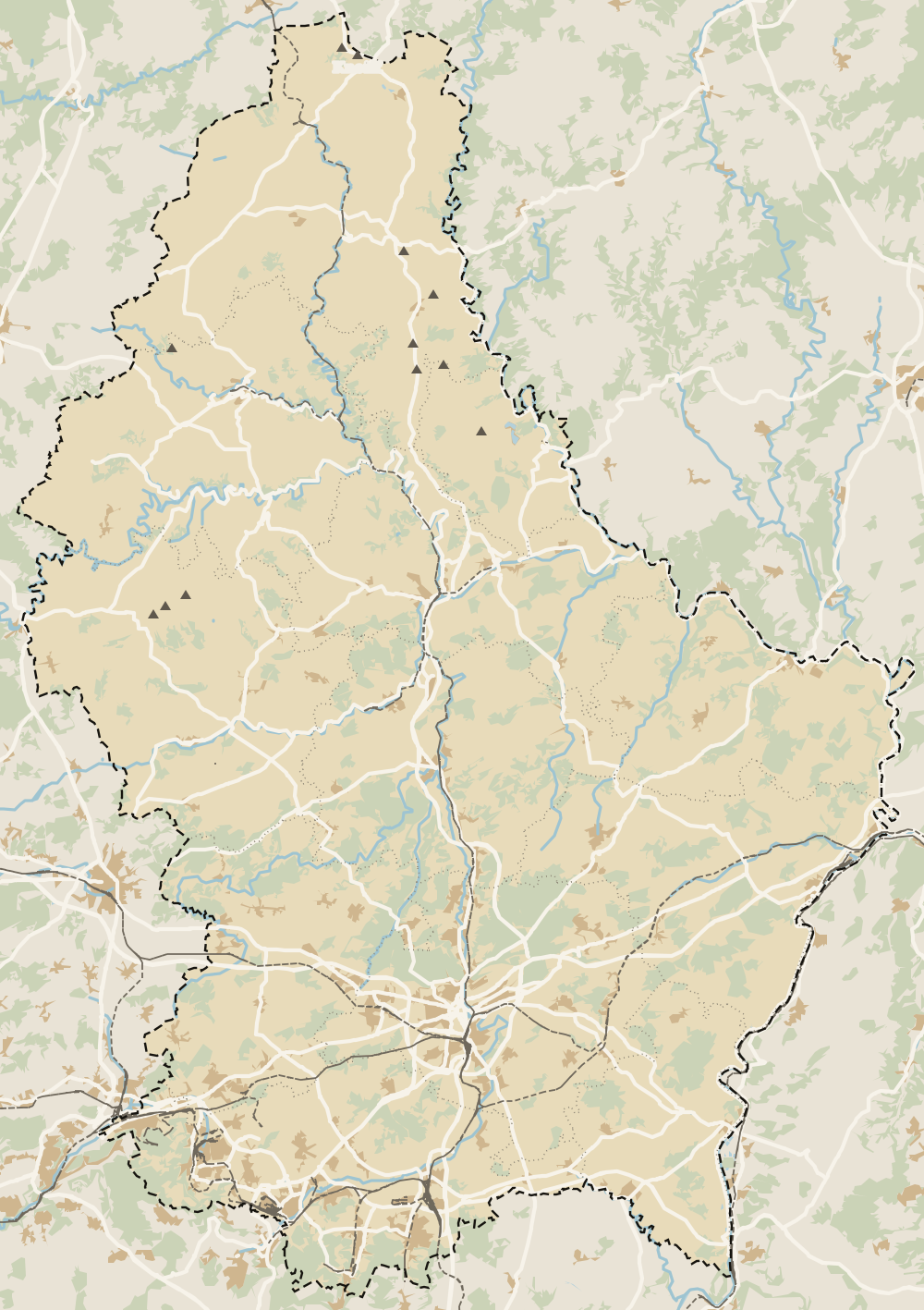 1Kirchberg 2Kirchberg funicular 3Mudam 4Philharmonie 5Dräi Eechelen Museum 6Red Bridge
 Map data © OpenStreetMap contributors (ODbL)
- 1KirchbergLuxembourg City's European and business district
- 2Kirchberg funicularThe country's only funicular, in the capital
- 3MudamGrand Duke Jean Museum of Modern Art, Kirchberg
- 4PhilharmonieGrand Duchess Joséphine-Charlotte Concert Hall, Kirchberg
- 5Dräi Eechelen MuseumHistory museum in Fort Thüngen, Kirchberg
- 6Red BridgeGrand Duchess Charlotte Bridge, centre to Kirchberg
0 of 425 Luxembourg guides
Your next stamp
- Luxembourg in two days
- Natur Musée
- Lëtzebuerg City Museum
- Museums in Luxembourg
- Luxembourg fortress
- Brandenbourg Castle
- Luxembourg in one day
- Mudam
- A Possen Museum
- American Cemetery
- Ansembourg
- Ansembourg Castles
- Asselborn
- Bascharage
- Beaufort castles
- Belval
- Belval blast furnaces
- Berg Castle
- Bernard-Massard cellars
- Bourglinster Castle
- Bourscheid Castle
- Brandenbourg
- Caves St Martin
- Christmas
- Clervaux Castle
- Echternach
- Echternach Abbey
- Ehnen
- Ehnen Wine Museum
- Esch-sur-Alzette
- Esch-sur-Sûre Castle
- European Museum Schengen
- Fond-de-Gras
- General Patton Museum
- German war cemetery
- Haff Réimech
- Hohllay
- Hollenfels Castle
- Hosingen
- Kautenbach
- Kneiff
- Koerich Castle
- Larochette Castle
- Lasauvage
- Mersch Castle
- Military History Museum
- Moersdorf
- Mondorf Domaine Thermal
- Munsbach Castle
- National Mining Museum
- Parc Merveilleux
- Park Sënnesräich
- Places to visit
- Remich
- Rindschleiden
- Schiessentümpel
- Septfontaines Castle
- Slate Museum
- Stolzembourg
- Tudor Museum
- Useldange Castle
- Valley of the Seven Castles
- Vianden
- Vianden Castle
- Ville Haute
- Wasserbillig Aquarium
- Weiswampach lakes
- Wiltz Castle
- Ahn
- Berdorf
- Bourscheid-Plage
- Butterfly garden
- Clervaux
- Differdange
- Echternach lake
- Grevenmacher
- Heringer Millen
- Hollenfels
- Luxembourg City
- Luxembourg Science Center
- Meysembourg Castle
- Mullerthal
- National Day
- National Resistance Museum
- Perekop
- Remerschen
- Schoenfels Castle
- The Family of Man
- Things to do
- Upper Sûre Lake
- Vianden chairlift
- Wasserbillig
- Clervaux Abbey
- Echternach Roman villa
- Éislek
- Insenborn
- Kallektuffquell
- Machtum
- Most beautiful places
- Our Nature Park
- Pétange
- Pettingen Castle
- Schueberfouer
- Schwebsingen
- Victor Hugo House
- Waldbillig
- Dudelange
- Kuelscheier
- Lultzhausen
- Moselle Valley
- Octave
- Prettiest villages
- Sanem
- Schengen
- Wellenstein
- Wiltz
- Wolfsschlucht
- Beaufort
- Bech-Kleinmacher
- Éimaischen
- Gaalgebierg
- Guttland
- Marnach
- Mondorf-les-Bains
- Putscheid
- Schifflange
- UNESCO World Heritage
- Carnival
- Consdorf
- Ellergronn
- Käerjeng
- Kayl
- Map
- Minett
- Munshausen
- Tandel
- Bech
- Buergbrennen
- Esch-sur-Sûre
- Rumelange
- Where is Luxembourg
- Is it a country?
- Lac de la Haute-Sûre (commune)
- Rosport-Mompach
- Wormeldange
- Larochette
- Mondercange
- Regions
- Bettembourg
- Bock Casemates
- Cantons
- Dancing procession
- Diekirch
- Fischbach
- Garnich
- Mersch
- Moselle wine route
- Ettelbruck
- Grund
- Heffingen
- Kehlen
- Lintgen
- Moselle river cruises
- Pétrusse Casemates
- Towns and villages
- Chemin de la Corniche
- Erpeldange-sur-Sûre
- Junglinster
- Kopstal
- Lorentzweiler
- Nommern
- Pfaffenthal
- Population
- Bissen
- Clausen
- Grand Ducal Palace
- Koerich
- Schieren
- Size
- Vallée de l'Ernz
- Feulen
- Kirchberg
- Languages
- Notre-Dame Cathedral
- Reisdorf
- Steinfort
- Bettendorf
- Habscht
- St Michael's Church
- Helperknapp
- Luxembourgish
- Place Guillaume II
- Name
- Place d'Armes
- History
- Place de la Constitution
- Grand Duke
- Colmar-Berg
- Flaxweiler
- Gare
- Hamm
- Kirchberg funicular
- Mamer
- Mertert
- Minett Trail
- Mullerthal Trail
- Neumünster Abbey
- Parc Hosingen
- Pfaffenthal lift
- Political system
- Redange
- The Passerelle
- Wine festivals
- Winseler
- Beckerich
- Biwer
- EU institutions
- Goesdorf
- Limpertsberg
- Pulvermühl
- Stadtbredimus
- Troisvierges
- Wenzel walk
- Bonnevoie
- Bous-Waldbredimus
- Ell
- Flag
- Kiischpelt
- Manternach
- Philharmonie
- Vauban circuit
- Weiswampach
- Betzdorf
- Boulaide
- Facts
- Hollerich
- Lenningen
- Useldange
- Wincrange
- Bourscheid
- Dalheim
- Gasperich
- Public holidays
- Red Bridge
- Saeul
- Belair
- Second World War
- Vichten
- Battle of the Bulge
- Merl
- Préizerdaul
- Cents
- EU and Schengen
- Groussbus-Wal
- Entry requirements
- Neudorf
- Rambrouch
- Currency and payments
- Mertzig
- Weimerskirch
- Adolphe Bridge
- Beggen
- Escapardenne
- How to get there
- International March of Diekirch
- MNHA (National Museum)
- Rock climbing
- Sandweiler
- Bridges
- Eich
- Flights
- Golf
- Hesperange
- Canoeing and kayaking
- Dommeldange
- Luxembourg airport
- Strassen
- Villa Vauban
- Airport to city centre
- Bertrange
- Casino Luxembourg
- Mühlenbach
- Swimming pools
- From Brussels
- Pétrusse Valley
- Rollingergrund
- Walferdange
- Cessange
- Day trip from Brussels
- Municipal Park
- Steinsel
- Free walking tours
- From Paris
- Niederanven
- From Frankfurt
- Schuttrange
- Sightseeing train and bus
- By train
- Contern
- By coach
- Weiler-la-Tour
- Driving
- Pretzel Sunday
- Rham Plateau
- Tour de Luxembourg
- Candlemas (Liichtmëssdag)
- Car hire
- Saint-Esprit Plateau
- Luxembourg in three days
- Melusina statue
- Parking
- St Nicholas Day (Kleeschen)
- Fête de la Musique
- Luxembourg in four days
- Petrol
- Place de Clairefontaine
- A week in Luxembourg
- Getting around
- Luxembourg Marathon
- Tram and Bus Museum
- Free public transport
- Parks in Luxembourg City
- Road trip
- Belgium and Luxembourg
- Tram
- Buses
- Viewpoints
- Trains
- Luxembourg station
- Cycling
- LuxembourgPass
- Prices and budget
- On a budget
- Free things to do
- Mobile and roaming
- Healthcare
- Safety
- Scams
- Tourist information
- Packing list
- Swimming lakes
- With a dog
- Markets
- Tipping
- Shopping
- What to buy
- Shopping centres
- With kids
- For couples
- Playgrounds
- Adventure parks
- Nightlife
- Castles
- Theatres and concert venues
- Leudelange
- Nature parks
- Where to stay
- City-centre hotels
- Hiking
- Nature reserves
- Reckange-sur-Mess
- Hotels near the station
- Roeser
- Frisange
- Hotels in Kirchberg
- Airport hotels
- Dippach
- Hotels in Vianden
- Hotels in Echternach
- Hotels in Clervaux
- Hotels in Mondorf-les-Bains
- Hotels in Esch-sur-Alzette
- Hotels on the Moselle
- Mullerthal hotels
- Upper Sûre lake hotels
- Hotels in Diekirch and Ettelbruck
- Cheap hotels
- Luxury hotels
- Boutique hotels
- Spa hotels
- Family hotels
- Apartments
- Weather
- Youth hostels
- Best time to visit
- Campsites
- Holiday cottages
- In winter
- Castle hotels
- In spring
- Day trips
- In summer
- Around Luxembourg
- In autumn
- Ice skating
- Trier day trip
- Metz day trip
- Arlon day trip
- In January
- In February
- In March
- In April
- In May
- In June
- In July
- In August
- In September
- Food
- In October
- In November
- Where to eat
- In December
- Michelin restaurants
- Cheap eats
- Judd mat Gaardebounen
- Bouneschlupp
- Gromperekichelcher
- Kniddelen
- Quetschentaart
- Rieslingspaschtéit
- Events
- Wine
- Crémant
- Beer
Frequently asked questions
What is the Dräi Eechelen Museum?
It's the Musée Dräi Eechelen: Forteresse, Histoire, Identités, a national museum in the redoubt of Fort Thüngen in Kirchberg. It tells the story of Luxembourg's fortress and the country between 1443 and 1903, with around 600 objects.
How much is the Dräi Eechelen Museum?
A single ticket is €7 and the combined ticket with the Nationalmusée um Fëschmaart, valid on the same day, is €12, as of September 2026. Groups of six or more pay €5 each.
When is the Dräi Eechelen Museum free?
Always for under-26s and for visitors with reduced mobility plus a companion. For everyone, on Wednesdays from 17:30 to 20:00 and during the last opening hour each day.
What does Dräi Eechelen mean?
Three acorns, in Luxembourgish. It's the name of Fort Thüngen's three round towers, called Trois Glands in French, which also give their name to the surrounding park.
How do I get to the Dräi Eechelen Museum?
Tram to Philharmonie / Mudam, bus to Rout Bréck-Pafendall, or train to Pfaffenthal-Kirchberg and then the funicular. By car, use the Trois Glands car park on rue du Fort Thüngen.
Is it wheelchair accessible?
Yes. The museum says the permanent and temporary exhibitions and the underground gallery are accessible to visitors with reduced mobility, who also get in free with a companion.
By
Tourism graduate with a master’s in Tourism Management and Planning from the University of Málaga, who has travelled across Europe. He writes every guide from official sources and his own judgement.
Published on . Updated on . Facts checked on .
Sources
Some links in this guide are affiliate links: if you book through them, the site earns a commission at no extra cost to you. Affiliate disclosure
Photos: Zinneke (CC BY-SA 3.0); Denise Hastert (CC BY-SA 4.0); Cayambe (CC BY-SA 4.0), via Wikimedia Commons.