Commune in the canton of Esch-sur-Alzette, Minett region
Kayl, the valley that keeps the miners' memory
Kayl is a commune of 9,989 people in the canton of Esch-sur-Alzette, made up of two localities, Kayl and Tétange. On the heights above it, next to the Léiffrächen nature reserve, stands the National Miners' Monument, completed in 1957 and since 1978 the national memorial to all of Luxembourg's miners, with plaques naming those who died underground.
In 30 seconds
Full read: 3 min
- Kayl is a commune of 9,989 people with two localities, Kayl and Tétange.
- The National Miners' Monument, completed in 1957, stands on the heights above it.
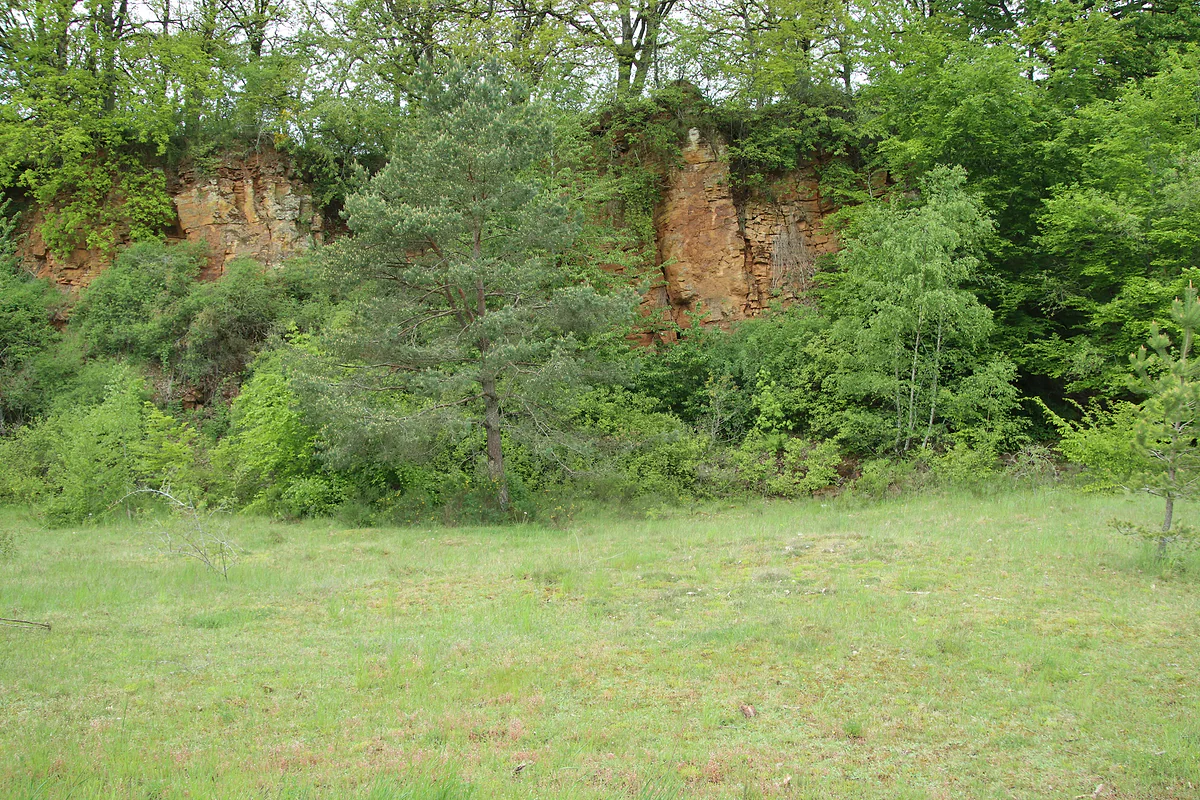
- The Léiffrächen reserve combines red rock cliffs, woodland and dry meadows.
- Two stages of the Minett Trail start or finish at Tétange station.
Kayl has no classic guidebook sights, and the commune says as much itself. To me it's the best place in the south to stop for a moment and think about who dug the iron out. I'd go up to the Léiffrächen, come back down to Tétange station and walk the Minett Trail on to Rumelange to finish at the mining museum.

Before you go
What I would keep in mind
-
01 Most beautiful
The Léiffrächen, red rock and dry meadow
visitluxembourg rates it among the finest reserves in the Minett, with viewpoints, red rock cliffs, dense woodland and open dry grassland. The miners' monument and a pilgrimage site sit right beside it.
-
02 My tip
Sleep in the old ironworks office
The former ironworks administration building in Tétange, where wagons of ore were weighed, is now Den alen Arbed's Büro, one of the Minett Trail's hikers' lodges.
Minett Trail -
03 Getting there
Two stations on a branch line
The CFL branch from Noertzange to Rumelange stops at Kayl and at Tétange. Second-class rail travel within Luxembourg is free.
trains in Luxembourg
The commune of Kayl opens its tourism page with refreshing honesty. It admits that Kayl and Tétange lack the obvious pull of better-known villages, and makes the case instead for its good-quality historical, industrial and natural heritage. I think that’s fair. This is a commune of 9,989 people in a valley of the Minett, and on the hill above it is one of the most meaningful places in southern Luxembourg.
The miners’ memorial
The National Miners’ Monument was completed in 1957 to honour the miners to whom the country owed its wealth at the start of the 20th century. Since 1978 it has been the national memorial to all of them, and plaques bear the names of those who died underground. The commune gives the figure that explains why it was needed, more than 1,400 miners killed by roof falls and blasting accidents, of every age and nationality. The research behind it was done by a former mayor, Jules Kauffmann, with the Léiffrächen memorial already in mind.
visitluxembourg adds a detail that stays with you, that some of the miners who died were not even 14. Beside the monument an observation tower looks out over the whole region. It’s a short visit, and one I’d make quietly and without hurrying.
What is the Léiffrächen?
It’s the nature reserve around the monument, and visitluxembourg counts it among the best in the Minett, with viewpoints, red rock cliffs, thick woodland and wide clearings of dry grassland. Next to it is the shrine that gives it its name, a small chapel in a grotto holding the Léiffrächen, patron saint of the miners, which became a place of pilgrimage closely tied to mining families. The Kayl circular walk starts from the monument car park on rue Notre-Dame and crosses the old Brommeschbierg opencast working, where the red extraction terraces are still plain to see. The commune shares two more reserves, Haard-Hesselsbierg-Staebierg with Dudelange and Rumelange, the largest in the country, and Brucherbierg-Lallengerbierg, which covers 267 hectares.
To sleep close to everything, search places to stay in Esch-sur-Alzette on Booking.com and filter by area before price.
Two villages, two histories
Kayl is older than Tétange, which dates from the Frankish period. There’s a prehistoric site on the heights of Tétange, and near Kayl’s cemetery archaeologists found worked stones now known as Tétange flint. A minor Roman road crossed the Poteau de Kayl. In the 13th century a small castle went up by the Kaylbach, with four towers and a moat, and only its foundations survive, found during works in the 1970s.
Everything changed in 1840 with the rediscovery of the minette ore. Trades grew up around the mines. In Tétange, Pierre Schiltz made acetylene lamps, and the Massard and Friser foundries built mine wagons and equipment. In 1914 the Hubert family opened a shoe factory, work boots included, which is now the Schungfabrik, the commune’s arts centre. Of all those firms, only Massard outlived the mines.
On foot along the Minett Trail
The Minett Trail calls at Tétange station. The stage in from Esch-sur-Alzette is 11.95 km, and the next one on to Rumelange is 7.79 km. That second one is the one I’d pick, as it’s short and ends in Rumelange, home of the National Mining Museum. The old ironworks building in Tétange, where full ore wagons were weighed before the ore went off to the steelworks, is now one of the trail’s hikers’ lodges.
To sleep close to everything, search places to stay in Esch-sur-Alzette on Expedia and filter by area before price.
Getting there
The CFL branch from Noertzange to Rumelange stops at both Kayl and Tétange, and at Noertzange you change for the capital or for Esch-sur-Alzette. Like all second-class rail travel within the country, it costs nothing.
If you are short on time, see the best tours in Esch-sur-Alzette and pick one that fits your day.
Where the bus does not go, a car does: compare car hire in Luxembourg before you arrive rather than at the desk.
If you still need a way in, check the best ticket deals to Luxembourg from where you are.
Kayl and Tétange at a glance
| What | Detail | Source |
|---|---|---|
| National Miners' Monument | Completed 1957; national memorial since 1978 | visitluxembourg |
| Miners killed in accidents | More than 1,400, of all ages and nationalities | Commune of Kayl |
| Medieval castle | 13th century, on the Kaylbach; only the foundations survive | Commune of Kayl |
| Hubert shoe factory | Opened 1914; now the Schungfabrik arts centre | Commune of Kayl |
| Stage Esch-sur-Alzette to Tétange | 11.95 km, about 3 hrs 30 | minetttrail.lu |
| Stage Tétange to Rumelange | 7.79 km, about 2 hrs 10 | minetttrail.lu |
Checked on 30-09-2026. Population on 1-1-2026, STATEC.
Test yourself
True or false?
0/3 Pick before you peek.
-
The towers of Kayl's medieval castle still stand.
See the answer
False. Only the foundations remain, uncovered during works on the Kaylbach in the 1970s, according to the commune.
-
Kayl's arts centre is in a former shoe factory.
See the answer
True. The factory opened by the Hubert family in 1914 is now the Schungfabrik, the commune's cultural centre.
-
The National Miners' Monument only remembers miners from Kayl.
See the answer
False. Since 1978 it has been the national memorial to all the country's miners, with name plaques for those who died.
- Miners' monument completed
- 1957
- Miners killed, per the commune
- 1,400+
- Residents on 1-1-2026
- 9,989
- Minette ore rediscovered
- 1840
Map
Where Kayl is
The thick dashed line is the border with Belgium, France and Germany, and the fine ones divide the twelve cantons. The Éislek lies to the north and the Moselle to the east. Every number opens its guide.
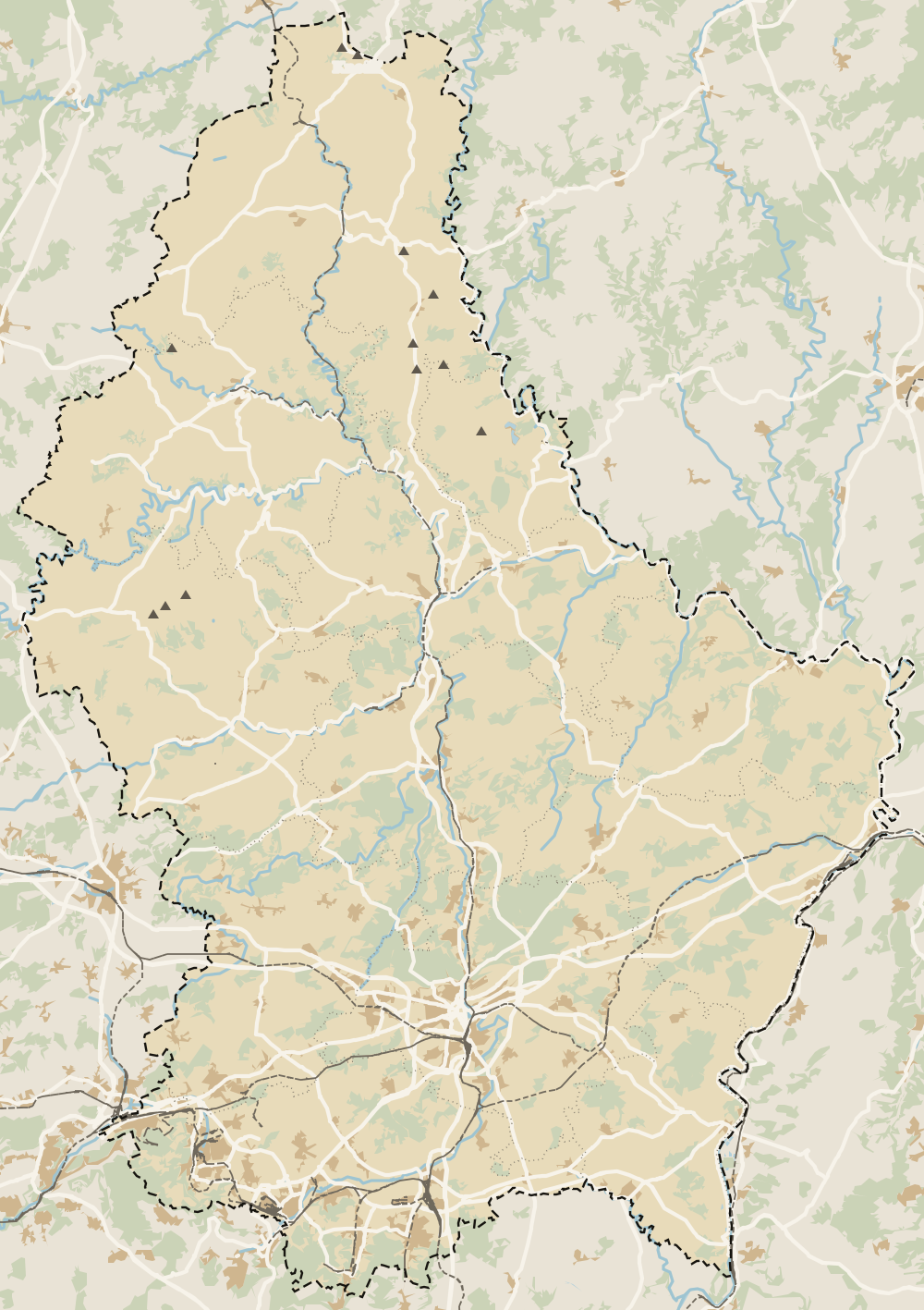 1Esch-sur-Alzette 2Differdange 3Pétange 4Dudelange 5Sanem 6Schifflange 7Käerjeng 8Kayl 9Rumelange 10Mondercange 11Bettembourg
 Map data © OpenStreetMap contributors (ODbL)
- 1Esch-sur-AlzetteCommune in the canton of Esch-sur-Alzette, in the Minett
- 2DifferdangeCommune in the canton of Esch-sur-Alzette, in the Minett
- 3PétangeCommune in the canton of Esch-sur-Alzette, in the Minett
- 4DudelangeTown in the canton of Esch-sur-Alzette, Minett region
- 5SanemCommune in the canton of Esch-sur-Alzette, in the Minett
- 6SchifflangeCommune in the canton of Esch-sur-Alzette, in the Minett
- 7KäerjengCommune in the canton of Capellen, in the Minett
- 8KaylCommune in the canton of Esch-sur-Alzette, Minett region
- 9RumelangeTown in the canton of Esch-sur-Alzette, Minett region
- 10MondercangeCommune in the canton of Esch-sur-Alzette, Minett region
- 11BettembourgCommune in the canton of Esch-sur-Alzette, Minett region
0 of 425 Luxembourg guides
Your next stamp
- Minett
- Minett Trail
- Goesdorf
- Käerjeng
- Garnich
- Pétange
- Dudelange
- Rumelange
- A Possen Museum
- American Cemetery
- Ansembourg
- Ansembourg Castles
- Asselborn
- Bascharage
- Beaufort castles
- Belval
- Belval blast furnaces
- Berg Castle
- Bernard-Massard cellars
- Bourglinster Castle
- Bourscheid Castle
- Brandenbourg
- Brandenbourg Castle
- Caves St Martin
- Christmas
- Clervaux Castle
- Echternach
- Echternach Abbey
- Ehnen
- Ehnen Wine Museum
- Esch-sur-Alzette
- Esch-sur-Sûre Castle
- European Museum Schengen
- Fond-de-Gras
- General Patton Museum
- German war cemetery
- Haff Réimech
- Hohllay
- Hollenfels Castle
- Hosingen
- Kautenbach
- Kneiff
- Koerich Castle
- Larochette Castle
- Lasauvage
- Mersch Castle
- Military History Museum
- Moersdorf
- Mondorf Domaine Thermal
- Munsbach Castle
- National Mining Museum
- Parc Merveilleux
- Park Sënnesräich
- Places to visit
- Remich
- Rindschleiden
- Schiessentümpel
- Septfontaines Castle
- Slate Museum
- Stolzembourg
- Tudor Museum
- Useldange Castle
- Valley of the Seven Castles
- Vianden
- Vianden Castle
- Ville Haute
- Wasserbillig Aquarium
- Weiswampach lakes
- Wiltz Castle
- Ahn
- Berdorf
- Bourscheid-Plage
- Butterfly garden
- Clervaux
- Differdange
- Echternach lake
- Grevenmacher
- Heringer Millen
- Hollenfels
- Luxembourg City
- Luxembourg Science Center
- Meysembourg Castle
- Mullerthal
- National Day
- National Resistance Museum
- Perekop
- Remerschen
- Schoenfels Castle
- The Family of Man
- Things to do
- Upper Sûre Lake
- Vianden chairlift
- Wasserbillig
- Clervaux Abbey
- Echternach Roman villa
- Éislek
- Insenborn
- Kallektuffquell
- Machtum
- Most beautiful places
- Our Nature Park
- Pettingen Castle
- Schueberfouer
- Schwebsingen
- Victor Hugo House
- Waldbillig
- Kuelscheier
- Lultzhausen
- Moselle Valley
- Octave
- Prettiest villages
- Sanem
- Schengen
- Wellenstein
- Wiltz
- Wolfsschlucht
- Beaufort
- Bech-Kleinmacher
- Éimaischen
- Gaalgebierg
- Guttland
- Marnach
- Mondorf-les-Bains
- Putscheid
- Schifflange
- UNESCO World Heritage
- Carnival
- Consdorf
- Ellergronn
- Map
- Munshausen
- Tandel
- Bech
- Buergbrennen
- Esch-sur-Sûre
- Where is Luxembourg
- Is it a country?
- Lac de la Haute-Sûre (commune)
- Rosport-Mompach
- Wormeldange
- Larochette
- Mondercange
- Regions
- Bettembourg
- Bock Casemates
- Cantons
- Dancing procession
- Diekirch
- Fischbach
- Mersch
- Moselle wine route
- Ettelbruck
- Grund
- Heffingen
- Kehlen
- Lintgen
- Moselle river cruises
- Pétrusse Casemates
- Towns and villages
- Chemin de la Corniche
- Erpeldange-sur-Sûre
- Junglinster
- Kopstal
- Lorentzweiler
- Nommern
- Pfaffenthal
- Population
- Bissen
- Clausen
- Grand Ducal Palace
- Koerich
- Schieren
- Size
- Vallée de l'Ernz
- Feulen
- Kirchberg
- Languages
- Notre-Dame Cathedral
- Reisdorf
- Steinfort
- Bettendorf
- Habscht
- St Michael's Church
- Helperknapp
- Luxembourgish
- Place Guillaume II
- Name
- Place d'Armes
- History
- Place de la Constitution
- Grand Duke
- Colmar-Berg
- Flaxweiler
- Gare
- Hamm
- Kirchberg funicular
- Luxembourg fortress
- Mamer
- Mertert
- Mullerthal Trail
- Neumünster Abbey
- Parc Hosingen
- Pfaffenthal lift
- Political system
- Redange
- The Passerelle
- Wine festivals
- Winseler
- Beckerich
- Biwer
- EU institutions
- Limpertsberg
- Mudam
- Natur Musée
- Pulvermühl
- Stadtbredimus
- Troisvierges
- Wenzel walk
- Bonnevoie
- Bous-Waldbredimus
- Ell
- Flag
- Kiischpelt
- Manternach
- Philharmonie
- Vauban circuit
- Weiswampach
- Betzdorf
- Boulaide
- Dräi Eechelen Museum
- Facts
- Hollerich
- Lenningen
- Useldange
- Wincrange
- Bourscheid
- Dalheim
- Gasperich
- Public holidays
- Red Bridge
- Saeul
- Belair
- Second World War
- Vichten
- Battle of the Bulge
- Merl
- Préizerdaul
- Cents
- EU and Schengen
- Groussbus-Wal
- Entry requirements
- Neudorf
- Rambrouch
- Currency and payments
- Mertzig
- Weimerskirch
- Adolphe Bridge
- Beggen
- Escapardenne
- How to get there
- International March of Diekirch
- MNHA (National Museum)
- Rock climbing
- Sandweiler
- Bridges
- Eich
- Flights
- Golf
- Hesperange
- Lëtzebuerg City Museum
- Canoeing and kayaking
- Dommeldange
- Luxembourg airport
- Strassen
- Villa Vauban
- Airport to city centre
- Bertrange
- Casino Luxembourg
- Mühlenbach
- Swimming pools
- From Brussels
- Pétrusse Valley
- Rollingergrund
- Walferdange
- Cessange
- Day trip from Brussels
- Municipal Park
- Steinsel
- Free walking tours
- From Paris
- Niederanven
- From Frankfurt
- Schuttrange
- Sightseeing train and bus
- By train
- Contern
- By coach
- Weiler-la-Tour
- Driving
- Luxembourg in one day
- Pretzel Sunday
- Rham Plateau
- Tour de Luxembourg
- Candlemas (Liichtmëssdag)
- Car hire
- Luxembourg in two days
- Saint-Esprit Plateau
- Luxembourg in three days
- Melusina statue
- Parking
- St Nicholas Day (Kleeschen)
- Fête de la Musique
- Luxembourg in four days
- Museums in Luxembourg
- Petrol
- Place de Clairefontaine
- A week in Luxembourg
- Getting around
- Luxembourg Marathon
- Tram and Bus Museum
- Free public transport
- Parks in Luxembourg City
- Road trip
- Belgium and Luxembourg
- Tram
- Buses
- Viewpoints
- Trains
- Luxembourg station
- Cycling
- LuxembourgPass
- Prices and budget
- On a budget
- Free things to do
- Mobile and roaming
- Healthcare
- Safety
- Scams
- Tourist information
- Packing list
- Swimming lakes
- With a dog
- Markets
- Tipping
- Shopping
- What to buy
- Shopping centres
- With kids
- For couples
- Playgrounds
- Adventure parks
- Nightlife
- Castles
- Theatres and concert venues
- Leudelange
- Nature parks
- Where to stay
- City-centre hotels
- Hiking
- Nature reserves
- Reckange-sur-Mess
- Hotels near the station
- Roeser
- Frisange
- Hotels in Kirchberg
- Airport hotels
- Dippach
- Hotels in Vianden
- Hotels in Echternach
- Hotels in Clervaux
- Hotels in Mondorf-les-Bains
- Hotels in Esch-sur-Alzette
- Hotels on the Moselle
- Mullerthal hotels
- Upper Sûre lake hotels
- Hotels in Diekirch and Ettelbruck
- Cheap hotels
- Luxury hotels
- Boutique hotels
- Spa hotels
- Family hotels
- Apartments
- Weather
- Youth hostels
- Best time to visit
- Campsites
- Holiday cottages
- In winter
- Castle hotels
- In spring
- Day trips
- In summer
- Around Luxembourg
- In autumn
- Ice skating
- Trier day trip
- Metz day trip
- Arlon day trip
- In January
- In February
- In March
- In April
- In May
- In June
- In July
- In August
- In September
- Food
- In October
- In November
- Where to eat
- In December
- Michelin restaurants
- Cheap eats
- Judd mat Gaardebounen
- Bouneschlupp
- Gromperekichelcher
- Kniddelen
- Quetschentaart
- Rieslingspaschtéit
- Events
- Wine
- Crémant
- Beer
Frequently asked questions
What is there to see in Kayl?
The National Miners' Monument and the Léiffrächen reserve on the heights above the village, plus the Haard-Hesselsbierg-Staebierg and Brucherbierg-Lallengerbierg reserves. The commune has also marked out two heritage trails.
What is the National Miners' Monument?
A memorial on rue de la Forêt in Kayl, completed in 1957, honouring the miners who made Luxembourg rich in the early 20th century. Since 1978 it has been the national memorial to all of them, with name plaques for those who died.
Are Kayl and Tétange the same place?
They're the two official localities of the commune of Kayl, with different histories. Kayl is older, while Tétange dates from Frankish times, according to the commune.
How do I get to Kayl by train?
Take the branch line from Noertzange to Rumelange, which calls at Kayl and Tétange. At Noertzange it connects with the Luxembourg City to Esch-sur-Alzette line.
How many people live in Kayl?
9,989 on 1 January 2026, according to STATEC, twenty more than a year earlier.
By
Tourism graduate with a master’s in Tourism Management and Planning from the University of Málaga, who has travelled across Europe. He writes every guide from official sources and his own judgement.
Published on . Facts checked on .
Sources
Some links in this guide are affiliate links: if you book through them, the site earns a commission at no extra cost to you. Affiliate disclosure
Photos: Paul Braun (CC0), via Wikimedia Commons.