Commune in the canton of Remich
Dalheim and Ricciacum, the Roman town of the Moselle
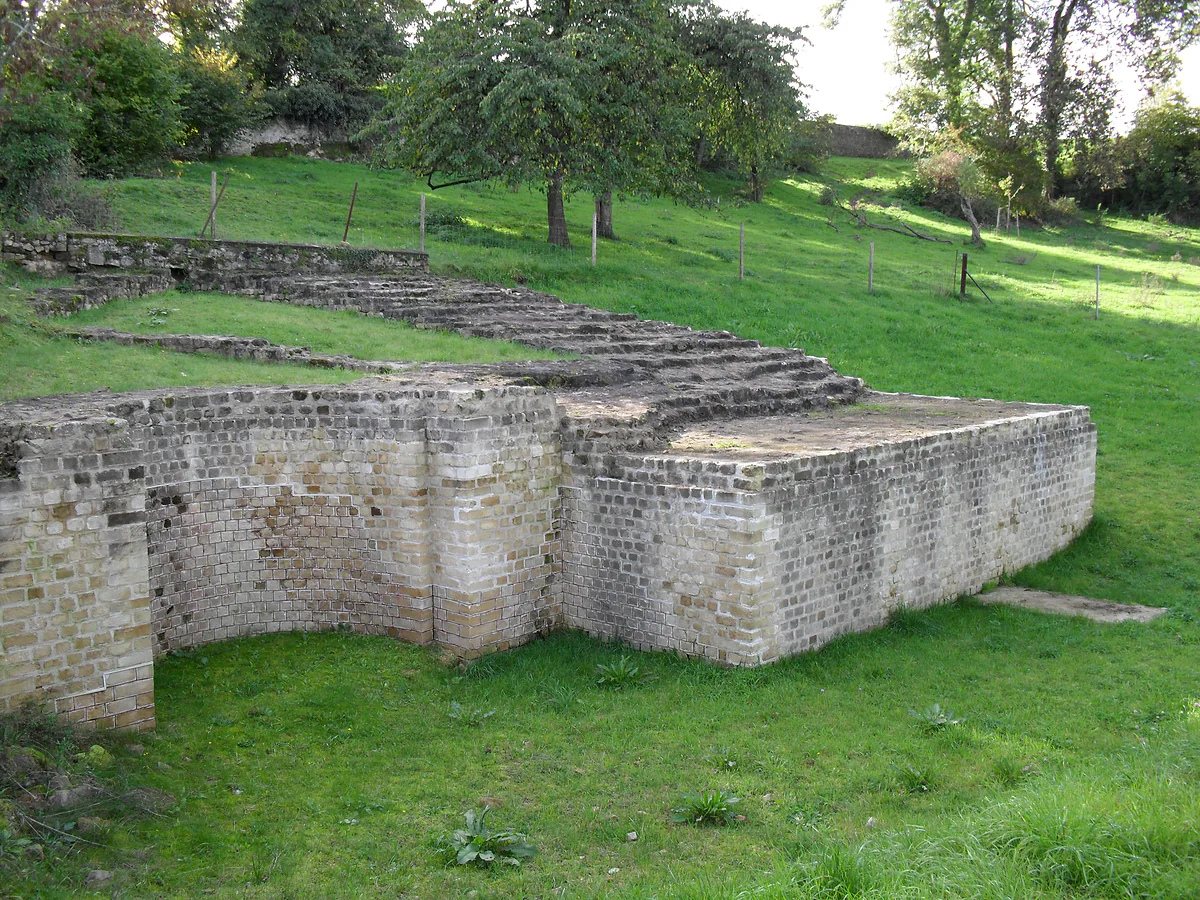
Dalheim is a commune in the canton of Remich, with 2,377 residents on 1 January 2026, built beside Ricciacum, a Roman town founded around 18 BC on the road from Metz to Trier. Its theatre, found in 1985, seated about 3,500 people and is free to visit. In 2026 it opens from March to November, on days that depend on the season.
In 30 seconds
Full read: 3 min
- Dalheim is a commune in the canton of Remich built beside the Roman town of Ricciacum.
- Its theatre, discovered in 1985, seated about 3,500 people.
- Entry to the theatre and the vicus is free.
- In 2026 it opens from 21 March to 1 November, daily only from 11 July to 15 September.
This is the most underrated cultural visit on the Moselle. A Roman theatre that costs nothing, with no queues and a view, a stone's throw from the Mondorf spa. I'd go on an autumn Saturday before 1 November and spend the afternoon in the thermal pool.

Before you go
What I would keep in mind
-
01 To save money
A Roman theatre for nothing
The Centre des Monuments charges no admission to the theatre or the Ricciacum vicus. Only group guided tours cost money, from €80 to €110 per guide.
-
02 Most beautiful
VIP seats with backrests
The theatre keeps seats of honour with backrests and armrests, the only known example in Gaul according to the Centre des Monuments.
-
03 My tip
Check the calendar first
In 2026 the theatre opens daily only from 11 July to 15 September. In spring and autumn it's weekends only, and the season ends on 1 November.
-
04 Getting there
Walk on to Mondorf
A 7.09 km route from Dalheim town hall passes the Roman baths and the theatre before heading on towards Mondorf-les-Bains.
Mondorf Domaine Thermal
What I would book
Dalheim is the Moselle village that smells least of wine and most of history. It sits inland on a plateau, around 325 metres up according to the commune, and two thousand years ago there was a whole Roman town here, Ricciacum, whose theatre and part of a residential quarter you can still see. The commune had 2,377 residents on 1 January 2026 in three localities, Dalheim, Filsdorf and Welfrange, in the south of the Luxembourg Moselle valley. To my mind it’s the most underrated cultural stop in the whole region.
A town for changing horses
The Centre des Monuments, which runs the site with the national archaeological research institute, tells the story clearly. Near today’s village stood a small town called Ricciacum, on the great road linking the Mediterranean and the Rhine via Lyon, Metz and Trier, where travellers stopped to rest, trade and change horses. It was founded under Augustus, around 18 or 17 BC, as a roadside relay. In the first century it was rebuilt in stone with an ordered street plan and grew to nearly 35 hectares, with temples, baths and a large theatre.
The commune adds that it was once the largest Roman settlement in the country, that it flourished from the second century to the first half of the third, and that Germanic raids burned it in 275 and again around 353 or 356. The detail I find most striking comes from the site’s managers, though. Large parts of the ancient town were never built over in modern times, which is exceptional for Luxembourg.
The theatre, the main event
The theatre was found in 1985 in a slope off the Neie Wee and held around 3,500 spectators. The Centre des Monuments singles it out for its condition and for something very rare, seats of honour with backrests and armrests, the only known example in Gaul. According to the commune, it faces north-east so the afternoon sun didn’t dazzle the audience.
Beside the N13 you can also see part of the residential quarter that lined the main street. Both sites are free, and in a country this expensive, that feels like a gift. If you want some background first, the history of Luxembourg starts with the Celts and the Romans.
Once your dates are set, check which hotels are still free in Mondorf-les-Bains before prices climb.
2026 opening days and planning your visit
The theatre and museum open between 10:00 and 18:00 (the gate lets you in until 17:00), but not all year. In 2026 it’s weekends from 21 March to 28 June, every day from 11 July to 15 September, then weekends again from 19 September to 1 November. Groups of up to 15 can book a guided tour by email at €80 an hour, €95 for ninety minutes and €110 for two hours. Dogs are welcome on a lead, but wheelchair access is difficult.
visitluxembourg also recommends the Argo augmented archaeology app, which rebuilds ancient sites of the region on your phone.
The finds that went to Paris
The commune’s website has a couple of surprises. The bronze statues of Jupiter and Minerva found on the Pëtzel, the high part of the village, are now in the Louvre. And of the more than 50,000 Roman coins found in Luxembourg over the last 150 years, Dalheim is the largest single site. Since 1977 a local society, the Ricciacus Frënn, has backed the excavations.
Once your dates are set, check which hotels are still free in Mondorf-les-Bains before prices climb.
On foot along the Roman road
Two walks stand out. The Dalheim circular walk, 7.87 km and about two hours, leaves the town hall, heads into the Buchholz woods and follows a raised stretch of Roman road for a kilometre to Hadrian’s milestone, which pointed the way to Trier, before returning past the Napoleon monument. The other, 7.09 km, also starts at the town hall, passes the Roman baths of the Taverne Ricciacus and the theatre, and carries on towards Mondorf-les-Bains.
That second one is my pick, because it ends near the Mondorf spa, the best possible reward after a morning among old stones. If you’d prefer something gentler, neighbouring Bous-Waldbredimus has walks among cherry orchards. For a bed, Mondorf-les-Bains is next door and has more hotels than any other village on the southern Moselle.
If you would rather have a local show you round, book a guided tour in Mondorf-les-Bains and choose by the reviews.
A car frees you from timetables: search car hire in Luxembourg on DiscoverCars and compare companies.
So you do not pay over the odds, look at trains, coaches and flights to Luxembourg on Omio and pick the one that suits you.
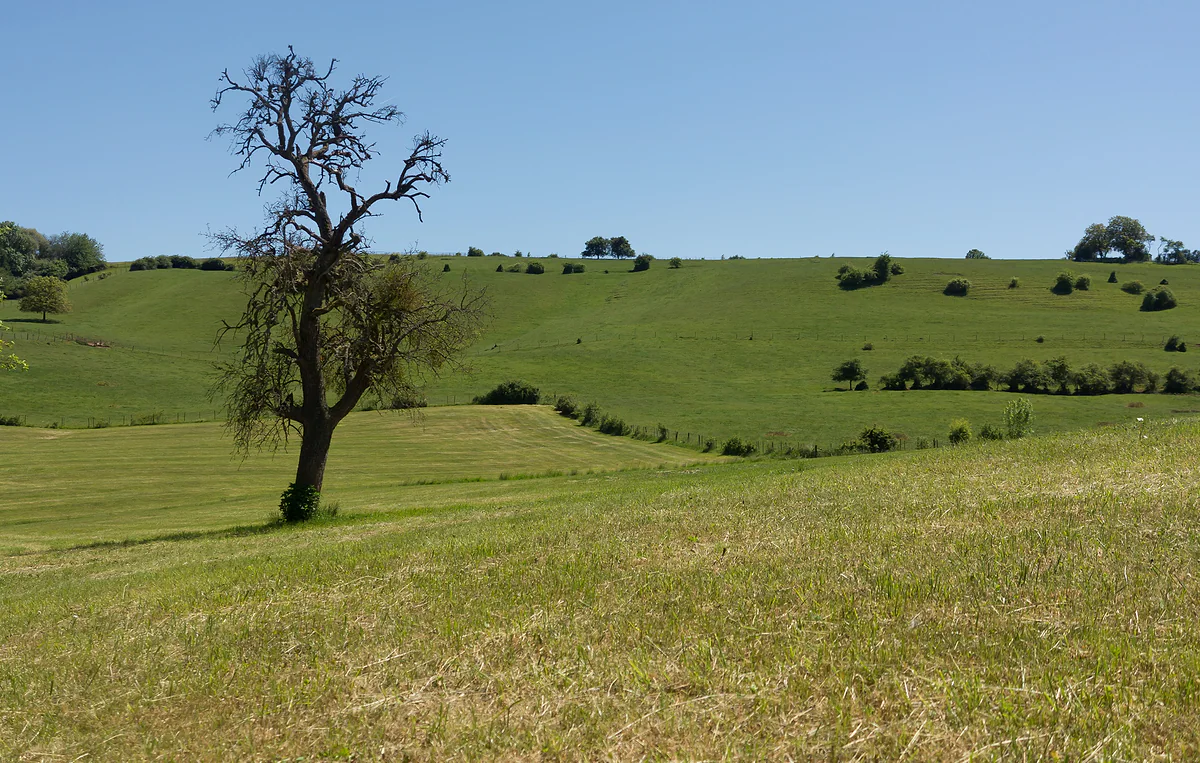
Rolling green countryside between Remich and Bous, with a lone tree, meadows and hedgerows under a blue sky
Ricciacum theatre and vicus in 2026
| Period | Days | Hours |
|---|---|---|
| 21 Mar to 28 Jun | Saturdays and Sundays | 10:00-18:00 |
| 11 Jul to 15 Sep | Daily | 10:00-18:00 |
| 19 Sep to 1 Nov | Saturdays and Sundays | 10:00-18:00 |
| Last admission | All season | 17:00 |
| Guided tour (groups of up to 15) | By booking | €80 1 h, €95 1 h 30, €110 2 h |
Centre des Monuments du Grand-Duché (monuments.lu), 2026 hours and prices, checked on 30-09-2026. Individual entry is free.
Test yourself
True or false?
0/4 Pick before you peek.
-
You have to pay to see the Roman theatre at Dalheim.
See the answer
False. Individual entry is free in 2026. Only guided tours for groups are charged.
-
Dalheim's theatre was discovered in 1985.
See the answer
True. The Centre des Monuments and the commune both date the find to 1985 and put its capacity at about 3,500.
-
Dalheim's bronze statues of Jupiter and Minerva are in a Luxembourg museum.
See the answer
False. According to the commune's website, both are held at the Louvre in Paris.
-
Ricciacum began life as a roadside staging post.
See the answer
True. It was founded under Augustus as a relay on the great road from the Mediterranean to the Rhine, where travellers rested, traded and changed horses.
- Spectators the theatre could seat
- 3,500
- Size of Ricciacum at its peak
- 35 ha
- Year the theatre was found
- 1985
- Individual admission
- €0
Map
Where Dalheim is
The thick dashed line is the border with Belgium, France and Germany, and the fine ones divide the twelve cantons. The Éislek lies to the north and the Moselle to the east. Every number opens its guide.
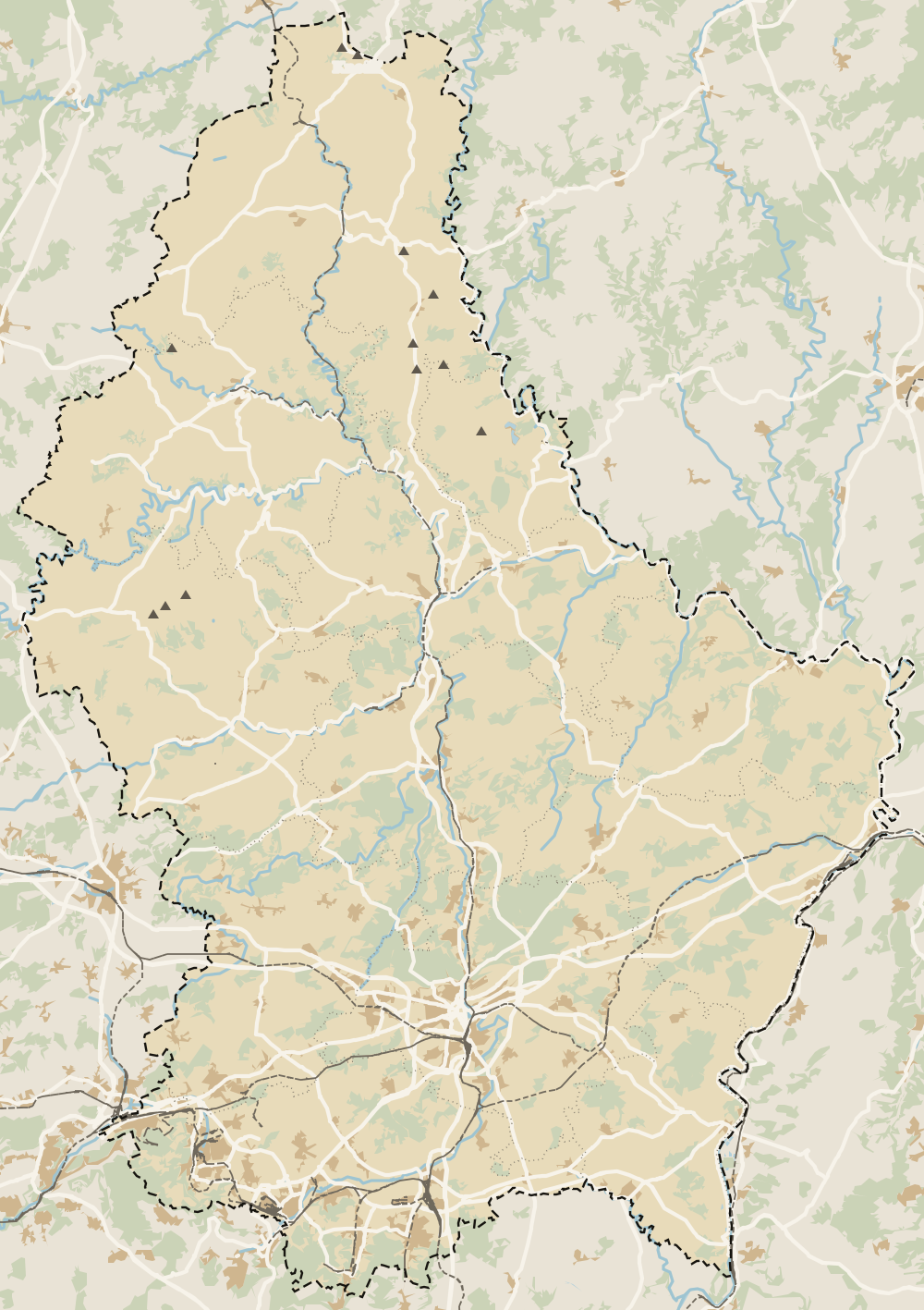 1Remich 2Grevenmacher 3Moselle Valley 4Schengen 5Mondorf-les-Bains 6Wormeldange 7Flaxweiler 8Mertert 9Biwer 10Stadtbredimus 11Bous-Waldbredimus 12Manternach 13Betzdorf 14Lenningen 15Dalheim
 Map data © OpenStreetMap contributors (ODbL)
- 1RemichThe pearl of the Moselle
- 2GrevenmacherThe Moselle's metropolis
- 3Moselle ValleyTourist region in the east
- 4SchengenWhere three countries meet
- 5Mondorf-les-BainsSpa, park and casino
- 6WormeldangeCanton of Grevenmacher
- 7FlaxweilerMunicipality in the canton of Grevenmacher
- 8MertertCommune in the canton of Grevenmacher
- 9BiwerMunicipality in the canton of Grevenmacher
- 10StadtbredimusCommune in the canton of Remich
- 11Bous-WaldbredimusCommune in the canton of Remich
- 12ManternachMunicipality in the canton of Grevenmacher
- 13BetzdorfMunicipality in the canton of Grevenmacher
- 14LenningenCommune in the canton of Remich
- 15DalheimCommune in the canton of Remich
0 of 425 Luxembourg guides
Your next stamp
- Koerich
- Echternach Roman villa
- Bous-Waldbredimus
- Places to visit
- Stadtbredimus
- Walferdange
- Trier day trip
- A Possen Museum
- American Cemetery
- Ansembourg
- Ansembourg Castles
- Asselborn
- Bascharage
- Beaufort castles
- Belval
- Belval blast furnaces
- Berg Castle
- Bernard-Massard cellars
- Bourglinster Castle
- Bourscheid Castle
- Brandenbourg
- Brandenbourg Castle
- Caves St Martin
- Christmas
- Clervaux Castle
- Echternach
- Echternach Abbey
- Ehnen
- Ehnen Wine Museum
- Esch-sur-Alzette
- Esch-sur-Sûre Castle
- European Museum Schengen
- Fond-de-Gras
- General Patton Museum
- German war cemetery
- Haff Réimech
- Hohllay
- Hollenfels Castle
- Hosingen
- Kautenbach
- Kneiff
- Koerich Castle
- Larochette Castle
- Lasauvage
- Mersch Castle
- Military History Museum
- Moersdorf
- Mondorf Domaine Thermal
- Munsbach Castle
- National Mining Museum
- Parc Merveilleux
- Park Sënnesräich
- Remich
- Rindschleiden
- Schiessentümpel
- Septfontaines Castle
- Slate Museum
- Stolzembourg
- Tudor Museum
- Useldange Castle
- Valley of the Seven Castles
- Vianden
- Vianden Castle
- Ville Haute
- Wasserbillig Aquarium
- Weiswampach lakes
- Wiltz Castle
- Ahn
- Berdorf
- Bourscheid-Plage
- Butterfly garden
- Clervaux
- Differdange
- Echternach lake
- Grevenmacher
- Heringer Millen
- Hollenfels
- Luxembourg City
- Luxembourg Science Center
- Meysembourg Castle
- Mullerthal
- National Day
- National Resistance Museum
- Perekop
- Remerschen
- Schoenfels Castle
- The Family of Man
- Things to do
- Upper Sûre Lake
- Vianden chairlift
- Wasserbillig
- Clervaux Abbey
- Éislek
- Insenborn
- Kallektuffquell
- Machtum
- Most beautiful places
- Our Nature Park
- Pétange
- Pettingen Castle
- Schueberfouer
- Schwebsingen
- Victor Hugo House
- Waldbillig
- Dudelange
- Kuelscheier
- Lultzhausen
- Moselle Valley
- Octave
- Prettiest villages
- Sanem
- Schengen
- Wellenstein
- Wiltz
- Wolfsschlucht
- Beaufort
- Bech-Kleinmacher
- Éimaischen
- Gaalgebierg
- Guttland
- Marnach
- Mondorf-les-Bains
- Putscheid
- Schifflange
- UNESCO World Heritage
- Carnival
- Consdorf
- Ellergronn
- Käerjeng
- Kayl
- Map
- Minett
- Munshausen
- Tandel
- Bech
- Buergbrennen
- Esch-sur-Sûre
- Rumelange
- Where is Luxembourg
- Is it a country?
- Lac de la Haute-Sûre (commune)
- Rosport-Mompach
- Wormeldange
- Larochette
- Mondercange
- Regions
- Bettembourg
- Bock Casemates
- Cantons
- Dancing procession
- Diekirch
- Fischbach
- Garnich
- Mersch
- Moselle wine route
- Ettelbruck
- Grund
- Heffingen
- Kehlen
- Lintgen
- Moselle river cruises
- Pétrusse Casemates
- Towns and villages
- Chemin de la Corniche
- Erpeldange-sur-Sûre
- Junglinster
- Kopstal
- Lorentzweiler
- Nommern
- Pfaffenthal
- Population
- Bissen
- Clausen
- Grand Ducal Palace
- Schieren
- Size
- Vallée de l'Ernz
- Feulen
- Kirchberg
- Languages
- Notre-Dame Cathedral
- Reisdorf
- Steinfort
- Bettendorf
- Habscht
- St Michael's Church
- Helperknapp
- Luxembourgish
- Place Guillaume II
- Name
- Place d'Armes
- History
- Place de la Constitution
- Grand Duke
- Colmar-Berg
- Flaxweiler
- Gare
- Hamm
- Kirchberg funicular
- Luxembourg fortress
- Mamer
- Mertert
- Minett Trail
- Mullerthal Trail
- Neumünster Abbey
- Parc Hosingen
- Pfaffenthal lift
- Political system
- Redange
- The Passerelle
- Wine festivals
- Winseler
- Beckerich
- Biwer
- EU institutions
- Goesdorf
- Limpertsberg
- Mudam
- Natur Musée
- Pulvermühl
- Troisvierges
- Wenzel walk
- Bonnevoie
- Ell
- Flag
- Kiischpelt
- Manternach
- Philharmonie
- Vauban circuit
- Weiswampach
- Betzdorf
- Boulaide
- Dräi Eechelen Museum
- Facts
- Hollerich
- Lenningen
- Useldange
- Wincrange
- Bourscheid
- Gasperich
- Public holidays
- Red Bridge
- Saeul
- Belair
- Second World War
- Vichten
- Battle of the Bulge
- Merl
- Préizerdaul
- Cents
- EU and Schengen
- Groussbus-Wal
- Entry requirements
- Neudorf
- Rambrouch
- Currency and payments
- Mertzig
- Weimerskirch
- Adolphe Bridge
- Beggen
- Escapardenne
- How to get there
- International March of Diekirch
- MNHA (National Museum)
- Rock climbing
- Sandweiler
- Bridges
- Eich
- Flights
- Golf
- Hesperange
- Lëtzebuerg City Museum
- Canoeing and kayaking
- Dommeldange
- Luxembourg airport
- Strassen
- Villa Vauban
- Airport to city centre
- Bertrange
- Casino Luxembourg
- Mühlenbach
- Swimming pools
- From Brussels
- Pétrusse Valley
- Rollingergrund
- Cessange
- Day trip from Brussels
- Municipal Park
- Steinsel
- Free walking tours
- From Paris
- Niederanven
- From Frankfurt
- Schuttrange
- Sightseeing train and bus
- By train
- Contern
- By coach
- Weiler-la-Tour
- Driving
- Luxembourg in one day
- Pretzel Sunday
- Rham Plateau
- Tour de Luxembourg
- Candlemas (Liichtmëssdag)
- Car hire
- Luxembourg in two days
- Saint-Esprit Plateau
- Luxembourg in three days
- Melusina statue
- Parking
- St Nicholas Day (Kleeschen)
- Fête de la Musique
- Luxembourg in four days
- Museums in Luxembourg
- Petrol
- Place de Clairefontaine
- A week in Luxembourg
- Getting around
- Luxembourg Marathon
- Tram and Bus Museum
- Free public transport
- Parks in Luxembourg City
- Road trip
- Belgium and Luxembourg
- Tram
- Buses
- Viewpoints
- Trains
- Luxembourg station
- Cycling
- LuxembourgPass
- Prices and budget
- On a budget
- Free things to do
- Mobile and roaming
- Healthcare
- Safety
- Scams
- Tourist information
- Packing list
- Swimming lakes
- With a dog
- Markets
- Tipping
- Shopping
- What to buy
- Shopping centres
- With kids
- For couples
- Playgrounds
- Adventure parks
- Nightlife
- Castles
- Theatres and concert venues
- Leudelange
- Nature parks
- Where to stay
- City-centre hotels
- Hiking
- Nature reserves
- Reckange-sur-Mess
- Hotels near the station
- Roeser
- Frisange
- Hotels in Kirchberg
- Airport hotels
- Dippach
- Hotels in Vianden
- Hotels in Echternach
- Hotels in Clervaux
- Hotels in Mondorf-les-Bains
- Hotels in Esch-sur-Alzette
- Hotels on the Moselle
- Mullerthal hotels
- Upper Sûre lake hotels
- Hotels in Diekirch and Ettelbruck
- Cheap hotels
- Luxury hotels
- Boutique hotels
- Spa hotels
- Family hotels
- Apartments
- Weather
- Youth hostels
- Best time to visit
- Campsites
- Holiday cottages
- In winter
- Castle hotels
- In spring
- Day trips
- In summer
- Around Luxembourg
- In autumn
- Ice skating
- Metz day trip
- Arlon day trip
- In January
- In February
- In March
- In April
- In May
- In June
- In July
- In August
- In September
- Food
- In October
- In November
- Where to eat
- In December
- Michelin restaurants
- Cheap eats
- Judd mat Gaardebounen
- Bouneschlupp
- Gromperekichelcher
- Kniddelen
- Quetschentaart
- Rieslingspaschtéit
- Events
- Wine
- Crémant
- Beer
Frequently asked questions
What is there to see in Dalheim?
The Ricciacum archaeological site, with the Gallo-Roman theatre discovered in 1985 and part of the residential quarter along the main street. There's also a walk along the old Roman road to Hadrian's milestone.
How much does the Dalheim Roman theatre cost?
Nothing. Individual entry is free in 2026. Guided tours for groups of up to 15 cost €80 for an hour, €95 for ninety minutes and €110 for two hours, booked by email.
When is the Dalheim theatre open?
In 2026, from 10:00 to 18:00 with last entry at 17:00. It opens at weekends from 21 March to 28 June and from 19 September to 1 November, and daily from 11 July to 15 September.
What was Ricciacum?
A small Roman town founded under Augustus, around 18 or 17 BC, as a staging post on the road from the Mediterranean to the Rhine via Lyon, Metz and Trier. At its height it covered nearly 35 hectares, with temples, baths and a theatre.
Can I bring a dog or a wheelchair?
Dogs are allowed on a lead. Wheelchair access is difficult, according to the Centre des Monuments itself, so it's worth emailing them before you go.
Is Dalheim easy to combine with Mondorf-les-Bains?
Very. They're neighbours, and an official 7.09 km walk links Dalheim town hall, the Roman baths and the theatre with the edge of Mondorf, home to the country's only thermal spa.
By
Tourism graduate with a master’s in Tourism Management and Planning from the University of Málaga, who has travelled across Europe. He writes every guide from official sources and his own judgement.
Published on . Facts checked on .
Sources
Some links in this guide are affiliate links: if you book through them, the site earns a commission at no extra cost to you. Affiliate disclosure
Photos: Christian Ries (CC BY-SA 3.0); Michielverbeek (CC BY-SA 4.0), via Wikimedia Commons.