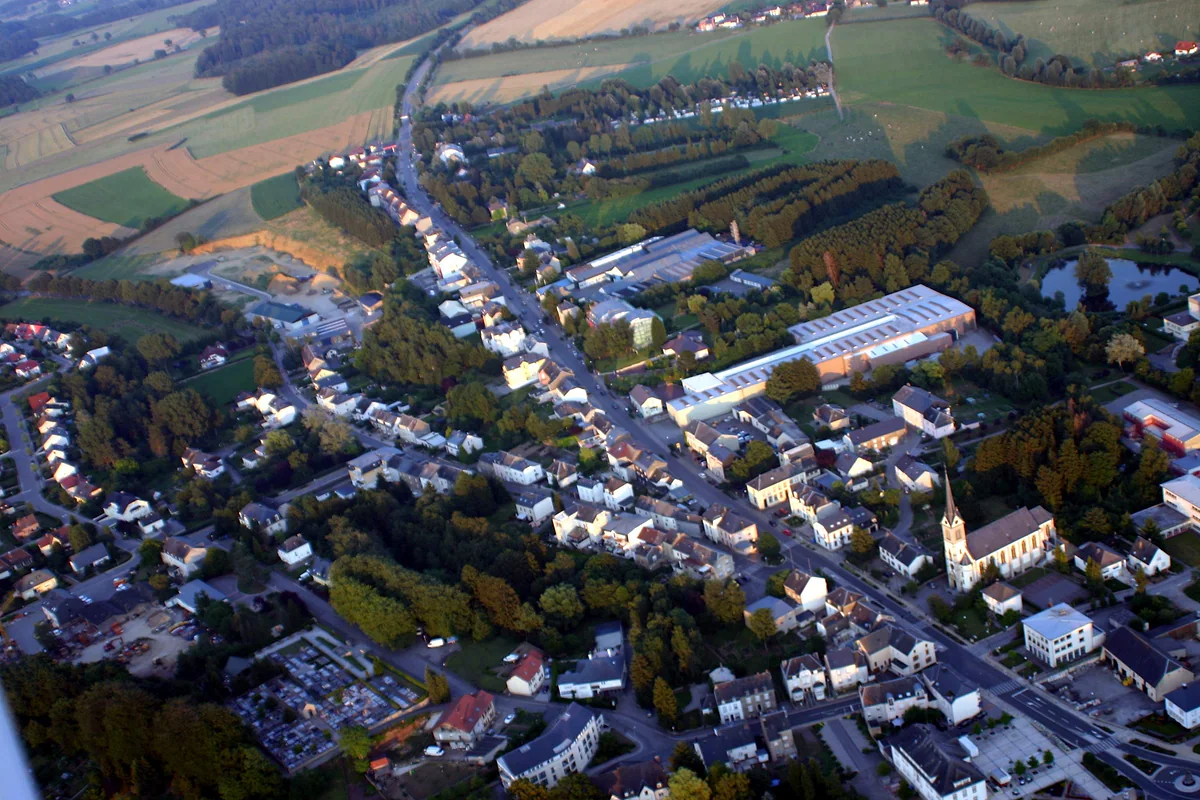
Canton of Capellen, Guttland region
Garnich, rural Luxembourg with a street-art twist
Garnich is a rural commune in the canton of Capellen, western Luxembourg, with 2,421 residents on 1 January 2026 and four villages, Garnich, Dahlem, Hivange and Kahler. The surprises are in Kahler, where house fronts have been turned into graffiti murals and the old school is now a cinema, and on the Réibierg near Hivange, home to the country's largest water collection reservoir.
In 30 seconds
Full read: 2 min
- Garnich has 2,421 residents and four villages in the canton of Capellen.
- Kahler has graffiti-painted houses and a cinema in the old school.
- The Réibierg holds the country's biggest water collection reservoir.
- Quiet farmland, best seen on foot from Kleinbettingen.
Garnich isn't a stop for a short break. It's a walk for someone who's already done the capital and the castle valley and fancies an afternoon in the western fields, with Kahler's murals as the excuse.

Before you go
What I would keep in mind
-
01 Most beautiful
A village turned gallery
In Kahler, a young local artist and a few friends painted graffiti murals on house fronts under the name Make Koler Kooler, according to Visit Guttland.
-
02 My tip
The UFO on the hill
On the Réibierg near Hivange stands a futuristic-looking water tower. The commune says the site gathers water from 65 springs for 23 communes.
-
03 Getting there
Walk in from Kleinbettingen station
Visit Guttland suggests field paths from Kleinbettingen station, in neighbouring Steinfort, which is on the free train line from the capital towards Arlon.
Steinfort, Luxembourg
If you drive west out of Luxembourg City, Garnich is the kind of place you pass without noticing. Four farming villages, Garnich, Dahlem, Hivange and Kahler, and 2,421 residents at the start of 2026. It’s not a destination in its own right, but it has two quirks I’d happily stop for.
Kahler’s painted houses
The first is Kahler. Visit Guttland tells how a young artist from the village set out, with a handful of fellow painters, to turn house fronts into graffiti art, a project they called Make Koler Kooler. The villagers kept the creative streak going and fitted out the old school as a cinema. It’s not what you’d expect in a sleepy corner of rural Luxembourg, which is exactly why I mention it.
Kahler’s past is more sombre. The commune’s history page notes that by 1658-59 nobody had lived there since 1635 and every house lay in ruins, a legacy of the Thirty Years’ War. Much later, on 1 August 1873, the Attert railway opened and trains ran through the village until the last passenger service on 23 September 1967. Part of today’s cycle track follows the old line.
The reservoir on the Réibierg
The second quirk is a water tower. On the Réibierg near Hivange, Visit Guttland describes a structure so futuristic you might take it for a spaceship waiting for passengers. According to the commune, a first large reservoir was finished there in 1911 and a first water tower in 1927. Since 2007, two underground tanks have collected water from 65 springs, around 30,000 m³ a day, for 23 communes in the cantons of Capellen and Esch. The commune calls it the largest collection basin in the country, with a 30 m tower whose top stands at 429 m.
If you are staying the night, see the best hotel deals in Luxembourg for your dates: the well-placed rooms go fast.
Nine centuries on paper
Garnich first appears in writing on 12 April 1128, when Pope Honorius II confirmed the properties of Münster Abbey in Luxembourg City, including land at Garnische. The parish is recorded in 1260, the church tower bears the date 1200 and the church was consecrated on 11 June 1697. As for the name, the commune lists several theories, from an early settler to a Celtic word for the crane, without picking one.
Hivange and Dahlem
Hivange only appears in documents from 1256 and has a simple chapel built in 1833, which the commune says came in under budget because villagers did the labouring and took turns feeding the masons. Dahlem, recorded from 1251, burnt to the ground with its church on 12 May 1785, when it had eleven thatched houses; a chapel went up on the old church’s foundations in 1806. It belonged to Dippach until 1823.
If you are staying the night, see the best hotel deals in Luxembourg for your dates: the well-placed rooms go fast.
How I’d do it
Visit Guttland suggests walking through the fields from Kleinbettingen station in Steinfort, and that’s how I’d see it, since the train from the capital costs nothing. I’d pair it with Koerich Castle, also in the canton of Capellen, to make a proper afternoon of it. The wider picture is in Guttland.
So you do not lose the morning at the ticket office, browse tickets and tours in Luxembourg on GetYourGuide.
If you would rather go at your own pace, see the car hire deals in Luxembourg: the earlier you book, the more cars are left to choose from.
Before you fix your dates, compare tickets to Luxembourg: the same journey can cost very different amounts from one day to the next.
Garnich in numbers
| Item | Figure | Source |
|---|---|---|
| Residents, 1 Jan 2026 | 2,421 | STATEC |
| Residents, 1 Jan 2025 | 2,311 | STATEC |
| Official localities | 4 | CACLR |
| Residents of Garnich section in 1904 | 548 | Garnich commune |
The area, about 21 km², is worked out from STATEC's population and density figures.
Test yourself
True or false?
0/3 Pick before you peek.
-
Dahlem belonged to Dippach before it joined Garnich.
See the answer
True. The commune's history page says Dahlem was part of Dippach until 1823.
-
Passenger trains still run through Kahler.
See the answer
False. The last passenger train on the Attert line passed on 23 September 1967. A cycle track now uses part of the old route.
-
Kahler was abandoned during the Thirty Years' War.
See the answer
True. The commune records that by 1658-59 nobody had lived there since 1635 and every house was in ruins.
- Residents on 1 January 2026
- 2,421
- Official villages
- 4
- Springs feeding the Réibierg reservoir
- 65
- Year of the first written mention
- 1128
Map
Where Garnich is
The thick dashed line is the border with Belgium, France and Germany, and the fine ones divide the twelve cantons. The Éislek lies to the north and the Moselle to the east. Every number opens its guide.
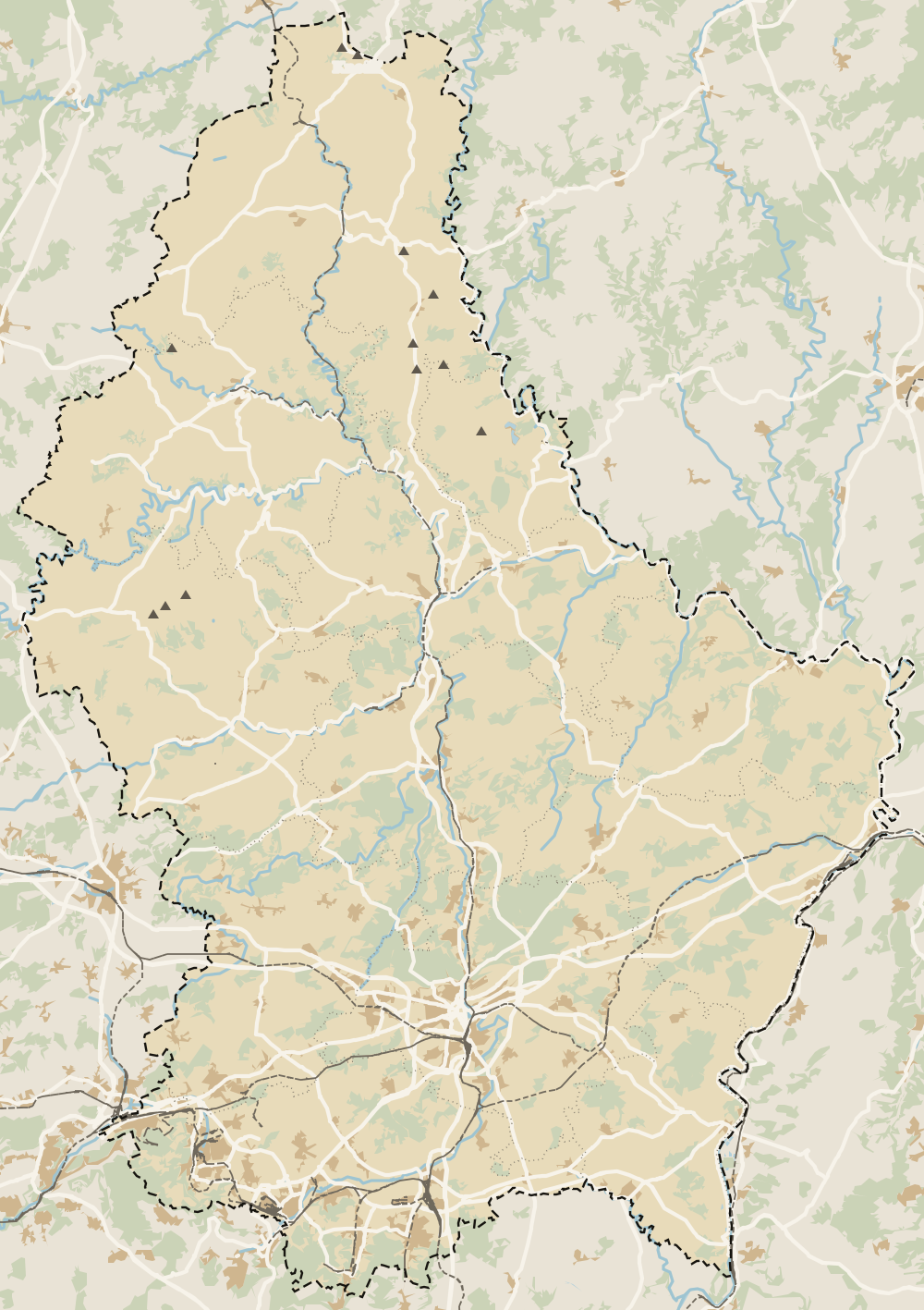 1Valley of the Seven Castles 2Guttland 3Garnich 4Mersch 5Kehlen 6Lintgen 7Kopstal 8Lorentzweiler 9Bissen 10Koerich 11Steinfort 12Habscht 13Helperknapp 14Mamer 15Redange 16Beckerich 17Ell 18Useldange 19Saeul 20Vichten 21Préizerdaul 22Groussbus-Wal 23Rambrouch 24Mertzig 25Sandweiler 26Walferdange 27Steinsel 28Niederanven 29Schuttrange 30Contern 31Weiler-la-Tour
 Map data © OpenStreetMap contributors (ODbL)
- 1Valley of the Seven CastlesEisch valley, Mersch to Koerich
- 2GuttlandTourist region of the centre and west
- 3GarnichCanton of Capellen, Guttland region
- 4MerschCanton of Mersch, Guttland
- 5KehlenCanton of Capellen, Guttland region
- 6LintgenCanton of Mersch, 3 localities
- 7KopstalCanton of Capellen, Guttland region
- 8LorentzweilerCanton of Mersch, 7 localities
- 9BissenCanton of Mersch, 2 localities
- 10KoerichCanton of Capellen, Guttland region
- 11SteinfortCanton of Capellen, Guttland region
- 12HabschtCanton of Capellen, Eisch valley
- 13HelperknappCanton of Mersch, Guttland region
- 14MamerCommune in the canton of Capellen, Guttland region
- 15RedangeMain town of the canton of Redange
- 16BeckerichCanton of Redange, 8 localities
- 17EllCanton of Redange, 5 localities
- 18UseldangeCanton of Redange, 4 localities
- 19SaeulCanton of Redange, 5 localities
- 20VichtenCanton of Redange, 2 localities
- 21PréizerdaulCanton of Redange, 4 localities
- 22Groussbus-WalCanton of Redange, merged in 2023
- 23RambrouchCanton of Redange, 17 localities
- 24MertzigCanton of Diekirch, a commune since 1875
- 25SandweilerMunicipality in the canton of Luxembourg, Guttland
- 26WalferdangeMunicipality in the canton of Luxembourg, Guttland
- 27SteinselMunicipality in the canton of Luxembourg, Guttland
- 28NiederanvenMunicipality in the canton of Luxembourg, Guttland
- 29SchuttrangeMunicipality in the canton of Luxembourg, Guttland
- 30ConternMunicipality in the canton of Luxembourg, Guttland
- 31Weiler-la-TourMunicipality in the canton of Luxembourg, Guttland
0 of 425 Luxembourg guides
Your next stamp
- Koerich
- Kayl
- Kehlen
- Differdange
- Reckange-sur-Mess
- Ville Haute
- Habscht
- Lac de la Haute-Sûre (commune)
- A Possen Museum
- American Cemetery
- Ansembourg
- Ansembourg Castles
- Asselborn
- Bascharage
- Beaufort castles
- Belval
- Belval blast furnaces
- Berg Castle
- Bernard-Massard cellars
- Bourglinster Castle
- Bourscheid Castle
- Brandenbourg
- Brandenbourg Castle
- Caves St Martin
- Christmas
- Clervaux Castle
- Echternach
- Echternach Abbey
- Ehnen
- Ehnen Wine Museum
- Esch-sur-Alzette
- Esch-sur-Sûre Castle
- European Museum Schengen
- Fond-de-Gras
- General Patton Museum
- German war cemetery
- Haff Réimech
- Hohllay
- Hollenfels Castle
- Hosingen
- Kautenbach
- Kneiff
- Koerich Castle
- Larochette Castle
- Lasauvage
- Mersch Castle
- Military History Museum
- Moersdorf
- Mondorf Domaine Thermal
- Munsbach Castle
- National Mining Museum
- Parc Merveilleux
- Park Sënnesräich
- Places to visit
- Remich
- Rindschleiden
- Schiessentümpel
- Septfontaines Castle
- Slate Museum
- Stolzembourg
- Tudor Museum
- Useldange Castle
- Valley of the Seven Castles
- Vianden
- Vianden Castle
- Wasserbillig Aquarium
- Weiswampach lakes
- Wiltz Castle
- Ahn
- Berdorf
- Bourscheid-Plage
- Butterfly garden
- Clervaux
- Echternach lake
- Grevenmacher
- Heringer Millen
- Hollenfels
- Luxembourg City
- Luxembourg Science Center
- Meysembourg Castle
- Mullerthal
- National Day
- National Resistance Museum
- Perekop
- Remerschen
- Schoenfels Castle
- The Family of Man
- Things to do
- Upper Sûre Lake
- Vianden chairlift
- Wasserbillig
- Clervaux Abbey
- Echternach Roman villa
- Éislek
- Insenborn
- Kallektuffquell
- Machtum
- Most beautiful places
- Our Nature Park
- Pétange
- Pettingen Castle
- Schueberfouer
- Schwebsingen
- Victor Hugo House
- Waldbillig
- Dudelange
- Kuelscheier
- Lultzhausen
- Moselle Valley
- Octave
- Prettiest villages
- Sanem
- Schengen
- Wellenstein
- Wiltz
- Wolfsschlucht
- Beaufort
- Bech-Kleinmacher
- Éimaischen
- Gaalgebierg
- Guttland
- Marnach
- Mondorf-les-Bains
- Putscheid
- Schifflange
- UNESCO World Heritage
- Carnival
- Consdorf
- Ellergronn
- Käerjeng
- Map
- Minett
- Munshausen
- Tandel
- Bech
- Buergbrennen
- Esch-sur-Sûre
- Rumelange
- Where is Luxembourg
- Is it a country?
- Rosport-Mompach
- Wormeldange
- Larochette
- Mondercange
- Regions
- Bettembourg
- Bock Casemates
- Cantons
- Dancing procession
- Diekirch
- Fischbach
- Mersch
- Moselle wine route
- Ettelbruck
- Grund
- Heffingen
- Lintgen
- Moselle river cruises
- Pétrusse Casemates
- Towns and villages
- Chemin de la Corniche
- Erpeldange-sur-Sûre
- Junglinster
- Kopstal
- Lorentzweiler
- Nommern
- Pfaffenthal
- Population
- Bissen
- Clausen
- Grand Ducal Palace
- Schieren
- Size
- Vallée de l'Ernz
- Feulen
- Kirchberg
- Languages
- Notre-Dame Cathedral
- Reisdorf
- Steinfort
- Bettendorf
- St Michael's Church
- Helperknapp
- Luxembourgish
- Place Guillaume II
- Name
- Place d'Armes
- History
- Place de la Constitution
- Grand Duke
- Colmar-Berg
- Flaxweiler
- Gare
- Hamm
- Kirchberg funicular
- Luxembourg fortress
- Mamer
- Mertert
- Minett Trail
- Mullerthal Trail
- Neumünster Abbey
- Parc Hosingen
- Pfaffenthal lift
- Political system
- Redange
- The Passerelle
- Wine festivals
- Winseler
- Beckerich
- Biwer
- EU institutions
- Goesdorf
- Limpertsberg
- Mudam
- Natur Musée
- Pulvermühl
- Stadtbredimus
- Troisvierges
- Wenzel walk
- Bonnevoie
- Bous-Waldbredimus
- Ell
- Flag
- Kiischpelt
- Manternach
- Philharmonie
- Vauban circuit
- Weiswampach
- Betzdorf
- Boulaide
- Dräi Eechelen Museum
- Facts
- Hollerich
- Lenningen
- Useldange
- Wincrange
- Bourscheid
- Dalheim
- Gasperich
- Public holidays
- Red Bridge
- Saeul
- Belair
- Second World War
- Vichten
- Battle of the Bulge
- Merl
- Préizerdaul
- Cents
- EU and Schengen
- Groussbus-Wal
- Entry requirements
- Neudorf
- Rambrouch
- Currency and payments
- Mertzig
- Weimerskirch
- Adolphe Bridge
- Beggen
- Escapardenne
- How to get there
- International March of Diekirch
- MNHA (National Museum)
- Rock climbing
- Sandweiler
- Bridges
- Eich
- Flights
- Golf
- Hesperange
- Lëtzebuerg City Museum
- Canoeing and kayaking
- Dommeldange
- Luxembourg airport
- Strassen
- Villa Vauban
- Airport to city centre
- Bertrange
- Casino Luxembourg
- Mühlenbach
- Swimming pools
- From Brussels
- Pétrusse Valley
- Rollingergrund
- Walferdange
- Cessange
- Day trip from Brussels
- Municipal Park
- Steinsel
- Free walking tours
- From Paris
- Niederanven
- From Frankfurt
- Schuttrange
- Sightseeing train and bus
- By train
- Contern
- By coach
- Weiler-la-Tour
- Driving
- Luxembourg in one day
- Pretzel Sunday
- Rham Plateau
- Tour de Luxembourg
- Candlemas (Liichtmëssdag)
- Car hire
- Luxembourg in two days
- Saint-Esprit Plateau
- Luxembourg in three days
- Melusina statue
- Parking
- St Nicholas Day (Kleeschen)
- Fête de la Musique
- Luxembourg in four days
- Museums in Luxembourg
- Petrol
- Place de Clairefontaine
- A week in Luxembourg
- Getting around
- Luxembourg Marathon
- Tram and Bus Museum
- Free public transport
- Parks in Luxembourg City
- Road trip
- Belgium and Luxembourg
- Tram
- Buses
- Viewpoints
- Trains
- Luxembourg station
- Cycling
- LuxembourgPass
- Prices and budget
- On a budget
- Free things to do
- Mobile and roaming
- Healthcare
- Safety
- Scams
- Tourist information
- Packing list
- Swimming lakes
- With a dog
- Markets
- Tipping
- Shopping
- What to buy
- Shopping centres
- With kids
- For couples
- Playgrounds
- Adventure parks
- Nightlife
- Castles
- Theatres and concert venues
- Leudelange
- Nature parks
- Where to stay
- City-centre hotels
- Hiking
- Nature reserves
- Hotels near the station
- Roeser
- Frisange
- Hotels in Kirchberg
- Airport hotels
- Dippach
- Hotels in Vianden
- Hotels in Echternach
- Hotels in Clervaux
- Hotels in Mondorf-les-Bains
- Hotels in Esch-sur-Alzette
- Hotels on the Moselle
- Mullerthal hotels
- Upper Sûre lake hotels
- Hotels in Diekirch and Ettelbruck
- Cheap hotels
- Luxury hotels
- Boutique hotels
- Spa hotels
- Family hotels
- Apartments
- Weather
- Youth hostels
- Best time to visit
- Campsites
- Holiday cottages
- In winter
- Castle hotels
- In spring
- Day trips
- In summer
- Around Luxembourg
- In autumn
- Ice skating
- Trier day trip
- Metz day trip
- Arlon day trip
- In January
- In February
- In March
- In April
- In May
- In June
- In July
- In August
- In September
- Food
- In October
- In November
- Where to eat
- In December
- Michelin restaurants
- Cheap eats
- Judd mat Gaardebounen
- Bouneschlupp
- Gromperekichelcher
- Kniddelen
- Quetschentaart
- Rieslingspaschtéit
- Events
- Wine
- Crémant
- Beer
Frequently asked questions
Where is Garnich in Luxembourg?
In the west of the country, in the canton of Capellen, west of Luxembourg City. It's one of the 27 communes of the Guttland tourist region.
What is there to see in Garnich?
The graffiti on the house fronts of Kahler, the cinema in its former school, the futuristic water tower on the Réibierg near Hivange, and the field paths from Kleinbettingen station.
How many people live in Garnich?
2,421 on 1 January 2026, according to STATEC, up from 2,311 a year earlier. In 1904 the Garnich section had 548 residents, says the commune.
What is the Garnich water reservoir?
Since 2007 two underground reservoirs on the Réibierg have taken in water from 65 springs, about 30,000 m³ a day, for 23 communes. The commune calls it the country's largest collection basin.
Are there hotels in Garnich?
STATEC doesn't publish an accommodation figure for Garnich. I'd stay in Luxembourg City and come out by train and on foot.
By
Tourism graduate with a master’s in Tourism Management and Planning from the University of Málaga, who has travelled across Europe. He writes every guide from official sources and his own judgement.
Published on . Facts checked on .
Some links in this guide are affiliate links: if you book through them, the site earns a commission at no extra cost to you. Affiliate disclosure
Photos: Les Meloures (CC BY-SA 3.0), via Wikimedia Commons.