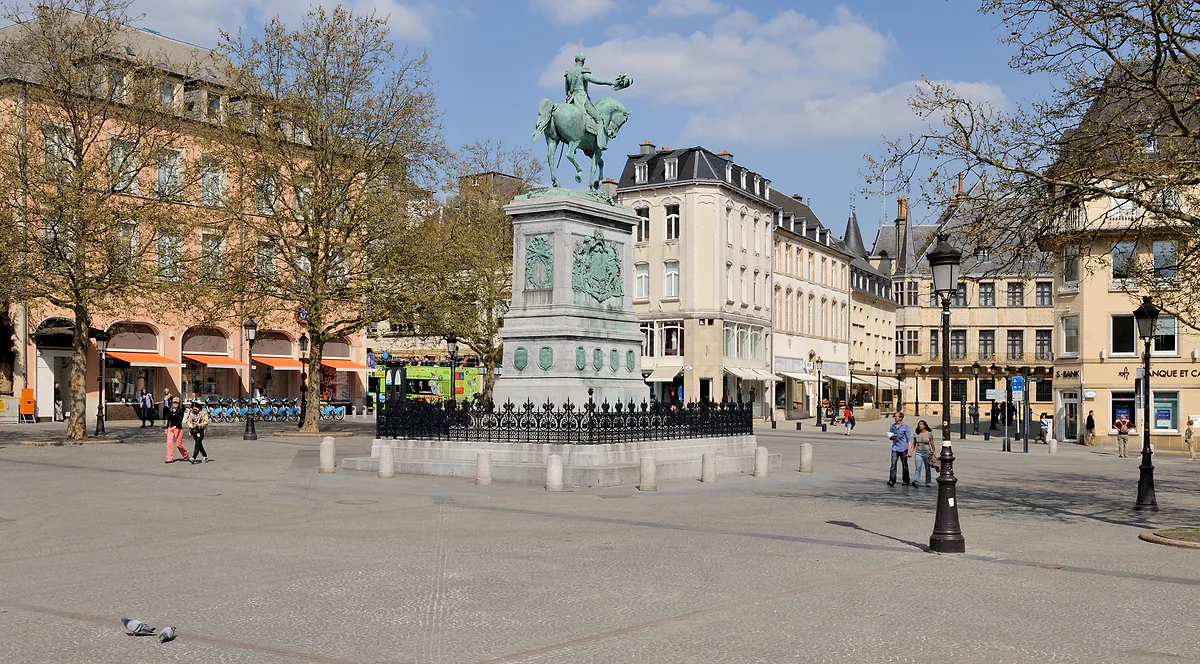
Luxembourgish, French, German and English
Luxembourg's languages, and which one you'll need
Luxembourg has three official languages. Luxembourgish has been the national language since a 1984 law, French and German are administrative languages, and laws are only binding in French. In an official 2018 survey, 98% of residents spoke French, 80% English, 78% German and 77% used Luxembourgish, so English speakers get by almost everywhere.
If you've any French at all, use it, because it's the language of shops and restaurants. If not, go with English and don't apologise. And as a small courtesy, I'd learn to say hello and thank you in Luxembourgish.

Before you go
What I would keep in mind
-
01 My tip
At the counter, it's French
The official portal is clear that French is the main language of shops, cafés and restaurants. It's what you'll hear when you order a coffee or pay in a shop, including in the capital.
Luxembourg City -
02 Most beautiful
Luxembourgish, in the constitution since 2023
Article 4 of the revised constitution, in force since 1 July 2023, states that the language of the Grand Duchy is Luxembourgish. A 2018 law also created a commissioner and a centre to promote it.
Luxembourgish language -
03 Getting there
English works almost everywhere
In the Education Ministry's 2018 survey, 80% of residents said they spoke English. With nearly half the population foreign, it's the go-between language in many workplaces and shops.
Luxembourg population
What I would book
It’s easily the most searched question about Luxembourg, and the short answer is three languages. The long answer is more interesting, because each has its own territory. Luxembourgish is the language of home and radio, French that of shops and laws, German that of many newspapers, and English, without being official, is spoken by the vast majority. For a British visitor that means you’ll rarely struggle to make yourself understood.
Three official languages, each with its job
The legal basis is simple. A 1984 law declared Luxembourgish the national language and allowed French, German or Luxembourgish to be used in the administration and the courts. Laws, however, are drafted in French, and only that text is binding. In 2023 Luxembourgish went up another step. Article 4 of the revised constitution, in force since 1 July that year, states that the language of the Grand Duchy is Luxembourgish.
Day to day, the split is different. The government’s portal explains that French is the main language of commerce and hospitality, German dominates the written press and Luxembourgish is the language of radio, television and political debate. At the cinema, films are shown in the original with subtitles or dubbed into German or French, so English-language films are usually in English.
How many people speak each language?
An Education Ministry survey measured it in 2018. 98% of residents spoke French, 80% English, 78% German and 77% used Luxembourgish. It’s striking that the national language comes last, but there’s a reason. On 1 January 2026, 46.6% of residents were foreign nationals, rising to 70.8% in the capital. Many don’t speak Luxembourgish, and French is the common ground. Where that mix comes from is in Luxembourg population.
Once your dates are set, check which hotels are still free in Luxembourg before prices climb.
So what is Luxembourgish?
It’s the country’s own language, the one of radio, television and political debate. Since 2018 a law has promoted it, with a commissioner and a dedicated centre, the Zenter fir d’Lëtzebuerger Sprooch. You’ll see it on signs, in place names (Vianden is Veianen; Clervaux, Klierf) and hear it on the radio. The country itself is Lëtzebuerg, and the story behind it is in Luxembourg name meaning. Its history and a few useful phrases are in the Luxembourgish language.
Languages on the street, beyond the official three
With around 180 nationalities living in the country, what you hear on a bus or in a market goes well beyond the three official languages. Portuguese is the clearest case, since the Portuguese make up 12.8% of the population, 88,300 people. You’ll hear Italian and plenty of English too.
Once your dates are set, check which hotels are still free in Luxembourg before prices climb.
Which language you’ll be served in
In practice, visitors are served in French. It’s the language of waiters, shop assistants and plenty of signs. If you don’t speak it, English works almost everywhere, above all in the capital, in hotels, museums and restaurants. German is mostly useful for reading the papers.
My tip is to learn to say hello and thank you in Luxembourgish. You don’t need it for anything practical, but it’s the national language, the one the constitution protects, and a greeting in it is a small courtesy to whoever’s serving you.
Even the head of state switches
If you want a sense of how normal multilingualism is here, look at the top. According to the Cour grand-ducale, Grand Duke Guillaume speaks Luxembourgish, French, German, English and Spanish, and he trained at Sandhurst in 2001-2002. In a country where the head of state speaks five languages and four out of five residents speak English, nobody is going to think twice about a visitor who only speaks English. Spanish, for the record, isn’t a language of the country, though 10,300 Spaniards live there.
If you would rather have a local show you round, book a guided tour in Luxembourg and choose by the reviews.
Why Luxembourg speaks the way it does
The explanation lies in the map and in history. The country sits between France, Germany and Belgium, and over the centuries it passed through Spanish, French, Austrian and Dutch hands. Language also had its moment of resistance. After the 1940 invasion the occupiers banned French, and in the census of 10 October 1941 many people answered «Luxembourgish». That date, 10 October, is now a day of national remembrance. So when someone asks whether Luxembourgish is just a dialect, the law’s answer is clear and history’s is clearer still. To see how it all fits on the continent, carry on to where is Luxembourg and is Luxembourg a country.
A car frees you from timetables: search car hire in Luxembourg on DiscoverCars and compare companies.
So you do not pay over the odds, look at trains, coaches and flights to Luxembourg on Omio and pick the one that suits you.
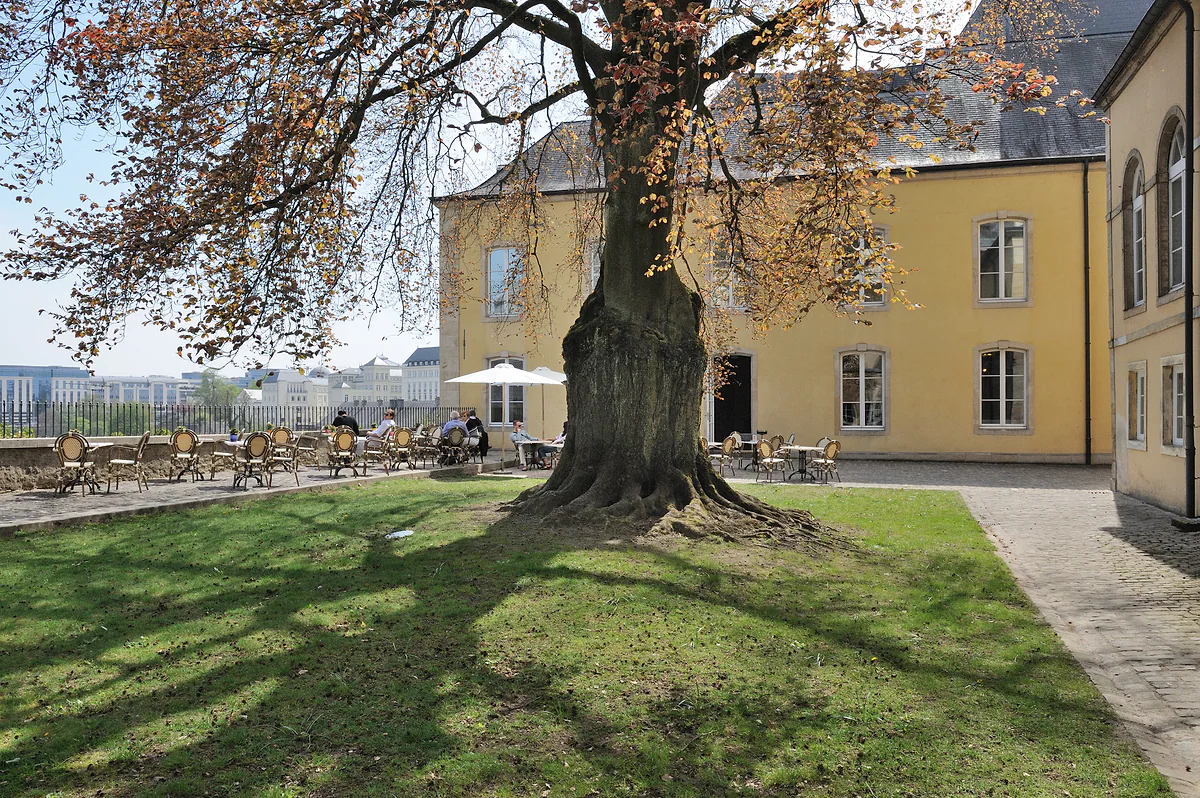
The courtyard of the Lëtzebuerg City Museum with a large copper beech, lawn and the café terrace in spring
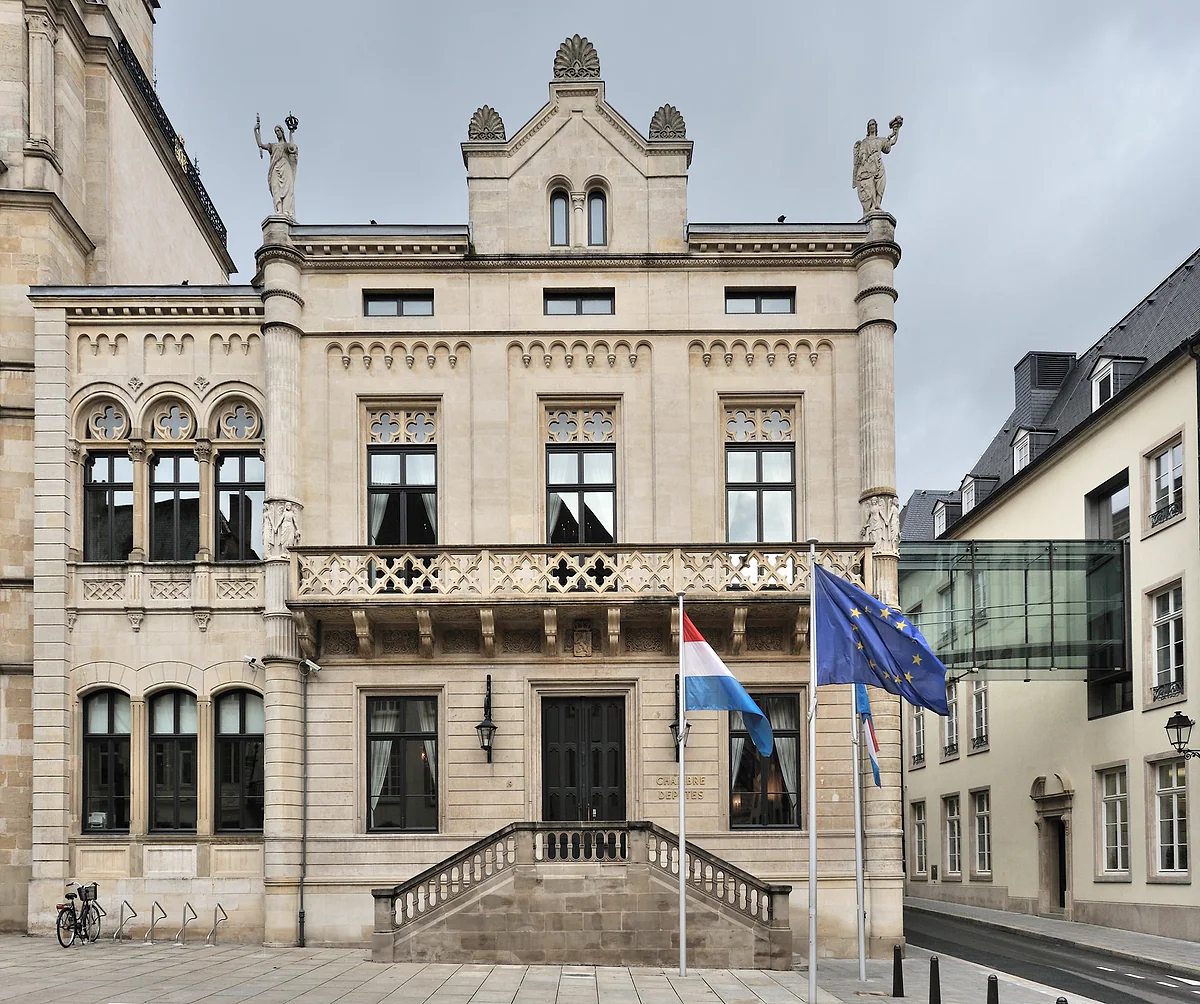
The Hôtel de la Chambre des Députés, seat of Luxembourg's Parliament, with a neo-Renaissance façade and flags
Which language is used for what
| Area | Main language | Note |
|---|---|---|
| Laws | French | Only the French text is binding |
| Administration and courts | French, German or Luxembourgish | 1984 law on the use of languages |
| Shops, cafés and restaurants | French | According to the official portal |
| Newspapers | German | Dominant, though not the only one |
| Radio, TV and political debate | Luxembourgish | |
| Cinema | Original version with subtitles | Or dubbed into German or French |
How many people speak each language
| Language | % of residents |
|---|---|
| French | 98% |
| English | 80% |
| German | 78% |
| Luxembourgish | 77% |
Education Ministry survey of 2018, as cited by luxembourg.public.lu, checked on 29-09-2026.
Test yourself
True or false?
0/4 Pick before you peek.
-
Luxembourg's laws are published in Luxembourgish.
See the answer
False. Laws are drafted in French and only the French text is binding, under the 1984 law on the use of languages.
-
Most people in Luxembourg speak English.
See the answer
True. 80% do, according to the Education Ministry's 2018 survey cited on the official portal. French came in at 98%.
-
Luxembourgish is written into the constitution.
See the answer
True. Since the revised constitution came into force on 1 July 2023. Article 4 reads «La langue du Grand-Duché de Luxembourg est le luxembourgeois».
-
Films in Luxembourg cinemas are dubbed into Luxembourgish.
See the answer
False. According to the official portal, films are shown in the original version with subtitles or dubbed into German or French.
What to see
What to see in Languages
0 of 425 Luxembourg guides
Your next stamp
- Luxembourgish
- Where is Luxembourg
- Population
- Facts
- Is it a country?
- Map
- Towns and villages
- A Possen Museum
- American Cemetery
- Ansembourg
- Ansembourg Castles
- Asselborn
- Bascharage
- Beaufort castles
- Belval
- Belval blast furnaces
- Berg Castle
- Bernard-Massard cellars
- Bourglinster Castle
- Bourscheid Castle
- Brandenbourg
- Brandenbourg Castle
- Caves St Martin
- Christmas
- Clervaux Castle
- Echternach
- Echternach Abbey
- Ehnen
- Ehnen Wine Museum
- Esch-sur-Alzette
- Esch-sur-Sûre Castle
- European Museum Schengen
- Fond-de-Gras
- General Patton Museum
- German war cemetery
- Haff Réimech
- Hohllay
- Hollenfels Castle
- Hosingen
- Kautenbach
- Kneiff
- Koerich Castle
- Larochette Castle
- Lasauvage
- Mersch Castle
- Military History Museum
- Moersdorf
- Mondorf Domaine Thermal
- Munsbach Castle
- National Mining Museum
- Parc Merveilleux
- Park Sënnesräich
- Places to visit
- Remich
- Rindschleiden
- Schiessentümpel
- Septfontaines Castle
- Slate Museum
- Stolzembourg
- Tudor Museum
- Useldange Castle
- Valley of the Seven Castles
- Vianden
- Vianden Castle
- Ville Haute
- Wasserbillig Aquarium
- Weiswampach lakes
- Wiltz Castle
- Ahn
- Berdorf
- Bourscheid-Plage
- Butterfly garden
- Clervaux
- Differdange
- Echternach lake
- Grevenmacher
- Heringer Millen
- Hollenfels
- Luxembourg City
- Luxembourg Science Center
- Meysembourg Castle
- Mullerthal
- National Day
- National Resistance Museum
- Perekop
- Remerschen
- Schoenfels Castle
- The Family of Man
- Things to do
- Upper Sûre Lake
- Vianden chairlift
- Wasserbillig
- Clervaux Abbey
- Echternach Roman villa
- Éislek
- Insenborn
- Kallektuffquell
- Machtum
- Most beautiful places
- Our Nature Park
- Pétange
- Pettingen Castle
- Schueberfouer
- Schwebsingen
- Victor Hugo House
- Waldbillig
- Dudelange
- Kuelscheier
- Lultzhausen
- Moselle Valley
- Octave
- Prettiest villages
- Sanem
- Schengen
- Wellenstein
- Wiltz
- Wolfsschlucht
- Beaufort
- Bech-Kleinmacher
- Éimaischen
- Gaalgebierg
- Guttland
- Marnach
- Mondorf-les-Bains
- Putscheid
- Schifflange
- UNESCO World Heritage
- Carnival
- Consdorf
- Ellergronn
- Käerjeng
- Kayl
- Minett
- Munshausen
- Tandel
- Bech
- Buergbrennen
- Esch-sur-Sûre
- Rumelange
- Lac de la Haute-Sûre (commune)
- Rosport-Mompach
- Wormeldange
- Larochette
- Mondercange
- Regions
- Bettembourg
- Bock Casemates
- Cantons
- Dancing procession
- Diekirch
- Fischbach
- Garnich
- Mersch
- Moselle wine route
- Ettelbruck
- Grund
- Heffingen
- Kehlen
- Lintgen
- Moselle river cruises
- Pétrusse Casemates
- Chemin de la Corniche
- Erpeldange-sur-Sûre
- Junglinster
- Kopstal
- Lorentzweiler
- Nommern
- Pfaffenthal
- Bissen
- Clausen
- Grand Ducal Palace
- Koerich
- Schieren
- Size
- Vallée de l'Ernz
- Feulen
- Kirchberg
- Notre-Dame Cathedral
- Reisdorf
- Steinfort
- Bettendorf
- Habscht
- St Michael's Church
- Helperknapp
- Place Guillaume II
- Name
- Place d'Armes
- History
- Place de la Constitution
- Grand Duke
- Colmar-Berg
- Flaxweiler
- Gare
- Hamm
- Kirchberg funicular
- Luxembourg fortress
- Mamer
- Mertert
- Minett Trail
- Mullerthal Trail
- Neumünster Abbey
- Parc Hosingen
- Pfaffenthal lift
- Political system
- Redange
- The Passerelle
- Wine festivals
- Winseler
- Beckerich
- Biwer
- EU institutions
- Goesdorf
- Limpertsberg
- Mudam
- Natur Musée
- Pulvermühl
- Stadtbredimus
- Troisvierges
- Wenzel walk
- Bonnevoie
- Bous-Waldbredimus
- Ell
- Flag
- Kiischpelt
- Manternach
- Philharmonie
- Vauban circuit
- Weiswampach
- Betzdorf
- Boulaide
- Dräi Eechelen Museum
- Hollerich
- Lenningen
- Useldange
- Wincrange
- Bourscheid
- Dalheim
- Gasperich
- Public holidays
- Red Bridge
- Saeul
- Belair
- Second World War
- Vichten
- Battle of the Bulge
- Merl
- Préizerdaul
- Cents
- EU and Schengen
- Groussbus-Wal
- Entry requirements
- Neudorf
- Rambrouch
- Currency and payments
- Mertzig
- Weimerskirch
- Adolphe Bridge
- Beggen
- Escapardenne
- How to get there
- International March of Diekirch
- MNHA (National Museum)
- Rock climbing
- Sandweiler
- Bridges
- Eich
- Flights
- Golf
- Hesperange
- Lëtzebuerg City Museum
- Canoeing and kayaking
- Dommeldange
- Luxembourg airport
- Strassen
- Villa Vauban
- Airport to city centre
- Bertrange
- Casino Luxembourg
- Mühlenbach
- Swimming pools
- From Brussels
- Pétrusse Valley
- Rollingergrund
- Walferdange
- Cessange
- Day trip from Brussels
- Municipal Park
- Steinsel
- Free walking tours
- From Paris
- Niederanven
- From Frankfurt
- Schuttrange
- Sightseeing train and bus
- By train
- Contern
- By coach
- Weiler-la-Tour
- Driving
- Luxembourg in one day
- Pretzel Sunday
- Rham Plateau
- Tour de Luxembourg
- Candlemas (Liichtmëssdag)
- Car hire
- Luxembourg in two days
- Saint-Esprit Plateau
- Luxembourg in three days
- Melusina statue
- Parking
- St Nicholas Day (Kleeschen)
- Fête de la Musique
- Luxembourg in four days
- Museums in Luxembourg
- Petrol
- Place de Clairefontaine
- A week in Luxembourg
- Getting around
- Luxembourg Marathon
- Tram and Bus Museum
- Free public transport
- Parks in Luxembourg City
- Road trip
- Belgium and Luxembourg
- Tram
- Buses
- Viewpoints
- Trains
- Luxembourg station
- Cycling
- LuxembourgPass
- Prices and budget
- On a budget
- Free things to do
- Mobile and roaming
- Healthcare
- Safety
- Scams
- Tourist information
- Packing list
- Swimming lakes
- With a dog
- Markets
- Tipping
- Shopping
- What to buy
- Shopping centres
- With kids
- For couples
- Playgrounds
- Adventure parks
- Nightlife
- Castles
- Theatres and concert venues
- Leudelange
- Nature parks
- Where to stay
- City-centre hotels
- Hiking
- Nature reserves
- Reckange-sur-Mess
- Hotels near the station
- Roeser
- Frisange
- Hotels in Kirchberg
- Airport hotels
- Dippach
- Hotels in Vianden
- Hotels in Echternach
- Hotels in Clervaux
- Hotels in Mondorf-les-Bains
- Hotels in Esch-sur-Alzette
- Hotels on the Moselle
- Mullerthal hotels
- Upper Sûre lake hotels
- Hotels in Diekirch and Ettelbruck
- Cheap hotels
- Luxury hotels
- Boutique hotels
- Spa hotels
- Family hotels
- Apartments
- Weather
- Youth hostels
- Best time to visit
- Campsites
- Holiday cottages
- In winter
- Castle hotels
- In spring
- Day trips
- In summer
- Around Luxembourg
- In autumn
- Ice skating
- Trier day trip
- Metz day trip
- Arlon day trip
- In January
- In February
- In March
- In April
- In May
- In June
- In July
- In August
- In September
- Food
- In October
- In November
- Where to eat
- In December
- Michelin restaurants
- Cheap eats
- Judd mat Gaardebounen
- Bouneschlupp
- Gromperekichelcher
- Kniddelen
- Quetschentaart
- Rieslingspaschtéit
- Events
- Wine
- Crémant
- Beer
Frequently asked questions
What language do they speak in Luxembourg?
Three official ones. Luxembourgish is the national language, and French and German are also used by the authorities. On the street you'll hear a lot of French, and 80% of residents said they spoke English in a 2018 survey.
Do they speak English in Luxembourg?
Widely. In the official 2018 survey, 80% of residents said they spoke English, and in the capital, where 70.8% of residents are foreign nationals, you'll be fine in hotels, museums and restaurants.
What is the official language of Luxembourg?
Article 4 of the constitution says the language of the Grand Duchy is Luxembourgish. The use of Luxembourgish, French and German is set out in law, and laws are only binding in French.
Is Luxembourgish a dialect of German?
Not in law. It has been the national language since the 1984 law and has been written into the constitution since 2023. What is true is that the written press relies heavily on German.
How many languages are spoken in Luxembourg?
Three official ones, Luxembourgish, French and German, with English very widely spoken. With around 180 nationalities living in the country, you'll hear many more on the street, Portuguese above all.
Do I need to speak French to visit Luxembourg?
No. French helps, because it's the language of shops and restaurants, but English gets you through almost everything, especially in the capital. A hello in Luxembourgish is a nice touch rather than a necessity.
By
Tourism graduate with a master’s in Tourism Management and Planning from the University of Málaga, who has travelled across Europe. He writes every guide from official sources and his own judgement.
Published on . Facts checked on .
Sources
Some links in this guide are affiliate links: if you book through them, the site earns a commission at no extra cost to you. Affiliate disclosure
Photos: Cayambe (CC BY-SA 3.0); Cayambe (CC BY-SA 3.0); Cayambe (CC BY-SA 3.0), via Wikimedia Commons.