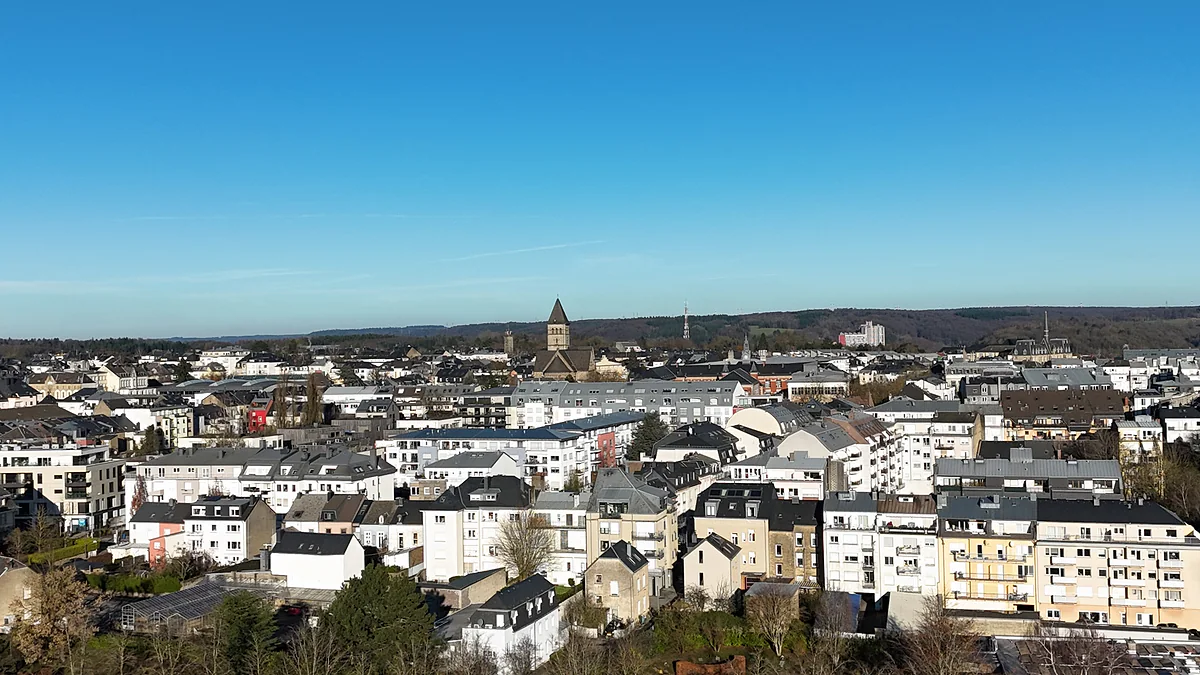
Northern district on the edge of the Bambësch
Mühlenbach, a mill stream and the way into the woods
Mühlenbach is a district in the north of Luxembourg City, covering 311.13 hectares with 2,482 residents on 31-12-2023. The name means mill stream, and it once drove eleven mills, including the Jesuits' mill where the first Luxembourg paper was made. Today it's the entrance to the Bambësch woods, with a forest playground opened in 2023.
With children, Mühlenbach is one of the best free afternoons in the capital. The Bambësch playground recreates the Bock, Fort Thüngen and the Dent Creuse in timber, and afterwards you can carry on through the woods to the old hunting lodge.

Before you go
What I would keep in mind
-
01 To save money
A fortress in miniature for kids
The Bambësch forest playground, opened in 2023, has child-sized versions of Fort Thüngen, the Bock, the castle bridge and the Dent Creuse. It covers 8,571 m² and bus 33 runs there.
Luxembourg with kids -
02 Most beautiful
The hunting lodge and the bison
In the Bambësch stands the Juegdschlass, an 1873 hunting lodge that's now a restaurant. Around it, the tourist office says, live American bison, donkeys and peacocks.
-
03 My tip
Where the country's first paper was made
In the early 18th century the Jesuits ran a paper mill in Mühlenbach where the first Luxembourg paper was produced, according to the city. A good fact to share with children on a woodland walk.
Mühlenbach means mill stream, and the name earns its keep. From the 14th century the stream powered up to eleven mills, grinding grain and making paper, plaster and tobacco, according to the tourist office. The water has run in a channel since the 1950s, and the district, home to 2,482 people, is now mainly the way into the Bambësch woods. Cross the woods westwards and you come out at Bridel, the hilltop village of Kopstal.
Mills, paper and market gardeners
The fact I like best is the paper. In the early 18th century the Jesuits had a mill here where, according to the city, the very first Luxembourg paper was made. On the site of the old tobacco mill, St Fiacre’s church went up in 1962-1963. Before the war the district had as many as 23 market gardeners; the tourist office says two remain.
Administratively, Mühlenbach did the rounds. It belonged to the municipality of Eich, moved to Rollingergrund in 1849 and became part of the capital in 1920.
If you’ve come looking for a mill you can actually visit, watch out for a common mix-up. The Muerbelsmillen, the Mohrfels mill with its big water wheel, which made mustard until 1985 and now shows its machinery with an exhibition and make-your-own-mustard workshops, isn’t in Mühlenbach. The tourist office places it at 69 rue Mohrfels in the Pfaffenthal, and it’s run by the Lëtzebuerg City Museum. I’d pair it with a walk along the Alzette valley rather than an afternoon in the woods.
What’s in the Bambësch?
Far more than you’d guess from the road. The district page reminds readers that the city manages 1,055 hectares of its own woodland. There’s a woodland restaurant from 1910 and, deeper in, the Juegdschlass, an 1873 hunting lodge now run as a restaurant. Around it, says the tourist office, live American bison, donkeys and peacocks, which is not what most people expect to find within the city limits.
For families, the highlight is the forest playground that opened in 2023. It recreates chunks of the fortress in timber, Fort Thüngen, the Bock, the castle bridge and the Dent Creuse, over 8,571 m². It’s the most fun way I know to introduce children to the Bock casemates before they see the real thing.
Once your dates are set, check which hotels are still free in Luxembourg before prices climb.
An afternoon in the woods, step by step
I’d take bus 33 to the playground and give the children an hour between the timber Bock and the wooden fort. Then I’d head into the woods on the paths leading off from there and look for the Juegdschlass to see the bison. If it gets late and they’re open, the lodge restaurant or the 1910 woodland restaurant will sort out tea. Apart from whatever you eat and drink, the whole plan costs nothing.
Who it suits
Families first and foremost, since I think it’s the best option in the north of the city, and anyone who wants a walk under the trees without leaving town. If you’re after monuments or neighbourhood life, Limpertsberg or the centre will suit you better. There are more ideas along these lines in Luxembourg with kids.
Once your dates are set, check which hotels are still free in Luxembourg before prices climb.
Getting there
The city recommends bus 33 for the Bambësch playground, which you can ride for free. Rollingergrund and its share of the woods are right next door, and I’d link the two on one long walk through the trees.
If you would rather have a local show you round, book a guided tour in Luxembourg and choose by the reviews.
A car frees you from timetables: search car hire in Luxembourg on DiscoverCars and compare companies.
So you do not pay over the odds, look at trains, coaches and flights to Luxembourg on Omio and pick the one that suits you.
What's in Mühlenbach
| Place | What it is | Detail |
|---|---|---|
| Bambësch woods | City forest | The city manages 1,055 ha of its own woodland |
| Forest playground | Themed children's play area | 8,571 m²; opened 2023; bus 33 |
| Juegdschlass | 1873 hunting lodge | Restaurant; bison, donkeys and peacocks |
| St Fiacre's church | Local church | 1962-1963, on the site of the tobacco mill |
Sources: City of Luxembourg district page and LCTO, checked on 29-09-2026.
Test yourself
True or false?
0/3 Pick before you peek.
-
Luxembourg's first paper was made in Mühlenbach.
See the answer
True. The city places it at the Jesuits' paper mill, in the early 18th century.
-
The Bambësch forest playground opened in the 1990s.
See the answer
False. It opened in 2023, according to the tourist office, with the Luxembourg fortress recreated for children.
-
Mühlenbach once belonged to the municipality of Rollingergrund.
See the answer
True. It was part of Eich, moved to Rollingergrund in 1849 and joined the capital in 1920.
Map
Where Mühlenbach is
The thick dashed line is the border with Belgium, France and Germany, and the fine ones divide the twelve cantons. The Éislek lies to the north and the Moselle to the east. Every number opens its guide.
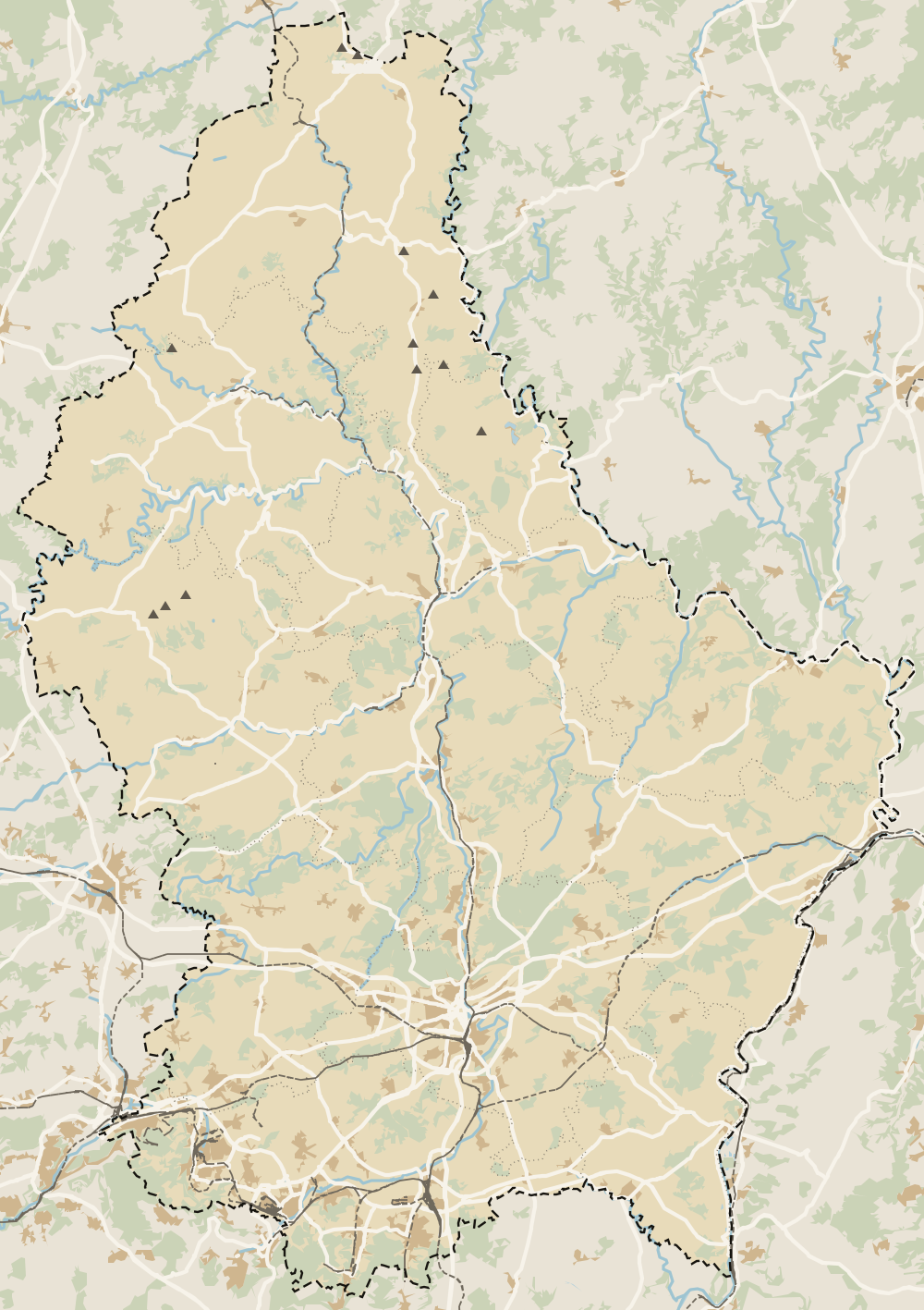 1Ville Haute 2Luxembourg City 3Grund 4Pfaffenthal 5Clausen 6Kirchberg 7Gare 8Hamm 9Luxembourg fortress 10Limpertsberg 11Pulvermühl 12Bonnevoie 13Hollerich 14Gasperich 15Belair 16Merl 17Cents 18Neudorf 19Weimerskirch 20Beggen 21Eich 22Dommeldange 23Mühlenbach 24Pétrusse Valley 25Rollingergrund 26Cessange 27Rham Plateau 28Tram and Bus Museum
 Map data © OpenStreetMap contributors (ODbL)
- 1Ville HauteA district of Luxembourg City
- 2Luxembourg CityCapital of the Grand Duchy
- 3GrundLuxembourg City district on the Alzette
- 4PfaffenthalLuxembourg City district in the Alzette valley
- 5ClausenLuxembourg City district in the Alzette valley
- 6KirchbergLuxembourg City's European and business district
- 7GareLuxembourg City district south of the Pétrusse
- 8HammDistrict on the eastern side of Luxembourg City
- 9Luxembourg fortressUNESCO World Heritage since 1994
- 10LimpertsbergLuxembourg City district north of the Ville Haute
- 11PulvermühlLuxembourg City's smallest district
- 12BonnevoieBonnevoie-Nord / Verlorenkost and Bonnevoie-Sud
- 13HollerichLuxembourg City district west of the Gare
- 14GasperichDistrict in the south of Luxembourg City
- 15BelairResidential district west of the Ville Haute
- 16MerlResidential district on the capital's west side
- 17CentsResidential district east of the city centre
- 18NeudorfAlzette valley district below Kirchberg
- 19WeimerskirchNorthern district on the Alzette valley slope
- 20BeggenDistrict at the northern tip of the capital
- 21EichNorthern district in the Alzette valley
- 22DommeldangeNorthern district with a village centre
- 23MühlenbachNorthern district on the edge of the Bambësch
- 24Pétrusse ValleyPark and walk between the old town and the Gare
- 25RollingergrundNorth-west district, including Belair-Nord
- 26CessangeSouth-west district of the capital
- 27Rham PlateauLuxembourg City fortifications
- 28Tram and Bus MuseumMuseum in Hollerich
0 of 425 Luxembourg guides
Your next stamp
- Junglinster
- Wormeldange
- Kopstal
- Pulvermühl
- Kiischpelt
- Bech
- Rollingergrund
- A Possen Museum
- American Cemetery
- Ansembourg
- Ansembourg Castles
- Asselborn
- Bascharage
- Beaufort castles
- Belval
- Belval blast furnaces
- Berg Castle
- Bernard-Massard cellars
- Bourglinster Castle
- Bourscheid Castle
- Brandenbourg
- Brandenbourg Castle
- Caves St Martin
- Christmas
- Clervaux Castle
- Echternach
- Echternach Abbey
- Ehnen
- Ehnen Wine Museum
- Esch-sur-Alzette
- Esch-sur-Sûre Castle
- European Museum Schengen
- Fond-de-Gras
- General Patton Museum
- German war cemetery
- Haff Réimech
- Hohllay
- Hollenfels Castle
- Hosingen
- Kautenbach
- Kneiff
- Koerich Castle
- Larochette Castle
- Lasauvage
- Mersch Castle
- Military History Museum
- Moersdorf
- Mondorf Domaine Thermal
- Munsbach Castle
- National Mining Museum
- Parc Merveilleux
- Park Sënnesräich
- Places to visit
- Remich
- Rindschleiden
- Schiessentümpel
- Septfontaines Castle
- Slate Museum
- Stolzembourg
- Tudor Museum
- Useldange Castle
- Valley of the Seven Castles
- Vianden
- Vianden Castle
- Ville Haute
- Wasserbillig Aquarium
- Weiswampach lakes
- Wiltz Castle
- Ahn
- Berdorf
- Bourscheid-Plage
- Butterfly garden
- Clervaux
- Differdange
- Echternach lake
- Grevenmacher
- Heringer Millen
- Hollenfels
- Luxembourg City
- Luxembourg Science Center
- Meysembourg Castle
- Mullerthal
- National Day
- National Resistance Museum
- Perekop
- Remerschen
- Schoenfels Castle
- The Family of Man
- Things to do
- Upper Sûre Lake
- Vianden chairlift
- Wasserbillig
- Clervaux Abbey
- Echternach Roman villa
- Éislek
- Insenborn
- Kallektuffquell
- Machtum
- Most beautiful places
- Our Nature Park
- Pétange
- Pettingen Castle
- Schueberfouer
- Schwebsingen
- Victor Hugo House
- Waldbillig
- Dudelange
- Kuelscheier
- Lultzhausen
- Moselle Valley
- Octave
- Prettiest villages
- Sanem
- Schengen
- Wellenstein
- Wiltz
- Wolfsschlucht
- Beaufort
- Bech-Kleinmacher
- Éimaischen
- Gaalgebierg
- Guttland
- Marnach
- Mondorf-les-Bains
- Putscheid
- Schifflange
- UNESCO World Heritage
- Carnival
- Consdorf
- Ellergronn
- Käerjeng
- Kayl
- Map
- Minett
- Munshausen
- Tandel
- Buergbrennen
- Esch-sur-Sûre
- Rumelange
- Where is Luxembourg
- Is it a country?
- Lac de la Haute-Sûre (commune)
- Rosport-Mompach
- Larochette
- Mondercange
- Regions
- Bettembourg
- Bock Casemates
- Cantons
- Dancing procession
- Diekirch
- Fischbach
- Garnich
- Mersch
- Moselle wine route
- Ettelbruck
- Grund
- Heffingen
- Kehlen
- Lintgen
- Moselle river cruises
- Pétrusse Casemates
- Towns and villages
- Chemin de la Corniche
- Erpeldange-sur-Sûre
- Lorentzweiler
- Nommern
- Pfaffenthal
- Population
- Bissen
- Clausen
- Grand Ducal Palace
- Koerich
- Schieren
- Size
- Vallée de l'Ernz
- Feulen
- Kirchberg
- Languages
- Notre-Dame Cathedral
- Reisdorf
- Steinfort
- Bettendorf
- Habscht
- St Michael's Church
- Helperknapp
- Luxembourgish
- Place Guillaume II
- Name
- Place d'Armes
- History
- Place de la Constitution
- Grand Duke
- Colmar-Berg
- Flaxweiler
- Gare
- Hamm
- Kirchberg funicular
- Luxembourg fortress
- Mamer
- Mertert
- Minett Trail
- Mullerthal Trail
- Neumünster Abbey
- Parc Hosingen
- Pfaffenthal lift
- Political system
- Redange
- The Passerelle
- Wine festivals
- Winseler
- Beckerich
- Biwer
- EU institutions
- Goesdorf
- Limpertsberg
- Mudam
- Natur Musée
- Stadtbredimus
- Troisvierges
- Wenzel walk
- Bonnevoie
- Bous-Waldbredimus
- Ell
- Flag
- Manternach
- Philharmonie
- Vauban circuit
- Weiswampach
- Betzdorf
- Boulaide
- Dräi Eechelen Museum
- Facts
- Hollerich
- Lenningen
- Useldange
- Wincrange
- Bourscheid
- Dalheim
- Gasperich
- Public holidays
- Red Bridge
- Saeul
- Belair
- Second World War
- Vichten
- Battle of the Bulge
- Merl
- Préizerdaul
- Cents
- EU and Schengen
- Groussbus-Wal
- Entry requirements
- Neudorf
- Rambrouch
- Currency and payments
- Mertzig
- Weimerskirch
- Adolphe Bridge
- Beggen
- Escapardenne
- How to get there
- International March of Diekirch
- MNHA (National Museum)
- Rock climbing
- Sandweiler
- Bridges
- Eich
- Flights
- Golf
- Hesperange
- Lëtzebuerg City Museum
- Canoeing and kayaking
- Dommeldange
- Luxembourg airport
- Strassen
- Villa Vauban
- Airport to city centre
- Bertrange
- Casino Luxembourg
- Swimming pools
- From Brussels
- Pétrusse Valley
- Walferdange
- Cessange
- Day trip from Brussels
- Municipal Park
- Steinsel
- Free walking tours
- From Paris
- Niederanven
- From Frankfurt
- Schuttrange
- Sightseeing train and bus
- By train
- Contern
- By coach
- Weiler-la-Tour
- Driving
- Luxembourg in one day
- Pretzel Sunday
- Rham Plateau
- Tour de Luxembourg
- Candlemas (Liichtmëssdag)
- Car hire
- Luxembourg in two days
- Saint-Esprit Plateau
- Luxembourg in three days
- Melusina statue
- Parking
- St Nicholas Day (Kleeschen)
- Fête de la Musique
- Luxembourg in four days
- Museums in Luxembourg
- Petrol
- Place de Clairefontaine
- A week in Luxembourg
- Getting around
- Luxembourg Marathon
- Tram and Bus Museum
- Free public transport
- Parks in Luxembourg City
- Road trip
- Belgium and Luxembourg
- Tram
- Buses
- Viewpoints
- Trains
- Luxembourg station
- Cycling
- LuxembourgPass
- Prices and budget
- On a budget
- Free things to do
- Mobile and roaming
- Healthcare
- Safety
- Scams
- Tourist information
- Packing list
- Swimming lakes
- With a dog
- Markets
- Tipping
- Shopping
- What to buy
- Shopping centres
- With kids
- For couples
- Playgrounds
- Adventure parks
- Nightlife
- Castles
- Theatres and concert venues
- Leudelange
- Nature parks
- Where to stay
- City-centre hotels
- Hiking
- Nature reserves
- Reckange-sur-Mess
- Hotels near the station
- Roeser
- Frisange
- Hotels in Kirchberg
- Airport hotels
- Dippach
- Hotels in Vianden
- Hotels in Echternach
- Hotels in Clervaux
- Hotels in Mondorf-les-Bains
- Hotels in Esch-sur-Alzette
- Hotels on the Moselle
- Mullerthal hotels
- Upper Sûre lake hotels
- Hotels in Diekirch and Ettelbruck
- Cheap hotels
- Luxury hotels
- Boutique hotels
- Spa hotels
- Family hotels
- Apartments
- Weather
- Youth hostels
- Best time to visit
- Campsites
- Holiday cottages
- In winter
- Castle hotels
- In spring
- Day trips
- In summer
- Around Luxembourg
- In autumn
- Ice skating
- Trier day trip
- Metz day trip
- Arlon day trip
- In January
- In February
- In March
- In April
- In May
- In June
- In July
- In August
- In September
- Food
- In October
- In November
- Where to eat
- In December
- Michelin restaurants
- Cheap eats
- Judd mat Gaardebounen
- Bouneschlupp
- Gromperekichelcher
- Kniddelen
- Quetschentaart
- Rieslingspaschtéit
- Events
- Wine
- Crémant
- Beer
Frequently asked questions
Where is Mühlenbach?
In the north of Luxembourg City, between Eich, Limpertsberg and Rollingergrund, on the edge of the Bambësch woods. It's one of the capital's 24 official districts.
What is the Bambësch?
A large forest in the north of the capital, reached from Mühlenbach. It has a forest playground opened in 2023, a woodland restaurant dating from 1910 and an 1873 hunting lodge.
Are there animals in the Bambësch?
Yes. The tourist office says American bison, donkeys and peacocks live around the Juegdschlass hunting lodge.
How do I get to the Bambësch playground?
On bus 33, according to the city. Like all public transport in Luxembourg, it's free.
Why is it called Mühlenbach?
It means mill stream. From the 14th century the stream powered up to eleven mills, grinding grain and producing paper, plaster and tobacco. It was put into a channel in the 1950s.
By
Tourism graduate with a master’s in Tourism Management and Planning from the University of Málaga, who has travelled across Europe. He writes every guide from official sources and his own judgement.
Published on . Updated on . Facts checked on .
Some links in this guide are affiliate links: if you book through them, the site earns a commission at no extra cost to you. Affiliate disclosure
Photos: GilPe (CC BY-SA 4.0), via Wikimedia Commons.