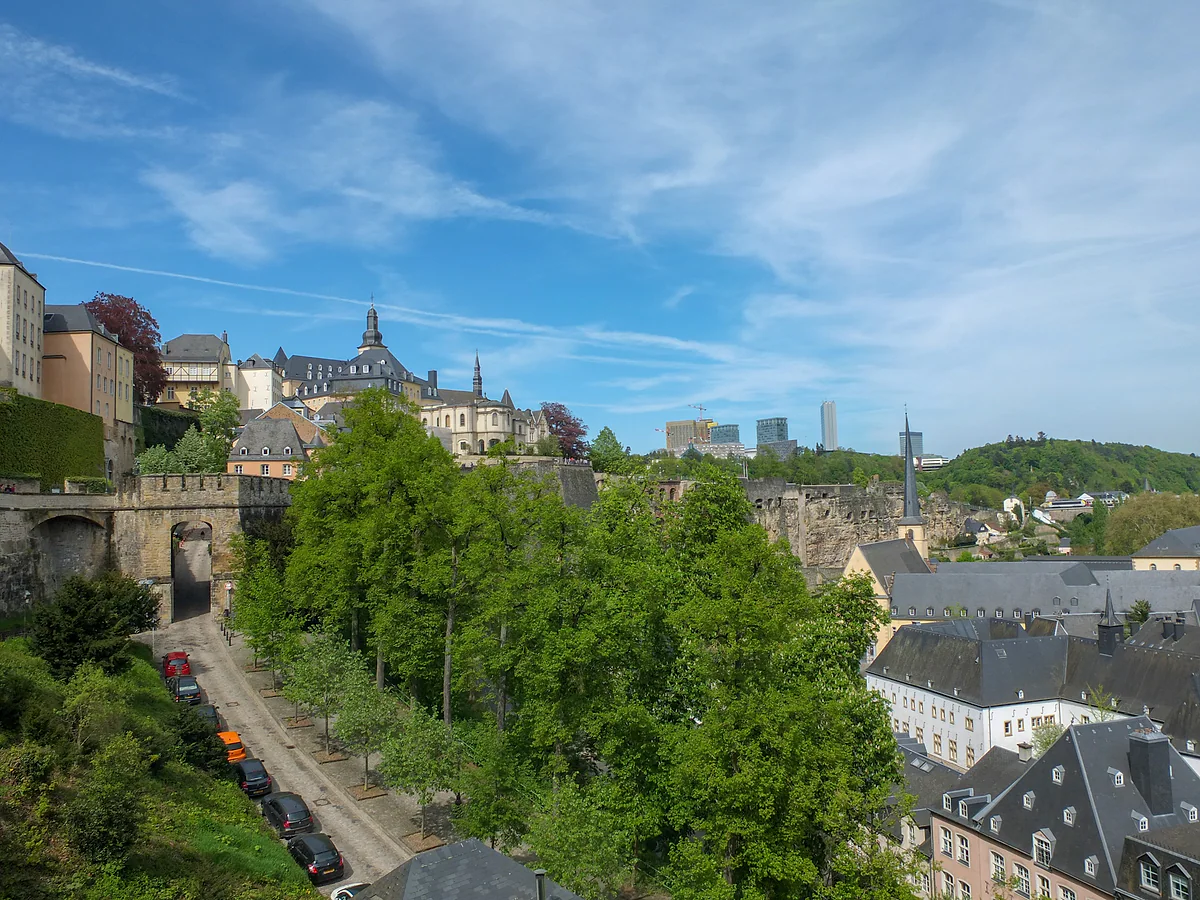
The rampart walk of the old town
The Chemin de la Corniche, a balcony over the Grund
The Chemin de la Corniche is a walk along the 17th-century ramparts built by the Spanish and the French in Luxembourg City. It runs from the Bock rock to the lower part of the Holy Spirit citadel, looks down on the Alzette valley and the Grund, and is free and open at all hours. The writer Batty Weber called it «the most beautiful balcony in Europe».
In 30 seconds
Full read: 4 min
- The Chemin de la Corniche is a walk along 17th-century ramparts on the eastern edge of Luxembourg's old town.
- It runs from the Bock rock to the Holy Spirit citadel, looking over the Grund, the Alzette and the Rham plateau.
- It's free and open at all hours.
- Batty Weber called it «the most beautiful balcony in Europe».
I'd walk it north to south, starting at the Bock, so the Grund stays in front of you the whole way. And if I were staying in the old town I'd do it again after dark, because it's free, it's on the doorstep and it becomes a different place.

Before you go
What I would keep in mind
-
01 Most beautiful
The balcony Batty Weber named
The Luxembourgish writer Batty Weber called it «the most beautiful balcony in Europe». It's the kind of exaggeration you forgive, because from here you see the whole city, top and bottom, in one sweep.
-
02 To save money
The capital's best viewpoint is free
There's no ticket office and no closing time. It's a public walk along the wall, so you can come at dawn, at noon or late at night. With the Corniche and the Grund you've filled half a day without spending a penny.
-
03 My tip
Take the lift down to the Grund
At the southern end, on the Holy Spirit plateau, a public lift drops you into the Grund. It saves the climb back if you'd like to finish by the river.
the Grund -
04 Getting there
Start where the casemates start
The northern end is the Bock rock on the Montée de Clausen, with the casemates and the Bockkasematten stop on bus lines 9, 14 and 15. All public transport in Luxembourg is free.
Bock Casemates
What I would book
My ranking, scored
What you see from the Corniche, in order
My own marks out of 10, weighing how much each view tells you about the two-level city and how good it looks from the walk. All of it is free.
0 of 5 seen
-
The Grund rooftops and the Alzette
The view that justifies the walk. The river quarter sits directly below, squeezed between rock and water.
9.5 out of 10
-
Neumünster Abbey
An abbey, then a military hospital and a prison, and a cultural centre since 2004. From above you grasp its size.
9.0 out of 10
-
The Rham plateau
Across the valley, with its towers and old barracks. The tourist office lists it among the views opened up when the battlements came down.
8.6 out of 10
-
The Bock rock
Where the walk and the city both begin. From the Corniche you see how the valley wraps around it on three sides.
8.4 out of 10
-
The Holy Spirit citadel
The end of the walk, where Vauban strengthened the bastions between 1685 and 1687. The law courts now stand on top.
7.6 out of 10
If I could keep just one place in Luxembourg City, it would be this one, and it costs nothing. The Chemin de la Corniche is a walk along the ramparts on the eastern edge of the old town, with the Grund and the river directly below. There’s no ticket office and no closing time, and this is where the capital stops looking like a pretty shopping district and reminds you it was a fortress. Here’s how I’d do it.
A walk on 17th-century ramparts
The city tourist office explains that the Corniche runs along ramparts the Spanish and the French built in the 17th century. It follows the Alzette valley from the Bock rock to the lower part of the Holy Spirit citadel, a stretch known as the «rondelles». It’s a piece of the great defensive ring that UNESCO describes as one of Europe’s largest fortified sites until 1867.
The odd thing is that the view we enjoy today didn’t exist while the wall was doing its job. Until 1870 some of its slopes had steps, which were only levelled after the fortress was dismantled. At the same time much of the battlements came down, and that is what opened the panorama over the Alzette, the Grund and the Rham plateau. The wall became a balcony once it stopped being a wall, and I rather like that.
Why the most beautiful balcony in Europe?
The phrase belongs to the Luxembourgish writer Batty Weber, and the tourist office still repeats it. It’s the sort of exaggeration you forgive. What makes the Corniche special isn’t a single monument but the fact that you see the city on both its levels at once. Above, the houses of the upper town on their rock; below, the rooftops of the Grund, Neumünster Abbey and the river; opposite, the towers of the Rham plateau.
If you are staying the night, see the best hotel deals in Luxembourg for your dates: the well-placed rooms go fast.
How I’d walk it
I’d start at the northern end, on the Bock rock, where you’ll find the Bock Casemates and the Bockkasematten bus stop. From there I’d head south with the valley on my left, stopping every time the wall opens a gap. The walk ends at the Holy Spirit citadel, which began as a convent founded in 1234, was drawn into the defences with the third town wall in the 14th century and took its final shape between 1685 and 1687, when Vauban strengthened its bastions. Today the Cité judiciaire, the heart of the Luxembourg justice system, stands on top. The citadel also holds the archaeological crypt of the old Poor Clares convent, with about 300 burials, but the tourist office only opens it for occasional guided tours, so I wouldn’t count on seeing it.
If you’re coming from the other direction, look for rue du Saint-Esprit on any street map. The lower bastions of the citadel, the Rondellen, mark the southern end, and the Saint-Esprit plateau sits right above them. From that plateau a public lift runs down to the Grund, and it’s my favourite way to finish. Down you go, lunch by the river, and back up by another route. If you’d rather walk it with more history attached, the Wenzel walk uses the Corniche as its first leg before heading down beside the medieval wall.
When is the best time to go?
As it’s a public walk, whenever suits you. If I were staying in the old town I’d go twice. Once in the morning, paired with the casemates and the Grund, and again at dusk to see it in another light. There’s no need to wait for a particular season, though in autumn the trees in the valley change the picture.
What I would do is wear comfortable shoes. Going down to the Grund or coming back from the river means slopes and steps, and the official page for the Wenzel walk, which passes this way, warns that parts of its route aren’t suitable for pushchairs or wheelchairs.
If you are staying the night, see the best hotel deals in Luxembourg for your dates: the well-placed rooms go fast.
What’s close by
The Corniche is surrounded by places with their own tourist office pages. Nearby are the Jacob tower and the gate called «Dinselpuert», and between the walk and the centre, the Chamber of Deputies and Place de Clairefontaine. Down in the Grund are the statue of Melusina, the mermaid of the founding legend, and on rue Münster the national natural history museum and St John’s church. If you’re doing the capital in a day, my page on Luxembourg City shows how it all fits together.
The best part is that the whole rampart walk, the view and the lift down to the river cost nothing, like almost everything in the old town apart from the casemates, which is one reason I’d send any first-time visitor here before anywhere else. I weigh it against the country’s other views in best viewpoints in Luxembourg.
So you do not lose the morning at the ticket office, browse tickets and tours in Chemin de la Corniche on GetYourGuide.
If you would rather go at your own pace, see the car hire deals in Luxembourg: the earlier you book, the more cars are left to choose from.
Before you fix your dates, compare tickets to Luxembourg: the same journey can cost very different amounts from one day to the next.
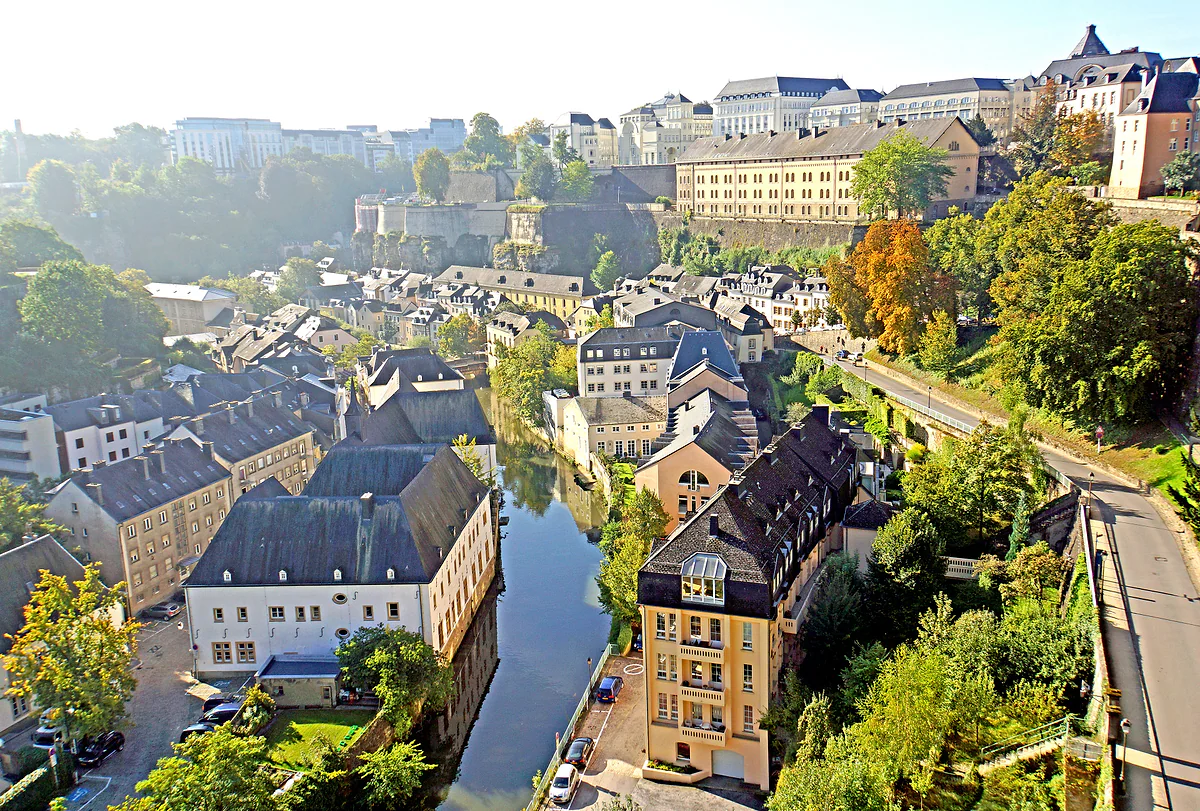
The Grund quarter and the River Alzette seen from the Corniche, with slate roofs and trees in autumn colours
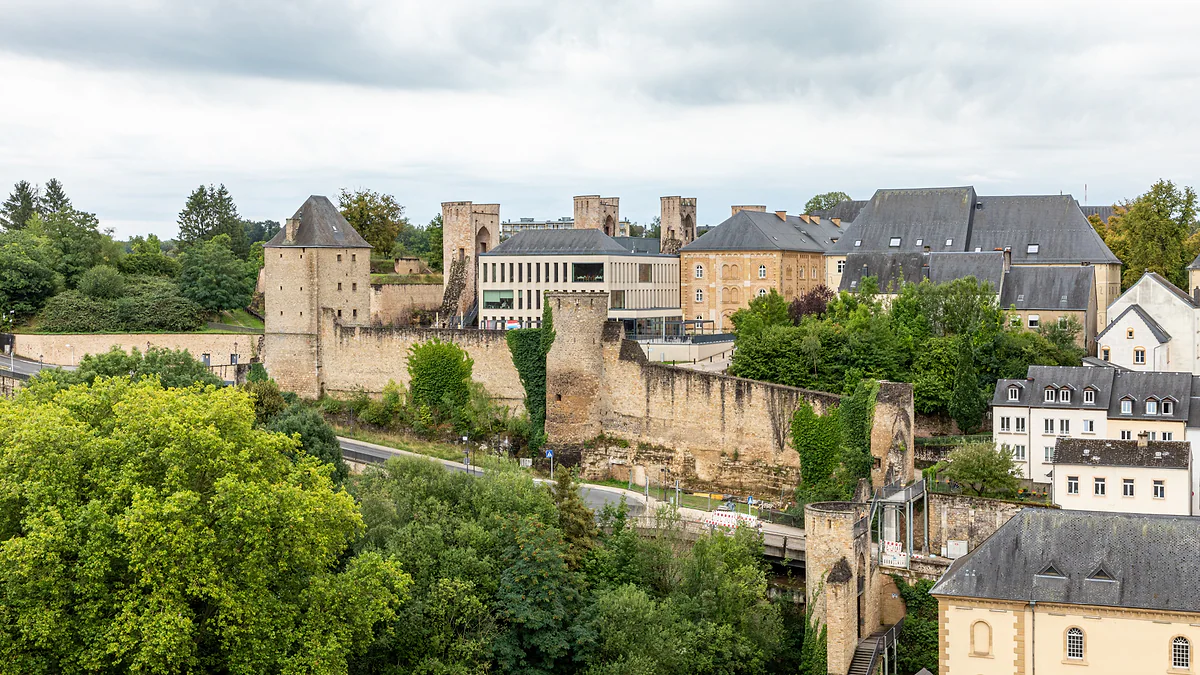
The Plateau du Rham with its medieval towers and former barracks above the city wall, among green trees
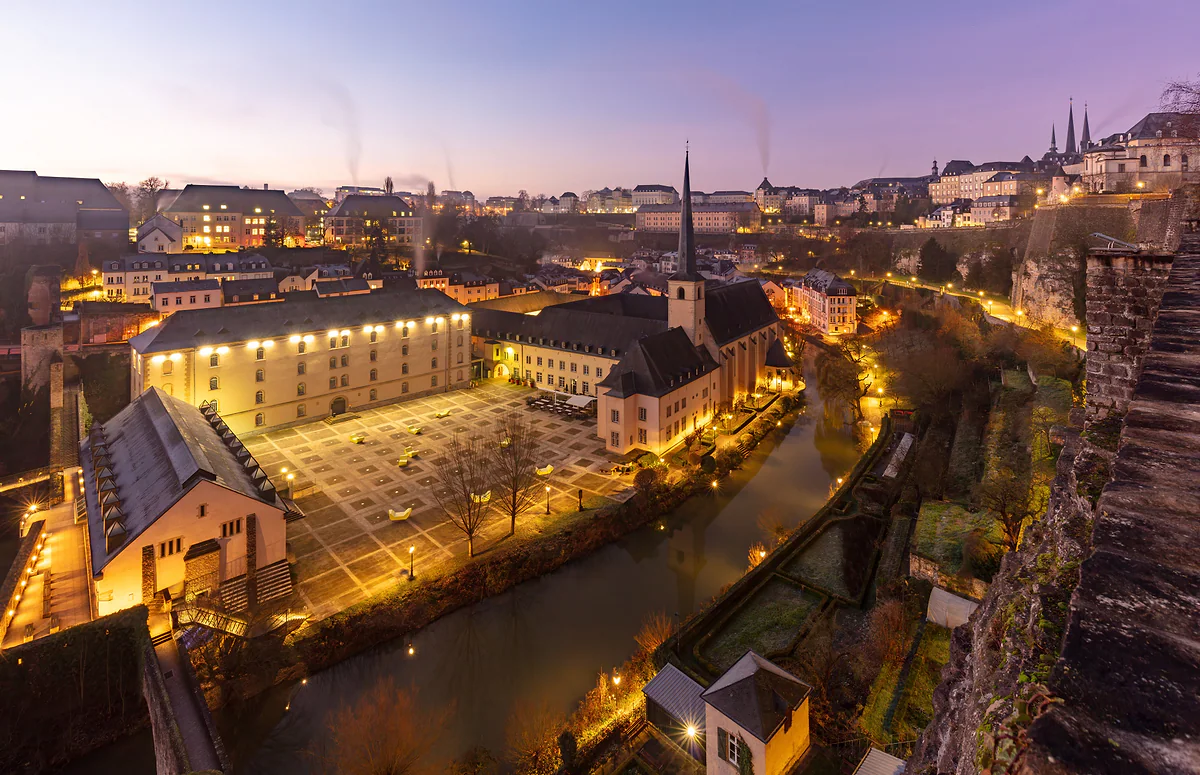
Neumünster Abbey and St John's Church lit up at dawn in the Grund, beside the River Alzette
The Chemin de la Corniche at a glance
| Detail | What to know |
|---|---|
| Start | The Bock rock, Montée de Clausen |
| End | Lower part of the Holy Spirit citadel, the «rondelles» |
| Ramparts | 17th century, built by the Spanish and the French |
| Steps | Until 1870; levelled after the fortress was dismantled |
| Price and hours | Free and always open |
Luxembourg City Tourist Office, pages on the Chemin de la Corniche and the Holy Spirit citadel, checked on 29-09-2026.
Test yourself
True or false?
0/3 Pick before you peek.
-
The Corniche runs along ramparts built in the 17th century.
See the answer
True. The city tourist office explains that the walk follows the ramparts the Spanish and French put up in the 17th century.
-
The Corniche slopes have always been smooth paths.
See the answer
False. Until 1870 some of them had steps, and they were only levelled after the fortress was dismantled.
-
Today's view over the Grund exists because part of the battlements was torn down.
See the answer
True. According to the tourist office, much of the crenellated rampart had to go, and that opened the view over the Alzette, the Grund and the Rham plateau.
- Age of the ramparts it follows
- 17th c.
- Until then some slopes had steps
- 1870
- Founding of the Holy Spirit convent
- 1234
- What it costs to walk
- €0
Map
Where Chemin de la Corniche is
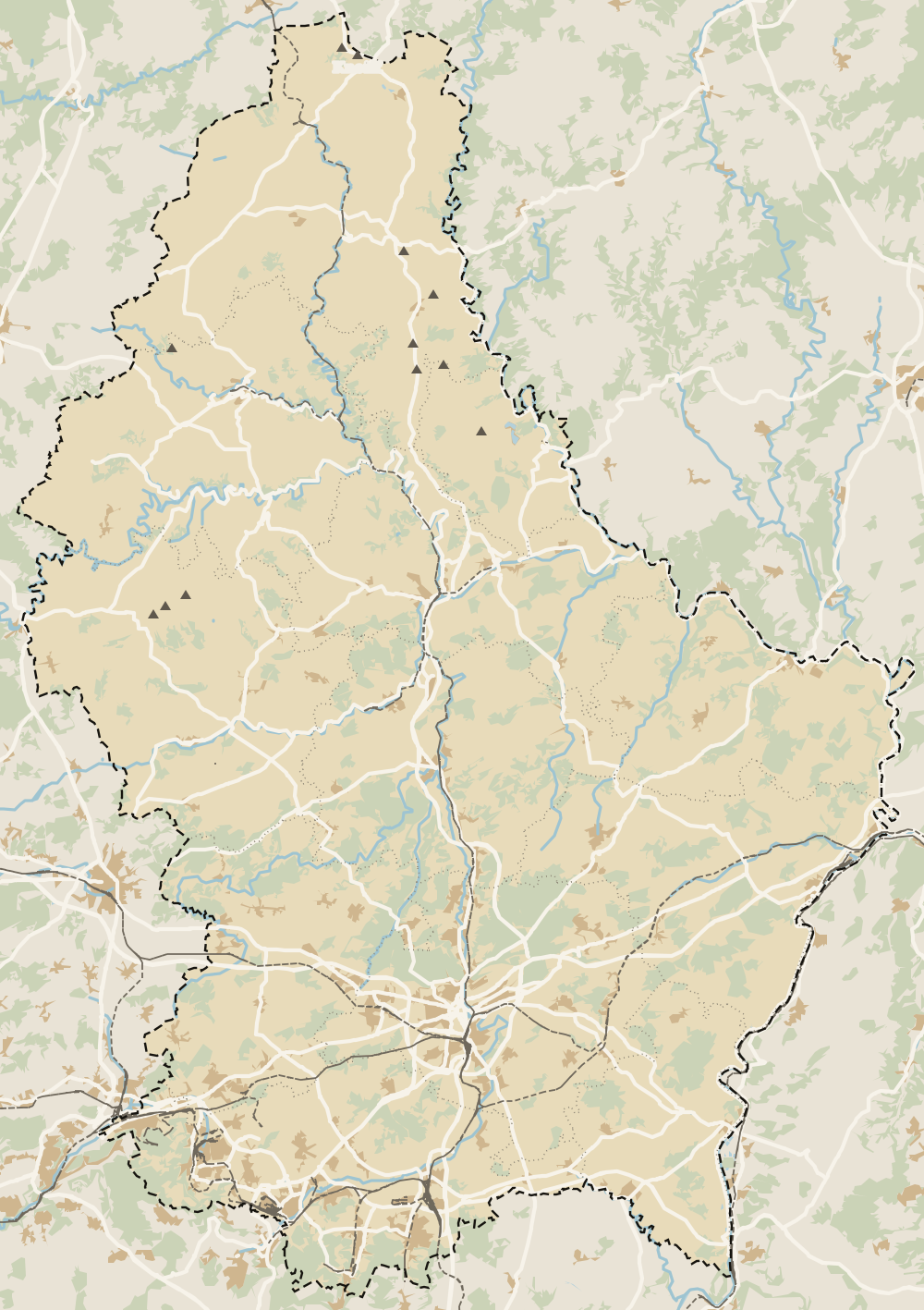
The thick dashed line is the border with Belgium, France and Germany, and the fine ones divide the twelve cantons. The Éislek lies to the north and the Moselle to the east. Every number opens its guide.
 1Ville Haute 2Bock Casemates 3Pétrusse Casemates 4Chemin de la Corniche 5Grand Ducal Palace 6Notre-Dame Cathedral 7St Michael's Church 8Place Guillaume II 9Place d'Armes 10Place de la Constitution 11Adolphe Bridge 12MNHA (National Museum) 13Lëtzebuerg City Museum 14Villa Vauban 15Casino Luxembourg 16Municipal Park 17Saint-Esprit Plateau 18Place de Clairefontaine
 Map data © OpenStreetMap contributors (ODbL)
- 1Ville HauteA district of Luxembourg City
- 2Bock CasematesTunnels in a World Heritage Site
- 3Pétrusse CasematesSandstone galleries by the Gëlle Fra
- 4Chemin de la CornicheThe rampart walk of the old town
- 5Grand Ducal PalaceOfficial seat in the old town
- 6Notre-Dame CathedralThe country's only cathedral
- 7St Michael's ChurchOne of the capital's oldest places of worship
- 8Place Guillaume IITown hall square and William II
- 9Place d'ArmesPedestrian square in the old town
- 10Place de la ConstitutionMonument of Remembrance on the Beck bastion
- 11Adolphe BridgeThe capital's emblem, between the Ville Haute and the Gare
- 12MNHA (National Museum)National museum on the Marché-aux-Poissons, old town
- 13Lëtzebuerg City MuseumThe capital's history museum, old town
- 14Villa VaubanThe city's art museum, in the municipal park
- 15Casino LuxembourgForum d'art contemporain, old town
- 16Municipal ParkParc municipal Édouard André, old town
- 17Saint-Esprit PlateauCitadel in the Ville Haute
- 18Place de ClairefontaineSquare in the Ville Haute
0 of 425 Luxembourg guides
Your next stamp
- For couples
- Wenzel walk
- Luxembourg in one day
- Viewpoints
- Most beautiful places
- Places to visit
- Luxembourg City
- Rham Plateau
- A Possen Museum
- American Cemetery
- Ansembourg
- Ansembourg Castles
- Asselborn
- Bascharage
- Beaufort castles
- Belval
- Belval blast furnaces
- Berg Castle
- Bernard-Massard cellars
- Bourglinster Castle
- Bourscheid Castle
- Brandenbourg
- Brandenbourg Castle
- Caves St Martin
- Christmas
- Clervaux Castle
- Echternach
- Echternach Abbey
- Ehnen
- Ehnen Wine Museum
- Esch-sur-Alzette
- Esch-sur-Sûre Castle
- European Museum Schengen
- Fond-de-Gras
- General Patton Museum
- German war cemetery
- Haff Réimech
- Hohllay
- Hollenfels Castle
- Hosingen
- Kautenbach
- Kneiff
- Koerich Castle
- Larochette Castle
- Lasauvage
- Mersch Castle
- Military History Museum
- Moersdorf
- Mondorf Domaine Thermal
- Munsbach Castle
- National Mining Museum
- Parc Merveilleux
- Park Sënnesräich
- Remich
- Rindschleiden
- Schiessentümpel
- Septfontaines Castle
- Slate Museum
- Stolzembourg
- Tudor Museum
- Useldange Castle
- Valley of the Seven Castles
- Vianden
- Vianden Castle
- Ville Haute
- Wasserbillig Aquarium
- Weiswampach lakes
- Wiltz Castle
- Ahn
- Berdorf
- Bourscheid-Plage
- Butterfly garden
- Clervaux
- Differdange
- Echternach lake
- Grevenmacher
- Heringer Millen
- Hollenfels
- Luxembourg Science Center
- Meysembourg Castle
- Mullerthal
- National Day
- National Resistance Museum
- Perekop
- Remerschen
- Schoenfels Castle
- The Family of Man
- Things to do
- Upper Sûre Lake
- Vianden chairlift
- Wasserbillig
- Clervaux Abbey
- Echternach Roman villa
- Éislek
- Insenborn
- Kallektuffquell
- Machtum
- Our Nature Park
- Pétange
- Pettingen Castle
- Schueberfouer
- Schwebsingen
- Victor Hugo House
- Waldbillig
- Dudelange
- Kuelscheier
- Lultzhausen
- Moselle Valley
- Octave
- Prettiest villages
- Sanem
- Schengen
- Wellenstein
- Wiltz
- Wolfsschlucht
- Beaufort
- Bech-Kleinmacher
- Éimaischen
- Gaalgebierg
- Guttland
- Marnach
- Mondorf-les-Bains
- Putscheid
- Schifflange
- UNESCO World Heritage
- Carnival
- Consdorf
- Ellergronn
- Käerjeng
- Kayl
- Map
- Minett
- Munshausen
- Tandel
- Bech
- Buergbrennen
- Esch-sur-Sûre
- Rumelange
- Where is Luxembourg
- Is it a country?
- Lac de la Haute-Sûre (commune)
- Rosport-Mompach
- Wormeldange
- Larochette
- Mondercange
- Regions
- Bettembourg
- Bock Casemates
- Cantons
- Dancing procession
- Diekirch
- Fischbach
- Garnich
- Mersch
- Moselle wine route
- Ettelbruck
- Grund
- Heffingen
- Kehlen
- Lintgen
- Moselle river cruises
- Pétrusse Casemates
- Towns and villages
- Erpeldange-sur-Sûre
- Junglinster
- Kopstal
- Lorentzweiler
- Nommern
- Pfaffenthal
- Population
- Bissen
- Clausen
- Grand Ducal Palace
- Koerich
- Schieren
- Size
- Vallée de l'Ernz
- Feulen
- Kirchberg
- Languages
- Notre-Dame Cathedral
- Reisdorf
- Steinfort
- Bettendorf
- Habscht
- St Michael's Church
- Helperknapp
- Luxembourgish
- Place Guillaume II
- Name
- Place d'Armes
- History
- Place de la Constitution
- Grand Duke
- Colmar-Berg
- Flaxweiler
- Gare
- Hamm
- Kirchberg funicular
- Luxembourg fortress
- Mamer
- Mertert
- Minett Trail
- Mullerthal Trail
- Neumünster Abbey
- Parc Hosingen
- Pfaffenthal lift
- Political system
- Redange
- The Passerelle
- Wine festivals
- Winseler
- Beckerich
- Biwer
- EU institutions
- Goesdorf
- Limpertsberg
- Mudam
- Natur Musée
- Pulvermühl
- Stadtbredimus
- Troisvierges
- Bonnevoie
- Bous-Waldbredimus
- Ell
- Flag
- Kiischpelt
- Manternach
- Philharmonie
- Vauban circuit
- Weiswampach
- Betzdorf
- Boulaide
- Dräi Eechelen Museum
- Facts
- Hollerich
- Lenningen
- Useldange
- Wincrange
- Bourscheid
- Dalheim
- Gasperich
- Public holidays
- Red Bridge
- Saeul
- Belair
- Second World War
- Vichten
- Battle of the Bulge
- Merl
- Préizerdaul
- Cents
- EU and Schengen
- Groussbus-Wal
- Entry requirements
- Neudorf
- Rambrouch
- Currency and payments
- Mertzig
- Weimerskirch
- Adolphe Bridge
- Beggen
- Escapardenne
- How to get there
- International March of Diekirch
- MNHA (National Museum)
- Rock climbing
- Sandweiler
- Bridges
- Eich
- Flights
- Golf
- Hesperange
- Lëtzebuerg City Museum
- Canoeing and kayaking
- Dommeldange
- Luxembourg airport
- Strassen
- Villa Vauban
- Airport to city centre
- Bertrange
- Casino Luxembourg
- Mühlenbach
- Swimming pools
- From Brussels
- Pétrusse Valley
- Rollingergrund
- Walferdange
- Cessange
- Day trip from Brussels
- Municipal Park
- Steinsel
- Free walking tours
- From Paris
- Niederanven
- From Frankfurt
- Schuttrange
- Sightseeing train and bus
- By train
- Contern
- By coach
- Weiler-la-Tour
- Driving
- Pretzel Sunday
- Tour de Luxembourg
- Candlemas (Liichtmëssdag)
- Car hire
- Luxembourg in two days
- Saint-Esprit Plateau
- Luxembourg in three days
- Melusina statue
- Parking
- St Nicholas Day (Kleeschen)
- Fête de la Musique
- Luxembourg in four days
- Museums in Luxembourg
- Petrol
- Place de Clairefontaine
- A week in Luxembourg
- Getting around
- Luxembourg Marathon
- Tram and Bus Museum
- Free public transport
- Parks in Luxembourg City
- Road trip
- Belgium and Luxembourg
- Tram
- Buses
- Trains
- Luxembourg station
- Cycling
- LuxembourgPass
- Prices and budget
- On a budget
- Free things to do
- Mobile and roaming
- Healthcare
- Safety
- Scams
- Tourist information
- Packing list
- Swimming lakes
- With a dog
- Markets
- Tipping
- Shopping
- What to buy
- Shopping centres
- With kids
- Playgrounds
- Adventure parks
- Nightlife
- Castles
- Theatres and concert venues
- Leudelange
- Nature parks
- Where to stay
- City-centre hotels
- Hiking
- Nature reserves
- Reckange-sur-Mess
- Hotels near the station
- Roeser
- Frisange
- Hotels in Kirchberg
- Airport hotels
- Dippach
- Hotels in Vianden
- Hotels in Echternach
- Hotels in Clervaux
- Hotels in Mondorf-les-Bains
- Hotels in Esch-sur-Alzette
- Hotels on the Moselle
- Mullerthal hotels
- Upper Sûre lake hotels
- Hotels in Diekirch and Ettelbruck
- Cheap hotels
- Luxury hotels
- Boutique hotels
- Spa hotels
- Family hotels
- Apartments
- Weather
- Youth hostels
- Best time to visit
- Campsites
- Holiday cottages
- In winter
- Castle hotels
- In spring
- Day trips
- In summer
- Around Luxembourg
- In autumn
- Ice skating
- Trier day trip
- Metz day trip
- Arlon day trip
- In January
- In February
- In March
- In April
- In May
- In June
- In July
- In August
- In September
- Food
- In October
- In November
- Where to eat
- In December
- Michelin restaurants
- Cheap eats
- Judd mat Gaardebounen
- Bouneschlupp
- Gromperekichelcher
- Kniddelen
- Quetschentaart
- Rieslingspaschtéit
- Events
- Wine
- Crémant
- Beer
Frequently asked questions
What is the Chemin de la Corniche?
A pedestrian walk along the ramparts the Spanish and French built in the 17th century on the eastern edge of the old town. It follows the Alzette valley from the Bock rock to the Holy Spirit citadel.
Why is it called the most beautiful balcony in Europe?
The phrase comes from the Luxembourgish writer Batty Weber, and the city tourist office still uses it. It refers to the view over the Grund, the Alzette and the Rham plateau that opens up from the walls.
Where does the Chemin de la Corniche start?
It has two ends, about 600 m apart according to the city tourist office. The northern one is on the Bock rock, on the Montée de Clausen by the Bock Casemates and the Bockkasematten bus stop. The southern one is at rue du Saint-Esprit, below the Holy Ghost citadel, at the bastions known as the Rondellen.
Is the Chemin de la Corniche free?
Yes. It's a public walk along the wall with no ticket office and no opening hours. The only paid thing at its start is the Bock Casemates, which you visit separately with a guide.
How long does the Corniche walk take?
Official sources don't give a time for this stretch. I'd treat it as a short stroll that stretches with every stop to look, and combine it with the descent into the Grund.
Is the Chemin de la Corniche part of the UNESCO site?
Yes. It lies within the old quarters and fortifications UNESCO listed in 1994, and the city council includes it among what the Ville Haute has inside the listed area.
How do you get down from the Corniche to the Grund?
On foot, by the slopes and steps that lead down from the wall, or with the public lift linking the Holy Spirit plateau and the Grund. The Wenzel walk makes that descent along the medieval wall.
By
Tourism graduate with a master’s in Tourism Management and Planning from the University of Málaga, who has travelled across Europe. He writes every guide from official sources and his own judgement.
Published on . Updated on . Facts checked on .
Sources
Some links in this guide are affiliate links: if you book through them, the site earns a commission at no extra cost to you. Affiliate disclosure
Photos: Paul Braun (CC0); Dennis G. Jarvis (CC BY-SA 2.0); Dietmar Rabich (CC BY-SA 4.0); Diego Delso (CC BY-SA 4.0), via Wikimedia Commons.