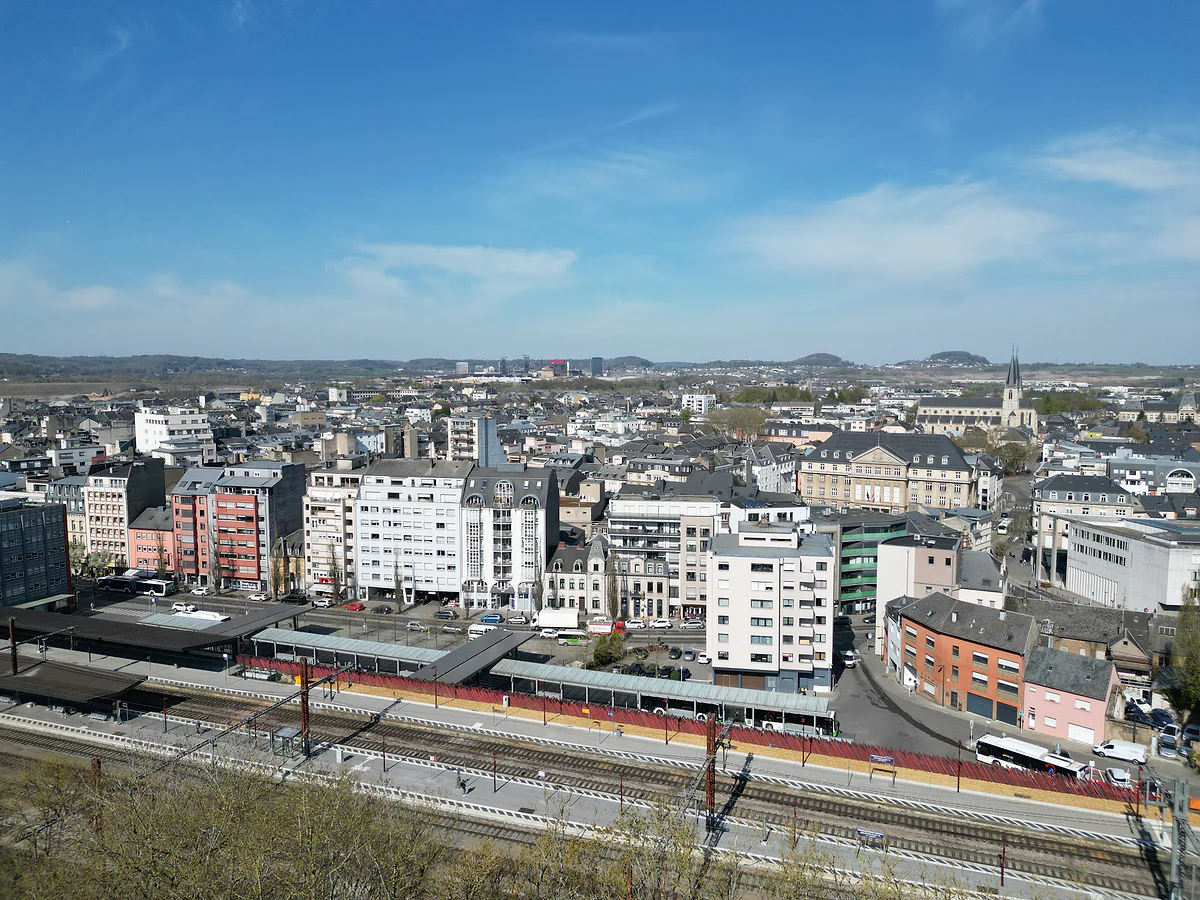
100 communes and 565 localities
Towns and villages in Luxembourg
The biggest towns in Luxembourg are the capital, Luxembourg City, with 137,678 people on 1 January 2026, then Esch-sur-Alzette (38,275), Differdange (31,421), Dudelange (22,379) and Pétange (21,290). The country has 100 communes and 565 localities, and twelve communes hold the legal title of town, including Echternach, Vianden and Wiltz.
Outside the capital, the big towns aren't the ones most worth your time. Esch-sur-Alzette is, for Belval and the Minett, but I'd give a day to Echternach, Vianden or Clervaux first, towns in name and villages in size.

Before you go
What I would keep in mind
-
01 My tip
A town by law, a village by size
Twelve communes hold the legal title of «ville», whatever their size. Vianden has it with 2,243 residents, while Hesperange, with over 17,000, doesn't. For a visitor it changes nothing.
Vianden -
02 Most beautiful
Esch-sur-Alzette, the second city
With 38,275 residents it's the biggest after the capital. It has the Belval blast furnaces, with a platform 40 m up, and the National Resistance Museum, open since 1956.
Esch-sur-Alzette -
03 Getting there
Town to town on free transport
Buses, trams and standard-class trains have been free nationwide since 1 March 2020, so hopping between towns costs nothing. Timetables for the whole country are on mobiliteit.lu.
Luxembourg free public transport
What I would book
- Places to stayBooking.com The capital as a base Free trains and buses from the central station reach every town on this list, from the Minett to the Éislek.
- Places to stayBooking.com Esch-sur-Alzette, for the south The country's second city sits in the middle of the Minett, close to Belval, Differdange and Dudelange.
Talk of towns in Luxembourg needs a change of scale. Outside the capital, no commune reaches 40,000 people, and many of those with town status would pass for large villages anywhere else. Here I rank the country’s hundred communes by size and tell you which ones deserve a visit and why.
A hundred communes, 565 localities
Luxembourg has been organised into 100 communes since 1 September 2023, spread across 12 cantons. The commune is the municipality, and each one can contain many villages. Clervaux, for instance, covers 25 localities and Wincrange 27. The national register counts 565 in total. To find which canton a commune falls in, see cantons of Luxembourg.
The biggest are in the south
The capital, Luxembourg City, had 137,678 people on 1 January 2026, more than three times the next largest. After it comes a block from the mining south, Esch-sur-Alzette with 38,275, Differdange with 31,421, Dudelange with 22,379 and Pétange with 21,290, all inside the Minett biosphere reserve. That’s the legacy of steel. The government portal notes that before steel, Luxembourg was a country people left, and that the mills then drew in Germans and Italians.
Of these, the one I’d visit is Esch-sur-Alzette, for Belval, where you can climb blast furnace A to a platform 40 m up, and for the National Resistance Museum. Differdange has the old mining village of Lasauvage within its boundaries, and Dudelange the Petite Italie district.
Once your dates are set, check which hotels are still free in Luxembourg before prices climb.
Twelve towns with the title
Twelve communes carry the legal title of «ville», or town, and it has nothing to do with size. They are Diekirch, Differdange, Dudelange, Echternach, Esch-sur-Alzette, Ettelbruck, Grevenmacher, Luxembourg, Remich, Rumelange, Vianden and Wiltz. Vianden has the title with 2,243 people, while Hesperange, nearing 17,300, doesn’t. It makes no difference to a visitor, but it explains why some villages present themselves as towns.
The capital is in a league of its own
Luxembourg City plays a different game. It covers 51.73 km², is split into 24 official districts from the Grund to the Kirchberg, and 70.8% of its residents are foreign nationals, well above the 46.6% for the country as a whole. The city publishes its own count too, 137,696 people on 31 December 2025, very close to STATEC’s. For visitors it’s the natural base and the town that deserves the most days, at least one full one.
Once your dates are set, check which hotels are still free in Luxembourg before prices climb.
The ones I’d visit
For me, the ones that most repay a trip are the small ones. Echternach, the oldest town in the country, with 6,031 people, the Basilica of St Willibrord and the start of the Mullerthal Trail. Vianden, with its castle above the Our. Clervaux, which doesn’t have town status but does have The Family of Man. And on the Moselle, Remich, with its 3 km riverside promenade.
In the north, Diekirch and Ettelbruck make up the Nordstad, as Visit Luxembourg calls it, and each has a Second World War museum, the National Museum of Military History in the first and the General Patton Memorial Museum in the second. Wiltz has its castle with brewing and Battle of the Bulge museums and a festival in the open-air theatre. The prettiest villages, scored, are in the prettiest villages in Luxembourg.
The smallest
At the other end are Saeul, in Redange canton, with 1,081 people, Putscheid (1,191), Kiischpelt (1,309), Fischbach (1,344) and Bech (1,370). They’re rural communes, almost all in the north or the Mullerthal, and some have a surprise. Saeul has what the tourist board calls the oldest oak in Luxembourg; Putscheid has Stolzembourg and its old copper mine; and Bech has the Bildchen, an oak more than 500 years old at Altrier.
If you would rather have a local show you round, book a guided tour in Luxembourg and choose by the reviews.
Getting between them
They’re all reachable by public transport, for free, and mobiliteit.lu has train and bus times nationwide. For the smallest villages of the Éislek, a car saves a lot of waiting. Within the capital, tram line T1 runs from Findel airport through the centre and the station to Stadion, 24 stops in all. My advice is not to try to tick off lots of towns in one day, however close together they look on the map. Pick a region, pick two or three places in it, and leave room for a long lunch. Luxembourg is better with two or three stops and time to walk.
A car frees you from timetables: search car hire in Luxembourg on DiscoverCars and compare companies.
So you do not pay over the odds, look at trains, coaches and flights to Luxembourg on Omio and pick the one that suits you.
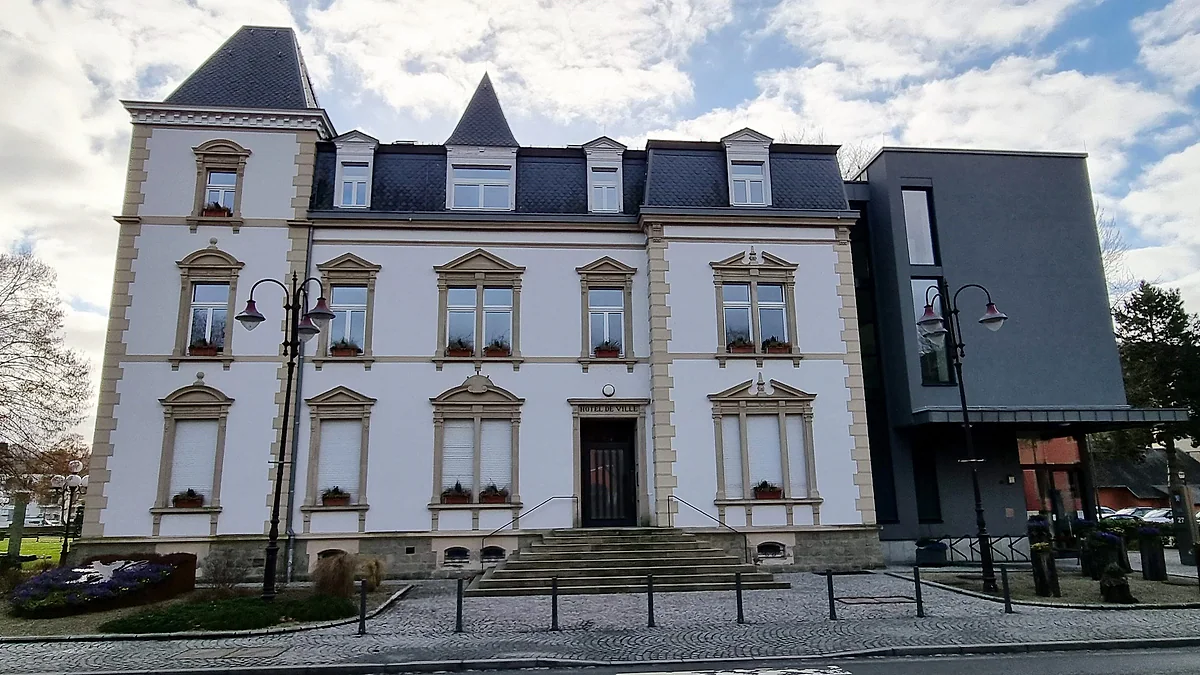
Diekirch town hall, a white mansion with slate dormers, street lamps and a modern grey extension
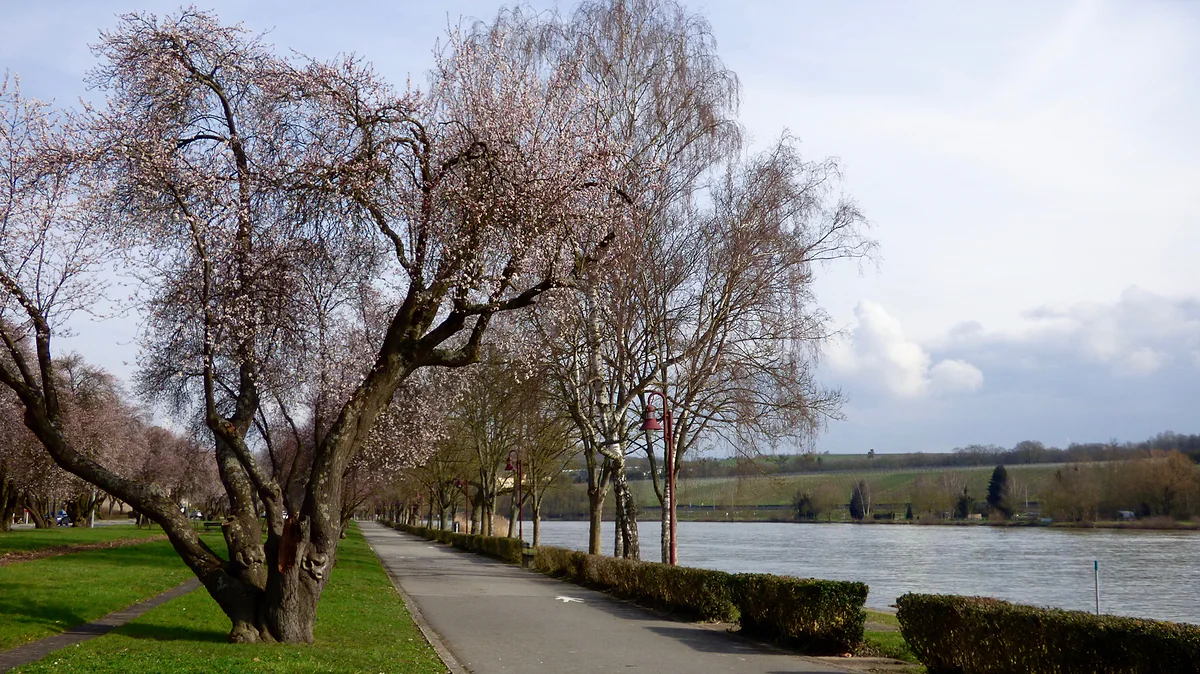
The tree-lined promenade at Remich beside the Moselle in late winter, with blossoming trees, lawns and the river
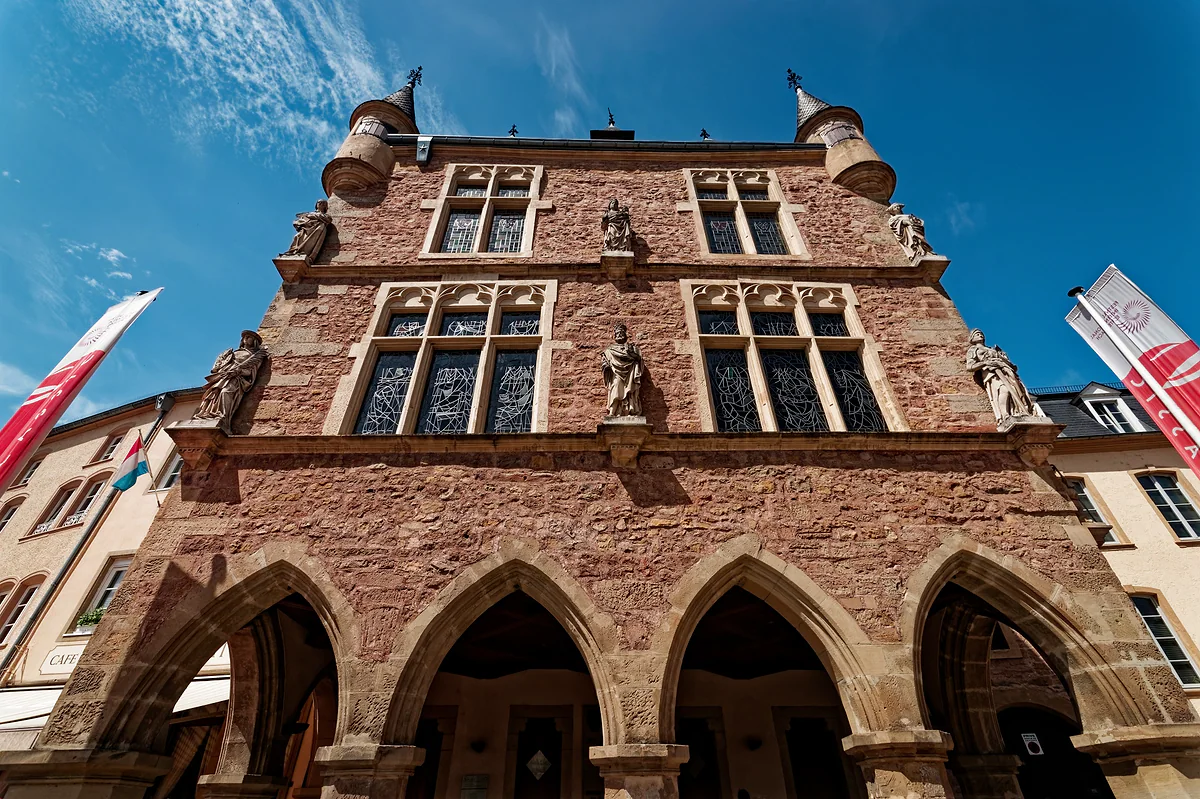
The Dënzelt, the old Gothic courthouse on Echternach's market square, with arcades, statues and turrets
The 10 most populous communes
| Commune | Population (1-1-2026) | Canton |
|---|---|---|
| Luxembourg | 137,678 | Luxembourg |
| Esch-sur-Alzette | 38,275 | Esch-sur-Alzette |
| Differdange | 31,421 | Esch-sur-Alzette |
| Dudelange | 22,379 | Esch-sur-Alzette |
| Pétange | 21,290 | Esch-sur-Alzette |
| Sanem | 19,611 | Esch-sur-Alzette |
| Hesperange | 17,264 | Luxembourg |
| Schifflange | 11,674 | Esch-sur-Alzette |
| Bettembourg | 11,651 | Esch-sur-Alzette |
| Mamer | 11,583 | Capellen |
The 12 communes with town status and what they offer
| Town | Region | For visitors |
|---|---|---|
| Luxembourg | Capital | World Heritage old town, casemates, museums |
| Esch-sur-Alzette | Minett | Belval blast furnaces, Resistance Museum |
| Differdange | Minett | Lasauvage and the Fond-de-Gras mine train |
| Dudelange | Minett | Petite Italie district and Haard reserve |
| Rumelange | Minett | National Mining Museum |
| Echternach | Mullerthal | Basilica, Roman villa, dancing procession |
| Vianden | Éislek | Castle, chairlift and Victor Hugo's house |
| Wiltz | Éislek | Castle with brewing and battle museums |
| Diekirch | Éislek | National Museum of Military History |
| Ettelbruck | Éislek | General Patton Memorial Museum |
| Remich | Moselle | Riverside promenade and Caves St Martin |
| Grevenmacher | Moselle | Bernard-Massard cellars and butterfly garden |
Population from STATEC on 1-1-2026; town status from luxembourg.public.lu; regions from Visit Luxembourg. Checked on 29-09-2026.
Test yourself
True or false?
0/3 Pick before you peek.
-
Esch-sur-Alzette is Luxembourg's second city.
See the answer
True. With 38,275 residents on 1 January 2026, according to STATEC. The capital has 137,678, more than three times as many.
-
Every commune with town status has over 10,000 people.
See the answer
False. Vianden holds town status with 2,243 residents, and Echternach with 6,031. The title is legal and historical, not about size.
-
Luxembourg has more than 500 localities.
See the answer
True. The national register of localities and streets, in its version of 28-09-2026, assigns 565 current localities to the 100 communes.
0 of 425 Luxembourg guides
Your next stamp
- Cantons
- Population
- Luxembourg City
- Where to stay
- Ville Haute
- Size
- Prettiest villages
- A Possen Museum
- American Cemetery
- Ansembourg
- Ansembourg Castles
- Asselborn
- Bascharage
- Beaufort castles
- Belval
- Belval blast furnaces
- Berg Castle
- Bernard-Massard cellars
- Bourglinster Castle
- Bourscheid Castle
- Brandenbourg
- Brandenbourg Castle
- Caves St Martin
- Christmas
- Clervaux Castle
- Echternach
- Echternach Abbey
- Ehnen
- Ehnen Wine Museum
- Esch-sur-Alzette
- Esch-sur-Sûre Castle
- European Museum Schengen
- Fond-de-Gras
- General Patton Museum
- German war cemetery
- Haff Réimech
- Hohllay
- Hollenfels Castle
- Hosingen
- Kautenbach
- Kneiff
- Koerich Castle
- Larochette Castle
- Lasauvage
- Mersch Castle
- Military History Museum
- Moersdorf
- Mondorf Domaine Thermal
- Munsbach Castle
- National Mining Museum
- Parc Merveilleux
- Park Sënnesräich
- Places to visit
- Remich
- Rindschleiden
- Schiessentümpel
- Septfontaines Castle
- Slate Museum
- Stolzembourg
- Tudor Museum
- Useldange Castle
- Valley of the Seven Castles
- Vianden
- Vianden Castle
- Wasserbillig Aquarium
- Weiswampach lakes
- Wiltz Castle
- Ahn
- Berdorf
- Bourscheid-Plage
- Butterfly garden
- Clervaux
- Differdange
- Echternach lake
- Grevenmacher
- Heringer Millen
- Hollenfels
- Luxembourg Science Center
- Meysembourg Castle
- Mullerthal
- National Day
- National Resistance Museum
- Perekop
- Remerschen
- Schoenfels Castle
- The Family of Man
- Things to do
- Upper Sûre Lake
- Vianden chairlift
- Wasserbillig
- Clervaux Abbey
- Echternach Roman villa
- Éislek
- Insenborn
- Kallektuffquell
- Machtum
- Most beautiful places
- Our Nature Park
- Pétange
- Pettingen Castle
- Schueberfouer
- Schwebsingen
- Victor Hugo House
- Waldbillig
- Dudelange
- Kuelscheier
- Lultzhausen
- Moselle Valley
- Octave
- Sanem
- Schengen
- Wellenstein
- Wiltz
- Wolfsschlucht
- Beaufort
- Bech-Kleinmacher
- Éimaischen
- Gaalgebierg
- Guttland
- Marnach
- Mondorf-les-Bains
- Putscheid
- Schifflange
- UNESCO World Heritage
- Carnival
- Consdorf
- Ellergronn
- Käerjeng
- Kayl
- Map
- Minett
- Munshausen
- Tandel
- Bech
- Buergbrennen
- Esch-sur-Sûre
- Rumelange
- Where is Luxembourg
- Is it a country?
- Lac de la Haute-Sûre (commune)
- Rosport-Mompach
- Wormeldange
- Larochette
- Mondercange
- Regions
- Bettembourg
- Bock Casemates
- Dancing procession
- Diekirch
- Fischbach
- Garnich
- Mersch
- Moselle wine route
- Ettelbruck
- Grund
- Heffingen
- Kehlen
- Lintgen
- Moselle river cruises
- Pétrusse Casemates
- Chemin de la Corniche
- Erpeldange-sur-Sûre
- Junglinster
- Kopstal
- Lorentzweiler
- Nommern
- Pfaffenthal
- Bissen
- Clausen
- Grand Ducal Palace
- Koerich
- Schieren
- Vallée de l'Ernz
- Feulen
- Kirchberg
- Languages
- Notre-Dame Cathedral
- Reisdorf
- Steinfort
- Bettendorf
- Habscht
- St Michael's Church
- Helperknapp
- Luxembourgish
- Place Guillaume II
- Name
- Place d'Armes
- History
- Place de la Constitution
- Grand Duke
- Colmar-Berg
- Flaxweiler
- Gare
- Hamm
- Kirchberg funicular
- Luxembourg fortress
- Mamer
- Mertert
- Minett Trail
- Mullerthal Trail
- Neumünster Abbey
- Parc Hosingen
- Pfaffenthal lift
- Political system
- Redange
- The Passerelle
- Wine festivals
- Winseler
- Beckerich
- Biwer
- EU institutions
- Goesdorf
- Limpertsberg
- Mudam
- Natur Musée
- Pulvermühl
- Stadtbredimus
- Troisvierges
- Wenzel walk
- Bonnevoie
- Bous-Waldbredimus
- Ell
- Flag
- Kiischpelt
- Manternach
- Philharmonie
- Vauban circuit
- Weiswampach
- Betzdorf
- Boulaide
- Dräi Eechelen Museum
- Facts
- Hollerich
- Lenningen
- Useldange
- Wincrange
- Bourscheid
- Dalheim
- Gasperich
- Public holidays
- Red Bridge
- Saeul
- Belair
- Second World War
- Vichten
- Battle of the Bulge
- Merl
- Préizerdaul
- Cents
- EU and Schengen
- Groussbus-Wal
- Entry requirements
- Neudorf
- Rambrouch
- Currency and payments
- Mertzig
- Weimerskirch
- Adolphe Bridge
- Beggen
- Escapardenne
- How to get there
- International March of Diekirch
- MNHA (National Museum)
- Rock climbing
- Sandweiler
- Bridges
- Eich
- Flights
- Golf
- Hesperange
- Lëtzebuerg City Museum
- Canoeing and kayaking
- Dommeldange
- Luxembourg airport
- Strassen
- Villa Vauban
- Airport to city centre
- Bertrange
- Casino Luxembourg
- Mühlenbach
- Swimming pools
- From Brussels
- Pétrusse Valley
- Rollingergrund
- Walferdange
- Cessange
- Day trip from Brussels
- Municipal Park
- Steinsel
- Free walking tours
- From Paris
- Niederanven
- From Frankfurt
- Schuttrange
- Sightseeing train and bus
- By train
- Contern
- By coach
- Weiler-la-Tour
- Driving
- Luxembourg in one day
- Pretzel Sunday
- Rham Plateau
- Tour de Luxembourg
- Candlemas (Liichtmëssdag)
- Car hire
- Luxembourg in two days
- Saint-Esprit Plateau
- Luxembourg in three days
- Melusina statue
- Parking
- St Nicholas Day (Kleeschen)
- Fête de la Musique
- Luxembourg in four days
- Museums in Luxembourg
- Petrol
- Place de Clairefontaine
- A week in Luxembourg
- Getting around
- Luxembourg Marathon
- Tram and Bus Museum
- Free public transport
- Parks in Luxembourg City
- Road trip
- Belgium and Luxembourg
- Tram
- Buses
- Viewpoints
- Trains
- Luxembourg station
- Cycling
- LuxembourgPass
- Prices and budget
- On a budget
- Free things to do
- Mobile and roaming
- Healthcare
- Safety
- Scams
- Tourist information
- Packing list
- Swimming lakes
- With a dog
- Markets
- Tipping
- Shopping
- What to buy
- Shopping centres
- With kids
- For couples
- Playgrounds
- Adventure parks
- Nightlife
- Castles
- Theatres and concert venues
- Leudelange
- Nature parks
- City-centre hotels
- Hiking
- Nature reserves
- Reckange-sur-Mess
- Hotels near the station
- Roeser
- Frisange
- Hotels in Kirchberg
- Airport hotels
- Dippach
- Hotels in Vianden
- Hotels in Echternach
- Hotels in Clervaux
- Hotels in Mondorf-les-Bains
- Hotels in Esch-sur-Alzette
- Hotels on the Moselle
- Mullerthal hotels
- Upper Sûre lake hotels
- Hotels in Diekirch and Ettelbruck
- Cheap hotels
- Luxury hotels
- Boutique hotels
- Spa hotels
- Family hotels
- Apartments
- Weather
- Youth hostels
- Best time to visit
- Campsites
- Holiday cottages
- In winter
- Castle hotels
- In spring
- Day trips
- In summer
- Around Luxembourg
- In autumn
- Ice skating
- Trier day trip
- Metz day trip
- Arlon day trip
- In January
- In February
- In March
- In April
- In May
- In June
- In July
- In August
- In September
- Food
- In October
- In November
- Where to eat
- In December
- Michelin restaurants
- Cheap eats
- Judd mat Gaardebounen
- Bouneschlupp
- Gromperekichelcher
- Kniddelen
- Quetschentaart
- Rieslingspaschtéit
- Events
- Wine
- Crémant
- Beer
Frequently asked questions
What are the main towns in Luxembourg?
By population, Luxembourg City (137,678 on 1 January 2026), Esch-sur-Alzette (38,275), Differdange (31,421), Dudelange (22,379) and Pétange (21,290). The last four are all in the old mining south.
How many towns are there in Luxembourg?
Twelve communes hold the legal title of town, namely Diekirch, Differdange, Dudelange, Echternach, Esch-sur-Alzette, Ettelbruck, Grevenmacher, Luxembourg, Remich, Rumelange, Vianden and Wiltz. Altogether the country has 100 communes and 565 localities.
What is the largest city in Luxembourg?
The capital, Luxembourg City, with 137,678 residents according to STATEC on 1 January 2026. That's more than three times the size of the second, Esch-sur-Alzette.
Which towns should I visit in Luxembourg?
Beyond the capital, I'd go to Echternach, Vianden and Clervaux, and to Esch-sur-Alzette if industrial history appeals. Remich is the best gateway to the Moselle.
What is the smallest commune in Luxembourg?
Saeul, in Redange canton, with 1,081 people on 1 January 2026. It's followed by Putscheid (1,191), Kiischpelt (1,309), Fischbach (1,344) and Bech (1,370).
By
Tourism graduate with a master’s in Tourism Management and Planning from the University of Málaga, who has travelled across Europe. He writes every guide from official sources and his own judgement.
Published on . Facts checked on .
Sources
Some links in this guide are affiliate links: if you book through them, the site earns a commission at no extra cost to you. Affiliate disclosure
Photos: Zinneke (CC BY-SA 4.0); GilPe (CC BY-SA 4.0); Denise Hastert (CC BY-SA 4.0); Txllxt TxllxT (CC BY-SA 4.0), via Wikimedia Commons.