Iron-mining museum in Rumelange
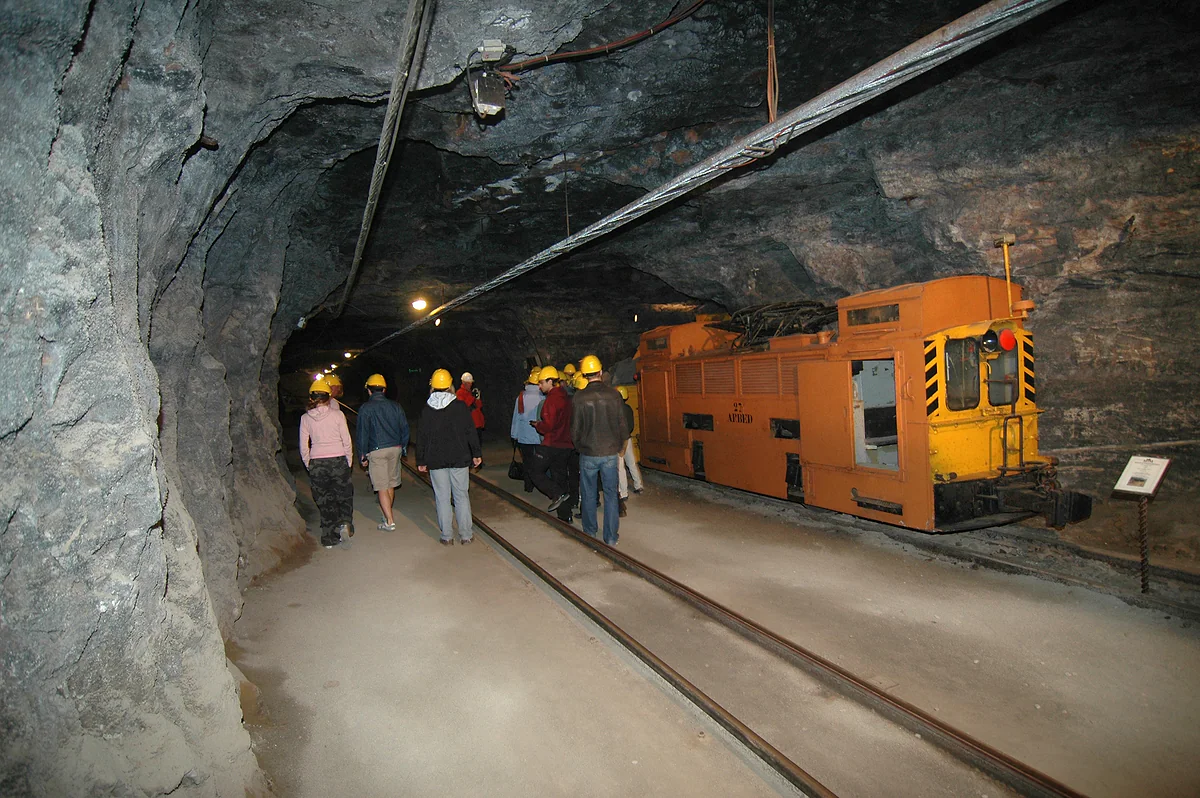
National Mining Museum, by train into the Walert mine
The National Mining Museum in Rumelange tells the story of Luxembourg's iron mining inside a real mine, the Walert, worked from 1891 to 1963. A mine train runs into the main gallery and the tour carries on on foot with a guide, more than 70 metres underground. Access is by guided tour only, best booked; adults pay €14 and LuxembourgPass holders go free.
In 30 seconds
Full read: 3 min
- The museum takes you by train into the Walert iron mine, worked from 1891 to 1963.
- Visits are guided only, at set times, and last about 90 minutes.
- Adults pay €14 booked or €15 at the desk; it's free with the LuxembourgPass.
- From October to March it opens on most Sundays, at 14:15 and 15:15.
It's the one museum in the south I wouldn't skip, but you need to book and turn up on time, because you only go underground with a guided group. Outside summer it opens almost only on Sundays, so plan your week around it. Take a warm layer and closed shoes, and save half an hour for the free exhibition in the main building.

Before you go
What I would keep in mind
-
01 To save money
Free with the LuxembourgPass
visitluxembourg says the guided mine tour with the train ride is free with the LuxembourgPass. Without a pass, booking ahead saves €1 on the desk price.
LuxembourgPass -
02 My tip
Sundays only in winter
From October to March there are tours for individual visitors on most Sundays, at 14:15 and 15:15. Check the museum's calendar and book, as places are allocated by group.
-
03 Most beautiful
A train with picture windows
The battery locomotive and carriages date from 2016 and have large windows. The museum likes to say you see the mine in a way even the miners never did.
-
04 Getting there
Pair it with the Minett Trail
The Minett Trail stage from Tétange to Rumelange is 7.79 km. Walking in for the afternoon tour makes a good full day out.
Minett Trail
Some museums describe an industry and some put you inside it. The National Mining Museum in Rumelange is the second kind. You don’t look at iron mining through a glass case here. You ride a train into a real mine, the Walert, worked from 1891 to 1963, and walk its galleries with someone who knows how to bring them to life.
Why iron matters so much here
visitluxembourg sums it up in two dates. Iron mines played a major part in the country’s economy from the 1870s to the 1990s and changed the lives of thousands of families in the south. Next door in Kayl is the national memorial to the miners, and the commune puts the number killed in accidents at more than 1,400. The museum opened in 1973, five years before the last mine in Rumelange closed, and for me that closeness gives the visit extra weight.
What the tour involves
It starts at the surface, on the carreau, the term for a mine’s pithead buildings. The mine train leaves from here. It runs first through the greenery that has grown over the old opencast pits and then into the main gallery, nearly 3 km long. The battery locomotive and carriages date from 2016 and have big windows, and the museum is fond of saying you see the mine as not even the men who worked it did.
Below ground you carry on on foot, about 1.2 km through galleries on two levels, more than 70 metres down, among the huge voids the miners left behind. Machines and tools set out where they worked trace more than a century of technology, from the 1860s to the closure of the last Lorraine mine in 1997. visitluxembourg puts the wagon ride at about 20 minutes and the whole visit at an hour and a half.
If you are staying the night, see the best hotel deals in Esch-sur-Alzette for your dates: the well-placed rooms go fast.
Do you need to book?
Yes, and it’s the step most people miss. You only go underground in a group with a museum guide and at set times. Booking also pays, as adults are charged €14 in advance and €15 at the desk. If you have the LuxembourgPass, visitluxembourg says the guided tour with the train is free.
The calendar shifts a lot with the seasons. From April to June and in September there are tours from Thursday to Sunday, and in July and August from Tuesday to Sunday, always at 14:15, 15:15 and 16:15. From October to March it’s most Sundays, at 14:15 and 15:15. The museum is closed on Mondays, on 1 November, on 4 December and from 24 December to 1 January.
For groups and children
Groups of up to 31 can visit all year by booking, from 8:30 to 12:00 and 14:00 to 18:00, with the last departure at 16:30. Adults in a group pay €12, with a minimum of €180 per group. There’s also an interactive tour for children aged 6 to 13 and a “mini-miners” tour for 3 to 5-year-olds, both booked with a group price. If you’re travelling with a school party or a group of friends, it works out better than going individually, and you get the guide to yourselves.
If you are staying the night, see the best hotel deals in Esch-sur-Alzette for your dates: the well-placed rooms go fast.
More to see on site
The old locomotive shed holds an exhibition on the history of Luxembourg’s iron mines, and around the pithead you’ll find the remains of buildings, loading bays and machines that explain the part of a mine you see above ground. visitluxembourg adds that the exhibition in the main building is free. There’s a brasserie in a former mine office 20 metres from reception, and a mining-themed playground with a small steam train on some weekends in season.
All around, the abandoned opencast pits have filled with life again, and walkers and mountain bikers now follow paths past the red walls the miners left. The museum also runs special tours, such as the carbide lamp tour or Lost Places, at €18 when booked.
Getting there and fitting it in
Trains reach Rumelange from Noertzange via Kayl and Tétange, and they cost nothing in second class, as with all public transport in Luxembourg. I’d fit it into an afternoon in the Minett, after a morning at the Belval blast furnaces or on a stretch of the Minett Trail. If you’re travelling with children, add it to your list of things to do in Luxembourg with kids, because a train that disappears underground works at any age.
So you do not lose the morning at the ticket office, browse tickets and tours in National Mining Museum on GetYourGuide.
If you would rather go at your own pace, see the car hire deals in Luxembourg: the earlier you book, the more cars are left to choose from.
Before you fix your dates, compare tickets to Luxembourg: the same journey can cost very different amounts from one day to the next.
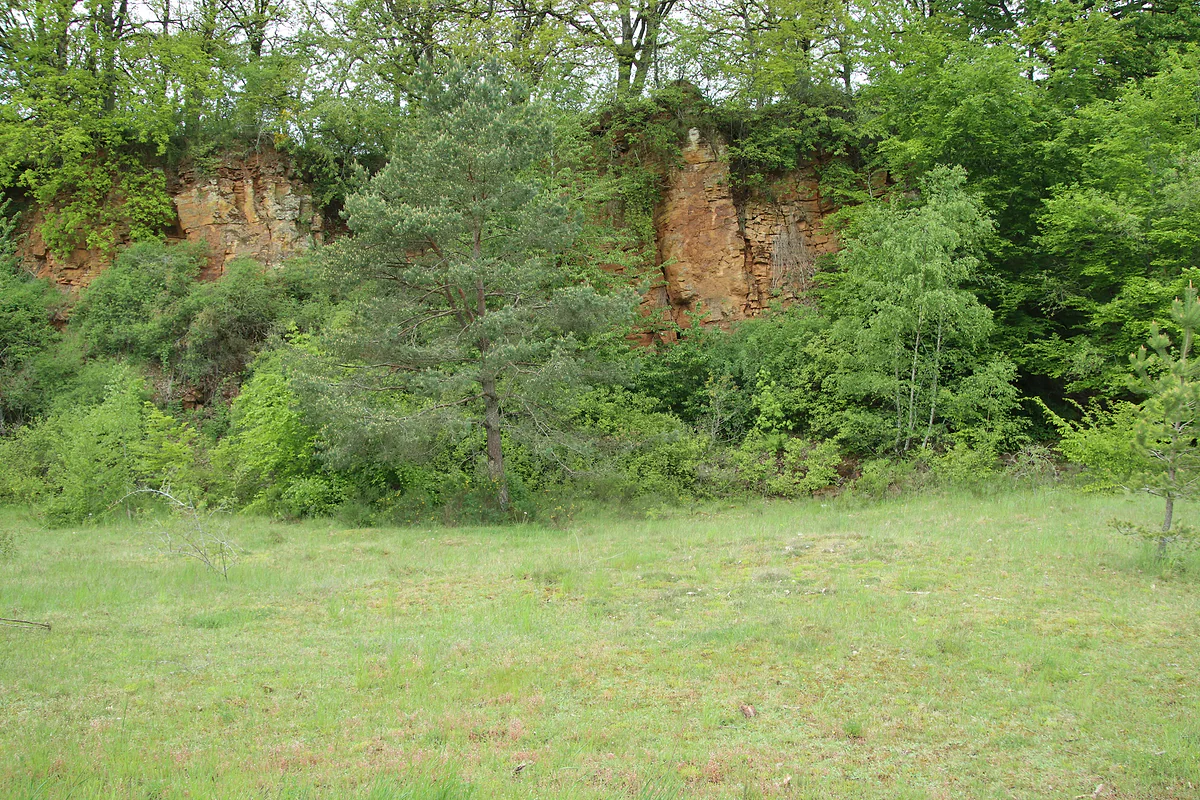
A reddish outcrop of minette ironstone in the Léiffrächen nature reserve at Kayl, among trees and grassland
Tours for individual visitors (September 2026)
| Season | Days | Mine and train tour departures |
|---|---|---|
| April to June and September | Thursday to Sunday | 14:15, 15:15 and 16:15 |
| July and August | Tuesday to Sunday | 14:15, 15:15 and 16:15 |
| October to March | Most Sundays | 14:15 and 15:15 |
| Groups of up to 31 | All year, by booking | 8:30-12:00 and 14:00-18:00 (last departure 16:30) |
mnm.lu, opening times and prices, checked on 30-09-2026. Closed Mondays, 1 November, 4 December and 24 December to 1 January inclusive.
Mine and train tour prices
| Ticket | Booked | At the desk |
|---|---|---|
| Adult | €14 | €15 |
| Student | €10 | €11 |
| Child (from age 2) | €8 | €9 |
| Train circuit only | €7 | €7 |
| Lost Places special tour | €18 | €19 |
mnm.lu, checked on 30-09-2026. Free with the LuxembourgPass according to visitluxembourg.
Test yourself
True or false?
0/3 Pick before you peek.
-
You can explore the mine on your own without a guide.
See the answer
False. The mine can only be visited in a group with a museum guide, according to visitluxembourg.
-
The Walert mine had stopped working before the museum opened.
See the answer
True. It was worked from 1891 to 1963, and the museum opened in 1973.
-
The machinery on show goes right up to the closure of the last Lorraine mine in 1997.
See the answer
True. The museum says its collection covers mining in the region from the 1860s until that closure.
- Years the Walert mine was worked
- 1891-1963
- Minimum depth of the tour
- 70 m
- Approximate length of the main gallery
- 3 km
- Year the museum opened
- 1973
Map
Where National Mining Museum is
The thick dashed line is the border with Belgium, France and Germany, and the fine ones divide the twelve cantons. The Éislek lies to the north and the Moselle to the east. Every number opens its guide.
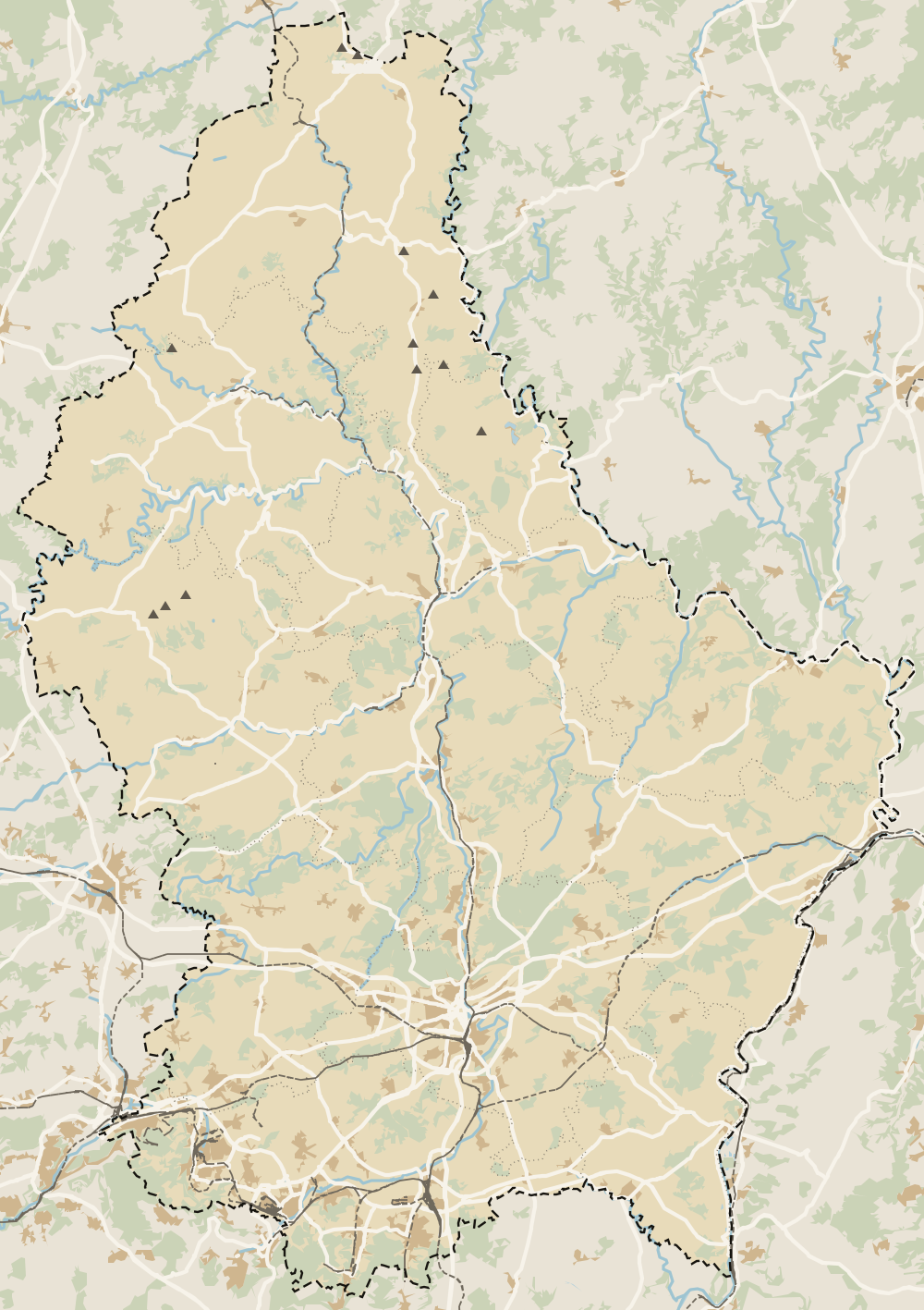
0 of 425 Luxembourg guides
Your next stamp
- Rumelange
- Slate Museum
- MNHA (National Museum)
- Natur Musée
- Minett Trail
- Museums in Luxembourg
- Minett
- A Possen Museum
- American Cemetery
- Ansembourg
- Ansembourg Castles
- Asselborn
- Bascharage
- Beaufort castles
- Belval
- Belval blast furnaces
- Berg Castle
- Bernard-Massard cellars
- Bourglinster Castle
- Bourscheid Castle
- Brandenbourg
- Brandenbourg Castle
- Caves St Martin
- Christmas
- Clervaux Castle
- Echternach
- Echternach Abbey
- Ehnen
- Ehnen Wine Museum
- Esch-sur-Alzette
- Esch-sur-Sûre Castle
- European Museum Schengen
- Fond-de-Gras
- General Patton Museum
- German war cemetery
- Haff Réimech
- Hohllay
- Hollenfels Castle
- Hosingen
- Kautenbach
- Kneiff
- Koerich Castle
- Larochette Castle
- Lasauvage
- Mersch Castle
- Military History Museum
- Moersdorf
- Mondorf Domaine Thermal
- Munsbach Castle
- Parc Merveilleux
- Park Sënnesräich
- Places to visit
- Remich
- Rindschleiden
- Schiessentümpel
- Septfontaines Castle
- Stolzembourg
- Tudor Museum
- Useldange Castle
- Valley of the Seven Castles
- Vianden
- Vianden Castle
- Ville Haute
- Wasserbillig Aquarium
- Weiswampach lakes
- Wiltz Castle
- Ahn
- Berdorf
- Bourscheid-Plage
- Butterfly garden
- Clervaux
- Differdange
- Echternach lake
- Grevenmacher
- Heringer Millen
- Hollenfels
- Luxembourg City
- Luxembourg Science Center
- Meysembourg Castle
- Mullerthal
- National Day
- National Resistance Museum
- Perekop
- Remerschen
- Schoenfels Castle
- The Family of Man
- Things to do
- Upper Sûre Lake
- Vianden chairlift
- Wasserbillig
- Clervaux Abbey
- Echternach Roman villa
- Éislek
- Insenborn
- Kallektuffquell
- Machtum
- Most beautiful places
- Our Nature Park
- Pétange
- Pettingen Castle
- Schueberfouer
- Schwebsingen
- Victor Hugo House
- Waldbillig
- Dudelange
- Kuelscheier
- Lultzhausen
- Moselle Valley
- Octave
- Prettiest villages
- Sanem
- Schengen
- Wellenstein
- Wiltz
- Wolfsschlucht
- Beaufort
- Bech-Kleinmacher
- Éimaischen
- Gaalgebierg
- Guttland
- Marnach
- Mondorf-les-Bains
- Putscheid
- Schifflange
- UNESCO World Heritage
- Carnival
- Consdorf
- Ellergronn
- Käerjeng
- Kayl
- Map
- Munshausen
- Tandel
- Bech
- Buergbrennen
- Esch-sur-Sûre
- Where is Luxembourg
- Is it a country?
- Lac de la Haute-Sûre (commune)
- Rosport-Mompach
- Wormeldange
- Larochette
- Mondercange
- Regions
- Bettembourg
- Bock Casemates
- Cantons
- Dancing procession
- Diekirch
- Fischbach
- Garnich
- Mersch
- Moselle wine route
- Ettelbruck
- Grund
- Heffingen
- Kehlen
- Lintgen
- Moselle river cruises
- Pétrusse Casemates
- Towns and villages
- Chemin de la Corniche
- Erpeldange-sur-Sûre
- Junglinster
- Kopstal
- Lorentzweiler
- Nommern
- Pfaffenthal
- Population
- Bissen
- Clausen
- Grand Ducal Palace
- Koerich
- Schieren
- Size
- Vallée de l'Ernz
- Feulen
- Kirchberg
- Languages
- Notre-Dame Cathedral
- Reisdorf
- Steinfort
- Bettendorf
- Habscht
- St Michael's Church
- Helperknapp
- Luxembourgish
- Place Guillaume II
- Name
- Place d'Armes
- History
- Place de la Constitution
- Grand Duke
- Colmar-Berg
- Flaxweiler
- Gare
- Hamm
- Kirchberg funicular
- Luxembourg fortress
- Mamer
- Mertert
- Mullerthal Trail
- Neumünster Abbey
- Parc Hosingen
- Pfaffenthal lift
- Political system
- Redange
- The Passerelle
- Wine festivals
- Winseler
- Beckerich
- Biwer
- EU institutions
- Goesdorf
- Limpertsberg
- Mudam
- Pulvermühl
- Stadtbredimus
- Troisvierges
- Wenzel walk
- Bonnevoie
- Bous-Waldbredimus
- Ell
- Flag
- Kiischpelt
- Manternach
- Philharmonie
- Vauban circuit
- Weiswampach
- Betzdorf
- Boulaide
- Dräi Eechelen Museum
- Facts
- Hollerich
- Lenningen
- Useldange
- Wincrange
- Bourscheid
- Dalheim
- Gasperich
- Public holidays
- Red Bridge
- Saeul
- Belair
- Second World War
- Vichten
- Battle of the Bulge
- Merl
- Préizerdaul
- Cents
- EU and Schengen
- Groussbus-Wal
- Entry requirements
- Neudorf
- Rambrouch
- Currency and payments
- Mertzig
- Weimerskirch
- Adolphe Bridge
- Beggen
- Escapardenne
- How to get there
- International March of Diekirch
- Rock climbing
- Sandweiler
- Bridges
- Eich
- Flights
- Golf
- Hesperange
- Lëtzebuerg City Museum
- Canoeing and kayaking
- Dommeldange
- Luxembourg airport
- Strassen
- Villa Vauban
- Airport to city centre
- Bertrange
- Casino Luxembourg
- Mühlenbach
- Swimming pools
- From Brussels
- Pétrusse Valley
- Rollingergrund
- Walferdange
- Cessange
- Day trip from Brussels
- Municipal Park
- Steinsel
- Free walking tours
- From Paris
- Niederanven
- From Frankfurt
- Schuttrange
- Sightseeing train and bus
- By train
- Contern
- By coach
- Weiler-la-Tour
- Driving
- Luxembourg in one day
- Pretzel Sunday
- Rham Plateau
- Tour de Luxembourg
- Candlemas (Liichtmëssdag)
- Car hire
- Luxembourg in two days
- Saint-Esprit Plateau
- Luxembourg in three days
- Melusina statue
- Parking
- St Nicholas Day (Kleeschen)
- Fête de la Musique
- Luxembourg in four days
- Petrol
- Place de Clairefontaine
- A week in Luxembourg
- Getting around
- Luxembourg Marathon
- Tram and Bus Museum
- Free public transport
- Parks in Luxembourg City
- Road trip
- Belgium and Luxembourg
- Tram
- Buses
- Viewpoints
- Trains
- Luxembourg station
- Cycling
- LuxembourgPass
- Prices and budget
- On a budget
- Free things to do
- Mobile and roaming
- Healthcare
- Safety
- Scams
- Tourist information
- Packing list
- Swimming lakes
- With a dog
- Markets
- Tipping
- Shopping
- What to buy
- Shopping centres
- With kids
- For couples
- Playgrounds
- Adventure parks
- Nightlife
- Castles
- Theatres and concert venues
- Leudelange
- Nature parks
- Where to stay
- City-centre hotels
- Hiking
- Nature reserves
- Reckange-sur-Mess
- Hotels near the station
- Roeser
- Frisange
- Hotels in Kirchberg
- Airport hotels
- Dippach
- Hotels in Vianden
- Hotels in Echternach
- Hotels in Clervaux
- Hotels in Mondorf-les-Bains
- Hotels in Esch-sur-Alzette
- Hotels on the Moselle
- Mullerthal hotels
- Upper Sûre lake hotels
- Hotels in Diekirch and Ettelbruck
- Cheap hotels
- Luxury hotels
- Boutique hotels
- Spa hotels
- Family hotels
- Apartments
- Weather
- Youth hostels
- Best time to visit
- Campsites
- Holiday cottages
- In winter
- Castle hotels
- In spring
- Day trips
- In summer
- Around Luxembourg
- In autumn
- Ice skating
- Trier day trip
- Metz day trip
- Arlon day trip
- In January
- In February
- In March
- In April
- In May
- In June
- In July
- In August
- In September
- Food
- In October
- In November
- Where to eat
- In December
- Michelin restaurants
- Cheap eats
- Judd mat Gaardebounen
- Bouneschlupp
- Gromperekichelcher
- Kniddelen
- Quetschentaart
- Rieslingspaschtéit
- Events
- Wine
- Crémant
- Beer
Frequently asked questions
How much does the National Mining Museum in Rumelange cost?
The guided mine and train tour costs €14 for adults if booked and €15 paid at the desk. Students pay €10 or €11 and children from age 2 pay €8 or €9. It's free with the LuxembourgPass.
How long does the mine tour take?
According to visitluxembourg, the wagon ride takes about 20 minutes and the whole visit about an hour and a half, including a 1.2 km walk through the galleries.
Do I need to book?
In practice, yes. You only go into the mine with a museum guide at set times, and booking is also €1 cheaper than paying on the day.
Is the mining museum open in winter?
From October to March it opens for individual visitors on most Sundays, with tours at 14:15 and 15:15. It closes on 1 November, 4 December and from 24 December to 1 January.
How deep does the tour go?
The museum says the tour takes you through the Walert mine's galleries on two levels, more than 70 metres below ground.
Is it accessible for visitors with reduced mobility?
visitluxembourg mentions a disabled parking space, adapted toilets and that most paths in the mine are easy going. For specific needs, it's best to ask the museum when booking.
By
Tourism graduate with a master’s in Tourism Management and Planning from the University of Málaga, who has travelled across Europe. He writes every guide from official sources and his own judgement.
Published on . Facts checked on .
Sources
Some links in this guide are affiliate links: if you book through them, the site earns a commission at no extra cost to you. Affiliate disclosure
Photos: Schnékert (Public domain); Paul Braun (CC0), via Wikimedia Commons.