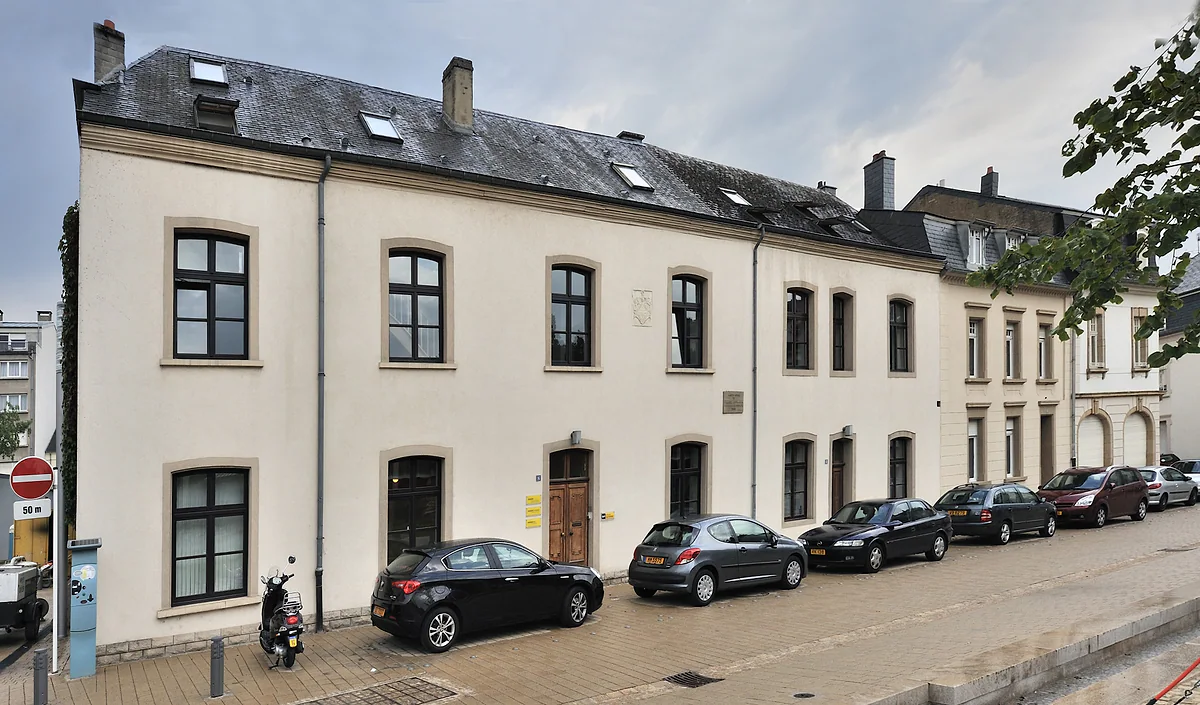
Bonnevoie-Nord / Verlorenkost and Bonnevoie-Sud
Bonnevoie, the capital's most populous and most mixed district
Bonnevoie covers two official districts of Luxembourg City east of the Gare. Bonnevoie-Sud, with 13,345 residents, is the capital's most populous district, and Bonnevoie-Nord / Verlorenkost has 4,680 (31-12-2023). It has the Rotondes, an arts centre in two old locomotive sheds, Kaltreis Park and the Lycée Bouneweg tram stop.
Bonnevoie is where I'd go to see how the capital actually lives, well away from the monuments. A drink on the Rotondes terrace, a walk round Kaltreis Park and dinner at one of its many international places would do me nicely.

Before you go
What I would keep in mind
-
01 Most beautiful
The Rotondes, arts in a steam-age engine shed
Two former locomotive sheds from the age of steam, built from 1877 and listed as a national monument, now host theatre, gigs, exhibitions and workshops, with a café and terrace that stays open outside performances.
-
02 Getting there
Tram to Lycée Bouneweg
Tram T1 reached the Lycée Bouneweg stop on 11 September 2022 and now continues to the Cloche d'Or. Northbound it takes you to the station, Hamilius and Kirchberg, all for free.
Luxembourg tram -
03 My tip
Kaltreis Park, open day and night
Over 33,000 m² with a playground, outdoor gym, a big dog run, ponds, community gardens, a drinking fountain and toilets. The city keeps it open round the clock.
-
04 To save money
Simple, varied food
The tourist office highlights the cultural mix of Bonnevoie-Sud, visible in its restaurants, cafés and corner shops. It's where I'd look for an unfussy meal away from the old town's terraces.
where to eat in Luxembourg
If the Ville Haute is postcard Luxembourg, Bonnevoie is everyday Luxembourg. It’s the capital’s most populous district, tucked against the station on its eastern side, with cafés serving food from half the world, a big park and an arts venue inside two locomotive sheds. The city divides it into two official districts; I’ve kept them together, because to a visitor they’re one place.
A convent, the railway and an explosion
Its name and origins go back to a convent of Cistercian nuns founded in the 12th century and dissolved at the end of the 18th, according to the city. The big change came with the railway after 1859, which turned fields into streets. The first parish church, of 1888, was destroyed by Second World War bombing, and the present Marie Reine de la Paix went up after the war, opposite a school of 1902-1905.
The northern part, Verlorenkost, has a more military past. Fort Verlorenkost stood here in the 19th century, and in 1807 a gunpowder explosion rocked the area and much of the city. In the early 20th century it filled with housing for a fast-growing population.
The Rotondes, the one I wouldn’t skip
The Rotondes are two old steam-era locomotive sheds, built from 1877 for engine maintenance and now a listed national monument. They stage theatre, music, exhibitions, community projects and workshops, and the café-terrace runs even when nothing’s on. Out front, Place des Rotondes, about 3,500 m², hosts open-air concerts and events. Its programme and that of other halls is in theatres and concert venues in Luxembourg.
I like them as the best example of how the capital has recycled its industrial past, much like the old brewery at Clausen. They’re a stone’s throw from the station too, so they work even on a tight schedule.
Inside, the tourist office breaks it down building by building. These are two circular halls, each 52 metres across. After the war one served as a store and the other as a CFL bus workshop, and in 2007 they were the headquarters of Luxembourg’s year as European Capital of Culture, with shows such as Sophie Calle’s Douleur exquise. Since reopening in 2015, Rotonde 1 has held the Grande Salle for performances, the Galerie and a multi-purpose hall, the Plateforme, while Rotonde 2 houses a free-standing structure with the café, the Buvette, and the Klub concert venue. The programme is on rotondes.lu.
To sleep close to everything, search places to stay in Luxembourg on Booking.com and filter by area before price.
What else is there?
Kaltreis Park is the area’s green lung, over 33,000 m² with ponds, community gardens, a playground, outdoor gym and dog run, open day and night. Its playground has a space theme, starting with the slide, and adds water play, a zip line and buggy-friendly paths, according to the tourist office, with easy parking alongside. With small children on a hot day, I’d pick it over anything in the centre. Place du Parc, 1,600 m², has a bandstand, a boules pitch and the Cape Verde monument. Bonnevoie cemetery, one of the oldest in the capital, is a quiet corner with mature trees.
From the end of Rue Anatole France, the allotments mark the start of the paths down into the Alzette valley, a walk almost no tourist takes. Football fans will find the Achille Hammerel stadium, home of Racing FC Union Luxembourg, with room for 5,000.
A place to eat and linger
The tourist office stresses the cultural mix of Bonnevoie-Sud, obvious in its restaurants, cafés and small shops, and the Théâtre des Casemates has a regular programme. It isn’t pretty on every corner, but it’s where you eat varied, neighbourhood food without the old-town backdrop. More ideas in where to eat in Luxembourg.
To sleep close to everything, search places to stay in Luxembourg on Expedia and filter by area before price.
Getting there
It’s a few minutes’ walk from the central station. The Luxembourg tram has had its Lycée Bouneweg stop here since 11 September 2022, running south to the Cloche d’Or and north to the station, Hamilius and Kirchberg. Like all public transport in the country, it’s free.
How I’d do it
I’d set aside an afternoon. Wander over from the Gare district, look in at the Rotondes, cross to Kaltreis Park and finish with dinner in Bonnevoie-Sud. No guidebook monuments, but you’ll see the city where most of its people actually live.
If you are short on time, see the best tours in Luxembourg and pick one that fits your day.
Where the bus does not go, a car does: compare car hire in Luxembourg before you arrive rather than at the desk.
If you still need a way in, check the best ticket deals to Luxembourg from where you are.
The two Bonnevoies
| Official district | Residents (31-12-2023) | Area | What's there |
|---|---|---|---|
| Bonnevoie-Nord / Verlorenkost | 4,680 | 67.76 ha | Rotondes, Achille Hammerel stadium, Fort Verlorenkost |
| Bonnevoie-Sud | 13,345 | 239.21 ha | Kaltreis Park, Place du Parc, Marie Reine de la Paix church, swimming pool |
Sources: City of Luxembourg (both district pages) and LCTO, checked on 29-09-2026. The combined total is my own sum.
Test yourself
True or false?
0/3 Pick before you peek.
-
Bonnevoie-Sud is the capital's most populous district.
See the answer
True. It had 13,345 residents on 31-12-2023, more than any of the other 24 official districts, according to the City of Luxembourg.
-
The Rotondes were built as a theatre.
See the answer
False. They were steam locomotive sheds, built from 1877 for engine maintenance. The arts use came much later.
-
Bonnevoie grew out of a convent.
See the answer
True. The city traces it back to a convent of Cistercian nuns founded in the 12th century and dissolved at the end of the 18th.
Map
Where Bonnevoie is
The thick dashed line is the border with Belgium, France and Germany, and the fine ones divide the twelve cantons. The Éislek lies to the north and the Moselle to the east. Every number opens its guide.
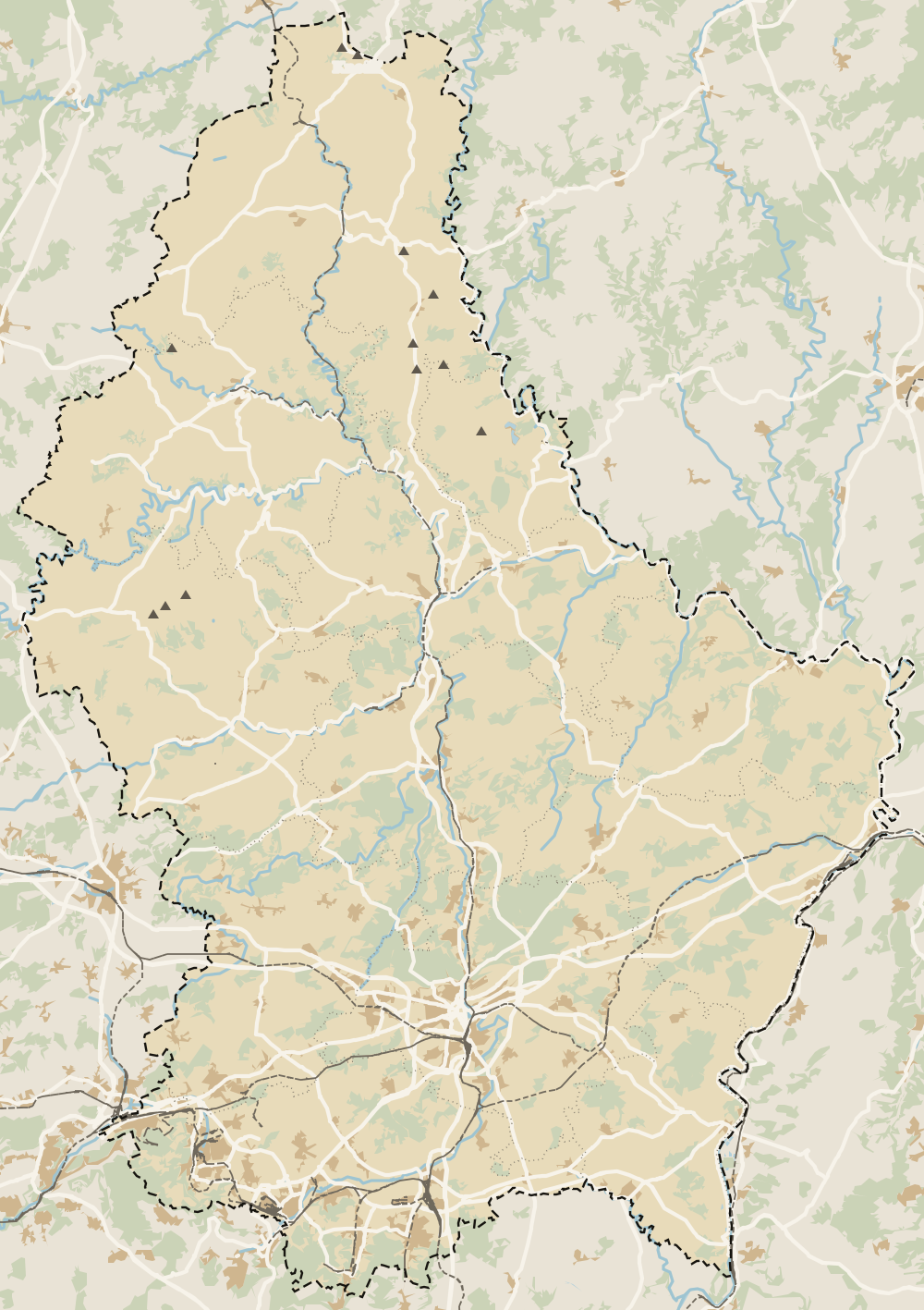 1Ville Haute 2Luxembourg City 3Grund 4Pfaffenthal 5Clausen 6Kirchberg 7Gare 8Hamm 9Luxembourg fortress 10Limpertsberg 11Pulvermühl 12Bonnevoie 13Hollerich 14Gasperich 15Belair 16Merl 17Cents 18Neudorf 19Weimerskirch 20Beggen 21Eich 22Dommeldange 23Mühlenbach 24Pétrusse Valley 25Rollingergrund 26Cessange 27Rham Plateau 28Tram and Bus Museum
 Map data © OpenStreetMap contributors (ODbL)
- 1Ville HauteA district of Luxembourg City
- 2Luxembourg CityCapital of the Grand Duchy
- 3GrundLuxembourg City district on the Alzette
- 4PfaffenthalLuxembourg City district in the Alzette valley
- 5ClausenLuxembourg City district in the Alzette valley
- 6KirchbergLuxembourg City's European and business district
- 7GareLuxembourg City district south of the Pétrusse
- 8HammDistrict on the eastern side of Luxembourg City
- 9Luxembourg fortressUNESCO World Heritage since 1994
- 10LimpertsbergLuxembourg City district north of the Ville Haute
- 11PulvermühlLuxembourg City's smallest district
- 12BonnevoieBonnevoie-Nord / Verlorenkost and Bonnevoie-Sud
- 13HollerichLuxembourg City district west of the Gare
- 14GasperichDistrict in the south of Luxembourg City
- 15BelairResidential district west of the Ville Haute
- 16MerlResidential district on the capital's west side
- 17CentsResidential district east of the city centre
- 18NeudorfAlzette valley district below Kirchberg
- 19WeimerskirchNorthern district on the Alzette valley slope
- 20BeggenDistrict at the northern tip of the capital
- 21EichNorthern district in the Alzette valley
- 22DommeldangeNorthern district with a village centre
- 23MühlenbachNorthern district on the edge of the Bambësch
- 24Pétrusse ValleyPark and walk between the old town and the Gare
- 25RollingergrundNorth-west district, including Belair-Nord
- 26CessangeSouth-west district of the capital
- 27Rham PlateauLuxembourg City fortifications
- 28Tram and Bus MuseumMuseum in Hollerich
0 of 425 Luxembourg guides
Your next stamp
- Gare
- Theatres and concert venues
- Ville Haute
- Hollerich
- Gasperich
- Weimerskirch
- Beggen
- Hotels near the station
- A Possen Museum
- American Cemetery
- Ansembourg
- Ansembourg Castles
- Asselborn
- Bascharage
- Beaufort castles
- Belval
- Belval blast furnaces
- Berg Castle
- Bernard-Massard cellars
- Bourglinster Castle
- Bourscheid Castle
- Brandenbourg
- Brandenbourg Castle
- Caves St Martin
- Christmas
- Clervaux Castle
- Echternach
- Echternach Abbey
- Ehnen
- Ehnen Wine Museum
- Esch-sur-Alzette
- Esch-sur-Sûre Castle
- European Museum Schengen
- Fond-de-Gras
- General Patton Museum
- German war cemetery
- Haff Réimech
- Hohllay
- Hollenfels Castle
- Hosingen
- Kautenbach
- Kneiff
- Koerich Castle
- Larochette Castle
- Lasauvage
- Mersch Castle
- Military History Museum
- Moersdorf
- Mondorf Domaine Thermal
- Munsbach Castle
- National Mining Museum
- Parc Merveilleux
- Park Sënnesräich
- Places to visit
- Remich
- Rindschleiden
- Schiessentümpel
- Septfontaines Castle
- Slate Museum
- Stolzembourg
- Tudor Museum
- Useldange Castle
- Valley of the Seven Castles
- Vianden
- Vianden Castle
- Wasserbillig Aquarium
- Weiswampach lakes
- Wiltz Castle
- Ahn
- Berdorf
- Bourscheid-Plage
- Butterfly garden
- Clervaux
- Differdange
- Echternach lake
- Grevenmacher
- Heringer Millen
- Hollenfels
- Luxembourg City
- Luxembourg Science Center
- Meysembourg Castle
- Mullerthal
- National Day
- National Resistance Museum
- Perekop
- Remerschen
- Schoenfels Castle
- The Family of Man
- Things to do
- Upper Sûre Lake
- Vianden chairlift
- Wasserbillig
- Clervaux Abbey
- Echternach Roman villa
- Éislek
- Insenborn
- Kallektuffquell
- Machtum
- Most beautiful places
- Our Nature Park
- Pétange
- Pettingen Castle
- Schueberfouer
- Schwebsingen
- Victor Hugo House
- Waldbillig
- Dudelange
- Kuelscheier
- Lultzhausen
- Moselle Valley
- Octave
- Prettiest villages
- Sanem
- Schengen
- Wellenstein
- Wiltz
- Wolfsschlucht
- Beaufort
- Bech-Kleinmacher
- Éimaischen
- Gaalgebierg
- Guttland
- Marnach
- Mondorf-les-Bains
- Putscheid
- Schifflange
- UNESCO World Heritage
- Carnival
- Consdorf
- Ellergronn
- Käerjeng
- Kayl
- Map
- Minett
- Munshausen
- Tandel
- Bech
- Buergbrennen
- Esch-sur-Sûre
- Rumelange
- Where is Luxembourg
- Is it a country?
- Lac de la Haute-Sûre (commune)
- Rosport-Mompach
- Wormeldange
- Larochette
- Mondercange
- Regions
- Bettembourg
- Bock Casemates
- Cantons
- Dancing procession
- Diekirch
- Fischbach
- Garnich
- Mersch
- Moselle wine route
- Ettelbruck
- Grund
- Heffingen
- Kehlen
- Lintgen
- Moselle river cruises
- Pétrusse Casemates
- Towns and villages
- Chemin de la Corniche
- Erpeldange-sur-Sûre
- Junglinster
- Kopstal
- Lorentzweiler
- Nommern
- Pfaffenthal
- Population
- Bissen
- Clausen
- Grand Ducal Palace
- Koerich
- Schieren
- Size
- Vallée de l'Ernz
- Feulen
- Kirchberg
- Languages
- Notre-Dame Cathedral
- Reisdorf
- Steinfort
- Bettendorf
- Habscht
- St Michael's Church
- Helperknapp
- Luxembourgish
- Place Guillaume II
- Name
- Place d'Armes
- History
- Place de la Constitution
- Grand Duke
- Colmar-Berg
- Flaxweiler
- Hamm
- Kirchberg funicular
- Luxembourg fortress
- Mamer
- Mertert
- Minett Trail
- Mullerthal Trail
- Neumünster Abbey
- Parc Hosingen
- Pfaffenthal lift
- Political system
- Redange
- The Passerelle
- Wine festivals
- Winseler
- Beckerich
- Biwer
- EU institutions
- Goesdorf
- Limpertsberg
- Mudam
- Natur Musée
- Pulvermühl
- Stadtbredimus
- Troisvierges
- Wenzel walk
- Bous-Waldbredimus
- Ell
- Flag
- Kiischpelt
- Manternach
- Philharmonie
- Vauban circuit
- Weiswampach
- Betzdorf
- Boulaide
- Dräi Eechelen Museum
- Facts
- Lenningen
- Useldange
- Wincrange
- Bourscheid
- Dalheim
- Public holidays
- Red Bridge
- Saeul
- Belair
- Second World War
- Vichten
- Battle of the Bulge
- Merl
- Préizerdaul
- Cents
- EU and Schengen
- Groussbus-Wal
- Entry requirements
- Neudorf
- Rambrouch
- Currency and payments
- Mertzig
- Adolphe Bridge
- Escapardenne
- How to get there
- International March of Diekirch
- MNHA (National Museum)
- Rock climbing
- Sandweiler
- Bridges
- Eich
- Flights
- Golf
- Hesperange
- Lëtzebuerg City Museum
- Canoeing and kayaking
- Dommeldange
- Luxembourg airport
- Strassen
- Villa Vauban
- Airport to city centre
- Bertrange
- Casino Luxembourg
- Mühlenbach
- Swimming pools
- From Brussels
- Pétrusse Valley
- Rollingergrund
- Walferdange
- Cessange
- Day trip from Brussels
- Municipal Park
- Steinsel
- Free walking tours
- From Paris
- Niederanven
- From Frankfurt
- Schuttrange
- Sightseeing train and bus
- By train
- Contern
- By coach
- Weiler-la-Tour
- Driving
- Luxembourg in one day
- Pretzel Sunday
- Rham Plateau
- Tour de Luxembourg
- Candlemas (Liichtmëssdag)
- Car hire
- Luxembourg in two days
- Saint-Esprit Plateau
- Luxembourg in three days
- Melusina statue
- Parking
- St Nicholas Day (Kleeschen)
- Fête de la Musique
- Luxembourg in four days
- Museums in Luxembourg
- Petrol
- Place de Clairefontaine
- A week in Luxembourg
- Getting around
- Luxembourg Marathon
- Tram and Bus Museum
- Free public transport
- Parks in Luxembourg City
- Road trip
- Belgium and Luxembourg
- Tram
- Buses
- Viewpoints
- Trains
- Luxembourg station
- Cycling
- LuxembourgPass
- Prices and budget
- On a budget
- Free things to do
- Mobile and roaming
- Healthcare
- Safety
- Scams
- Tourist information
- Packing list
- Swimming lakes
- With a dog
- Markets
- Tipping
- Shopping
- What to buy
- Shopping centres
- With kids
- For couples
- Playgrounds
- Adventure parks
- Nightlife
- Castles
- Leudelange
- Nature parks
- Where to stay
- City-centre hotels
- Hiking
- Nature reserves
- Reckange-sur-Mess
- Roeser
- Frisange
- Hotels in Kirchberg
- Airport hotels
- Dippach
- Hotels in Vianden
- Hotels in Echternach
- Hotels in Clervaux
- Hotels in Mondorf-les-Bains
- Hotels in Esch-sur-Alzette
- Hotels on the Moselle
- Mullerthal hotels
- Upper Sûre lake hotels
- Hotels in Diekirch and Ettelbruck
- Cheap hotels
- Luxury hotels
- Boutique hotels
- Spa hotels
- Family hotels
- Apartments
- Weather
- Youth hostels
- Best time to visit
- Campsites
- Holiday cottages
- In winter
- Castle hotels
- In spring
- Day trips
- In summer
- Around Luxembourg
- In autumn
- Ice skating
- Trier day trip
- Metz day trip
- Arlon day trip
- In January
- In February
- In March
- In April
- In May
- In June
- In July
- In August
- In September
- Food
- In October
- In November
- Where to eat
- In December
- Michelin restaurants
- Cheap eats
- Judd mat Gaardebounen
- Bouneschlupp
- Gromperekichelcher
- Kniddelen
- Quetschentaart
- Rieslingspaschtéit
- Events
- Wine
- Crémant
- Beer
Frequently asked questions
What is Bonnevoie in Luxembourg?
An area east of the Gare that the city splits into two official districts, Bonnevoie-Nord / Verlorenkost and Bonnevoie-Sud. Together they had 18,025 residents on 31-12-2023, and Bonnevoie-Sud is the capital's most populous district.
What are the Rotondes in Luxembourg?
An arts centre in two former steam locomotive sheds in Bonnevoie, built from 1877 and listed as a national monument. It programmes theatre, music, exhibitions and workshops and has a café with a terrace.
Is Bonnevoie a good place to stay?
It's residential, next to the station, on the tram line and full of neighbourhood life. I'd consider it if you're arriving by train and want something more local than the centre.
How do I get to Bonnevoie?
On foot from the central station in a few minutes, or on tram T1 to Lycée Bouneweg. Public transport is free throughout Luxembourg.
What is there to see in Bonnevoie?
The Rotondes and their square, Kaltreis Park, Place du Parc with its bandstand and Cape Verde monument, the Marie Reine de la Paix church and the paths down to the Alzette valley.
By
Tourism graduate with a master’s in Tourism Management and Planning from the University of Málaga, who has travelled across Europe. He writes every guide from official sources and his own judgement.
Published on . Updated on . Facts checked on .
Sources
Some links in this guide are affiliate links: if you book through them, the site earns a commission at no extra cost to you. Affiliate disclosure
Photos: Cayambe (CC BY-SA 3.0), via Wikimedia Commons.