Luxembourg sweets
Quetschentaart, the plum tart that signals autumn in Luxembourg
Quetschentaart is an open plum tart, quetschen being Luxembourgish for the plums, on a shortcrust base. It's a late summer and autumn treat, made when the plums ripen, and eaten with an afternoon coffee. The recipe published by Luxembourg's youth hostels arranges the plums in circles and bakes the tart for about 40 to 45 minutes.
In 30 seconds
Full read: 3 min
- Quetschentaart is an open plum tart on a shortcrust base.
- It's a late summer and autumn bake, made when the plums ripen.
- It bakes for about 40 to 45 minutes with the plums arranged in circles.
- It's eaten with coffee, or with a glass of crémant de Luxembourg.
I'd look for it between late August and October in a patisserie, with a coffee mid-afternoon, which is when it makes sense. Out of season I wouldn't bother, because a fruit tart lives or dies by its fruit.

Before you go
What I would keep in mind
-
01 Most beautiful
The tart that turns the season
Luxembourg's youth hostels call it a symbol of summer ending and autumn beginning, baked when the plums ripen in the country's orchards.
Luxembourg food -
02 Worth the splurge
With a glass of crémant
Besides coffee, the hostels' recipe suggests crémant de Luxembourg or a Moselle Auxerrois alongside it. A pairing I'd happily try.
crémant de Luxembourg -
03 My tip
Order it in season
It's an autumn pudding. In August the official portal is already writing about plums and mirabelles in the country's orchards and suggests turning them into tarts.
-
04 Getting there
A land of patisseries
The tourist board devotes a page to the country's patisseries, from Namur, open since 1863, to Oberweis, founded in 1964. Good places to hunt for seasonal fruit tarts.
what to buy in Luxembourg
What I would book
Every cuisine has a bake that marks the turn of the season, and in Luxembourg it’s this one. Quetschentaart is a plum tart with no decoration beyond the fruit, and I like it for exactly that reason, because it forces you to eat it at the right time. One important note first. There’s no official page on it from the government or the tourist board, so I’ll tell you what the country’s youth hostels say and what I’d do, making clear which is which.
What is Quetschentaart?
Luxembourg’s youth hostels, which publish a series of national recipes on their blog, present it as the plum tart that is the pride of the country’s patisseries. Quetschen is the local word for the plums, and the tart is open, with a shortcrust base and the fruit halved and arranged in concentric circles, cut side up.
According to the same source, it’s a symbol of summer ending and autumn beginning. When the plums start to ripen in the orchards, it’s time to bake one, and it’s still a fixture at village fêtes and family gatherings.
The fruit calendar
Here I do have an official source. The government portal runs a summer series on seasonal produce, and its August page features orchards in Steinsel where a grower produces cherries, plums, pears and mirabelles on about 6.5 hectares. It explains that mirabelles are picked over barely four weeks, from mid-August to early September, and suggests turning mirabelles and plums into compote or tarts to stretch the season. So my advice is simple, look for Quetschentaart from late August to October.
To sleep close to everything, search places to stay in Luxembourg on Booking.com and filter by area before price.
How it’s made
The hostels’ recipe starts with a shortcrust of flour, sugar, salt, diced cold butter and an egg, chilled for half an hour. The plums are washed, halved and stoned, then tossed with sugar, cornflour and cinnamon if you like it. Roll out the pastry into a buttered tin, arrange the plums in circles and bake for 40 to 45 minutes, until the pastry is golden and the fruit soft.
The hostels admit that every family has its own version. Some want it crisper, some softer, with or without cinnamon, sweeter or less so, arranged neatly or piled on rustic-style. To me that’s the best sign of a bake that’s still alive.
Baking it yourself is straightforward, and few dishes from the Grand Duchy travel to a British kitchen so easily, since plums are in the shops at exactly the same time of year. My only advice is to pack the halves tightly, because they shrink as they bake, and to let the tart cool a little before cutting so the juices set. Serve it warm with a spoonful of cream, or cold the next day with a strong coffee, and you’ve brought a Luxembourg autumn afternoon home.
What to have with it
Coffee, mid-afternoon, which is how the hostels suggest it and how I’d have it. If you’d rather avoid caffeine, they propose black tea or a red berry infusion. For something more festive, a glass of crémant de Luxembourg, whose bubbles balance the sweetness, or a Moselle Auxerrois. I like that last idea a lot, especially if you’re passing through wine country during the harvest.
To sleep close to everything, search places to stay in Luxembourg on Expedia and filter by area before price.
The rest of Luxembourg’s sweet calendar
Quetschentaart is the autumn bake, but it isn’t the only one that follows the seasons. At carnival there are Verwurrelter, knots of fried dough dusted with icing sugar, and Nonnefäscht, little fritters, according to the official portal. The tourist board also mentions seasonal treats such as the Boxemännchen and the Bretzel, and Bamkuch, the tree cake built up layer by layer as it turns over a flame, which the Namur patisserie bakes twice a week. Line up a few of those seasons and you’ve got a sweet tour of the Luxembourg year.
Where to look for it
In patisseries and tea rooms, in season. I can’t give you names of places that sell it, because no official source lists them and inventing a shop would help nobody. The tourist board devotes a whole page to the country’s patisseries, from Namur, open since 1863, to Oberweis, founded in 1964, and that’s where I’d start browsing shop windows on an autumn afternoon. The other sweets and dishes are in Luxembourg food, and what’s worth taking home is in what to buy in Luxembourg.
If you are short on time, see the best tours in Luxembourg and pick one that fits your day.
Where the bus does not go, a car does: compare car hire in Luxembourg before you arrive rather than at the desk.
If you still need a way in, check the best ticket deals to Luxembourg from where you are.
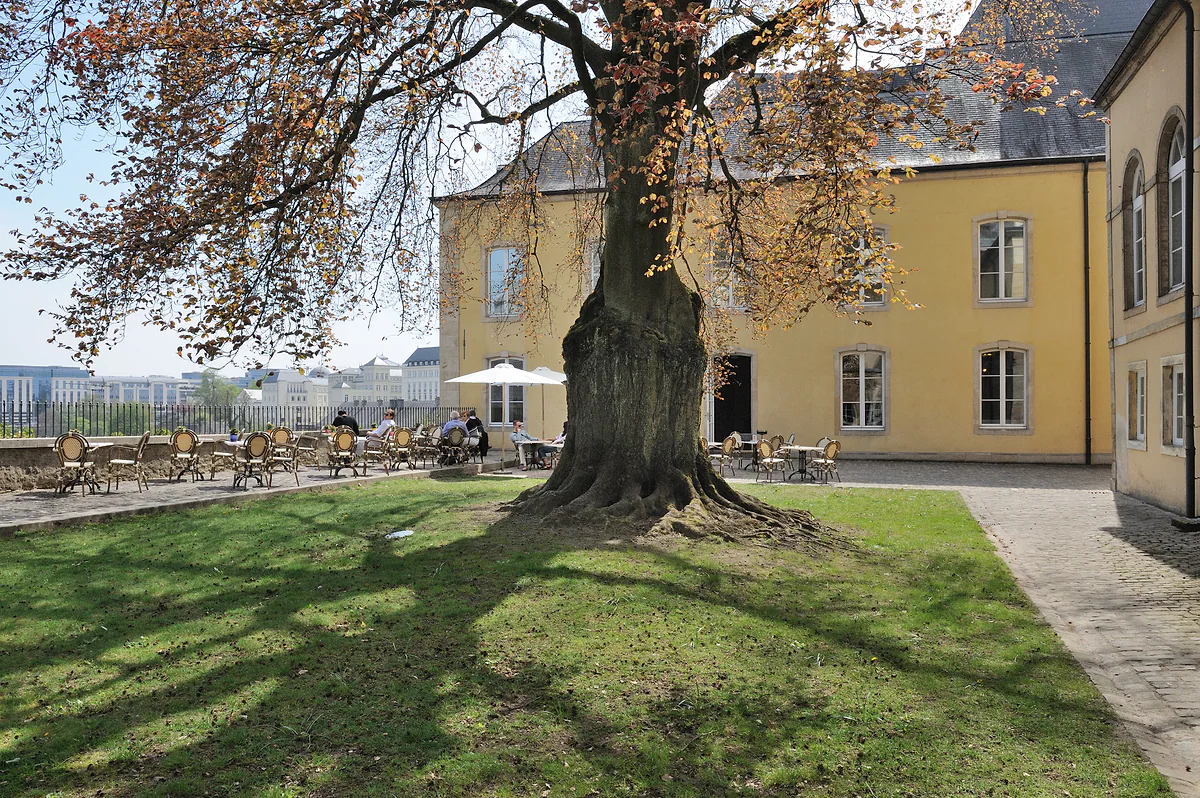
The courtyard of the Lëtzebuerg City Museum with a large copper beech, lawn and the café terrace in spring
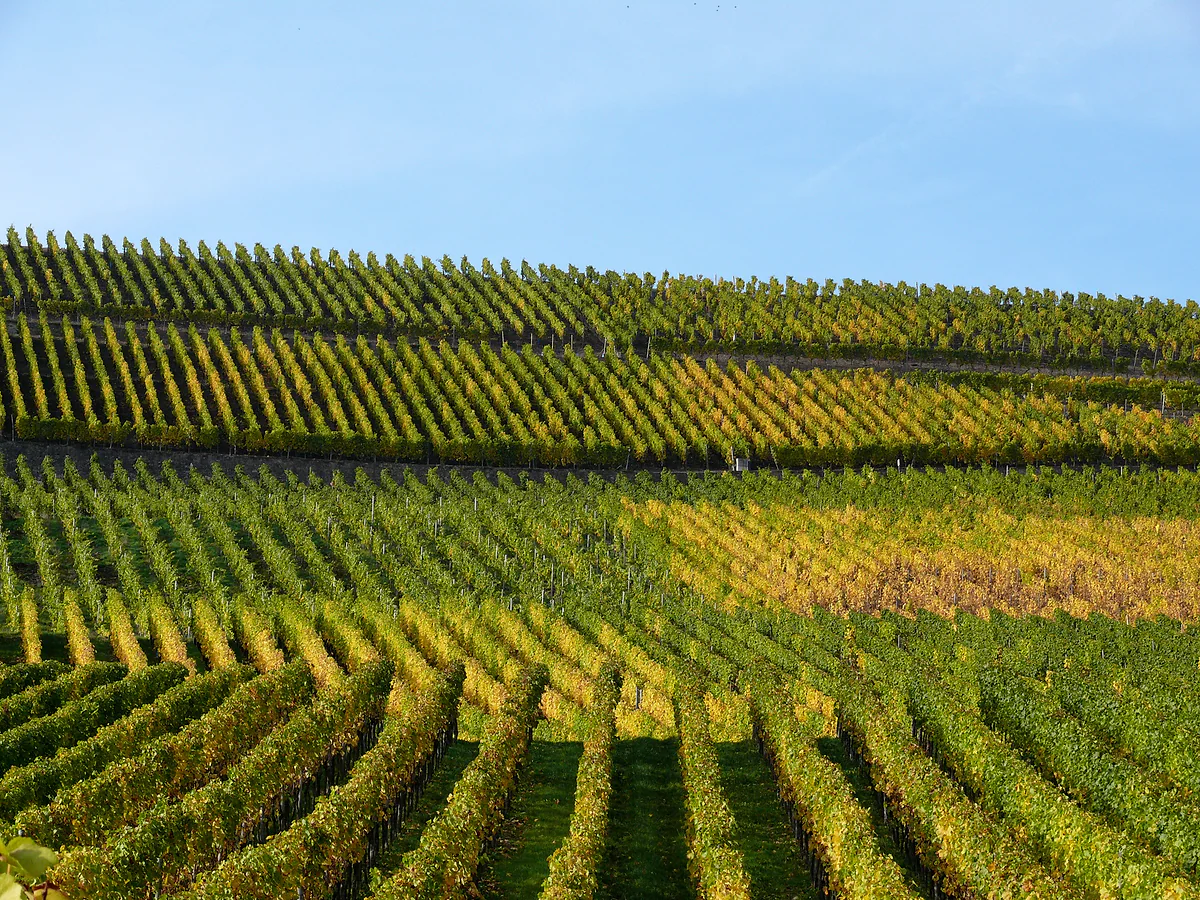
Rows of vineyards on the slopes at Wellenstein, on the Moselle, with green and yellow leaves after the harvest
Quetschentaart at a glance
| Aspect | What the source says |
|---|---|
| What it is | Plum tart on a shortcrust base |
| Season | Late summer and autumn, when plums ripen |
| Pastry | Flour, sugar, salt, cold butter and an egg, chilled for 30 minutes |
| Filling | Halved, stoned plums with sugar, cornflour and optional cinnamon |
| Assembly | Plums in concentric circles, cut side up |
| Baking | 40 to 45 minutes, until the pastry is golden |
Luxembourg Youth Hostels blog (youthhostels.lu), a secondary source, checked on 29-09-2026. Neither the government portal nor the tourist board has a page on this tart.
Test yourself
True or false?
0/3 Pick before you peek.
-
Quetschentaart is an apple tart.
See the answer
False. It's made with plums, quetschen, arranged in circles on a shortcrust base.
-
It's a bake for the end of summer and autumn.
See the answer
True. Luxembourg's youth hostels describe it as a symbol of summer ending and autumn beginning.
-
It can only be eaten with coffee.
See the answer
False. The hostels' recipe also suggests tea, crémant de Luxembourg or a Moselle Auxerrois.
0 of 425 Luxembourg guides
Your next stamp
- Events
- What to buy
- Food
- Candlemas (Liichtmëssdag)
- Crémant
- Where to eat
- Markets
- In October
- A Possen Museum
- American Cemetery
- Ansembourg
- Ansembourg Castles
- Asselborn
- Bascharage
- Beaufort castles
- Belval
- Belval blast furnaces
- Berg Castle
- Bernard-Massard cellars
- Bourglinster Castle
- Bourscheid Castle
- Brandenbourg
- Brandenbourg Castle
- Caves St Martin
- Christmas
- Clervaux Castle
- Echternach
- Echternach Abbey
- Ehnen
- Ehnen Wine Museum
- Esch-sur-Alzette
- Esch-sur-Sûre Castle
- European Museum Schengen
- Fond-de-Gras
- General Patton Museum
- German war cemetery
- Haff Réimech
- Hohllay
- Hollenfels Castle
- Hosingen
- Kautenbach
- Kneiff
- Koerich Castle
- Larochette Castle
- Lasauvage
- Mersch Castle
- Military History Museum
- Moersdorf
- Mondorf Domaine Thermal
- Munsbach Castle
- National Mining Museum
- Parc Merveilleux
- Park Sënnesräich
- Places to visit
- Remich
- Rindschleiden
- Schiessentümpel
- Septfontaines Castle
- Slate Museum
- Stolzembourg
- Tudor Museum
- Useldange Castle
- Valley of the Seven Castles
- Vianden
- Vianden Castle
- Ville Haute
- Wasserbillig Aquarium
- Weiswampach lakes
- Wiltz Castle
- Ahn
- Berdorf
- Bourscheid-Plage
- Butterfly garden
- Clervaux
- Differdange
- Echternach lake
- Grevenmacher
- Heringer Millen
- Hollenfels
- Luxembourg City
- Luxembourg Science Center
- Meysembourg Castle
- Mullerthal
- National Day
- National Resistance Museum
- Perekop
- Remerschen
- Schoenfels Castle
- The Family of Man
- Things to do
- Upper Sûre Lake
- Vianden chairlift
- Wasserbillig
- Clervaux Abbey
- Echternach Roman villa
- Éislek
- Insenborn
- Kallektuffquell
- Machtum
- Most beautiful places
- Our Nature Park
- Pétange
- Pettingen Castle
- Schueberfouer
- Schwebsingen
- Victor Hugo House
- Waldbillig
- Dudelange
- Kuelscheier
- Lultzhausen
- Moselle Valley
- Octave
- Prettiest villages
- Sanem
- Schengen
- Wellenstein
- Wiltz
- Wolfsschlucht
- Beaufort
- Bech-Kleinmacher
- Éimaischen
- Gaalgebierg
- Guttland
- Marnach
- Mondorf-les-Bains
- Putscheid
- Schifflange
- UNESCO World Heritage
- Carnival
- Consdorf
- Ellergronn
- Käerjeng
- Kayl
- Map
- Minett
- Munshausen
- Tandel
- Bech
- Buergbrennen
- Esch-sur-Sûre
- Rumelange
- Where is Luxembourg
- Is it a country?
- Lac de la Haute-Sûre (commune)
- Rosport-Mompach
- Wormeldange
- Larochette
- Mondercange
- Regions
- Bettembourg
- Bock Casemates
- Cantons
- Dancing procession
- Diekirch
- Fischbach
- Garnich
- Mersch
- Moselle wine route
- Ettelbruck
- Grund
- Heffingen
- Kehlen
- Lintgen
- Moselle river cruises
- Pétrusse Casemates
- Towns and villages
- Chemin de la Corniche
- Erpeldange-sur-Sûre
- Junglinster
- Kopstal
- Lorentzweiler
- Nommern
- Pfaffenthal
- Population
- Bissen
- Clausen
- Grand Ducal Palace
- Koerich
- Schieren
- Size
- Vallée de l'Ernz
- Feulen
- Kirchberg
- Languages
- Notre-Dame Cathedral
- Reisdorf
- Steinfort
- Bettendorf
- Habscht
- St Michael's Church
- Helperknapp
- Luxembourgish
- Place Guillaume II
- Name
- Place d'Armes
- History
- Place de la Constitution
- Grand Duke
- Colmar-Berg
- Flaxweiler
- Gare
- Hamm
- Kirchberg funicular
- Luxembourg fortress
- Mamer
- Mertert
- Minett Trail
- Mullerthal Trail
- Neumünster Abbey
- Parc Hosingen
- Pfaffenthal lift
- Political system
- Redange
- The Passerelle
- Wine festivals
- Winseler
- Beckerich
- Biwer
- EU institutions
- Goesdorf
- Limpertsberg
- Mudam
- Natur Musée
- Pulvermühl
- Stadtbredimus
- Troisvierges
- Wenzel walk
- Bonnevoie
- Bous-Waldbredimus
- Ell
- Flag
- Kiischpelt
- Manternach
- Philharmonie
- Vauban circuit
- Weiswampach
- Betzdorf
- Boulaide
- Dräi Eechelen Museum
- Facts
- Hollerich
- Lenningen
- Useldange
- Wincrange
- Bourscheid
- Dalheim
- Gasperich
- Public holidays
- Red Bridge
- Saeul
- Belair
- Second World War
- Vichten
- Battle of the Bulge
- Merl
- Préizerdaul
- Cents
- EU and Schengen
- Groussbus-Wal
- Entry requirements
- Neudorf
- Rambrouch
- Currency and payments
- Mertzig
- Weimerskirch
- Adolphe Bridge
- Beggen
- Escapardenne
- How to get there
- International March of Diekirch
- MNHA (National Museum)
- Rock climbing
- Sandweiler
- Bridges
- Eich
- Flights
- Golf
- Hesperange
- Lëtzebuerg City Museum
- Canoeing and kayaking
- Dommeldange
- Luxembourg airport
- Strassen
- Villa Vauban
- Airport to city centre
- Bertrange
- Casino Luxembourg
- Mühlenbach
- Swimming pools
- From Brussels
- Pétrusse Valley
- Rollingergrund
- Walferdange
- Cessange
- Day trip from Brussels
- Municipal Park
- Steinsel
- Free walking tours
- From Paris
- Niederanven
- From Frankfurt
- Schuttrange
- Sightseeing train and bus
- By train
- Contern
- By coach
- Weiler-la-Tour
- Driving
- Luxembourg in one day
- Pretzel Sunday
- Rham Plateau
- Tour de Luxembourg
- Car hire
- Luxembourg in two days
- Saint-Esprit Plateau
- Luxembourg in three days
- Melusina statue
- Parking
- St Nicholas Day (Kleeschen)
- Fête de la Musique
- Luxembourg in four days
- Museums in Luxembourg
- Petrol
- Place de Clairefontaine
- A week in Luxembourg
- Getting around
- Luxembourg Marathon
- Tram and Bus Museum
- Free public transport
- Parks in Luxembourg City
- Road trip
- Belgium and Luxembourg
- Tram
- Buses
- Viewpoints
- Trains
- Luxembourg station
- Cycling
- LuxembourgPass
- Prices and budget
- On a budget
- Free things to do
- Mobile and roaming
- Healthcare
- Safety
- Scams
- Tourist information
- Packing list
- Swimming lakes
- With a dog
- Tipping
- Shopping
- Shopping centres
- With kids
- For couples
- Playgrounds
- Adventure parks
- Nightlife
- Castles
- Theatres and concert venues
- Leudelange
- Nature parks
- Where to stay
- City-centre hotels
- Hiking
- Nature reserves
- Reckange-sur-Mess
- Hotels near the station
- Roeser
- Frisange
- Hotels in Kirchberg
- Airport hotels
- Dippach
- Hotels in Vianden
- Hotels in Echternach
- Hotels in Clervaux
- Hotels in Mondorf-les-Bains
- Hotels in Esch-sur-Alzette
- Hotels on the Moselle
- Mullerthal hotels
- Upper Sûre lake hotels
- Hotels in Diekirch and Ettelbruck
- Cheap hotels
- Luxury hotels
- Boutique hotels
- Spa hotels
- Family hotels
- Apartments
- Weather
- Youth hostels
- Best time to visit
- Campsites
- Holiday cottages
- In winter
- Castle hotels
- In spring
- Day trips
- In summer
- Around Luxembourg
- In autumn
- Ice skating
- Trier day trip
- Metz day trip
- Arlon day trip
- In January
- In February
- In March
- In April
- In May
- In June
- In July
- In August
- In September
- In November
- In December
- Michelin restaurants
- Cheap eats
- Judd mat Gaardebounen
- Bouneschlupp
- Gromperekichelcher
- Kniddelen
- Rieslingspaschtéit
- Wine
- Beer
Frequently asked questions
What is Quetschentaart?
An open plum tart typical of Luxembourg. Quetschen is the local name for the plums, according to the country's youth hostels, which call the tart the pride of Luxembourg's patisseries.
When is Quetschentaart eaten?
At the end of summer and in autumn, when the plums ripen. It's a seasonal bake and makes less sense outside that window.
What do you drink with Quetschentaart?
Coffee is the usual choice, or tea. The youth hostels also suggest a glass of crémant de Luxembourg or a Moselle Auxerrois.
Does it contain cinnamon?
It depends on the household. The hostels' recipe makes cinnamon optional and admits every family has its own version, crisper or softer, sweeter or less so.
Where can I eat Quetschentaart in Luxembourg?
In patisseries and tea rooms, in season. No official source publishes a list, so I'd check the window of a patisserie in the capital or a village.
Is it like a British plum tart?
It's a close cousin of any open plum tart, with the fruit packed in tight circles. What makes it Luxembourgish is eating it in autumn with coffee or crémant. My comparison, not an official one.
By
Tourism graduate with a master’s in Tourism Management and Planning from the University of Málaga, who has travelled across Europe. He writes every guide from official sources and his own judgement.
Published on . Facts checked on .
Sources
Some links in this guide are affiliate links: if you book through them, the site earns a commission at no extra cost to you. Affiliate disclosure
Photos: Cayambe (CC BY-SA 4.0); Cayambe (CC BY-SA 3.0); Denise Hastert (CC BY-SA 4.0), via Wikimedia Commons.