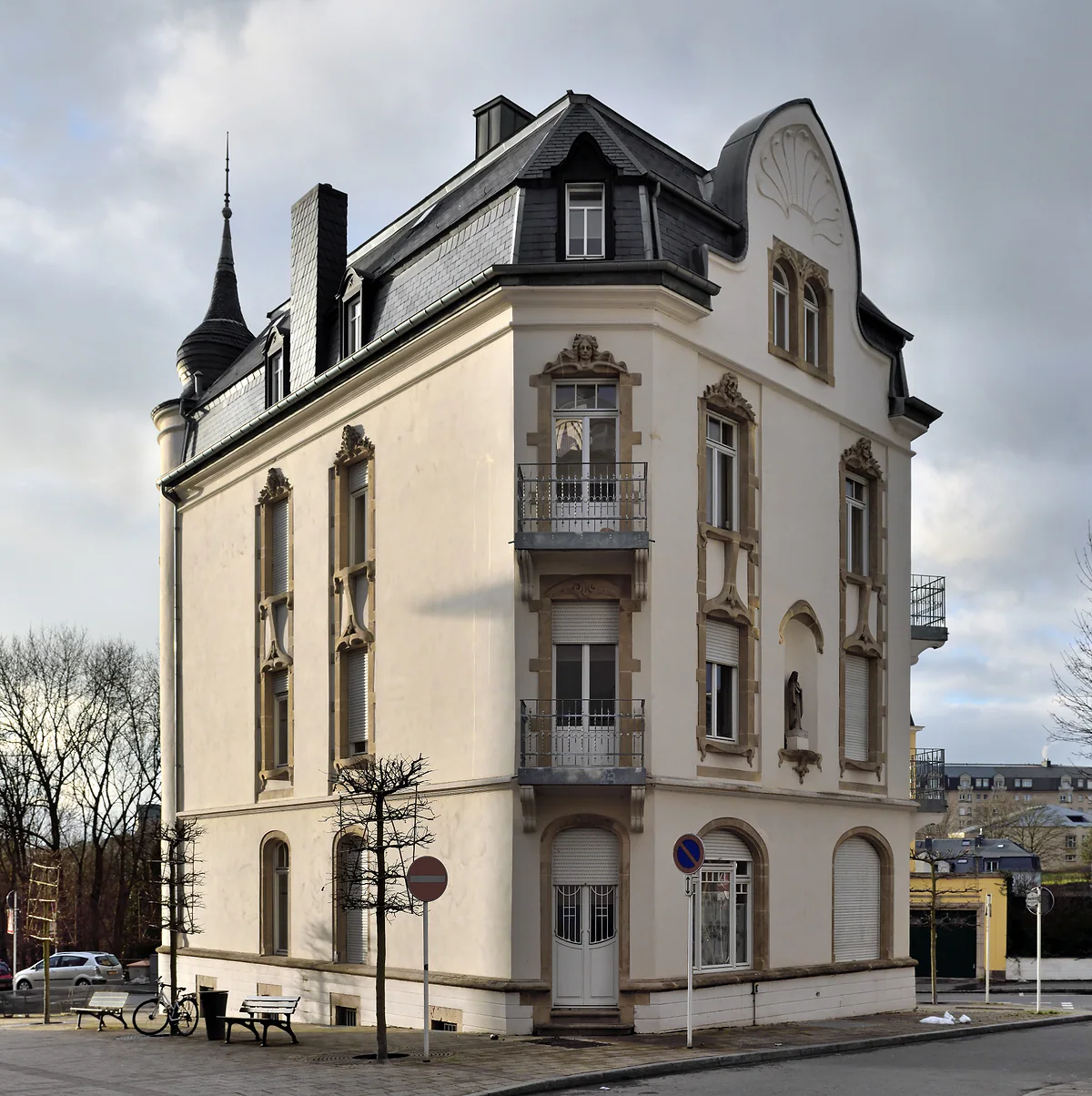
Luxembourg City district south of the Pétrusse
The Gare, the district that grew up around the station
The Gare is the part of Luxembourg City around the central station, on the Plateau Bourbon south of the Pétrusse valley. It covers 105.26 hectares and had 11,513 residents on 31-12-2023, with Avenue de la Liberté, Place de Paris and Villa Pauly, and it's linked to the Ville Haute by the Passerelle and the Adolphe Bridge.
I'd walk the Gare from north to south, down Avenue de la Liberté from the Passerelle to the station, which is the way it makes most sense. It's a handy base, but after dark I'd stick to the main streets and keep my bag in front of me.

Before you go
What I would keep in mind
-
01 Most beautiful
Avenue de la Liberté, end to end
The tourist office calls it one of the finest streets in the country. It runs from the Passerelle to the station past Place de Paris, the rose garden on Place des Martyrs and the landmark head office of the state savings bank.
-
02 Getting there
Two bridges to the old town
The Pétrusse valley separates the district from the Ville Haute. You cross it on the Passerelle, the 1859-1861 viaduct, or the Adolphe Bridge of 1903. Both take a few minutes on foot.
the Passerelle -
03 My tip
Thursday market on Place de Paris
The Garer Maart sets up around a dozen stalls on Place de Paris on Thursdays from 07:30 to 14:00, according to the tourist office. It's the most local way to see the area in the morning.
shopping in Luxembourg -
04 Watch out
Pickpockets around the station
The UK Foreign Office singles out the main station for pickpockets, and Spain's travel advice says the same of the streets around it. It isn't a dangerous area, but it's where your phone and wallet need the most attention.
is Luxembourg safe
Almost everyone who arrives in Luxembourg by train walks through the Gare, and most drag their case straight across it without looking up. That’s a shame. In roughly a square kilometre you get one of the country’s most handsome avenues, 19th-century townhouses now used as embassies, a rose garden and a Second World War memorial that very few visitors find.
From a wooden station to a city district
It all began in 1859 with a first station built entirely of wood, according to the tourist office. The present Moselle Baroque building came in the early 20th century, and the city dates its completion to 1912. Hotels and firms moved in around it, from the champagne house Mercier to the cigarette maker Heintz van Landewyck.
The district wasn’t even part of the capital until 1920; it belonged to the municipality of Hollerich. Only when the fortress came down after 1867 could the Plateau Bourbon be built on and Avenue de la Liberté laid out. The city now puts it at 105.26 hectares with 11,513 residents at the end of 2023, and the Plateau Bourbon sits in the buffer zone of the UNESCO site.
The practical side of the station itself, left luggage, Wi-Fi and tickets, is covered in my guide to Luxembourg railway station. This page is about the neighbourhood.
Three Gares in one
The tourist office splits it into three areas, and that’s how I’d tackle it. First the station area, all shops, offices and traffic at any hour. Then the Pétrusse side, with elegant 19th-century houses, some of them embassies. Finally Avenue de la Liberté, which the LCTO rates among the finest streets in Luxembourg.
Along it you’ll find Place de Paris, with its Thursday market (I cover it with the others in markets in Luxembourg), and Place des Martyrs, known as the Rousegärtchen, a 5,684 m² rose garden where the city is reworking the park. Look out too for the head office of the state savings bank, the BCEE, and number 19, the former headquarters of the steel giant ARBED. If early 20th-century architecture is your thing, it’s the most rewarding street outside the old town.
To sleep close to everything, search places to stay in Luxembourg on Booking.com and filter by area before price.
Place de Paris and the Bourbon Plateau
Place de Paris is where I’d stop for a coffee. The tourist office says it became a pedestrian zone in 1986, and it’s lined with restaurants whose terraces fill up in summer, a short walk from the station. The small Thursday market is the best excuse to plan your arrival on that day.
The Bourbon Plateau is the ground the whole district stands on, and its name tells the story. It comes from the old Fort Bourbon, one of the defences of the so-called Diedenhofener Front, the Thionville side of the fortress, alongside Fort Elisabeth, Fort Wallis and Fort Wedell. Once dismantling began in 1867 the plateau was opened to town planning, which is why the streets here run straighter than anything in the Ville Haute.
Is the Gare worth a wander?
It is, if you go about it in the right order. I’d come over from the Ville Haute on the Passerelle, a 24-arch stone viaduct that gained a suspended walkway for pedestrians and cyclists during the 2018-2020 works. Then down Avenue de la Liberté to the station, and back over the Adolphe Bridge of 1903, which the tourist office calls the “new bridge” to the viaduct’s “old” one.
In between, Place de Strasbourg has a playground, and the edge of the Pétrusse gives you the view across the valley to the ramparts.
To sleep close to everything, search places to stay in Luxembourg on Expedia and filter by area before price.
Villa Pauly and wartime memory
At 57 Boulevard de la Pétrusse stands Villa Pauly, a 1920s house by the architect Mathias Martin. During the occupation, from 1940 to 1945, it was the Gestapo’s headquarters, and the deportation of Luxembourg’s Jewish population was organised from here. It has been a national monument since 1989 and houses the associations representing resistance fighters, forced conscripts and victims of the Shoah.
It opens Tuesday to Friday from 13:00 to 16:30 and by appointment, and is closed at weekends, on public holidays and from 24 December to 6 January. For me it’s the visit that gives the district its weight, and it ties in with Luxembourg in the Second World War. If you’d rather have a guide, the LCTO runs a two-hour wartime walk through the city, with a private guide from €150 for groups of up to 20.
What the brochures leave out
The Gare is the capital’s most cosmopolitan and lively district, and also its most debated. In 2024 the city itself published residents’ recordings describing a place where “day and night there’s always something going on”, alongside complaints about insecurity and litter. It isn’t dangerous, but the Foreign Office flags the main station for pickpockets.
My approach is simple. By day I’d wander freely; at night I’d keep to the main streets, especially walking back to a hotel. If you’re weighing up a stay here, the pros and cons are in hotels near Luxembourg station.
If you are short on time, see the best tours in Luxembourg and pick one that fits your day.
Getting around from here
Tram T1 stops outside the station at Gare Centrale, running north to Hamilius, Kirchberg and the airport and south through Bonnevoie to the Cloche d’Or. On Friday and Saturday nights the CN1 City Night Bus also runs until 03:30. It’s all free, which makes the Gare an easy base for Luxembourg City and the rest of the country. Come in on the direct TGV from Paris, 2 hours 10 minutes, and you step straight out into it.
Where the bus does not go, a car does: compare car hire in Luxembourg before you arrive rather than at the desk.
If you still need a way in, check the best ticket deals to Luxembourg from where you are.
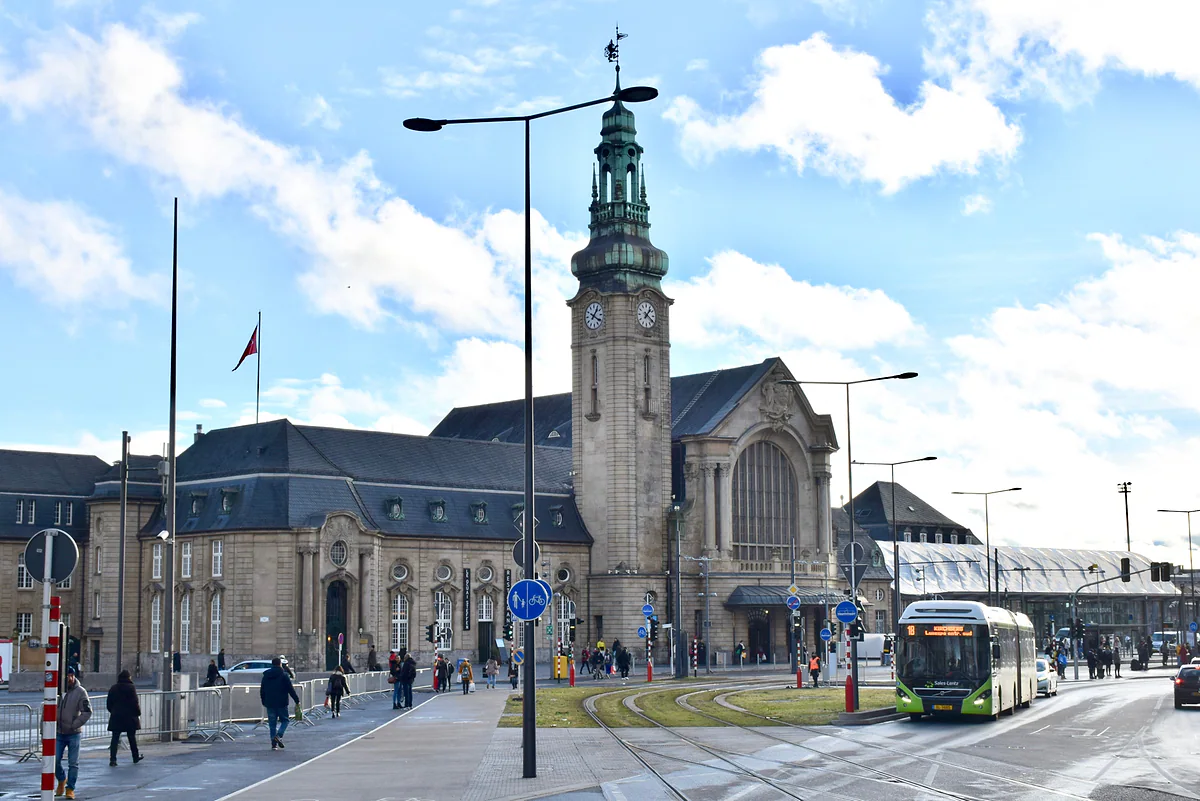
Luxembourg central station with its clock tower, Place de la Gare and the tram stop in front
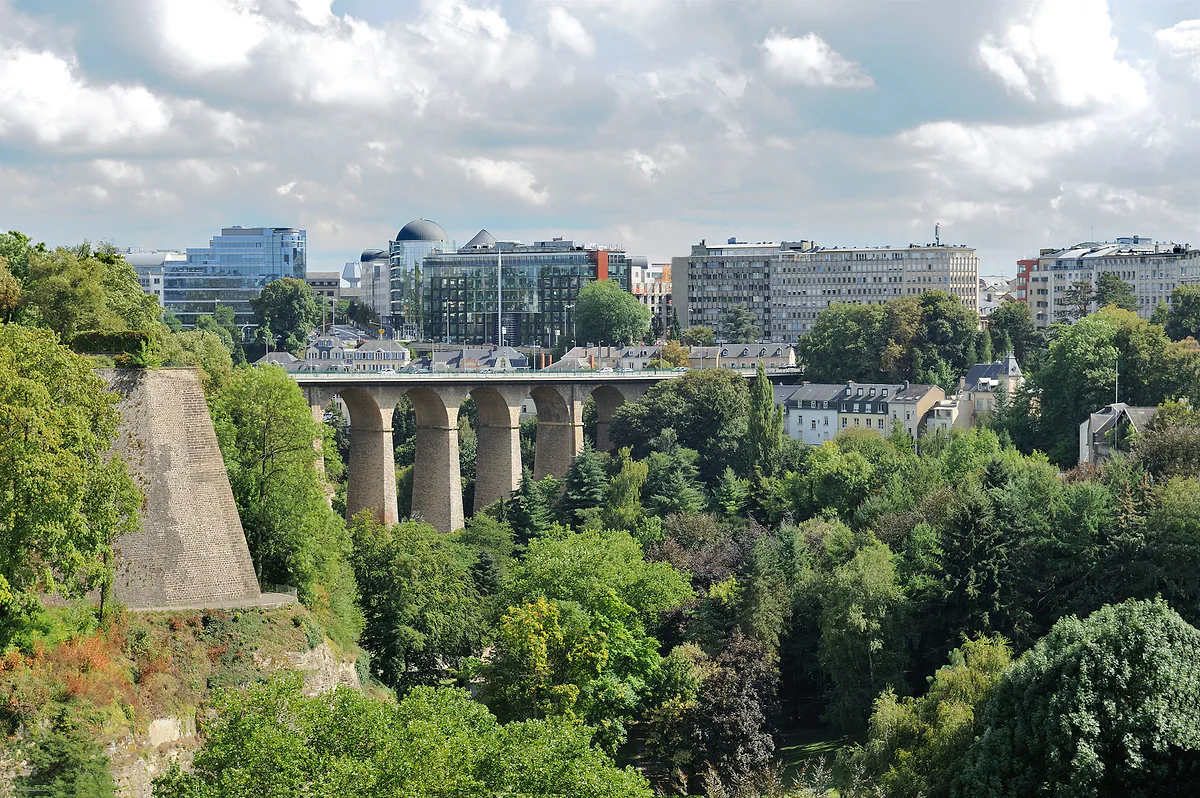
The Passerelle, a 19th-century stone viaduct, crossing the Pétrusse valley in front of the Gare buildings
What's in the Gare
| Place | What it is | Detail |
|---|---|---|
| Place de la Gare | Station square | 8,563 m² |
| Place de Paris | Square with a market | 4,349 m²; Garer Maart on Thursdays |
| Rousegärtchen (Place des Martyrs) | Rose garden on Avenue de la Liberté | 5,684 m² |
| Villa Pauly | Second World War memorial | Tue to Fri 13:00-16:30 and by appointment |
| Place de Strasbourg | Square with a playground | 1,724 m² |
| Passerelle | 24-arch viaduct | 1859-1861; renovated 2018-2020 |
Sources: City of Luxembourg district page and LCTO, checked on 29-09-2026. Villa Pauly is closed at weekends, on public holidays and from 24-12 to 6-1.
Test yourself
True or false?
0/3 Pick before you peek.
-
The Gare has always been part of Luxembourg City.
See the answer
False. It belonged to the municipality of Hollerich until the merger of 1920, according to the City of Luxembourg.
-
Luxembourg's first railway station was built of wood.
See the answer
True. The tourist office says it was built entirely of wood in 1859 and rebuilt in the early 20th century in the Moselle Baroque style.
-
Villa Pauly was the Gestapo's headquarters during the occupation.
See the answer
True. It was their headquarters from 1940 to 1945. Today it's a national monument and the seat of the war remembrance associations.
Map
Where Gare is
The thick dashed line is the border with Belgium, France and Germany, and the fine ones divide the twelve cantons. The Éislek lies to the north and the Moselle to the east. Every number opens its guide.
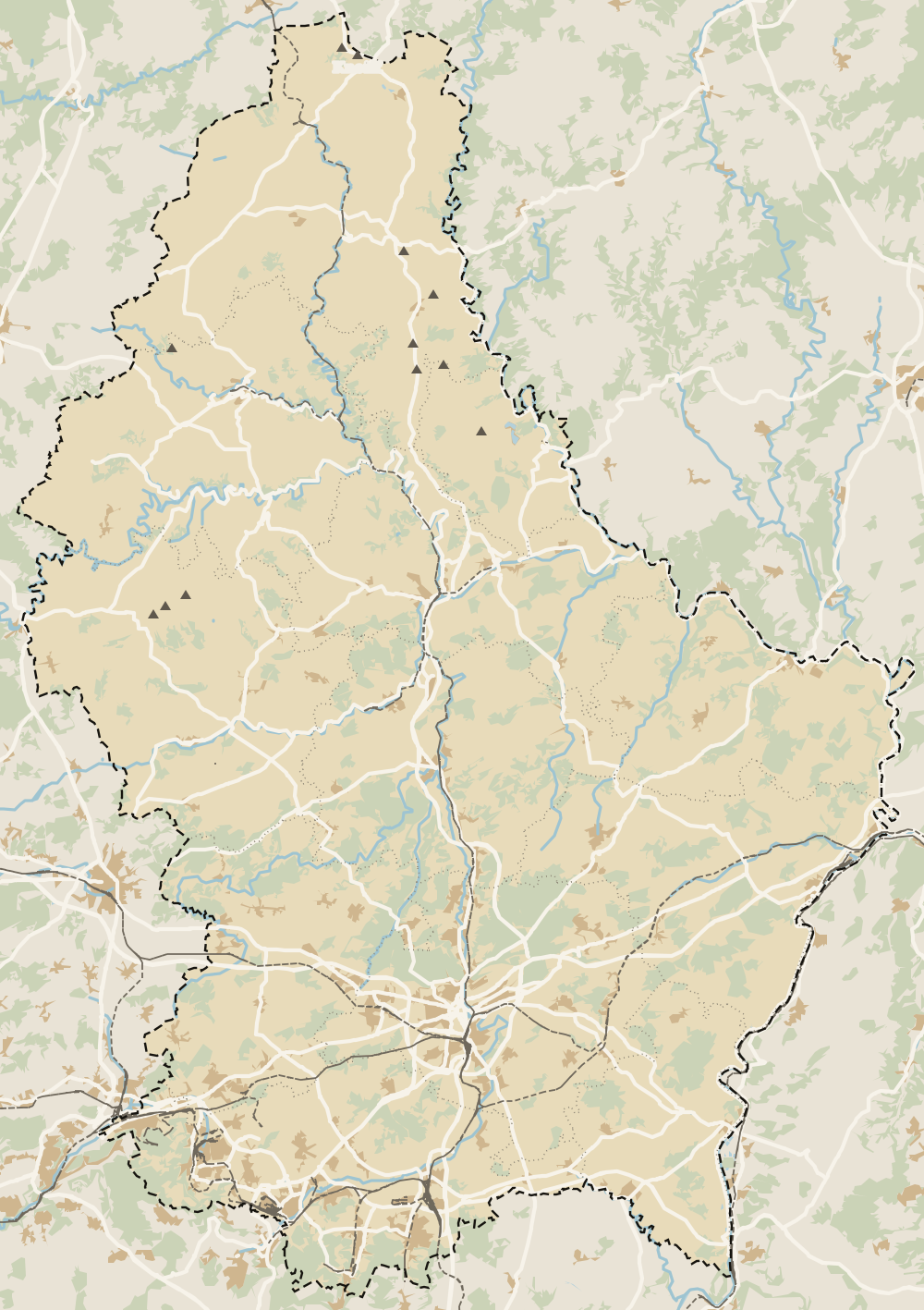 1Ville Haute 2Luxembourg City 3Grund 4Pfaffenthal 5Clausen 6Kirchberg 7Gare 8Hamm 9Luxembourg fortress 10Limpertsberg 11Pulvermühl 12Bonnevoie 13Hollerich 14Gasperich 15Belair 16Merl 17Cents 18Neudorf 19Weimerskirch 20Beggen 21Eich 22Dommeldange 23Mühlenbach 24Pétrusse Valley 25Rollingergrund 26Cessange 27Rham Plateau 28Tram and Bus Museum
 Map data © OpenStreetMap contributors (ODbL)
- 1Ville HauteA district of Luxembourg City
- 2Luxembourg CityCapital of the Grand Duchy
- 3GrundLuxembourg City district on the Alzette
- 4PfaffenthalLuxembourg City district in the Alzette valley
- 5ClausenLuxembourg City district in the Alzette valley
- 6KirchbergLuxembourg City's European and business district
- 7GareLuxembourg City district south of the Pétrusse
- 8HammDistrict on the eastern side of Luxembourg City
- 9Luxembourg fortressUNESCO World Heritage since 1994
- 10LimpertsbergLuxembourg City district north of the Ville Haute
- 11PulvermühlLuxembourg City's smallest district
- 12BonnevoieBonnevoie-Nord / Verlorenkost and Bonnevoie-Sud
- 13HollerichLuxembourg City district west of the Gare
- 14GasperichDistrict in the south of Luxembourg City
- 15BelairResidential district west of the Ville Haute
- 16MerlResidential district on the capital's west side
- 17CentsResidential district east of the city centre
- 18NeudorfAlzette valley district below Kirchberg
- 19WeimerskirchNorthern district on the Alzette valley slope
- 20BeggenDistrict at the northern tip of the capital
- 21EichNorthern district in the Alzette valley
- 22DommeldangeNorthern district with a village centre
- 23MühlenbachNorthern district on the edge of the Bambësch
- 24Pétrusse ValleyPark and walk between the old town and the Gare
- 25RollingergrundNorth-west district, including Belair-Nord
- 26CessangeSouth-west district of the capital
- 27Rham PlateauLuxembourg City fortifications
- 28Tram and Bus MuseumMuseum in Hollerich
What to see
What to see in Gare
0 of 425 Luxembourg guides
Your next stamp
- Hotels near the station
- Bonnevoie
- Ville Haute
- From Paris
- Hiking
- Bertrange
- Luxembourg station
- Luxembourg fortress
- A Possen Museum
- American Cemetery
- Ansembourg
- Ansembourg Castles
- Asselborn
- Bascharage
- Beaufort castles
- Belval
- Belval blast furnaces
- Berg Castle
- Bernard-Massard cellars
- Bourglinster Castle
- Bourscheid Castle
- Brandenbourg
- Brandenbourg Castle
- Caves St Martin
- Christmas
- Clervaux Castle
- Echternach
- Echternach Abbey
- Ehnen
- Ehnen Wine Museum
- Esch-sur-Alzette
- Esch-sur-Sûre Castle
- European Museum Schengen
- Fond-de-Gras
- General Patton Museum
- German war cemetery
- Haff Réimech
- Hohllay
- Hollenfels Castle
- Hosingen
- Kautenbach
- Kneiff
- Koerich Castle
- Larochette Castle
- Lasauvage
- Mersch Castle
- Military History Museum
- Moersdorf
- Mondorf Domaine Thermal
- Munsbach Castle
- National Mining Museum
- Parc Merveilleux
- Park Sënnesräich
- Places to visit
- Remich
- Rindschleiden
- Schiessentümpel
- Septfontaines Castle
- Slate Museum
- Stolzembourg
- Tudor Museum
- Useldange Castle
- Valley of the Seven Castles
- Vianden
- Vianden Castle
- Wasserbillig Aquarium
- Weiswampach lakes
- Wiltz Castle
- Ahn
- Berdorf
- Bourscheid-Plage
- Butterfly garden
- Clervaux
- Differdange
- Echternach lake
- Grevenmacher
- Heringer Millen
- Hollenfels
- Luxembourg City
- Luxembourg Science Center
- Meysembourg Castle
- Mullerthal
- National Day
- National Resistance Museum
- Perekop
- Remerschen
- Schoenfels Castle
- The Family of Man
- Things to do
- Upper Sûre Lake
- Vianden chairlift
- Wasserbillig
- Clervaux Abbey
- Echternach Roman villa
- Éislek
- Insenborn
- Kallektuffquell
- Machtum
- Most beautiful places
- Our Nature Park
- Pétange
- Pettingen Castle
- Schueberfouer
- Schwebsingen
- Victor Hugo House
- Waldbillig
- Dudelange
- Kuelscheier
- Lultzhausen
- Moselle Valley
- Octave
- Prettiest villages
- Sanem
- Schengen
- Wellenstein
- Wiltz
- Wolfsschlucht
- Beaufort
- Bech-Kleinmacher
- Éimaischen
- Gaalgebierg
- Guttland
- Marnach
- Mondorf-les-Bains
- Putscheid
- Schifflange
- UNESCO World Heritage
- Carnival
- Consdorf
- Ellergronn
- Käerjeng
- Kayl
- Map
- Minett
- Munshausen
- Tandel
- Bech
- Buergbrennen
- Esch-sur-Sûre
- Rumelange
- Where is Luxembourg
- Is it a country?
- Lac de la Haute-Sûre (commune)
- Rosport-Mompach
- Wormeldange
- Larochette
- Mondercange
- Regions
- Bettembourg
- Bock Casemates
- Cantons
- Dancing procession
- Diekirch
- Fischbach
- Garnich
- Mersch
- Moselle wine route
- Ettelbruck
- Grund
- Heffingen
- Kehlen
- Lintgen
- Moselle river cruises
- Pétrusse Casemates
- Towns and villages
- Chemin de la Corniche
- Erpeldange-sur-Sûre
- Junglinster
- Kopstal
- Lorentzweiler
- Nommern
- Pfaffenthal
- Population
- Bissen
- Clausen
- Grand Ducal Palace
- Koerich
- Schieren
- Size
- Vallée de l'Ernz
- Feulen
- Kirchberg
- Languages
- Notre-Dame Cathedral
- Reisdorf
- Steinfort
- Bettendorf
- Habscht
- St Michael's Church
- Helperknapp
- Luxembourgish
- Place Guillaume II
- Name
- Place d'Armes
- History
- Place de la Constitution
- Grand Duke
- Colmar-Berg
- Flaxweiler
- Hamm
- Kirchberg funicular
- Mamer
- Mertert
- Minett Trail
- Mullerthal Trail
- Neumünster Abbey
- Parc Hosingen
- Pfaffenthal lift
- Political system
- Redange
- The Passerelle
- Wine festivals
- Winseler
- Beckerich
- Biwer
- EU institutions
- Goesdorf
- Limpertsberg
- Mudam
- Natur Musée
- Pulvermühl
- Stadtbredimus
- Troisvierges
- Wenzel walk
- Bous-Waldbredimus
- Ell
- Flag
- Kiischpelt
- Manternach
- Philharmonie
- Vauban circuit
- Weiswampach
- Betzdorf
- Boulaide
- Dräi Eechelen Museum
- Facts
- Hollerich
- Lenningen
- Useldange
- Wincrange
- Bourscheid
- Dalheim
- Gasperich
- Public holidays
- Red Bridge
- Saeul
- Belair
- Second World War
- Vichten
- Battle of the Bulge
- Merl
- Préizerdaul
- Cents
- EU and Schengen
- Groussbus-Wal
- Entry requirements
- Neudorf
- Rambrouch
- Currency and payments
- Mertzig
- Weimerskirch
- Adolphe Bridge
- Beggen
- Escapardenne
- How to get there
- International March of Diekirch
- MNHA (National Museum)
- Rock climbing
- Sandweiler
- Bridges
- Eich
- Flights
- Golf
- Hesperange
- Lëtzebuerg City Museum
- Canoeing and kayaking
- Dommeldange
- Luxembourg airport
- Strassen
- Villa Vauban
- Airport to city centre
- Casino Luxembourg
- Mühlenbach
- Swimming pools
- From Brussels
- Pétrusse Valley
- Rollingergrund
- Walferdange
- Cessange
- Day trip from Brussels
- Municipal Park
- Steinsel
- Free walking tours
- Niederanven
- From Frankfurt
- Schuttrange
- Sightseeing train and bus
- By train
- Contern
- By coach
- Weiler-la-Tour
- Driving
- Luxembourg in one day
- Pretzel Sunday
- Rham Plateau
- Tour de Luxembourg
- Candlemas (Liichtmëssdag)
- Car hire
- Luxembourg in two days
- Saint-Esprit Plateau
- Luxembourg in three days
- Melusina statue
- Parking
- St Nicholas Day (Kleeschen)
- Fête de la Musique
- Luxembourg in four days
- Museums in Luxembourg
- Petrol
- Place de Clairefontaine
- A week in Luxembourg
- Getting around
- Luxembourg Marathon
- Tram and Bus Museum
- Free public transport
- Parks in Luxembourg City
- Road trip
- Belgium and Luxembourg
- Tram
- Buses
- Viewpoints
- Trains
- Cycling
- LuxembourgPass
- Prices and budget
- On a budget
- Free things to do
- Mobile and roaming
- Healthcare
- Safety
- Scams
- Tourist information
- Packing list
- Swimming lakes
- With a dog
- Markets
- Tipping
- Shopping
- What to buy
- Shopping centres
- With kids
- For couples
- Playgrounds
- Adventure parks
- Nightlife
- Castles
- Theatres and concert venues
- Leudelange
- Nature parks
- Where to stay
- City-centre hotels
- Nature reserves
- Reckange-sur-Mess
- Roeser
- Frisange
- Hotels in Kirchberg
- Airport hotels
- Dippach
- Hotels in Vianden
- Hotels in Echternach
- Hotels in Clervaux
- Hotels in Mondorf-les-Bains
- Hotels in Esch-sur-Alzette
- Hotels on the Moselle
- Mullerthal hotels
- Upper Sûre lake hotels
- Hotels in Diekirch and Ettelbruck
- Cheap hotels
- Luxury hotels
- Boutique hotels
- Spa hotels
- Family hotels
- Apartments
- Weather
- Youth hostels
- Best time to visit
- Campsites
- Holiday cottages
- In winter
- Castle hotels
- In spring
- Day trips
- In summer
- Around Luxembourg
- In autumn
- Ice skating
- Trier day trip
- Metz day trip
- Arlon day trip
- In January
- In February
- In March
- In April
- In May
- In June
- In July
- In August
- In September
- Food
- In October
- In November
- Where to eat
- In December
- Michelin restaurants
- Cheap eats
- Judd mat Gaardebounen
- Bouneschlupp
- Gromperekichelcher
- Kniddelen
- Quetschentaart
- Rieslingspaschtéit
- Events
- Wine
- Crémant
- Beer
Frequently asked questions
What is the Gare in Luxembourg?
One of the capital's 24 official districts, the one around the central station on the Plateau Bourbon. It covers 105.26 hectares and had 11,513 residents on 31-12-2023. It belonged to the municipality of Hollerich until 1920.
Is the Gare area of Luxembourg safe?
It's a busy, ordinary neighbourhood, but the UK Foreign Office warns of pickpockets at the main station. After dark I'd stay on the main streets and keep an eye on my phone, as you would around any big station.
How do I get from the Gare to the old town?
On foot over the Passerelle or the Adolphe Bridge in a few minutes, or on tram T1 from Gare Centrale to Hamilius. All public transport in Luxembourg is free.
What is there to see near Luxembourg station?
Avenue de la Liberté, Place de Paris, the rose garden on Place des Martyrs, the state savings bank building, Villa Pauly and the views over the Pétrusse valley from the Passerelle and the Adolphe Bridge.
What is Villa Pauly?
A 1920s villa that served as Gestapo headquarters during the occupation, from 1940 to 1945. It's now a national monument and home to the remembrance associations. It opens Tuesday to Friday, 13:00 to 16:30, and by appointment.
When was Luxembourg station built?
The first station, built of wood, dates from 1859. The present building, in the Moselle Baroque style, went up in the early 20th century; the city gives 1912 as its completion date.
By
Tourism graduate with a master’s in Tourism Management and Planning from the University of Málaga, who has travelled across Europe. He writes every guide from official sources and his own judgement.
Published on . Updated on . Facts checked on .
Sources
Some links in this guide are affiliate links: if you book through them, the site earns a commission at no extra cost to you. Affiliate disclosure
Photos: Cayambe (CC BY-SA 4.0); Zinneke (CC BY-SA 3.0); Cayambe (CC BY-SA 3.0), via Wikimedia Commons.