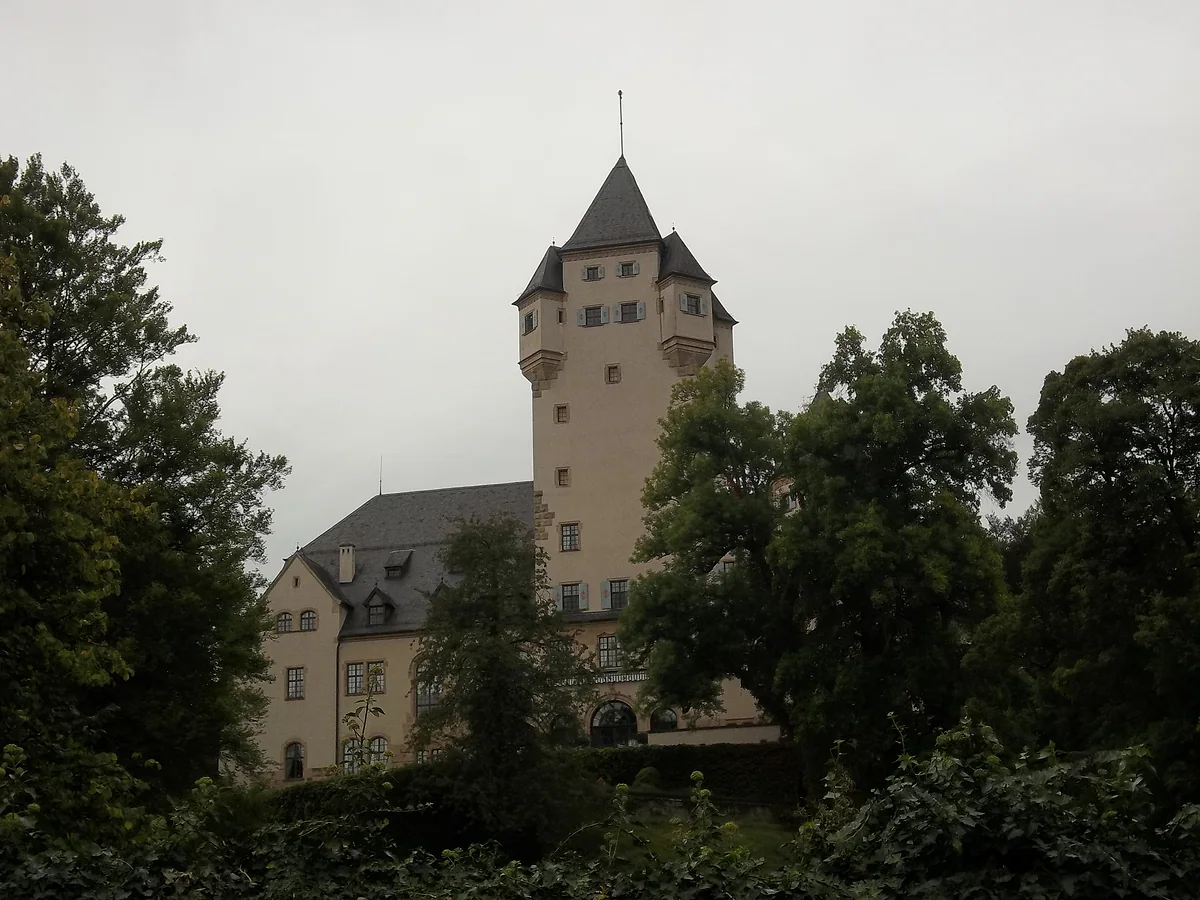
Grand ducal residence, not open to the public
Berg Castle, where Luxembourg's head of state lives
Berg Castle, in Colmar-Berg, is the main residence of the Grand Duke of Luxembourg and his family. It can't be visited, inside or in its grounds. The current building, with more than a hundred rooms, went up between 1907 and 1911 for Grand Duke Guillaume IV, and the state bought it in 1934, leaving it at the grand ducal family's disposal.
In 30 seconds
Full read: 3 min
- Berg Castle in Colmar-Berg is the home of the Grand Duke and his family.
- It isn't open to the public, inside or in the grounds.
- The current castle was built between 1907 and 1911 and has more than 100 rooms.
- The state bought it in 1934 and makes it available to the grand ducal family.
You don't come here to go in; you come to understand. If you want to see the Luxembourg monarchy from the inside, book the Grand Ducal Palace in the capital in summer. Berg is for people passing through Colmar-Berg who fancy a look at the tower and a check on the flag.

Before you go
What I would keep in mind
-
01 My tip
The flag tells you if he's home
visitluxembourg explains that the flag on the tower roof shows whether the Grand Duke is in residence or not.
-
02 Worth the splurge
Want to go inside a royal residence? Try the capital
Berg never opens. The Grand Ducal Palace in Luxembourg City runs summer tours, at €18 for adults and €9 for children aged 4 to 12.
Grand Ducal Palace -
03 Getting there
Colmar-Berg has a railway station
The commune has a station on the northern line, and second-class travel is free. The castle can only be seen from outside.
Colmar-Berg
This is the most important castle in Luxembourg that you won’t be able to set foot in. The head of state lives at Berg with his family, and visitluxembourg is quite plain about it. To protect their privacy, it can only be seen from outside, and that includes the grounds. Even so, its story is worth telling, because it explains how a Dutch dynasty ended up with a house in a central Luxembourg village and how that house came to belong to the state.
Bought by the King of the Netherlands
William II, who was both King of the Netherlands and Luxembourg’s Grand Duke between 1840 and 1849, ran the country from The Hague. According to the Grand Ducal Court, he wanted to strengthen the House of Orange-Nassau’s hand, and saw a good investment too, so he bought several Luxembourg estates. Berg joined his private property in 1845, purchased from Baron Charles Joseph du Pasquier de Dommartin, and the king visited the following year.
visitluxembourg traces the castle’s origins to the early 15th century, the commune speaks of a building put up around 1740 by the Heisgen lords, and the Court itself admits its building phases are poorly documented. I’ll leave it there, which is the honest answer.
From neo-Gothic to a brand-new castle
Under William III, the royal estate architect Ernest van Koenig turned the old Baroque house into a neo-Gothic residence. After the change of dynasty Grand Duke Adolphe became the owner, and his son, the future Guillaume IV, moved in with Marie-Anne of Braganza after their wedding in 1893.
Once on the throne, Guillaume IV commissioned the Munich architect Max Ostenrieder, assisted by Luxembourg’s Pierre Funck-Eydt, to restore the castle and add a grander modern wing. The old building proved too far gone, and only the stables, coach houses and 19th-century gate tower were kept. Demolition began on 19 October 1907, and despite having more than a hundred rooms the new castle was finished in under four years. On 15 September 1911 the Grand Duke moved in with a court of around thirty, and a landscaped park was laid out around it.
Once your dates are set, check which hotels are still free in Diekirch before prices climb.
What happened to Berg in the 20th century?
Guillaume IV died there, and his daughter Marie-Adélaïde lived at Berg until she abdicated in January 1919. It was also at Berg that Grand Duchess Charlotte took her constitutional oath. In 1934 the state bought the castle and the furniture of its state rooms, leaving them at the grand ducal family’s disposal as the constitution requires.
During the Nazi occupation, with the family abroad, the castle was requisitioned and turned into a National Socialist school for girls. After the war it was uninhabitable, and Grand Duchess Charlotte moved to Fischbach Castle while it was restored. Grand Duke Jean returned to Berg in 1964, after taking his oath, and it has been the home of the head of state and his family ever since. There’s more on that period in Luxembourg in the Second World War.
What a visitor can actually see
From outside, the tower and the bulk of the castle among the trees of its large park. visitluxembourg adds a detail I love, which is that the flag on the tower roof tells you whether the Grand Duke is at home. Since 3 October 2025 the head of state has been Grand Duke Guillaume, and you’ll find who he is and how he came to the throne under Grand Duke of Luxembourg.
If you want to step inside a royal residence, head to the Grand Ducal Palace in the capital, which runs summer tours at €18 for adults. Berg doesn’t compete with it. It’s something else, a family home with a state history, and I find that part of its appeal.
Once your dates are set, check which hotels are still free in Diekirch before prices climb.
Fitting it in
The castle is in Colmar-Berg, which has a station on the northern railway line, free in second class. I wouldn’t make the trip purely to look from the outside, but if you’re heading from the capital towards Ettelbruck or Diekirch, hopping off for a stroll in the village park and a glance at the flag is time well spent. In my ranking of castles in Luxembourg, Berg sits with the ones you can’t go inside, alongside Schoenfels, Hollenfels and Septfontaines.
If you would rather have a local show you round, book a guided tour in Berg Castle and choose by the reviews.
A car frees you from timetables: search car hire in Luxembourg on DiscoverCars and compare companies.
So you do not pay over the odds, look at trains, coaches and flights to Luxembourg on Omio and pick the one that suits you.
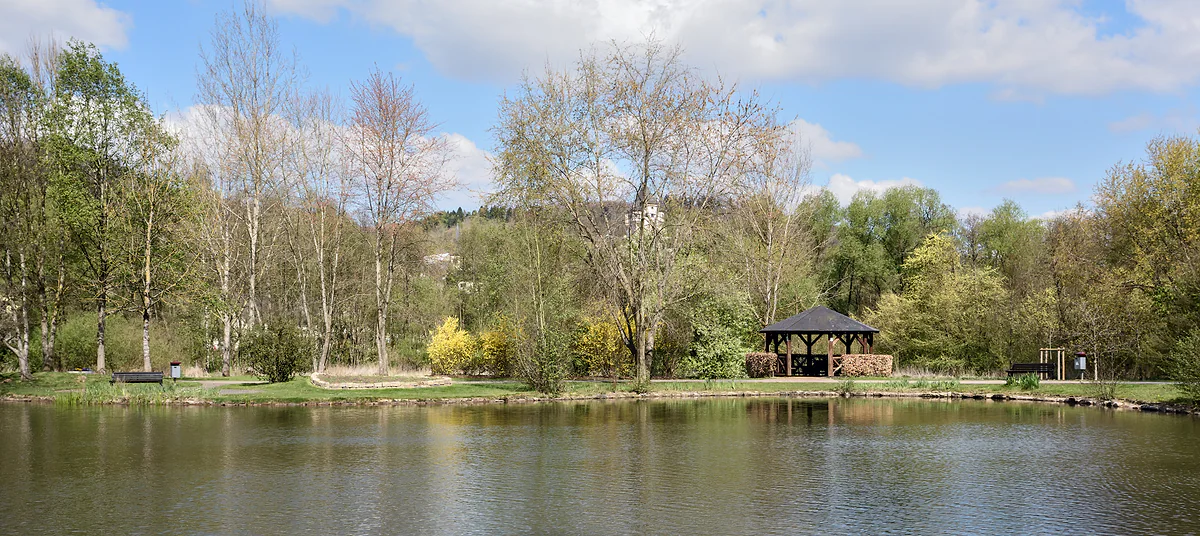
The public park at Colmar-Berg with a pond, waterside trees and a wooden pavilion by the water
Berg through time
| Date | What happened |
|---|---|
| 1845 | William II, King of the Netherlands and Grand Duke, buys the castle and estate |
| Reign of William III | Ernest van Koenig remodels it as a neo-Gothic residence |
| 1893 | Guillaume IV and Marie-Anne of Braganza move in after their wedding |
| 19 Oct 1907 | Demolition of the old castle begins |
| 15 Sept 1911 | Guillaume IV moves into the new castle with his court |
| 1934 | The state buys the castle and its state-room furniture |
| 1964 | Grand Duke Jean moves back in; it has been the head of state's home ever since |
Cour grand-ducale (monarchie.lu), Berg Castle page, checked on 30 September 2026.
Key facts
| Item | Detail |
|---|---|
| Visiting | No, neither the castle nor the grounds |
| Rooms | More than a hundred |
| Architects, 1907-1911 | Max Ostenrieder, with Pierre Funck-Eydt |
| What survives of the old castle | Stables, coach houses and the 19th-century gate tower |
monarchie.lu and visitluxembourg.
Test yourself
True or false?
0/4 Pick before you peek.
-
Berg Castle opens to the public in summer.
See the answer
False. It never opens. The summer tours are at the Grand Ducal Palace in Luxembourg City.
-
Today's Berg Castle is a 20th-century building.
See the answer
True. Demolition of the old castle began on 19 October 1907 and Guillaume IV moved into the new one on 15 September 1911.
-
Berg Castle is the private property of the grand ducal family.
See the answer
False. The state bought it in 1934, together with the state-room furniture, and places it at the family's disposal.
-
During the Nazi occupation the castle became a school.
See the answer
True. According to the Grand Ducal Court, it was requisitioned and turned into a National Socialist school for girls.
- Bought by William II
- 1845
- Rooms in the new castle
- 100+
- Guillaume IV moves in
- 1911
- Head of state's home ever since
- 1964
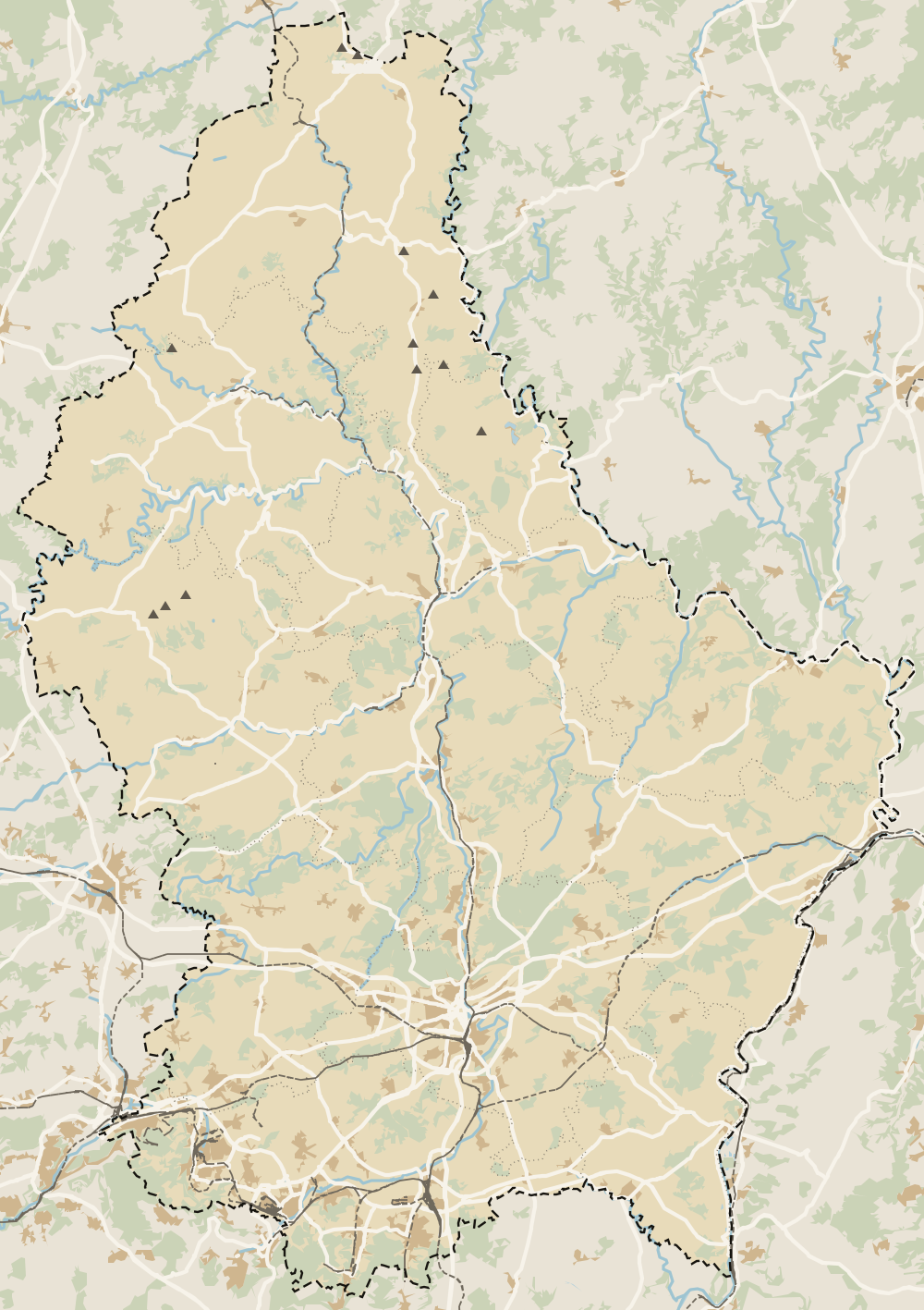
Map
Where Berg Castle is
The thick dashed line is the border with Belgium, France and Germany, and the fine ones divide the twelve cantons. The Éislek lies to the north and the Moselle to the east. Every number opens its guide.
0 of 425 Luxembourg guides
Your next stamp
- Colmar-Berg
- Luxembourg fortress
- Grand Duke
- Grand Ducal Palace
- Castle hotels
- Wiltz Castle
- Castles
- A Possen Museum
- American Cemetery
- Ansembourg
- Ansembourg Castles
- Asselborn
- Bascharage
- Beaufort castles
- Belval
- Belval blast furnaces
- Bernard-Massard cellars
- Bourglinster Castle
- Bourscheid Castle
- Brandenbourg
- Brandenbourg Castle
- Caves St Martin
- Christmas
- Clervaux Castle
- Echternach
- Echternach Abbey
- Ehnen
- Ehnen Wine Museum
- Esch-sur-Alzette
- Esch-sur-Sûre Castle
- European Museum Schengen
- Fond-de-Gras
- General Patton Museum
- German war cemetery
- Haff Réimech
- Hohllay
- Hollenfels Castle
- Hosingen
- Kautenbach
- Kneiff
- Koerich Castle
- Larochette Castle
- Lasauvage
- Mersch Castle
- Military History Museum
- Moersdorf
- Mondorf Domaine Thermal
- Munsbach Castle
- National Mining Museum
- Parc Merveilleux
- Park Sënnesräich
- Places to visit
- Remich
- Rindschleiden
- Schiessentümpel
- Septfontaines Castle
- Slate Museum
- Stolzembourg
- Tudor Museum
- Useldange Castle
- Valley of the Seven Castles
- Vianden
- Vianden Castle
- Ville Haute
- Wasserbillig Aquarium
- Weiswampach lakes
- Ahn
- Berdorf
- Bourscheid-Plage
- Butterfly garden
- Clervaux
- Differdange
- Echternach lake
- Grevenmacher
- Heringer Millen
- Hollenfels
- Luxembourg City
- Luxembourg Science Center
- Meysembourg Castle
- Mullerthal
- National Day
- National Resistance Museum
- Perekop
- Remerschen
- Schoenfels Castle
- The Family of Man
- Things to do
- Upper Sûre Lake
- Vianden chairlift
- Wasserbillig
- Clervaux Abbey
- Echternach Roman villa
- Éislek
- Insenborn
- Kallektuffquell
- Machtum
- Most beautiful places
- Our Nature Park
- Pétange
- Pettingen Castle
- Schueberfouer
- Schwebsingen
- Victor Hugo House
- Waldbillig
- Dudelange
- Kuelscheier
- Lultzhausen
- Moselle Valley
- Octave
- Prettiest villages
- Sanem
- Schengen
- Wellenstein
- Wiltz
- Wolfsschlucht
- Beaufort
- Bech-Kleinmacher
- Éimaischen
- Gaalgebierg
- Guttland
- Marnach
- Mondorf-les-Bains
- Putscheid
- Schifflange
- UNESCO World Heritage
- Carnival
- Consdorf
- Ellergronn
- Käerjeng
- Kayl
- Map
- Minett
- Munshausen
- Tandel
- Bech
- Buergbrennen
- Esch-sur-Sûre
- Rumelange
- Where is Luxembourg
- Is it a country?
- Lac de la Haute-Sûre (commune)
- Rosport-Mompach
- Wormeldange
- Larochette
- Mondercange
- Regions
- Bettembourg
- Bock Casemates
- Cantons
- Dancing procession
- Diekirch
- Fischbach
- Garnich
- Mersch
- Moselle wine route
- Ettelbruck
- Grund
- Heffingen
- Kehlen
- Lintgen
- Moselle river cruises
- Pétrusse Casemates
- Towns and villages
- Chemin de la Corniche
- Erpeldange-sur-Sûre
- Junglinster
- Kopstal
- Lorentzweiler
- Nommern
- Pfaffenthal
- Population
- Bissen
- Clausen
- Koerich
- Schieren
- Size
- Vallée de l'Ernz
- Feulen
- Kirchberg
- Languages
- Notre-Dame Cathedral
- Reisdorf
- Steinfort
- Bettendorf
- Habscht
- St Michael's Church
- Helperknapp
- Luxembourgish
- Place Guillaume II
- Name
- Place d'Armes
- History
- Place de la Constitution
- Flaxweiler
- Gare
- Hamm
- Kirchberg funicular
- Mamer
- Mertert
- Minett Trail
- Mullerthal Trail
- Neumünster Abbey
- Parc Hosingen
- Pfaffenthal lift
- Political system
- Redange
- The Passerelle
- Wine festivals
- Winseler
- Beckerich
- Biwer
- EU institutions
- Goesdorf
- Limpertsberg
- Mudam
- Natur Musée
- Pulvermühl
- Stadtbredimus
- Troisvierges
- Wenzel walk
- Bonnevoie
- Bous-Waldbredimus
- Ell
- Flag
- Kiischpelt
- Manternach
- Philharmonie
- Vauban circuit
- Weiswampach
- Betzdorf
- Boulaide
- Dräi Eechelen Museum
- Facts
- Hollerich
- Lenningen
- Useldange
- Wincrange
- Bourscheid
- Dalheim
- Gasperich
- Public holidays
- Red Bridge
- Saeul
- Belair
- Second World War
- Vichten
- Battle of the Bulge
- Merl
- Préizerdaul
- Cents
- EU and Schengen
- Groussbus-Wal
- Entry requirements
- Neudorf
- Rambrouch
- Currency and payments
- Mertzig
- Weimerskirch
- Adolphe Bridge
- Beggen
- Escapardenne
- How to get there
- International March of Diekirch
- MNHA (National Museum)
- Rock climbing
- Sandweiler
- Bridges
- Eich
- Flights
- Golf
- Hesperange
- Lëtzebuerg City Museum
- Canoeing and kayaking
- Dommeldange
- Luxembourg airport
- Strassen
- Villa Vauban
- Airport to city centre
- Bertrange
- Casino Luxembourg
- Mühlenbach
- Swimming pools
- From Brussels
- Pétrusse Valley
- Rollingergrund
- Walferdange
- Cessange
- Day trip from Brussels
- Municipal Park
- Steinsel
- Free walking tours
- From Paris
- Niederanven
- From Frankfurt
- Schuttrange
- Sightseeing train and bus
- By train
- Contern
- By coach
- Weiler-la-Tour
- Driving
- Luxembourg in one day
- Pretzel Sunday
- Rham Plateau
- Tour de Luxembourg
- Candlemas (Liichtmëssdag)
- Car hire
- Luxembourg in two days
- Saint-Esprit Plateau
- Luxembourg in three days
- Melusina statue
- Parking
- St Nicholas Day (Kleeschen)
- Fête de la Musique
- Luxembourg in four days
- Museums in Luxembourg
- Petrol
- Place de Clairefontaine
- A week in Luxembourg
- Getting around
- Luxembourg Marathon
- Tram and Bus Museum
- Free public transport
- Parks in Luxembourg City
- Road trip
- Belgium and Luxembourg
- Tram
- Buses
- Viewpoints
- Trains
- Luxembourg station
- Cycling
- LuxembourgPass
- Prices and budget
- On a budget
- Free things to do
- Mobile and roaming
- Healthcare
- Safety
- Scams
- Tourist information
- Packing list
- Swimming lakes
- With a dog
- Markets
- Tipping
- Shopping
- What to buy
- Shopping centres
- With kids
- For couples
- Playgrounds
- Adventure parks
- Nightlife
- Theatres and concert venues
- Leudelange
- Nature parks
- Where to stay
- City-centre hotels
- Hiking
- Nature reserves
- Reckange-sur-Mess
- Hotels near the station
- Roeser
- Frisange
- Hotels in Kirchberg
- Airport hotels
- Dippach
- Hotels in Vianden
- Hotels in Echternach
- Hotels in Clervaux
- Hotels in Mondorf-les-Bains
- Hotels in Esch-sur-Alzette
- Hotels on the Moselle
- Mullerthal hotels
- Upper Sûre lake hotels
- Hotels in Diekirch and Ettelbruck
- Cheap hotels
- Luxury hotels
- Boutique hotels
- Spa hotels
- Family hotels
- Apartments
- Weather
- Youth hostels
- Best time to visit
- Campsites
- Holiday cottages
- In winter
- In spring
- Day trips
- In summer
- Around Luxembourg
- In autumn
- Ice skating
- Trier day trip
- Metz day trip
- Arlon day trip
- In January
- In February
- In March
- In April
- In May
- In June
- In July
- In August
- In September
- Food
- In October
- In November
- Where to eat
- In December
- Michelin restaurants
- Cheap eats
- Judd mat Gaardebounen
- Bouneschlupp
- Gromperekichelcher
- Kniddelen
- Quetschentaart
- Rieslingspaschtéit
- Events
- Wine
- Crémant
- Beer
Frequently asked questions
Can you visit Berg Castle in Luxembourg?
No. visitluxembourg says that to protect the grand ducal family's privacy it can only be seen from outside. If you want to tour a royal residence, the Grand Ducal Palace in the capital opens in summer.
Who lives in Berg Castle?
The head of state and his family, according to the Grand Ducal Court. Since 3 October 2025 that's Grand Duke Guillaume, with Grand Duchess Stéphanie.
Where is Berg Castle?
In the commune of Colmar-Berg, canton of Mersch, in the centre-north of the country. visitluxembourg places it in the Éislek, the Luxembourg Ardennes.
How old is Berg Castle?
visitluxembourg dates its origins to the early 15th century, but today's building is from 1907-1911. Of the earlier castle only the stables, coach houses and 19th-century gate tower survived.
How can I tell if the Grand Duke is at home?
Look at the flag. visitluxembourg notes that the flag on the tower roof indicates whether the Grand Duke is in residence.
What happened to the castle in the Second World War?
With the grand ducal family in exile, the Nazi occupiers requisitioned it and turned it into a National Socialist school for girls, according to the Grand Ducal Court.
By
Tourism graduate with a master’s in Tourism Management and Planning from the University of Málaga, who has travelled across Europe. He writes every guide from official sources and his own judgement.
Published on . Facts checked on .
Sources
Some links in this guide are affiliate links: if you book through them, the site earns a commission at no extra cost to you. Affiliate disclosure
Photos: Nikilux (CC BY-SA 3.0 lu); Cayambe (CC BY-SA 4.0), via Wikimedia Commons.