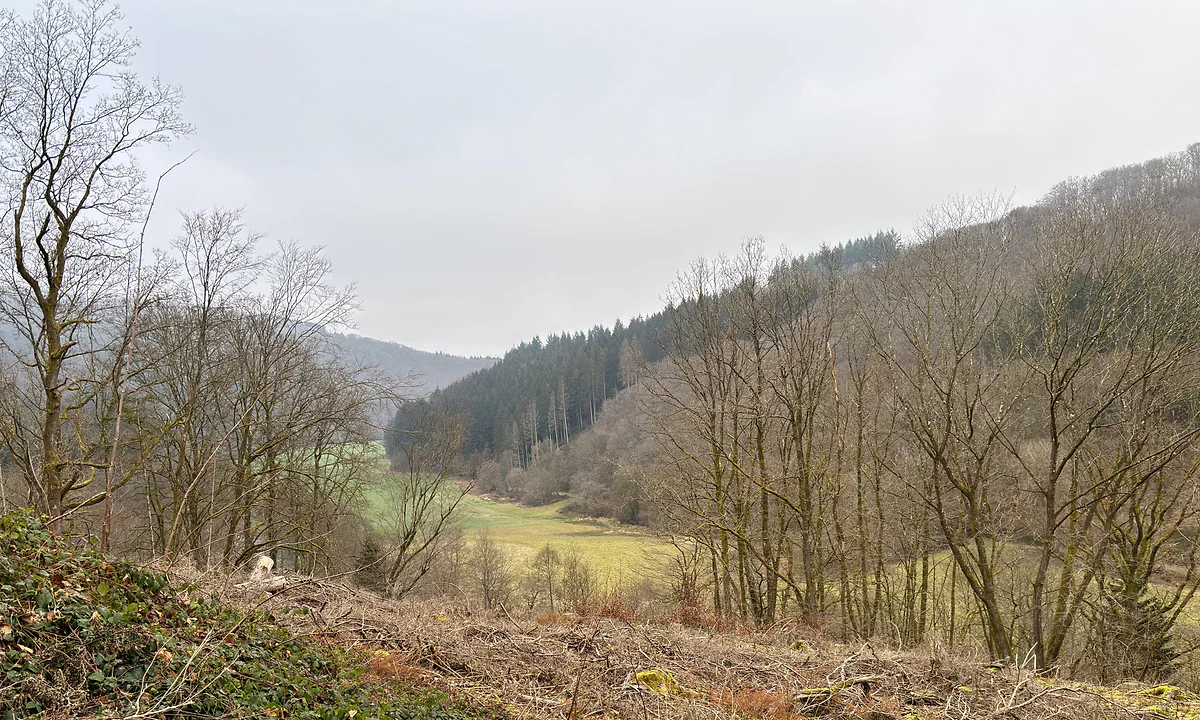
Naturpark Our, created in 2005
Our Nature Park, the plateau and valleys of Luxembourg's far north
The Our Nature Park (Naturpark Our) protects 420 km² of the northern Éislek, on the borders with Belgium and Germany. Created in 2005, it brings together eight communes, Vianden and Clervaux among them, with about 24,000 residents. It's a high plateau cut by the narrow valleys of the Our and the Clerve, with castles, museums and paths for every level.
In 30 seconds
Full read: 3 min
- The Naturpark Our has protected 420 km² of northern Luxembourg since 2005.
- It brings together eight communes and about 24,000 people, including Vianden and Clervaux.
- Its landscape is a high plateau cut by the valleys of the Our and the Clerve.
- The 8.5 km Ourdall between Vianden and Stolzembourg is its most rewarding walk.
I wouldn't come to the park to clock up miles, but to pair a village with a short walk. Vianden with the Ourdall, Clervaux with its castle and, time permitting, the sound trail at Hoscheid. That gives you the best of the Our without needing to be a hillwalker.
Before you go
What I would keep in mind
-
01 Most beautiful
The Ourdall, from Vianden to Stolzembourg
An 8.5 km path along the Our with ten themed stops on the valley's past and present. It's the one I'd do first.
Stolzembourg -
02 My tip
A trail made for listening
At Hoscheid, the sound trail is a 6 km loop with listening points installed by artists to tune you into nature.
-
03 To save money
The park's museums, with the LuxembourgPass
Vianden Castle, the Victor Hugo House, the Stolzembourg copper mine and The Family of Man in Clervaux are all free with the pass.
LuxembourgPass -
04 Getting there
By train to Clervaux
Clervaux has a station on CFL line 10, free in second class within Luxembourg. It's the car-free gateway to the north of the park.
Clervaux
Plenty of people visit Vianden and Clervaux without realising both sit in the same nature park. The Naturpark Our fills the north of the Éislek, the Luxembourg Ardennes, and the country’s official portal defines it by its landscape, a broad, high plateau cut by narrow valleys that the Our, the Clerve and their tributaries have carved into the rock. For me that’s the key to it. Up top, open fields; down below, tight wooded valleys where the villages are.
What it actually is
It was created in 2005 and covers 420 km², bordering both Belgium and Germany. About 24,000 people live in its eight communes, Clervaux, Kiischpelt, Parc Hosingen, Putscheid, Tandel, Troisvierges, Vianden and Wincrange. Since September 2021 it has been working with Weiswampach towards bringing it in. The communes and the state together form the syndicate that runs it.
A Luxembourg nature park isn’t a wilderness reserve, and in that it’s closer to a British national park than you might think. According to the official portal, it’s an area of at least 5,000 hectares with valuable natural and cultural heritage, where the aim is to protect it while ensuring sustainable economic development for the people who live there. So there’s no gate and no fence. It’s a working landscape of villages, farms and roads. In practice you’ll share lanes with tractors and the villages carry on with everyday life, which for me is a large part of the appeal.
One detail I rather like. One of its communes, Putscheid, earned DarkSky International’s dark-sky community label in 2026, a first for Luxembourg, after years of changing its street lighting. If you’re staying nearby and the night is clear, it’s worth putting your phone away and looking up.
The river that gives it its name
The Our rises in Belgium, at a spot called Eichelsberg near Manderfeld, at 653 metres. It flows south as the border between Belgium and Germany and, from near Ouren, between Luxembourg and Germany, with the status of a condominium. Just before Vianden its left bank encloses a Luxembourg enclave taking in much of the town. After 78 km it joins the Sûre at Wallendorf, in Germany.
To sleep close to everything, search places to stay in Vianden on Booking.com and filter by area before price.
The walks I’d do
The official portal picks out several. The one I’d do first is the Ourdall Promenade, which covers 8.5 km from Vianden up to Stolzembourg by way of ten themed islands on the valley’s history. At Hoscheid there’s a 6 km sound trail, with points installed by artists for listening to nature. At Parc Hosingen, a 5-hectare arboretum with 45 species of trees and shrubs, each described in detail.
The one with the most history is the smugglers’ path at Troisvierges, with two routes of 12 and 9 km, tracing the escapes to Belgium of Luxembourg resisters and young men refusing forced conscription in the last years of the Second World War. Cyclists get two circuits, six mountain-bike routes and 28 km of e-bike circuits between Troisvierges and Weiswampach. For a long-distance route, the Éislek Trail, part of the Escapardenne trail, passes through Clervaux.
Castles and museums inside the park
The park also holds two of the country’s big names. Vianden Castle, the work of the 11th to 14th centuries, and Clervaux’s 12th-century castle, with three museums inside, Steichen’s photography exhibition, the castle models and the 1944 battle museum. In summer the Clervaux Castle Summer Festival showcases young Luxembourg bands with free entry. Add the Victor Hugo House in Vianden and the copper mine museum at Stolzembourg.
To sleep close to everything, search places to stay in Vianden on Expedia and filter by area before price.
Local food and getting around
The park works on the food side too. Its School of Taste uses workshops to explain the link between what we eat, the climate and the region, and the Natur genéissen scheme promotes regional, organic and fair produce. It has also set up a biological station, more a service than a building, which surveys species and habitats and organises their protection.
Without a car, CFL line 10 runs up to Clervaux and Troisvierges, free in second class within Luxembourg, and Vianden is reached by bus from Diekirch. Coming overland from Britain via Belgium, the Clervaux tourist office points out that you can also reach Clervaux by train through Liège, which drops you straight into the north of the park. The country’s other parks, including the Upper Sûre, are in the guide to Luxembourg nature parks.
If you are short on time, see the best tours in Our Nature Park and pick one that fits your day.
Where the bus does not go, a car does: compare car hire in Luxembourg before you arrive rather than at the desk.
If you still need a way in, check the best ticket deals to Luxembourg from where you are.
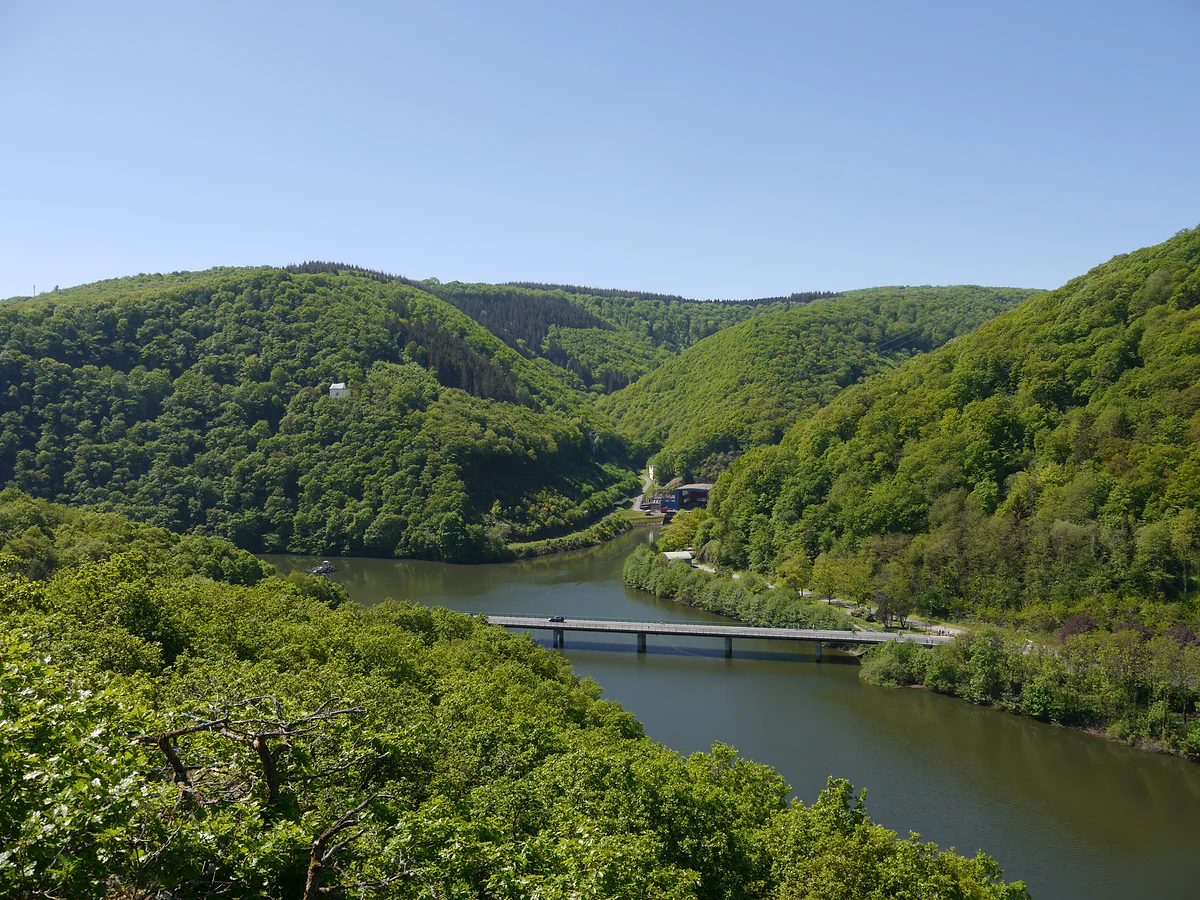
The Our valley by Vianden, on the German border, with the river between wooded slopes and a road bridge
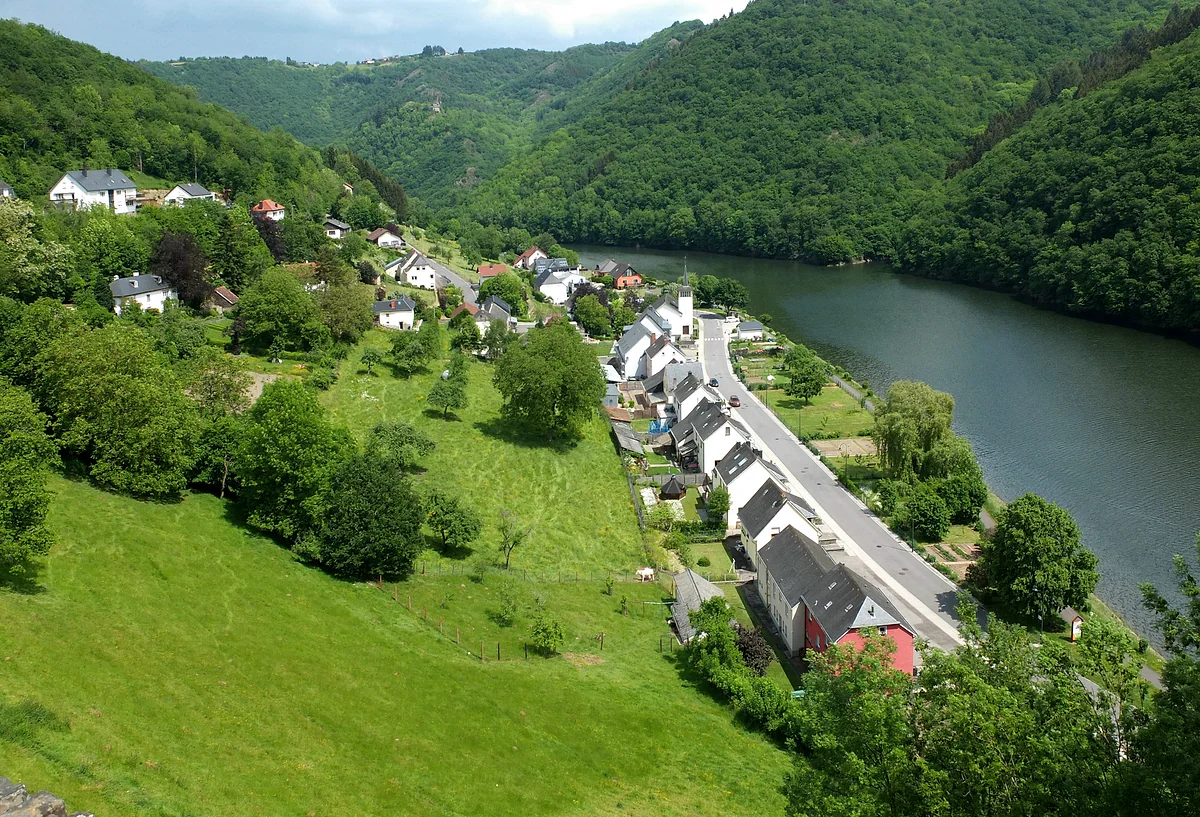
The village of Bivels on a bend of the River Our, with houses lined up by the water and lush forested slopes
The park in figures
| Figure | Value |
|---|---|
| Area | 420 km² |
| Year created | 2005 |
| Residents | About 24,000 |
| Member communes | Clervaux, Kiischpelt, Parc Hosingen, Putscheid, Tandel, Troisvierges, Vianden and Wincrange |
| Joining | Weiswampach, since September 2021 |
Luxembourg.public.lu, Naturpark Our page.
Walks and routes named by the official portal
| Route | Where | Length |
|---|---|---|
| Ourdall Promenade | Vianden to Stolzembourg | 8.5 km |
| Sound trail | Hoscheid | 6 km |
| Arboretum (45 species) | Parc Hosingen | 5 ha |
| Smugglers' path (sentier des passeurs) | Troisvierges | 12 and 9 km |
| E-bike circuits | Troisvierges to Weiswampach | 28 km |
Plus two cycle circuits and six mountain-bike routes, according to Luxembourg.public.lu.
Test yourself
True or false?
0/3 Pick before you peek.
-
Along the Our, Luxembourg and Germany share the river as a condominium.
See the answer
True. The official portal explains that the Our forms the border with the status of a condominium between the two countries.
-
The Our Nature Park is a national park.
See the answer
False. It's a nature park, a Luxembourg designation for areas of at least 5,000 hectares that combine protection with development for the people who live there.
-
The River Our rises in Luxembourg.
See the answer
False. It rises in Belgium, at 653 metres near Manderfeld, and flows into the Sûre at Wallendorf, in Germany.
- Area of the park
- 420 km²
- Year created
- 2005
- Member communes
- 8
- Total length of the Our
- 78 km
0 of 425 Luxembourg guides
Your next stamp
- Éislek
- Nature parks
- Kiischpelt
- Hotels in Clervaux
- Nature reserves
- Winseler
- Parks in Luxembourg City
- Hiking
- A Possen Museum
- American Cemetery
- Ansembourg
- Ansembourg Castles
- Asselborn
- Bascharage
- Beaufort castles
- Belval
- Belval blast furnaces
- Berg Castle
- Bernard-Massard cellars
- Bourglinster Castle
- Bourscheid Castle
- Brandenbourg
- Brandenbourg Castle
- Caves St Martin
- Christmas
- Clervaux Castle
- Echternach
- Echternach Abbey
- Ehnen
- Ehnen Wine Museum
- Esch-sur-Alzette
- Esch-sur-Sûre Castle
- European Museum Schengen
- Fond-de-Gras
- General Patton Museum
- German war cemetery
- Haff Réimech
- Hohllay
- Hollenfels Castle
- Hosingen
- Kautenbach
- Kneiff
- Koerich Castle
- Larochette Castle
- Lasauvage
- Mersch Castle
- Military History Museum
- Moersdorf
- Mondorf Domaine Thermal
- Munsbach Castle
- National Mining Museum
- Parc Merveilleux
- Park Sënnesräich
- Places to visit
- Remich
- Rindschleiden
- Schiessentümpel
- Septfontaines Castle
- Slate Museum
- Stolzembourg
- Tudor Museum
- Useldange Castle
- Valley of the Seven Castles
- Vianden
- Vianden Castle
- Ville Haute
- Wasserbillig Aquarium
- Weiswampach lakes
- Wiltz Castle
- Ahn
- Berdorf
- Bourscheid-Plage
- Butterfly garden
- Clervaux
- Differdange
- Echternach lake
- Grevenmacher
- Heringer Millen
- Hollenfels
- Luxembourg City
- Luxembourg Science Center
- Meysembourg Castle
- Mullerthal
- National Day
- National Resistance Museum
- Perekop
- Remerschen
- Schoenfels Castle
- The Family of Man
- Things to do
- Upper Sûre Lake
- Vianden chairlift
- Wasserbillig
- Clervaux Abbey
- Echternach Roman villa
- Insenborn
- Kallektuffquell
- Machtum
- Most beautiful places
- Pétange
- Pettingen Castle
- Schueberfouer
- Schwebsingen
- Victor Hugo House
- Waldbillig
- Dudelange
- Kuelscheier
- Lultzhausen
- Moselle Valley
- Octave
- Prettiest villages
- Sanem
- Schengen
- Wellenstein
- Wiltz
- Wolfsschlucht
- Beaufort
- Bech-Kleinmacher
- Éimaischen
- Gaalgebierg
- Guttland
- Marnach
- Mondorf-les-Bains
- Putscheid
- Schifflange
- UNESCO World Heritage
- Carnival
- Consdorf
- Ellergronn
- Käerjeng
- Kayl
- Map
- Minett
- Munshausen
- Tandel
- Bech
- Buergbrennen
- Esch-sur-Sûre
- Rumelange
- Where is Luxembourg
- Is it a country?
- Lac de la Haute-Sûre (commune)
- Rosport-Mompach
- Wormeldange
- Larochette
- Mondercange
- Regions
- Bettembourg
- Bock Casemates
- Cantons
- Dancing procession
- Diekirch
- Fischbach
- Garnich
- Mersch
- Moselle wine route
- Ettelbruck
- Grund
- Heffingen
- Kehlen
- Lintgen
- Moselle river cruises
- Pétrusse Casemates
- Towns and villages
- Chemin de la Corniche
- Erpeldange-sur-Sûre
- Junglinster
- Kopstal
- Lorentzweiler
- Nommern
- Pfaffenthal
- Population
- Bissen
- Clausen
- Grand Ducal Palace
- Koerich
- Schieren
- Size
- Vallée de l'Ernz
- Feulen
- Kirchberg
- Languages
- Notre-Dame Cathedral
- Reisdorf
- Steinfort
- Bettendorf
- Habscht
- St Michael's Church
- Helperknapp
- Luxembourgish
- Place Guillaume II
- Name
- Place d'Armes
- History
- Place de la Constitution
- Grand Duke
- Colmar-Berg
- Flaxweiler
- Gare
- Hamm
- Kirchberg funicular
- Luxembourg fortress
- Mamer
- Mertert
- Minett Trail
- Mullerthal Trail
- Neumünster Abbey
- Parc Hosingen
- Pfaffenthal lift
- Political system
- Redange
- The Passerelle
- Wine festivals
- Beckerich
- Biwer
- EU institutions
- Goesdorf
- Limpertsberg
- Mudam
- Natur Musée
- Pulvermühl
- Stadtbredimus
- Troisvierges
- Wenzel walk
- Bonnevoie
- Bous-Waldbredimus
- Ell
- Flag
- Manternach
- Philharmonie
- Vauban circuit
- Weiswampach
- Betzdorf
- Boulaide
- Dräi Eechelen Museum
- Facts
- Hollerich
- Lenningen
- Useldange
- Wincrange
- Bourscheid
- Dalheim
- Gasperich
- Public holidays
- Red Bridge
- Saeul
- Belair
- Second World War
- Vichten
- Battle of the Bulge
- Merl
- Préizerdaul
- Cents
- EU and Schengen
- Groussbus-Wal
- Entry requirements
- Neudorf
- Rambrouch
- Currency and payments
- Mertzig
- Weimerskirch
- Adolphe Bridge
- Beggen
- Escapardenne
- How to get there
- International March of Diekirch
- MNHA (National Museum)
- Rock climbing
- Sandweiler
- Bridges
- Eich
- Flights
- Golf
- Hesperange
- Lëtzebuerg City Museum
- Canoeing and kayaking
- Dommeldange
- Luxembourg airport
- Strassen
- Villa Vauban
- Airport to city centre
- Bertrange
- Casino Luxembourg
- Mühlenbach
- Swimming pools
- From Brussels
- Pétrusse Valley
- Rollingergrund
- Walferdange
- Cessange
- Day trip from Brussels
- Municipal Park
- Steinsel
- Free walking tours
- From Paris
- Niederanven
- From Frankfurt
- Schuttrange
- Sightseeing train and bus
- By train
- Contern
- By coach
- Weiler-la-Tour
- Driving
- Luxembourg in one day
- Pretzel Sunday
- Rham Plateau
- Tour de Luxembourg
- Candlemas (Liichtmëssdag)
- Car hire
- Luxembourg in two days
- Saint-Esprit Plateau
- Luxembourg in three days
- Melusina statue
- Parking
- St Nicholas Day (Kleeschen)
- Fête de la Musique
- Luxembourg in four days
- Museums in Luxembourg
- Petrol
- Place de Clairefontaine
- A week in Luxembourg
- Getting around
- Luxembourg Marathon
- Tram and Bus Museum
- Free public transport
- Road trip
- Belgium and Luxembourg
- Tram
- Buses
- Viewpoints
- Trains
- Luxembourg station
- Cycling
- LuxembourgPass
- Prices and budget
- On a budget
- Free things to do
- Mobile and roaming
- Healthcare
- Safety
- Scams
- Tourist information
- Packing list
- Swimming lakes
- With a dog
- Markets
- Tipping
- Shopping
- What to buy
- Shopping centres
- With kids
- For couples
- Playgrounds
- Adventure parks
- Nightlife
- Castles
- Theatres and concert venues
- Leudelange
- Where to stay
- City-centre hotels
- Reckange-sur-Mess
- Hotels near the station
- Roeser
- Frisange
- Hotels in Kirchberg
- Airport hotels
- Dippach
- Hotels in Vianden
- Hotels in Echternach
- Hotels in Mondorf-les-Bains
- Hotels in Esch-sur-Alzette
- Hotels on the Moselle
- Mullerthal hotels
- Upper Sûre lake hotels
- Hotels in Diekirch and Ettelbruck
- Cheap hotels
- Luxury hotels
- Boutique hotels
- Spa hotels
- Family hotels
- Apartments
- Weather
- Youth hostels
- Best time to visit
- Campsites
- Holiday cottages
- In winter
- Castle hotels
- In spring
- Day trips
- In summer
- Around Luxembourg
- In autumn
- Ice skating
- Trier day trip
- Metz day trip
- Arlon day trip
- In January
- In February
- In March
- In April
- In May
- In June
- In July
- In August
- In September
- Food
- In October
- In November
- Where to eat
- In December
- Michelin restaurants
- Cheap eats
- Judd mat Gaardebounen
- Bouneschlupp
- Gromperekichelcher
- Kniddelen
- Quetschentaart
- Rieslingspaschtéit
- Events
- Wine
- Crémant
- Beer
Frequently asked questions
Where is the Our Nature Park?
In northern Luxembourg, in the Éislek, bordering Belgium and Germany. It covers the communes of Clervaux, Kiischpelt, Parc Hosingen, Putscheid, Tandel, Troisvierges, Vianden and Wincrange.
What is there to see in the Our Nature Park?
The castles of Vianden and Clervaux, The Family of Man, the Victor Hugo House, the Stolzembourg copper mine, and walks such as the Ourdall and the Hoscheid sound trail.
How do I get to the Our Nature Park from Luxembourg City?
By train on line 10 to Clervaux or, for the south of the park, to Diekirch and then the bus to Vianden. Public transport is free within Luxembourg.
Is it the same as the German-Luxembourg Nature Park?
No. The German-Luxembourg park, from 1964, is a cross-border park of about 800 km². The Naturpark Our is Luxembourgish, dates from 2005 and covers 420 km².
What's the best walk in the Our Nature Park?
For me, the Ourdall between Vianden and Stolzembourg, 8.5 km along the river with ten information stops. For something longer, the Éislek Trail passes through Clervaux.
Do you have to pay to enter the park?
No. It's a lived-in area with villages and roads, not an enclosure. You only pay for the museums and castles you visit.
By
Tourism graduate with a master’s in Tourism Management and Planning from the University of Málaga, who has travelled across Europe. He writes every guide from official sources and his own judgement.
Published on . Facts checked on .
Sources
Some links in this guide are affiliate links: if you book through them, the site earns a commission at no extra cost to you. Affiliate disclosure
Photos: Hejnjahns (CC BY-SA 4.0); Sergei Tikhomirov (CC BY 2.0); Palauenc05 (CC BY-SA 4.0), via Wikimedia Commons.