Where three countries meet
Schengen, the Moselle village behind the passport queue
Schengen is a wine village on the Luxembourg Moselle, at the point where Luxembourg, Germany and France meet. The agreement that scrapped border checks was signed here on 14 June 1985, aboard a boat moored on the river. Today it has the European Museum, that same boat restored, the 1997 monument and the Markusberg hill. The commune has 5,265 residents.
In 30 seconds
Full read: 4 min
- Schengen is the Moselle village where Luxembourg, Germany and France meet.
- The agreement was signed here on 14 June 1985, aboard the boat Princesse Marie-Astrid.
- The European Museum reopened on 14 June 2025, and its ticket includes the boat.
- There's no Luxembourg railway station and no hotel in the commune, so base yourself in Remich or the capital.
Schengen takes half a day, and I'd do the museum first and the Markusberg afterwards, because from the top the three-countries idea clicks at a glance. What I wouldn't do is come only for the monument and a photo. The boat, which is on the same ticket, is what makes the trip worthwhile.

On the calendar
The dates at a glance
-
Hiking without Borders, M3 Trail
Schengen
-
Hunnefeier
Schengen
Before you go
What I would keep in mind
-
01 Most beautiful
Three countries from the Markusberg
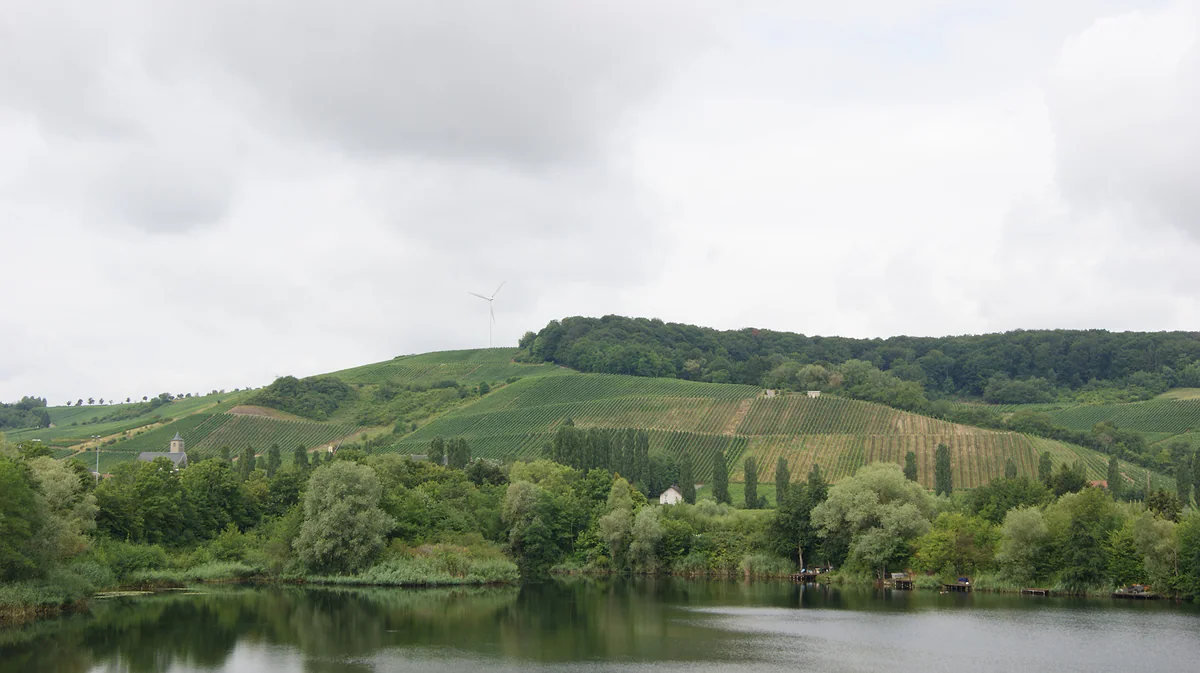
From the vineyard hill above the village you see the bridge to Germany and France beyond. A statue of St Mark by Claus Cito, the sculptor of the Gëlle Fra, stands on the tower.
-
02 To save money
Museum and boat for €5
The European Museum ticket covers the boat where the agreement was signed and costs €5 as of September 2026. With the LuxembourgPass it's free.
European Museum in Schengen -
03 Getting there
The nearest station is in Germany
Schengen has no Luxembourg station. The closest is Perl/Schengen on the German network, about 1 km on foot over the river. From the capital, the free option is the bus.
Luxembourg buses -
04 My tip
The irony at passport control
The UK is outside Schengen, so a British visitor gets the full EES biometric check to reach the village that abolished border checks. Allow for it at Findel or St Pancras.
is Luxembourg in the EU
What I would book
My ranking, scored
Things to do in Schengen, ranked
My own marks out of 10, for a half-day visit without a car. What explains the place counts for more than what merely photographs well.
0 of 4 seen
-
European Museum and the Marie-Astrid boat
The exhibition redesigned in 2025 and the signing room on the boat itself. It's the reason to come, and an hour and a half covers it.
9.2 out of 10
-
Markusberg and St Mark's Tower
Vines planted by a 1933 cooperative, the tower restored in 2016 and the finest view of the tripoint. Walk up from the village.
8.5 out of 10
-
Monument and Place des Étoiles
Three steel pillars from 1997, two pieces of the Berlin Wall and a flag for every Schengen country, each named in its own language.
7.8 out of 10
-
Schengen Castle
From the outside only. One round tower survives from the 13th-century moated castle, the one Victor Hugo sketched in 1871.
6.5 out of 10
Most British travellers know the word Schengen from the wrong side of a passport desk. It decides which queue you join at Findel and how many days you get in the EU, and yet the place itself is a small wine village at the bottom of the Luxembourg Moselle Valley, with the river in front and two more countries within a stone’s throw. Across the bridge is Perl, in Germany, and a little further south France begins. The national tourist board calls the spot the magic triangle.
What happened here in June 1985
On 14 June 1985 the representatives of the first signatory countries met aboard the Princesse Marie-Astrid, a passenger boat moored on the Moselle, and signed the agreement that removed checks at their shared borders. The convention that made it work was signed in 1990, and Luxembourg has applied it since 26 March 1995. The UK stayed out, which is why you still show a passport. How the rules affect a British visitor, from the 90 days in 180 to EES, is covered in is Luxembourg in the EU.
I like that they picked a tiny village and a boat rather than a capital. In 2017 the EU gave Schengen its European Heritage Label, and visitluxembourg reckons about 50,000 people a year now come to see it.
Museum and boat come first
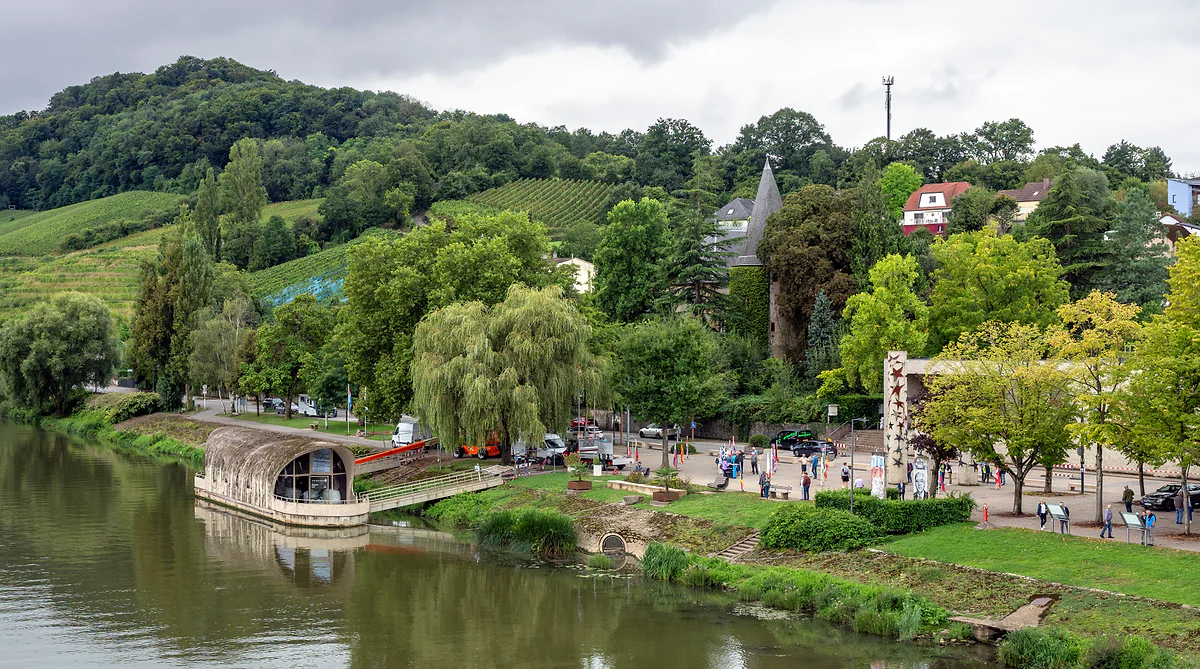
The European Museum in Schengen reopened on 14 June 2025, the 40th anniversary of the signing, after a full refit. A few steps away, the original boat, renamed Prinzessin Marie-Astrid Europa, is moored at the bank and included on the same ticket, signing room and all. It’s €5 for an adult as of September 2026, with doors open 10:00-18:00 every day. With only an hour in the village, I’d spend it here.
To sleep close to everything, search places to stay in Remich on Booking.com and filter by area before price.
A stroll along the river
By the boat’s mooring stands the monument to the agreement, three steel pillars from 1997, each with a star for one of the first signatories. Nearby, on the Place des Étoiles, are two pieces of the Berlin Wall, one given by the Berlin Senate in 2010 and one added in 2015 with a dove of peace and a portrait of Gorbachev, plus the flag of every Schengen country with a plaque giving its name in its own language. Everyone takes their photo here, and fair enough.
The castle is round the corner. It began as a moated castle in the 13th century, but in 1812 the industrialist Jean-Nicolas Collart pulled most of it down and built the present house. A single round tower survives, the one Victor Hugo sketched in 1871 while staying with his family at Altwies. One of those drawings is kept today at the capital’s National Museum of History and Art. The official listing says nothing about going inside, so treat it as a view from the lane.
Up the Markusberg for the big picture
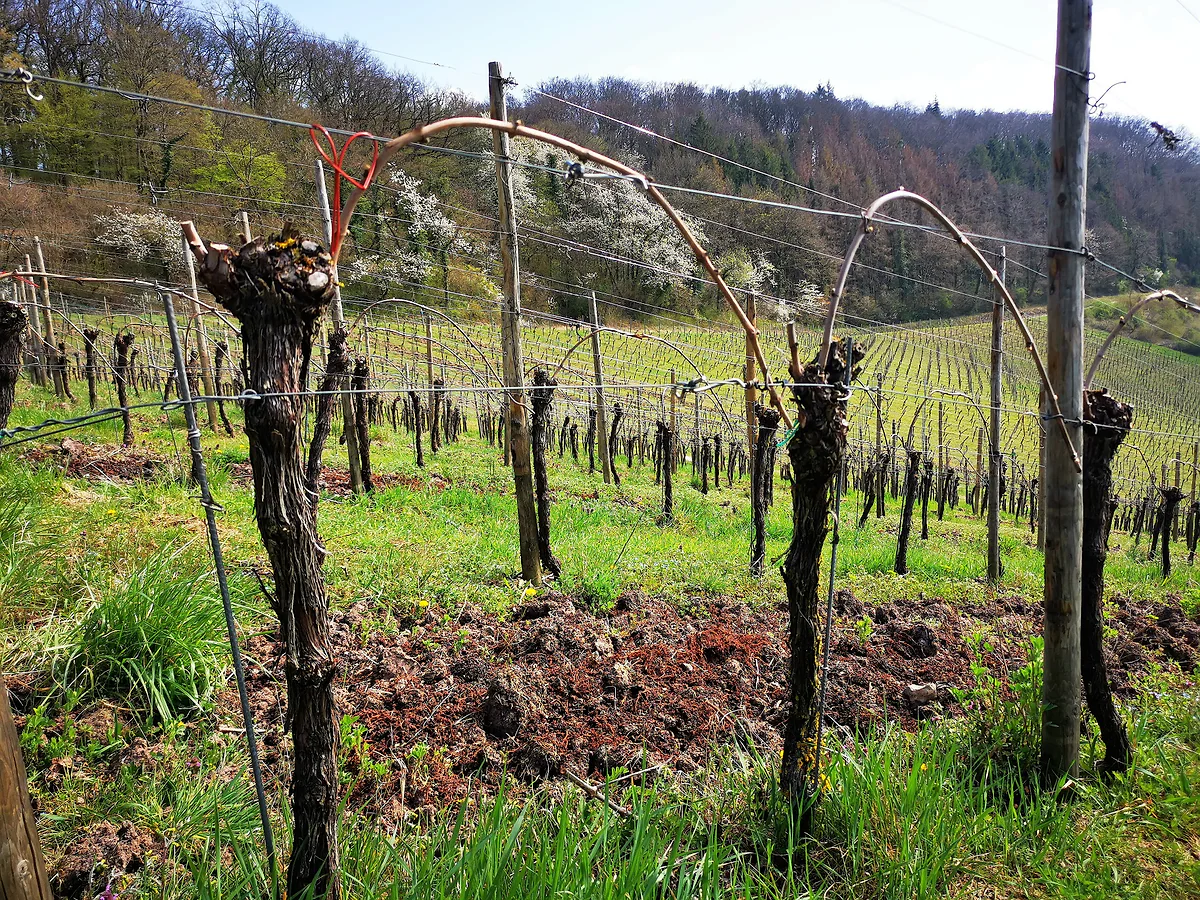
Behind the village rises the Markusberg, covered in vines. Many Moselle vines died in the harsh winter of 1928-1929, and in 1933 85 Schengen wine estates pooled their small plots into a single 20-hectare cooperative. On 13 September 1936 they placed it under the protection of St Mark, with a statue by Claus Cito, who also made the Gëlle Fra, on top of the tower. Nobody knows when the tower was built, though it’s thought to be medieval, and it was restored in 2016. From up there you take in the bridge and all three countries, and for me it’s the right way to end the visit.
For a longer walk, the Schengen grenzenlos premium trail makes a 7.71 km loop across borders. The Moselle3 Trail, about 33 km, starts at the museum, and the GR E3 footpath and the country’s Grand Tour driving route also begin here.
To sleep close to everything, search places to stay in Remich on Expedia and filter by area before price.
Getting there without a car
Schengen has no Luxembourg railway station. The nearest is Perl/Schengen on the German network, a kilometre’s walk over the bridge, and that leg isn’t part of the free transport. The simple route is the bus from the capital to the Schengen, Ennen am Doref stop, free within the country. Drivers take the A3 towards Metz and the A13 towards Saarbrücken, exit Schengen/Remich.
You can also arrive by water. Navi-Tour runs a 75-minute trip round the three-countries triangle on the MuselSchëff, and the scheduled Moselle boats call here. Times and fares are in Moselle river cruises.
The rest of the commune
The commune of Schengen has nine localities and 5,265 residents on 1 January 2026. The ones worth your time are Remerschen, with its swimming lakes and bird reserve, and the three crémant villages (Wellenstein, Bech-Kleinmacher and Schwebsingen), the last with the country’s only marina and the second with the A Possen museum. In autumn the Hunnefeier closes the grape harvest on the third weekend of October, the 18th in 2026, with a flea market and Fiederwäissen, the young wine still fermenting. Every other date of the year is listed in Luxembourg wine festivals.
Beds are scarce. STATEC counted no hotels in the commune in 2025, only a campsite, so I’d sleep in Remich and ride the bus down.
If you are short on time, see the best tours in Remich and pick one that fits your day.
Where the bus does not go, a car does: compare car hire in Luxembourg before you arrive rather than at the desk.
If you still need a way in, check the best ticket deals to Luxembourg from where you are.
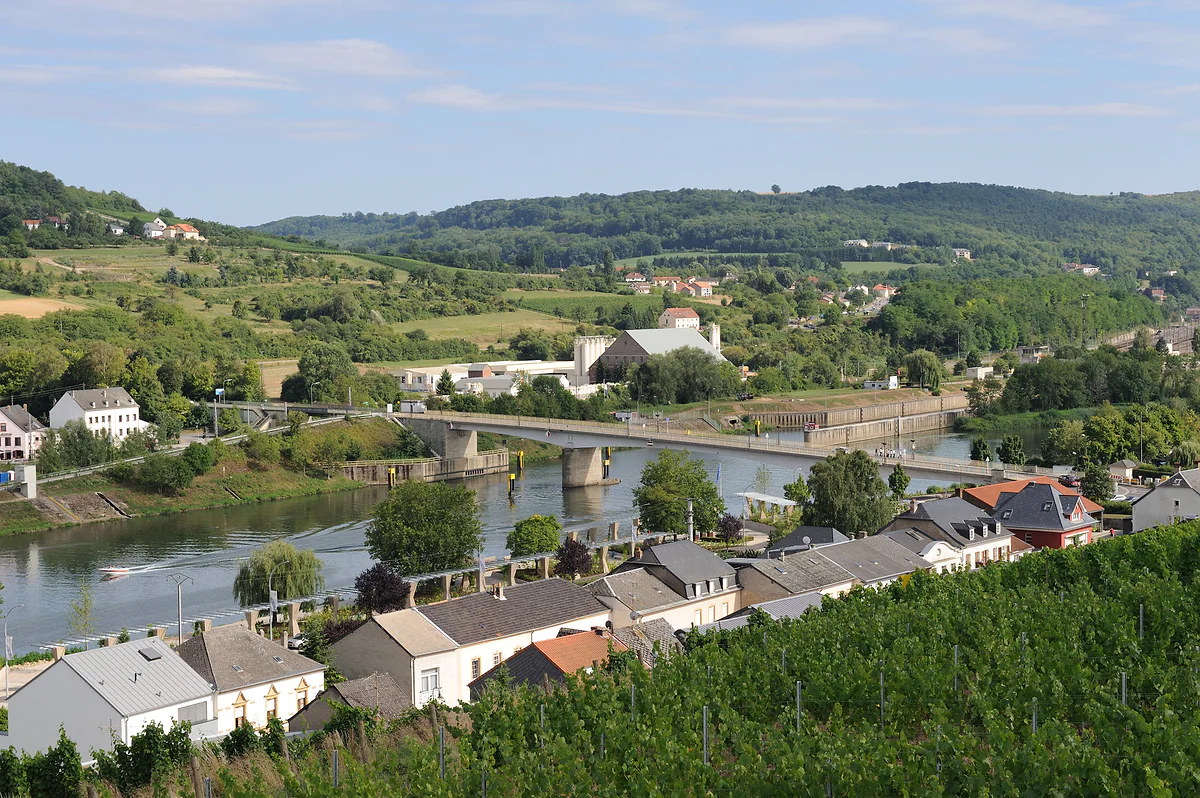
Schengen and the Moselle seen from the Markusberg, with the bridge to Germany and France beyond among vineyards
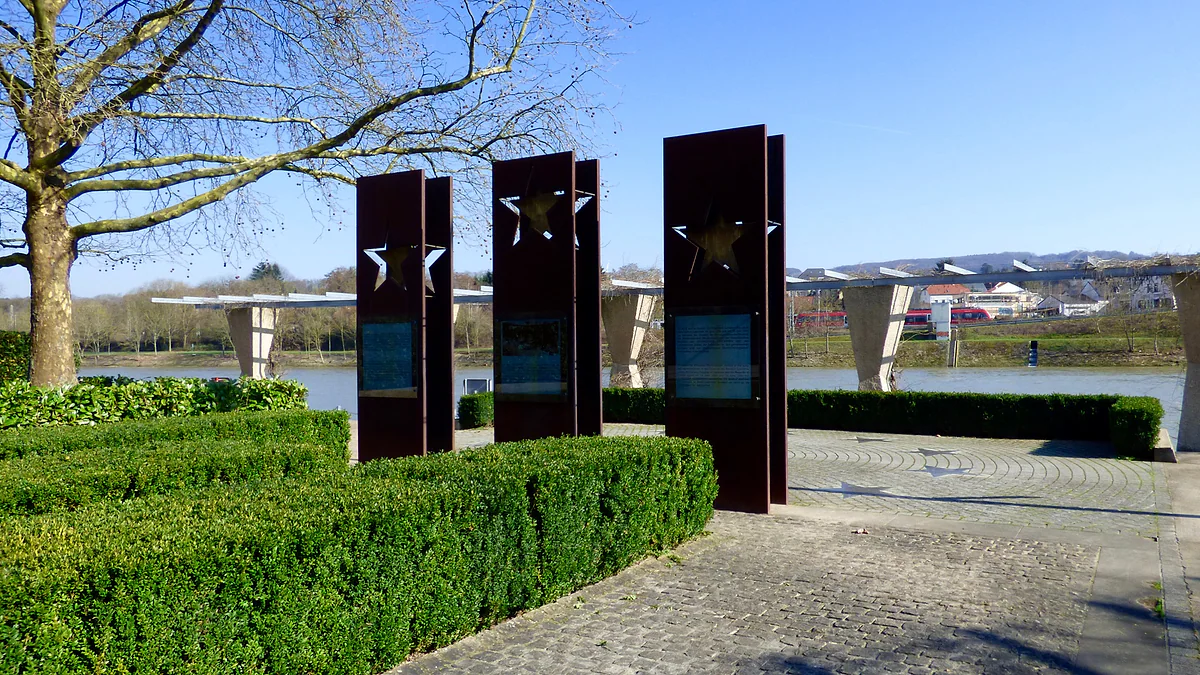
The Schengen Agreement monument, three steel slabs with stars, beside the Moselle and the border bridge
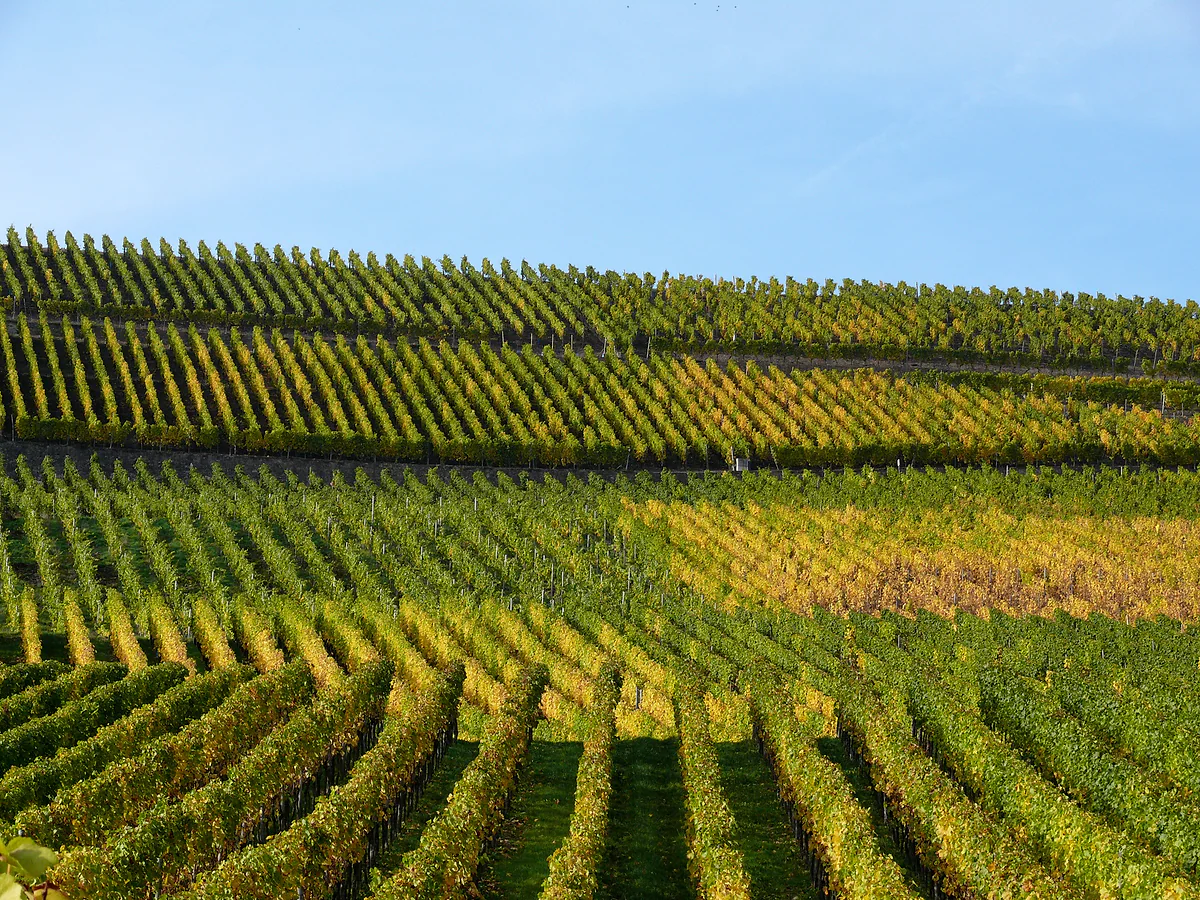
Rows of vineyards on the slopes at Wellenstein, on the Moselle, with green and yellow leaves after the harvest
Schengen at a glance
| What | Where | Hours or detail |
|---|---|---|
| European Museum and boat | 1 rue Robert Goebbels | Daily 10:00-18:00; closed 18-10 and 1-11-2026 |
| Tourist office | Museum entrance | Same hours; bike hire March to October |
| Castle | 2 Beim Schlass | Outside only; no interior visits published |
| Bus | Schengen, Ennen am Doref stop | Free within Luxembourg; times on mobiliteit.lu |
| Train | Perl/Schengen station (Germany) | About 1 km on foot; not covered by free transport |
| Places to stay in the commune | Schengen | 0 hotels and 1 campsite in 2025 (STATEC) |
visitschengen.lu, visitluxembourg.com and STATEC, checked on 29 and 30-09-2026.
Test yourself
True or false?
0/3 Pick before you peek.
-
The Schengen Agreement was signed in the village town hall.
See the answer
False. It was signed aboard a boat, the Princesse Marie-Astrid, moored on the Moselle by the village. That boat has been restored and is now part of the museum.
-
Three countries' borders meet at Schengen.
See the answer
True. It's the tripoint of Luxembourg, Germany and France. Across the bridge is Perl in Germany, and France begins just to the south.
-
The UK was one of the countries that signed the agreement at Schengen.
See the answer
False. The UK never joined. British visitors follow Schengen rules as outsiders, with the 90 days in 180 limit and EES registration.
- Agreement signed
- 1985
- Residents of the commune on 1-1-2026
- 5,265
- Visitors a year, per visitluxembourg
- 50,000
- Schengen grenzenlos trail
- 7.71 km
Map
Where Schengen is
The thick dashed line is the border with Belgium, France and Germany, and the fine ones divide the twelve cantons. The Éislek lies to the north and the Moselle to the east. Every number opens its guide.
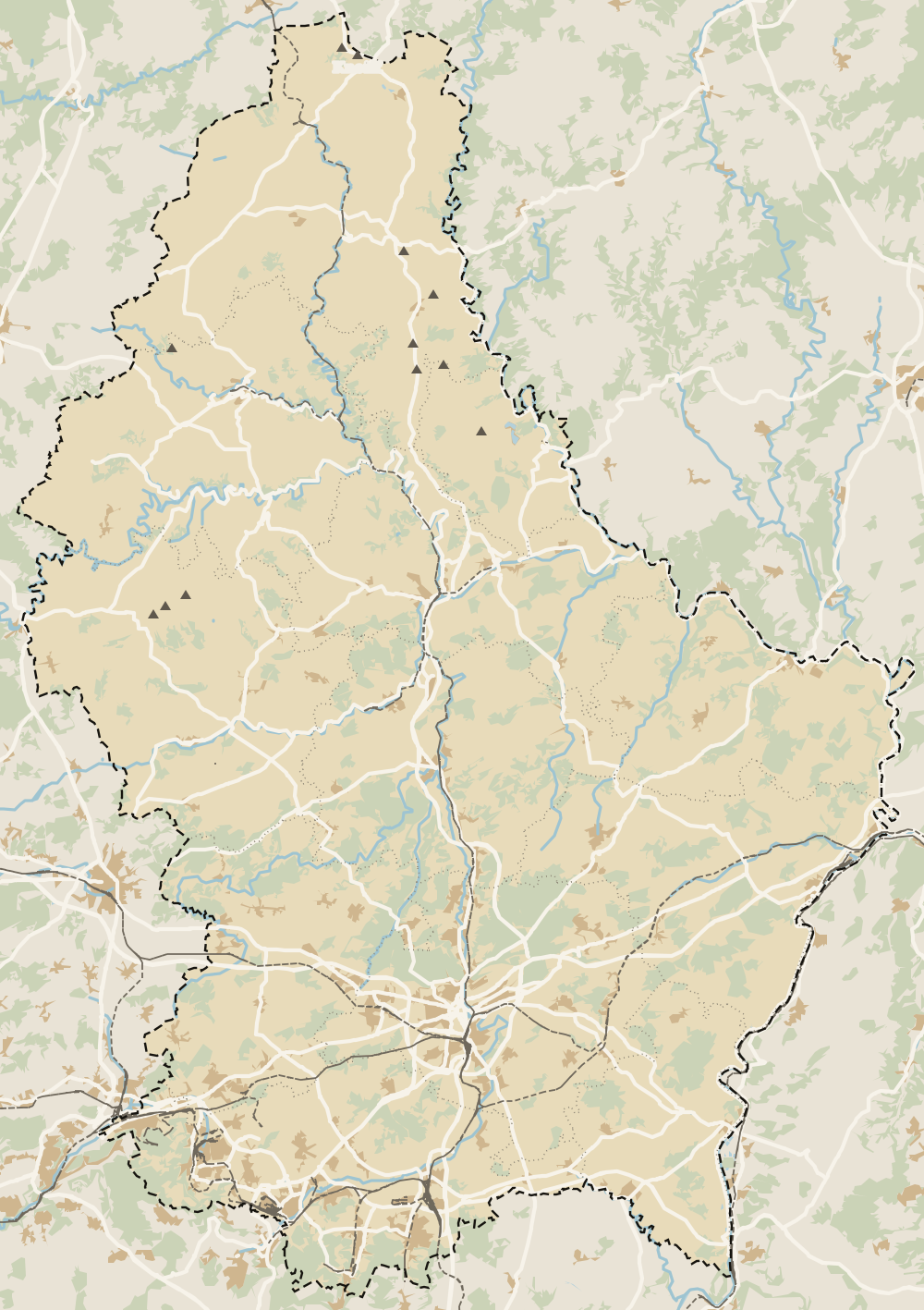 1Remich 2Grevenmacher 3Moselle Valley 4Schengen 5Mondorf-les-Bains 6Wormeldange 7Flaxweiler 8Mertert 9Biwer 10Stadtbredimus 11Bous-Waldbredimus 12Manternach 13Betzdorf 14Lenningen 15Dalheim
 Map data © OpenStreetMap contributors (ODbL)
- 1RemichThe pearl of the Moselle
- 2GrevenmacherThe Moselle's metropolis
- 3Moselle ValleyTourist region in the east
- 4SchengenWhere three countries meet
- 5Mondorf-les-BainsSpa, park and casino
- 6WormeldangeCanton of Grevenmacher
- 7FlaxweilerMunicipality in the canton of Grevenmacher
- 8MertertCommune in the canton of Grevenmacher
- 9BiwerMunicipality in the canton of Grevenmacher
- 10StadtbredimusCommune in the canton of Remich
- 11Bous-WaldbredimusCommune in the canton of Remich
- 12ManternachMunicipality in the canton of Grevenmacher
- 13BetzdorfMunicipality in the canton of Grevenmacher
- 14LenningenCommune in the canton of Remich
- 15DalheimCommune in the canton of Remich
What to see
What to see in Schengen
0 of 425 Luxembourg guides
Your next stamp
- EU and Schengen
- Moselle Valley
- European Museum Schengen
- Road trip
- Hotels on the Moselle
- Bech-Kleinmacher
- Schwebsingen
- Entry requirements
- A Possen Museum
- American Cemetery
- Ansembourg
- Ansembourg Castles
- Asselborn
- Bascharage
- Beaufort castles
- Belval
- Belval blast furnaces
- Berg Castle
- Bernard-Massard cellars
- Bourglinster Castle
- Bourscheid Castle
- Brandenbourg
- Brandenbourg Castle
- Caves St Martin
- Christmas
- Clervaux Castle
- Echternach
- Echternach Abbey
- Ehnen
- Ehnen Wine Museum
- Esch-sur-Alzette
- Esch-sur-Sûre Castle
- Fond-de-Gras
- General Patton Museum
- German war cemetery
- Haff Réimech
- Hohllay
- Hollenfels Castle
- Hosingen
- Kautenbach
- Kneiff
- Koerich Castle
- Larochette Castle
- Lasauvage
- Mersch Castle
- Military History Museum
- Moersdorf
- Mondorf Domaine Thermal
- Munsbach Castle
- National Mining Museum
- Parc Merveilleux
- Park Sënnesräich
- Places to visit
- Remich
- Rindschleiden
- Schiessentümpel
- Septfontaines Castle
- Slate Museum
- Stolzembourg
- Tudor Museum
- Useldange Castle
- Valley of the Seven Castles
- Vianden
- Vianden Castle
- Ville Haute
- Wasserbillig Aquarium
- Weiswampach lakes
- Wiltz Castle
- Ahn
- Berdorf
- Bourscheid-Plage
- Butterfly garden
- Clervaux
- Differdange
- Echternach lake
- Grevenmacher
- Heringer Millen
- Hollenfels
- Luxembourg City
- Luxembourg Science Center
- Meysembourg Castle
- Mullerthal
- National Day
- National Resistance Museum
- Perekop
- Remerschen
- Schoenfels Castle
- The Family of Man
- Things to do
- Upper Sûre Lake
- Vianden chairlift
- Wasserbillig
- Clervaux Abbey
- Echternach Roman villa
- Éislek
- Insenborn
- Kallektuffquell
- Machtum
- Most beautiful places
- Our Nature Park
- Pétange
- Pettingen Castle
- Schueberfouer
- Victor Hugo House
- Waldbillig
- Dudelange
- Kuelscheier
- Lultzhausen
- Octave
- Prettiest villages
- Sanem
- Wellenstein
- Wiltz
- Wolfsschlucht
- Beaufort
- Éimaischen
- Gaalgebierg
- Guttland
- Marnach
- Mondorf-les-Bains
- Putscheid
- Schifflange
- UNESCO World Heritage
- Carnival
- Consdorf
- Ellergronn
- Käerjeng
- Kayl
- Map
- Minett
- Munshausen
- Tandel
- Bech
- Buergbrennen
- Esch-sur-Sûre
- Rumelange
- Where is Luxembourg
- Is it a country?
- Lac de la Haute-Sûre (commune)
- Rosport-Mompach
- Wormeldange
- Larochette
- Mondercange
- Regions
- Bettembourg
- Bock Casemates
- Cantons
- Dancing procession
- Diekirch
- Fischbach
- Garnich
- Mersch
- Moselle wine route
- Ettelbruck
- Grund
- Heffingen
- Kehlen
- Lintgen
- Moselle river cruises
- Pétrusse Casemates
- Towns and villages
- Chemin de la Corniche
- Erpeldange-sur-Sûre
- Junglinster
- Kopstal
- Lorentzweiler
- Nommern
- Pfaffenthal
- Population
- Bissen
- Clausen
- Grand Ducal Palace
- Koerich
- Schieren
- Size
- Vallée de l'Ernz
- Feulen
- Kirchberg
- Languages
- Notre-Dame Cathedral
- Reisdorf
- Steinfort
- Bettendorf
- Habscht
- St Michael's Church
- Helperknapp
- Luxembourgish
- Place Guillaume II
- Name
- Place d'Armes
- History
- Place de la Constitution
- Grand Duke
- Colmar-Berg
- Flaxweiler
- Gare
- Hamm
- Kirchberg funicular
- Luxembourg fortress
- Mamer
- Mertert
- Minett Trail
- Mullerthal Trail
- Neumünster Abbey
- Parc Hosingen
- Pfaffenthal lift
- Political system
- Redange
- The Passerelle
- Wine festivals
- Winseler
- Beckerich
- Biwer
- EU institutions
- Goesdorf
- Limpertsberg
- Mudam
- Natur Musée
- Pulvermühl
- Stadtbredimus
- Troisvierges
- Wenzel walk
- Bonnevoie
- Bous-Waldbredimus
- Ell
- Flag
- Kiischpelt
- Manternach
- Philharmonie
- Vauban circuit
- Weiswampach
- Betzdorf
- Boulaide
- Dräi Eechelen Museum
- Facts
- Hollerich
- Lenningen
- Useldange
- Wincrange
- Bourscheid
- Dalheim
- Gasperich
- Public holidays
- Red Bridge
- Saeul
- Belair
- Second World War
- Vichten
- Battle of the Bulge
- Merl
- Préizerdaul
- Cents
- Groussbus-Wal
- Neudorf
- Rambrouch
- Currency and payments
- Mertzig
- Weimerskirch
- Adolphe Bridge
- Beggen
- Escapardenne
- How to get there
- International March of Diekirch
- MNHA (National Museum)
- Rock climbing
- Sandweiler
- Bridges
- Eich
- Flights
- Golf
- Hesperange
- Lëtzebuerg City Museum
- Canoeing and kayaking
- Dommeldange
- Luxembourg airport
- Strassen
- Villa Vauban
- Airport to city centre
- Bertrange
- Casino Luxembourg
- Mühlenbach
- Swimming pools
- From Brussels
- Pétrusse Valley
- Rollingergrund
- Walferdange
- Cessange
- Day trip from Brussels
- Municipal Park
- Steinsel
- Free walking tours
- From Paris
- Niederanven
- From Frankfurt
- Schuttrange
- Sightseeing train and bus
- By train
- Contern
- By coach
- Weiler-la-Tour
- Driving
- Luxembourg in one day
- Pretzel Sunday
- Rham Plateau
- Tour de Luxembourg
- Candlemas (Liichtmëssdag)
- Car hire
- Luxembourg in two days
- Saint-Esprit Plateau
- Luxembourg in three days
- Melusina statue
- Parking
- St Nicholas Day (Kleeschen)
- Fête de la Musique
- Luxembourg in four days
- Museums in Luxembourg
- Petrol
- Place de Clairefontaine
- A week in Luxembourg
- Getting around
- Luxembourg Marathon
- Tram and Bus Museum
- Free public transport
- Parks in Luxembourg City
- Belgium and Luxembourg
- Tram
- Buses
- Viewpoints
- Trains
- Luxembourg station
- Cycling
- LuxembourgPass
- Prices and budget
- On a budget
- Free things to do
- Mobile and roaming
- Healthcare
- Safety
- Scams
- Tourist information
- Packing list
- Swimming lakes
- With a dog
- Markets
- Tipping
- Shopping
- What to buy
- Shopping centres
- With kids
- For couples
- Playgrounds
- Adventure parks
- Nightlife
- Castles
- Theatres and concert venues
- Leudelange
- Nature parks
- Where to stay
- City-centre hotels
- Hiking
- Nature reserves
- Reckange-sur-Mess
- Hotels near the station
- Roeser
- Frisange
- Hotels in Kirchberg
- Airport hotels
- Dippach
- Hotels in Vianden
- Hotels in Echternach
- Hotels in Clervaux
- Hotels in Mondorf-les-Bains
- Hotels in Esch-sur-Alzette
- Mullerthal hotels
- Upper Sûre lake hotels
- Hotels in Diekirch and Ettelbruck
- Cheap hotels
- Luxury hotels
- Boutique hotels
- Spa hotels
- Family hotels
- Apartments
- Weather
- Youth hostels
- Best time to visit
- Campsites
- Holiday cottages
- In winter
- Castle hotels
- In spring
- Day trips
- In summer
- Around Luxembourg
- In autumn
- Ice skating
- Trier day trip
- Metz day trip
- Arlon day trip
- In January
- In February
- In March
- In April
- In May
- In June
- In July
- In August
- In September
- Food
- In October
- In November
- Where to eat
- In December
- Michelin restaurants
- Cheap eats
- Judd mat Gaardebounen
- Bouneschlupp
- Gromperekichelcher
- Kniddelen
- Quetschentaart
- Rieslingspaschtéit
- Events
- Wine
- Crémant
- Beer
Frequently asked questions
Where is Schengen in Luxembourg?
In the far south-east of the country, on the Moselle, exactly where Luxembourg, Germany and France meet. It belongs to the canton of Remich, and the national tourist board calls it the magic triangle.
What are the things to do in Schengen, Luxembourg?
The European Museum and the boat where the agreement was signed, the 1997 monument by the river, the Place des Étoiles with its Berlin Wall fragments, the Markusberg and its tower, and the castle from outside. The Remerschen lakes are in the same commune.
Does Schengen, Luxembourg have a train station?
No. The nearest is Perl/Schengen, on the German bank, about a kilometre's walk. From Luxembourg City the easy way is the bus, free inside the country, or the car via the A3 and A13, exit Schengen/Remich.
Why is the Schengen Area named after this village?
Because the agreement abolishing checks between the first signatory countries was signed here on 14 June 1985, aboard the Princesse Marie-Astrid moored on the Moselle. The convention that put it into practice followed in 1990.
Can you visit Schengen Castle?
The official listing only covers its history, so I can't tell you it opens inside. It's a house built in 1812 on the site of a 13th-century moated castle, of which one round tower survives.
How many people visit Schengen?
Around 50,000 a year, according to visitluxembourg, which says visitors arrive from as far as China and Australia. Outside summer weekends the village is still very quiet.
By
Tourism graduate with a master’s in Tourism Management and Planning from the University of Málaga, who has travelled across Europe. He writes every guide from official sources and his own judgement.
Published on . Facts checked on .
Sources
Some links in this guide are affiliate links: if you book through them, the site earns a commission at no extra cost to you. Affiliate disclosure
Photos: Cayambe (CC BY-SA 4.0); Cayambe (CC BY-SA 3.0); Denise Hastert (CC BY-SA 4.0); Denise Hastert (CC BY-SA 4.0), via Wikimedia Commons.