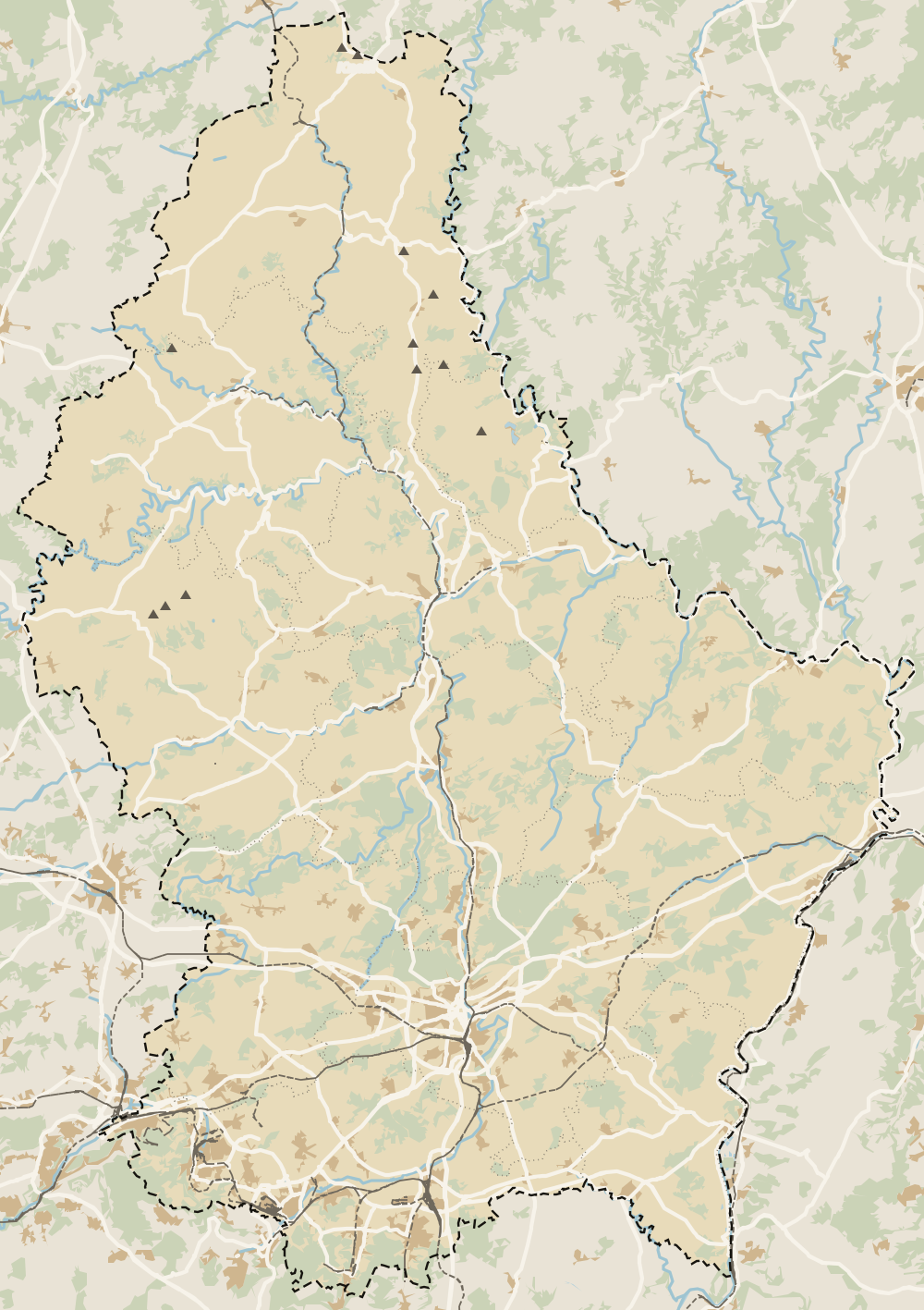
The thick dashed line is the border with Belgium, France and Germany, and the fine ones divide the twelve cantons. The Éislek lies to the north and the Moselle to the east. Every number opens its guide.
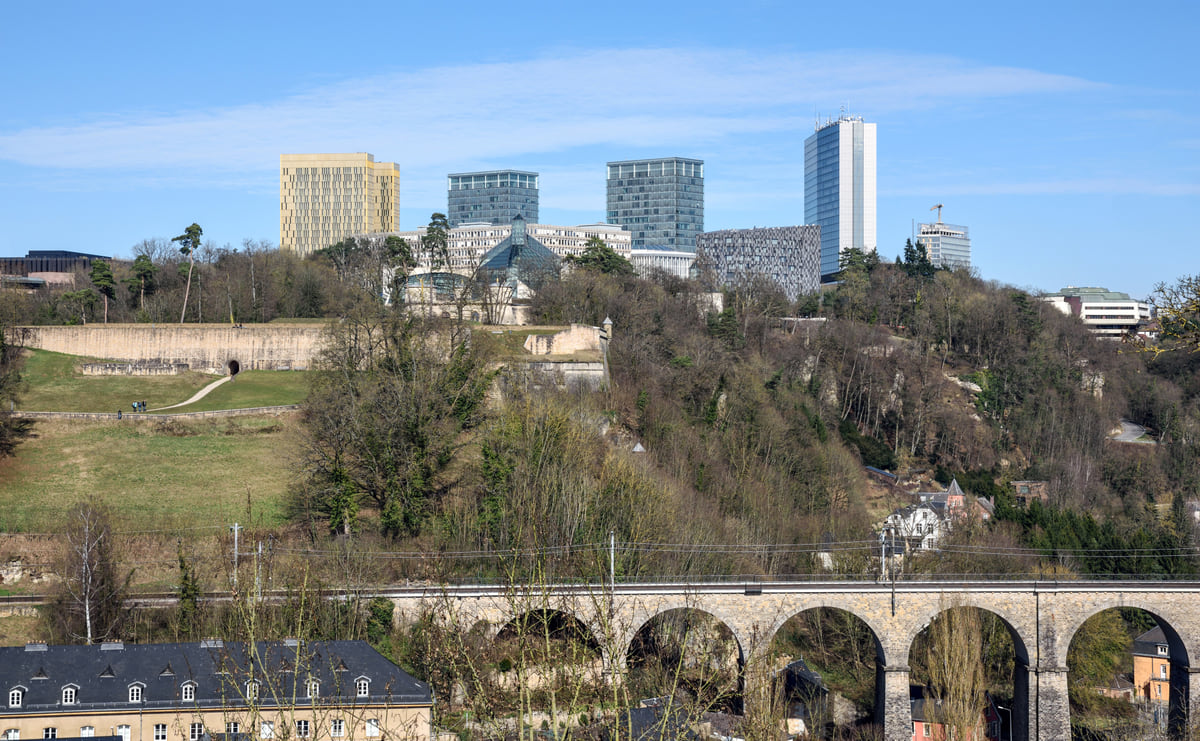
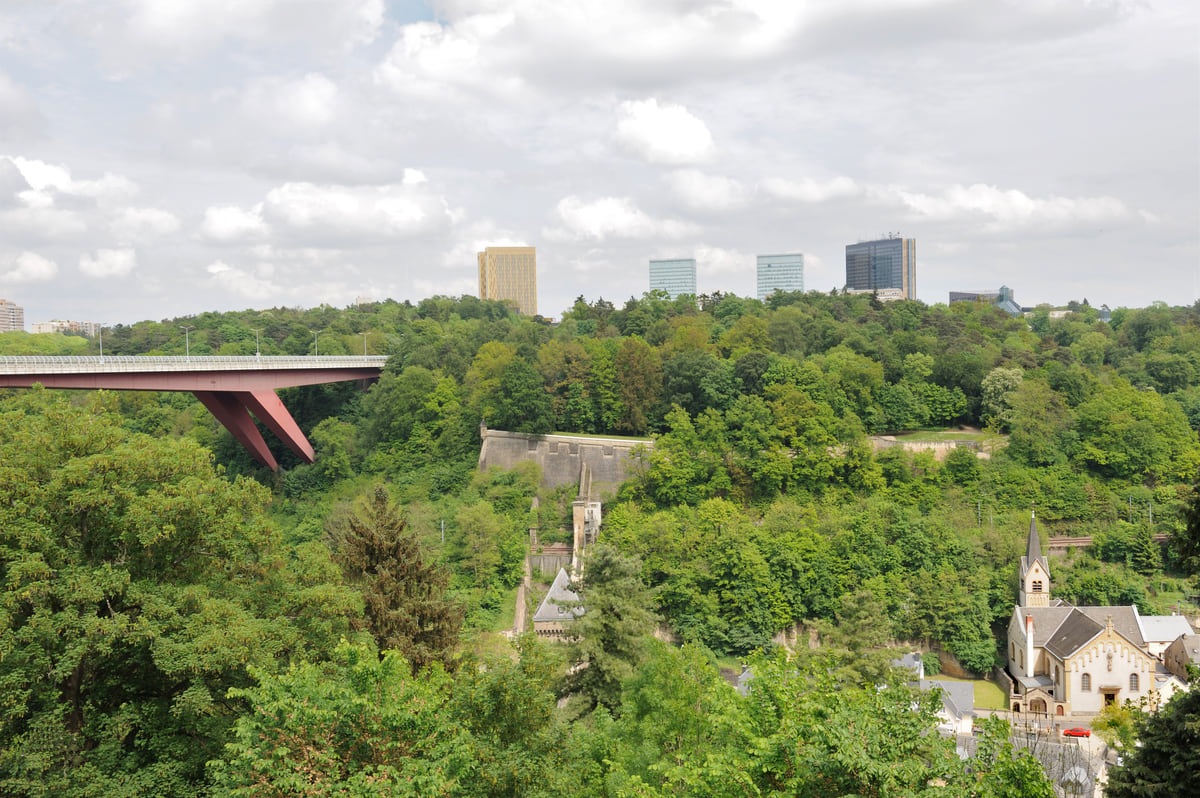
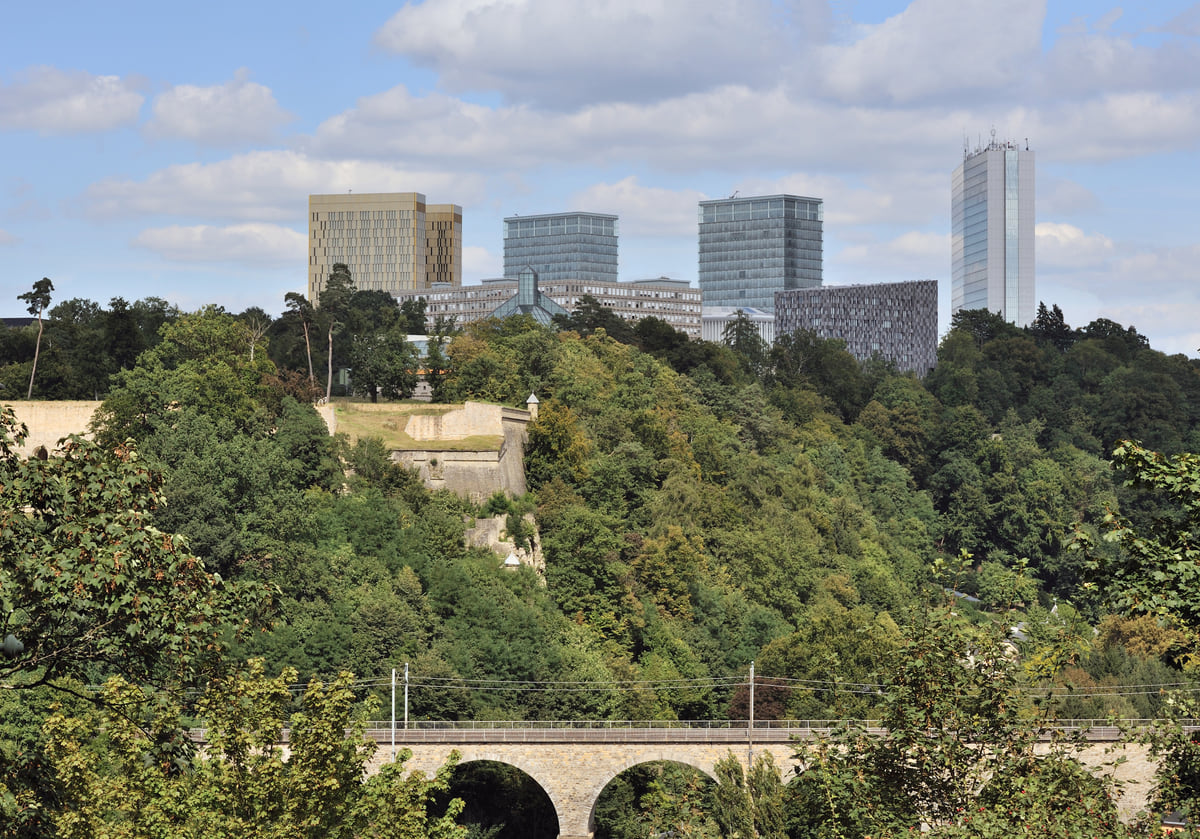
Kirchberg is the plateau east of the Alzette valley with the European institutions, such as the EU Court of Justice, the Court of Auditors and the EIB, the financial district and three of the capital's best cultural venues, Mudam, the Philharmonie and the Dräi Eechelen Museum. It covers 336.84 hectares with 9,714 residents, and you get there free across the Red Bridge by tram or by funicular from Pfaffenthal.
How I would do it
I see Kirchberg as an afternoon of museums and architecture, not for aimless wandering. I'd ride up on the funicular, see Mudam and Fort Thüngen and, on a Wednesday, take advantage of Mudam being free from 18:00 to 21:00.
Mudam is free on Wednesdays from 18:00 to 21:00, and the Dräi Eechelen Museum is free on Wednesdays from 17:30 to 20:00. They sit a few steps apart in Dräi Eechelen Park.
The European Parliament's visitor centre opens Monday to Saturday, 10:00 to 18:00, and charges nothing. Bring a valid passport or ID card. It closes from 24-12-2026 to 2-1-2027.
03 Getting there
Ride up by funicular
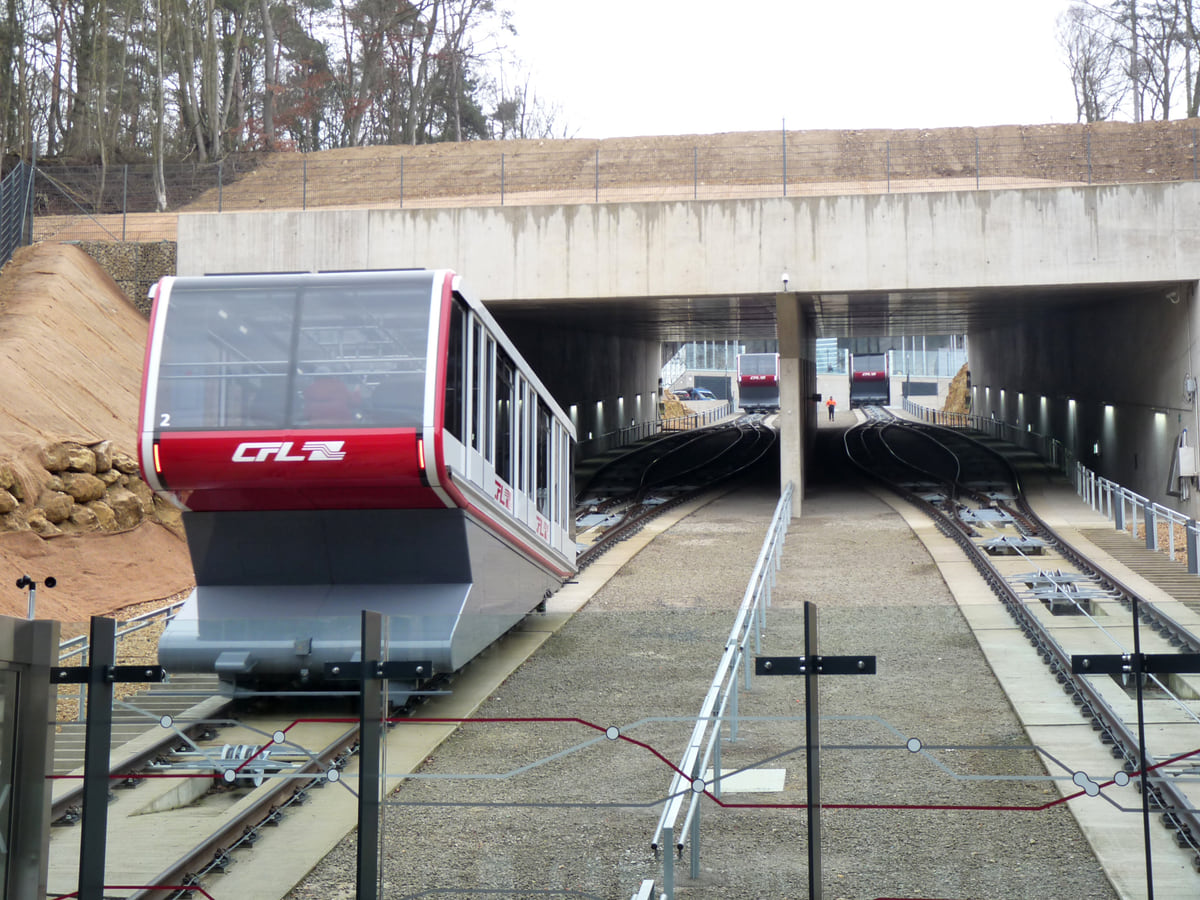
From Pfaffenthal-Kirchberg station at the foot of the Red Bridge, the funicular climbs 40 m in 63 seconds and drops you by the tram. It's free and has valley views.
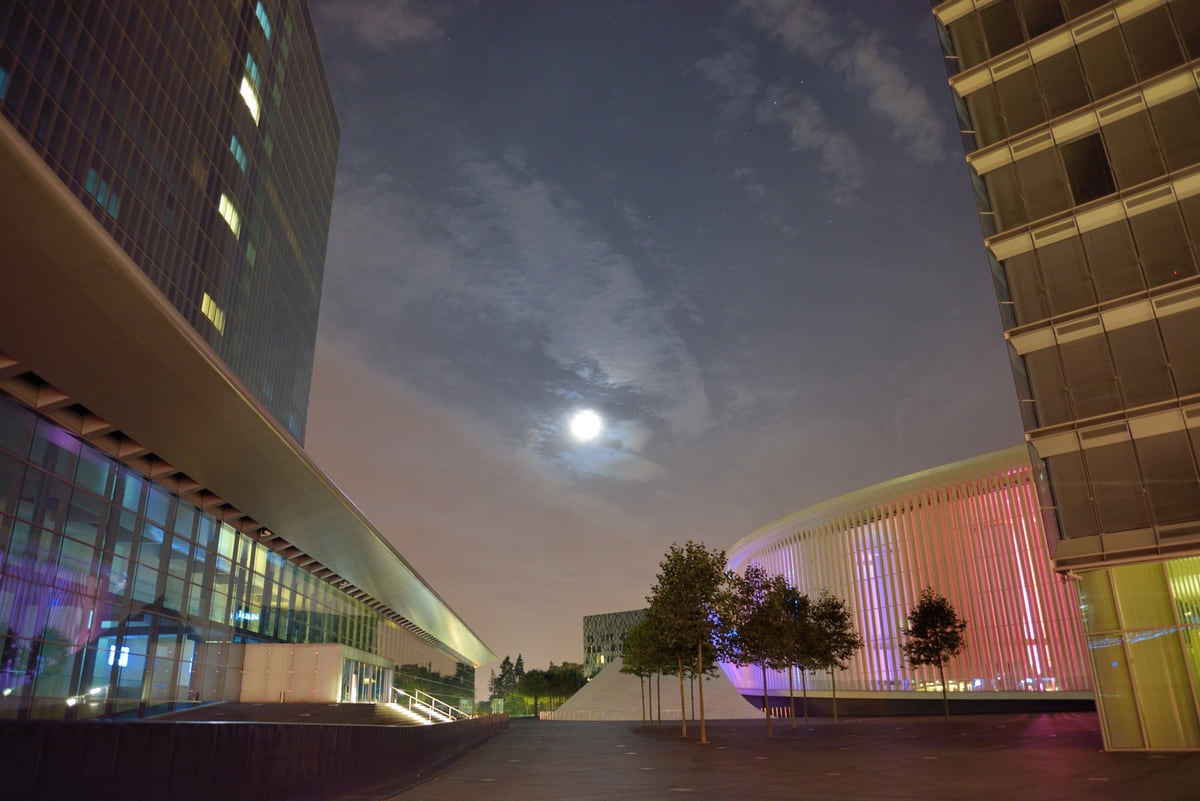
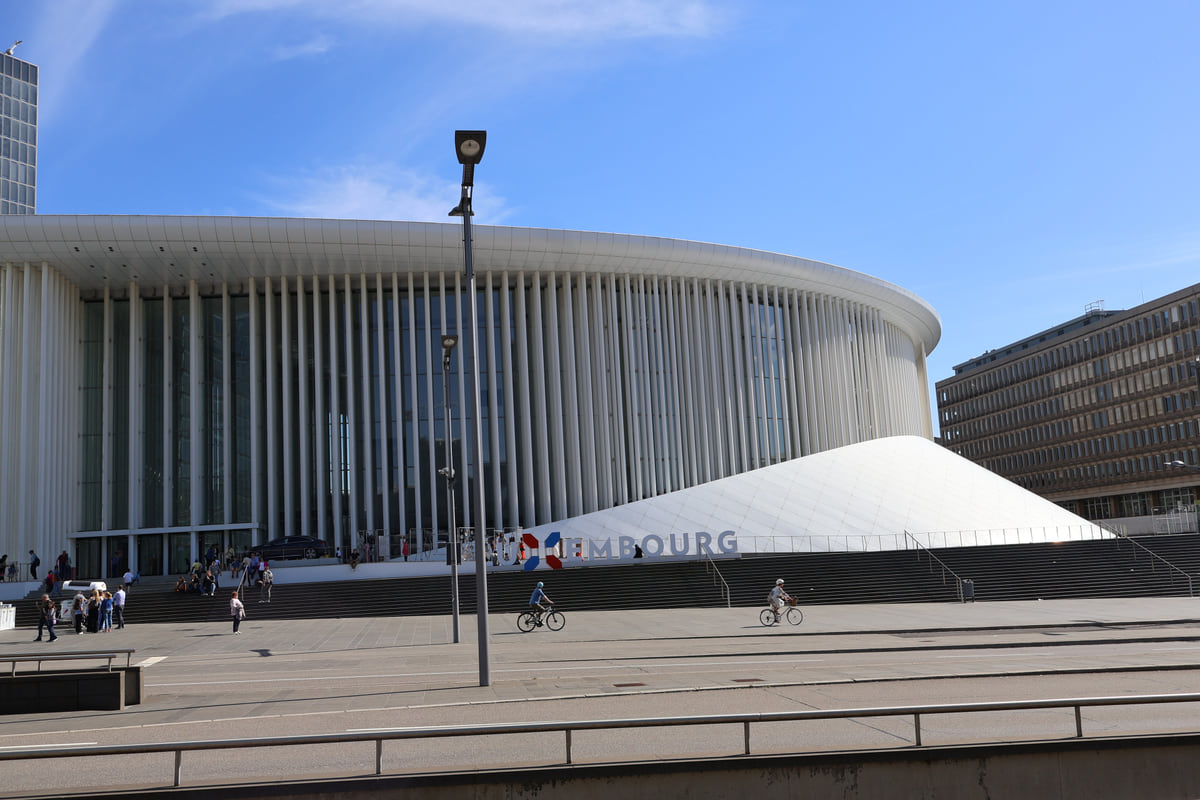
The tourist office calls it an open-air gallery of contemporary architecture. Pei designed Mudam and Portzamparc the Philharmonie, with over 800 columns in its peristyle.
The tram links Kirchberg with the airport and the central station, so it works for business trips or early flights. For a pure sightseeing break, I'd stay closer to the old town.
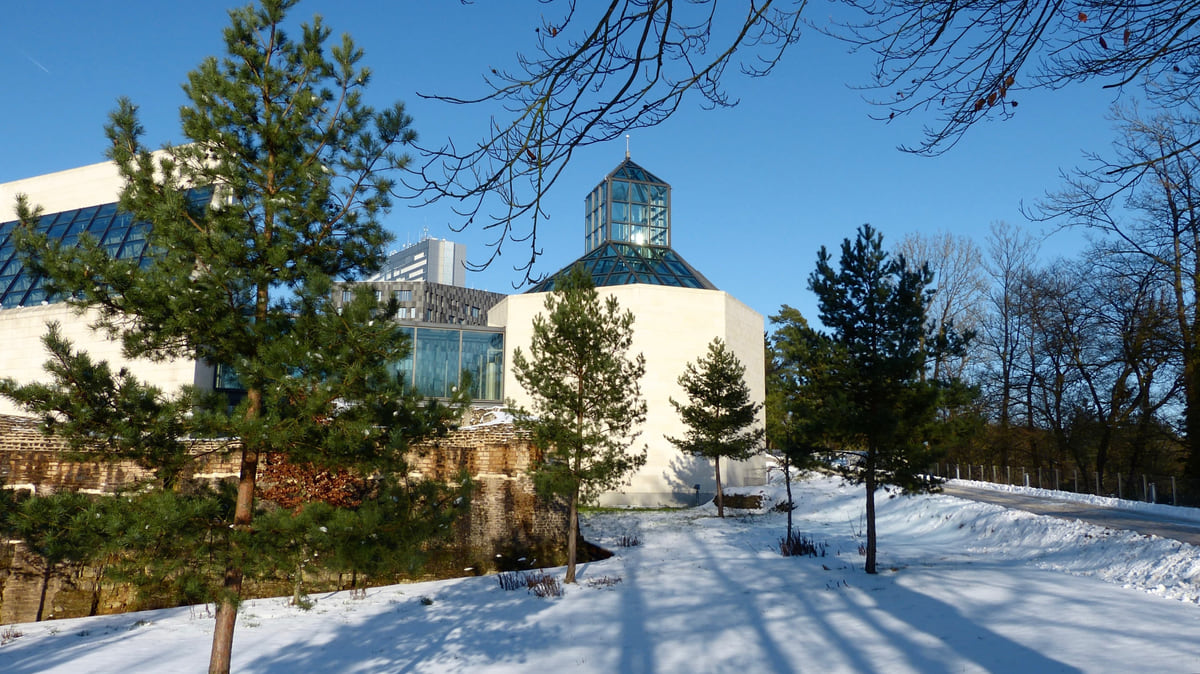
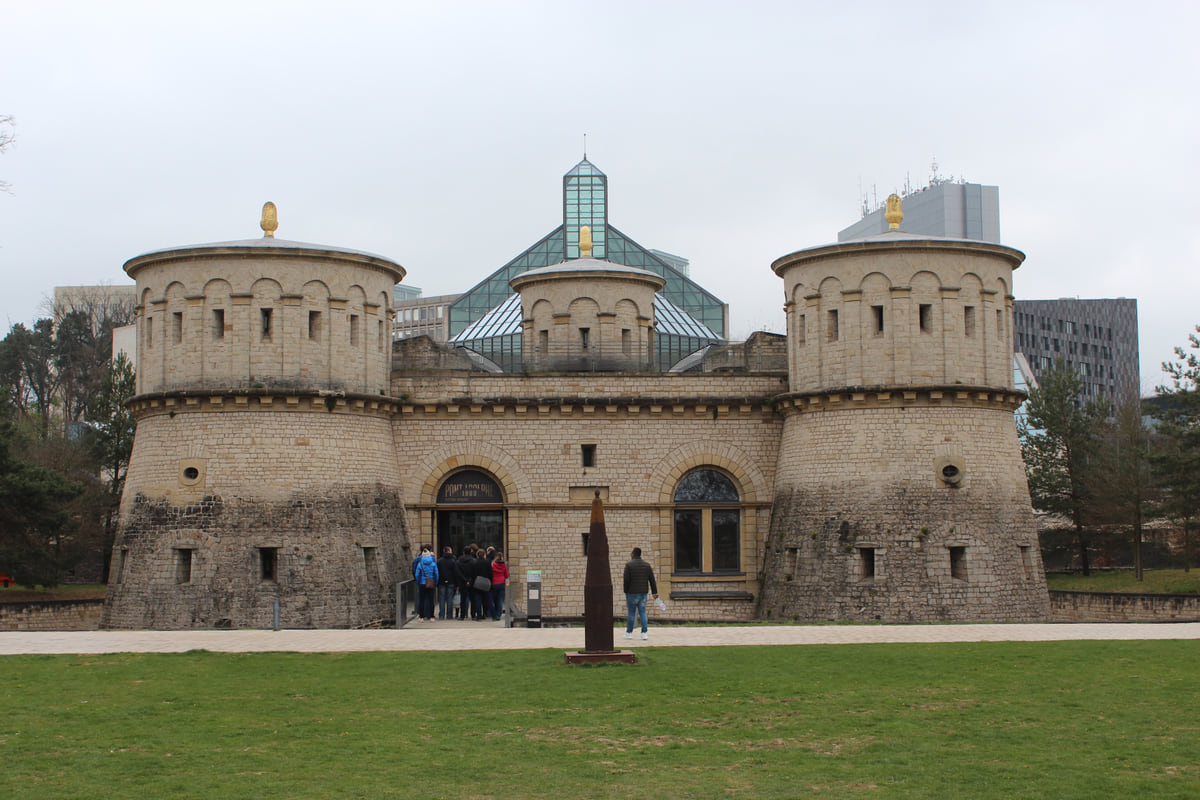
The best of it is clustered in Dräi Eechelen Park, at the end of the district facing the old town. There stands Mudam, the modern art museum by I. M. Pei, architect of the Louvre pyramid, built on an old Vauban fort. A few steps away, Fort Thüngen’s round towers are home to the Dräi Eechelen Museum, devoted to the fortress and to national identity. And across the way, on Place de l’Europe, sits Christian de Portzamparc’s Philharmonie, wrapped in more than 800 white columns.
If architecture is your thing, the tourist office runs a guided walk on architecture and public art in Kirchberg, bookable for groups. Another building with a story is d’Coque by Roger Taillibert, an Olympic pool from 1982 with a shell-shaped prestressed concrete roof, extended in 2002 with an 8,000-seat arena. Its hours and prices, and those of other swimming pools in Luxembourg, are on their own page. And outside the Commission’s building there’s an original of the “Non-violence” sculpture, the revolver with the knotted barrel that Luxembourg gave to the UN in 1988.
Getting there for nothing
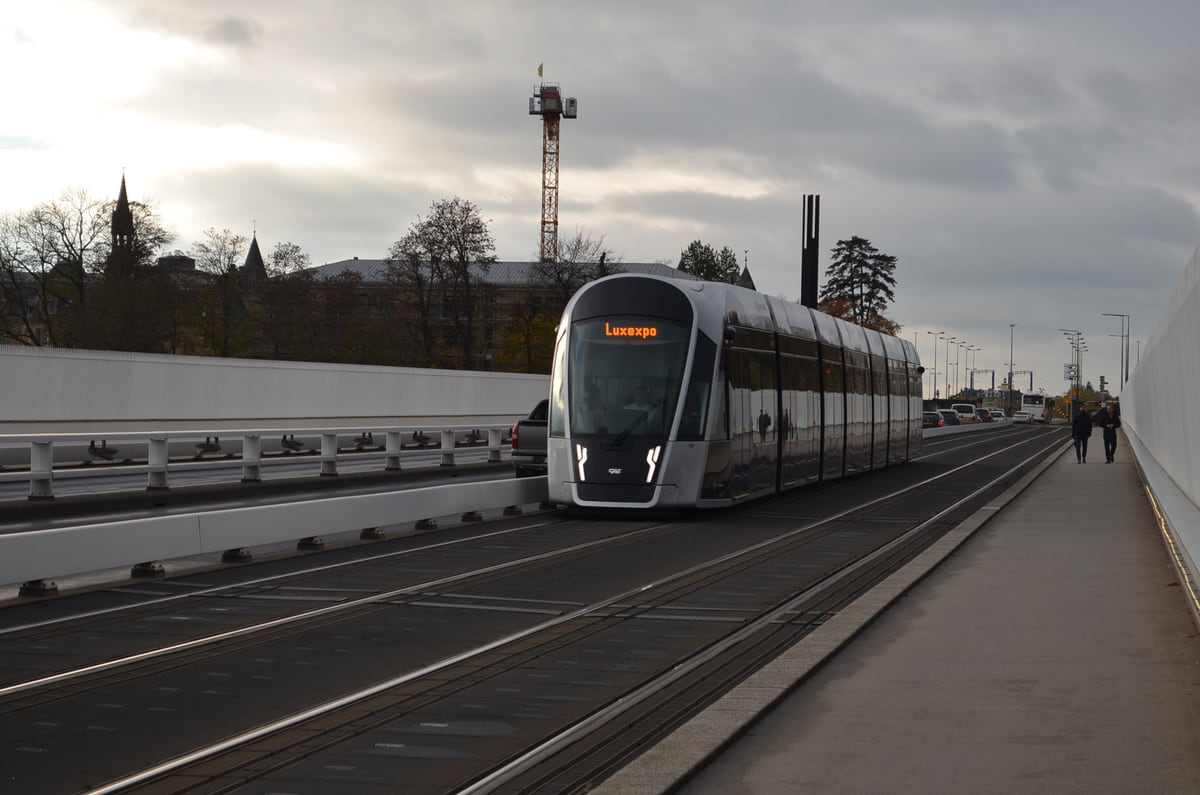
There are two ways in. The obvious one is across the Red Bridge on the T1 tram, which has run along Avenue John F. Kennedy since 10 December 2017 and now goes from the airport to the Cloche d’Or stadium via the central station. The one I prefer is to drop into Pfaffenthal on the panoramic lift and ride the Kirchberg funicular, which climbs 40 metres in 63 seconds with views over the valley. Both are free, like all public transport in the country.
Europe in a district
Together with Brussels and Strasbourg, Luxembourg City hosts the EU’s institutions, and almost everything it has sits on this plateau. The Court of Justice and the Court of Auditors work here, as do the European Investment Bank, the Parliament’s General Secretariat and several Commission directorates-general, employing more than 14,000 people, according to the government portal. The third Court of Justice tower, from 2019, is the tallest building in the country, while the Alcide de Gasperi tower of 1966 was its first high-rise. There’s more in EU institutions in Luxembourg.
For visitors, the front door is the Europa Experience, the European Parliament’s centre at 17 Avenue J. F. Kennedy. It opens Monday to Saturday, 10:00 to 18:00, is free and includes a 360-degree immersive show. Bring a passport or ID card, and note it closes over Christmas and New Year, from 24 December 2026 to 2 January 2027. For British visitors, it’s a neat way to see how the Union works from the inside, whatever your view of it.
Two open-air stops complete the European side, and both are free. Place de l’Europe is a black-paved triangle designed by Ricardo Bofill in 2004 on what used to be a car park at the foot of the Alcide De Gasperi tower, reached by a broad flight of steps from Avenue Kennedy. Around it stand the Philharmonie, the tower itself, the conference centre and, a little further on, Mudam and the Dräi Eechelen. At the Schuman roundabout, as you enter the district, is Robert Lentz’s 1966 Robert Schuman monument. Three steel girders end in six spikes, one for each founding state of the Coal and Steel Community, and the stone carries an extract from the speech of 9 May 1950. For me it’s the Kirchberg photo that explains why Europe ended up here.
On weekdays Kirchberg is full of office workers, and after about seven in the evening it empties out noticeably. I’d visit on a Wednesday, when Mudam is free from 18:00 to 21:00 and Dräi Eechelen from 17:30 to 20:00. The ING Night Marathon of Saturday 8 May 2027 is based in Kirchberg and at Luxexpo and also runs through the centre.
As for beds, hotels in Kirchberg make sense for work, a trade fair or an early flight, since the tram runs to the airport. For a sightseeing break, I’d stay closer to the old town.
Parks, and a district still growing
The city lists Central Park, Réimerwee Park and Trois Eechelen Park with Fort Obergrünewald among the district’s green spaces. It counted 9,714 residents in late 2023, while the tourist office expects some 7,000 new homes over the coming years, with more parks and gardens to soften the scale of the office blocks. It’s a work in progress, and you’ll likely see cranes and hoardings; the Philharmonie itself warns of building works around Place de l’Europe and a partly closed car park.
One of the capital's 24 districts, a 336.84-hectare plateau east of the Alzette valley. It holds the EU institutions, the financial district, Mudam, the Philharmonie and the Dräi Eechelen Museum.
What is there to see in Kirchberg?
Mudam, Fort Thüngen with the Dräi Eechelen Museum, the Philharmonie, the Europa Experience, Central Park and the architecture of the EU buildings. Plus the view from the Red Bridge as you arrive.
How do I get to Kirchberg from the centre?
On the T1 tram, which crosses the Red Bridge with stops including Rout Bréck-Pafendall, Philharmonie / Mudam and Europaparlament, or by funicular up from Pfaffenthal. All public transport is free.
Which EU institutions are in Kirchberg?
The Court of Justice of the EU, the European Court of Auditors, the European Investment Bank, the European Parliament's General Secretariat and several Commission directorates-general, with more than 14,000 staff, almost all in Kirchberg.
What is the tallest building in Luxembourg?
The third tower of the EU Court of Justice, opened in September 2019, is the tallest building in the country, according to the government's official portal.
Is Kirchberg a good place to stay?
For business, a trade fair at Luxexpo or an early flight, yes, because the tram runs to the airport. For a sightseeing break I'd rather stay in the old town or near the station.
Tourism graduate with a master’s in Tourism Management and Planning from the University of Málaga, who has travelled across Europe. He writes every guide from official sources and his own judgement.

 1Ville Haute 2Luxembourg City 3Grund 4Pfaffenthal 5Clausen 6Kirchberg 7Gare 8Hamm 9Luxembourg fortress 10Limpertsberg 11Pulvermühl 12Bonnevoie 13Hollerich 14Gasperich 15Belair 16Merl 17Cents 18Neudorf 19Weimerskirch 20Beggen 21Eich 22Dommeldange 23Mühlenbach 24Pétrusse Valley 25Rollingergrund 26Cessange 27Rham Plateau 28Tram and Bus Museum