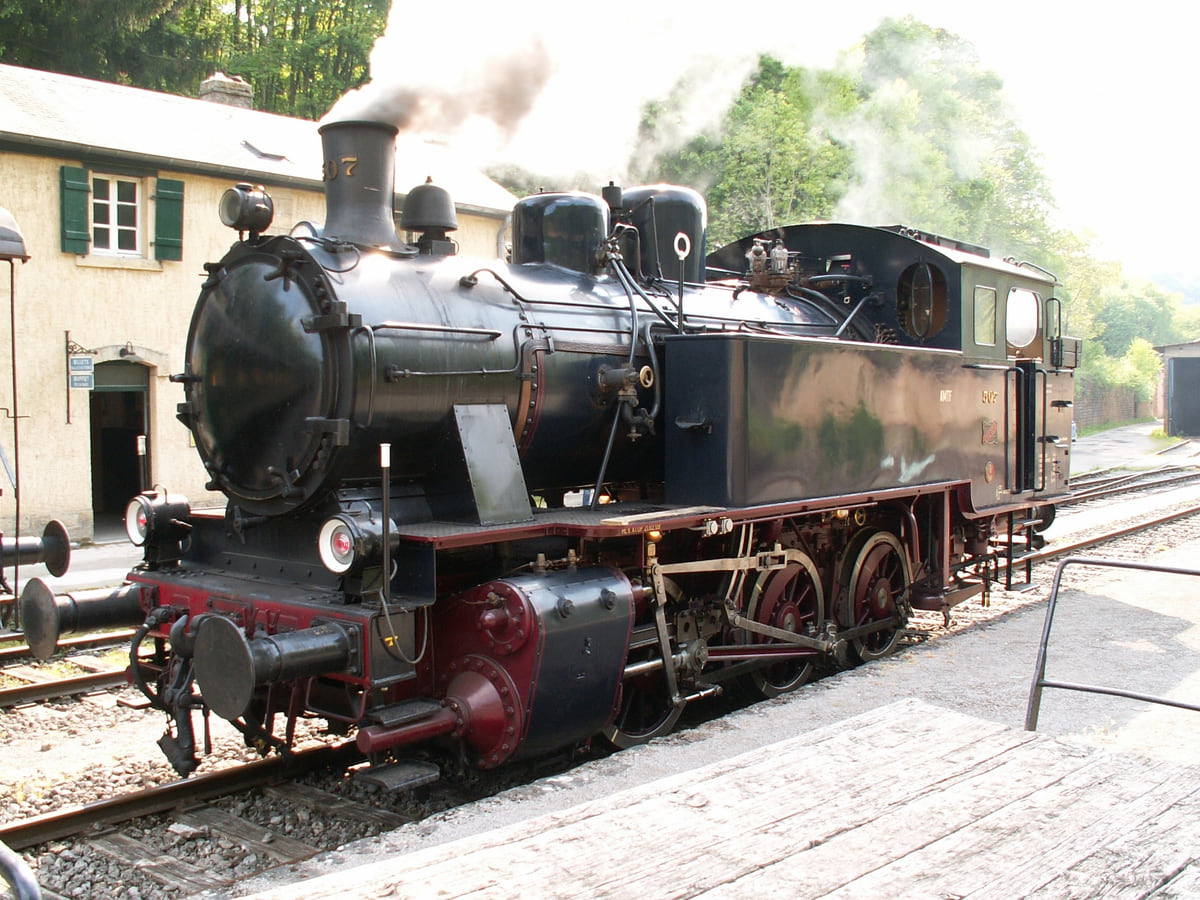
Locality of Differdange, in the Minett
Lasauvage, a miners' village at the end of the tunnel

- Commune
- Differdange
- River
- Crosnière
Map
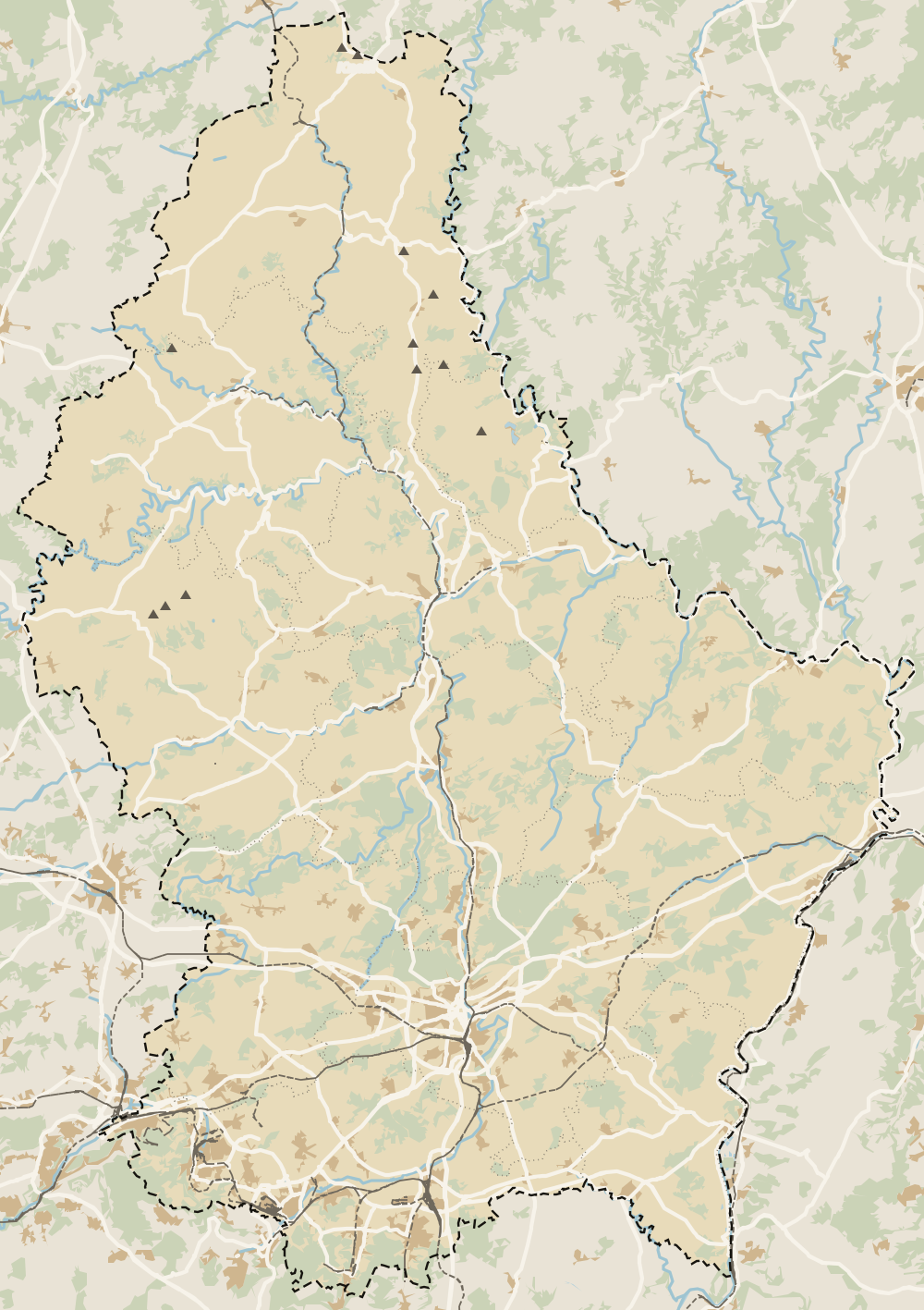
Where Lasauvage is
The thick dashed line is the border with Belgium, France and Germany, and the fine ones divide the twelve cantons. The Éislek lies to the north and the Moselle to the east. Every number opens its guide.
Lasauvage, in the commune of Differdange, is the mining village of the Crosnière valley on the French border, reached by the Minièresbunn mine train from Fond-de-Gras. It's part of the Minett Park, with neo-Gothic St Barbara's church and small free museums on Sundays from May to September, 14:00 to 18:00. It had a forge from around 1625 and iron mines until 1978.
I'd arrive in Lasauvage as the miners did, through the gallery. On a Sunday in season I'd take the Minièresbunn at Fond-de-Gras, get off here, see the church and museums and ride the next train back. Outside those Sundays, the village loses most of its point.
Lasauvage, in short
Full read: 3 min
- Lasauvage is a locality of Differdange in the Crosnière valley.
- It had a forge from around 1625 and iron mines until 1978.
- Its museums open free on Sundays from May to September, 2pm to 6pm.
- The Minièresbunn mine train arrives from Fond-de-Gras through a 1,400-metre gallery.
My key points
Worth knowing about Lasauvage
-
01 Worth the splurge
Arrive by mine train
The Minièresbunn leaves Fond-de-Gras, runs through a 1,400-metre gallery and emerges in the village via the oldest part of the mine, dating from 1908. An adult ticket is €10.
Fond-de-Gras -
02 Most beautiful
St Barbara inside her tower
Count Fernand de Saintignon built the neo-Gothic church. Its patron saint of miners is shown inside a tower rather than holding one, an unusual depiction.
-
03 To save money
Free museums on Sundays
The museum space, the Eugène Pesch museum, the hanging room and the mine yard open on Sundays in season from 2pm to 6pm, with no admission charge.
-
04 Getting there
A bus every day of the week
Line 6 reaches Lasauvage daily from Differdange and Niederkorn, with three stops in the village, Kajibi, Kierch and Schoul.
Differdange
Getting to Lasauvage on the mine train
The Minièresbunn leaves Fond-de-Gras, passes the Doihl mine yard and dives underground through an old 1,400-metre haulage gallery. It surfaces in the oldest part of the workings, dating from 1908, and pulls into Lasauvage. The full line carries on to Saulnes in France.
On Sundays in spring and autumn there are departures from Fond-de-Gras at 3pm, 4pm and 5pm, returning from Lasauvage at 4pm, 5pm and 6pm. On summer Sundays an extra train leaves at 11.05am. Tickets are €10 for adults and €8 for ages 5 to 11 and can only be bought at the station on the day, and underground the thermometer sits at 10 to 12 degrees whatever the season, so a jumper earns its place even in August.
The Sunday museums
The Minett Park runs several small spaces in Lasauvage that open on Sundays from May to September, 2pm to 6pm, free of charge. The museum space is housed in a former priory of the Count of Saintignon and tells the story of the village and of a group of young Luxembourgers who hid in a mine near Niederkorn during the Second World War to avoid wearing Wehrmacht uniform.
The Eugène Pesch museum shows the fossil and mineral collection that this Differdange man built up over many years, alongside a reconstructed mine gallery and a display on the harsh working conditions of the early 1900s. The salle des pendus, the hanging room, was the miners’ changing room. Each man hoisted his clothes to the ceiling on a chain with a padlock, because they dried faster that way and the floor was easier to clean. And in the mine yard, the surface buildings of the mine, you’ll find the train platform. If you’re left wanting more science, Differdange has the Luxembourg Science Center, with over 100 hands-on stations.
St Barbara’s church
The neo-Gothic church was built by Count Fernand de Saintignon, the ironmaster behind the forge. It’s dedicated, naturally, to the patron saint of miners, but with a detail I find the most curious thing in the village. Traditionally St Barbara carries a tower in her hands or has one at her feet. Here she stands inside the tower. You can see it all year round.
If you are staying the night, see the best hotel deals in Esch-sur-Alzette for your dates: the well-placed rooms go fast.
Walking, eating and sleeping
Outside Sundays in season the village is still worth a wander, even with the museums shut. The Minett Park suggests a 3.7 km nature trail along the Crosnière and a 2.4 km circuit around the village. For food it lists the Presbytère and Chez Flavia, and for a bed, a gîte and the An der Schoul inn. Bus line 6 comes in every day from Differdange, stopping at Kajibi, Kierch and Schoul. And on rue de la Crosnière visitluxembourg places the Kiemerchen, Scheiergronn and Groussebësch nature reserve, one more among the many reserves of the south.
For the rest of the region, the Minett guide pulls it all together.
An iron village since the 17th century
Lasauvage belongs to the commune of Differdange and sits tight in the Crosnière valley on the French border. The Minett Park explains that a forge worked here from around 1625, one of the oldest ironworks in the country. The spot was chosen because it had the three things iron-making needed, ore, wood from the forests to burn and river water for power.
Later the village became an ore-mining centre, from the last quarter of the 19th century until 1978, when extraction stopped. visitluxembourg describes it as the only French-speaking village in the country to be declared a pilot village for preserving and restoring its industrial housing.
Before you fix your dates, compare train and coach tickets to Luxembourg: the same journey can cost very different amounts from one day to the next.
So you do not lose the morning at the ticket office, browse tickets and tours in Esch-sur-Alzette on GetYourGuide.
If you would rather go at your own pace, see the car hire deals in Luxembourg: the earlier you book, the more cars are left to choose from.
If you are staying the night, see the best hotel deals in Esch-sur-Alzette for your dates: the well-placed rooms go fast.
What to see in Lasauvage
| Place | What it is | Opening |
|---|---|---|
| St Barbara's church | Neo-Gothic church built by the Count of Saintignon | Open access all year |
| Museum space | Village history and the young men hidden in a mine | Sundays 2pm-6pm |
| Eugène Pesch museum | Fossils, minerals and a reconstructed mine gallery | Sundays 2pm-6pm |
| Salle des pendus | Miners' changing room with pulleys and chains | Sundays 2pm-6pm |
| Mine yard | Surface buildings and train platform | Sundays 2pm-6pm |
Minett Park, May to September season. All free.
Minièresbunn mine train (Sundays in season)
| Leg | Departures |
|---|---|
| Fond-de-Gras to Lasauvage | 3pm, 4pm and 5pm (summer, also 11.05am) |
| Lasauvage to Fond-de-Gras | 4pm, 5pm and 6pm |
| Fare | €10 adult; €8 ages 5 to 11; free up to 4 |
Minett Park 2026 timetable and fares. Tickets on site, same day only.
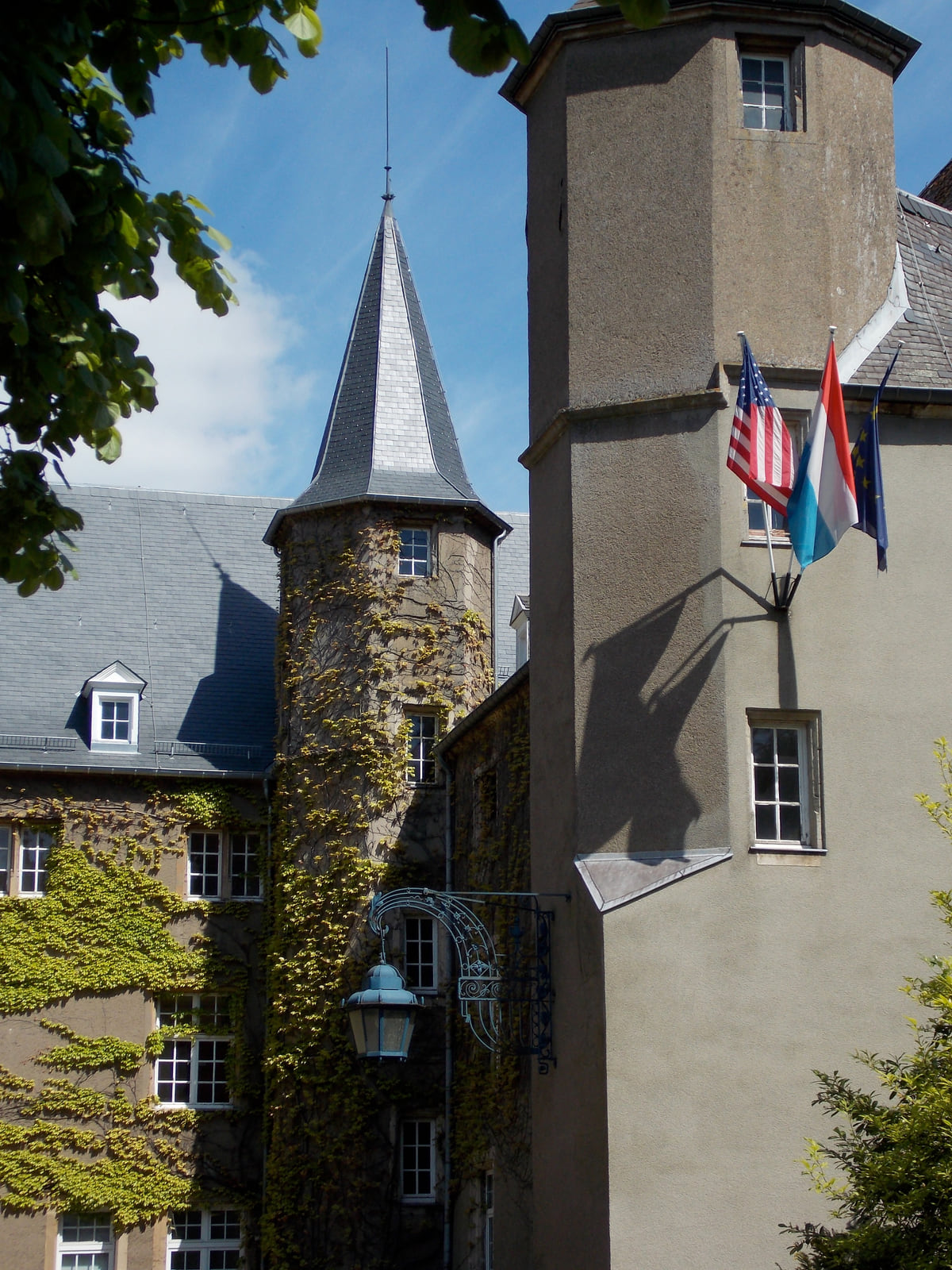
The towers of Differdange Castle, one with a conical roof and one square with flags, covered in ivy
Test yourself
True or false?
0/3 Pick before you peek.
-
Lasauvage is a commune in its own right.
See the answer
False. It's one of the four official localities of the commune of Differdange, alongside Differdange, Niederkorn and Oberkorn.
-
Iron ore was mined at Lasauvage until 1978.
See the answer
True. The Minett Park dates mining there from the last quarter of the 19th century until 1978, when it stopped.
-
In Lasauvage church, St Barbara holds a tower in her hands.
See the answer
False. It's the other way round. Here the saint is shown inside a tower, an unusual depiction.
- Approximate date of the forge
- 1625
- Mining ended
- 1978
- Mine train gallery
- 1,400 m
- Adult Minièresbunn ticket
- €10
Quick questions about Lasauvage
Where is Lasauvage?
In south-west Luxembourg, in the commune of Differdange, at the bottom of the narrow Crosnière valley right by the French border. It's one of the commune's four official localities.
What is there to see in Lasauvage?
The neo-Gothic St Barbara's church, the museum space on the village's history, the Eugène Pesch museum of fossils and minerals, the miners' hanging room and the mine yard, plus the mine train pulling in.
How do I get to Lasauvage?
On bus line 6 from Differdange and Niederkorn, which runs every day. On Sundays in season, the best way in is the Minièresbunn mine train from Fond-de-Gras.
When are the Lasauvage museums open?
On Sundays from May to September, 2pm to 6pm, and they're free. The rest of the year you can wander the village freely, but the museums and buildings only open when the trains are running.
How far does the Lasauvage mine train go?
The Minièresbunn line links Fond-de-Gras with Lasauvage and continues to Saulnes in France, around 4 km in all. The visitor trip lasts an hour and a half including a stop in the mine.
0 of 425 Luxembourg guides
Your next stamp
- Differdange
- Fond-de-Gras
- Minett Trail
- Heffingen
- Dudelange
- Goesdorf
- Walferdange
- Pétange
- A Possen Museum
- American Cemetery
- Ansembourg
- Ansembourg Castles
- Asselborn
- Bascharage
- Beaufort castles
- Belval
- Belval blast furnaces
- Berg Castle
- Bernard-Massard cellars
- Bourglinster Castle
- Bourscheid Castle
- Brandenbourg
- Brandenbourg Castle
- Caves St Martin
- Christmas
- Clervaux Castle
- Echternach
- Echternach Abbey
- Ehnen
- Ehnen Wine Museum
- Esch-sur-Alzette
- Esch-sur-Sûre Castle
- European Museum Schengen
- General Patton Museum
- German war cemetery
- Haff Réimech
- Hohllay
- Hollenfels Castle
- Hosingen
- Kautenbach
- Kneiff
- Koerich Castle
- Larochette Castle
- Mersch Castle
- Military History Museum
- Moersdorf
- Mondorf Domaine Thermal
- Munsbach Castle
- National Mining Museum
- Parc Merveilleux
- Park Sënnesräich
- Places to visit
- Remich
- Rindschleiden
- Schiessentümpel
- Septfontaines Castle
- Slate Museum
- Stolzembourg
- Tudor Museum
- Useldange Castle
- Valley of the Seven Castles
- Vianden
- Vianden Castle
- Ville Haute
- Wasserbillig Aquarium
- Weiswampach lakes
- Wiltz Castle
- Ahn
- Berdorf
- Bourscheid-Plage
- Butterfly garden
- Clervaux
- Echternach lake
- Grevenmacher
- Heringer Millen
- Hollenfels
- Luxembourg City
- Luxembourg Science Center
- Meysembourg Castle
- Mullerthal
- National Day
- National Resistance Museum
- Perekop
- Remerschen
- Schoenfels Castle
- The Family of Man
- Things to do
- Upper Sûre Lake
- Vianden chairlift
- Wasserbillig
- Clervaux Abbey
- Echternach Roman villa
- Éislek
- Insenborn
- Kallektuffquell
- Machtum
- Most beautiful places
- Our Nature Park
- Pettingen Castle
- Schueberfouer
- Schwebsingen
- Victor Hugo House
- Waldbillig
- Kuelscheier
- Lultzhausen
- Moselle Valley
- Octave
- Prettiest villages
- Sanem
- Schengen
- Wellenstein
- Wiltz
- Wolfsschlucht
- Beaufort
- Bech-Kleinmacher
- Éimaischen
- Gaalgebierg
- Guttland
- Marnach
- Mondorf-les-Bains
- Putscheid
- Schifflange
- UNESCO World Heritage
- Carnival
- Consdorf
- Ellergronn
- Käerjeng
- Kayl
- Map
- Minett
- Munshausen
- Tandel
- Bech
- Buergbrennen
- Esch-sur-Sûre
- Rumelange
- Where is Luxembourg
- Is it a country?
- Lac de la Haute-Sûre (commune)
- Rosport-Mompach
- Wormeldange
- Larochette
- Mondercange
- Regions
- Bettembourg
- Bock Casemates
- Cantons
- Dancing procession
- Diekirch
- Fischbach
- Garnich
- Mersch
- Moselle wine route
- Ettelbruck
- Grund
- Kehlen
- Lintgen
- Moselle river cruises
- Pétrusse Casemates
- Towns and villages
- Chemin de la Corniche
- Erpeldange-sur-Sûre
- Junglinster
- Kopstal
- Lorentzweiler
- Nommern
- Pfaffenthal
- Population
- Bissen
- Clausen
- Grand Ducal Palace
- Koerich
- Schieren
- Size
- Vallée de l'Ernz
- Feulen
- Kirchberg
- Languages
- Notre-Dame Cathedral
- Reisdorf
- Steinfort
- Bettendorf
- Habscht
- St Michael's Church
- Helperknapp
- Luxembourgish
- Place Guillaume II
- Name
- Place d'Armes
- History
- Place de la Constitution
- Grand Duke
- Colmar-Berg
- Flaxweiler
- Gare
- Hamm
- Kirchberg funicular
- Luxembourg fortress
- Mamer
- Mertert
- Mullerthal Trail
- Neumünster Abbey
- Parc Hosingen
- Pfaffenthal lift
- Political system
- Redange
- The Passerelle
- Wine festivals
- Winseler
- Beckerich
- Biwer
- EU institutions
- Limpertsberg
- Mudam
- Natur Musée
- Pulvermühl
- Stadtbredimus
- Troisvierges
- Wenzel walk
- Bonnevoie
- Bous-Waldbredimus
- Ell
- Flag
- Kiischpelt
- Manternach
- Philharmonie
- Vauban circuit
- Weiswampach
- Betzdorf
- Boulaide
- Dräi Eechelen Museum
- Facts
- Hollerich
- Lenningen
- Useldange
- Wincrange
- Bourscheid
- Dalheim
- Gasperich
- Public holidays
- Red Bridge
- Saeul
- Belair
- Second World War
- Vichten
- Battle of the Bulge
- Merl
- Préizerdaul
- Cents
- EU and Schengen
- Groussbus-Wal
- Entry requirements
- Neudorf
- Rambrouch
- Currency and payments
- Mertzig
- Weimerskirch
- Adolphe Bridge
- Beggen
- Escapardenne
- How to get there
- International March of Diekirch
- MNHA (National Museum)
- Rock climbing
- Sandweiler
- Bridges
- Eich
- Flights
- Golf
- Hesperange
- Lëtzebuerg City Museum
- Canoeing and kayaking
- Dommeldange
- Luxembourg airport
- Strassen
- Villa Vauban
- Airport to city centre
- Bertrange
- Casino Luxembourg
- Mühlenbach
- Swimming pools
- From Brussels
- Pétrusse Valley
- Rollingergrund
- Cessange
- Day trip from Brussels
- Municipal Park
- Steinsel
- Free walking tours
- From Paris
- Niederanven
- From Frankfurt
- Schuttrange
- Sightseeing train and bus
- By train
- Contern
- By coach
- Weiler-la-Tour
- Driving
- Luxembourg in one day
- Pretzel Sunday
- Rham Plateau
- Tour de Luxembourg
- Candlemas (Liichtmëssdag)
- Car hire
- Luxembourg in two days
- Saint-Esprit Plateau
- Luxembourg in three days
- Melusina statue
- Parking
- St Nicholas Day (Kleeschen)
- Fête de la Musique
- Luxembourg in four days
- Museums in Luxembourg
- Petrol
- Place de Clairefontaine
- A week in Luxembourg
- Getting around
- Luxembourg Marathon
- Tram and Bus Museum
- Free public transport
- Parks in Luxembourg City
- Road trip
- Belgium and Luxembourg
- Tram
- Buses
- Viewpoints
- Trains
- Luxembourg station
- Cycling
- LuxembourgPass
- Prices and budget
- On a budget
- Free things to do
- Mobile and roaming
- Healthcare
- Safety
- Scams
- Tourist information
- Packing list
- Swimming lakes
- With a dog
- Markets
- Tipping
- Shopping
- What to buy
- Shopping centres
- With kids
- For couples
- Playgrounds
- Adventure parks
- Nightlife
- Castles
- Theatres and concert venues
- Leudelange
- Nature parks
- Where to stay
- City-centre hotels
- Hiking
- Nature reserves
- Reckange-sur-Mess
- Hotels near the station
- Roeser
- Frisange
- Hotels in Kirchberg
- Airport hotels
- Dippach
- Hotels in Vianden
- Hotels in Echternach
- Hotels in Clervaux
- Hotels in Mondorf-les-Bains
- Hotels in Esch-sur-Alzette
- Hotels on the Moselle
- Mullerthal hotels
- Upper Sûre lake hotels
- Hotels in Diekirch and Ettelbruck
- Cheap hotels
- Luxury hotels
- Boutique hotels
- Spa hotels
- Family hotels
- Apartments
- Weather
- Youth hostels
- Best time to visit
- Campsites
- Holiday cottages
- In winter
- Castle hotels
- In spring
- Day trips
- In summer
- Around Luxembourg
- In autumn
- Ice skating
- Trier day trip
- Metz day trip
- Arlon day trip
- In January
- In February
- In March
- In April
- In May
- In June
- In July
- In August
- In September
- Food
- In October
- In November
- Where to eat
- In December
- Michelin restaurants
- Cheap eats
- Judd mat Gaardebounen
- Bouneschlupp
- Gromperekichelcher
- Kniddelen
- Quetschentaart
- Rieslingspaschtéit
- Events
- Wine
- Crémant
- Beer

Questions about Lasauvage? Write to me
I read every email. If a fact is wrong or missing, tell me and I will check it.
My email sergiolepone@gmail.com
By
Tourism graduate with a master’s in Tourism Management and Planning from the University of Málaga, who has travelled across Europe. He writes every guide from official sources and his own judgement.
Published on . Updated on . Facts checked on .
Sources
Some links in this guide are affiliate links: if you book through them, the site earns a commission at no extra cost to you. Affiliate disclosure
Photos: Noben k (CC BY-SA 3.0); VT98Fan (CC BY-SA 3.0), via Wikimedia Commons.