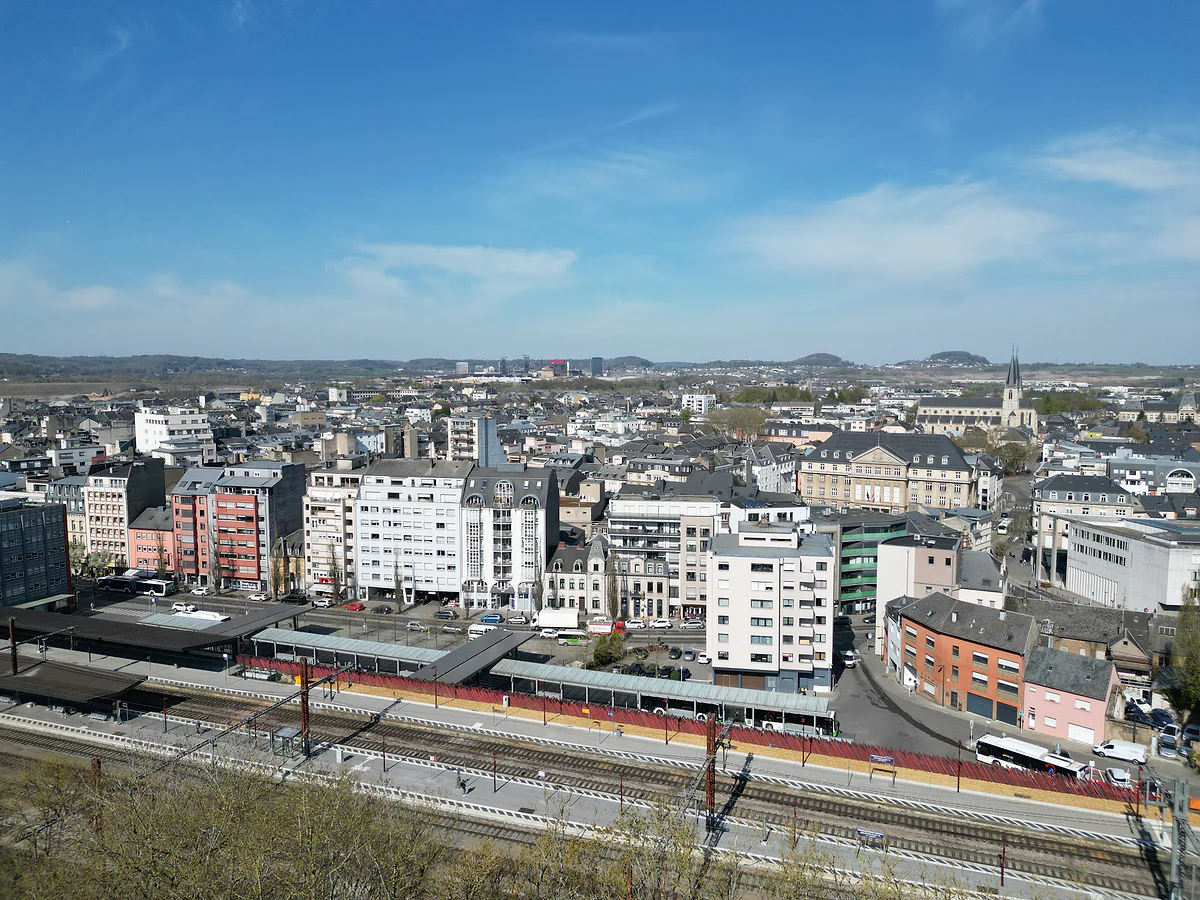
Place de la Résistance, Esch-sur-Alzette
National Resistance Museum, the Nazi occupation told in Esch
The National Museum of Resistance and Human Rights opened in Esch-sur-Alzette in 1956 and reopened, enlarged, in 2022. Since 1 March 2024 it has had a new permanent exhibition, in French, German and English, on the Nazi occupation, the resistance, the camps and the Holocaust. It opens Tuesday to Sunday, 10am to 6pm, and costs €5, free for under-21s.
In 30 seconds
Full read: 3 min
- The museum opened in 1956 and reopened, renovated and enlarged, in 2022.
- The new trilingual permanent exhibition opened on 1-3-2024.
- Open Tuesday to Sunday, 10am to 6pm; closed on Mondays.
- Entry is €5, free for under-21s and with the LuxembourgPass.
This isn't a museum to rush. I'd give it at least an hour and a half and see it before climbing the Belval blast furnaces, because it explains what happened to this working-class town between 1940 and 1944. If you're under 21, it's free.

On the calendar
The date at a glance
-
Women in War by Lynsey Addario
National Resistance Museum, Esch-sur-Alzette
Before you go
What I would keep in mind
-
01 To save money
Free up to the age of 21
Under-21s, students with a card, Kulturpass holders and anyone with a LuxembourgPass get in free. Everyone else pays €5.
LuxembourgPass -
02 Most beautiful
A space for remembrance
The museum keeps urns holding soil gathered after the war from different concentration camps, alongside Lucien Wercollier's sculpture The Political Prisoner.
-
03 My tip
War photography until 20 December
Women in War, by the twice Pulitzer-winning photojournalist Lynsey Addario, runs until 20 December 2026 and is included in the standard ticket.
-
04 Getting there
Right in the centre
It's on place de la Résistance, in the pedestrian zone, 8 minutes' walk from Esch station. Buses 3 and 4 stop at Boulevard Prince Henri.
Esch-sur-Alzette
Of all the museums in the south, this is the one that asks me to slow down. Luxembourg’s national museum of resistance and human rights tells how the country lived through the Nazi occupation, who resisted, who collaborated and what happened to those who ended up in the camps. And it tells that story in Esch-sur-Alzette, a working-class town that paid dearly for those years.
A museum built by the survivors
The museum opened in 1956. The town of Esch-sur-Alzette built it at the initiative of the local branch of the Luxembourg league of political prisoners and deportees, next to the war memorial, in honour of the victims of Nazism and of the workers who died in the mines and works of the south. That’s how the museum tells its own history.
For decades it was run by the league and then by the town. In 2017 the town and the government decided to renovate and enlarge it and set up a foundation to manage it. Work began at the end of 2018, with the Jim Clemes practice as architects, and the museum reopened in 2022 as part of Esch’s European Capital of Culture year. The current permanent exhibition opened on 1 March 2024, in a space the museum says is three times larger than before.
What the permanent exhibition covers
It’s in three languages, French, German and English, so a British visitor can follow every panel. The entrance hall opens with the resistance and a series of biographical niches. The ground floor of the new wing deals with the interwar years, the Nazi structures and daily life under a totalitarian state.
The first floor is the hardest part. It covers collaboration and resistance, the forced conscription of young Luxembourgers into the German army, repression, the resettlement and concentration camps, the art made inside them, the Holocaust, liberation, the post-war years and memory. It closes with a section on human rights.
If you are staying the night, see the best hotel deals in Esch-sur-Alzette for your dates: the well-placed rooms go fast.
The objects that stay with you
The museum highlights a few pieces on its website, and they give a good sense of the tone. A card made in Ravensbrück by the communist resistance fighter Yvonne Useldinger, recording moments of solidarity among the prisoners. A forged identity card from 1943, of the kind groups such as the PI-Men supplied to people fleeing to France or Belgium. A poster from August 1940 by Gauleiter Gustav Simon telling Luxembourgers their language was German. And a 1942 call for a general strike against forced conscription.
There’s also a space for remembrance with urns holding soil gathered after the war from different camps, and Lucien Wercollier’s sculpture The Political Prisoner. For the wider picture of those years across the country, see my overview of Luxembourg in the Second World War.
The 2026 temporary exhibition
Until 20 December 2026 you can see Women in War by the American photojournalist Lynsey Addario, twice winner of the Pulitzer Prize. She created it for the museum, and it closes the Women in Conflict cycle on women in wars past and present. Standard entry includes the temporary exhibitions, so there’s nothing extra to pay.
If you are staying the night, see the best hotel deals in Esch-sur-Alzette for your dates: the well-placed rooms go fast.
Opening times, prices and getting there
Opening hours are 10am to 6pm, Tuesday to Sunday, with Mondays closed. Entry costs €5, or €4 each for groups of at least 8 adults. Under-21s, students, Kulturpass and ICOM card holders and anyone with a LuxembourgPass go free.
It’s on place de la Résistance, in the pedestrian heart of Esch-sur-Alzette, an 8-minute walk from Esch station. Buses 3 and 4 stop at Boulevard Prince Henri, and there’s an underground car park alongside. Wheelchair access is guaranteed and reception can lend you a chair.
How I’d fit it in
The museum closes on Mondays and the Belval blast furnaces on Tuesdays, so from Wednesday to Sunday you can do both. Coming from Luxembourg City, the train to Esch station is free in second class, and the museum makes a sensible first stop straight off the platform. I’d start here in the morning, have lunch in the centre and climb the furnace in the afternoon. On the way out, look down at the memorial stones set into the pavements outside victims’ homes, since the museum suggests a walking route past them.
So you do not lose the morning at the ticket office, browse tickets and tours in National Resistance Museum on GetYourGuide.
If you would rather go at your own pace, see the car hire deals in Luxembourg: the earlier you book, the more cars are left to choose from.
Before you fix your dates, compare tickets to Luxembourg: the same journey can cost very different amounts from one day to the next.
Prices and opening times (September 2026)
| Item | Detail |
|---|---|
| Adult | €5 |
| Adult in a group of 8 or more | €4 |
| Under-21s, students, Kulturpass, ICOM, LuxembourgPass | Free |
| Tuesday to Sunday | 10am-6pm |
| Monday | Closed |
Museum website (mnr.lu) and visitluxembourg. Entry covers the permanent and temporary exhibitions.
What the permanent exhibition covers
| Floor | Themes |
|---|---|
| Entrance hall | Resistance and biographical niches |
| Ground floor, new wing | Interwar years, Nazi structures, daily life under a totalitarian state |
| First floor, new wing | Collaboration, resistance, forced conscription, repression, camps, art in the camps, Holocaust, liberation, post-war years and memory |
| Hall gallery | Human rights and resistance |
Sections published by the museum for the exhibition opened on 1-3-2024.
Test yourself
True or false?
0/3 Pick before you peek.
-
The National Resistance Museum was built at the initiative of former political prisoners.
See the answer
True. It grew out of the local branch of the Luxembourg league of political prisoners and deportees and was built by the town of Esch, which opened it in 1956.
-
The museum is closed on Tuesdays.
See the answer
False. It's closed on Mondays. It opens Tuesday to Sunday from 10am to 6pm.
-
The permanent exhibition is only in Luxembourgish.
See the answer
False. It's trilingual, in French, German and English.
- Year it opened
- 1956
- New permanent exhibition opened
- 1-3-2024
- Adult ticket
- €5
- Exhibition languages
- 3
Map
Where National Resistance Museum is
The thick dashed line is the border with Belgium, France and Germany, and the fine ones divide the twelve cantons. The Éislek lies to the north and the Moselle to the east. Every number opens its guide.
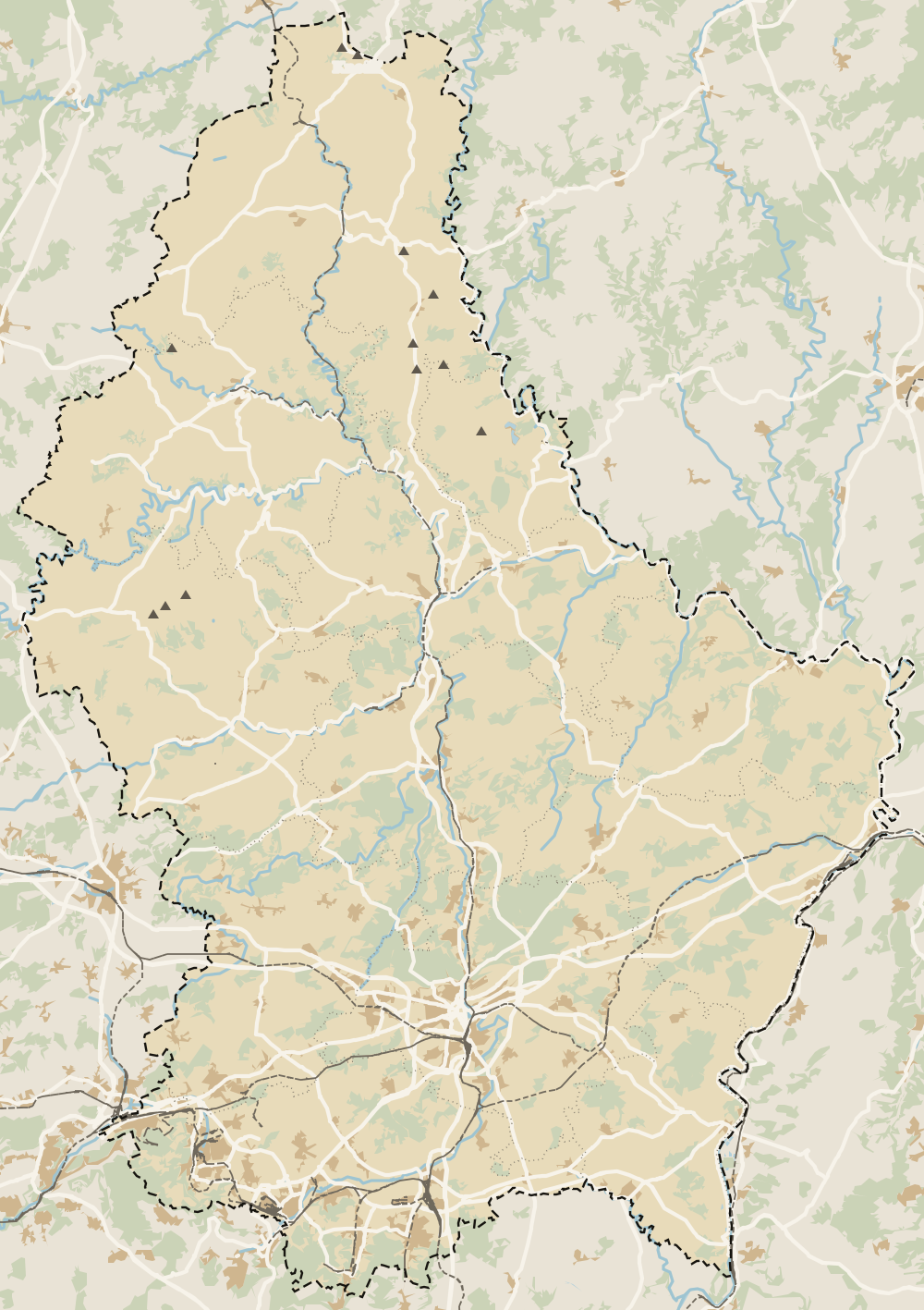 1Belval 2Esch-sur-Alzette 3National Resistance Museum 4Gaalgebierg 5Ellergronn
 Map data © OpenStreetMap contributors (ODbL)
0 of 425 Luxembourg guides
Your next stamp
- Esch-sur-Alzette
- Natur Musée
- Lëtzebuerg City Museum
- MNHA (National Museum)
- Wiltz Castle
- Museums in Luxembourg
- Mudam
- Dräi Eechelen Museum
- A Possen Museum
- American Cemetery
- Ansembourg
- Ansembourg Castles
- Asselborn
- Bascharage
- Beaufort castles
- Belval
- Belval blast furnaces
- Berg Castle
- Bernard-Massard cellars
- Bourglinster Castle
- Bourscheid Castle
- Brandenbourg
- Brandenbourg Castle
- Caves St Martin
- Christmas
- Clervaux Castle
- Echternach
- Echternach Abbey
- Ehnen
- Ehnen Wine Museum
- Esch-sur-Sûre Castle
- European Museum Schengen
- Fond-de-Gras
- General Patton Museum
- German war cemetery
- Haff Réimech
- Hohllay
- Hollenfels Castle
- Hosingen
- Kautenbach
- Kneiff
- Koerich Castle
- Larochette Castle
- Lasauvage
- Mersch Castle
- Military History Museum
- Moersdorf
- Mondorf Domaine Thermal
- Munsbach Castle
- National Mining Museum
- Parc Merveilleux
- Park Sënnesräich
- Places to visit
- Remich
- Rindschleiden
- Schiessentümpel
- Septfontaines Castle
- Slate Museum
- Stolzembourg
- Tudor Museum
- Useldange Castle
- Valley of the Seven Castles
- Vianden
- Vianden Castle
- Ville Haute
- Wasserbillig Aquarium
- Weiswampach lakes
- Ahn
- Berdorf
- Bourscheid-Plage
- Butterfly garden
- Clervaux
- Differdange
- Echternach lake
- Grevenmacher
- Heringer Millen
- Hollenfels
- Luxembourg City
- Luxembourg Science Center
- Meysembourg Castle
- Mullerthal
- National Day
- Perekop
- Remerschen
- Schoenfels Castle
- The Family of Man
- Things to do
- Upper Sûre Lake
- Vianden chairlift
- Wasserbillig
- Clervaux Abbey
- Echternach Roman villa
- Éislek
- Insenborn
- Kallektuffquell
- Machtum
- Most beautiful places
- Our Nature Park
- Pétange
- Pettingen Castle
- Schueberfouer
- Schwebsingen
- Victor Hugo House
- Waldbillig
- Dudelange
- Kuelscheier
- Lultzhausen
- Moselle Valley
- Octave
- Prettiest villages
- Sanem
- Schengen
- Wellenstein
- Wiltz
- Wolfsschlucht
- Beaufort
- Bech-Kleinmacher
- Éimaischen
- Gaalgebierg
- Guttland
- Marnach
- Mondorf-les-Bains
- Putscheid
- Schifflange
- UNESCO World Heritage
- Carnival
- Consdorf
- Ellergronn
- Käerjeng
- Kayl
- Map
- Minett
- Munshausen
- Tandel
- Bech
- Buergbrennen
- Esch-sur-Sûre
- Rumelange
- Where is Luxembourg
- Is it a country?
- Lac de la Haute-Sûre (commune)
- Rosport-Mompach
- Wormeldange
- Larochette
- Mondercange
- Regions
- Bettembourg
- Bock Casemates
- Cantons
- Dancing procession
- Diekirch
- Fischbach
- Garnich
- Mersch
- Moselle wine route
- Ettelbruck
- Grund
- Heffingen
- Kehlen
- Lintgen
- Moselle river cruises
- Pétrusse Casemates
- Towns and villages
- Chemin de la Corniche
- Erpeldange-sur-Sûre
- Junglinster
- Kopstal
- Lorentzweiler
- Nommern
- Pfaffenthal
- Population
- Bissen
- Clausen
- Grand Ducal Palace
- Koerich
- Schieren
- Size
- Vallée de l'Ernz
- Feulen
- Kirchberg
- Languages
- Notre-Dame Cathedral
- Reisdorf
- Steinfort
- Bettendorf
- Habscht
- St Michael's Church
- Helperknapp
- Luxembourgish
- Place Guillaume II
- Name
- Place d'Armes
- History
- Place de la Constitution
- Grand Duke
- Colmar-Berg
- Flaxweiler
- Gare
- Hamm
- Kirchberg funicular
- Luxembourg fortress
- Mamer
- Mertert
- Minett Trail
- Mullerthal Trail
- Neumünster Abbey
- Parc Hosingen
- Pfaffenthal lift
- Political system
- Redange
- The Passerelle
- Wine festivals
- Winseler
- Beckerich
- Biwer
- EU institutions
- Goesdorf
- Limpertsberg
- Pulvermühl
- Stadtbredimus
- Troisvierges
- Wenzel walk
- Bonnevoie
- Bous-Waldbredimus
- Ell
- Flag
- Kiischpelt
- Manternach
- Philharmonie
- Vauban circuit
- Weiswampach
- Betzdorf
- Boulaide
- Facts
- Hollerich
- Lenningen
- Useldange
- Wincrange
- Bourscheid
- Dalheim
- Gasperich
- Public holidays
- Red Bridge
- Saeul
- Belair
- Second World War
- Vichten
- Battle of the Bulge
- Merl
- Préizerdaul
- Cents
- EU and Schengen
- Groussbus-Wal
- Entry requirements
- Neudorf
- Rambrouch
- Currency and payments
- Mertzig
- Weimerskirch
- Adolphe Bridge
- Beggen
- Escapardenne
- How to get there
- International March of Diekirch
- Rock climbing
- Sandweiler
- Bridges
- Eich
- Flights
- Golf
- Hesperange
- Canoeing and kayaking
- Dommeldange
- Luxembourg airport
- Strassen
- Villa Vauban
- Airport to city centre
- Bertrange
- Casino Luxembourg
- Mühlenbach
- Swimming pools
- From Brussels
- Pétrusse Valley
- Rollingergrund
- Walferdange
- Cessange
- Day trip from Brussels
- Municipal Park
- Steinsel
- Free walking tours
- From Paris
- Niederanven
- From Frankfurt
- Schuttrange
- Sightseeing train and bus
- By train
- Contern
- By coach
- Weiler-la-Tour
- Driving
- Luxembourg in one day
- Pretzel Sunday
- Rham Plateau
- Tour de Luxembourg
- Candlemas (Liichtmëssdag)
- Car hire
- Luxembourg in two days
- Saint-Esprit Plateau
- Luxembourg in three days
- Melusina statue
- Parking
- St Nicholas Day (Kleeschen)
- Fête de la Musique
- Luxembourg in four days
- Petrol
- Place de Clairefontaine
- A week in Luxembourg
- Getting around
- Luxembourg Marathon
- Tram and Bus Museum
- Free public transport
- Parks in Luxembourg City
- Road trip
- Belgium and Luxembourg
- Tram
- Buses
- Viewpoints
- Trains
- Luxembourg station
- Cycling
- LuxembourgPass
- Prices and budget
- On a budget
- Free things to do
- Mobile and roaming
- Healthcare
- Safety
- Scams
- Tourist information
- Packing list
- Swimming lakes
- With a dog
- Markets
- Tipping
- Shopping
- What to buy
- Shopping centres
- With kids
- For couples
- Playgrounds
- Adventure parks
- Nightlife
- Castles
- Theatres and concert venues
- Leudelange
- Nature parks
- Where to stay
- City-centre hotels
- Hiking
- Nature reserves
- Reckange-sur-Mess
- Hotels near the station
- Roeser
- Frisange
- Hotels in Kirchberg
- Airport hotels
- Dippach
- Hotels in Vianden
- Hotels in Echternach
- Hotels in Clervaux
- Hotels in Mondorf-les-Bains
- Hotels in Esch-sur-Alzette
- Hotels on the Moselle
- Mullerthal hotels
- Upper Sûre lake hotels
- Hotels in Diekirch and Ettelbruck
- Cheap hotels
- Luxury hotels
- Boutique hotels
- Spa hotels
- Family hotels
- Apartments
- Weather
- Youth hostels
- Best time to visit
- Campsites
- Holiday cottages
- In winter
- Castle hotels
- In spring
- Day trips
- In summer
- Around Luxembourg
- In autumn
- Ice skating
- Trier day trip
- Metz day trip
- Arlon day trip
- In January
- In February
- In March
- In April
- In May
- In June
- In July
- In August
- In September
- Food
- In October
- In November
- Where to eat
- In December
- Michelin restaurants
- Cheap eats
- Judd mat Gaardebounen
- Bouneschlupp
- Gromperekichelcher
- Kniddelen
- Quetschentaart
- Rieslingspaschtéit
- Events
- Wine
- Crémant
- Beer
Frequently asked questions
What are the opening times of the National Resistance Museum in Esch?
Opening hours are 10am to 6pm, Tuesday to Sunday, with Mondays closed. Groups can book guided visits Monday to Friday from 8am to 6pm and at weekends from 10am to 6pm.
How much is entry to the Resistance Museum?
€5 for adults and €4 per person for groups of at least 8 adults. Under-21s, students, Kulturpass and ICOM card holders and LuxembourgPass holders get in free.
What can you see at the National Resistance Museum?
The Nazi occupation of Luxembourg, collaboration and resistance, forced conscription, repression, the concentration camps, the Holocaust, liberation and memory, plus a section on human rights. Original objects include forged resistance papers and propaganda posters.
Is the museum in English?
Yes. The permanent exhibition is trilingual, in French, German and English, so it's easy to follow without French or Luxembourgish.
How do I get to the museum from Esch station?
It's about 8 minutes on foot to place de la Résistance in the pedestrian zone. Buses 3 and 4 stop at Boulevard Prince Henri, and there's an underground car park next to the museum.
Is the Resistance Museum wheelchair accessible?
Yes. The museum guarantees access for visitors with reduced mobility and lends a wheelchair at reception. It also has portable seats for resting during the visit.
By
Tourism graduate with a master’s in Tourism Management and Planning from the University of Málaga, who has travelled across Europe. He writes every guide from official sources and his own judgement.
Published on . Facts checked on .
Sources
Some links in this guide are affiliate links: if you book through them, the site earns a commission at no extra cost to you. Affiliate disclosure
Photos: Zinneke (CC BY-SA 4.0), via Wikimedia Commons.