Luxembourgish food
Kniddelen, the simplest winter dish in Luxembourg's kitchen
Kniddelen are boiled flour dumplings served with Gréiwen, small cubes of bacon. Luxembourg's official portal calls them a very popular winter dish made with very few ingredients. The dough is flour, egg, milk and salt, and they're often finished with a little cream or served with apple sauce.
In 30 seconds
Full read: 3 min
- Kniddelen are boiled flour dumplings served with Gréiwen, cubes of bacon.
- The official portal describes them as a very popular, very simple winter dish.
- The dough is flour, egg, milk and salt, and they're cooked until they float.
- They come with cream, apple sauce and a Moselle Riesling.
Kniddelen are what I'd order to understand Luxembourg's home cooking, the kind that never makes it into the photos. I'd have them in winter, with their bacon, and I'd go easy before pudding, because they're a lot more filling than they look.

Before you go
What I would keep in mind
-
01 Most beautiful
Very few ingredients
The official portal calls them a very popular, simple winter dish, made with very few ingredients but delicious. Store-cupboard cooking at its purest.
Luxembourg food -
02 My tip
Gréiwen means bacon
On the menu you'll see the word Gréiwen. The official portal translates it as lardons, small cubes of bacon, the classic partner to the dumplings.
-
03 Worth the splurge
With apple sauce
The youth hostels' recipe also suggests serving them with warm apple sauce, the same sweet and savoury contrast you get with potato fritters at the fairs.
Gromperekichelcher -
04 Getting there
A cookbook classic
The 2011 edition of Ketty Thull's cookbook lists them among Luxembourg's classics, alongside Bouneschlupp and Judd mat Gaardebounen.
Bouneschlupp
What I would book
Some dishes you order out of curiosity, others to understand how a country eats at home. Kniddelen belong firmly in the second group. There’s nothing showy about them, they’re dumplings with bacon, and that’s exactly why I think they’re a good window onto everyday Luxembourgish cooking. Below I cover what goes into them, how they’re cooked and when I think they’re worth ordering.
What are Kniddelen?
The country’s official portal lists them among its typical dishes as a kind of boiled flour dumpling, served with Gréiwen, small cubes of bacon. On its Christmas traditions page it adds that they’re a very popular and very simple winter dish, made with very few ingredients but delicious. It’s hard to sum them up better.
Luxembourg’s youth hostels, in the recipe series on their blog, call them Kniddelen mat Speck, meaning with bacon, and trace them back to peasant cooking, the kind that had to feed a lot of people with cheap, local ingredients. They add that over time the dish has become an icon, served in many restaurants across the country, from the simplest to the gastronomic.
How they’re made
The hostels’ recipe, which I use as a secondary reference, is one of the simplest I know. Flour is mixed with eggs, milk and a pinch of salt into a dough, shaped into small dumplings and cooked in boiling salted water until they rise to the surface. Meanwhile, bacon is fried with a splash of crème fraîche. The dumplings are drained and served with the bacon on top.
My tip if you make them at home is to cook a single test dumpling first to check the size and the salt before dropping in the rest. It’s a dish with nowhere to hide, so everything rides on the dough and on decent bacon.
British readers will find the idea familiar. A suet dumpling bobbing in a winter stew is not a million miles away, although Kniddelen are the main event rather than a topping, they contain no suet and they come with bacon instead of gravy. That’s my comparison, not the portal’s, but it’s a handy way to set expectations before the plate arrives. Think of them as proper cold-weather food, not a light lunch.
To sleep close to everything, search places to stay in Luxembourg on Booking.com and filter by area before price.
When do people eat them?
In the colder months. The official portal places them among its winter dishes, on the same page as the Christmas markets and mulled wine, and the hostels say they hold a special place in Luxembourgers’ hearts at that time of year, especially at family gatherings. If you’re visiting in December, they fit neatly with an afternoon at the Luxembourg Christmas market.
What goes with them
The classic is bacon, which gives the hostels’ version its name. They also suggest serving the dumplings with warm apple sauce, the same sweet and savoury contrast you’ll find with potato fritters at the fairs. To drink, a Luxembourg white such as Riesling, which lightens a fairly rich plate. More on those grapes in Luxembourg wine. I wouldn’t add anything else, because any fussy sauce would spoil the humble charm of the dish.
To sleep close to everything, search places to stay in Luxembourg on Expedia and filter by area before price.
Their relatives on the Luxembourg table
Kniddelen don’t travel alone. On the same list of typical dishes, the official portal includes Stäerzelen, made with buckwheat flour, smoked bacon and sometimes cream, which is almost their country cousin. In winter they share the menu with Träipen, the local black pudding, served with apple sauce or mashed potato, and with Ierzebulli, the pea soup served at the Buergbrennen bonfires. If you enjoy Kniddelen, I’d order any of those at the next meal, because together they paint a clear picture of a Luxembourg farmhouse larder in winter.
Where I’d order them
In a traditional bistro, in winter. No official source lists restaurants that serve them, so I won’t give you names. What I’d do is look for them on the menu by the door, which by law already includes service in the price, and order them as a main course. In Ketty Thull’s cookbook, republished in 2011, they sit alongside Bouneschlupp and Judd mat Gaardebounen among the seasonal classics, and together they make a complete Luxembourgish meal. For the wider picture of the national cuisine, see Luxembourg food; for restaurant areas, where to eat in Luxembourg.
If you are short on time, see the best tours in Luxembourg and pick one that fits your day.
Where the bus does not go, a car does: compare car hire in Luxembourg before you arrive rather than at the desk.
If you still need a way in, check the best ticket deals to Luxembourg from where you are.
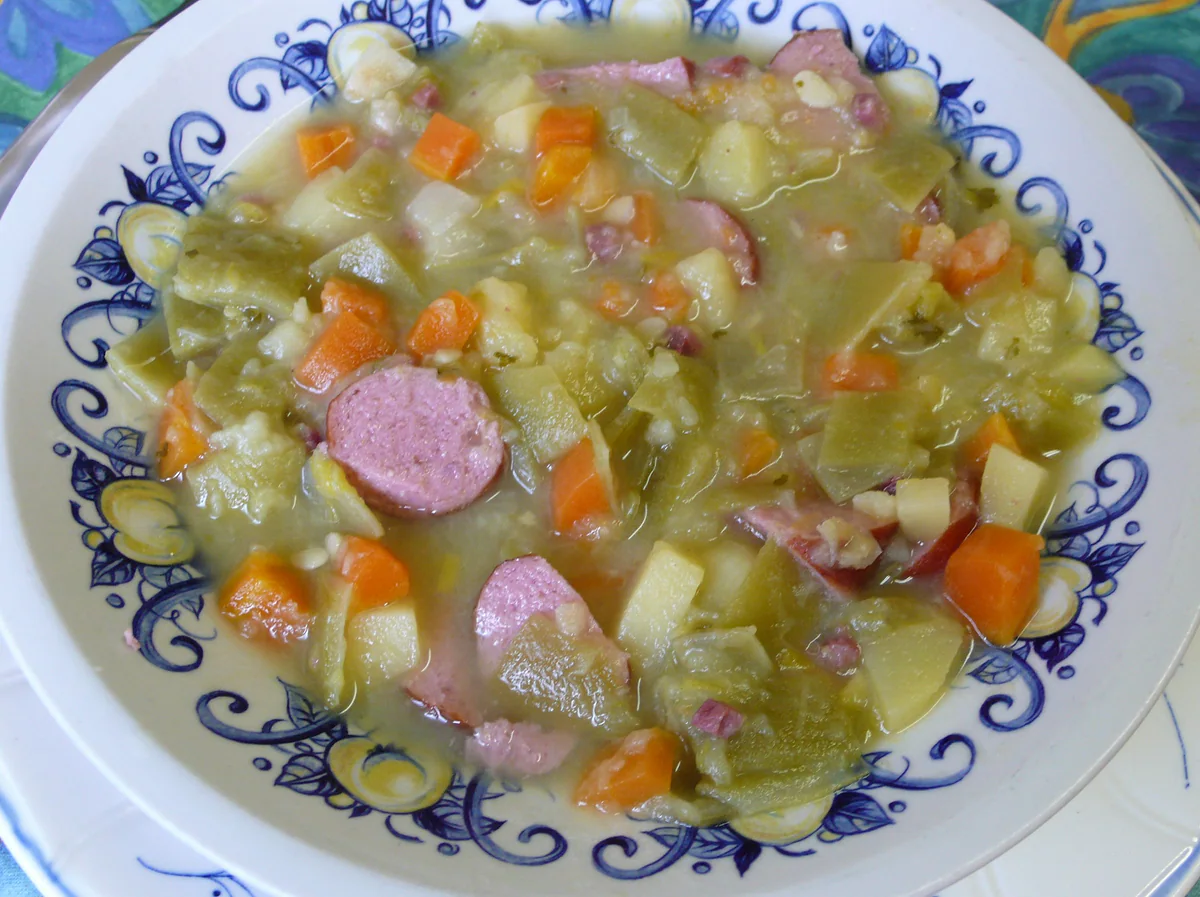
A deep plate of Bouneschlupp, Luxembourg green bean soup with potato, carrot, leek and sliced sausage
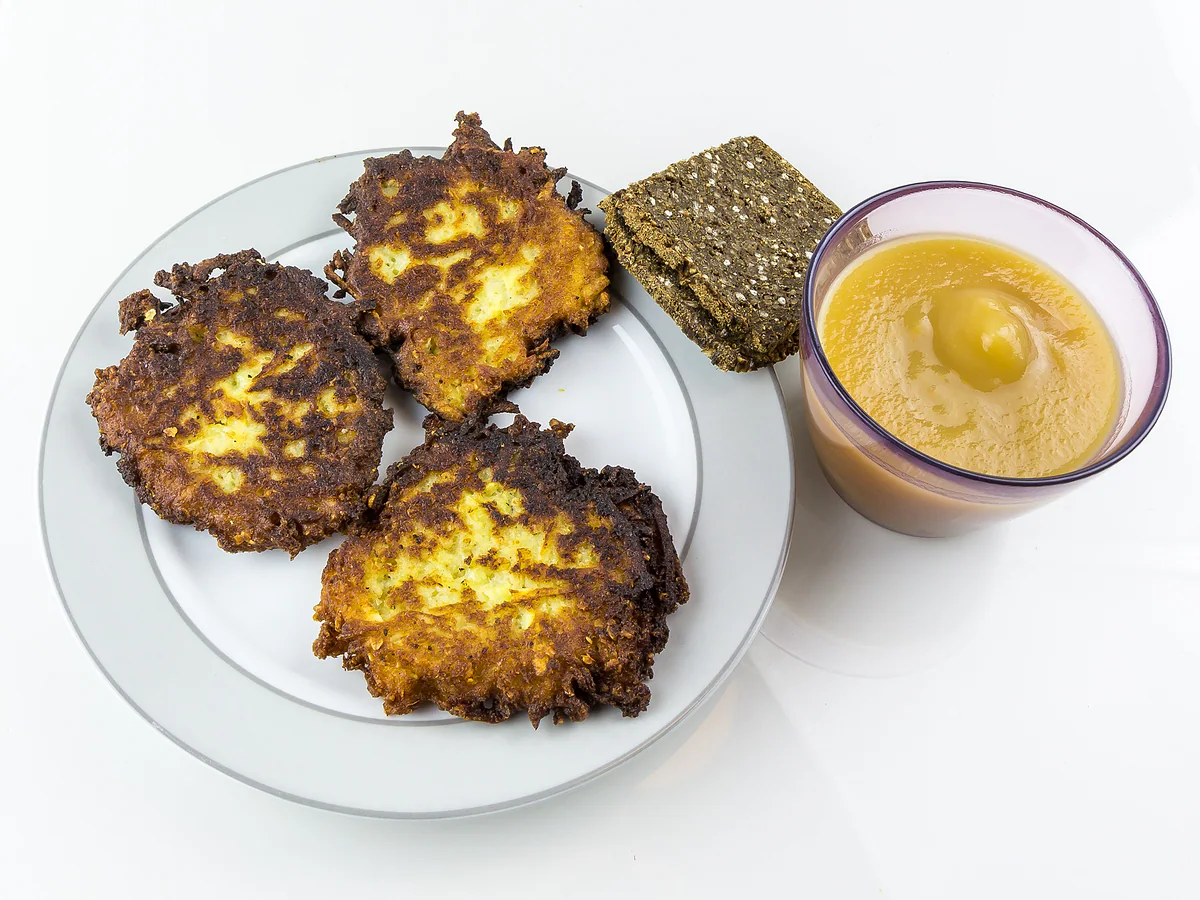
Fried grated potato pancakes, like Luxembourg's Gromperekichelcher, with apple sauce and dark rye bread
Kniddelen at a glance
| Aspect | What the sources say |
|---|---|
| What they are | Boiled flour dumplings served with Gréiwen (bacon cubes) |
| When | A very popular winter dish |
| Dough | Flour, eggs, milk and a pinch of salt |
| Cooking | In boiling salted water until they rise to the surface |
| Sauce | Fried bacon with a splash of crème fraîche |
| On the side | Apple sauce; Riesling to drink |
luxembourg.public.lu (cuisine and Christmas pages) and the recipe on the Luxembourg Youth Hostels blog, a secondary source. Checked on 29-09-2026.
How they're made, step by step
| Step | What to do |
|---|---|
| 1 | Mix flour, eggs, milk and a pinch of salt into a dough |
| 2 | Shape small dumplings and drop them into boiling salted water |
| 3 | Cook until they rise to the surface |
| 4 | Meanwhile, fry the bacon with a splash of crème fraîche |
| 5 | Drain the dumplings and serve with the bacon |
Recipe from the Luxembourg Youth Hostels blog (youthhostels.lu), a secondary source.
Test yourself
True or false?
0/3 Pick before you peek.
-
Kniddelen are served with Gréiwen, cubes of bacon.
See the answer
True. Luxembourg's official portal describes them as boiled flour dumplings served with Gréiwen, which it translates as lardons.
-
Kniddelen are a summer dish.
See the answer
False. The official portal presents them as a very popular, simple winter dish.
-
Kniddelen dough is made with potato.
See the answer
False. The youth hostels' recipe uses flour, eggs, milk and salt. The potato cakes are a different dish, Gromperekichelcher.
0 of 425 Luxembourg guides
Your next stamp
- Food
- Judd mat Gaardebounen
- Bouneschlupp
- Gromperekichelcher
- What to buy
- Buergbrennen
- Crémant
- Rieslingspaschtéit
- A Possen Museum
- American Cemetery
- Ansembourg
- Ansembourg Castles
- Asselborn
- Bascharage
- Beaufort castles
- Belval
- Belval blast furnaces
- Berg Castle
- Bernard-Massard cellars
- Bourglinster Castle
- Bourscheid Castle
- Brandenbourg
- Brandenbourg Castle
- Caves St Martin
- Christmas
- Clervaux Castle
- Echternach
- Echternach Abbey
- Ehnen
- Ehnen Wine Museum
- Esch-sur-Alzette
- Esch-sur-Sûre Castle
- European Museum Schengen
- Fond-de-Gras
- General Patton Museum
- German war cemetery
- Haff Réimech
- Hohllay
- Hollenfels Castle
- Hosingen
- Kautenbach
- Kneiff
- Koerich Castle
- Larochette Castle
- Lasauvage
- Mersch Castle
- Military History Museum
- Moersdorf
- Mondorf Domaine Thermal
- Munsbach Castle
- National Mining Museum
- Parc Merveilleux
- Park Sënnesräich
- Places to visit
- Remich
- Rindschleiden
- Schiessentümpel
- Septfontaines Castle
- Slate Museum
- Stolzembourg
- Tudor Museum
- Useldange Castle
- Valley of the Seven Castles
- Vianden
- Vianden Castle
- Ville Haute
- Wasserbillig Aquarium
- Weiswampach lakes
- Wiltz Castle
- Ahn
- Berdorf
- Bourscheid-Plage
- Butterfly garden
- Clervaux
- Differdange
- Echternach lake
- Grevenmacher
- Heringer Millen
- Hollenfels
- Luxembourg City
- Luxembourg Science Center
- Meysembourg Castle
- Mullerthal
- National Day
- National Resistance Museum
- Perekop
- Remerschen
- Schoenfels Castle
- The Family of Man
- Things to do
- Upper Sûre Lake
- Vianden chairlift
- Wasserbillig
- Clervaux Abbey
- Echternach Roman villa
- Éislek
- Insenborn
- Kallektuffquell
- Machtum
- Most beautiful places
- Our Nature Park
- Pétange
- Pettingen Castle
- Schueberfouer
- Schwebsingen
- Victor Hugo House
- Waldbillig
- Dudelange
- Kuelscheier
- Lultzhausen
- Moselle Valley
- Octave
- Prettiest villages
- Sanem
- Schengen
- Wellenstein
- Wiltz
- Wolfsschlucht
- Beaufort
- Bech-Kleinmacher
- Éimaischen
- Gaalgebierg
- Guttland
- Marnach
- Mondorf-les-Bains
- Putscheid
- Schifflange
- UNESCO World Heritage
- Carnival
- Consdorf
- Ellergronn
- Käerjeng
- Kayl
- Map
- Minett
- Munshausen
- Tandel
- Bech
- Esch-sur-Sûre
- Rumelange
- Where is Luxembourg
- Is it a country?
- Lac de la Haute-Sûre (commune)
- Rosport-Mompach
- Wormeldange
- Larochette
- Mondercange
- Regions
- Bettembourg
- Bock Casemates
- Cantons
- Dancing procession
- Diekirch
- Fischbach
- Garnich
- Mersch
- Moselle wine route
- Ettelbruck
- Grund
- Heffingen
- Kehlen
- Lintgen
- Moselle river cruises
- Pétrusse Casemates
- Towns and villages
- Chemin de la Corniche
- Erpeldange-sur-Sûre
- Junglinster
- Kopstal
- Lorentzweiler
- Nommern
- Pfaffenthal
- Population
- Bissen
- Clausen
- Grand Ducal Palace
- Koerich
- Schieren
- Size
- Vallée de l'Ernz
- Feulen
- Kirchberg
- Languages
- Notre-Dame Cathedral
- Reisdorf
- Steinfort
- Bettendorf
- Habscht
- St Michael's Church
- Helperknapp
- Luxembourgish
- Place Guillaume II
- Name
- Place d'Armes
- History
- Place de la Constitution
- Grand Duke
- Colmar-Berg
- Flaxweiler
- Gare
- Hamm
- Kirchberg funicular
- Luxembourg fortress
- Mamer
- Mertert
- Minett Trail
- Mullerthal Trail
- Neumünster Abbey
- Parc Hosingen
- Pfaffenthal lift
- Political system
- Redange
- The Passerelle
- Wine festivals
- Winseler
- Beckerich
- Biwer
- EU institutions
- Goesdorf
- Limpertsberg
- Mudam
- Natur Musée
- Pulvermühl
- Stadtbredimus
- Troisvierges
- Wenzel walk
- Bonnevoie
- Bous-Waldbredimus
- Ell
- Flag
- Kiischpelt
- Manternach
- Philharmonie
- Vauban circuit
- Weiswampach
- Betzdorf
- Boulaide
- Dräi Eechelen Museum
- Facts
- Hollerich
- Lenningen
- Useldange
- Wincrange
- Bourscheid
- Dalheim
- Gasperich
- Public holidays
- Red Bridge
- Saeul
- Belair
- Second World War
- Vichten
- Battle of the Bulge
- Merl
- Préizerdaul
- Cents
- EU and Schengen
- Groussbus-Wal
- Entry requirements
- Neudorf
- Rambrouch
- Currency and payments
- Mertzig
- Weimerskirch
- Adolphe Bridge
- Beggen
- Escapardenne
- How to get there
- International March of Diekirch
- MNHA (National Museum)
- Rock climbing
- Sandweiler
- Bridges
- Eich
- Flights
- Golf
- Hesperange
- Lëtzebuerg City Museum
- Canoeing and kayaking
- Dommeldange
- Luxembourg airport
- Strassen
- Villa Vauban
- Airport to city centre
- Bertrange
- Casino Luxembourg
- Mühlenbach
- Swimming pools
- From Brussels
- Pétrusse Valley
- Rollingergrund
- Walferdange
- Cessange
- Day trip from Brussels
- Municipal Park
- Steinsel
- Free walking tours
- From Paris
- Niederanven
- From Frankfurt
- Schuttrange
- Sightseeing train and bus
- By train
- Contern
- By coach
- Weiler-la-Tour
- Driving
- Luxembourg in one day
- Pretzel Sunday
- Rham Plateau
- Tour de Luxembourg
- Candlemas (Liichtmëssdag)
- Car hire
- Luxembourg in two days
- Saint-Esprit Plateau
- Luxembourg in three days
- Melusina statue
- Parking
- St Nicholas Day (Kleeschen)
- Fête de la Musique
- Luxembourg in four days
- Museums in Luxembourg
- Petrol
- Place de Clairefontaine
- A week in Luxembourg
- Getting around
- Luxembourg Marathon
- Tram and Bus Museum
- Free public transport
- Parks in Luxembourg City
- Road trip
- Belgium and Luxembourg
- Tram
- Buses
- Viewpoints
- Trains
- Luxembourg station
- Cycling
- LuxembourgPass
- Prices and budget
- On a budget
- Free things to do
- Mobile and roaming
- Healthcare
- Safety
- Scams
- Tourist information
- Packing list
- Swimming lakes
- With a dog
- Markets
- Tipping
- Shopping
- Shopping centres
- With kids
- For couples
- Playgrounds
- Adventure parks
- Nightlife
- Castles
- Theatres and concert venues
- Leudelange
- Nature parks
- Where to stay
- City-centre hotels
- Hiking
- Nature reserves
- Reckange-sur-Mess
- Hotels near the station
- Roeser
- Frisange
- Hotels in Kirchberg
- Airport hotels
- Dippach
- Hotels in Vianden
- Hotels in Echternach
- Hotels in Clervaux
- Hotels in Mondorf-les-Bains
- Hotels in Esch-sur-Alzette
- Hotels on the Moselle
- Mullerthal hotels
- Upper Sûre lake hotels
- Hotels in Diekirch and Ettelbruck
- Cheap hotels
- Luxury hotels
- Boutique hotels
- Spa hotels
- Family hotels
- Apartments
- Weather
- Youth hostels
- Best time to visit
- Campsites
- Holiday cottages
- In winter
- Castle hotels
- In spring
- Day trips
- In summer
- Around Luxembourg
- In autumn
- Ice skating
- Trier day trip
- Metz day trip
- Arlon day trip
- In January
- In February
- In March
- In April
- In May
- In June
- In July
- In August
- In September
- In October
- In November
- Where to eat
- In December
- Michelin restaurants
- Cheap eats
- Quetschentaart
- Events
- Wine
- Beer
Frequently asked questions
What are Kniddelen?
Boiled flour dumplings served with Gréiwen, small cubes of bacon. That's how Luxembourg's official portal describes them in its list of typical dishes.
When do people eat Kniddelen?
Mainly in winter. The official portal calls them a very popular winter dish, and the youth hostels link them to the colder months and family gatherings.
What's in Kniddelen dough?
Flour, eggs, milk and a pinch of salt, according to the Luxembourg Youth Hostels recipe. They're cooked in boiling salted water until they float.
What are Kniddelen served with?
Fried bacon, often with a little crème fraîche. Also warm apple sauce, and a Luxembourg white such as Riesling to drink.
Are Kniddelen like British dumplings or gnocchi?
They're in the same family as both, soft dough boiled in water, but made with flour, egg and milk rather than suet or potato. That comparison is mine, not an official one.
Where can I eat Kniddelen in Luxembourg?
In traditional bistros, especially in winter. The youth hostels say they're now served in many restaurants across the country, from the simplest to the gastronomic.
By
Tourism graduate with a master’s in Tourism Management and Planning from the University of Málaga, who has travelled across Europe. He writes every guide from official sources and his own judgement.
Published on . Facts checked on .
Sources
Some links in this guide are affiliate links: if you book through them, the site earns a commission at no extra cost to you. Affiliate disclosure
Photos: Cayambe (CC BY-SA 4.0); SITCK (CC BY-SA 3.0); Raimond Spekking (CC BY-SA 4.0), via Wikimedia Commons.